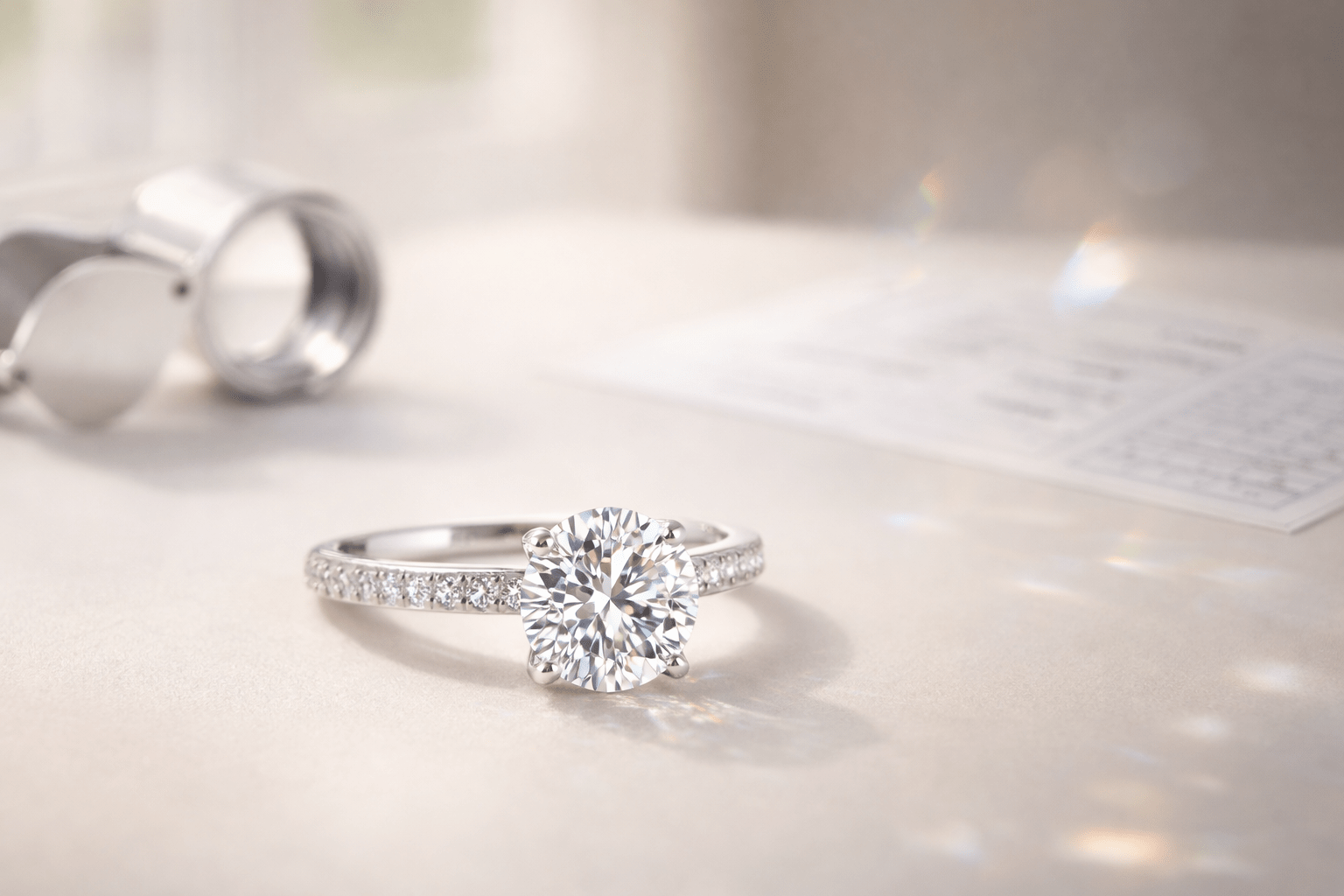
Choosing the right diamond for your engagement ring can feel overwhelming when myths and marketing blur the truth. Understanding what makes diamonds truly special matters because your decision impacts both your budget and how meaningful that ring feels on your finger. This guide unpacks the science, market realities, and emotional value behind diamond quality and authenticity, so you can confidently select a stone that suits your values and financial plans.
Table of Contents
- Diamonds Defined: Properties And Misconceptions
- Natural Versus Lab-Grown Diamonds Explained
- Understanding The 4Cs Of Diamond Value
- Emotional And Cultural Significance In Engagements
- Financial Value, Investment Risks, And Alternatives
Key Takeaways
| Point | Details |
|---|---|
| Understanding Diamond Value | Focus on the Four Cs: cut, color, clarity, and carat weight, as they affect the quality and beauty of the diamond more than size alone. |
| Price Comparison of Diamond Types | Lab-grown diamonds are chemically identical to natural diamonds but can cost 40-60% less, making them a budget-friendly option. |
| Cultural Significance | Choose a ring that resonates personally with your values and relationship story, rather than following societal expectations. |
| Investment Considerations | Remember that diamonds are primarily a symbol of love and commitment, and their resale value can significantly decrease after purchase. |
Diamonds Defined: Properties and Misconceptions
Diamonds are simply carbon atoms arranged in a specific crystalline structure. Yet this chemical simplicity belies their remarkable physical properties that make them so prized for engagement rings and fine jewelry.
The magic lies in how those carbon atoms bond. Diamond cubic crystal structure creates an exceptionally strong lattice where each carbon atom bonds to four others through covalent bonds. This arrangement gives diamonds their legendary hardness and other extreme properties.
What Makes Diamonds Physically Unique
Diamond possesses several distinctive characteristics that set it apart from other gemstones:
- Hardness: The hardest naturally occurring material known to science, scoring 10 on the Mohs scale
- Thermal conductivity: Exceptional heat transfer properties that create their signature sparkle and light reflection
- Optical clarity: When free from inclusions, diamonds transmit light with minimal distortion
- Density and weight: More compact than many gemstones, affecting how they sit in jewelry designs
Diamond cubic crystal structure allows these properties to coexist in one mineral, which is why scientists and jewelers have studied diamonds extensively using spectroscopy and advanced testing techniques.
The Rarity Question: Fact vs. Fiction
Here’s where many couples get confused. Diamonds feel rare because they’re expensive and precious, but the actual geological availability tells a different story.
Historically, market scarcity was partly manufactured through corporate supply control and aggressive marketing campaigns. The De Beers corporation dominated the diamond market for decades, controlling distribution and shaping public perception about diamonds as status symbols.
This doesn’t diminish diamonds’ value. It just means their current pricing reflects both their genuine physical properties and decades of strategic branding.
Diamonds are rare in everyday rocks, but relatively abundant in accessible deposits worldwide—their market value stems from both genuine properties and historical marketing.
Common Misconceptions About Diamonds
Engaged couples often believe several myths about diamonds that affect purchasing decisions:
- Diamonds are the rarest gemstone (actually, rubies and emeralds are often rarer)
- All diamonds are colorless (many contain subtle hues; colorless is simply more marketed)
- Larger diamonds are always better (cut quality and clarity matter equally)
- Diamonds last forever unchanged (they can scratch, chip, and require proper care)
- Lab-grown diamonds are fake (they’re chemically identical to mined diamonds, just created in a lab)
Understanding these distinctions helps you evaluate value based on what actually matters to your relationship, not marketing narratives.
Pro tip: When evaluating diamonds, focus on the Four Cs—cut, color, clarity, and carat weight—and determine which factors matter most for your budget and aesthetic preferences.
Natural Versus Lab-Grown Diamonds Explained
The choice between natural and lab-grown diamonds comes down to understanding how they form and what that means for your engagement ring. Both are real diamonds—the difference lies in where and how they were created.
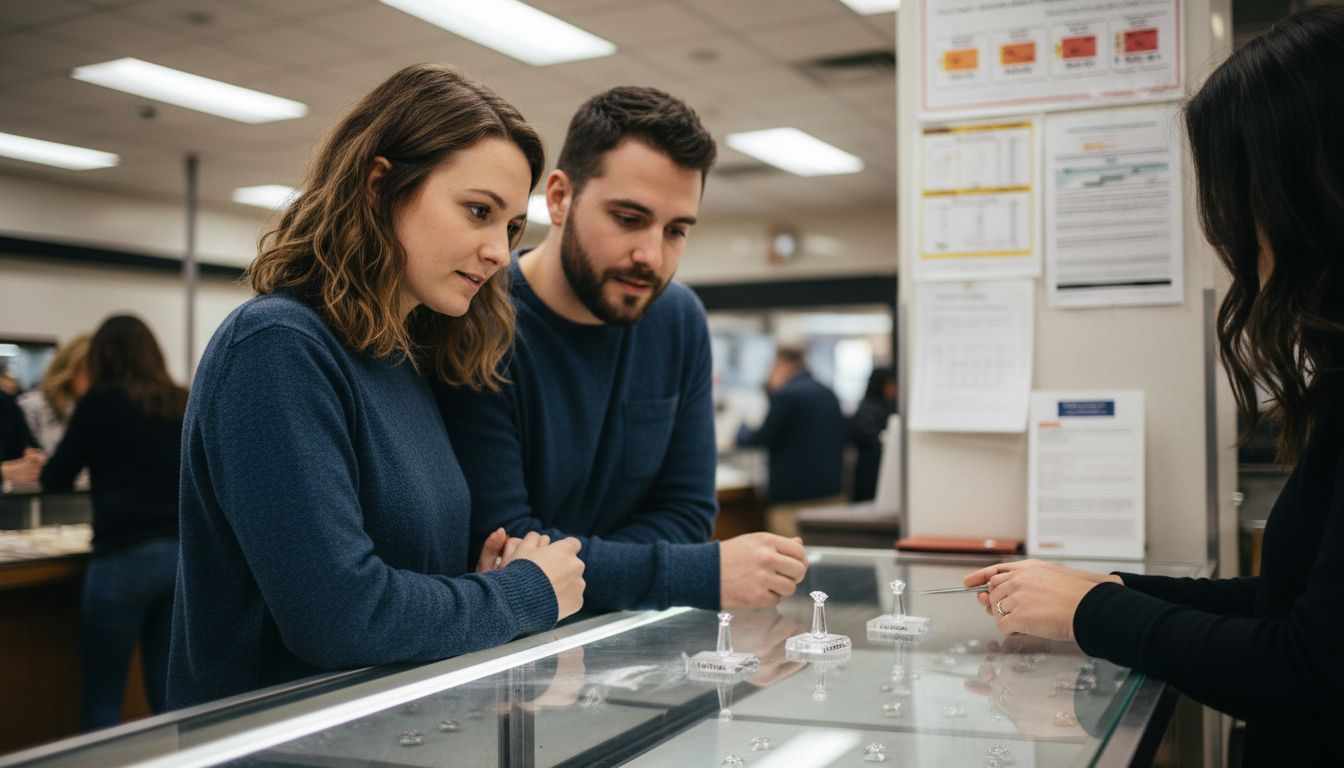
Natural diamonds formed billions of years ago, deep beneath the Earth’s surface under extreme pressure and heat. Lab-grown diamonds replicate those same conditions in a controlled laboratory setting, producing diamonds in weeks instead of geological time scales.
How Each Type Forms
Natural diamonds developed over 1 to 3 billion years within the Earth’s mantle. Geological forces brought them closer to the surface through volcanic eruptions, where miners extract them today.
Lab-grown diamonds use two primary methods to mimic natural formation:
- HPHT (High Pressure High Temperature): Recreates mantle conditions by applying extreme pressure and heat to carbon in a laboratory
- CVD (Chemical Vapor Deposition): Grows diamonds layer-by-layer from a carbon gas in a controlled chamber
Physical and chemical properties are identical between natural and lab-grown diamonds—you cannot tell them apart with your eyes alone.
Key Differences That Matter to Couples
While chemically identical, these diamonds differ in meaningful ways:
Here’s a concise comparison of natural and lab-grown diamonds to highlight considerations beyond their basic properties:
| Factor | Natural Diamond | Lab-Grown Diamond |
|---|---|---|
| Formation Time | 1–3 billion years | Several weeks in lab |
| Typical Price Range | Highest cost per carat | 40–60% lower price |
| Ethical Concerns | May have mining concerns | Often seen as environmentally friendly |
| Unique Marks | Geological inclusions common | Fewer inclusions, more uniform |
| Resale Value | Holds value better | Generally lower resale value |
| Emotional Story | Tied to Earth’s history | Focused on innovation and ethics |
- Price: Lab-grown diamonds cost 40-60% less than comparable natural diamonds
- Origin: Natural diamonds carry Earth’s history; lab-grown offer sustainability
- Inclusions: Natural diamonds have unique geological marks; lab-grown are typically cleaner
- Resale value: Natural diamonds hold market value better long-term
- Transparency: Lab-grown diamonds must be clearly labeled and certified
Lab-grown diamonds are real diamonds in every scientific way—their lower price reflects production method, not quality or durability.
Which Option Makes Sense for You
Choose natural diamonds if you value:
- Traditional engagement ring symbolism and market recognition
- Long-term resale potential
- The geological rarity story behind each stone
Choose lab-grown diamonds if you prioritize:
- Affordability and maximizing diamond size within budget
- Ethical sourcing and environmental responsibility
- Getting higher clarity and color grades at lower cost
Lab-grown diamonds offer sustainable luxury without compromising on the brilliance and sparkle couples expect. Both choices are legitimate—it’s about what aligns with your values and budget.
Pro tip: Regardless of which type you choose, prioritize cut quality—it determines how much your diamond sparkles, and this matters more than origin.
Understanding the 4Cs of Diamond Value
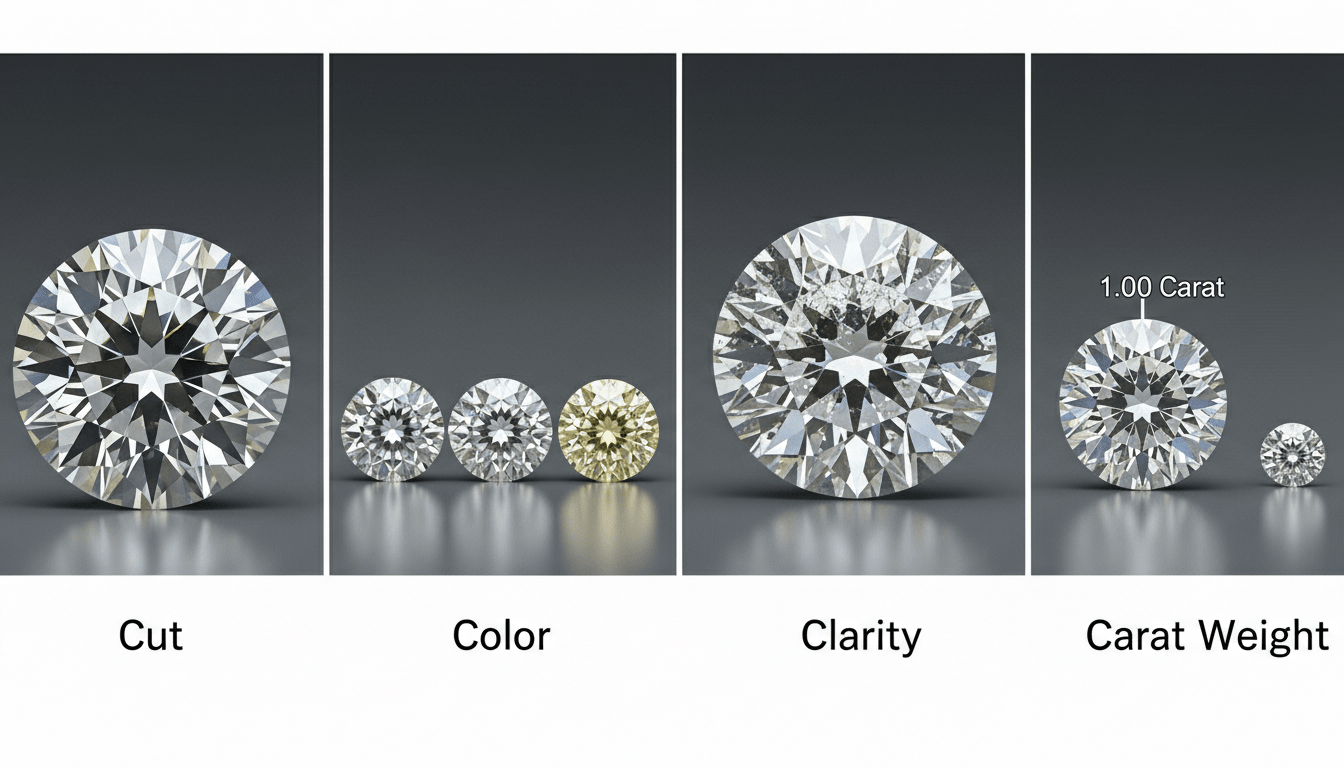
The 4Cs framework gives you a shared language to evaluate diamonds fairly. Whether you’re shopping for a natural or lab-grown diamond, these four criteria determine quality, rarity, and price.
Think of the 4Cs as a universal diamond report card. Gemologists and jewelers worldwide use this system to grade diamonds consistently, so you can compare stones confidently.
What the 4Cs Actually Mean
Cut describes how well the diamond was shaped and faceted. It impacts brilliance and sparkle—the most visible factor affecting a diamond’s beauty.
Color measures how colorless the diamond is on a scale from D (colorless) to Z (light tint). Most diamonds contain tiny trace elements that create subtle hues.
Clarity evaluates internal inclusions and surface blemishes using magnification. Fewer imperfections mean higher clarity grades and typically higher prices.
Carat is simply weight. One carat equals 200 milligrams, and heavier diamonds cost exponentially more per carat.
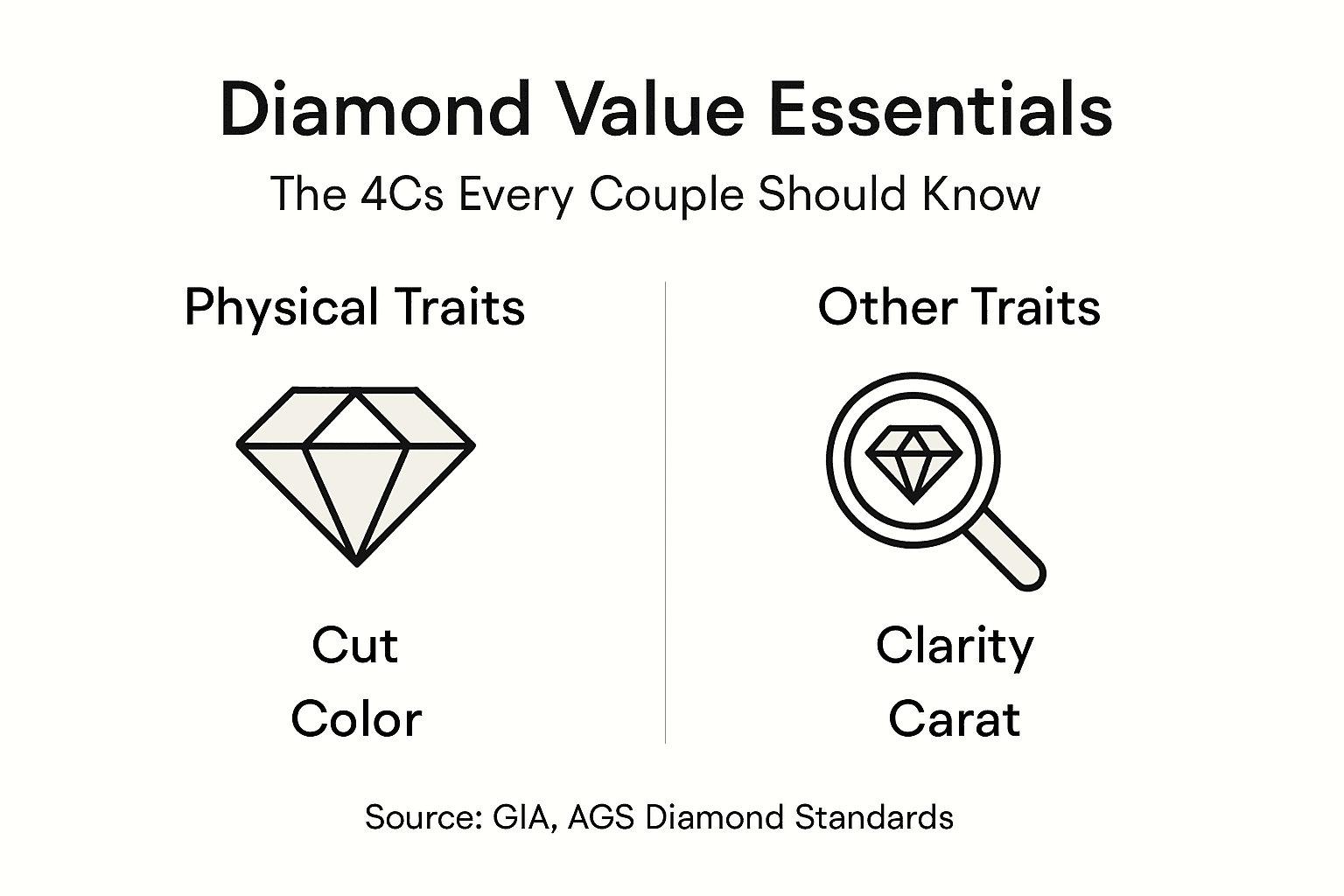
The 4Cs framework provides objective standards allowing you to compare diamonds from different jewelers with confidence.
Below is a summary of the 4Cs to help you quickly understand their impact when choosing a diamond:
| C (Category) | What It Assesses | Visual Impact | Budget Consideration |
|---|---|---|---|
| Cut | Brilliance/sparkle | Most visible difference | Prioritize for best look |
| Color | Presence of tints | Subtle in smaller stones | Accept near-colorless grades |
| Clarity | Inclusions/blemishes | Minor to naked eye | Mid grades often sufficient |
| Carat | Weight/size | Size is obvious visually | Drives price exponentially |
Which C Matters Most for Your Ring
Here’s where couples often make budget mistakes. They prioritize carat weight (size) over cut quality, resulting in a dull, expensive diamond. The hierarchy should look different:
- Cut quality (most impact on sparkle)
- Color (visible only in larger stones)
- Clarity (invisible to naked eye in most grades)
- Carat weight (the budget limiter)
Cut has the greatest visual impact—a well-cut 0.9-carat diamond outshines a poorly cut 1.0-carat diamond dramatically.
Making Trade-offs Within Budget
You cannot maximize all four Cs on a single budget. Instead, make strategic choices:
- Skip perfect clarity (VS2 or SI1 grades are eye-clean)
- Accept near-colorless grades (G-H range is invisible to most eyes)
- Invest heavily in cut quality
- Choose the carat weight that fits your budget after prioritizing cut
When reading a diamond certification, why diamond quality matters involves understanding which grades genuinely affect what you’ll see when wearing the ring daily.
Pro tip: Request diamonds certified by reputable labs (AGS or GIA), compare at least three stones across different C grades, and prioritize cut quality above all other factors.
Emotional and Cultural Significance in Engagements
A diamond engagement ring is far more than a piece of jewelry. It represents a commitment, a promise, and a shared future—which is why the ring itself carries such weight in your relationship.
The emotional significance of an engagement ring varies by couple, but the cultural context surrounding it has deep historical roots. Understanding this context helps you choose a ring that genuinely resonates with your values and relationship story.
The History Behind Diamond Engagement Rings
Engagement rings have ancient origins. The tradition traces back to ancient Rome, where symbolic tokens of betrothal were exchanged to formalize marriages.
Diamond engagement rings became popular much more recently. In 1477, Archduke Maximilian of Austria gave a diamond ring to his betrothed, establishing a trend among European nobility.
The modern diamond engagement ring boom came later. South African diamond discoveries in the 19th century, combined with strategic marketing campaigns, made diamonds the expected engagement stone worldwide.
What Diamonds Symbolize Across Cultures
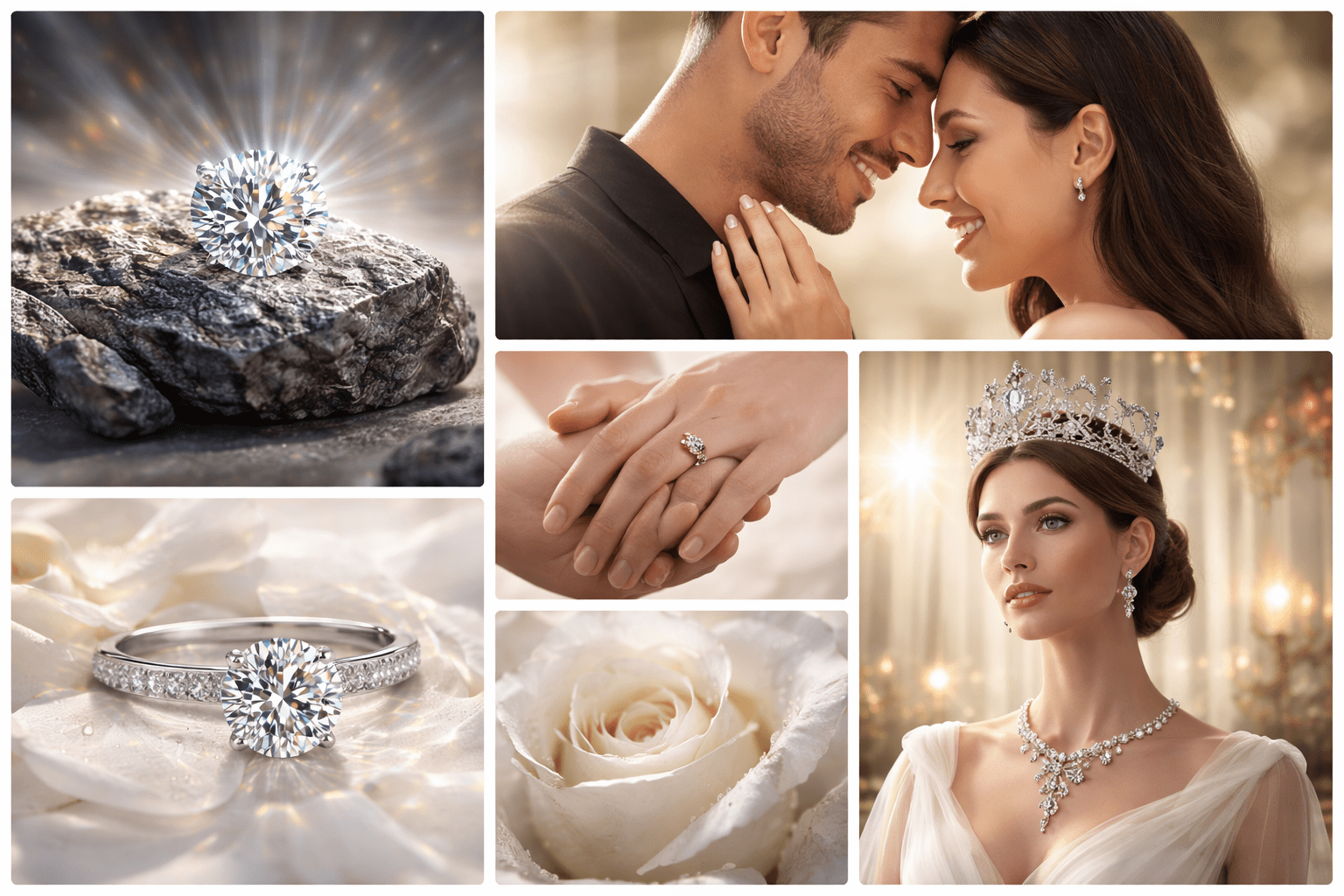
Diamonds have held symbolic meaning across centuries and continents. Ancient Egyptians, Hindus, Greeks, and Romans associated diamonds with divine power, strength, and eternal protection.
These associations shaped modern symbolism:
- Strength: Diamonds represent durability and unbreakable bonds
- Eternal love: Their permanence mirrors lasting commitment
- Purity: Colorless diamonds symbolize clarity and innocence
- Power: Historically linked to royalty and status
- Protection: Believed to safeguard relationships and futures
Diamonds became symbols of love not just because of their physical properties, but because centuries of cultural meaning transformed them into vessels for commitment.
Why Your Ring’s Meaning Matters More Than Marketing
The commercial diamond industry has shaped expectations powerfully. But your ring’s true value comes from personal meaning, not marketing narratives.
Consider what actually matters to your engagement:
- Does the stone’s origin (natural vs. lab-grown) align with your values?
- Does the style reflect who you are as a couple?
- Does the price feel right for your financial situation?
- Does the ring tell your unique love story?
Engagement rings matter because they’re tangible representations of your commitment, not because they follow cultural conventions.
Your ring should feel personally significant to you both, whether that’s a family heirloom, a lab-grown diamond chosen for sustainability, or a mined diamond cherished for its geological history.
Pro tip: Choose a ring design and stone that resonates with your shared values and budget, rather than selecting based on what you think you “should” choose.
Financial Value, Investment Risks, and Alternatives
Diamonds carry emotional value that’s priceless. But their financial value—and whether they make sound investments—requires honest assessment.
Most couples buy engagement rings for personal meaning, not financial returns. However, understanding the investment landscape helps you make informed decisions about where your money goes.
The Reality of Diamond Investments
Diamonds are not like stocks or real estate. Diamond investment lacks transparency due to private transactions and the unique characteristics of individual stones that make comparison difficult.
Historically, larger diamonds appreciated in value. Recently, the market has shifted dramatically.
Several factors have disrupted diamond pricing:
- Introduction of lab-grown diamonds at lower price points
- Changing demand in major markets like China and India
- Economic uncertainty affecting luxury goods purchases
- Supply-control practices that previously stabilized prices
- Significant recent price drops for many diamond categories
The takeaway: Don’t expect your engagement ring to be a financial investment. Buy it for its beauty and meaning, not as a wealth-building tool.
Why Diamonds Depreciate
Engagement rings typically lose 20-40% of their purchase price immediately upon purchase. The secondary market for used diamonds is thin, with dealers buying at wholesale rates far below retail.
You cannot easily resell a diamond at market value because the supply-demand dynamics differ from the retail market. Jewelers have incentives to sell new diamonds rather than buy used ones from customers.
Treat your diamond engagement ring as a purchase for emotional and aesthetic value, not as a financial asset that will appreciate over time.
Alternatives to Consider
If investment potential matters to you, consider other options:
- Lab-grown diamonds: Lower cost means less financial loss if reselling becomes necessary
- Moissanite or sapphire: Durable alternatives at 50-70% lower cost than diamonds
- Vintage or heirloom rings: Historical significance and established values
- Smaller mined diamonds with moissanite accent stones: Blends affordability with traditional symbolism
Lab-grown diamonds have disrupted market dynamics by offering chemically identical stones at significantly lower prices, challenging assumptions about diamond value retention.
Your engagement ring should primarily reflect your relationship and personal style. Secondary financial considerations should influence how much you spend, not whether you buy.
Pro tip: Buy the most beautiful ring you can afford without stretching your budget, prioritize the stone’s visual qualities over investment potential, and enjoy it as a symbol rather than an asset.
Discover the Perfect Diamond That Matches Your Values and Vision
Choosing a diamond engagement ring involves understanding complex details like the Four Cs and deciding between natural or lab-grown stones. Many couples feel overwhelmed balancing quality, ethical concerns, and budget while wanting a ring that truly symbolizes their love. Whether you prioritize cut quality for unmatched sparkle or prefer the sustainable benefits of lab-grown diamonds, making an informed choice can be challenging.
At SuperJeweler.com, we simplify this journey by offering a diverse collection of engagement rings, wedding bands, and lab-grown diamonds crafted to meet your unique preferences. Our easy-to-navigate website supports you with customizable options and competitive pricing backed by free worldwide shipping and reliable warranty coverage.

Start exploring our range today and find a ring that reflects your story and values. Visit SuperJeweler.com to compare diamonds with confidence and secure a symbol of your eternal commitment. Your perfect ring is waiting at a price that fits your budget without compromising on beauty or meaning.
Frequently Asked Questions
What makes diamonds valuable?
Diamonds are valuable due to their unique physical properties, including exceptional hardness, brilliance, and rarity in comparison to other gemstones. Their value is also influenced by historical branding and marketing strategies, which have shaped public perceptions of diamonds as symbols of status and love.
How do natural and lab-grown diamonds compare in terms of value?
Natural diamonds typically hold higher market value due to their geological rarity and historical significance. In contrast, lab-grown diamonds are usually 40-60% less expensive, offering similar visual and chemical properties while being seen as more environmentally friendly.
What are the Four Cs of diamonds and why do they matter?
The Four Cs—cut, color, clarity, and carat weight—are crucial criteria that determine a diamond’s quality, rarity, and price. Prioritizing these factors helps buyers evaluate the true value of a diamond, making informed decisions based on personal preferences and budget.
Are diamonds a good financial investment?
Diamonds are generally not considered sound financial investments. They often depreciate significantly after purchase, and their resale value is typically lower than the retail price. Instead, diamonds should primarily be viewed as symbols of emotional significance rather than as assets with expected appreciation.
Recommended
- Diamond Cut: The Secret to Sparkling Love
- Why Invest in Diamond Jewelry: Value, Beauty, and Security
- Diamond Clarity – How It Impacts Ring Value
- Why Diamond Quality Matters for Engagement Rings
