TL;DR:
- Diamond upgrade rings involve replacing or redesigning rings with larger, higher-quality stones or new settings. The best options balance carat size, cut, and style, with size and quality depending on individual budgets and priorities. Lab-grown diamonds offer significant size advantages, while setting styles like three-stone or halo can dramatically change a ring’s appearance.
A diamond upgrade ring, known in the trade as a diamond ring enhancement or reset, is the process of replacing or redesigning your existing engagement or wedding ring with a larger stone, higher-quality diamond, or a completely new setting. The best diamond upgrade ring options balance carat weight, cut quality, and setting style to create a ring that reflects where you are now, not just where you started. Whether you want a bigger center stone, a fancy shape like an emerald or pear cut, or a lab-grown diamond that stretches your budget further, the right upgrade path depends on your priorities and your budget.
What are the most popular diamond upgrade ring options?
The four most common upgrade paths are: a larger center diamond, a higher-quality stone at the same size, a new diamond shape, and a full setting redesign. Most buyers pursue a combination of two or three of these at once.
- Larger center diamond. Moving from a 0.75-carat to a 1.5-carat stone creates an immediate visual impact. The jump in size is the most requested upgrade, and it typically requires the most budget.
- Higher clarity and color grade. Upgrading from an I1 clarity stone to a VS2 or better, or from a J color to a G or higher, produces a noticeably brighter, cleaner diamond without changing the carat weight.
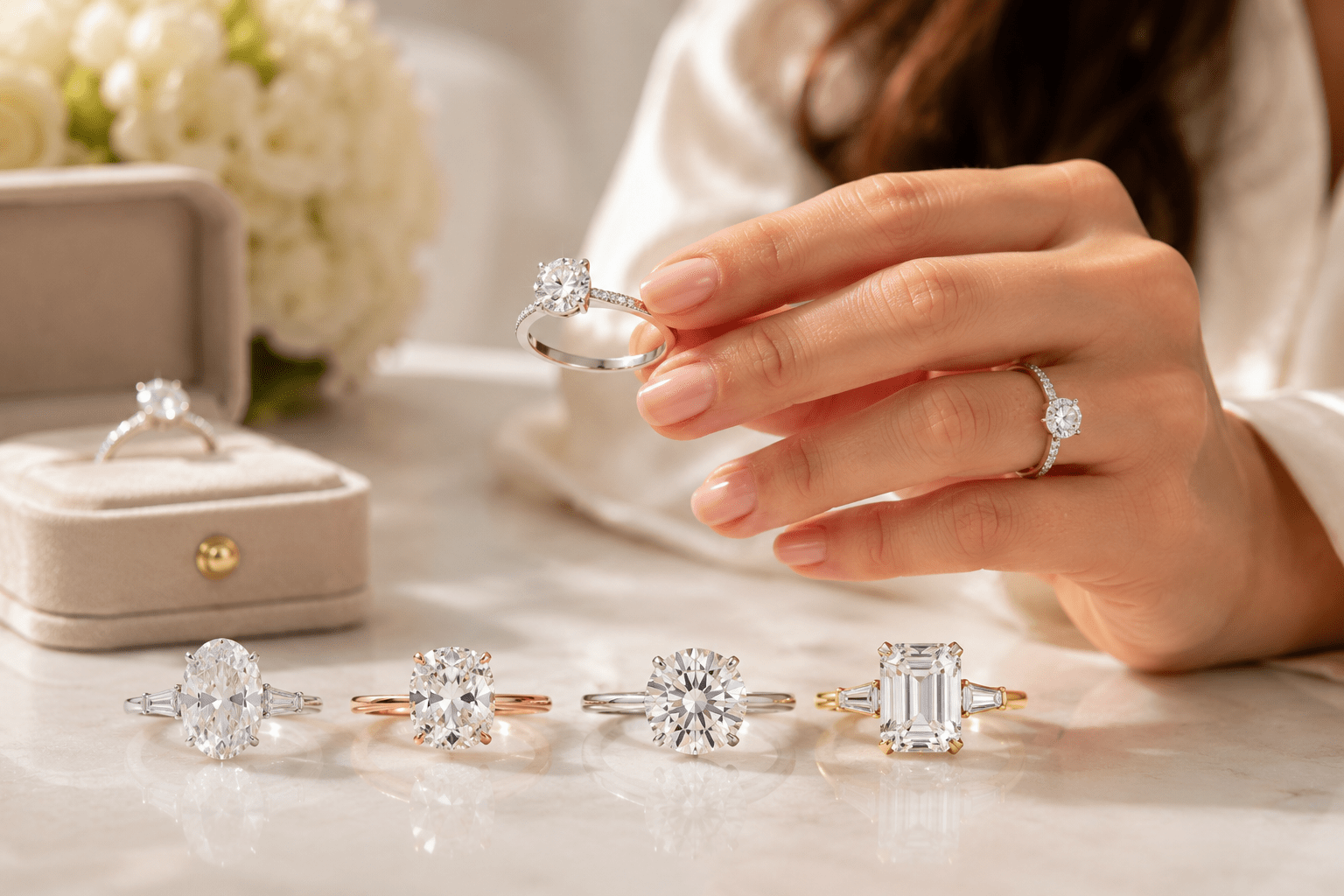
- Fancy diamond shapes. Shapes like oval, pear, cushion, and emerald cut read larger than a round brilliant of the same carat weight because of their elongated outlines. Switching shapes is one of the most cost-effective ways to gain visual size.
- Setting redesign or reset. Changing from a solitaire to a three-stone or halo setting adds sparkle and perceived size without replacing the center stone at all.
- Lab-grown diamond upgrade. Swapping a natural diamond for a lab-grown stone of the same or larger size is a growing choice. Lab-grown diamonds are chemically, physically, and optically identical to mined diamonds, differing only by origin.
Each path carries different costs and trade-offs. Knowing which one matters most to you is the first decision to make.
How to choose the right diamond size and quality for your upgrade
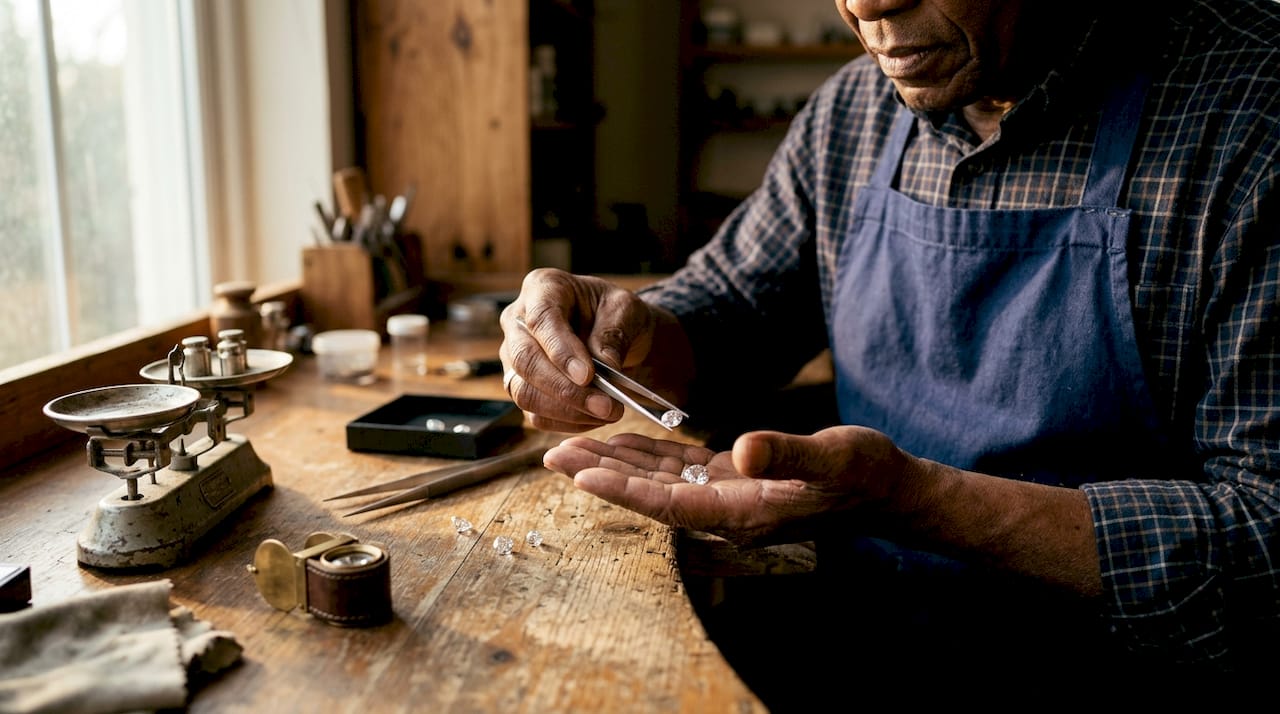
The industry standard for upgrade programs is that the new diamond must be at least twice the value of the original to qualify for full trade-in credit. That benchmark exists because trade-in values typically range from 50–80% of retail replacement value. Understanding this upfront prevents sticker shock when you sit down with a jeweler.
For diamonds at 5 carats or above, VS clarity or better, G color or higher, and a Very Good to Excellent cut grade are the recommended quality benchmarks. At larger sizes, inclusions and color tints become visible to the naked eye, so quality grades matter more than they do at smaller sizes. The same logic applies at 2 carats and above: a well-cut G/VS2 stone will outperform a poorly cut D/VVS2 in real-world sparkle.
Cut quality is the single most important factor in how a diamond performs visually. An Excellent cut grade maximizes light return regardless of carat weight. If your budget forces a choice between a higher color grade and a better cut, choose the better cut every time.
Pro Tip: Ask your jeweler to show you two stones of the same carat weight side by side: one with an Excellent cut and one with a Good cut. The difference in brightness is immediately obvious and will confirm why cut grade matters more than any other quality factor.
Fancy shapes like oval, pear, and cushion cuts are preferred for visual distinctiveness at larger sizes. An oval cut, for example, can appear 10–15% larger than a round brilliant of the same carat weight because of its elongated surface area. That is a meaningful gain without spending more money.
Benefits and considerations of lab-grown diamonds in upgrades
Lab-grown diamonds deliver 30–50% larger stones for the same budget as natural diamonds of equivalent quality. That is a significant size advantage. A buyer who budgets $5,000 for a natural 1-carat upgrade could instead purchase a lab-grown stone in the 1.4–1.6-carat range at the same price point.
The key benefits of choosing a lab-grown diamond for your upgrade:
- Identical physical properties. Lab-grown diamonds share the same hardness, refractive index, and chemical composition as mined diamonds. A gemologist cannot distinguish them without specialized equipment.
- Budget flexibility. The price difference frees up money for a better setting, higher metal quality, or additional accent stones.
- Ethical sourcing. Lab-grown diamonds reduce environmental impact compared to mined stones, making them a responsible choice for buyers who prioritize sustainability.
- Trade-in opportunities. Many jewelers now accept natural diamonds as trade-ins toward lab-grown upgrades, giving you full credit toward a larger stone.
The one consideration worth knowing: lab-grown diamond prices have declined significantly over the past five years. That means their resale value is lower than natural diamonds of comparable size. If long-term resale value matters to you, a natural diamond holds its value better. If size and quality within a set budget matter more, lab-grown is the stronger choice.
Pro Tip: When trading in a natural diamond for a lab-grown upgrade, bring your GIA or AGS certification and original purchase documentation. Certified stones with documented provenance receive better trade-in credit.
Popular diamond ring setting styles for upgrades
The setting is the frame that defines how your diamond looks on your hand. Changing the setting alone can transform a ring’s entire character without touching the center stone.
Three-stone settings are the most popular choice for milestone upgrades. Three-stone settings symbolize the past, present, and future, which makes them a natural fit for anniversaries, vow renewals, or significant life events. The original center diamond is often reset as a side stone in the new design, preserving its sentimental value while giving the ring a completely new look.
Toi et Moi settings pair two stones of equal or contrasting size side by side. The design has roots in 18th-century French jewelry and has seen a strong revival in 2025 and 2026. It works especially well when you want to incorporate a colored gemstone alongside a diamond, or when you have two meaningful stones to combine.
Halo and pavé settings add sparkle without increasing the center stone’s size. A halo of small round diamonds surrounding the center stone can make a 1-carat diamond appear closer to 1.4 carats. Pavé bands, where small diamonds are set along the band itself, add brilliance from every angle.
Custom heirloom redesigns are the most personal option. A jeweler can melt down an existing ring, reuse the metal, and rebuild the setting around a new or upgraded stone. This approach works well for inherited rings that carry emotional weight but no longer match your style. Superjeweler’s diamond eternity ring designs are a popular choice for buyers who want to add a complementary band to a redesigned center piece.
| Setting style | Best for | Visual effect |
|---|---|---|
| Three-stone | Anniversary or milestone upgrades | Adds width and symbolic meaning |
| Toi et Moi | Pairing two meaningful stones | Unique, editorial look |
| Halo | Maximizing perceived size | Center stone appears larger |
| Pavé band | Adding sparkle to existing ring | Brilliance from every angle |
| Solitaire reset | Clean, modern refresh | Puts full focus on upgraded stone |
Fancy colored diamonds as a standout upgrade choice
Fancy-colored diamonds are among the rarest upgrade options available. Only 1 in 10,000 carats of diamonds exhibits a fancy color, and only 1 in 25,000 carries an intense hue like pink, yellow, or blue. That rarity makes them a genuinely distinctive choice for buyers who want something no one else has.
Natural fancy-colored diamonds command premium prices precisely because of their scarcity. Lab-grown colored diamonds offer the same visual impact at a fraction of the cost, making the look accessible to a much wider range of budgets. Yellow and blue lab-grown diamonds in particular have become a popular upgrade choice in 2026.
Colored diamonds pair well with white metal settings like platinum or white gold, which contrast the stone’s hue and make the color appear more vivid. Rose gold settings complement pink and champagne-toned stones. The setting metal choice is as important as the stone color itself.
How trade-in programs work for diamond upgrades
Trade-in programs require documentation to deliver the best credit value. Certification and original purchase information improve the exchange value in upgrade programs. A GIA-certified diamond with a clean provenance record will receive a higher trade-in offer than an uncertified stone of the same size.
The standard trade-in rule is straightforward: the new diamond must be worth at least twice the original stone’s retail value to qualify for full credit. This rule exists to protect the jeweler’s margin on the transaction. Knowing this benchmark before you walk in lets you set a realistic budget for the upgrade.
Condition matters too. A diamond with chips, heavy abrasion, or a damaged girdle will receive a lower offer. Have your current ring professionally cleaned and inspected before any trade-in appraisal. A clean, well-maintained stone always photographs and appraises better.
Key Takeaways
The most effective diamond upgrade combines a quality-graded center stone with a setting style that reflects your current taste and milestone.
| Point | Details |
|---|---|
| Prioritize cut grade | An Excellent cut outperforms a higher color or clarity grade in real-world sparkle. |
| Lab-grown diamonds offer size gains | Lab-grown stones deliver 30–50% more carat weight for the same budget as natural equivalents. |
| Trade-in requires documentation | Bring GIA certification and original purchase records to maximize your trade-in credit. |
| Setting style changes the entire look | Switching to a three-stone or halo setting transforms a ring without replacing the center stone. |
| Budget first, then shop | Setting a clear budget before consulting a jeweler focuses the search and prevents overspending. |
What I’ve learned about upgrading a diamond ring
Setting a clear budget upfront transforms the upgrade process from stressful to genuinely exciting. The buyers I’ve seen struggle most are the ones who walk in without a number in mind. They fall in love with a stone that is $3,000 over budget and spend the rest of the process feeling disappointed by everything else.
The conventional wisdom says “upgrade to the biggest diamond you can afford.” I disagree with that framing. The most satisfying upgrades I’ve seen are the ones where the buyer chose a stone that felt right for their life right now, not the largest stone their credit card could handle. A beautifully cut 1.5-carat oval in a three-stone setting will bring more daily joy than a poorly cut 2-carat round that stretches the budget to its limit.
Sentimental elements deserve more weight than most buyers give them. Resetting your original diamond as a side stone in a new three-stone design costs less than buying two new accent stones, and it keeps the original stone in the ring. That matters to a lot of people more than they expect it to.
The reasons to upgrade your engagement ring are personal, and the best upgrade is the one that reflects your actual story. Size is one variable. Quality, shape, setting, and meaning are the others.
— Andrew
Superjeweler’s diamond upgrade collections
Superjeweler carries one of the most extensive selections of lab-grown and natural diamond rings available online, with prices that make meaningful upgrades accessible at every budget level.
The lab-grown diamond ring deals at Superjeweler are a strong starting point for buyers who want maximum size and quality within a set budget. For buyers focused on natural diamonds, the full engagement ring collection includes solitaires, three-stone designs, halo settings, and custom-ready options across a wide range of carat weights and shapes. Superjeweler also offers free worldwide shipping and a warranty program, so your upgraded ring is protected from day one.
FAQ
What does a diamond upgrade ring mean?
A diamond upgrade ring is the process of replacing or redesigning your current engagement or wedding ring with a larger stone, higher-quality diamond, or new setting. The industry term for this process is a diamond ring enhancement or reset.
How much does it cost to upgrade a diamond ring?
Costs vary widely based on the new stone’s size, quality, and setting style. Trade-in programs typically credit 50–80% of the original diamond’s retail replacement value toward the new purchase.
Are lab-grown diamonds a good choice for upgrades?
Lab-grown diamonds deliver 30–50% more carat weight for the same budget as natural diamonds of equivalent quality. They are chemically and optically identical to mined diamonds and are a strong choice for buyers who prioritize size and value.
What setting styles work best for diamond ring upgrades?
Three-stone, halo, and pavé settings are the most popular choices. Three-stone settings symbolize the past, present, and future, making them a natural fit for anniversary and milestone upgrades.
What documents do I need for a diamond trade-in?
Bring your original GIA or AGS certification and your original purchase receipt. Certified stones with documented provenance consistently receive higher trade-in credit than uncertified diamonds.
Recommended
- Advantages of Different Diamond Shapes: 2026 Buyer’s Guide
- Step-by-step engagement ring buying guide for couples
- Diamond Trends 2026: Styles, Shapes & Smart Choices
- Engagement Ring Shopping Timeline: Your 2026 Guide
