TL;DR:
- A jewelry gift planning workflow is a step-by-step process that ensures style, quality, sizing, budget, and presentation are carefully considered before purchase. Most mistakes occur when one of these steps is skipped, leading to returns or unwearable gifts. Following a deliberate workflow helps buyers select meaningful, well-made jewelry that matches recipient preferences and occasion requirements.
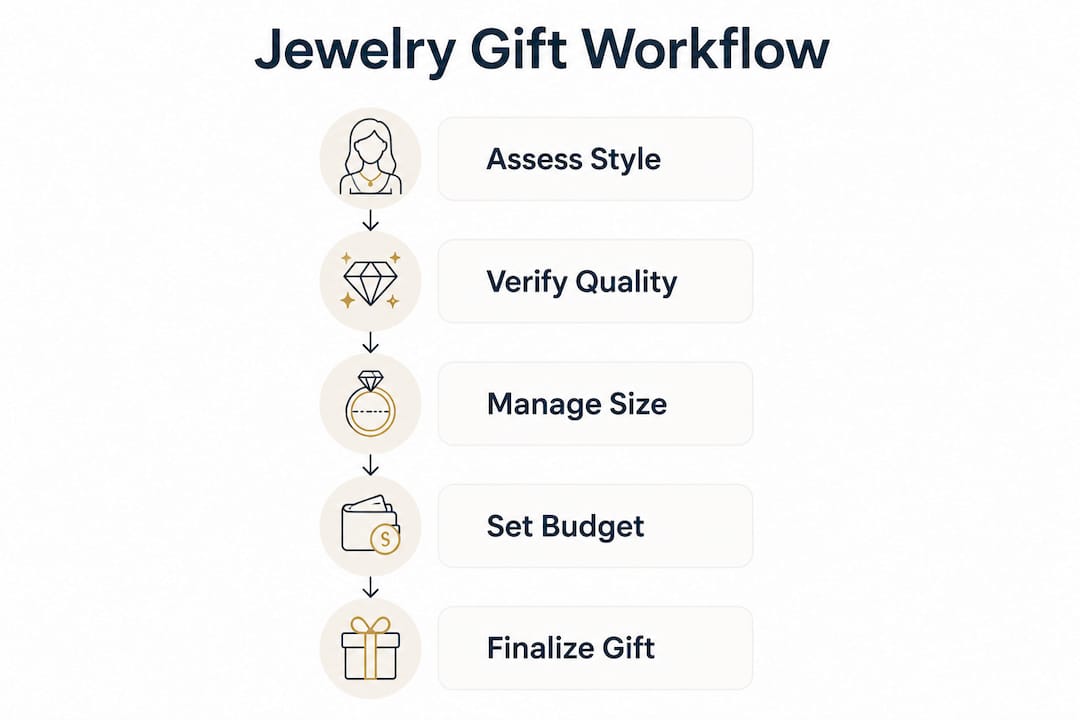
A jewelry gift planning workflow is a structured, step-by-step process for selecting meaningful, high-quality jewelry gifts tailored to any recipient and occasion. Without a clear process, even well-intentioned buyers end up guessing on ring size, skipping certification checks, or choosing a style the recipient never wears. This guide walks you through every stage: reading the recipient’s style, verifying quality through standards like the 4Cs and GIA certification, confirming sizing, setting a realistic budget, and presenting the gift in a way that makes it memorable. Superjeweler offers certified diamonds, lab-grown options, and personalized pieces at every price point to support each step.
What is a jewelry gift planning workflow and why does it matter?
A jewelry gift planning workflow is the industry term for what most buyers attempt informally: a repeatable checklist that covers style, quality, sizing, budget, and presentation before any purchase is made. Skipping even one step creates problems. A beautiful ring in the wrong size, a diamond without certification, or a bold statement necklace given to someone who only wears delicate gold chains all result in the same outcome: a return, an awkward conversation, or a piece that sits unworn in a drawer.
The workflow matters because jewelry is both personal and expensive. Unlike a book or a candle, jewelry sits on the body and signals something about the wearer’s identity. Getting it right requires more than good taste. It requires a process.
How to assess the recipient’s style and match it to the occasion
Style assessment is the first and most consequential step in any gift selection process. The fastest method is to look at what the recipient already wears. Pay attention to three things: metal tone (yellow gold, white gold, rose gold, or silver), scale (delicate and minimal versus bold and layered), and boldness (geometric and modern versus classic and traditional).

Lifestyle matters just as much as aesthetic preference. An active person who works with their hands needs secure, low-snag settings and durable metals. A person who rarely removes their jewelry needs pieces built for daily wear. Someone who dresses up only occasionally can wear more delicate or elaborate designs without risk of damage.
Occasion type shapes the appropriate jewelry category:
- Everyday affection (birthdays, “just because” gifts): stud earrings, simple pendants, delicate bracelets, or affordable jewelry gift ideas that complement a daily wardrobe
- Milestone commitment (engagements, anniversaries, graduations): diamond rings, tennis bracelets, gemstone pendants, or pieces with lasting symbolic weight
- Celebratory occasions (holidays, promotions): versatile pieces like gold hoops, birthstone jewelry, or personalized necklaces that work across multiple outfits
Trendy styles carry risk. A design that feels current today may feel dated in three years. Classic cuts and timeless settings hold their appeal far longer, which matters when the gift is meant to last.
Pro Tip: Before purchasing earrings, confirm whether the recipient has pierced ears and whether they prefer studs, hoops, or drops. This single check prevents one of the most common jewelry gift returns.
How do quality factors and certification affect jewelry gifts?
Jewelry quality for diamonds is measured by the 4Cs: cut, color, clarity, and carat weight. Cut is the most critical factor. A well-cut diamond reflects light brilliantly regardless of its color or clarity grade. A poorly cut stone looks dull even at a high carat weight. Prioritizing cut over carat gives you more visual impact per dollar spent.
Independent certification from bodies like GIA (Gemological Institute of America) or IGI (International Gemological Institute) is the standard method for verifying diamond quality. A certificate confirms the stone’s exact 4Cs grades, measured by a neutral third party. Industry experts emphasize demanding certification reports before purchase to confirm the piece matches what the seller claims.
The table below summarizes the key quality factors and what to check for each:
| Quality Factor | What to Check | Why It Matters |
|---|---|---|
| Cut | Excellent or Ideal grade | Determines brilliance and visual impact |
| Color | D–J range for white diamonds | Affects how “white” or warm the stone appears |
| Clarity | VS2 or better for most gifts | Ensures no visible inclusions to the naked eye |
| Carat | Balanced with cut and setting | Larger is not always better without a strong cut |
| Certification | GIA or IGI report included | Confirms all grades independently |
| Metal durability | Platinum or 14K gold for daily wear | Platinum and 14K gold hold up better than higher-karat golds |
Lab-grown diamonds offer a compelling value case. Certified lab-grown diamonds cost 30–50% less than natural diamonds at similar quality grades and carry the same independent certification. That price difference lets you choose a larger stone or a more elaborate setting without exceeding your budget. Superjeweler carries a full range of certified lab-grown diamond jewelry with the same quality standards as natural stone options.
Pro Tip: Always request the certification document before completing a purchase. A reputable retailer provides it without hesitation. If a seller cannot produce a GIA or IGI report for a diamond, treat that as a red flag.
How do you manage sizing, budget, and retailer selection?
Sizing is where most jewelry gifts go wrong. Rings require accurate sizing through professional measurement or by borrowing an existing ring the recipient wears on the correct finger. Necklaces and bracelets are more forgiving, but a bracelet that is too tight is uncomfortable and one that is too loose catches on clothing. When in doubt, choose a style with resizing flexibility built in.
Common sizing mistakes to avoid:
- Guessing ring size based on general body size (finger size does not correlate reliably with height or weight)
- Assuming the same size across different ring fingers (the dominant hand is often slightly larger)
- Skipping bracelet measurement for recipients with small or large wrists
- Ordering a fixed-length necklace without knowing the recipient’s preferred chain length
Budget should reflect the occasion’s significance, not a fixed formula. Spending more on milestone events is reasonable, but meaningful, well-made pieces exist at every price point. A $200 gold birthstone pendant can carry as much emotional weight as a $2,000 diamond necklace if it is chosen thoughtfully.
Metal selection also affects long-term satisfaction. Platinum and 14K gold are the best choices for daily-wear pieces because they resist scratching better than 18K or 22K gold. For recipients who are active or hard on jewelry, platinum is the most durable option available.
Retailer selection is the final practical checkpoint. Reputable jewelers offer clear return policies, resizing support, and certifications. Check that the retailer provides at minimum a 30-day return window, a written sizing policy, and insured shipping on high-value orders.
Pro Tip: When you cannot confirm ring size before the gift, choose a solitaire or simple band style. These designs are the easiest to resize without altering the overall look of the piece.
How to finalize the gift with personalization, presentation, and timing
Personalization turns a good gift into a great one. Custom engravings, birthstone settings, and name or initial pendants add a layer of meaning that no off-the-shelf piece can replicate. Personalized jewelry works especially well for milestone occasions where the date, initials, or a short phrase carries permanent significance.
Presentation and timing significantly affect how a gift is received. Giving privately, using a personalized box, or building a small moment around the reveal adds emotional weight to the piece itself. A scavenger hunt that ends with the jewelry, a handwritten note inside the box, or a surprise delivery at a meaningful location all amplify the impact.
Presentation mistakes to avoid:
- Handing over jewelry in its shipping box without any additional packaging
- Giving a high-value piece in a public setting where the recipient cannot react naturally
- Forgetting to remove price tags or retailer stickers from the box
- Skipping a card or note that explains why you chose that specific piece
Timing matters for milestone gifts. An engagement ring presented on a random Tuesday carries less weight than one given at a planned, meaningful moment. For casual gifts, timing is less critical, but pairing the gift with a shared experience (a dinner, a trip, a celebration) makes it more memorable.
For expensive pieces, insured shipping and a secure delivery method protect your investment. Confirm that the retailer ships with signature confirmation and provides tracking on all orders above a set value.
Key Takeaways
A successful jewelry gift planning workflow requires assessing recipient style, verifying quality through certification, confirming sizing, aligning budget with occasion, and presenting the gift with intention.
| Point | Details |
|---|---|
| Assess style before shopping | Match metal tone, scale, and boldness to what the recipient already wears. |
| Demand certification | Always request a GIA or IGI report for any diamond or gemstone gift. |
| Confirm sizing early | Borrow an existing ring or choose resizable styles to avoid returns. |
| Budget by occasion | Spend more on milestones; meaningful pieces exist at every price point. |
| Personalize the presentation | Engravings, custom packaging, and thoughtful timing make the gift memorable. |
Why I think most jewelry gift mistakes are entirely avoidable
After years of writing about fine jewelry and watching buyers navigate the process, the pattern is clear: most jewelry gift regrets trace back to one skipped step. Someone assumed the ring size. Someone bought a diamond without asking for the certification. Someone chose a bold, trendy piece for a person who only wears classic gold.
The workflow approach fixes this not by making the process complicated, but by making it deliberate. You do not need to be a gemologist to give a great jewelry gift. You need to ask the right questions in the right order.
What I find most interesting is how certification awareness has shifted buyer confidence in the last few years. Buyers who once accepted a seller’s verbal assurance about diamond quality now routinely ask for GIA or IGI reports. That shift is healthy. It means the gift carries documented value, not just sentimental value. For the recipient, knowing a piece is certified adds a layer of trust that makes it easier to insure, resell, or pass down.
The one thing most guides underemphasize is presentation timing. The physical gift can be perfect in every technical sense, but if it is handed over in a rushed or awkward moment, the emotional impact is cut in half. The workflow does not end at checkout. It ends when the recipient opens the box.
— Andrew
Superjeweler’s selection for every step of your gift plan
Planning a jewelry gift is easier when the retailer does the heavy lifting on quality and variety. Superjeweler carries certified natural and lab-grown diamonds, personalized jewelry with custom engraving options, and pieces across every occasion and price point.
For buyers focused on value without sacrificing certification, Superjeweler’s lab-grown diamond engagement rings offer GIA and IGI certified stones at significantly lower prices than comparable natural diamonds. Free worldwide shipping, clear return policies, and resizing support remove the practical risks that derail most gift purchases. Browse by occasion, metal type, or gemstone to find the right piece without second-guessing every choice.
FAQ
What is a jewelry gift planning workflow?
A jewelry gift planning workflow is a structured checklist covering recipient style, quality verification, sizing, budget, and presentation before any jewelry purchase. Following each step in order reduces returns and increases the chance the recipient loves the gift.
How do I verify the quality of a diamond jewelry gift?
Request a GIA or IGI certification report before completing the purchase. These independent reports confirm the diamond’s cut, color, clarity, and carat weight with no conflict of interest from the seller.
What is the best metal for a daily-wear jewelry gift?
Platinum and 14K gold are the most durable choices for daily wear. Higher-karat golds like 18K or 22K scratch more easily and require more frequent maintenance.
How do I find the right ring size for a gift?
Borrow a ring the recipient wears on the correct finger and have it measured at a jeweler. If that is not possible, choose a style with easy resizing options to avoid a poor fit.
Are lab-grown diamonds a good choice for jewelry gifts?
Yes. Certified lab-grown diamonds cost 30–50% less than natural diamonds at equivalent quality grades and come with the same independent certification. They are an excellent choice for budget-conscious buyers who want a larger or higher-quality stone.
Recommended
- Step by Step Jewelry Shopping: Your Complete 2026 Guide
- Wedding band buying workflow: your 2026 step-by-step guide
- Step-by-step engagement ring buying guide for couples
- Affordable Jewelry Shopping Guide for Quality Finds
