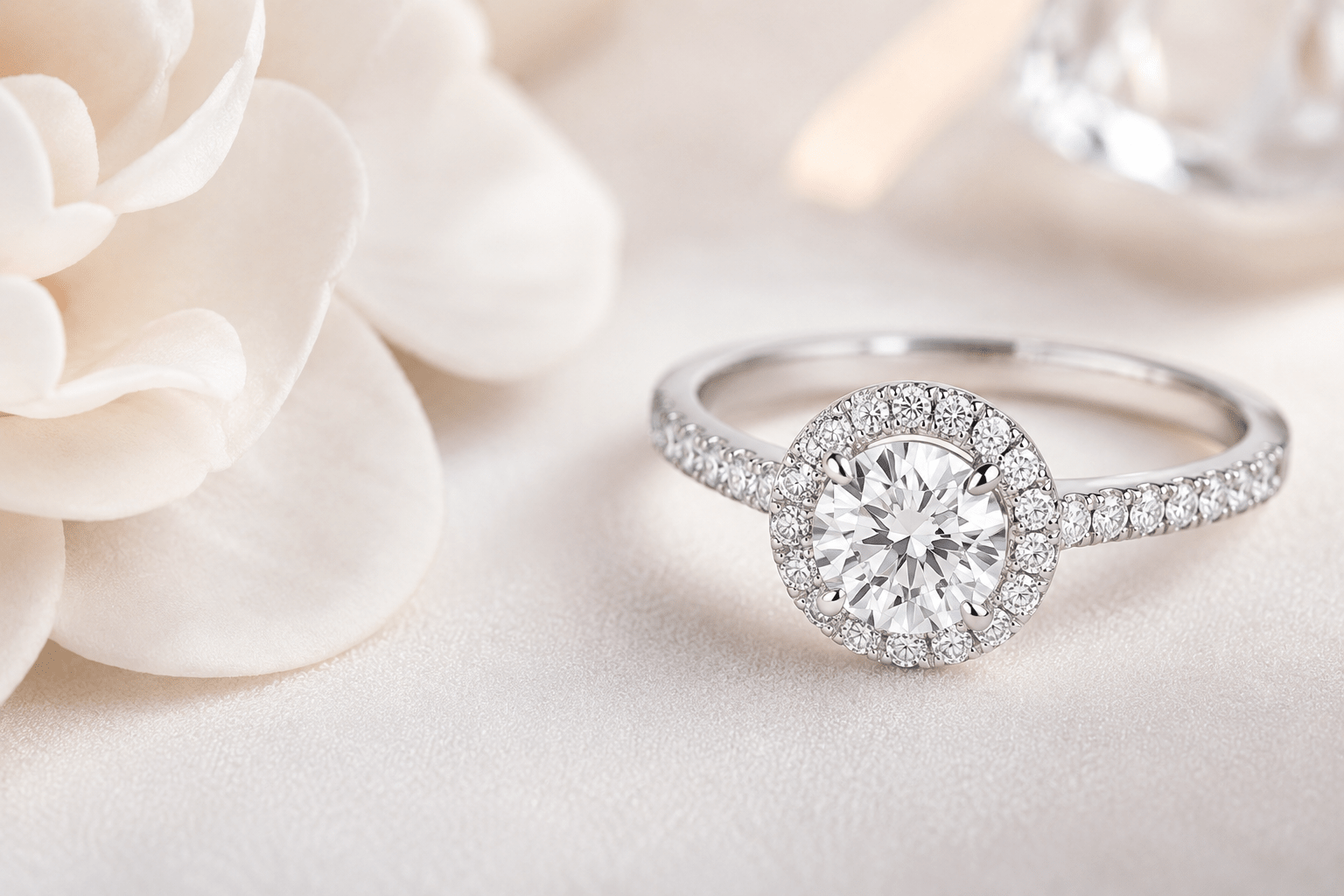
A halo setting is a ring design where a center gemstone sits surrounded by a ring of smaller stones, called melee, that circle it like a rim of light when viewed from above. The style is a staple at retailers like Superjeweler, and jewelry authorities including the GIA and IGI both use it as a textbook example of how a setting changes a diamond’s perceived size and brilliance. Before you shop, here’s what matters most:
- Appearance: a halo makes the center stone look bigger and adds noticeably more sparkle from every angle.
- Variety: styles range from a single row of melee to hidden halos, double halos, and colored gemstone rims.
- Buying implication: halos affect wedding band pairing and require slightly more upkeep, so factor that into your budget and lifestyle before you commit.
Key Takeaways
A halo setting surrounds a center stone with smaller melee diamonds to increase perceived size and sparkle, and choosing the right style depends on center-stone shape, budget, and how the ring will pair with a wedding band.
| Point | Details |
|---|---|
| Core definition | A halo setting rings the center stone with melee diamonds, boosting apparent size and light return. |
| Style variety | Single, double, hidden, micro-pavé, and gemstone halos each change silhouette, cost, and maintenance differently. |
| Carat weight clarity | Always confirm whether listed carat weight covers the center stone alone or the center plus melee. |
| Maintenance matters | Monthly prong checks and professional cleaning every six to twelve months protect against lost melee. |
| Where to shop | Superjeweler’s halo engagement ring collection covers single, double, and hidden halo styles with free shipping and warranty coverage. |
Table of Contents
- What Makes Up a Halo Setting
- Types of Halo Settings and How They Differ
- How a Halo Changes the Way a Diamond Looks
- Pros and Cons of Choosing a Halo
- How to Choose the Right Halo Engagement Ring
- What Halo Settings Cost and Where to Save
- Caring for a Halo Ring Long Term
- How Halos Compare to Other Popular Settings
- Which Buyers Actually Benefit From a Halo
- Shopping for a Halo Engagement Ring at Superjeweler
- Frequently Asked Questions
- Sources
What Makes Up a Halo Setting
A halo ring has more moving parts than a plain solitaire, and knowing the vocabulary helps you shop smarter. The center stone is the main diamond or gemstone. The halo itself is the ring of melee, tiny diamonds or gems usually under a small carat size each, designed to be tiny melee stones, set tightly around it. Below that sits the gallery, the metal framework that holds everything together, and the shank, which is the band itself.
Jewelers describe how the melee is attached using a few recurring terms:
- Pavé setting: small stones set close together with tiny beads of metal holding each one, creating a “paved” look of continuous sparkle.
- Micro-pavé: the same technique using even smaller stones, common in delicate halo designs.
- Bead setting: individual prongs or beads secure each melee stone one at a time.
- Channel-set halo: stones sit in a track between two metal walls rather than being individually pronged, which offers more protection against snagging.
- Millgrain: a decorative beaded edge sometimes added along the halo’s border for a vintage look.
Metal choice changes both the look and the wear pattern. White gold and platinum give melee a bright, seamless glow because the metal disappears visually against the diamonds. Yellow gold and rose gold create contrast, making the halo pop as a distinct ring of color against the warmer band. Platinum holds prongs more securely over decades of wear, which matters more on a halo than on a solitaire simply because there are more prongs to maintain.
Types of Halo Settings and How They Differ
Not all halos look or wear the same, and the differences go beyond aesthetics.
- Single halo: one row of melee around the center stone. The most common and generally the most affordable version.
- Double halo: two concentric rows of melee, adding more sparkle and a noticeably larger visual footprint. It also adds more total carat weight and cost.
- Hidden halo: melee sits beneath the center stone, invisible from a straight-on top view but visible in profile. This gives a cleaner, more minimalist look from above while still adding brilliance from the side.
- Micro-pavé halo: uses very small stones for a delicate, low-profile ring of sparkle that doesn’t compete with the center stone.
- Bezel or partial halo: metal or melee wraps around only part of the center stone rather than the full circle, often used on pear or marquise shapes.
- Gemstone halo: colored stones like sapphire or emerald replace diamond melee, a growing trend for buyers wanting a personalized look.
- Floral or vintage-style halo: scalloped or petal-shaped melee arrangement that echoes Edwardian and Art Deco design.
- Split-shank halo: the band divides into two strands as it approaches the halo, often adding extra melee along the shoulders.
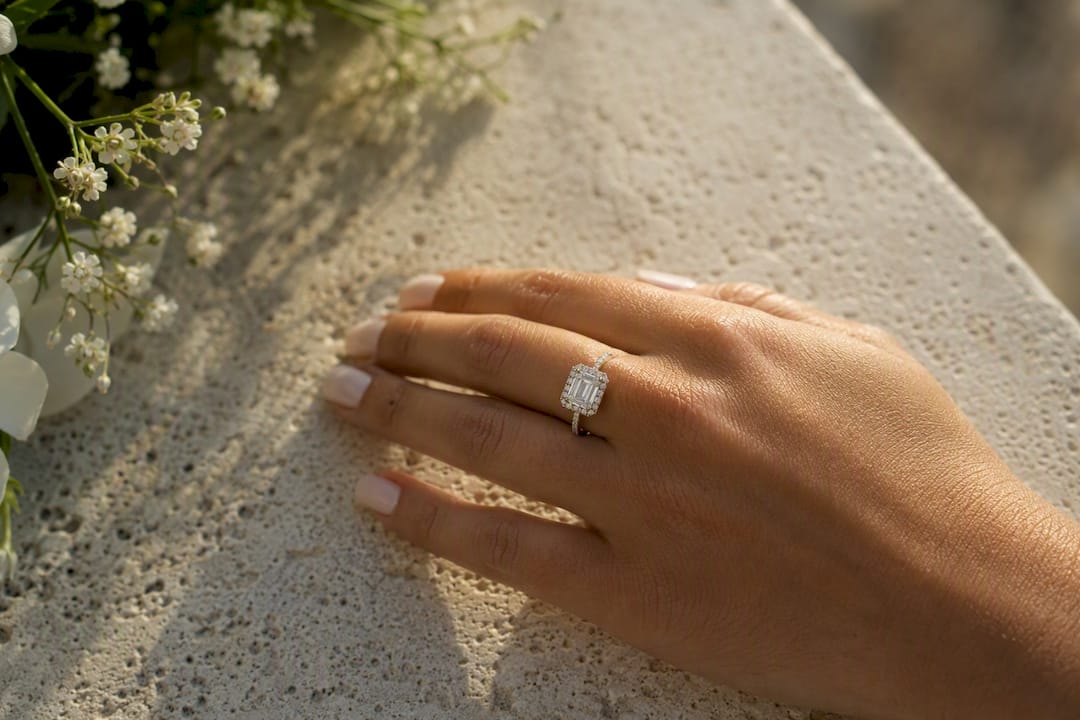
Halo shape should generally echo center-stone shape. Round centers pair with round halos, cushion and oval centers often get a matching cushion or oval halo, and emerald-cut centers typically wear a rectangular or slightly rounded rectangular halo. Pear and marquise shapes often work best with a partial halo that follows the point of the stone rather than a full circle.
How a Halo Changes the Way a Diamond Looks
The main reason people choose a halo is the size illusion. Melee stones extend the visual footprint of the ring’s face outward, so a center diamond can look noticeably larger than its actual carat weight suggests. The GIA notes that setting design directly affects how light returns to the eye, and a halo essentially multiplies the number of facets catching and bouncing light across the top of the ring.
That extra facet count also increases overall sparkle. Because melee stones sit at slightly different angles than the center stone, they catch light the center misses, which can help mask minor inclusions or a center stone with mediocre clarity. It’s not a fix for a poorly cut diamond, but it does soften small imperfections from a normal viewing distance.
Shape pairing changes the outline dramatically. A round center with a round halo reads as one large, continuous circle of brilliance. An emerald-cut center with a rectangular halo instead emphasizes clean lines and a broader silhouette, which tends to look more architectural than sparkly. Neither is better. They just create different visual signatures.
Pros and Cons of Choosing a Halo
Halos solve real problems, but they come with tradeoffs worth knowing before you buy.
Advantages:
- Makes a smaller center stone look larger without paying for extra carat weight in the main diamond.
- Adds substantial sparkle from multiple angles, not just straight overhead.
- Can hide minor clarity issues in the center stone.
- Often a cost-effective way to boost visual impact compared to upgrading to a bigger solitaire.
Drawbacks:
- More metal and more stones mean more maintenance. Prongs need regular checking.
- A wider profile can look bulky next to certain wedding band styles.
- Melee stones can loosen or fall out over years of wear, especially with active lifestyles.
- Dirt and lotion build up faster in the tight spaces around melee than on a plain band.
If you work with your hands often or play sports regularly, ask your jeweler about setting durability before choosing a wide double halo.
How to Choose the Right Halo Engagement Ring
Start with a checklist before you fall in love with a specific ring online or in-store:
- Set your budget first, then decide how much of it goes to the center stone versus the halo.
- Pick your center-stone shape and size. Round and oval tend to look largest inside a halo; emerald and asscher show off cleaner lines.
- Choose your metal based on durability needs and whether you want the halo to blend or contrast with the band.
- Think about your wedding band. A wide halo may need a custom-fitted or contoured band, so ask about pairing options early.
- Confirm total carat weight versus center-stone carat. These are two different numbers, and listings should specify both.
Bring these questions to your jeweler:
- What is the setting height, and will it catch on clothing or gloves?
- How is the melee secured: prongs, pavé, or channel setting?
- Is the listed carat weight for the center stone alone or the total including melee?
- Can this ring be resized later without damaging the halo?
- What does the warranty or return policy cover if a melee stone is lost?
Watch for red flags: vague melee specifications, no clear breakdown of total carat weight, unusually high setting height with no explanation, or weak return terms. Reputable sellers disclose this information without you having to ask twice.
Pro Tip: Ask to see the ring under magnification or request close-up photos from the top, profile, and side angles before buying online. A halo can look flawless in a straight-on product shot and reveal loose prongs or uneven melee spacing from the side.
For a deeper look at how one specific style works, the guide to hidden halo styles breaks down pairing options in more detail, and the diamond shape guide is worth a look before you settle on a center stone.
What Halo Settings Cost and Where to Save
Halos generally cost more than plain solitaires, and the reason is straightforward: more stones, more labor, and a higher total carat weight listed on the specs sheet. Each melee stone has to be individually set and matched for color and clarity, which adds jeweler time on top of the material cost.
A few ways to get the look without the full price tag:
- Choose smaller or slightly lower-clarity melee. At that size, minor clarity differences are invisible to the naked eye but meaningfully cheaper.
- Consider a lab-grown center diamond, which often costs significantly less than a mined stone of the same size and grade.
- Stick to solid precious metal rather than plated metal for the band. Plating wears off over time and needs re-application, which adds long-term cost even if the upfront price looks lower.
Always compare total carat weight against center-stone carat when shopping. The GIA recommends confirming which number a listing actually refers to, since a “1.50 carat” halo ring might mean a 1-carat center with 0.50 carats of melee, not a 1.5-carat center stone. That distinction changes the ring’s real value substantially.
Caring for a Halo Ring Long Term
Halos need slightly more attention than simpler settings, mostly because there are more stones and more prongs to keep track of.
- Clean gently at home. Warm water, a few drops of mild dish soap, and a soft-bristled brush work for most halos. Skip ultrasonic cleaners unless your jeweler confirms your specific setting can handle the vibration, since some pavé work loosens over repeated ultrasonic cycles.
- Check prongs monthly. A quick visual inspection catches a loose stone before it’s lost.
- Get a professional cleaning and inspection every six to twelve months. A jeweler can spot wear you’d miss at home.
- Document everything for insurance. Record total carat weight, metal type, and setting details in your appraisal. IGI certification or an independent grading report from a lab like HRD Antwerp gives you documentation that holds up if you ever need to file a claim.
Storing the ring safely when you’re not wearing it matters too. A dedicated jewelry safe at home reduces the risk of loss or damage between wears, especially for rings with a lot of small, valuable stones.
A Brief History of the Halo Look
The word “halo” borrows from the ring-like glow seen around bright light sources, a phenomenon described in general optics references). Jewelry design echoing this radiant-surround concept traces back through Georgian-era ornamentation, which favored dense clusters of small stones around a central gem. Vintage revival periods since have kept reintroducing the look, which is why so many modern halo variations borrow floral and filigree details from decades-old designs.
How Halos Compare to Other Popular Settings
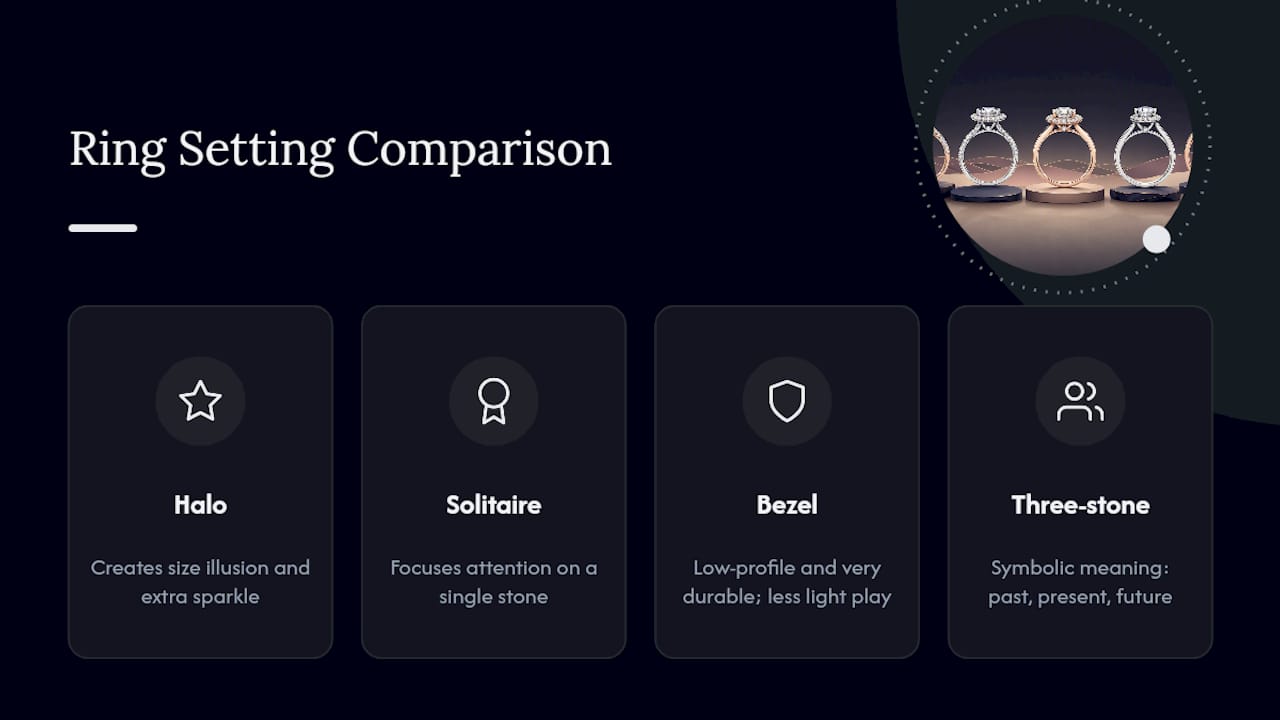
A solitaire keeps all attention on one clean stone with no distractions, while a halo trades that simplicity for size illusion and extra sparkle. A bezel setting wraps metal fully around the stone’s edge for a low profile and excellent durability, but it sacrifices the light play a halo delivers. A three-stone setting leans on symbolism, often read as past, present, and future, where a halo leans instead on modern visual impact and brilliance.
Which Buyers Actually Benefit From a Halo
Halos work best for two types of buyers: people who want maximum visual impact without stretching their budget on a larger center stone, and people who plan to pair the ring with a slim, well-matched wedding band rather than a chunky one. If you’re rough on your hands daily or need a ring that survives manual work without frequent prong checks, a lower-profile setting might serve you better long term.
My advice if you’re on the fence: look at more than one halo style before deciding. A single halo photographed under good lighting can look nearly identical to a double halo in a thumbnail image, but they wear and price very differently in person. Request detailed photos from multiple angles, and don’t be shy about asking a jeweler to walk you through melee count and total carat weight line by line.
Buying from a retailer with a clear warranty and return policy also matters more with halos than with simpler settings, purely because there are more small parts that can eventually need attention.
Shopping for a Halo Engagement Ring at Superjeweler
Superjeweler carries a full range of halo engagement rings, from classic single-halo designs to more elaborate double-halo and hidden-halo styles, so you can compare looks side by side instead of guessing from a single photo.

If size illusion and sparkle matter more to you than a large center-stone budget, the lab-grown diamond rings category is worth a look. Lab-grown centers cost less than mined stones of equal size and grade, which frees up budget for a fuller halo or a matching diamond bridal set. Shoppers working with a tighter budget can also browse engagement rings under $1,000 for halo styles that don’t sacrifice sparkle for price.
Every ring ships free, and Superjeweler backs its jewelry with clear warranty and return terms, so you’re not stuck guessing about what happens if a melee stone ever needs attention down the road. Browse the halo engagement ring collection now and filter by center-stone shape, metal, and budget to find a style that fits how you’ll actually wear it.
Frequently Asked Questions
What is a halo setting on a ring?
A halo setting is a ring style where a center gemstone is surrounded by a circle of smaller melee stones, creating a larger visual footprint and extra sparkle from the top view.
Does a halo setting make a diamond look bigger?
Yes. The melee stones extend the ring’s visual face outward, so the center diamond appears larger than its actual carat weight would suggest on its own.
Is a halo setting more expensive than a solitaire?
Generally yes, because a halo requires additional melee stones and more setting labor, plus it typically carries a higher total carat weight than a comparable solitaire.
How do I know if a ring’s carat weight includes the halo?
Check the product description for “total carat weight” versus “center stone carat weight.” If only one number is listed, ask the retailer to clarify before you buy.
How often should a halo ring be professionally inspected?
Most jewelers recommend a professional cleaning and prong inspection every six to twelve months, with a quick visual check at home monthly.
Can any diamond shape work with a halo?
Most shapes work, but round, oval, and cushion centers pair most naturally with a full round or matching-shape halo, while pear and marquise often look best with a partial halo.
Sources
For grading questions specific to a ring you’re considering, a local gemologist or the GIA itself remains the most reliable resource.
