Yes, buying certified natural loose diamonds online can be safe if you verify an independent GIA report, confirm the stone’s imaging and laser inscription, and buy from a seller with a clear return policy and U.S.-based protections. The non-negotiables are simple: check the report number, look for high-resolution imagery, insist on 30 or more days to return the stone, and get an independent appraisal once it arrives.
TL;DR:
- Verifying the GIA report number through the official database and comparing measurements and inclusion plots is essential to confirm the stone’s authenticity and match to paperwork.
- Prioritize diamonds with an excellent or ideal cut grade, a G to H color range, and SI1 clarity to maximize value and visual appeal, avoiding grade ranges that lack specificity.
- Ensure seller offers a minimum of 30 days for returns, insures shipping, and provides transparent policies to protect your purchase against discrepancies or issues upon delivery.
- After receipt, have an independent appraiser verify that the actual diamond matches its report and update your insurance coverage accordingly.
- Buying from U.S.-based sellers with full grading disclosures and clear return policies reduces legal risks and increases chances of a satisfactory, protected transaction.
Table of Contents
- Quick Buyer Checklist for Buying Diamonds Online
- How Do You Verify a GIA Report Number?
- Which of the 4Cs Actually Matters Most?
- What Seller Protections Should You Require?
- What Happens After the Diamond Arrives?
- Why Verification Beats Impulse Buying
- Where to Start Browsing With Confidence
- Sources
- FAQ
Quick Buyer Checklist for Buying Diamonds Online
Before you commit to any diamond listing, run through this short list. It takes maybe five minutes and it will catch most of the problems that trip up first-time online diamond buyers.
- Confirm the grading lab (GIA is the industry benchmark) and the exact report number, not a stated range.
- Check for high-resolution photos, a 360° video, and whether the report number is laser-inscribed on the girdle.
- Verify the seller’s return window (30 days or more is standard for reputable sellers), insured shipping, and credit card payment protection.
- Look into the seller’s reputation, written disclosures on treatments or origin, and whether an independent appraisal is available or encouraged.
Sellers who skip any one of these usually aren’t hiding something sinister. They’re just cutting corners that cost you leverage if the stone doesn’t match what you expected.
How Do You Verify a GIA Report Number?
Every legitimate GIA report has a number tied to it, and confirming that number takes about two minutes. Open GIA Report Check, a free, real-time database, and enter the report number or scan the QR code printed on the document. No account required. The tool pulls up the diamond’s 4Cs, measurements, and fluorescence notes exactly as GIA recorded them.
Here’s the process worth following every time:
- Pull the report number from the listing and enter it into GIA Report Check.
- Compare the millimeter measurements and the inclusion plot shown on the report against the seller’s listing photos.
- If possible, examine the stone under a loupe or microscope to confirm the plot matches, or locate the laser inscription on the girdle.
- Favor listings that embed the full report PDF or link directly to GIA rather than showing a cropped screenshot.
Pro Tip: A report number that checks out on GIA’s database proves the paperwork is real. It does not prove that paperwork belongs to the specific stone in front of you. Matching the inclusion plot, measurements, and inscription is what closes that gap.
That distinction trips up more buyers than outright fraud does. A dishonest seller can show you a genuine GIA report for a similar stone while shipping you something slightly different. GIA’s own buying tips recommend exactly this kind of cross-check, along with reviewing the full report rather than a summary. For a deeper walkthrough of matching a stone to its paperwork, see this step-by-step verification guide.
Which of the 4Cs Actually Matters Most?
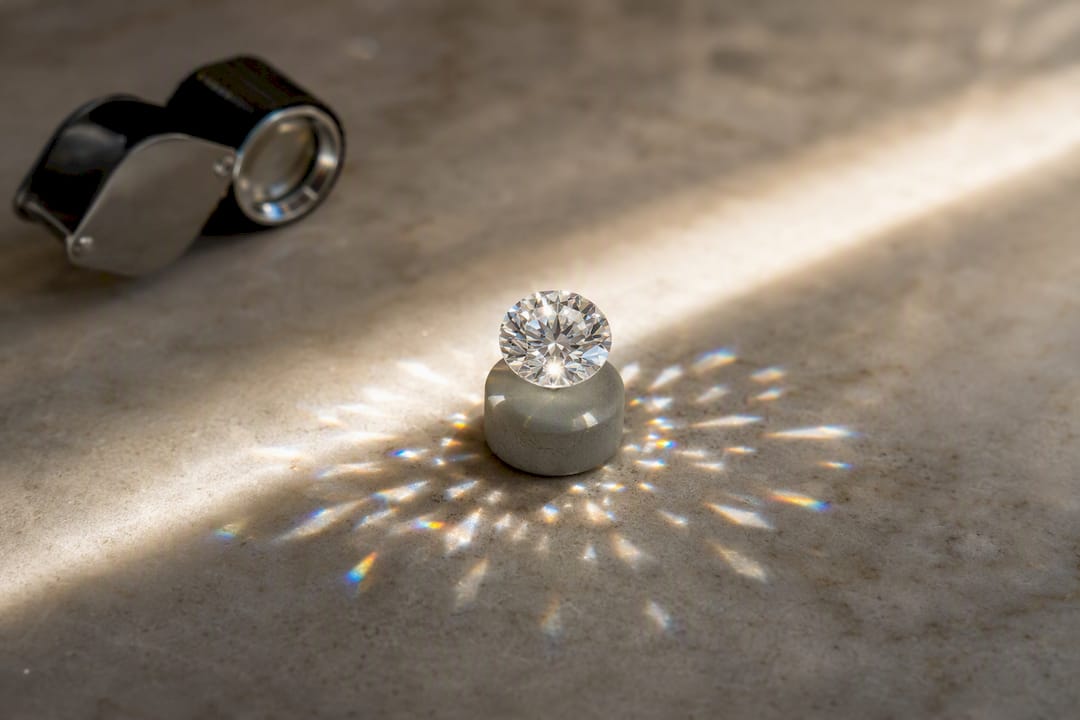
Cut is where your money buys the most visible result. An Excellent or Ideal cut grade controls how light moves through the stone, and that’s what produces the sparkle people notice across a room. Color and clarity matter too, but the differences get harder to see with the naked eye once you’re inside a certain range.
Consumer research backs this up directly: Consumers’ Checkbook’s diamond guide found that many shoppers overspend on color or clarity grades that aren’t visibly different from a step or two below them, and recommends most buyers avoid paying a premium for color above F or clarity better than SI1.
Practical trade-offs that keep more money in your pocket:
- Prioritize an Excellent or Ideal cut grade over marginal upgrades in color or clarity.
- Consider G to H color and SI1 clarity as a sensible range where the visual difference from higher grades is minimal.
- Avoid listings that advertise a grade range (“G to I color, SI1 to SI2 clarity”) instead of exact grades for one specific stone. A range means you don’t know what you’re actually buying until it ships.
- Compare two stones with identical 4Cs across different sellers. Price gaps at that point usually reflect markup or return policy, not diamond quality.
Pro Tip: Print two listings side by side with the same carat, cut, color, and clarity. If one costs 20% more, ask why. The answer is usually the seller’s overhead, not a hidden quality difference. For a closer look at how color and clarity interact, this comparison guide breaks down the trade-offs in more detail.
What Seller Protections Should You Require?
The diamond itself is only half the equation. The seller’s policies determine what happens if something goes wrong, and that’s where a lot of online purchases quietly fall apart.
- Insist on a written return policy, insured and signature-required shipping, and clear refund terms if any custom work was involved.
- Pay by credit card or through a payment method with built-in buyer protection. Avoid wire transfers to sellers you can’t easily research, especially those based entirely overseas.
- A seller with a documented U.S.-based presence gives you clearer legal recourse than one operating solely from abroad, since disputes and refunds are far easier to enforce domestically.
- Treat these as red flags: no specific report number, only grade ranges listed, no visible return policy, or a seller who won’t show you the full report before you buy.
The FTC’s consumer guidance on gemstone purchases makes the same point: check seller paperwork, confirm return policies in writing, and understand that where a seller is located affects how much recourse you actually have if a dispute arises.
What Happens After the Diamond Arrives?
Don’t treat delivery as the finish line. It’s the point where verification actually gets confirmed.
- Have a qualified independent appraiser confirm the measurements and inclusion plot against the GIA report, and generate an insurance appraisal document.
- Add the stone to your homeowner’s or renter’s insurance policy, or buy standalone jewelry coverage, and keep the appraisal paperwork on file.
- If the stone doesn’t match what was listed, follow the seller’s return process immediately, keep every piece of documentation, and consider a credit card dispute or a complaint to the FTC, the Better Business Bureau, or the Jewelers Vigilance Committee if the seller won’t cooperate.
A 30-day-plus return window matters here for a reason beyond convenience: it’s the window that gives you time to actually get an appraisal done before your recourse expires.
Why Verification Beats Impulse Buying
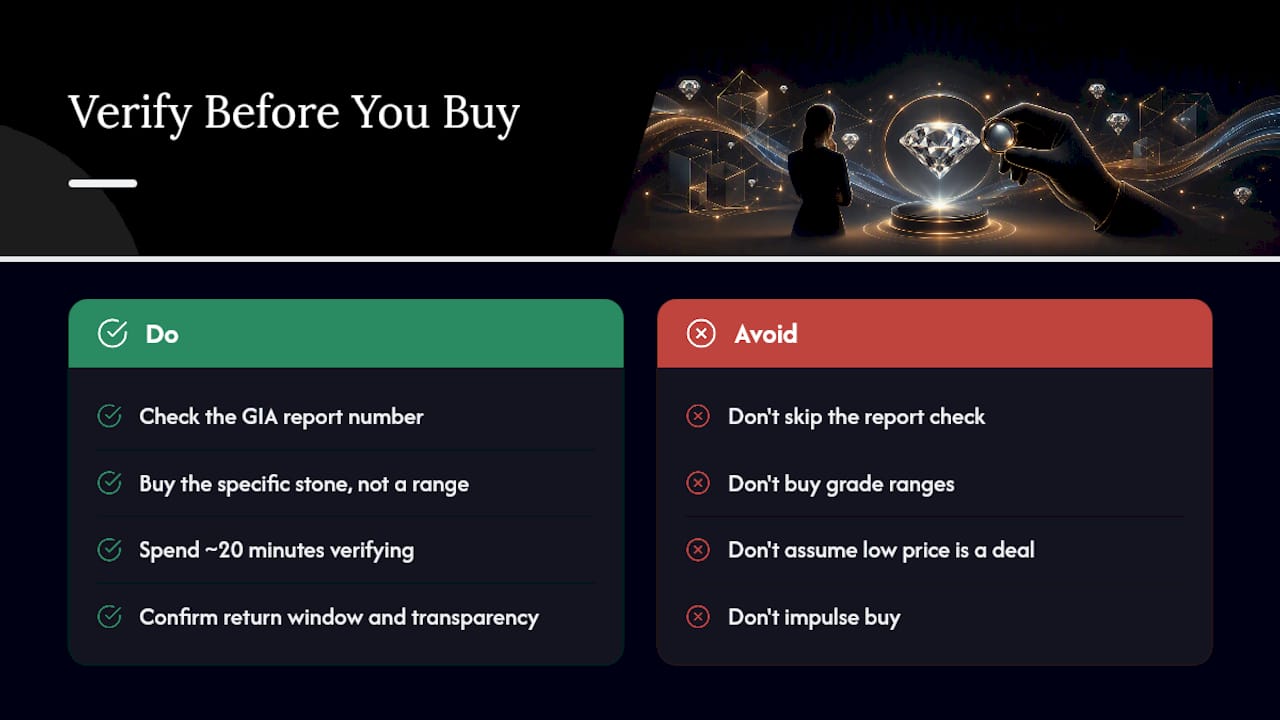
Some sellers build their policies, including return windows and commitments to transparent grading information, around the principle that a diamond purchase should hold up to scrutiny, not just to a nice photo.
The buyers who get burned online almost never lose because a certified stone was fake. They lose because they skipped a step. They didn’t check the report number, or they bought from a listing with a grade range instead of a specific stone, or they assumed a low price meant a deal instead of a shortcut. Verification takes twenty extra minutes. Impulse decisions can cost you thousands.
— Andrew
Where to Start Browsing With Confidence
Superjeweler gives you a straightforward alternative to guessing your way through unfamiliar listings: every diamond category is built around the same verification standards this guide walks through, so you’re not starting from scratch on trust.

If you’re just getting oriented, the cheap engagement rings collection is a low-pressure place to see certified stones set at accessible price points, while the full engagement rings category lets you compare settings alongside loose stone specifications. If you have questions about a specific report number or want help matching a stone’s measurements to its paperwork, Superjeweler’s customer and gemologist support team can walk through the verification steps with you directly. Start by browsing certified stones with full 4C specifications listed, and reach out before you buy if anything on a listing looks incomplete.
Sources
- GIA Report Check
- Diamonds Shopping Guide – National — Consumers’ Checkbook
- Buying Gemstones, Diamonds, and Pearls — FTC
FAQ
Is it safe to buy diamonds online?
Yes, provided you verify the GIA report through Report Check, confirm the stone’s imaging and laser inscription, and buy from a seller offering a 30-day-or-longer return policy and insured shipping.
What is the best website to buy real diamonds?
Look for a site that publishes full GIA reports, exact 4C specifications per stone, and high-resolution or 360° imagery rather than grade ranges. Superjeweler’s engagement ring and diamond categories are built around these same transparency standards.
How much is a 1 carat diamond worth today?
Pricing varies widely based on cut, color, clarity, and seller markup, which is exactly why comparing identical 4C specifications across sellers matters more than chasing a single price point.
Which website is the best for buying diamond jewelry?
The safest choice is a seller with U.S.-based recourse, transparent per-stone grading reports, and a written return policy of 30 days or more, since those three factors determine what happens if the stone doesn’t match its listing.
Do I need an independent appraisal if the diamond already has a GIA report?
Yes. A GIA report confirms the grading is accurate, but an independent appraisal after delivery confirms that the specific stone you received matches that report and establishes its value for insurance purposes.
Recommended
- How to verify diamond authenticity: guide for buyers
- What Is a Diamond Report? Your Complete Buyer’s Guide
