Shopping for a diamond necklace can feel overwhelming when so many terms sound alike but mean something different. For buyers in the United States who know engagement rings but want to make smart choices beyond the basics, understanding clear diamond necklace terminology is essential. By learning the names of each part, as well as popular diamond shapes and styles, you gain the confidence to compare designs, metals, and settings and make your jewelry investment truly count. Diamond necklace terminology is the first step toward a well-informed decision.
Table of Contents
- Defining Diamond Necklace Terminology Clearly
- Popular Diamond Necklace Styles and Types
- Essential Parts and Construction Terms Explained
- Diamond Quality Grading and Necklace Value
- Common Missteps When Choosing or Describing Necklaces
Key Takeaways
| Point | Details |
|---|---|
| Understanding Terminology | Familiarize yourself with key diamond necklace components and terminology to make informed purchasing decisions. |
| Metal Selection Matters | Choose the right metal for aesthetics and durability; consider options like white gold, yellow gold, rose gold, or platinum. |
| Know the 4Cs | Always assess diamonds based on Cut, Color, Clarity, and Carat weight to determine overall quality and value. |
| Avoid Common Mistakes | Conduct personal inspections and understand grading reports to prevent costly errors in your jewelry selection. |
Defining Diamond Necklace Terminology Clearly
Understanding diamond necklace terminology is crucial for making an informed jewelry purchase. Whether you’re shopping for a special occasion or investing in a timeless piece, knowing the key components and descriptive language will help you navigate the world of diamond necklaces with confidence.
A diamond necklace consists of several fundamental components that define its overall design and value. Necklace terminology encompasses various elements including the chain, pendant, and decorative elements. The primary parts typically include:
- Chain: The foundational metal structure that supports the entire piece
- Pendant: A decorative hanging element attached to the chain
- Clasp: The mechanism used to secure the necklace around the neck
- Setting: The metal framework holding the diamond in place
The metal used in diamond necklaces plays a significant role in both aesthetics and durability. Common metals include white gold, yellow gold, rose gold, and platinum. Each metal offers unique characteristics in terms of color, strength, and price point.
Here’s a quick reference comparing popular diamond necklace metals:
| Metal Type | Appearance | Durability | Typical Price Range |
|---|---|---|---|
| White Gold | Bright, silvery | Moderate | Mid-range |
| Yellow Gold | Warm, classic | Moderate | Mid-range |
| Rose Gold | Pinkish, trendy | Moderate | Mid-range |
| Platinum | Silvery, luxurious | Very durable | Premium |
This table helps clarify how metal choice impacts style, strength, and investment.
Diamond placement and configuration also contribute to a necklace’s overall design. Some popular diamond necklace styles include solitaire pendants, multi-stone designs, and intricate pavé settings that feature numerous small diamonds covering the surface.
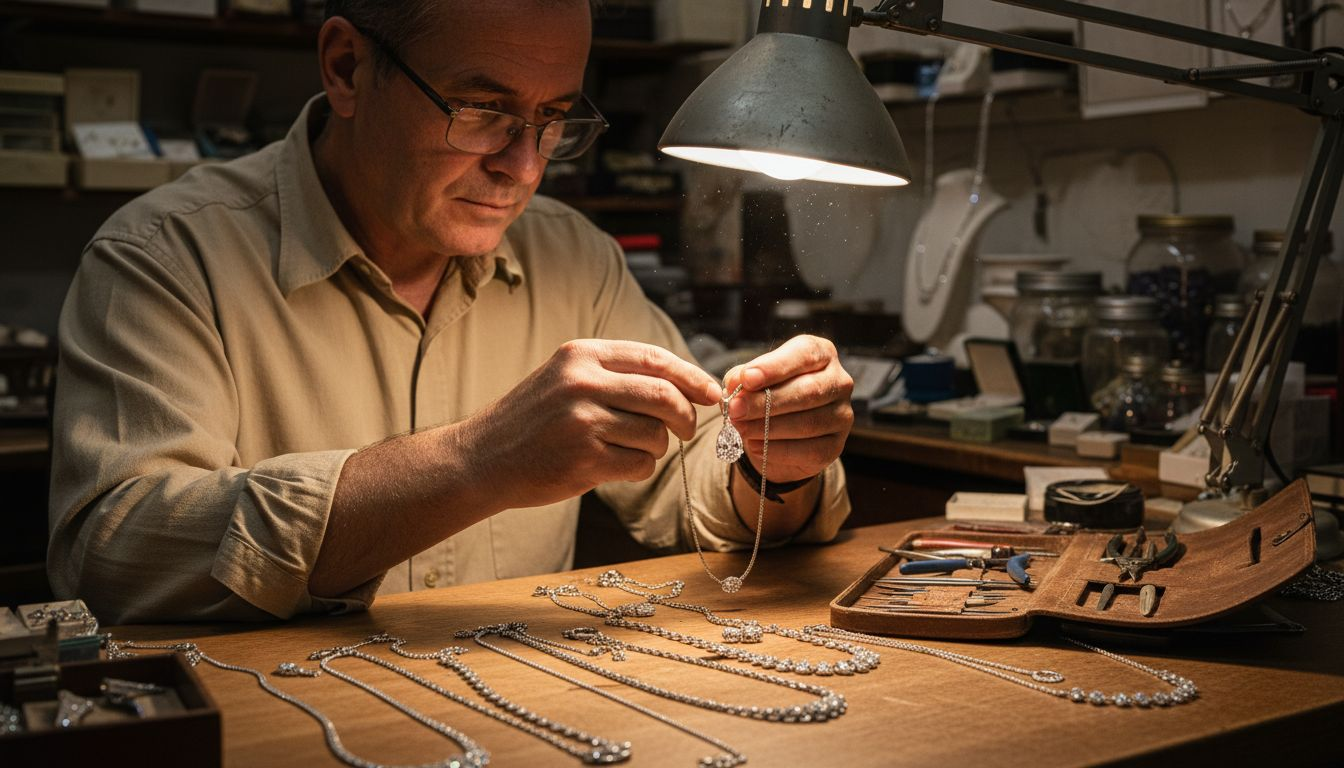
Pro tip: Always examine the chain’s length and thickness to ensure the necklace complements your personal style and neckline.
Popular Diamond Necklace Styles and Types
Diamond necklaces come in an impressive array of styles that cater to different tastes, occasions, and personal preferences. Diamond cut shapes play a crucial role in determining a necklace’s overall aesthetic and brilliance.
Some of the most popular diamond necklace styles include:
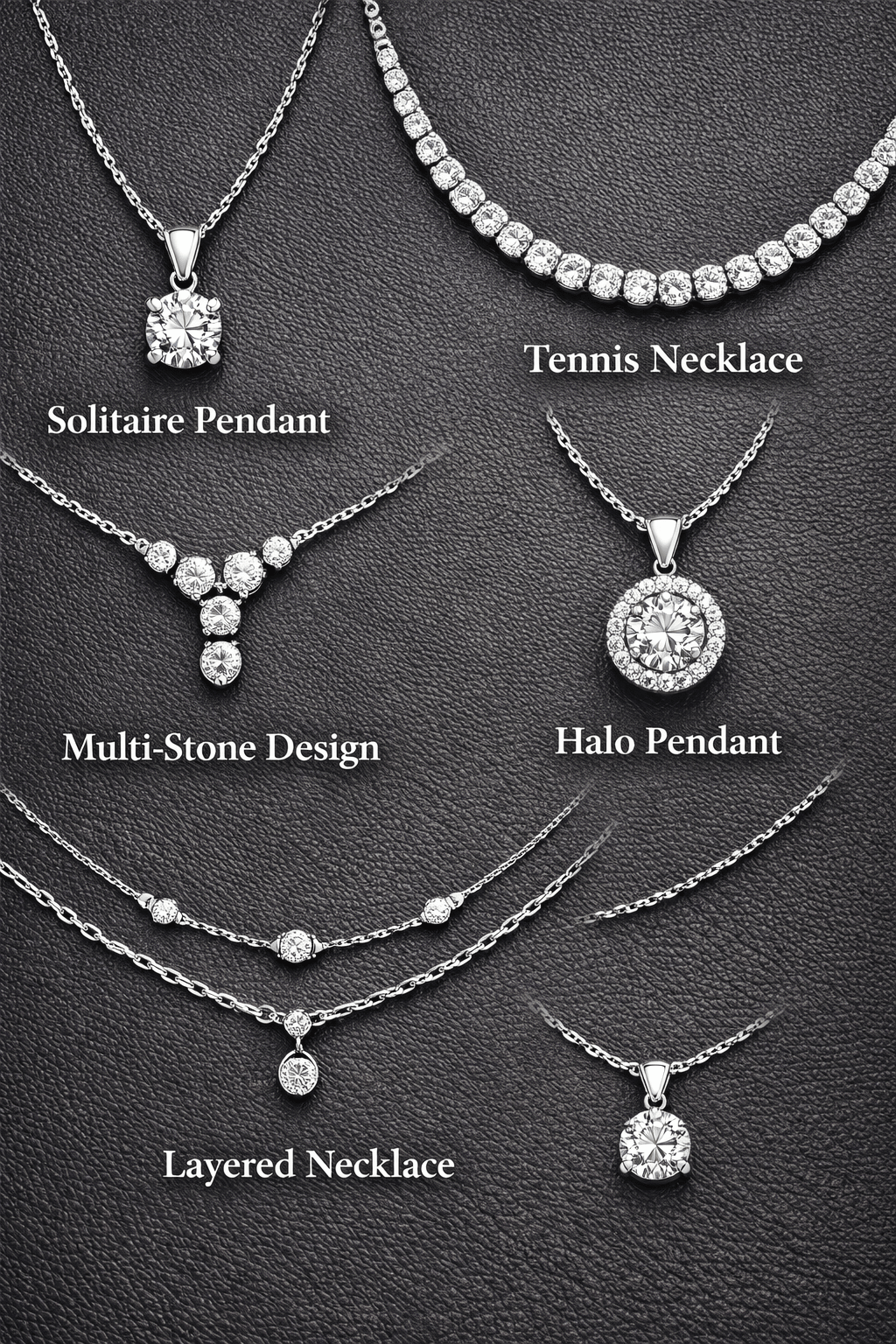
- Solitaire Pendant: A classic design featuring a single diamond as the centerpiece
- Tennis Necklace: A continuous strand of diamonds set in a uniform, elegant line
- Halo Pendant: A central diamond surrounded by smaller accent stones
- Multi-Stone Design: Necklaces featuring several diamonds in various arrangements
- Layered Necklace: Multiple chains with different diamond placements
The most sought-after diamond shapes for necklaces are:
- Round Brilliant: Maximum sparkle and traditional appeal
- Princess Cut: Modern, angular design with sharp edges
- Oval: Elongated shape that creates a slimming effect
- Pear-Shaped: Teardrop design with elegant tapering
- Emerald Cut: Vintage-inspired rectangular shape with step-cut facets
Diamond tennis necklaces have a particularly interesting history and design. Tennis necklace styles offer a timeless and versatile option for both formal and casual wear, featuring a continuous line of diamonds that creates a stunning, shimmering effect.
Each diamond necklace style communicates a unique personality and aesthetic. The choice depends on personal style, occasion, and individual preferences in diamond cut, setting, and overall design.
Pro tip: Consider your neck length and personal style when selecting a diamond necklace to ensure the most flattering and comfortable fit.
Essential Parts and Construction Terms Explained
Understanding the intricate construction of diamond necklaces requires familiarity with key technical terms and components. Jewelry construction terminology provides insight into the sophisticated craftsmanship behind these elegant accessories.
The fundamental components of a diamond necklace include:
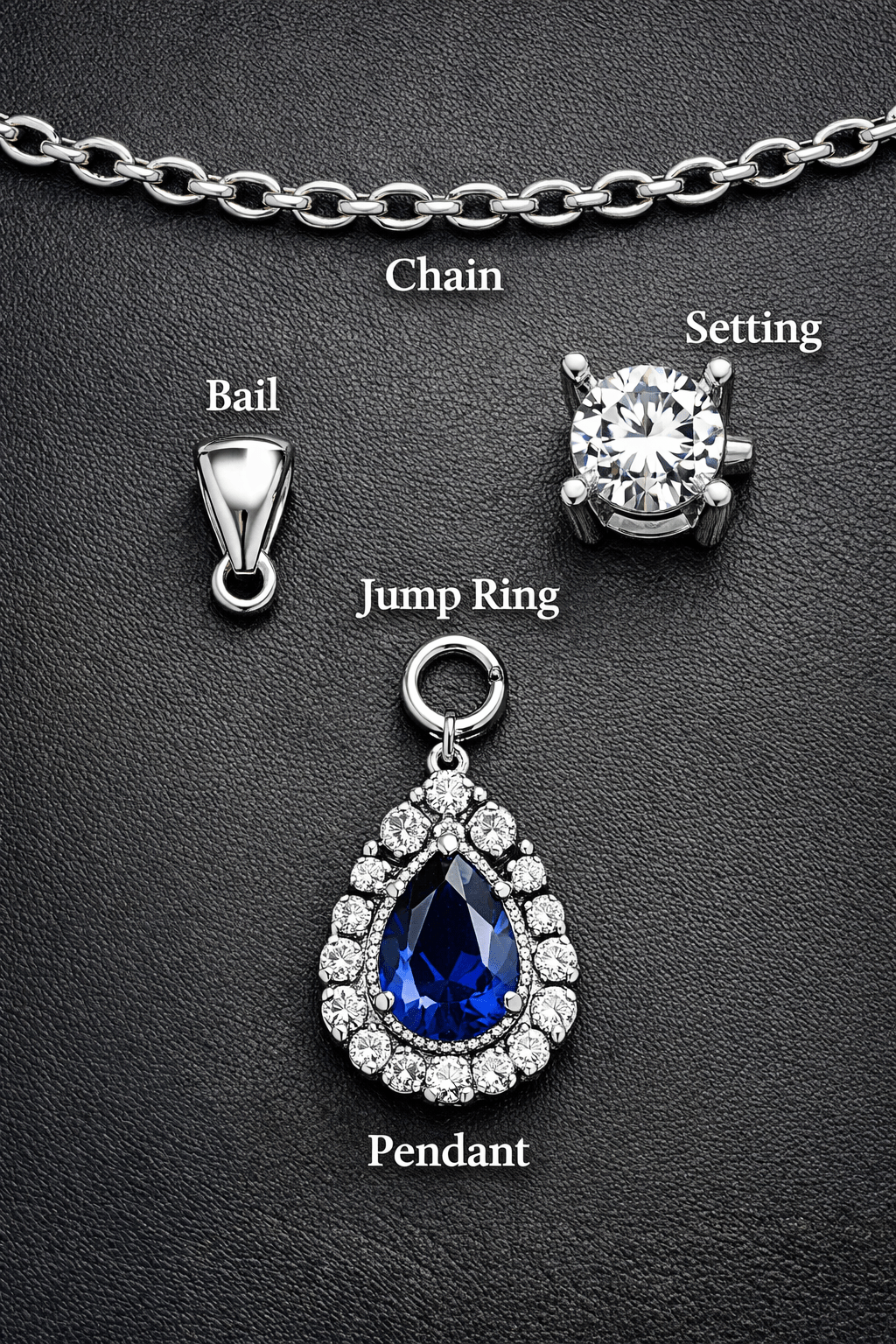
- Chain: The primary metal structure supporting the entire piece
- Setting: The metal framework that secures individual diamonds
- Bail: The connector that attaches a pendant to the chain
- Jump Ring: Small metal ring used to connect components
- Pendant: Decorative element hanging from the main chain
Clasp types are critical for both functionality and design. The most common clasp varieties are:
- Lobster Claw: Spring-loaded mechanism with high security
- Box Clasp: Sliding closure with a decorative box-like appearance
- Toggle Clasp: T-shaped design that provides a distinctive look
- Magnetic Clasp: Convenient but less secure option
- Barrel Clasp: Cylindrical closure that twists together
Necklace fastener designs have evolved significantly, with modern clasps balancing aesthetic appeal and practical functionality. The choice of clasp can impact both the necklace’s wearability and overall style.
Diamond settings play a crucial role in a necklace’s appearance and durability. Common setting types include prong, bezel, pavé, and channel settings, each offering unique visual and structural characteristics.
Pro tip: Inspect the clasp mechanism carefully when purchasing a diamond necklace, ensuring it provides both security and ease of use.
Diamond Quality Grading and Necklace Value
Diamond certification is the cornerstone of understanding a diamond necklace’s true value and quality. The comprehensive evaluation process involves assessing multiple critical factors that determine a diamond’s overall worth and aesthetic appeal.
The 4Cs represent the fundamental criteria for diamond grading:
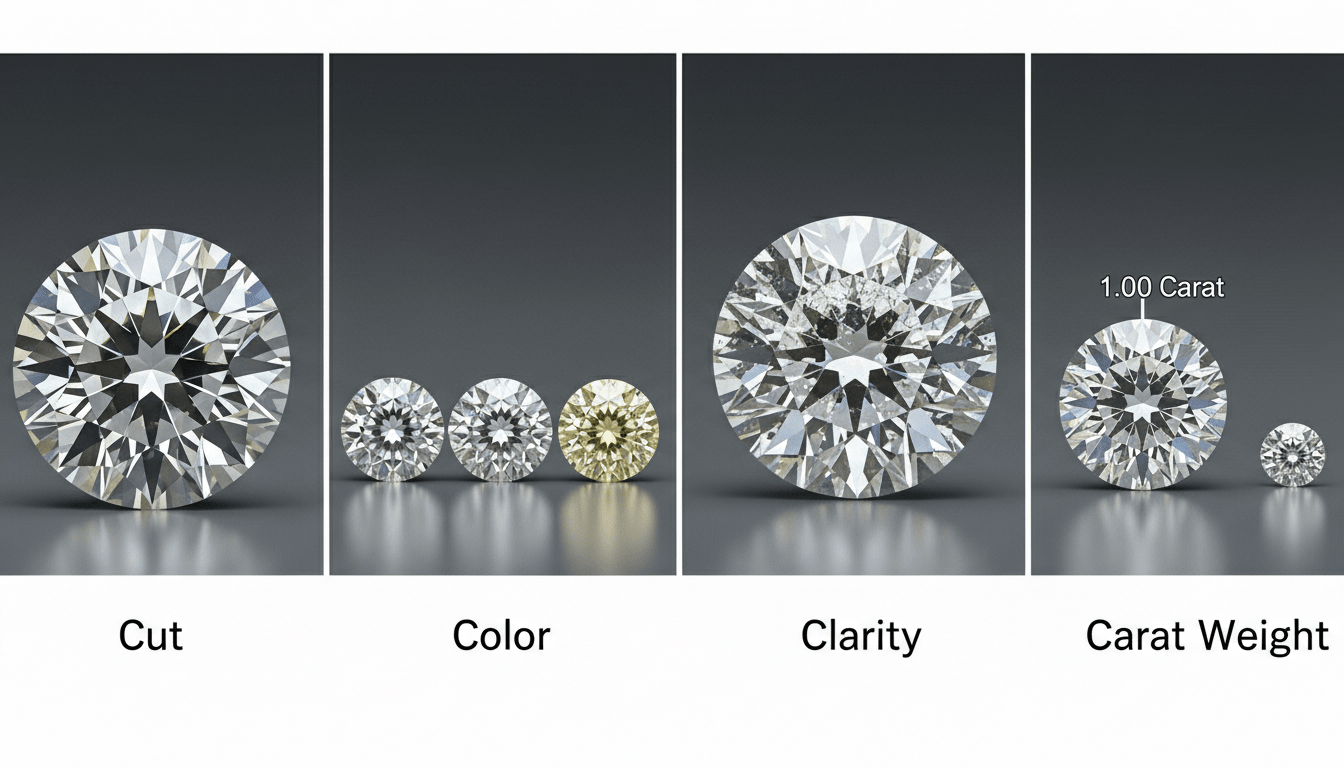
- Cut: Determines the diamond’s brilliance and sparkle
- Color: Ranges from colorless to light yellow or brown
- Clarity: Measures internal and external imperfections
- Carat Weight: Indicates the diamond’s physical size and mass
Grading scales provide detailed insights into each of these characteristics:
- Cut Grade: Ranges from Excellent to Poor
- Color Grade: Spans from D (colorless) to Z (light color)
- Clarity Grade: From Flawless to Included
- Carat Weight: Precise measurement in metric carats
American Gem Society’s grading system offers a comprehensive 0-10 scale that helps buyers understand nuanced diamond quality. The cut grade is particularly crucial, as it directly impacts a diamond’s ability to reflect and refract light, creating that coveted brilliant sparkle.
Diamond necklace value is not just about individual stone quality but also about the overall craftsmanship, metal type, and design complexity. Factors like diamond placement, setting style, and total carat weight significantly influence the final price.
For buyers, understanding diamond grading can simplify necklace selection. Here’s a summary of the 4Cs grading system:
| Grading Aspect | Typical Scale | Impact on Necklace Value |
|---|---|---|
| Cut | Excellent to Poor | Sparkle and brilliance |
| Color | D (colorless) to Z | Visual purity and rarity |
| Clarity | Flawless to Included | Flaws and transparency |
| Carat Weight | Measured in carats | Size and overall presence |
Pro tip: Always request and carefully review the diamond grading report before making a purchase, ensuring you understand the specific quality characteristics of your necklace.
Common Missteps When Choosing or Describing Necklaces
Diamond clarity assessment represents one of the most challenging aspects of necklace selection, where buyers frequently make critical errors that impact their ultimate satisfaction and investment.
The most common missteps when choosing diamond necklaces include:
- Overlooking Clarity Details: Ignoring subtle imperfections that affect diamond quality
- Misunderstanding Grading Reports: Misinterpreting technical terminology
- Focusing Solely on Carat Weight: Neglecting cut, color, and clarity
- Skipping Personal Inspection: Relying exclusively on online descriptions
- Ignoring Metal Quality: Concentrating only on diamond characteristics
Buyers often make significant mistakes in understanding and describing diamond characteristics:
- Confusing diamond cut with diamond shape
- Misinterpreting clarity grade descriptions
- Overemphasizing carat weight
- Using incorrect technical terminology
- Failing to consider overall necklace design
Diamond buying guide recommendations emphasize the critical importance of comprehensive evaluation. Understanding nuanced details prevents costly purchasing mistakes and ensures a more informed selection process.
Professional jewelers recommend thorough research and personal examination to avoid common pitfalls. Each diamond necklace tells a unique story, and understanding its intricate details helps buyers make more confident and intelligent purchasing decisions.
Pro tip: Request professional certification and conduct a detailed visual inspection before finalizing any diamond necklace purchase.
Discover and Choose the Perfect Diamond Necklace with Confidence
Navigating diamond necklace terminology and understanding the 4Cs can feel overwhelming when searching for that ideal sparkling piece. Many buyers struggle with identifying the right cut, clarity, setting, and metal type to match their personal style and budget. At SuperJeweler.com, we simplify this journey by offering a wide range of carefully curated diamond necklaces that highlight those essential qualities. Whether you prefer a classic solitaire pendant or a dazzling tennis necklace, you can shop with clarity and confidence.

Explore our extensive collection of diamond necklaces today at SuperJeweler.com and enjoy affordable pricing, customizable options, and expert guidance. Take control of your jewelry purchase by understanding the terminology and quality factors that truly matter. Start crafting your timeless look now and experience unparalleled world-class service that puts you first.
Frequently Asked Questions
What are the main components of a diamond necklace?
A diamond necklace typically consists of a chain, pendant, clasp, and setting. The chain is the foundational structure, the pendant is the decorative element, the clasp secures the necklace around the neck, and the setting holds the diamond in place.
How does the choice of metal affect a diamond necklace?
The choice of metal impacts both the aesthetics and durability of a diamond necklace. Common metals include white gold, yellow gold, rose gold, and platinum, each offering unique characteristics in terms of appearance, strength, and price.
What are the popular styles of diamond necklaces?
Popular styles of diamond necklaces include solitaire pendants, tennis necklaces, halo pendants, multi-stone designs, and layered necklaces. Each style caters to different tastes and occasions.
What does the 4Cs grading system mean for diamond quality?
The 4Cs grading system evaluates a diamond’s cut, color, clarity, and carat weight. Understanding these factors helps buyers assess the diamond’s overall quality and value, impacting the appearance and price of a necklace.
Recommended
- Shop Perfect Diamond Tennis Necklace At Amazing Prices | SuperJeweler
- Diamonds By The Yard Necklace | Huge Selection At Low Prices From SuperJeweler
- What Is a Diamond Necklace? Styles, Value, and Trends
- Clearance Necklaces
