Choosing the right men’s wedding band should be exciting, not overwhelming. With countless styles, materials, and price points available, many grooms feel paralyzed by options. This guide cuts through the confusion, helping you confidently select a band that matches your personal style, survives daily wear, and fits comfortably within your budget.
Table of Contents
- Understanding Materials And Durability
- Style Guidance: Matching Your Personality And Lifestyle
- Budget And Pricing Expectations
- Sizing And Comfort Considerations
- Customization Possibilities
- Common Mistakes And Pitfalls To Avoid
- Maintenance And Care For Longevity
- Find Your Perfect Men’s Wedding Band At SuperJeweler
Key takeaways
| Point | Details |
|---|---|
| Material impacts durability and cost | Tungsten and titanium offer scratch resistance at lower prices, while gold and platinum provide traditional elegance at premium costs. |
| Style reflects personality | Choose finishes like matte, polished, or brushed that align with your wardrobe and daily activities. |
| Proper sizing prevents returns | Professional measurement and comfort-fit designs ensure all-day wearability without irritation. |
| Customization adds meaning | Engravings and mixed metals create unique bands but may extend delivery time and increase price. |
| Regular care extends lifespan | Simple cleaning routines and annual professional inspections keep your band looking new. |
Understanding materials and durability
The metal you choose determines how your wedding band looks, feels, and performs over decades of wear. Each material offers distinct advantages and tradeoffs.
Gold remains the traditional choice, available in yellow, white, and rose variations. It’s soft enough to scratch with regular wear but carries timeless appeal. Platinum delivers similar aesthetics with superior durability and hypoallergenic properties, though it commands higher prices. For budget-conscious grooms seeking maximum toughness, tungsten carbide resists scratches and daily wear better than precious metals. Titanium provides lightweight comfort with excellent corrosion resistance, perfect for active lifestyles.
Cobalt chrome offers a middle ground between precious metals and alternative materials. It maintains a bright finish similar to white gold without the maintenance requirements.
Material comparison:
| Metal | Durability | Price Range | Hypoallergenic | Maintenance |
|---|---|---|---|---|
| Gold | Low-Medium | $500-$3000+ | No | High |
| Platinum | High | $1000-$4000+ | Yes | Medium |
| Tungsten | Very High | $100-$500 | Yes | Low |
| Titanium | High | $150-$600 | Yes | Low |
| Cobalt | High | $200-$700 | No | Low |
Consider your daily activities when selecting materials. Construction workers, mechanics, and gym enthusiasts benefit from scratch-resistant options like tungsten and titanium. Office professionals might prefer the refined look of platinum or gold.
Pro Tip: If you have metal sensitivities, request nickel-free options. Many white gold alloys contain nickel, which causes skin reactions in sensitive individuals.
Some grooms incorporate diamonds or gemstones into their bands for added distinction. This customization works best with softer metals that jewelers can easily set stones into.
Style guidance: matching your personality and lifestyle
Your wedding band speaks volumes about your personal aesthetic. The right style complements your wardrobe while reflecting your individuality.
Finish options dramatically alter a band’s appearance. Polished surfaces create mirror-like shine, ideal for formal dressers. Matte finishes deliver understated sophistication that hides minor scratches. Brushed textures fall between these extremes, offering subtle dimension that catches light without overwhelming brilliance.
Classic designs feature simple, smooth profiles without embellishment. They pair effortlessly with any outfit and never go out of fashion. Modern styles incorporate geometric patterns, mixed finishes, or asymmetrical elements for contemporary edge. Rugged bands feature hammered textures, wood inlays, or industrial details that appeal to outdoor enthusiasts.
Consider how your band coordinates with your partner’s ring. Some couples prefer matching sets, while others choose complementary designs that share common elements like metal type or width.
Style selection factors:
- Daily wardrobe: casual, business, or formal
- Job requirements and workplace environment
- Existing jewelry preferences
- Desire for understated or statement piece
- Coordination with partner’s ring
Band width affects both appearance and comfort. Narrow bands (2-4mm) suit smaller fingers and minimalist preferences. Medium widths (5-7mm) offer versatility for most hand sizes. Wide bands (8mm+) make bold statements but require careful sizing since they cover more finger surface.
Pro Tip: Visit a jeweler to try different widths on your finger. What looks good online might feel uncomfortable in person, especially if you’re not accustomed to wearing rings.
Edge profiles range from flat to heavily rounded. Flat edges create modern, architectural looks. Rounded (comfort-fit) edges reduce friction against adjacent fingers. Beveled edges add visual interest through angled transitions. Learn more about selecting wedding bands that match your specific needs.
Budget and pricing expectations
Setting a realistic budget prevents overspending while ensuring you get quality craftsmanship. Men’s wedding bands vary dramatically in price based on material, brand, and customization.
Entry-level tungsten and titanium bands start around $100 to $300. These deliver excellent durability without precious metal premiums. Mid-range options in cobalt, palladium, or lower-karat gold run $300 to $800. Premium platinum and high-karat gold bands typically cost $1000 to $4000 or more.
Brand names add markup that doesn’t necessarily improve quality. Independent jewelers often provide better value than luxury retailers. Online specialists reduce overhead costs, passing savings to customers.
Budget considerations:
- Material costs: precious metals command higher prices
- Brand premiums: designer names increase costs 50-200%
- Customization fees: engravings add $50-150, inlays add $200-500
- Sizing adjustments: future resizing may cost $75-200 depending on metal
- Warranties and guarantees: comprehensive coverage adds peace of mind
Many couples allocate 3-5% of their total wedding budget to rings. However, personal priorities should guide spending. Some grooms prefer investing in quality bands they’ll wear daily, while others prioritize other wedding elements.
Affordable doesn’t mean cheap. Reputable online jewelers offer certified metals and craftsmanship at competitive prices. Review the wedding ring checklist for 2026 to allocate your budget wisely across all ring-related expenses.
Financing options spread costs over time, though interest charges increase total expense. Cash purchases often qualify for discounts. Some jewelers offer trade-in programs for future upgrades.
Sizing and comfort considerations
An incorrectly sized ring causes constant frustration. Too tight restricts circulation and causes swelling. Too loose risks loss during daily activities.

Professional jewelers use calibrated ring sizers to measure your finger accurately. Request measurement at different times, since fingers swell throughout the day and across seasons. Evening measurements typically run slightly larger than morning ones.
Accurate sizing steps:
- Visit a jeweler for professional measurement using metal sizers
- Measure the same finger you’ll wear the ring on (typically left ring finger)
- Take measurements at different times of day for consistency
- Account for knuckle size if it’s significantly larger than finger base
- Remeasure if you’ve recently gained or lost weight
Comfort-fit bands feature rounded interior edges that slide on easier and reduce friction. Standard-fit rings have flat interiors that some find uncomfortable for extended wear. Most grooms prefer comfort-fit designs, especially for wider bands.
Band width affects sizing. Wider rings cover more finger surface, requiring slightly larger sizes than narrow bands for the same comfortable fit. When transitioning from a narrow to wide band, you might need to increase half a size.
Common sizing mistakes:
- Measuring fingers when cold or immediately after exercise
- Using online printable sizers with inaccurate printer settings
- Measuring the wrong finger or wrong hand
- Ignoring knuckle size when choosing ring dimensions
- Failing to account for band width when sizing
Different metals have varying resize capabilities. Tungsten and titanium cannot be resized due to their hardness. Gold and platinum resize easily if your finger size changes. Consider this limitation when selecting materials, especially if weight fluctuations are likely.
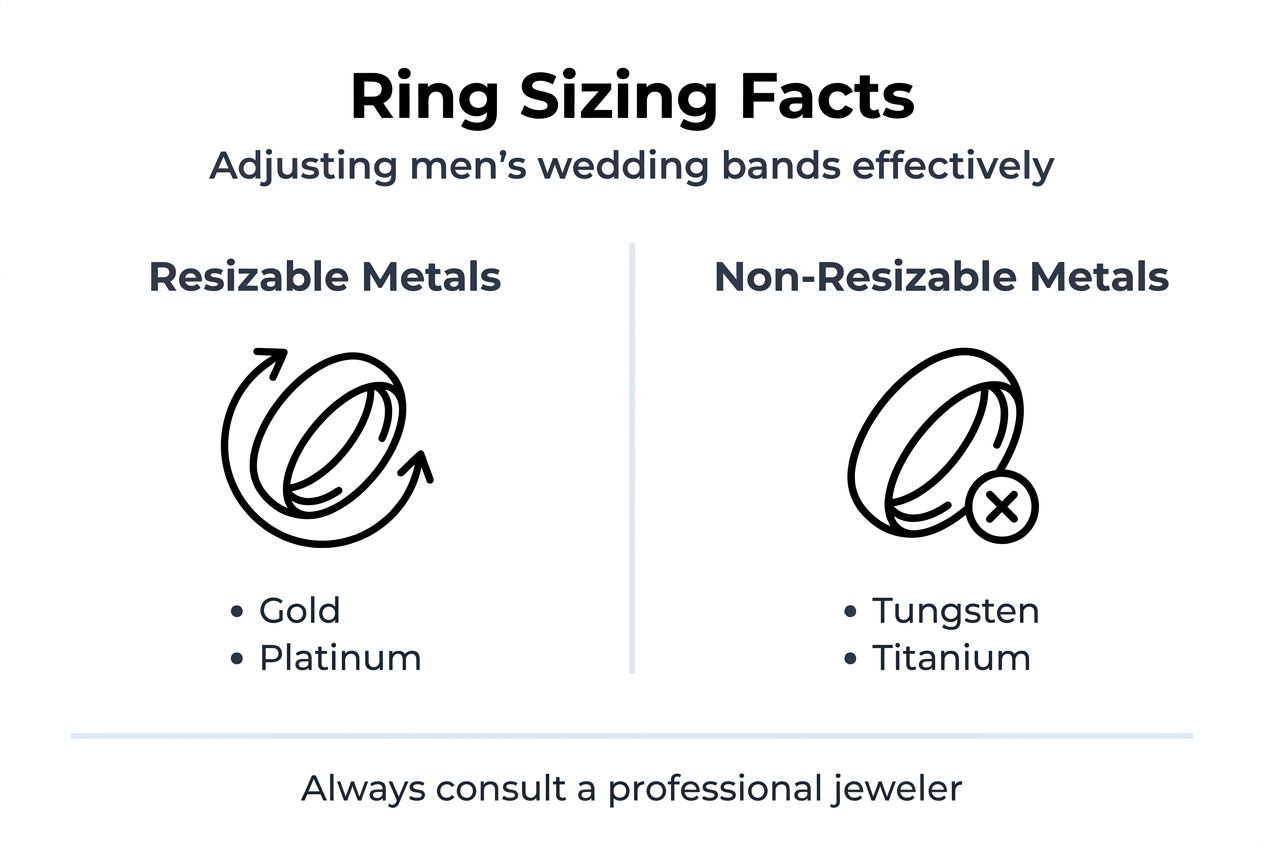
Explore comprehensive guides for selecting wedding bands that ensure proper fit. Additional ring selection resources help you make informed decisions about comfort and sizing.
Customization possibilities
Personalization transforms a standard band into a meaningful symbol of your relationship. Customization options range from subtle to dramatic.
Engraving remains the most popular personalization. Inside-band engravings keep messages private while adding sentimental value. Common choices include wedding dates, initials, coordinates of special locations, or short phrases. Character limits vary by band width, typically 15-30 characters.
Mixed metals create visual interest through contrasting inlays or edges. Rose gold inlays in white gold bands provide warm accents. Black ceramic stripes in titanium deliver modern edge. These combinations often cost $200-500 more than single-metal designs.
Texture customization includes hammered finishes, wood grain patterns, or carbon fiber inlays. Outdoor enthusiasts often choose bands incorporating materials like whiskey barrel wood or meteorite fragments. These unique elements add conversation value.
Customization options:
- Inside engravings: dates, initials, coordinates, phrases
- Metal mixing: contrasting inlays or edges
- Stone setting: diamonds, birthstones, or alternative gems
- Texture additions: wood, carbon fiber, meteorite
- Finish combinations: polished with matte accents
Customized bands typically require 2-6 weeks for production versus immediate availability for stock rings. Rush orders incur additional fees. Understand why couples buy wedding bands and how customization adds meaning to the purchase.
Some retailers offer digital previews of customizations before production. This reduces revision requests and ensures you get exactly what you envision. Learn to customize your wedding band affordably in 2026 without exceeding your budget.
Balance personalization with practical concerns. Highly customized rings may be difficult to replace if lost. Extreme customizations might look dated in future years. Choose meaningful elements with timeless appeal.
Common mistakes and pitfalls to avoid
Avoiding frequent errors saves money, time, and frustration. Learn from others’ missteps to make smart choices.
Incorrect sizing causes 28% of wedding band returns. Grooms often guess their size or use unreliable measurement methods. Always get professionally sized before ordering, especially for non-resizable metals like tungsten.
Choosing impractical materials for your lifestyle leads to disappointment. Soft gold bands scratch easily during manual labor. Ultra-hard tungsten rings can shatter under extreme impact. Match material properties to your daily activities.
Skipping comfort-fit options saves minimal money while sacrificing wearability. The small upcharge ($20-50) prevents years of irritation from sharp interior edges. Nearly all jewelers recommend comfort-fit for bands worn daily.
Mistakes to avoid:
- Ordering without professional sizing verification
- Selecting materials unsuited to your job or hobbies
- Ignoring comfort-fit benefits to save small amounts
- Overlooking metal allergies that cause skin reactions
- Neglecting to ask about warranty coverage and return policies
- Purchasing from retailers without verified customer reviews
Metal allergies affect approximately 10-15% of the population. Nickel causes most reactions, often present in white gold alloys. Test for sensitivities before committing to a metal type. Hypoallergenic options include platinum, titanium, and high-purity gold.
Pro Tip: Order 6-8 weeks before your wedding to allow time for sizing adjustments or customizations. Last-minute orders limit your options and may incur rush fees.
Neglecting maintenance accelerates wear damage. Even durable metals benefit from regular cleaning and inspection. Dirt buildup dulls finishes. Loose settings risk stone loss. Simple care routines preserve your investment.
Maintenance and care for longevity
Proper maintenance keeps your wedding band looking new for decades. Most care requires minimal effort and no special equipment.
Regular cleaning removes oils, lotions, and dirt that accumulate daily. Create a simple cleaning solution using warm water and mild dish soap. Soak your ring for 20-30 minutes, then gently scrub with a soft toothbrush. Rinse thoroughly and dry with a lint-free cloth.
Maintenance routine:
- Clean your band weekly using mild soap and warm water
- Remove your ring during activities that could damage it (weightlifting, construction work)
- Inspect monthly for scratches, dents, or loose elements
- Schedule annual professional cleaning and inspection
- Store separately from other jewelry to prevent scratching
Avoid harsh chemicals that damage metals. Chlorine weakens gold alloys over time. Bleach discolors many metals. Remove your ring before swimming, cleaning, or working with chemicals.
Different metals require specific care approaches. Gold and platinum benefit from professional polishing every 1-2 years to restore shine. Tungsten and titanium need minimal maintenance but cannot be polished if deeply scratched. Brushed finishes require special techniques to maintain their texture.
Professional servicing identifies problems before they worsen. Jewelers check for thinning metal, loose settings, or structural issues. They can re-apply special finishes or coatings that wear over time. Most jewelers offer free inspections to existing customers.
Consider insurance for expensive bands. Homeowner’s or renter’s policies often cover jewelry with added riders. Specialized jewelry insurance provides comprehensive protection against loss, theft, or damage. Document your purchase with photos and receipts.
Ultrasonic cleaners work well for most metals but can damage certain stone settings or soft materials. Consult your jeweler before using mechanical cleaning devices. When in doubt, stick with gentle hand cleaning.
Find your perfect men’s wedding band at SuperJeweler
Ready to find a wedding band that matches your style, budget, and lifestyle? SuperJeweler offers an extensive selection of men’s wedding bands crafted from premium materials at accessible prices.
Explore durable tungsten and titanium options that withstand daily wear without sacrificing style. Discover elegant diamond wedding bands for grooms seeking extra brilliance. Every band comes with quality guarantees, flexible return policies, and expert customer support to ensure complete satisfaction.
Customization services let you create a truly personal symbol of your commitment. Free worldwide shipping removes barriers to finding your ideal ring. SuperJeweler’s user-friendly platform simplifies browsing, comparison, and purchase, making your wedding band selection stress-free and enjoyable.
FAQ
What is the most durable metal for men’s wedding bands?
Tungsten carbide resists scratches and daily wear better than most other options. It ranks among the hardest materials available for jewelry, making it ideal for men with active lifestyles or jobs involving manual labor. Titanium offers similar durability with lighter weight.
How can I ensure my wedding band size is accurate?
Visit a professional jeweler who will measure your finger using calibrated metal sizers at different times of day. Avoid measuring when your fingers are cold, swollen from exercise, or after consuming salty foods. Proper sizing guidance ensures comfort for decades of wear.
What is the best way to care for men’s wedding bands?
Clean your band weekly using warm water and mild soap, scrubbing gently with a soft brush. Schedule annual professional inspections to check for damage or wear. Remove your ring during activities involving harsh chemicals, heavy lifting, or potential impact that could damage the metal or settings.
Recommended
- How to Select a Wedding Band for Your Perfect Match
- Wedding Ring Selection Guide for Perfect Bands
- How to Select Wedding Bands for a Perfect Match
- How to customize your wedding band affordably in 2026
