Choosing an engagement ring is more than picking a sparkling stone, especially when ethics and affordability matter. Lab-grown diamonds offer a transparent alternative for couples who want beauty without compromise. Understanding the detailed steps scientists take to ensure purity—from preparing high-quality seed crystals to carefully controlling reactor conditions—helps you evaluate the diamond’s journey and feel confident in your selection. Discover how each stage of the lab-grown diamond process brings you closer to a truly responsible choice.
Table of Contents
- Step 1: Prepare Seed Crystals For Growth
- Step 2: Initiate Diamond Formation In Reactor
- Step 3: Grow Diamond Crystals Under Controlled Settings
- Step 4: Extract And Cool Finished Diamonds
- Step 5: Assess And Grade Diamond Quality
Quick Summary
| Key Point | Explanation |
|---|---|
| 1. High-Quality Seed Crystals Are Essential | Selecting pristine diamond seed crystals is critical, as any flaws can affect the entire diamond’s quality during growth. |
| 2. Controlled Environment Ensures Successful Growth | Precise monitoring of temperature, pressure, and gas composition is vital for optimal diamond formation using either HPHT or CVD methods. |
| 3. Extraction Requires Careful Handling | Safely extracting diamonds from reactors without damaging them involves specific tools and controlled cooling processes. |
| 4. Thorough Quality Assessment Is Necessary | Evaluating diamonds based on clarity, color, cut, carat weight, and certification ensures accurate grading and market value. |
| 5. Use Reputable Suppliers For Seed Crystals | Always source diamond seed crystals from trusted scientific suppliers to avoid impurities that can compromise the growing process. |
Step 1: Prepare Seed Crystals for Growth
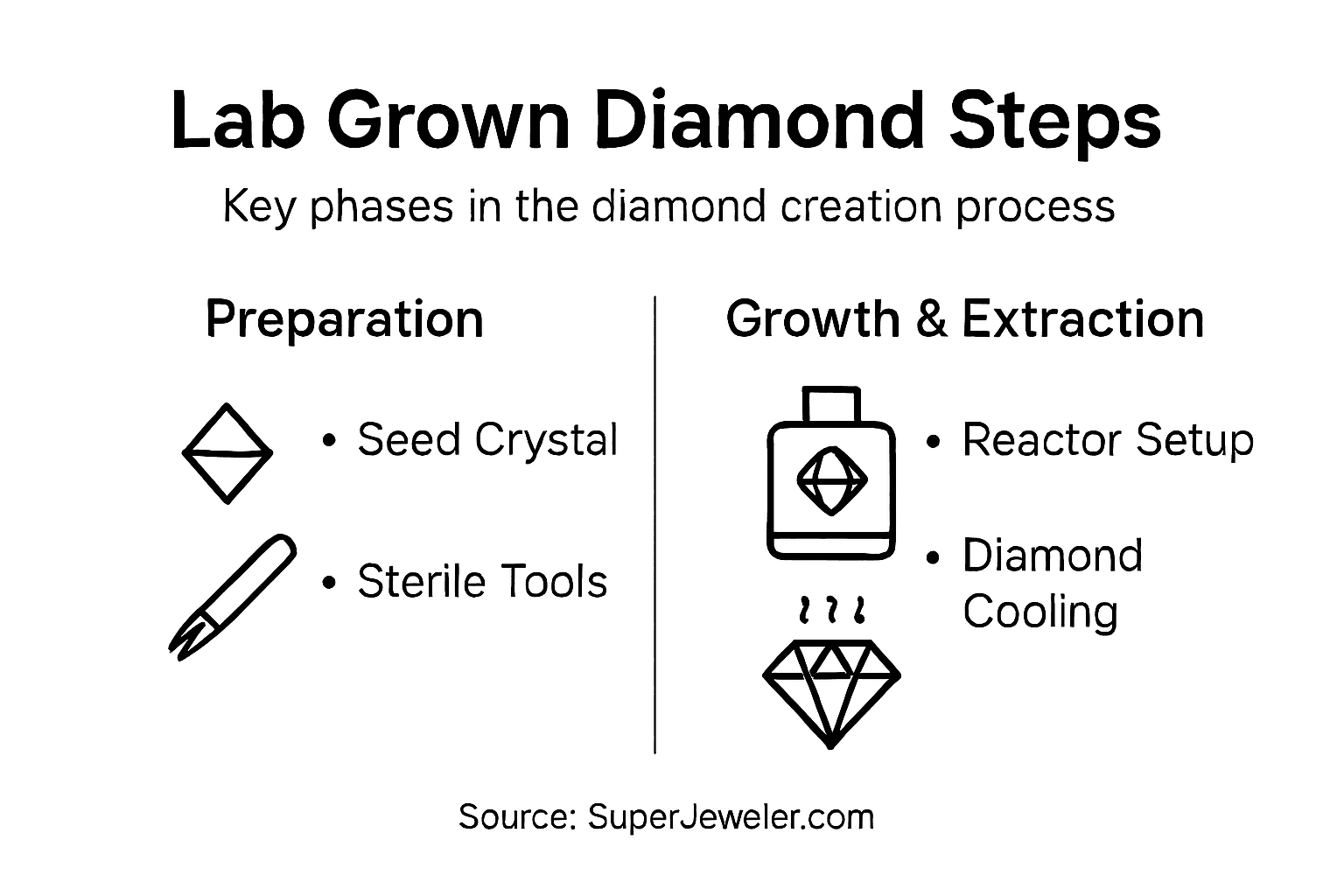
To kickstart the diamond growing process, you’ll be selecting and preparing pristine diamond seed crystals that serve as the foundation for your synthetic diamond. These microscopic templates determine the entire crystal’s quality and characteristics, so precision is key.
The preparation begins with obtaining high-quality diamond seed crystals from specialized suppliers who produce extremely pure diamond fragments. Typically, these seeds are created from crushed diamond powders or ultra-thin diamond slices that have been meticulously screened for imperfections. Each seed crystal must be perfect because any initial flaw can transfer directly into the growing diamond’s final structure.
Careful handling is crucial during seed preparation. You’ll want to work in a sterile, controlled environment using precision tools to prevent contamination. The seed crystals are then positioned strategically inside specialized growth chambers that will provide exact temperature, pressure, and atmospheric conditions necessary for diamond formation. Think of these seed crystals like microscopic architectural blueprints that will guide the entire diamond growth process.
Pro tip: Always source seed crystals from reputable scientific suppliers and handle them with clean, lint-free gloves to prevent introducing any external impurities during preparation.
Step 2: Initiate Diamond Formation in Reactor
Now that your seed crystals are prepared, you are ready to start the incredible process of growing a synthetic diamond inside a specialized laboratory reactor. This step transforms microscopic seed crystals into full grown diamonds through precise scientific manipulation.
Two primary methods exist for diamond formation: High Pressure High Temperature (HPHT) and Chemical Vapor Deposition (CVD). In the HPHT method, you will place the diamond seed and a carbon source like graphite inside a growth cell. The reactor then subjects these materials to extreme pressures and temperatures that cause carbon to dissolve and crystallize directly onto the seed crystal. The CVD method works differently by activating methane and hydrogen gases in plasma form within the reactor chamber, which deposits carbon atoms layer by layer onto the seed.
The key to successful diamond formation lies in carefully controlling the reactor environment. Experimental studies demonstrate that precise temperature gradients and specific gas mixtures are critical for promoting carbon atom bonding and initiating crystal growth. Technicians monitor multiple parameters including pressure, temperature, gas composition, and energy input to ensure optimal conditions for diamond nucleation and development.
Pro tip: Invest in high quality reactor monitoring equipment to track temperature and pressure variations within 0.1% accuracy for the most consistent diamond growth results.
Here’s a comparison of the two main synthetic diamond growth methods:
| Aspect | High Pressure High Temperature (HPHT) | Chemical Vapor Deposition (CVD) |
|---|---|---|
| Carbon Source | Uses graphite and metal catalysts | Uses methane and hydrogen gases |
| Environment | Extreme pressure and temperature | Controlled plasma in vacuum |
| Growth Rate | Usually faster, less precise control | Slower, offers fine control over layers |
| Typical Crystal Quality | May show metallic inclusions | High purity and uniformity |
| Equipment Cost | Usually higher | Lower for small-scale labs |
Step 3: Grow Diamond Crystals Under Controlled Settings
With your reactor prepared and seed crystals in place, you are now entering the most critical phase of diamond creation where scientific precision transforms microscopic seeds into brilliant crystals. This stage requires meticulous control and patience as diamonds develop layer by layer in an environment that mimics geological conditions.
Diamond crystal growth occurs through two primary mechanisms: High Pressure High Temperature (HPHT) and Chemical Vapor Deposition (CVD). In the HPHT method, carbon atoms dissolve in metallic catalyst solutions and migrate toward cooler sections containing the seed crystal, gradually building diamond structure over several weeks. The CVD process works differently, depositing carbon atoms from plasma onto the seed crystal’s surface inside a vacuum chamber, creating precise crystal layers.
Precision is paramount during this stage. Microwave Plasma Chemical Vapor Deposition techniques require constant monitoring of substrate temperature, gas pressures, and composition. Technicians use advanced spectroscopy methods to verify diamond phase and quality, ensuring each crystal meets stringent structural requirements. The growth rate, crystal uniformity, and ultimate purity depend entirely on maintaining these incredibly specific environmental parameters.
Pro tip: Maintain a detailed log of reactor conditions during each growth cycle to help identify the precise parameters that produce your highest quality diamonds.
Step 4: Extract and Cool Finished Diamonds
After weeks of precise diamond growth, you have now reached the delicate final stage of extracting your lab grown diamonds from the reactor. This process requires extreme care and specialized equipment to safely remove the newly formed crystals without causing damage or compromising their structural integrity.
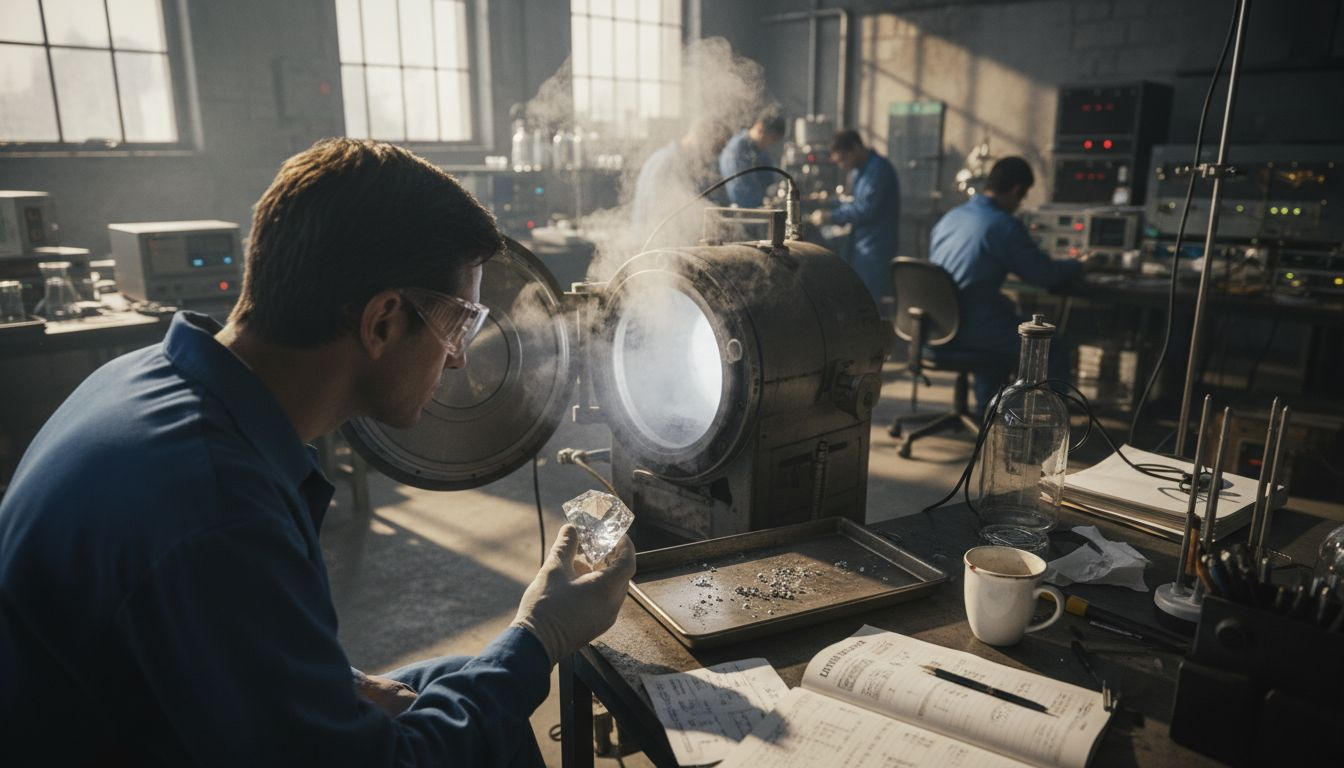
The extraction begins by carefully powering down the reactor and gradually reducing internal temperatures and pressures. Technicians use specialized tools designed to minimize thermal shock and mechanical stress during diamond removal. Loose diamonds are carefully separated from the growth substrate, with each crystal being individually inspected for quality and potential imperfections.
Cooling represents a critical phase that determines the diamond’s final characteristics. The extracted diamonds undergo controlled cooling processes that help stabilize their molecular structure and prevent potential fracturing. Precision cooling chambers maintain specific temperature gradients, allowing the diamonds to transition from extreme reactor conditions to ambient temperatures smoothly. Advanced cooling techniques ensure that the crystal’s internal stress is minimized, preserving the diamond’s optical and structural properties.
Pro tip: Always use diamond tweezers with soft tips and wear clean cotton gloves to prevent contamination or accidental surface scratching during the extraction and cooling process.
Step 5: Assess and Grade Diamond Quality
With your lab grown diamond now fully formed, the next crucial step involves meticulously evaluating its quality and characteristics. This assessment determines the diamond’s value, brilliance, and overall desirability in the marketplace.
International gemological standards require comprehensive evaluation across multiple criteria including clarity, color, polish, symmetry, and cut. Expert gemologists examine each diamond under standardized viewing conditions using precise measurement techniques. The goal is to classify the diamond as either Premium or Standard based on its performance across these critical parameters.
Certification represents the final validation of your diamond’s quality. Renowned institutions like the Gemological Institute of America (GIA) and International Gemological Institute (IGI) provide detailed reports that authenticate the diamond’s origin, confirm its growth method, and document its specific characteristics. These certificates serve as an authoritative record for consumers, offering transparency about the diamond’s precise color grade, clarity level, carat weight, and any treatments it may have undergone.
Pro tip: Request a digital copy of the full gemological certification and cross reference the physical diamond with its official report to ensure complete alignment of documented and actual characteristics.
Here’s a summary of the main lab diamond grading criteria:
| Grading Factor | What It Measures | Impact on Value |
|---|---|---|
| Clarity | Presence of inclusions or blemishes | Higher clarity boosts price |
| Color | Tint or hue present in diamond | Less color is more valuable |
| Cut | Quality of facets and proportions | Better cut enhances sparkle |
| Carat Weight | Size of the diamond | Greater weight increases cost |
| Certification | Verifies authenticity and origin | Essential for market confidence |
Explore the Beauty and Science of Lab Grown Diamonds Today
Understanding the meticulous process of lab grown diamond creation reveals the true value behind these stunning gems. You now know how precision in seed crystal preparation, controlled growth environments, and expert grading ensure every diamond’s exceptional quality. If you seek affordable luxury combined with ethical sourcing this knowledge empowers you to make informed decisions when choosing your perfect piece.

Discover an impressive selection of lab grown diamonds and fine jewelry crafted with care at SuperJeweler.com. Whether you desire an engagement ring that captures your unique love story or a timeless bracelet that reflects your style, our collection offers customizable options for every occasion. Act now to enjoy free worldwide shipping and warranties that protect your precious purchase. Begin your journey toward owning a brilliant lab grown diamond today by visiting our site and exploring the elegant range that awaits.
Frequently Asked Questions
What is the first step in the lab grown diamond process?
To start the lab grown diamond process, you need to prepare high-quality diamond seed crystals. Obtain these pristine crystals from specialized suppliers, ensuring they are free from imperfections, as they will influence the final diamond’s characteristics.
How does the diamond formation occur in the reactor?
Diamond formation occurs in a specialized laboratory reactor using two main methods: High Pressure High Temperature (HPHT) and Chemical Vapor Deposition (CVD). Choose the method based on your preferred growth control and desired crystal quality, as each has specific environmental requirements.
What conditions are required for successful diamond growth?
Successful diamond growth requires controlling temperature, pressure, and gas composition within the reactor. Maintain optimal conditions with precision monitoring to ensure consistent layer growth and high-quality diamonds.
How do I safely extract and cool finished diamonds?
Safely extracting and cooling diamonds involves carefully powering down the reactor and using specialized tools to minimize thermal shock. Follow a controlled cooling process to stabilize the diamonds and prevent structural damage, ensuring they retain their optical properties.
What criteria should I consider when assessing the quality of lab grown diamonds?
Assess the quality of lab grown diamonds based on factors such as clarity, color, cut, carat weight, and certification. Each of these elements influences a diamond’s value and appeal, so examine each one thoroughly before making a decision.
Why is certification important for lab grown diamonds?
Certification authenticates the diamond’s origin and verifies its characteristics according to established gemological standards. Ensure you request a complete gemological certificate to gain transparency on the diamond’s attributes and value.
Recommended
- Step-by-Step Guide to Buying Lab-Grown Diamonds Online
- Step by Step Lab-Grown Diamond Guide for Engagement Rings
- Lab Grown Diamond Jewelry | SuperJeweler
- Lab-Grown Diamonds: Affordable Luxury With Ethics
