Choosing your engagement ring or wedding band should feel exciting, not confusing. For couples across the United States, the search often leads to questions about what truly sets custom jewelry apart from mass-produced options. Custom jewelry is designed specifically for you, blending personal vision, quality, and modern style. This guide helps you clearly understand custom jewelry, its misconceptions, and why it offers unmatched possibilities for both affordability and personal expression.
Table of Contents
- Defining Custom Jewelry And Common Misconceptions
- Types Of Custom Jewelry And Personalization Options
- Step-By-Step Custom Jewelry Creation Process
- Cost Factors, Timeframes, And Hidden Risks
- Comparing Custom And Ready-Made Jewelry Pieces
Key Takeaways
| Point | Details |
|---|---|
| Custom Jewelry is Personal | Custom jewelry is a collaborative process that results in pieces uniquely tailored to individual preferences and styles. |
| Misconceptions About Cost and Time | Custom pieces can be cost-effective and completed within a reasonable timeline of 4 to 8 weeks, depending on complexity. |
| Diverse Options for Customization | There are various types of custom jewelry and personalization techniques that allow for significant creative freedom. |
| Importance of Clear Communication | Establishing clear expectations regarding design, costs, and timelines with your jeweler is essential to avoid misunderstandings. |
Defining Custom Jewelry and Common Misconceptions
Custom jewelry represents a fundamental shift from mass-produced pieces toward something deeply personal and intentional. Unlike factory-made items created in bulk, custom jewelry is designed specifically for you, reflecting your vision, style, and individuality.
At its core, custom jewelry means working with a jeweler to create a piece from scratch or modify an existing design. You’re not selecting from limited inventory options—you’re collaborating to build something unique. The distinction matters because it affects everything from design possibilities to pricing and timeline.
What Custom Jewelry Actually Is
According to the Federal Trade Commission, handmade jewelry is created through hand power or hand guidance without mass production techniques. This foundation is critical to understanding why custom pieces differ so dramatically from commercial alternatives.
Custom jewelry typically involves:
- Personal collaboration with a skilled designer or jeweler
- Material selection tailored to your preferences and budget
- Unique design elements that reflect your personality
- Artisanal craftsmanship rather than automated assembly
- Complete creative control over every detail
Each piece becomes an extension of your identity and values.

Common Misconceptions About Custom Jewelry
Misunderstandings often prevent couples from considering custom options. Here are the myths that persist:
Misconception 1: Custom jewelry is prohibitively expensive
Reality: Custom pieces can cost less than comparable designer rings because you’re not paying for brand markup. You pay for the materials and labor, nothing more.
Misconception 2: Custom means long, uncertain timelines
Reality: Most custom engagement rings take 2–6 weeks depending on complexity. Clear communication with your jeweler ensures predictable delivery.
Misconception 3: Custom jewelry is either modern or traditional
Reality: Jewelry draws inspiration from traditional designs across cultures while embracing contemporary artistry. You can blend vintage aesthetics with modern techniques or create something entirely original.
Misconception 4: Only handcrafted pieces count as custom
Reality: Custom means you have input into the design. Whether your jeweler uses traditional hand techniques or modern CAD technology, the result is uniquely yours.
Misconception 5: Custom jewelry requires sketching skills
Reality: You simply describe what you want. Your jeweler translates ideas into reality—that’s their job.
Custom jewelry is about control, not compromise. You decide every element, from metal type to stone placement to finishing details.
Pro tip: Start by gathering reference images of designs you love, not to copy them, but to help your jeweler understand your style language and preferences.
Types of Custom Jewelry and Personalization Options
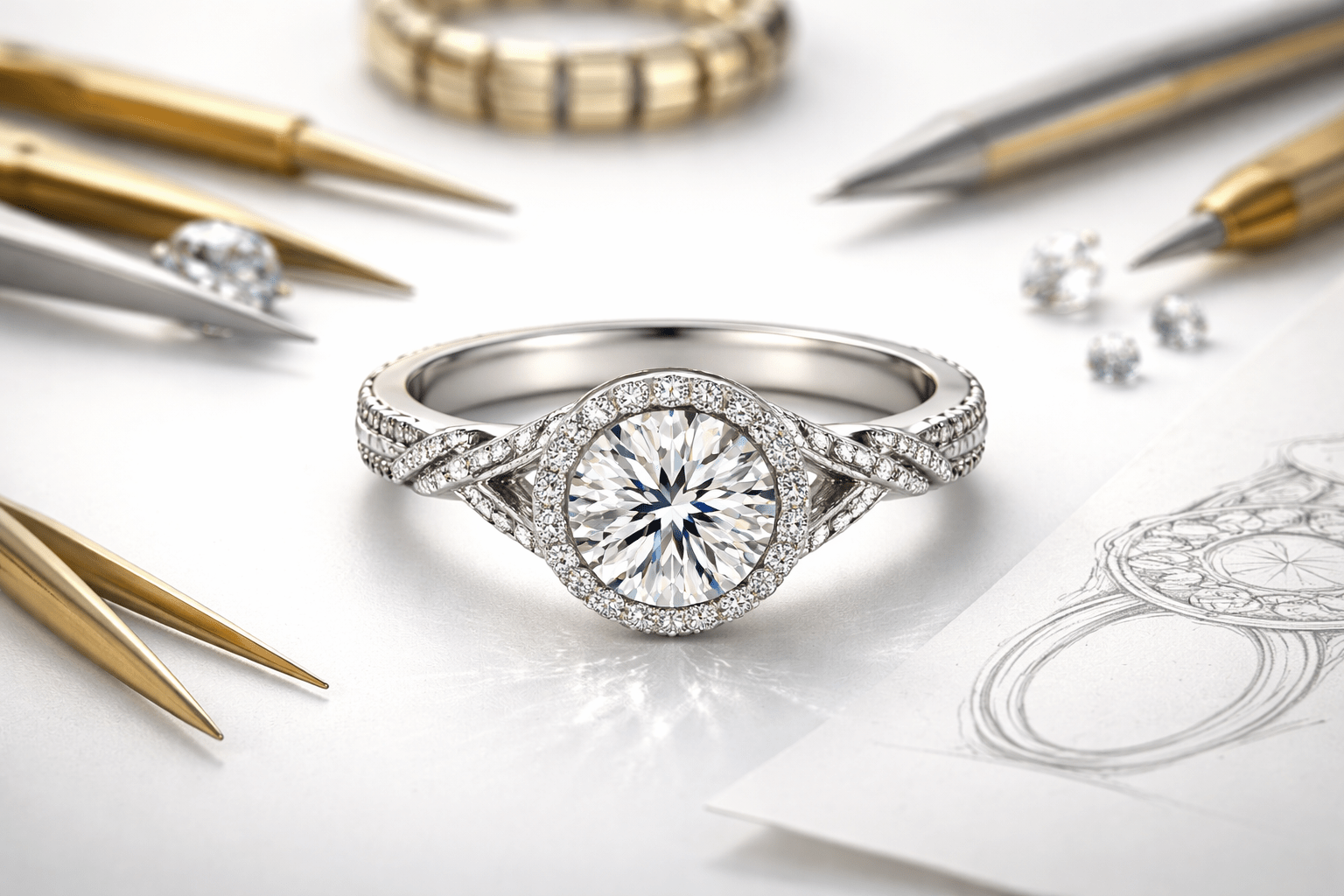
Custom jewelry comes in many forms, each offering distinct ways to express your personality and preferences. Whether you want a completely original design or a modification of an existing style, understanding your options helps you make confident decisions about what works best for your vision.
The beauty of customization lies in flexibility. You’re not locked into a single approach—you can blend techniques, materials, and artistic concepts to create something truly yours.
Popular Types of Custom Jewelry
Custom jewelry spans several distinct categories based on design approach and craftsmanship style:
- Bespoke designs: Completely original pieces created from your concept or inspiration
- Modified heirlooms: Reimagined family pieces that honor tradition while reflecting modern aesthetics
- Semi-custom rings: Pre-designed styles adjusted for your specifications (stone size, metal type, width)
- Artistic statement pieces: One-of-a-kind creations emphasizing individual artistic vision
- Blended vintage-modern: Antique elements combined with contemporary techniques
Each type serves different needs and budgets.
Personalization Techniques
Modern jewelry makers use diverse crafting methods to bring your vision to life. Wire wrapping, beaded jewelry, and fabricated pieces represent just some techniques that create custom results. Metal choices include gold, silver, platinum, and increasingly popular lab-grown diamond settings.
Personalization extends beyond materials. You can customize:
Below is a summary of personalization options most often used in custom jewelry design:
| Personalization Area | Example Choices | Impact on Final Piece |
|---|---|---|
| Stone Selection | Diamond cut, gemstone type | Affects sparkle and symbolism |
| Metal Finish | Brushed, hammered, polished | Changes overall appearance |
| Engraving | Names, dates, meaningful text | Adds personal significance |
| Artistic Details | Unique motifs or settings | Enhances individuality |
| Ring Width & Shape | Slim to wide bands, profiles | Influences comfort and style |
- Stone selection: Diamond shape, carat weight, clarity, and color
- Metal finish: Polished, brushed, textured, or hammered surfaces
- Design elements: Engraving, accent stones, band width, and setting style
- Artistic concept: Incorporating individual artistic expression and wearer identity into the finished piece
Engagement Ring Customization
Engagement rings offer particular opportunities for personalization because every element matters. You can customize the center stone independently from the setting, allowing you to balance quality and budget strategically. When customizing your engagement ring for a perfect fit, consider how daily wear affects your choices.
Think about lifestyle first. Do you prefer minimal designs or statement pieces? Are you active, or will your ring live primarily in formal settings?
Personalization is about aligning every detail with who you are, not copying trends or following what others choose.
Pro tip: Start with your most non-negotiable element (maybe it’s a specific stone or metal color), then build other customizations around that anchor point to maintain design coherence.
Step-By-Step Custom Jewelry Creation Process
Creating custom jewelry involves a structured workflow from initial concept through final delivery. Understanding these steps helps you communicate effectively with your jeweler and sets realistic expectations for timeline and quality.
The process balances artistry with precision craftsmanship. Each stage builds on the previous one, and attention to detail at every step determines your final piece’s beauty and durability.
Step 1: Consultation and Design
Your journey starts with a detailed conversation about your vision. Share inspiration images, describe your lifestyle, and discuss your budget openly. A skilled jeweler asks clarifying questions about stone preferences, metal choices, and design priorities.
Your jeweler typically creates sketches or digital renderings for approval. This stage sets the foundation for everything that follows, so don’t rush it.
Step 2: Material Selection and Sourcing
Once your design is approved, your jeweler sources materials matching your specifications. This includes selecting your center stone, choosing metal type and purity, and identifying accent stones if desired. Understanding lab-grown diamond options and processes helps you make informed choices about stone selection.
Quality control happens here. Reputable jewelers verify stone authenticity and metal composition before proceeding.
Step 3: Preparation and Metal Fabrication
Jewelers prepare materials through soldering, casting, and shaping techniques tailored to your design. The metal is formed into the band and setting structure. This hands-on work requires precision and experience to ensure strength and proper fit.
Proper preparation prevents costly corrections later.
Step 4: Stone Setting and Assembly
Your stone is carefully secured using specialized techniques. Prong setting, bezel setting, and tension settings each offer different aesthetics and security levels. Your jeweler positions accent stones if included and ensures everything aligns perfectly.
This stage demands meticulous attention—a loose stone defeats the entire purpose.
Step 5: Polishing and Finishing
The piece undergoes detailed polishing and finishing procedures to achieve your desired surface. Metal receives its final shine, texture, or matte finish. Engraving happens now if you’ve chosen it.
Polishing reveals the true beauty of your design.
Step 6: Quality Inspection and Sizing
Before delivery, your jeweler conducts thorough inspection. The setting holds securely, the surface is flawless, and sizing is perfect. When customizing your engagement ring for a perfect fit, final sizing ensures comfort for everyday wear.
Great custom jewelry combines artistic vision with meticulous craftsmanship at every single stage.
Pro tip: Request a progress update at the halfway point, and ask your jeweler about their quality assurance process before work begins—this prevents surprises and builds confidence in the final result.
Cost Factors, Timeframes, and Hidden Risks
Custom jewelry pricing varies dramatically based on materials, complexity, and craftsmanship. Understanding what drives costs and realistic timelines helps you budget effectively and avoid unpleasant surprises.
Transparency matters. A reputable jeweler explains every cost component upfront and sets clear expectations about delivery dates.
What Actually Drives Custom Jewelry Costs
Several factors influence your final price:
- Stone quality: Diamond grade, carat weight, and origin significantly impact cost
- Metal selection: Platinum costs more than gold; gold purity affects pricing
- Labor intensity: Intricate designs require more artisan hours
- Design complexity: Simple bands cost less than elaborate settings with multiple accent stones
- Material sourcing: Availability and ethical sourcing affect expenses
Your jeweler should itemize these costs clearly.
Realistic Timeframes
Custom jewelry doesn’t happen overnight. Most engagement rings take 4 to 8 weeks from approval to completion. Simpler designs may finish faster; elaborate pieces require more time. Rush orders exist but typically cost extra.
Factor in this timeline when planning proposals or weddings. Starting early reduces stress considerably.
Hidden Risks to Watch For
Several risks can derail your custom jewelry experience. Supply chain disruptions affect material availability and delivery dates. Understanding jewelry industry sourcing practices and transparency issues helps you identify reputable jewelers committed to ethical practices.
Other risks include:
- Miscommunication: Unclear design expectations lead to revisions
- Material cost fluctuations: Gold and precious metal prices shift regularly
- Sizing mistakes: Incorrect finger measurement requires resizing work
- Craftsmanship issues: Careless work creates loose stones or weak settings
- Unethical sourcing: Some jewelers don’t disclose material origins
Choose a jeweler with clear policies and strong reviews.
Here’s a concise overview of common risks in custom jewelry and how to mitigate them:
| Risk Type | Examples | Prevention Tactic |
|---|---|---|
| Communication Errors | Misunderstood design requests | Confirm details in writing |
| Cost Overruns | Price changes in metals or stones | Lock pricing before contract |
| Quality Issues | Loose stones or poor fit | Insist on inspection and warranty |
| Sourcing Problems | Ethical concerns or delayed materials | Choose jewelers with transparency |
| Sizing Mistakes | Wrong measurements causing discomfort | Double-check sizing in person |
Protecting Your Investment
Request everything in writing. Your contract should specify materials, timeline, revision policies, and what happens if something goes wrong. Understand Federal Trade Commission jewelry industry guidance regarding material claims and authenticity—this protects you from misrepresentation.
Ask about warranties and insurance before paying. Reputable jewelers stand behind their work with clear guarantees.
Smart couples ask tough questions upfront and get everything in writing—this prevents costly mistakes and misunderstandings later.
Pro tip: Request a written breakdown of costs before ordering, ask about payment schedules (deposits plus final payment), and clarify the revision policy in case you want changes mid-process.
Comparing Custom and Ready-Made Jewelry Pieces
Custom and ready-made jewelry serve different needs, budgets, and preferences. Understanding the key differences helps you choose the right approach for your engagement ring or wedding band.
Neither option is universally “better”—it depends on what matters most to you.
The Core Differences
Ready-made jewelry is mass-produced for broad markets using standardized designs and manufacturing processes. Thousands of identical pieces exist. Custom jewelry, by contrast, involves direct collaboration with a maker who designs and crafts your specific vision.
This fundamental difference cascades into everything else: uniqueness, pricing, timeline, and personal connection.
Uniqueness and Individuality
Ready-made pieces prioritize efficiency over exclusivity. You select from existing inventory—beautiful options, but not unique to you. Custom jewelry emphasizes individual artistic expression and one-of-a-kind creation, meaning your piece reflects only your vision and taste.
If you want something nobody else wears, custom wins decisively.
Cost Comparison
Ready-made jewelry often costs less upfront because manufacturers spread production costs across many pieces. However, affordable diamond ring comparisons reveal that custom pieces can match ready-made prices when you skip designer markups.
Custom jewelry costs more for complex designs; simple custom bands may cost less than branded ready-made options. Budget affects which choice makes sense for you.
Quality and Craftsmanship
Handmade custom jewelry emphasizes meticulous human involvement in every stage, often resulting in superior quality control. Artisans take pride in their work because their name is attached.
Ready-made pieces vary wildly in quality depending on manufacturer. Some mass-produced rings are excellent; others have hidden flaws.
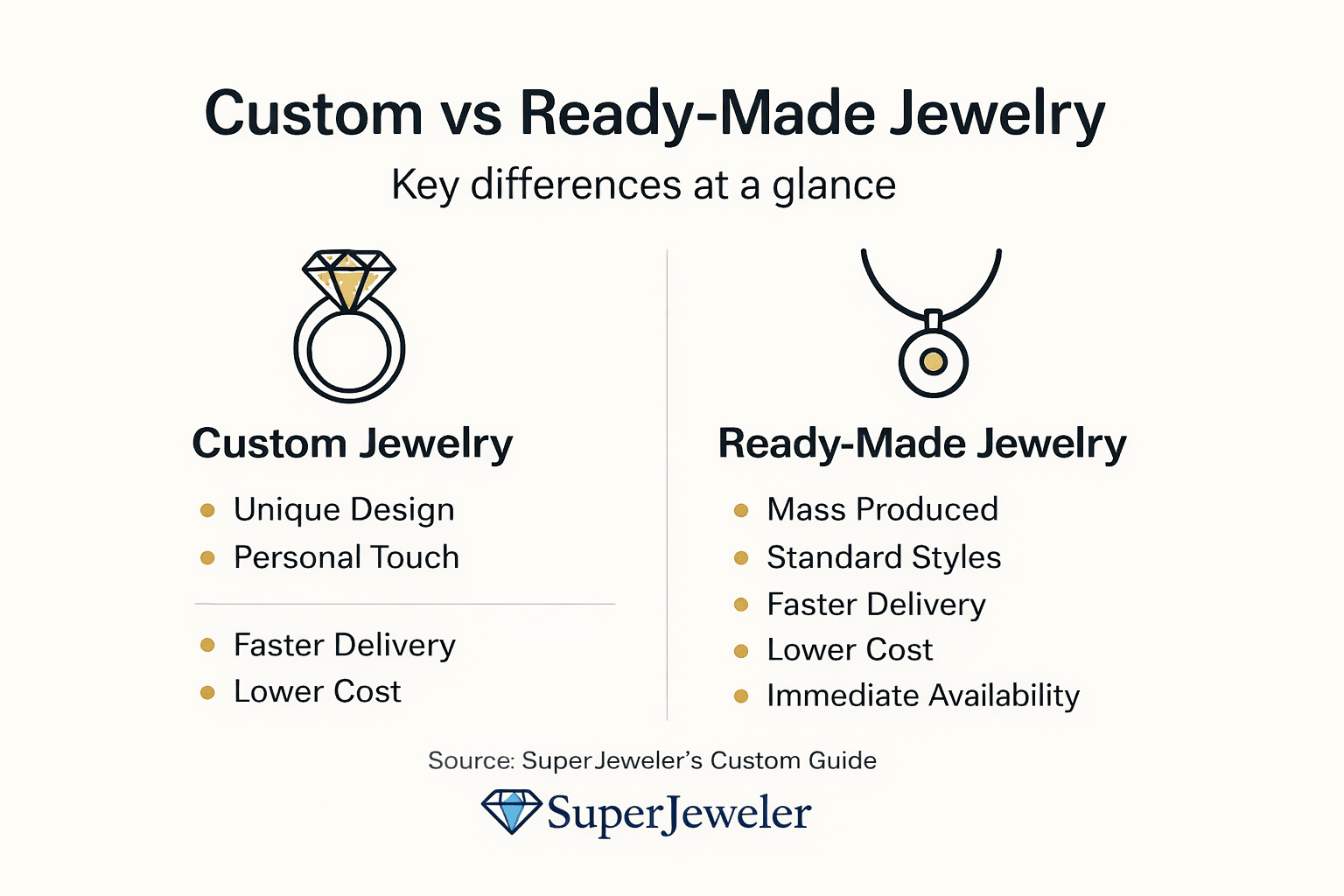
Key Differences at a Glance
| Factor | Custom | Ready-Made |
|---|---|---|
| Uniqueness | Completely original | Common designs |
| Timeline | 4-8 weeks | Immediate |
| Price | Variable | Usually lower entry |
| Customization | Complete control | Limited options |
| Quality control | Artisan-driven | Manufacturer-dependent |
| Personal connection | Strong | Minimal |
Timeline Considerations
Ready-made jewelry ships immediately—perfect if you’re in a hurry. Custom jewelry requires patience; expect 4 to 8 weeks minimum. If your proposal is weeks away, ready-made makes sense. If you have months, custom offers possibilities ready-made never will.
Custom jewelry feels like yours because it literally is—designed exclusively for you, not manufactured for thousands of strangers.
Pro tip: If you love a ready-made design but want customization, many jewelers can modify existing pieces—combining affordability with personalization for the best of both approaches.
Discover the Power of Custom Jewelry Tailored Just for You
Feeling overwhelmed by misconceptions about custom jewelry or unsure where to start can make this exciting journey challenging. Whether you want complete creative control over your engagement ring or a unique piece reflecting your personality, overcoming concerns about cost, timeline, and design complexity is essential. Custom jewelry is about crafting a one-of-a-kind treasure that matches your vision perfectly without compromise.
At SuperJeweler, we understand these challenges and offer accessible customization options including a wide variety of diamond shapes and styles, lab-grown diamonds, and carefully selected gemstones. Our easy-to-navigate platform provides transparent pricing, free worldwide shipping, and warranty guarantees so you can confidently bring your dream jewelry to life.

Start your custom jewelry journey today by exploring our extensive selection of engagement rings designed to fit your lifestyle and budget. Embrace the chance to create something truly yours with the support of expert craftsmanship and affordable pricing. Visit SuperJeweler now and transform your vision into a timeless symbol of your story.
Frequently Asked Questions
What is custom jewelry?
Custom jewelry refers to unique pieces designed specifically for an individual, created either from scratch or by modifying an existing design. It reflects the owner’s personal vision, style, and individuality.
How is custom jewelry different from ready-made jewelry?
Unlike ready-made jewelry, which is mass-produced and available in standard designs, custom jewelry is tailored specifically to the individual’s preferences, allowing for complete creative control over materials, design, and personal details.
What are the common misconceptions about custom jewelry?
Common misconceptions include the belief that it is prohibitively expensive, that it takes a long time to create, and that only handcrafted pieces count as custom. In reality, custom jewelry can be affordable, and timelines are often predictable with clear communication.
What factors influence the cost of custom jewelry?
The cost of custom jewelry is influenced by factors such as the quality of stones, metal selection, design complexity, and craftsmanship. Custom pieces can be comparable in price to ready-made options, depending on these elements.
Recommended
- Why Buy Jewelry Online: Key Benefits In 2026
- Why Engagement Rings Matter for Couples Worldwide
- Why Affordable Luxury Jewelry Appeals in 2026
- Affordable Jewelry Shopping Guide for Quality Finds
