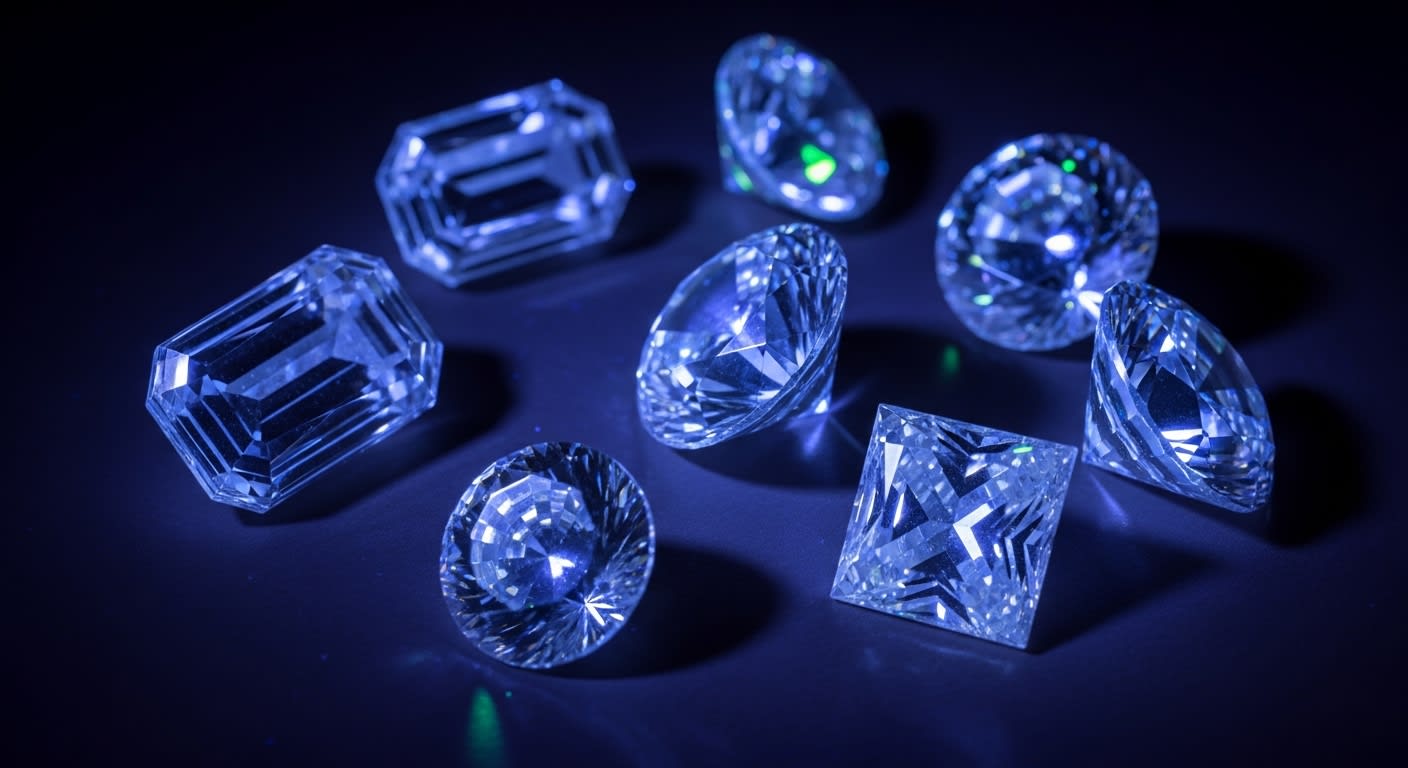
Shopping for an engagement ring, you might notice “fluorescence” on diamond certificates and wonder what it means. This natural characteristic affects how diamonds glow under ultraviolet light, yet many buyers skip over it or misunderstand its impact. Fluorescence can actually work in your favor, sometimes making diamonds appear whiter or offering better value. Understanding this trait helps you make smarter choices when selecting your perfect stone, whether you’re considering natural or lab-grown diamonds for your jewelry.
Table of Contents
- What Is Diamond Fluorescence And What Causes It?
- How Gem Labs Grade Diamond Fluorescence Intensity
- The Impact Of Fluorescence On Diamond Appearance And Value
- Differences In Fluorescence Between Natural And Lab-Grown Diamonds
- Explore Our Diamond Collection
- FAQ
Key takeaways
| Point | Details |
|---|---|
| What fluorescence is | Diamonds emit visible light, usually blue, when exposed to UV light due to natural impurities. |
| How labs grade it | Gemological labs use a five-level scale from None to Very Strong under standardized UV testing. |
| Impact on appearance | Medium fluorescence often enhances lower color grades, while very strong can cause haziness in top grades. |
| Value considerations | Fluorescent diamonds typically sell at 10-30% discounts despite minimal visual downsides for most buyers. |
| Natural vs lab-grown | Lab-grown diamonds show brighter fluorescence and more phosphorescence than natural stones. |
What is diamond fluorescence and what causes it?
Diamond fluorescence is the emission of visible light caused by nitrogen impurities when a diamond is exposed to ultraviolet radiation. This phenomenon occurs naturally during the diamond’s formation deep within the earth, where trace elements become trapped in the crystal structure. When UV light hits these impurities, they absorb the energy and release it as visible light, creating that characteristic glow.
The most common fluorescence color is blue, appearing in 95-97% of fluorescent diamonds due to N3 defects. These defects consist of three nitrogen atoms surrounding a vacancy in the crystal lattice. Other colors like yellow, orange, green, or white occur rarely, caused by different trace elements or structural variations. The intensity and color depend on the concentration and distribution of these impurities throughout the stone.
Fluorescence differs from phosphorescence in an important way. Fluorescence stops immediately when you remove the UV light source, while phosphorescence continues glowing for seconds or minutes afterward. Most natural diamonds show only fluorescence, though some lab-grown diamonds exhibit both characteristics. This distinction matters when identifying diamond origins and understanding their behavior under different lighting conditions.
Several factors influence fluorescence strength:
- Nitrogen concentration and distribution patterns within the crystal structure
- Presence of other trace elements like boron or aluminum
- Crystal growth conditions including temperature and pressure variations
- Structural defects or irregularities in the diamond lattice
You typically encounter UV light in everyday situations more than you realize. Sunlight contains significant UV radiation, especially outdoors on bright days. Nightclubs and some retail stores use blacklight fixtures that make fluorescent diamonds glow visibly. Even some LED lights emit small amounts of UV radiation. Understanding where you’ll wear your jewelry helps you anticipate how fluorescence might appear in real-world settings.
Pro Tip: Ask to view your diamond under both natural daylight and UV light before purchasing to see exactly how fluorescence affects its appearance in different environments.
How gem labs grade diamond fluorescence intensity
Gemological laboratories use standardized long-wave UV light at 365 nm to evaluate fluorescence consistently across all diamonds. This testing occurs in a darkened environment where trained gemologists compare each diamond against master stones representing different intensity levels. The process ensures buyers receive accurate, reproducible information about their diamond’s fluorescence characteristics.
The industry standard grading scale includes five distinct levels:
- None: No visible fluorescence under UV light
- Faint: Barely detectable glow requiring careful observation
- Medium: Noticeable fluorescence visible to most observers
- Strong: Bright fluorescence easily seen under UV light
- Very Strong: Intense glow that may affect appearance in sunlight
Laboratories also note the fluorescence color when present, though blue dominates the market. Yellow, green, orange, or white fluorescence appears on certificates when observed. This information helps buyers understand exactly what to expect when their diamond encounters UV light sources.
| Fluorescence Grade | Visibility Under UV | Approximate Market Percentage |
|---|---|---|
| None | No glow detected | 65-75% of diamonds |
| Faint | Slight glow, hard to see | 10-15% of diamonds |
| Medium | Clear visible glow | 6-8% of diamonds |
| Strong | Bright obvious glow | 2-4% of diamonds |
| Very Strong | Intense vivid glow | 1-2% of diamonds |
Importantly, gemological reports present fluorescence as a neutral characteristic, not a flaw or enhancement. The grading simply describes what exists in the diamond without making value judgments. This approach lets buyers decide for themselves whether fluorescence matters for their specific needs and preferences.
Testing consistency matters because different UV light sources produce varying results. Short-wave UV light, used less commonly, can reveal different fluorescence patterns than long-wave testing. Laboratories stick to long-wave standards to maintain comparability across all grading reports. When you receive a certificate, you can trust the fluorescence grade matches what other reputable labs would report.
Pro Tip: Request your diamond certificate before viewing the stone so you know its fluorescence grade, then compare the documented intensity with what you observe in person.
The impact of fluorescence on diamond appearance and value
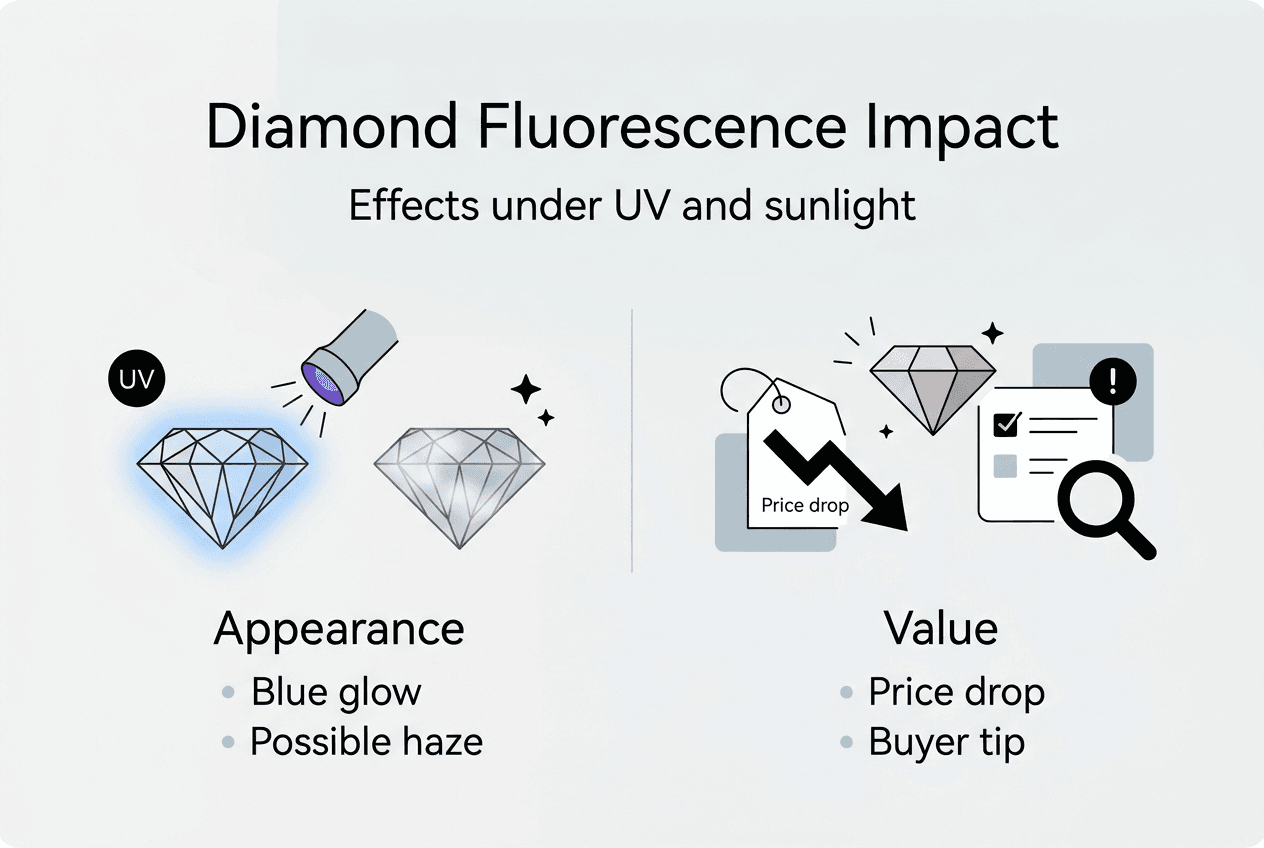
Fluorescence effects vary dramatically depending on your diamond’s color grade and the intensity of its glow. For diamonds in lower color grades like I through M, medium blue fluorescence enhances appearance by making stones look whiter under natural daylight. The blue glow counteracts yellowish tints, creating a more colorless appearance that many buyers find appealing. This phenomenon turns fluorescence into an advantage rather than a drawback.
However, very strong fluorescence in high color grades D through F may cause haziness when exposed to UV-rich sunlight. This cloudy appearance, called overblue, affects only a small percentage of diamonds with very strong fluorescence. Most diamonds with strong or very strong fluorescence still appear perfectly clear and brilliant. The key is examining each diamond individually rather than avoiding fluorescence entirely.
Market pricing reflects outdated concerns about fluorescence, creating opportunities for savvy buyers. Diamonds with medium to strong fluorescence typically sell at 10-30% discounts compared to non-fluorescent stones with identical grades. This price difference exists despite research showing most consumers cannot detect negative effects from fluorescence. You can leverage this market inefficiency to purchase larger or higher quality diamonds within your budget.
| Diamond Color Grade | Fluorescence Impact | Recommended Action |
|---|---|---|
| D-F (colorless) | May cause haziness if very strong | Avoid very strong, accept medium or less |
| G-J (near colorless) | Usually neutral or slightly positive | Any intensity acceptable after viewing |
| K-M (faint color) | Often improves appearance noticeably | Seek medium to strong for better look |
Viewing conditions matter significantly when evaluating fluorescence effects. Indoor lighting with minimal UV content shows diamonds as they’ll appear most of the time. Direct sunlight or blacklight reveals maximum fluorescence intensity. Smart buyers examine diamonds in multiple lighting environments before deciding whether fluorescence enhances or detracts from their specific stone.
Consider your lifestyle when weighing fluorescence importance. If you spend considerable time outdoors or in bright sunlight, fluorescence becomes more noticeable. Indoor office workers or those in northern climates encounter less UV light daily. Your engagement ring will look different depending on where you wear it most frequently.
Some buyers specifically seek fluorescent diamonds for their unique character. The subtle glow under UV light creates a distinctive appearance that sets these stones apart. Nightclub or concert settings where blacklights are common make fluorescence a conversation starter. This personal preference factor means fluorescence adds value for certain buyers while others remain indifferent.
Pro Tip: If considering a diamond with strong or very strong fluorescence, insist on viewing it outdoors in direct sunlight to check for any haziness before committing to purchase.
Differences in fluorescence between natural and lab-grown diamonds
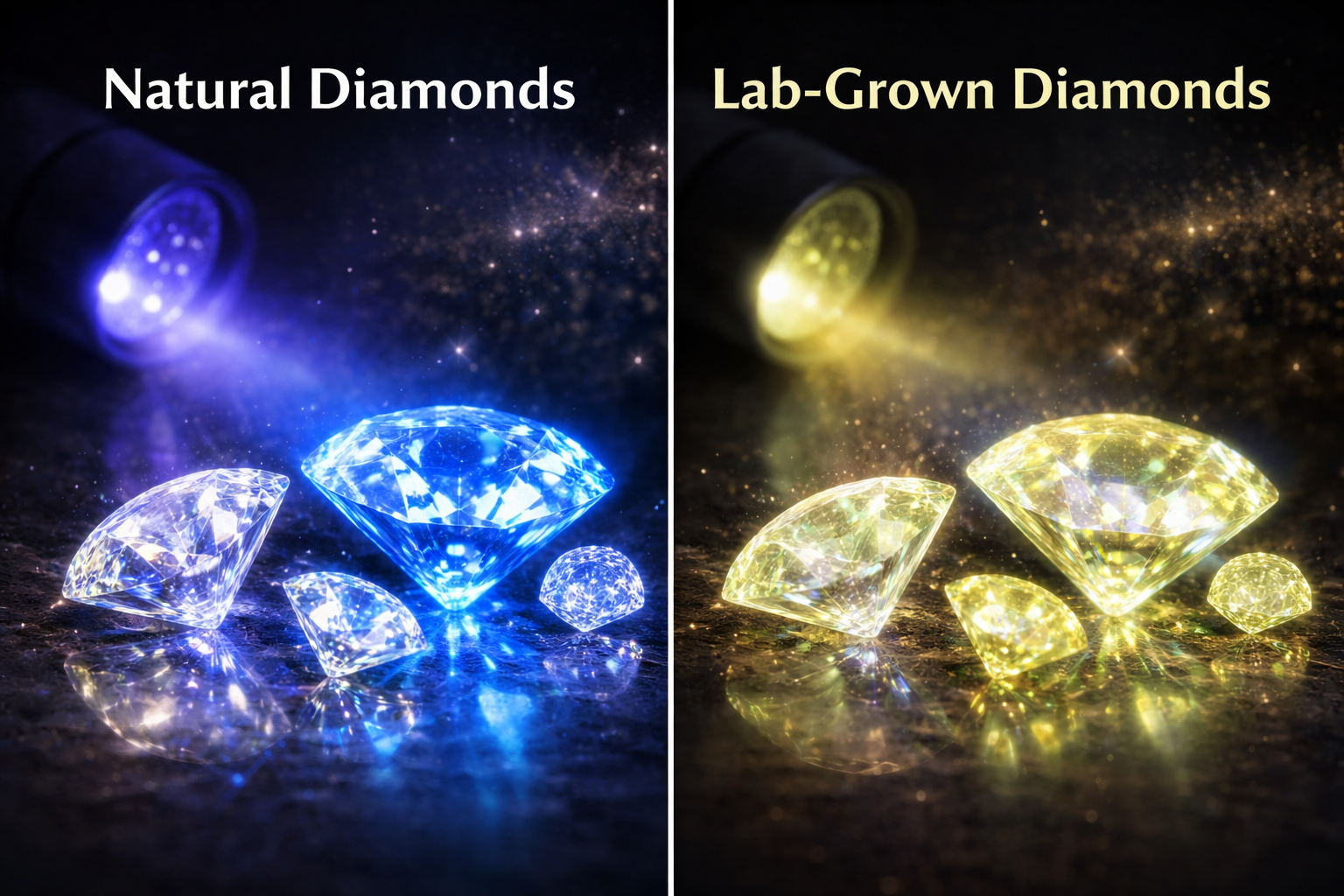
Natural diamonds show fluorescence in approximately 25-35% of stones under long-wave UV light, with most exhibiting blue coloration. Lab-grown diamonds display brighter, more intense fluorescence patterns due to different growth conditions and trace element concentrations. This distinction helps gemologists identify diamond origins and provides buyers with important information about their stone’s characteristics.
Lab-grown diamonds, especially those created through HPHT (high pressure, high temperature) methods, often exhibit phosphorescence alongside fluorescence. Phosphorescence appears more commonly in HPHT lab-grown diamonds than in natural stones, creating an afterglow that persists after removing the UV light source. This extended glow can last from seconds to several minutes depending on the specific diamond and its growth conditions.
Several key differences distinguish natural from lab-grown diamond fluorescence:
- Intensity levels tend higher in lab-grown stones due to controlled growth environments
- Color patterns may include unusual hues like orange or green more frequently
- Phosphorescence duration provides a reliable identification method for labs
- Distribution patterns appear more uniform in lab-grown versus natural diamonds
CVD (chemical vapor deposition) lab-grown diamonds typically show different fluorescence characteristics than HPHT stones. CVD diamonds often display weaker fluorescence or none at all, depending on their specific growth parameters. Some CVD diamonds exhibit distinctive striped fluorescence patterns visible under UV light, reflecting their layer-by-layer growth process. These patterns rarely appear in natural diamonds.
Understanding these differences matters when shopping for lab grown diamonds because fluorescence behavior varies by production method. HPHT stones might glow brightly and continue glowing after UV exposure ends. CVD stones could show minimal fluorescence or unusual color patterns. Neither characteristic indicates quality problems, but knowing what to expect helps you make informed decisions.
Testing procedures for identifying diamond origins:
- Expose the diamond to long-wave UV light and observe fluorescence color and intensity
- Remove UV source and watch for phosphorescence afterglow indicating possible lab-grown origin
- Use short-wave UV to reveal growth patterns and zoning not visible under long-wave light
- Compare fluorescence distribution patterns against known natural and lab-grown examples
- Combine fluorescence testing with other identification methods for definitive results
Some buyers prefer natural diamonds specifically for their subtle fluorescence characteristics. Others appreciate the brighter glow of lab-grown stones as a unique feature. Your lab grown diamond jewelry choice depends on personal preferences regarding appearance and origin rather than quality differences.
Market pricing for fluorescent lab-grown diamonds follows different patterns than natural stones. Since lab-grown diamonds already sell at significant discounts to natural diamonds, fluorescence creates smaller additional price reductions. The perceived disadvantage of fluorescence matters less when base prices are already lower. This pricing dynamic makes fluorescent lab-grown diamonds particularly attractive for budget-conscious buyers.
Explore our diamond collection
Now that you understand how fluorescence affects diamond appearance and value, you can apply this knowledge to find your perfect stone. We offer extensive selections of both natural and lab-grown diamonds across all fluorescence grades, letting you choose based on your preferences and budget. Our affordable engagement rings include options with medium fluorescence that deliver exceptional value without compromising beauty.

Browse our lab grown diamond engagement rings to discover stones with various fluorescence characteristics at accessible prices. Whether you want a diamond with no fluorescence or one with a subtle blue glow that enhances its appearance, our collection provides choices for every preference. Explore gemstone rings as alternatives if you’re considering different options beyond traditional diamonds. Our team can answer questions about specific stones and help you understand exactly how fluorescence appears in each diamond you’re considering.
FAQ
What is diamond fluorescence?
Diamond fluorescence is the visible light emission, typically blue, that occurs when a diamond is exposed to ultraviolet radiation. This natural phenomenon results from trace nitrogen impurities or structural defects within the diamond’s crystal lattice. Most diamonds show no fluorescence, while about 25-35% exhibit some degree of glow under UV light.
Does fluorescence make diamonds less valuable?
Fluorescence typically reduces diamond prices by 10-30% compared to non-fluorescent stones with identical grades, though this discount often exceeds any actual visual impact. For lower color grade diamonds (I-M), medium fluorescence can actually improve appearance by making stones look whiter. Only very strong fluorescence in high color grades (D-F) occasionally causes haziness that genuinely affects desirability.
How do I know if my diamond has fluorescence?
Your diamond’s grading report from GIA or another reputable laboratory lists fluorescence intensity and color in the characteristics section. You can also observe fluorescence by exposing your diamond to a long-wave UV light (blacklight) in a dark room. If the stone glows blue or another color, it has fluorescence.
Is fluorescence different in lab-grown diamonds?
Yes, lab-grown diamonds often exhibit brighter fluorescence than natural diamonds due to controlled growth conditions and trace element concentrations. HPHT lab-grown diamonds frequently show phosphorescence, an afterglow that continues after removing UV light, which rarely occurs in natural diamonds. CVD lab-grown diamonds may display distinctive striped fluorescence patterns reflecting their growth process.
Should I avoid diamonds with strong fluorescence?
Not necessarily, as strong fluorescence only causes visible problems in a small percentage of diamonds. The key is examining each stone individually in various lighting conditions, especially direct sunlight. Strong fluorescence in lower color grades often enhances appearance, while in colorless grades it requires careful evaluation. Many diamonds with strong fluorescence look identical to non-fluorescent stones in normal lighting.
Can fluorescence help me save money on a diamond?
Absolutely, since fluorescent diamonds sell at significant discounts despite minimal visual impact for most buyers. You can purchase a larger or higher quality diamond within your budget by accepting medium to strong fluorescence. This strategy works especially well for near-colorless grades (G-J) where fluorescence rarely causes negative effects but still reduces prices substantially.
Recommended
- Diamond necklace buying tips: quality & value in 2026
- Understand diamond certification to buy with confidence
- Diamond Necklace Terminology: What Every Buyer Should Know
- What Is Diamond Color Grade? 50% Price Impact Explained
