Choosing the perfect ring setting can feel like the most personal part of picking out an engagement ring. For many engaged couples across the United States, the setting does far more than simply hold a lab-grown diamond in place. It shapes how your ring sparkles, protects your investment, and lets your style shine through every detail. This guide explains how the way gemstones are secured influences both beauty and durability, giving you the knowledge to find affordable, customizable options that fit your unique love story.
Table of Contents
- Defining Ring Setting And Its Role
- Types Of Ring Settings Explained
- How Ring Settings Enhance Lab-Grown Diamonds
- Durability, Safety, And Daily Wear Considerations
- Cost, Customization, And Common Mistakes
Key Takeaways
| Point | Details |
|---|---|
| Importance of Ring Settings | The setting secures the gemstone and enhances its light performance, affecting brilliance and personal style. |
| Choosing Based on Lifestyle | Select a setting that suits your daily activities and personal preferences for optimal protection and beauty. |
| Types of Settings | Familiarize yourself with common styles like prong, bezel, and halo to understand their benefits and drawbacks. |
| Customization Opportunities | Customizing your ring allows for personal expression while taking budget considerations into account. |
Defining Ring Setting and Its Role
A ring setting is the metal framework that secures and displays your gemstone. Think of it as the stage your diamond performs on—it holds the stone safely while showcasing its sparkle.
The setting does far more than just hold your stone in place. It affects how light enters the diamond, which directly impacts brilliance and sparkle. It also communicates your personal style and protects your investment from daily wear and tear.
What Makes a Setting Matter
Ring settings serve three core purposes:
- Security: Keeps your stone protected and prevents loss or damage
- Light performance: Determines how much light enters the stone and reflects back to your eye
- Aesthetics: Sets the overall look and feel of your engagement ring
The way gemstones are secured directly influences both its visual appeal and long-term durability.
Your setting choice depends on your lifestyle, stone shape, and personal taste. An active person might prefer a bezel setting that wraps protective metal around the stone, while someone wanting maximum sparkle might choose a solitaire with delicate prongs.
Historical Evolution Shapes Modern Choices
Settings have come a long way. Early engagement rings featured simple bands, but Victorian and Edwardian designs introduced elaborate prongs and filigree work. This evolution reflects how settings balance practical function with emotional meaning—they protect the stone while symbolizing your commitment.
Your setting choice determines not only how your diamond looks today, but how well it withstands years of daily wear.
Modern couples have more options than ever. Settings range from vintage-inspired designs with intricate detailing to contemporary minimalist styles. Customizing your engagement ring allows you to select a setting that truly reflects both your lifestyle and personality.
Different settings work better with different diamond shapes. A cushion-cut diamond might shine brightest in a halo setting, while an emerald cut looks stunning in a sleek solitaire. Your choice shapes the entire appearance of your ring.
Pro tip: Consider your daily activities when selecting a setting—high-profile settings like prongs may snag on fabric, while lower-profile bezels offer more protection for active lifestyles.
Types of Ring Settings Explained
Ring settings come in many styles, each with distinct advantages. Understanding the main types helps you choose one that matches your lifestyle and aesthetic preferences.
The most popular settings fall into distinct categories based on how they secure and display your stone. Each offers different levels of protection, sparkle, and visual impact.
Common Setting Styles
Prong settings use four to six metal arms that grip your diamond from above. This classic style maximizes light exposure, allowing brilliant sparkle. Prongs are visible and add delicate detail to your ring’s profile.
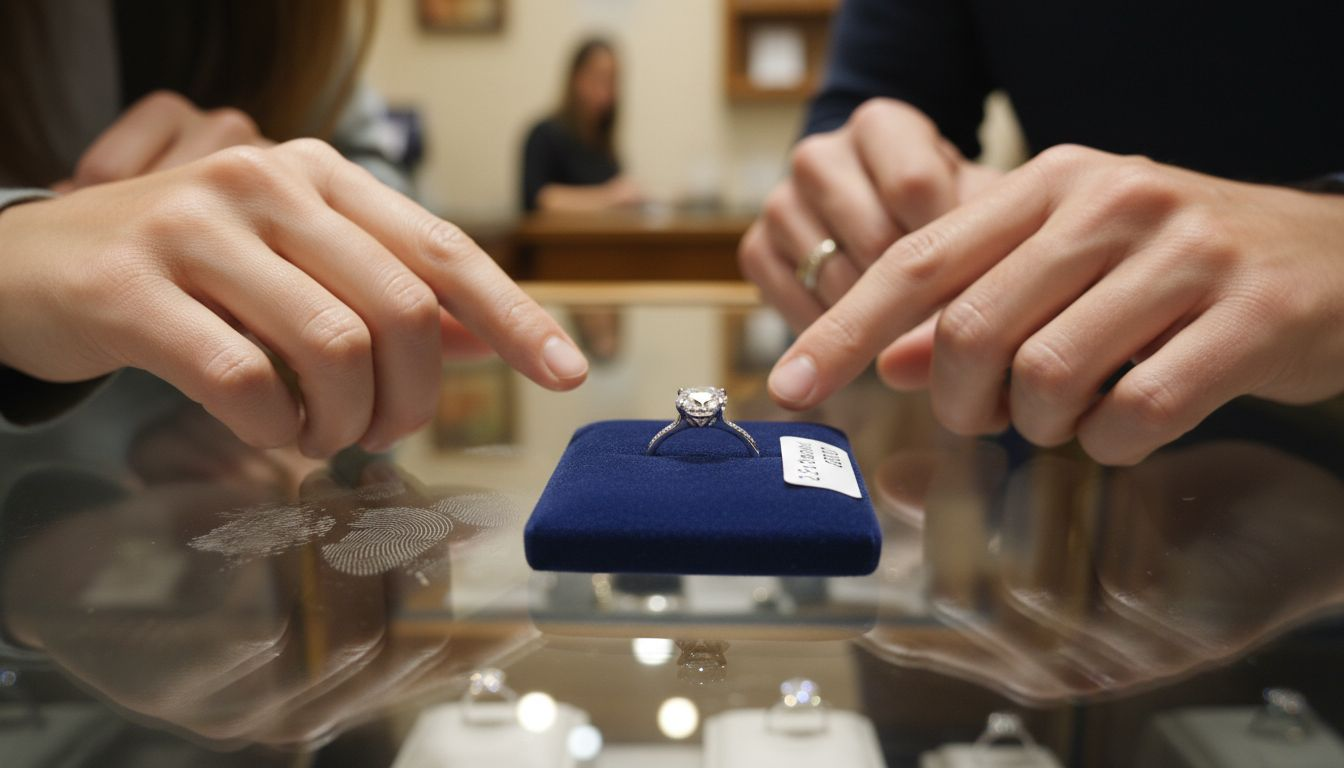
Bezel settings wrap protective metal around your stone’s edge. This approach offers maximum security and works well for active lifestyles. The metal rim slightly reduces visible diamond size but provides unmatched protection.
Solitaire settings feature a single stone set on a simple band. This timeless choice puts all focus on your diamond. It works beautifully with any stone shape and suits both modern and traditional tastes.
Accent and Decorative Options
Pavé settings feature small stones closely spaced with tiny prongs along the band. These settings add sparkle and visual richness without overwhelming the center stone.
Channel settings line stones side by side between protective metal walls. This creates a smooth, continuous look that’s both secure and elegant. Channels work especially well for diamond-studded bands.
Halo settings surround your center stone with smaller diamonds or accent stones. This amplifies sparkle and can make a smaller diamond appear larger. Halos add drama and modern flair to traditional ring designs.
Three-stone settings feature your main diamond flanked by stones on either side. This arrangement symbolizes past, present, and future. It’s a meaningful choice for couples seeking additional significance.
Here’s a quick comparison of the most popular ring setting styles and their key characteristics:
| Setting Style | Visual Impact | Best For | Potential Drawback |
|---|---|---|---|
| Prong | Classic, maximum sparkle | Traditional elegance | Prongs can catch or loosen |
| Bezel | Smooth, modern outline | Active lifestyles | Hides edge of diamond |
| Solitaire | Simple, diamond-focused | Minimalist preferences | Limited decorative options |
| Halo | Dramatic, amplifies size | Smaller center stones | Can require complex cleaning |
| Channel | Sleek, continuous stones | Diamond bands | Resizing can be challenging |
| Three-Stone | Balanced, symbolic | Meaningful symbolism | Costs more with extra stones |
The right setting balances what you love to look at with how much protection your stone needs during daily life.
Choosing Based on Your Lifestyle
Active people benefit from lower-profile settings like bezels or tension settings. Office workers can wear higher-profile prongs without worry. Parents juggling kids might prefer secure channel or bezel styles.
Your setting choice also depends on stone shape. Round diamonds shine in virtually any setting. Cushion cuts look stunning in halos. Emerald cuts show off their linear beauty in simple solitaires or three-stone arrangements.
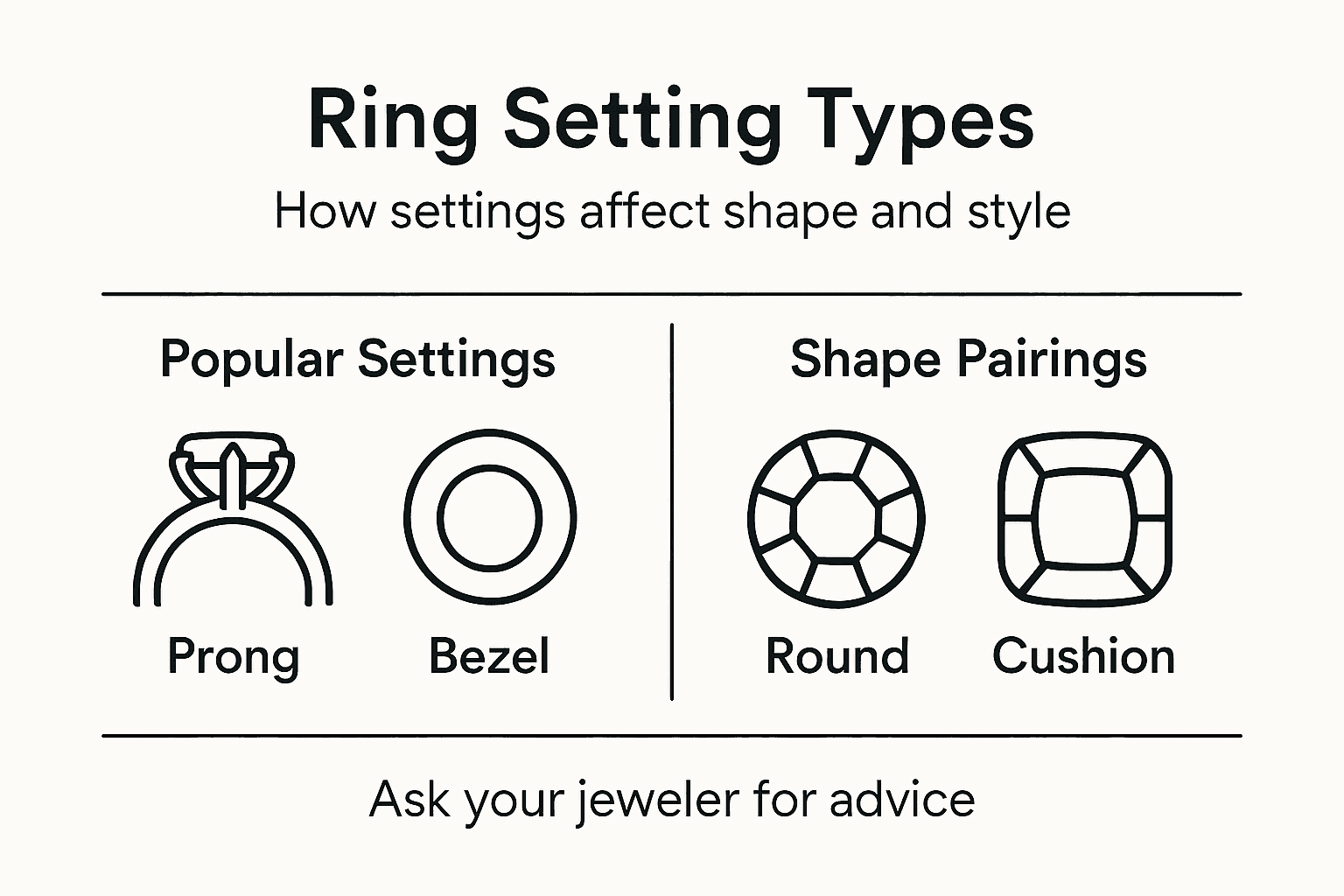
When customizing your engagement ring, consider mixing settings. You might choose a bezel for the center stone and pavé accents along the band.
Pro tip: Visit a jeweler to try on different setting styles with similar stones—you’ll immediately see which setting makes your diamond sparkle the way you love.
This table summarizes how different lifestyle factors influence the ideal ring setting choice:
| Lifestyle Factor | Recommended Settings | Main Reason |
|---|---|---|
| Very active/athletic | Bezel, tension | High protection, low snag risk |
| Desk/office work | Prong, three-stone | Allows high sparkle, stylish |
| Parent/caregiver | Channel, bezel | Secures stones, safe for kids |
| Trend-focused | Halo, pavé, mixed metals | Modern designs, more sparkle |
How Ring Settings Enhance Lab-Grown Diamonds
Lab-grown diamonds are optically and chemically identical to mined diamonds, and they deserve settings that showcase their full beauty. The right setting amplifies sparkle, protects your stone, and ensures your ring looks stunning for decades.
Settings do more than hold your lab-grown diamond in place. They control how light enters and exits the stone, directly affecting brilliance and fire. A thoughtfully designed setting can transform the visual impact of your diamond.
Maximizing Brilliance and Light Performance
Lab-grown diamonds follow the same grading standards as natural diamonds, evaluated by cut, clarity, color, and carat weight. Your setting choice influences how well the stone’s optical qualities shine through.
Prong settings allow maximum light entry from above and sides. This approach works beautifully for lab-grown diamonds with excellent clarity. The stone gets full exposure, showcasing its sparkle without obstruction.
Bezel settings frame your diamond with protective metal that slightly reduces visible size but amplifies reflection within the stone. This creates a focused, intense sparkle that many couples love.
Halo settings surround your lab-grown diamond with smaller accent stones. This multiplies sparkle across the entire ring face and can make a smaller diamond appear significantly larger.
Protection and Durability Benefits
Lab-grown diamonds are just as durable as natural stones, with the same hardness rating. The right setting provides crucial protection for everyday wear.
Key protection features include:
- Metal guards that prevent chipping during daily activities
- Secure prongs or bezels that keep the stone firmly in place
- Low profiles that minimize snags on clothing or surfaces
- Durable metals like platinum or gold that withstand constant wear
Active lifestyles benefit from secure bezel or tension settings. Office professionals can enjoy delicate prong work without worry. Parents and outdoor enthusiasts should prioritize protective designs.
Custom settings designed for lab-grown diamonds elevate their appearance while ensuring long-term durability and protection.
Affordable Customization Opportunities
Lab-grown diamonds cost 30 to 40 percent less than comparable mined diamonds. This affordability lets you invest more in a beautiful, custom setting without stretching your budget.
You can choose premium metals like platinum while keeping overall costs reasonable. Consider mixed metal designs that combine white gold with rose gold accents. Customization options expand dramatically when your diamond budget shrinks.
Understanding the benefits of lab-grown diamonds helps you make confident choices about both stone and setting. The combination of affordability and exceptional quality makes lab-grown diamonds perfect for couples wanting meaningful customization.
Pro tip: Ask your jeweler to show you how different settings change the appearance of your specific lab-grown diamond under various lighting conditions before making your final decision.
Durability, Safety, and Daily Wear Considerations
Your engagement ring should survive years of daily wear while keeping your finger safe. Understanding durability and safety factors helps you choose a setting that works for your lifestyle.
Diamonds have the highest hardness rating of any gemstone. However, they are brittle and can chip if struck hard. Your setting’s job is protecting those vulnerable edges.
Understanding Diamond Durability in Settings
Gemstone hardness and wearability depend on both the stone itself and how the setting protects it. Diamonds themselves won’t scratch, but their corners and edges need protection from impact.
Bezel settings offer maximum protection by wrapping metal around the stone’s perimeter. This shields all edges from accidental bumps and knocks. The trade-off is slightly reduced sparkle from the covered areas.
Prong settings expose more of the diamond but require careful handling. Four or six metal arms hold the stone securely if properly maintained. Regular professional checks keep prongs tight and secure.
Tension settings appear to float the diamond between metal bands. They offer good protection while maximizing light exposure. This modern design suits contemporary lifestyles well.
Physical Safety and Ring Avulsion Risks
Beyond protecting your stone, your ring choice affects finger safety. Rings can cause serious injury if caught during physical activities.
High-risk situations for ring wearers include:
- Gym workouts and weight training
- Contact sports like basketball or martial arts
- Gardening or yard work
- Machinery operation or factory work
- Swimming or water sports
- Any laborious or hazardous activity
During these activities, consider removing your ring. Ring avulsion injuries can range from severe to life-threatening. Prevention through removal is your best protection.
If you prefer continuous wear, choose a low-profile setting that won’t catch. Bezel settings sit closer to the finger than prong designs.
A truly durable ring protects both your stone and your finger during everyday life.
Maintenance for Long-Term Durability
Even the best setting requires care. Professional cleaning every six months keeps your ring looking new. Annual inspections catch loose prongs before they become problems.
Clean your ring gently at home with mild soap and warm water. Avoid harsh chemicals that can damage metals or loosen stones. Remove your ring before harsh activities to prevent damage.
Choose durable metals like platinum, 14K gold, or high-quality white gold. These withstand constant wear better than softer alternatives. Your setting’s metal matters as much as its design.
Pro tip: Have a professional jeweler inspect your ring annually—they’ll tighten any loose prongs and catch damage before it becomes expensive to repair.
Cost, Customization, and Common Mistakes
Setting prices vary widely based on design complexity and materials. Understanding costs and common pitfalls helps you make smart decisions that deliver lasting satisfaction.
Some settings require significantly more metal or intricate handwork than others. These differences directly impact your final bill. Knowing where your money goes helps you choose wisely.
Setting Costs and Price Factors
Factors that increase setting costs:
- Metal choice: Platinum costs more than gold; 18K gold costs more than 14K
- Design complexity: Intricate filigree or detailed work adds labor costs
- Stone count: Halo or pavé settings require multiple accent stones
- Customization: Custom designs cost more than standard styles
- Metal weight: Wider bands and thicker settings use more material
Simple solitaire settings on thin bands cost considerably less. Three-stone settings fall in the mid-range. Elaborate halo designs with pavé accents represent the highest investment.
Lab-grown diamonds stretch your setting budget further. Since your stone costs 30 to 40 percent less, you can invest in premium metals or intricate designs without overspending.
Customization Options That Matter
Customization lets you build your perfect ring rather than compromise on a stock design. Buying engagement rings involves choices about metal, security level, and personal style that affect both cost and satisfaction.
Smart customization decisions include:
- Selecting metal based on your skin tone and preference
- Choosing setting height for your lifestyle and hand shape
- Adding accent stones that complement your diamond
- Adjusting band width for comfort and durability
- Incorporating personal details like engravings or meaningful symbols
Work with a jeweler who listens to your priorities. They’ll help you balance cost, aesthetics, and practicality.
Common Mistakes to Avoid
Incorrect ring sizing ranks as the most frequent error. Ring sizing mistakes cause discomfort or loss. Get professionally sized before ordering your ring.
Choosing a setting without considering your lifestyle is a costly mistake you’ll regret during daily wear.
Another major error is selecting high-profile settings for active lifestyles. If you work out, garden, or play sports, delicate prongs invite damage. Choose secure bezels or tension settings instead.
Some couples pick settings that cannot be resized. Pavé and channel set rings often resist resizing. If your ring size might change, verify resizing options upfront.
Finally, avoid settings that don’t adequately protect your stone’s corners and edges. Prioritize security over sparkle if you lead an active life. You can always upgrade later to a higher-profile setting once you’ve proven your lifestyle.
Pro tip: Discuss your budget and lifestyle with your jeweler before exploring options—they’ll steer you toward settings that maximize value and minimize regret.
Discover the Perfect Ring Setting That Reflects Your Style and Protects Your Treasure
Choosing the ideal ring setting is more than just picking a design. It is about finding the perfect balance between stunning brilliance, lasting durability, and everyday comfort. Whether you want a secure bezel setting for an active lifestyle or a classic prong setting to maximize sparkle, your engagement ring should truly showcase your personality and protect your valuable lab-grown diamond or precious gemstone.

Explore a vast collection of customizable engagement rings and settings at SuperJeweler.com. Benefit from affordable pricing, free worldwide shipping, and trusted warranties designed to keep your ring shining bright for years. Act now to create a unique ring that fits your lifestyle and symbolizes your love with confidence. Start your journey today with our beautiful engagement rings and experience the exceptional blend of style and security your perfect setting deserves.
Frequently Asked Questions
What is a ring setting?
A ring setting is the metal framework that secures and displays a gemstone. It holds the stone in place while enhancing its beauty and protecting it from damage.
Why does the ring setting matter for a diamond?
The ring setting significantly impacts how light interacts with the diamond, affecting its brilliance and sparkle. Additionally, it influences the overall aesthetic and durability of the ring.
What are the different types of ring settings?
Common types of ring settings include prong, bezel, solitaire, pavé, channel, halo, and three-stone settings. Each offers distinct advantages in terms of light exposure, security, and visual appeal.
How do I choose the right ring setting for my lifestyle?
Consider your daily activities when choosing a ring setting. For active lifestyles, a bezel or tension setting provides more protection, while more delicate styles, like prongs or halos, may suit those in less hands-on environments.
Recommended
- Why Engagement Rings Matter for Couples Worldwide
- How to Customize Engagement Ring for a Perfect Fit
- What Is a Wedding Band and Why It Matters
- Engagement Ring Budgeting Workflow for Smart Shopping
