Shopping for an engagement ring feels exhilarating, but the stakes are high when you want lasting value and confidence in ethical sourcing. Couples across the United States face a real dilemma, as uncertified diamonds leave questions around authenticity and origin. By focusing on certified diamonds and their official grading reports, you gain transparent documentation, independent verification, and peace of mind. This guide helps you understand how certification protects your investment and ensures your ring reflects your shared values.
Table of Contents
- Certified Diamonds Explained: What Sets Them Apart
- Types of Diamond Certifications and Key Distinctions
- How Certification Protects Buyers and Investments
- Certified vs. Uncertified Diamonds: Key Risks and Benefits
- Ethical Sourcing and Reputable US Labs
Key Takeaways
| Point | Details |
|---|---|
| Certified Diamonds | Certified diamonds come with independent grading reports, providing transparency and objective verification of quality. |
| The 4Cs Standard | All certified diamonds are graded based on Color, Clarity, Cut, and Carat Weight, ensuring consistent comparison across the market. |
| Certification Importance | Certification protects buyers from overpaying and ensures better resale value and insurance coverage. |
| Ethical Sourcing | Certified diamonds are verified for ethical sourcing, giving buyers confidence in their purchase and supporting responsible practices. |
Certified Diamonds Explained: What Sets Them Apart
Certified diamonds come with official grading reports from independent laboratories, documenting exactly what you’re buying. Unlike uncertified stones, every certified diamond has been systematically evaluated and verified by gemologists who have no stake in the sale.
These certifications transform diamonds from unknown commodities into verifiable assets. You get transparency instead of guesswork.
The 4Cs: The Universal Standard
All certified diamonds are graded using the 4Cs standard: Color, Clarity, Cut, and Carat Weight. These universally recognized metrics give diamonds a common language that buyers and sellers understand globally.
Here’s what each measure tells you:
- Color ranges from completely colorless (most valuable) to light yellow or brown
- Clarity measures the absence of inclusions and surface blemishes visible under magnification
- Cut determines how well the diamond reflects light, affecting its sparkle and brilliance
- Carat Weight measures the diamond’s mass; heavier diamonds are rarer and more expensive
When you compare two certified diamonds, you’re comparing apples to apples. The grading criteria stay consistent across decades and across the world.
Certified diamonds eliminate the guesswork by providing objective, third-party verification of quality—something you simply cannot get from an uncertified stone.
Who Grades Your Diamond?
Independent laboratories like the Gemological Institute of America (GIA) and the International Gemological Institute (IGI) perform these evaluations. These organizations have strict protocols to ensure objective diamond assessments without bias.
The lab never knows the price or who’s selling the diamond. This independence guarantees honest grading.
Each diamond receives a unique report number, creating a permanent record tied directly to your stone. If your diamond ever needs revaluation or authentication, the certification provides that foundation.
What You Actually Receive
When you buy a certified diamond, you get more than a beautiful stone:
- An official grading report detailing all 4Cs measurements
- A unique certification number laser-inscribed on the diamond’s girdle
- Confidence in resale value, since certification is universally recognized
- Documentation that supports insurance claims
- Authentication you can verify independently
This documentation becomes especially valuable if you ever decide to upgrade, sell, or pass your ring to the next generation.
The Difference in Real Life
Consider two diamonds that look identical to the naked eye. One is certified, one isn’t. The certified diamond comes with proof of exactly what color and clarity grade it earned. The uncertified diamond? You’re trusting the seller’s word.
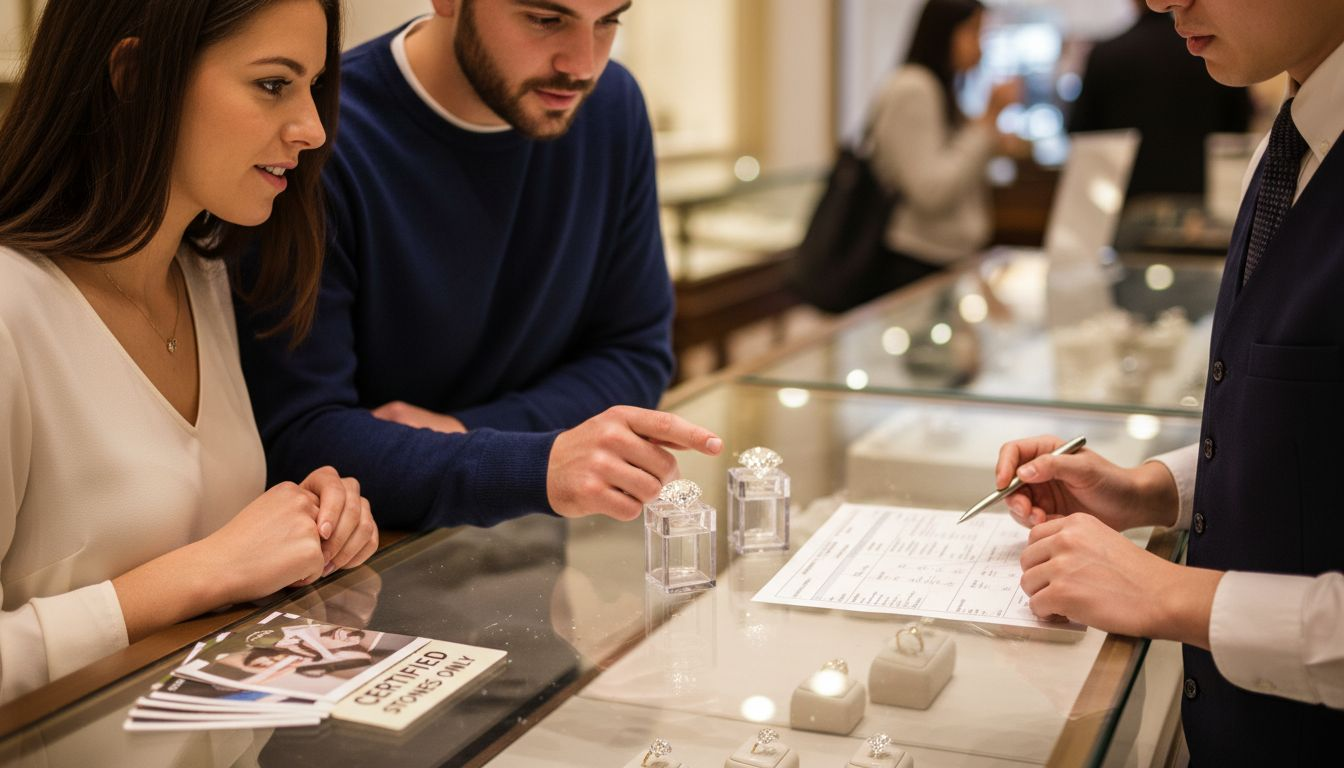
When you eventually want to sell or insure your ring, the certified diamond commands respect and confidence. Jewelers, appraisers, and buyers instantly know its verified specifications.
Pro tip: Always verify the certification number on your grading report matches the number laser-inscribed on your diamond’s girdle—this confirms the document matches your actual stone.
Types of Diamond Certifications and Key Distinctions
Not all diamond certifications are created equal. Different laboratories offer different report types, each designed for specific situations and buyer needs. Understanding which certification you’re getting matters more than you might think.
The major certification bodies—GIA, IGI, and AGS—each maintain their own grading standards and report formats. While all reputable labs follow rigorous testing protocols, their approaches and documentation vary significantly.
The Major Certification Labs
Three organizations dominate the diamond certification world:
- GIA (Gemological Institute of America) is the most widely recognized and respected, particularly for natural diamonds
- IGI (International Gemological Institute) specializes in lab-grown diamonds and finished jewelry certification
- AGS (American Gem Society) focuses on cut grading and consumer protection standards
Each lab maintains independent grading systems, though they all evaluate the 4Cs. The differences matter when you’re comparing diamonds or planning to resell.
Here’s a quick comparison of the top diamond certification laboratories and their areas of expertise:
| Certification Lab | Primary Focus | Unique Strength |
|---|---|---|
| GIA | Natural diamonds | Strictest grading standards |
| IGI | Lab-grown and finished jewelry | Treatment and origin transparency |
| AGS | Cut grading and consumer protection | Proprietary light performance system |
Different certification bodies use slightly different grading scales, so a diamond certified by one lab may receive a different grade from another—even if it’s the same stone.
GIA Report Types
The GIA offers multiple report formats for different diamond types. The most common is the Diamond Grading Report, which includes a detailed diagram mapping the diamond’s unique characteristics like inclusions and surface marks.
For smaller diamonds under one carat, GIA provides the Diamond Dossier—a lighter, more affordable option that still carries GIA’s credibility.
The GIA also issues specialized reports like the Diamond Origin Report for colored diamonds and the online-only Diamond eReport for added convenience.
IGI and AGS Distinctions
IGI stands out for certifying lab-grown diamonds and finished jewelry pieces, not just loose stones. This matters if you’re buying a ring that’s already set. IGI emphasizes treatment disclosures and origin documentation.
AGS takes a different approach, placing special emphasis on cut grading using their proprietary system. They also focus on consumer advocacy and transparency in grading standards.
What Each Report Documents
While all major laboratories cover the 4Cs, their reports vary in additional information:
- Treatment disclosure clearly identifies any enhancements or treatments applied
- Origin information documents geographic source for certain colored diamonds
- Fluorescence notes describe how the diamond reacts under ultraviolet light
- Inclusions mapping provides visual diagrams of internal characteristics
- Polish and symmetry grades evaluate finishing quality
Some reports include more detail than others. A GIA Diamond Grading Report is more comprehensive than a Diamond Dossier, for example.
Choosing Which Certification Matters
For engagement rings, GIA certification carries the most weight in resale value and insurance claims. Insurers and jewelers instantly recognize and trust GIA grades.
If you’re buying a lab-grown diamond, IGI certification is highly respected and specifically designed for that market. For vintage or colored diamonds, you might encounter AGS or specialty reports.
The certification you choose affects not just your purchase decision, but your diamond’s future liquidity and value verification.
Pro tip: Request the full certification report before purchase, not just a summary—the detailed documentation protects you if you ever need independent verification or resale appraisal.
How Certification Protects Buyers and Investments
Certification acts as your financial shield when buying a diamond. It protects you from overpaying, misrepresentation, and makes resale far easier down the road. Without certification, you’re vulnerable to deception and have no objective proof of what you own.
Think of certification as a professional appraisal you carry with your diamond forever. It documents exactly what you purchased and ensures that documentation remains valid for insurance, resale, or future authentication.
Protection Against Overpaying
Uncertified diamonds create information imbalance. The seller knows the stone’s actual quality; you’re guessing based on appearance alone. Certification eliminates that gap by providing objective assessment of the diamond’s 4Cs.
With a certified report, you know the exact color grade, clarity grade, cut quality, and carat weight. You can compare this data against current market prices and verify you’re paying fair value.
This transparency prevents you from paying premium prices for diamonds that don’t deserve them or unknowingly accepting lower-quality stones at high-end prices.
Ethical Sourcing Assurance
Certification confirms your diamond is conflict-free. Programs like the Kimberley Process regulate rough diamond trade, and certified diamonds come with documentation proving ethical sourcing.
As a couple, you can feel confident knowing your engagement ring doesn’t fund conflict or exploitation. This matters not just morally, but because future buyers will ask the same questions.
Certified diamonds with clear conflict-free documentation command better resale value and reputation.
Certification provides the documentation trail that proves your diamond was responsibly sourced and ethically traded—something impossible to verify without official certification.
Insurance and Resale Protection
Insurance companies require certification for coverage. Without it, you’ll face challenges filing claims or proving your diamond’s value if it’s lost or stolen.
When you eventually resell, certification dramatically increases buyer confidence. They don’t have to take your word for quality—they have a credible third-party report.
Certified diamonds sell faster and command higher prices than uncertified stones of comparable appearance. The documentation justifies the investment.
Preventing Fraud and Misrepresentation
Certification stops sellers from making false claims about quality or origin. The grading report documents exactly what the diamond is—nothing more, nothing less.
You’re protected against common deceptions:
- Claiming a lower clarity grade to justify higher pricing
- Hiding treatments or enhancements that affect durability
- Misrepresenting origin or sourcing claims
- Inflating carat weight or color grade
The certified report is your proof that the diamond you received matches what you paid for.
Long-Term Investment Security
Certified diamonds maintain documented value. If you want to upgrade later, sell to another buyer, or pass the ring to your children, that certification travels with the stone.
Your investment is protected by objective documentation that doesn’t fade, change, or depend on anyone’s opinion. The grading report remains valid indefinitely.
Pro tip: Store your certification report separately from your ring—keep it in a safe deposit box or secure digital copy—so you have proof of ownership and quality even if the diamond is lost or stolen.
Certified vs. Uncertified Diamonds: Key Risks and Benefits
The choice between certified and uncertified diamonds comes down to risk versus savings. Uncertified diamonds might cost less upfront, but that savings often disappears when you try to resell or insure your ring. Certified diamonds cost more initially but protect your investment for decades.
Understanding the real differences helps you make a choice aligned with your long-term goals as a couple.
The Core Difference
Certified diamonds come with official grading reports from independent laboratories documenting the 4Cs. Uncertified diamonds have no third-party verification—you’re taking the seller’s word for quality.
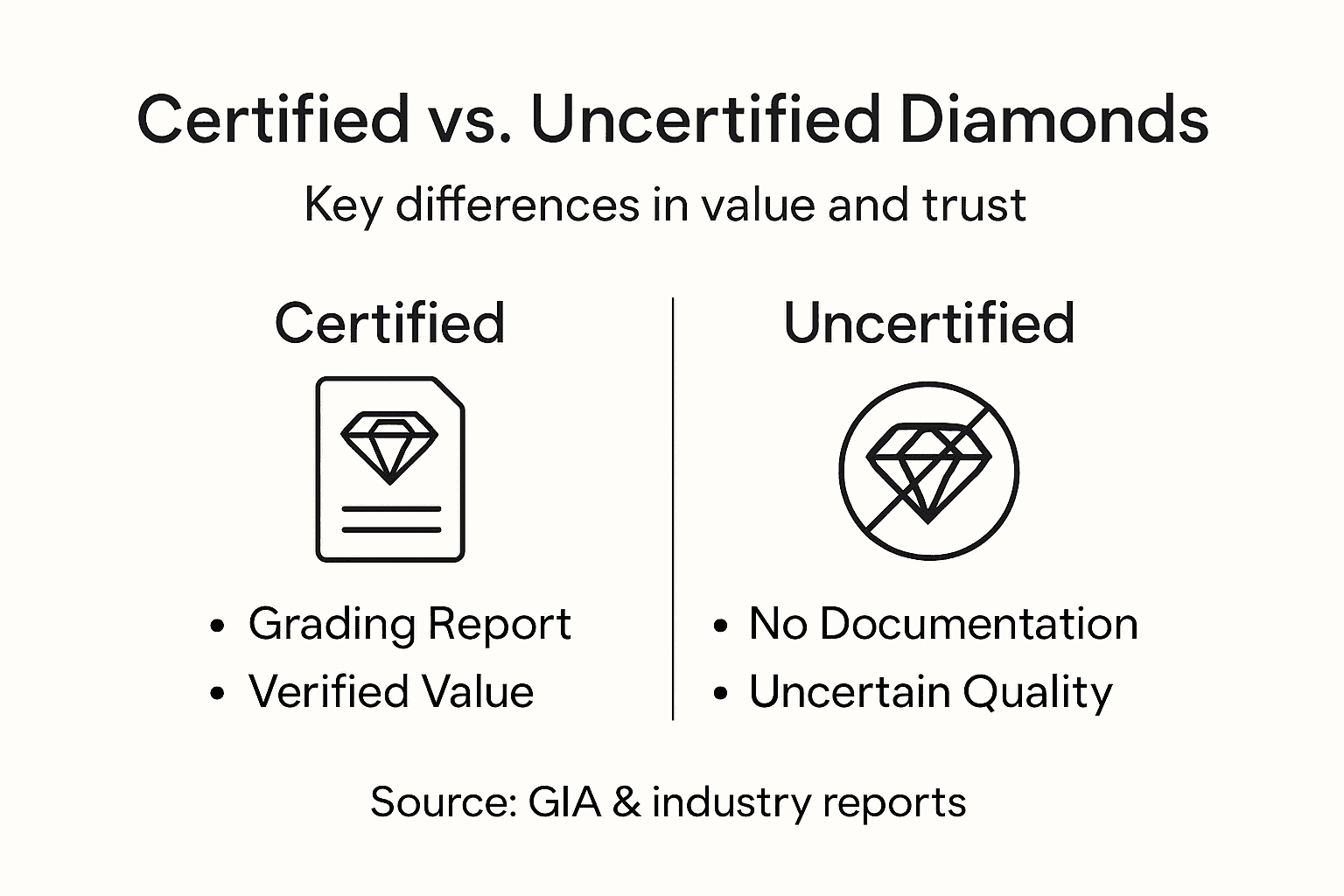
This single distinction creates ripple effects across pricing, resale value, insurance coverage, and peace of mind. One approach offers transparency; the other offers uncertainty.
To help you choose between certified and uncertified diamonds, review these key differences:
| Aspect | Certified Diamond | Uncertified Diamond |
|---|---|---|
| Quality Verification | Independent grading report | Seller’s description only |
| Insurance Eligibility | Readily insurable | Difficult to insure |
| Resale Value | Maintains higher resale price | Reduced resale demand |
| Ethical Sourcing Proof | Documented and traceable | Unknown or unverifiable |
Benefits of Certified Diamonds
Certified diamonds provide documented assurance about quality. Independent grading ensures accurate 4Cs assessments that you can verify and compare against market prices.
Key advantages include:
- Objective third-party verification of color, clarity, cut, and carat weight
- Documentation that supports insurance claims and future appraisals
- Higher resale value since buyers trust the grading report
- Proof of conflict-free sourcing and ethical origin
- Ability to compare multiple diamonds using consistent standards
- Greater liquidity when you decide to sell or upgrade
The certification travels with your diamond forever, making it easier to establish value at any point.
Risks of Uncertified Diamonds
Uncertified diamonds carry hidden risks that can cost you significantly. Without independent verification, you depend entirely on the seller’s claims about quality and authenticity.
Common risks include:
- Paying premium prices for lower-quality stones
- Undisclosed treatments that affect durability and value
- Misrepresented characteristics that only show up later
- Difficulty insuring without documented proof of quality
- Dramatically reduced resale value or buyer interest
- No way to authenticate the stone independently
- Future appraisers may assign lower grades, reducing apparent value
Uncertified diamonds lack the transparency that protects you—what you see isn’t necessarily what you get, and future buyers won’t trust claims without documentation.
The Resale Reality
When couples eventually upgrade or need to sell, certification matters enormously. A certified diamond with documentation sells faster and at higher prices than an uncertified stone of identical appearance.
Buyers demand proof. Without it, they assume the worst about quality and offer lower prices accordingly. The savings from buying uncertified diamonds evaporate quickly in resale situations.
Certified stones maintain market liquidity. Jewelers, dealers, and individual buyers recognize and trust the grading report immediately.
Insurance and Peace of Mind
Insurance companies require certification for valuable diamond coverage. Without it, you’ll struggle to prove the diamond’s value for claims.
Certification gives you documented proof of what you own. This matters psychologically—you know exactly what your ring is worth and can rest assured it’s legitimate.
The peace of mind justifies the certification cost for most couples planning to keep their rings long-term.
Making Your Decision
Choose certified diamonds if you want transparency, investment security, and easier resale. Choose uncertified only if you’re buying from a trusted jeweler at a significant discount and plan to keep the ring indefinitely without insurance.
For engagement rings—stones you’ll wear for decades and potentially pass to children—certification is the wiser choice.
Pro tip: If you find an uncertified diamond at a great price, ask the jeweler to get it certified before purchase; the cost is typically $200-400 and provides permanent protection for your investment.
Ethical Sourcing and Reputable US Labs
Ethical sourcing matters more than ever when buying a diamond. You want to know your engagement ring doesn’t fund conflict, exploitation, or environmental damage. Reputable US laboratories enforce strict standards that verify both quality and ethical origin.
Choosing diamonds certified by established US labs ensures your purchase aligns with your values and supports responsible practices.
What Ethical Sourcing Means
Conflict-free diamonds come from sources without ties to armed conflict or human rights abuses. The Kimberley Process regulates rough diamond trade internationally, and reputable labs verify compliance with these standards.
Ethical sourcing goes beyond just avoiding conflict. It includes responsible mining practices, fair labor conditions, and environmental stewardship. Certified diamonds come with documentation proving their origin and handling.
When you buy certified, you’re supporting an industry that values transparency and accountability.
Why US Labs Lead on Ethics
American certification laboratories like GIA maintain some of the world’s strictest ethical standards. These labs don’t just grade diamonds—they verify the entire supply chain.
Reputable US labs enforce comprehensive ethical standards in their certification processes, including conflict-free verification and responsible sourcing documentation. They invest heavily in traceability systems that track diamonds from mine to consumer.
These laboratories have no financial incentive to overlook ethical concerns. Their reputation depends on maintaining credibility with consumers and industry partners.
The Kimberley Process and Beyond
The Kimberley Process Certification Scheme prevents conflict diamonds from entering the mainstream market. Participating countries and organizations pledge to prevent diamond mining from funding armed conflict.
Reputable US labs go further, often implementing additional scrutiny beyond Kimberley requirements. They examine:
- Mining company practices and environmental records
- Labor conditions in producing countries
- Community impact and fair compensation
- Chain of custody documentation
- Treatment disclosures and enhancements
This layered approach gives you confidence your diamond meets multiple ethical standards.
How Certification Verifies Ethics
When you receive a certified diamond report, it includes origin documentation. This paperwork traces your diamond’s journey from mine through distribution to your jeweler.
The certification process includes independent verification that the diamond complies with ethical sourcing standards. Labs maintain relationships with trusted suppliers who meet their strict requirements.
You get proof, not just promises.
Certified diamonds come with documented evidence of ethical sourcing—something impossible to verify with uncertified stones where the origin remains unknown and unverified.
Lab-Grown as an Ethical Alternative
Consider that lab-grown diamonds offer ethical advantages while providing the same beauty and durability as mined stones. They eliminate mining concerns entirely and still require certification for quality assurance.
Both mined certified diamonds and lab-grown certified diamonds can align with your ethical values. The key is choosing certification that documents and verifies those claims.
Questions to Ask Your Jeweler
Before purchasing, verify your diamond’s certification status:
- Can you provide the official certification report from a recognized US lab?
- Does the report include origin documentation?
- What conflict-free verification process was used?
- Are there any undisclosed treatments or enhancements?
- Can you explain the diamond’s supply chain history?
Reputable jewelers welcome these questions and readily provide documentation. If they hesitate or avoid specifics, that’s a warning sign.
Pro tip: Request written documentation of your diamond’s ethical sourcing and certification before finalizing your purchase—this gives you permanent proof of the claims made during the sale.
Secure Your Forever with Certified Diamonds from SuperJeweler
Choosing a certified diamond means you are investing in clarity, quality, and trust. You know exactly what you are getting with an independently verified 4Cs grading report. At SuperJeweler, we understand the importance of transparency and ethical sourcing when selecting the perfect engagement ring or fine jewelry piece. Our collection includes both natural and lab-grown certified diamonds, ensuring you find the stone that matches your values and budget without sacrificing brilliance or security.

Explore our wide range of certified diamonds and customizable engagement rings today at SuperJeweler to experience affordable luxury backed by trusted certification. Don’t wait to protect your investment and celebrate your love with confidence. Start your journey now by browsing the Engagement Rings Collection, or discover our certified Lab-Grown Diamonds for an ethical and brilliant choice.
Frequently Asked Questions
What are certified diamonds?
Certified diamonds come with official grading reports from independent laboratories, detailing the quality of the stone based on the 4Cs: Color, Clarity, Cut, and Carat Weight. This verification provides buyers with transparency and assurance about the diamond’s quality.
How does certification protect my investment in a diamond?
Certification protects your investment by providing objective proof of the diamond’s quality, ensuring you don’t overpay or receive a misrepresented product. It also enhances insurance and resale options, as certified diamonds are more valuable and trustworthy to future buyers.
What are the 4Cs and why are they important?
The 4Cs represent Color, Clarity, Cut, and Carat Weight, which are the universal metrics used to evaluate and compare diamonds. Understanding these criteria helps you make informed choices and ensures you’re paying a fair price for the quality you desire.
Why is independent grading important for diamonds?
Independent grading is crucial because it offers an unbiased assessment of the diamond’s quality without conflict of interest. Laboratories like GIA and IGI follow strict grading protocols, ensuring that the evaluations are accurate and trustworthy, giving buyers confidence in their purchase.
Recommended
- What Is a Certified Diamond and Why It Matters
- Why Diamond Quality Matters for Engagement Rings
- Why Buy Diamond Earrings: Beauty, Value, and Ethics
- Diamond Clarity – How It Impacts Ring Value
