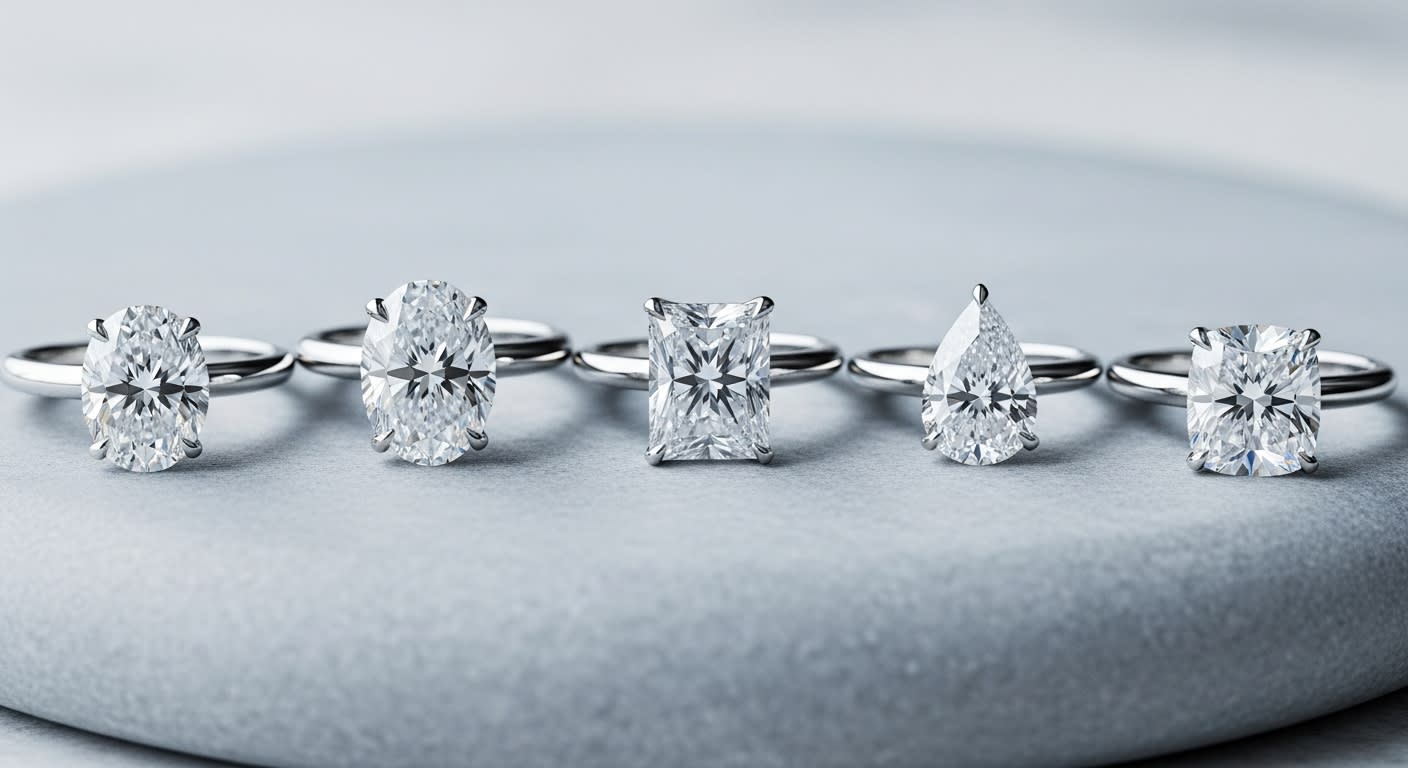
Choosing an engagement ring is a moment packed with excitement and meaning, especially for couples who want their values to shine as brightly as their new diamond. More couples across the United States, Canada, and beyond are seeking rings that reflect both their personal style and thoughtful priorities. With options like lab-grown diamonds delivering ethical luxury and major savings, you can create a ring that is beautiful, affordable, and uniquely yours while staying true to what matters most.
Table of Contents
- Defining Engagement Rings And Their Symbolism
- Traditional Versus Lab-Grown Diamond Rings
- Customization And Personalization Options
- Ethical Sourcing And Environmental Impact
- Cost, Value, And Shopping Mistakes To Avoid
Key Takeaways
| Point | Details |
|---|---|
| Symbolism of Engagement Rings | Engagement rings symbolize commitment and personal values, differing in meaning based on design choices and individual circumstances. |
| Mined vs. Lab-Grown Diamonds | Traditional mined diamonds carry heritage but lab-grown options offer cost savings and ethical sourcing, aligning with modern values. |
| Customization Potential | Custom engagement rings provide control over design and budget, allowing for personal symbolism that reflects each couple’s unique story. |
| Importance of Certification | Always obtain third-party certification for diamonds to ensure quality and authenticity, protecting your investment for future needs. |
Defining Engagement Rings and Their Symbolism
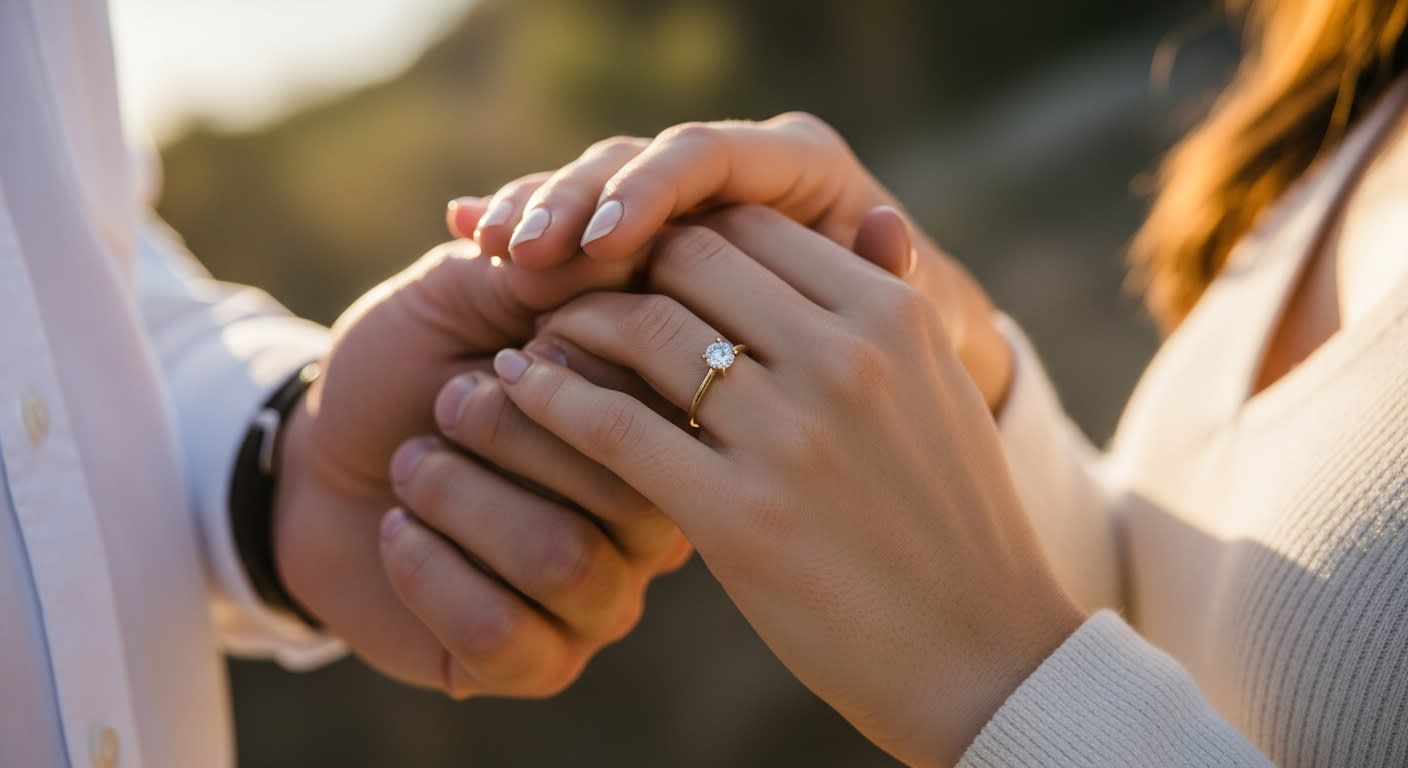
An engagement ring is far more than a piece of jewelry. It’s a tangible symbol of commitment, a promise of a shared future, and for many couples, one of the most meaningful purchases you’ll ever make together. At its core, an engagement ring is a piece of jewelry, typically worn on the fourth finger of the left hand, that signals an engagement between two people intending to marry. But the real story goes much deeper.
The history of engagement rings reveals something profound about human connection. Engagement rings began as iron or copper bands in Ancient Rome, where they served as betrothal agreements between families. Over centuries, these simple bands evolved into the elaborate designs we see today, shaped by religious traditions, royal influences, and changing cultural values. The circular shape of the ring itself carries profound meaning. Since ancient times, the unbroken circle has represented eternity, endless love, and the cyclical nature of life itself. Unlike other jewelry that has a beginning and an end, a ring simply continues, just like the commitment it represents.
What makes engagement rings particularly special to couples like you is their versatility in personal expression. A diamond solitaire might appeal to someone who values timeless tradition, while choosing an engagement ring involves considering various design options that reflect individual style, budget, and values. The gemstone or diamond you select carries its own meaning. Diamonds became synonymous with romance and status through marketing brilliance in the 20th century, but they’re far from the only choice. Colored gemstones, lab-grown diamonds, and alternative stones each tell a different story about what matters most to you as a couple. Some couples prioritize ethical sourcing and sustainability. Others focus on getting maximum sparkle within their budget. Still others want a unique stone that won’t look identical to a thousand other rings.
The symbolism behind your engagement ring is ultimately personal. Whether you choose a traditional diamond or a lab-grown alternative, whether you prefer a minimalist band or an intricate vintage design, the ring represents your unique commitment. What cost $500 might mean just as much as what cost $5,000 if it aligns with your values and circumstances. For couples managing student loans, saving for a home, or simply being intentional about their spending, this matters enormously. Your engagement ring should feel right to you, not dictated by outdated expectations.
Pro tip: _Before shopping, discuss with your partner what the ring represents to each of you and what matters most financially and ethically. This conversation will guide your choices far better than any trend or external pressure.
Traditional Versus Lab-Grown Diamond Rings
If you’re shopping for an engagement ring right now, you’ve probably encountered a choice that didn’t exist for your parents’ generation: traditional mined diamonds or lab-grown diamonds. This decision matters more than you might think, especially when you’re balancing budget, ethics, and getting the ring of your dreams. The two options look identical to the naked eye, but the differences run much deeper than appearance.
Let’s start with what they actually are. Traditional diamonds form deep within the Earth over billions of years under extreme pressure and heat. They’re mined from the ground, then cut and polished into the gems you see in jewelry stores. Lab-grown diamonds, by contrast, are created in controlled laboratory environments using technology that replicates the natural diamond-forming process. Laboratory-grown diamonds are produced via high-pressure high-temperature and chemical vapor deposition methods, making them physically and chemically identical to mined diamonds. Here’s the kicker: a gemologist needs specialized testing equipment to tell them apart. Your friends, your family, and even jewelers examining your ring without specific tools won’t be able to distinguish between the two.
This is where the practical advantages for your situation become clear. Lab-grown diamonds typically cost 30 to 50 percent less than comparable mined diamonds. That means you can either save significant money or get a noticeably larger or higher-quality stone for the same budget. For couples in your age group managing student debt, saving for a home down payment, or simply being thoughtful about spending, this price difference can be substantial. A traditional mined diamond that costs $8,000 might have a lab-grown equivalent priced at $4,000 to $5,600. That freed-up cash could go toward your honeymoon, your first apartment together, or simply building financial security as a couple.
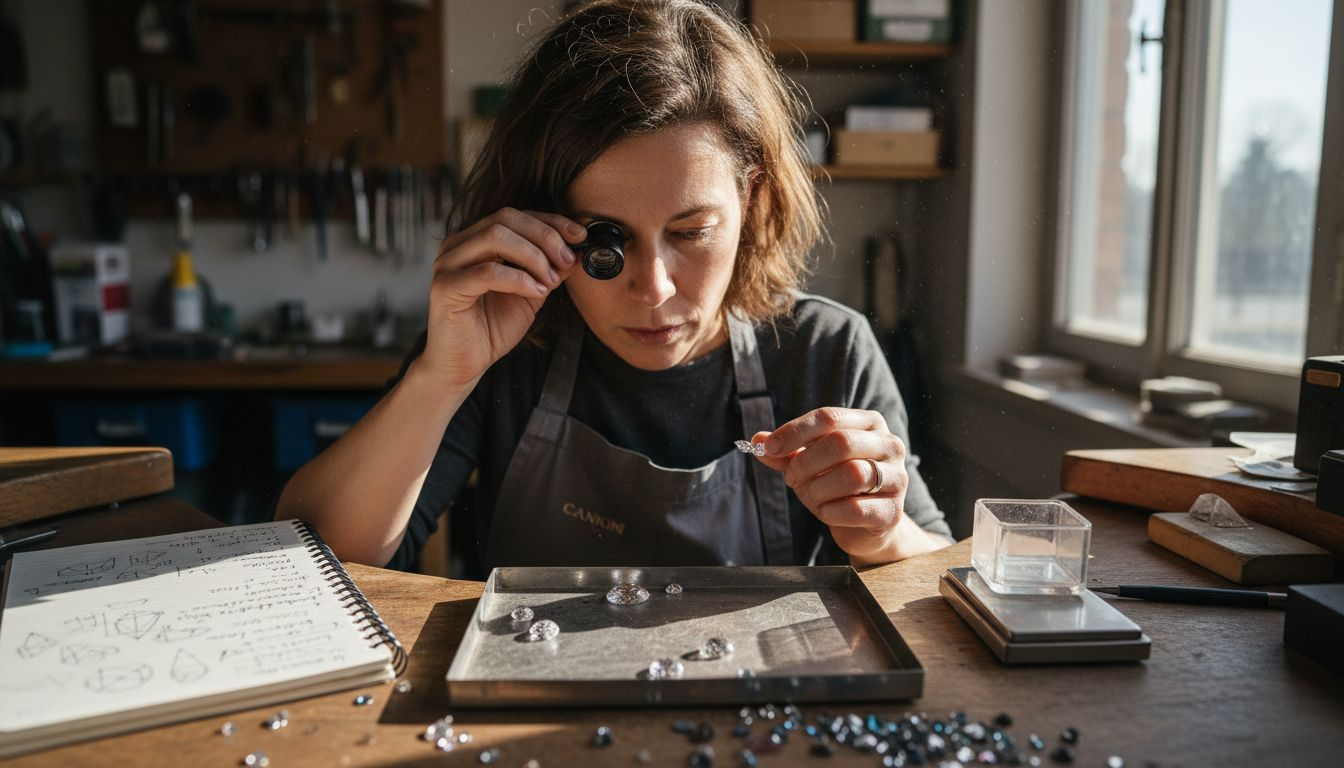
Beyond price, the ethical and environmental considerations deserve serious attention. Traditional diamond mining has documented environmental impacts and complex supply chain concerns. Lab-grown diamonds eliminate these issues entirely. They’re produced in controlled facilities without the mining, habitat disruption, or the ethical complexities associated with traditional diamond extraction. If sustainability and ethical sourcing matter to you as a couple, lab-grown diamonds align perfectly with those values. Many couples find this aligns directly with who they are and what they believe in.
There are reasons some couples still choose traditional diamonds. Mined diamonds carry a sense of rarity and heritage. They’ve traveled through billions of years of Earth’s history. Some people simply prefer knowing their diamond came from nature rather than a laboratory, and that preference is completely valid. Traditional diamonds also hold their value in ways that are well-established and understood. Resale markets for mined diamonds have longer track records.
Here’s what matters most: both options are real diamonds with identical optical and physical properties. Your choice should be based on your values, budget, and what feels right to you as a couple. If you want to maximize your budget while prioritizing ethics and sustainability, lab-grown diamonds are genuinely transformative. If heritage and the story of a mined diamond resonates with you more deeply, that’s valid too. The best engagement ring isn’t about what’s objectively better. It’s about what aligns with your priorities and makes you both happy.
Here’s a quick comparison of traditional mined diamonds and lab-grown diamonds to help inform your decision:
| Aspect | Traditional Mined Diamond | Lab-Grown Diamond |
|---|---|---|
| Origin | Formed underground for billions of years | Created in laboratories in weeks |
| Visual Differences | Indistinguishable to the naked eye | Indistinguishable to the naked eye |
| Cost | Higher, often double or more | 30-50% less expensive |
| Environmental Impact | Land disruption, higher carbon footprint | Minimal, no mining impact |
| Ethical Concerns | Potential for conflict stones | Free from mining issues |
| Value Retention | Long-established resale market | Resale market still emerging |
| Customization | Wide options, some supply limits | Easily customized, consistent supply |
Pro tip: Ask your jeweler for certification documents for any diamond you’re considering, whether lab-grown or mined, so you have independent verification of the stone’s quality and characteristics.
Customization and Personalization Options
One of the most exciting parts of choosing an engagement ring is making it yours. You’re not limited to what’s sitting in a jewelry store display case. Customization lets you create something that tells your specific love story, not someone else’s. This is especially powerful for couples in your situation who care about budget control and getting exactly what you want rather than settling for what’s available.
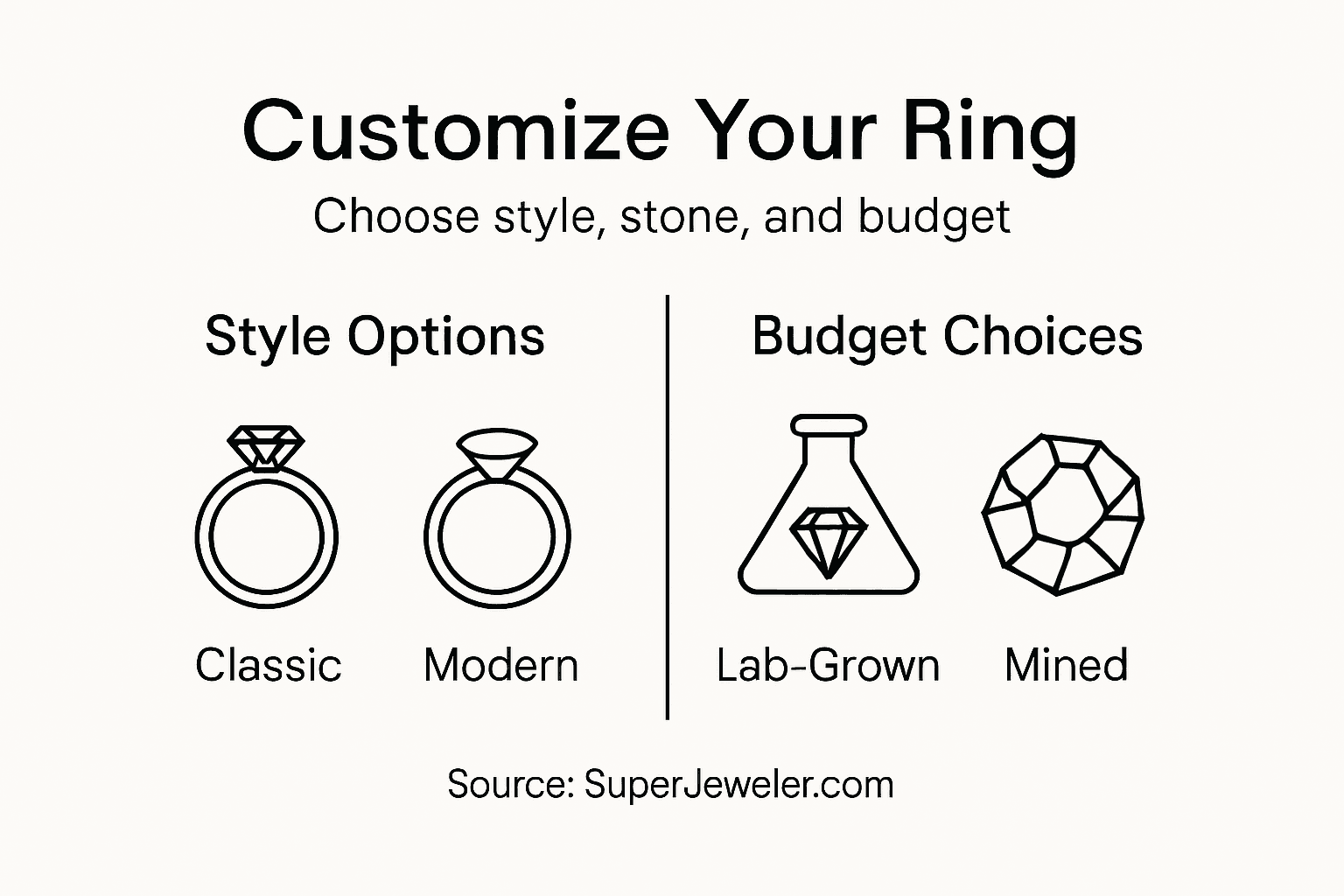
When you customize an engagement ring, you’re controlling multiple elements that define the final piece. The gemstone is your biggest creative choice. You might select a lab-grown diamond for ethical and budget reasons, choose a colored gemstone like sapphire or emerald, or even combine multiple stones in one design. The metal matters too. Gold, platinum, white gold, rose gold, or even palladium each create different aesthetics and price points. Then comes the setting style, which determines how your gemstone is positioned and held. A solitaire focuses all attention on the center stone. A halo setting uses smaller diamonds around the main gem for extra sparkle. Three stone designs tell a story of your past, present, and future together. The possibilities expand exponentially when you combine these choices. Beyond the visible design, personalized engagement rings allow couples to express their unique love story through engravings and custom details that hold private meaning.
What makes customization so valuable for your budget is control and transparency. When you work with a jeweler to build your ring from scratch, you see exactly where your money goes. You’re not paying for a brand name or a retail markup on a pre-made design. If you want to allocate more budget toward a higher quality stone and less toward elaborate band detailing, you can do that. If you prefer an intricate design with a more modest center gemstone, that’s completely possible too. Many couples find they can get significantly more ring for their money through customization compared to buying something off the shelf. You also avoid the trap of compromising on a pre-made ring that’s close to what you want but not quite right.
Here’s another advantage that matters when you’re building something meaningful: customization lets you incorporate personal symbolism. Your engraving might include your initials, a date, coordinates of where you got engaged, or even a private message only you two will ever see. Some couples choose metals or gemstones that connect to their heritage or personal meaning. Others build designs that reflect shared interests or inside jokes. A musician might choose a band with musical note motifs. A couple who loves hiking might select a setting inspired by mountain peaks. These personal touches transform a piece of jewelry into something genuinely irreplaceable.
The customization process typically works like this. You consult with a jeweler who listens to your vision, shows you design options, and discusses your budget openly. They create sketches or digital renderings so you can see the design before production starts. You can adjust details until it’s perfect. Then they source materials and create your ring. This timeline varies but usually takes two to four weeks. Some online jewelry retailers offer customization tools that let you see design combinations in real time before ordering, giving you instant visual feedback on your choices.
Below is an overview of popular customization options for creating your unique engagement ring:
| Customization Area | Common Choices | Budget Impact |
|---|---|---|
| Gemstone Type | Diamond, sapphire, emerald, lab-grown | High variability, major influence |
| Metal Selection | Gold, platinum, rose gold, white gold | Moderate, depends on metal market |
| Setting Style | Solitaire, halo, three-stone | Can add cost, affects durability |
| Engraving | Dates, initials, personal symbols | Usually small extra cost |
Pro tip: Request a detailed breakdown of costs from your jeweler before ordering so you understand exactly what you’re paying for each component, from the gemstone to the metal to labor, giving you confidence in your investment.
Ethical Sourcing and Environmental Impact
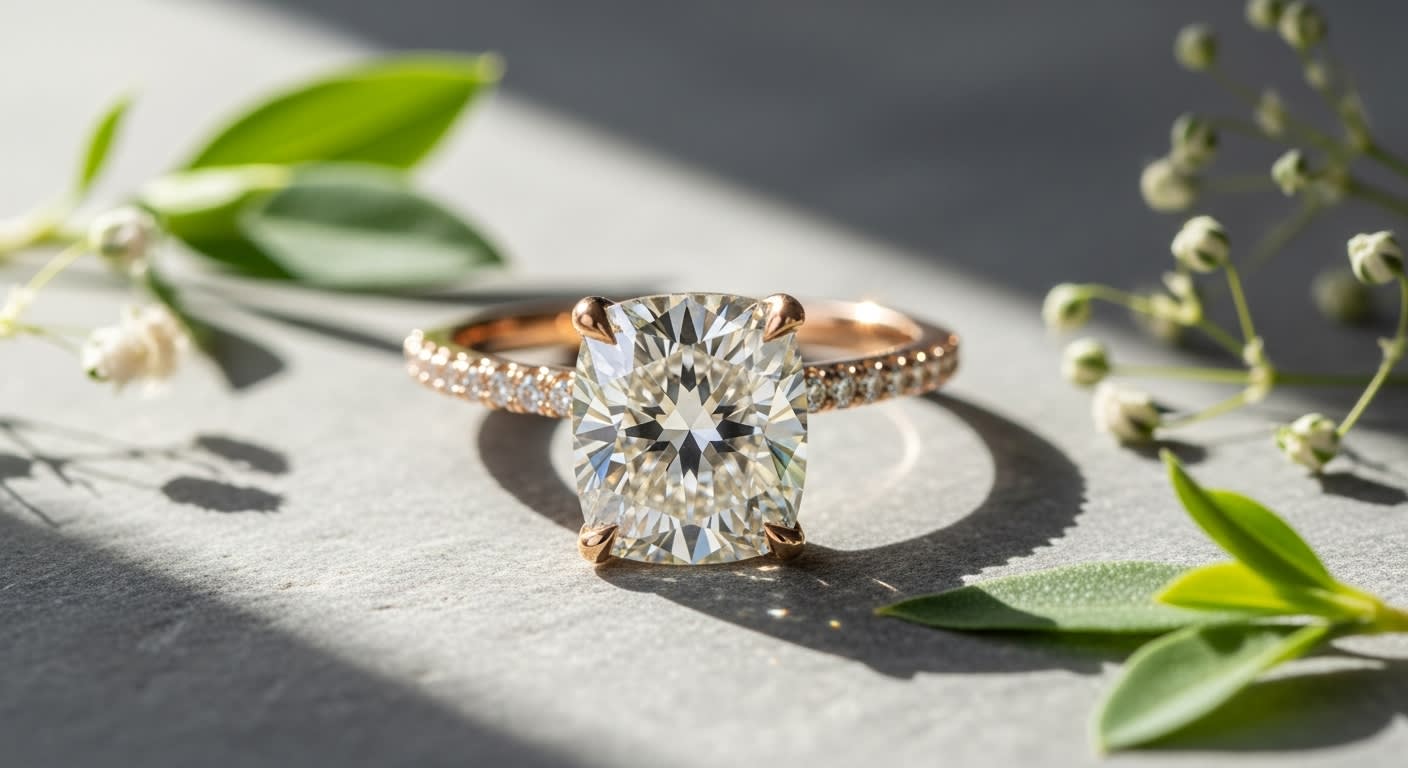
When you’re choosing an engagement ring, you’re making a statement about what matters to you as a couple. For many of you, that includes thinking about where your ring comes from and what impact it has on the world. This matters more than previous generations realized. The engagement ring industry is shifting, and you have genuine options to align your purchase with your values.
Traditional diamond mining carries real environmental and social costs. Mining operations require significant land disruption, water usage, and energy consumption. They can damage ecosystems, displace communities, and create complex labor concerns in regions where diamonds are extracted. Beyond environmental damage, there’s also the historical issue of conflict diamonds, stones mined in war zones and sold to finance armed conflict. While the Kimberley Process was established to prevent this, many ethical advocates argue it doesn’t go far enough. Then there’s the broader question of fair labor practices and whether miners and their communities benefit fairly from the wealth their work generates. These aren’t hypothetical concerns. They’re real issues affecting real people.
This is where your choices become powerful. Ethically sourced engagement rings prioritize conflict-free diamonds and fair labor practices while reducing environmental damage. Lab-grown diamonds represent one major ethical shift. They eliminate mining entirely, removing environmental disruption and the complex supply chain concerns of mined diamonds. Recycled metals provide another sustainable option. Instead of mining new precious metals from the ground, recycled gold, platinum, and silver are repurposed from existing jewelry and industrial sources. This dramatically reduces environmental impact while still delivering the same beautiful, high-quality materials. Many jewelers now offer rings made with recycled metals and lab-grown diamonds, giving you a genuinely sustainable option.
Transparency and certification matter tremendously when you’re trying to make ethical choices. Reputable jewelers should be able to tell you exactly where their diamonds come from and provide documentation. Third-party certifications from organizations like the Gemological Institute of America give you independent verification of a stone’s authenticity and sometimes its sourcing. Some jewelers specialize in conflict-free mined diamonds, working with suppliers who can document ethical practices throughout the supply chain. Others focus entirely on lab-grown diamonds and recycled metals. The key is asking questions and expecting clear answers. You deserve to know the origin story of your ring.
Here’s what makes this especially relevant to you right now. Lab-grown diamonds cost less than mined diamonds while being more ethical. That’s not a trade-off where you sacrifice something. You’re actually getting more value while making a choice that aligns with your values. Similarly, recycled metals cost the same as newly mined metals but carry none of the mining impact. When you can make the ethical choice without paying a premium, it becomes a no-brainer decision for many couples. You’re not being asked to pay extra for your values. You’re being given the chance to live them while saving money.
The broader trend is moving toward sustainability across the jewelry industry. Major retailers are increasingly offering lab-grown diamonds and recycled metal options. Smaller jewelers and online retailers have been ahead of this curve for years, recognizing that younger couples care deeply about these issues. When you shop, you have more ethical options available than ever before. Your engagement ring can be beautiful, affordable, and aligned with your conscience.
Pro tip: Ask your jeweler for written documentation or certification about the sourcing of your diamond and metals before you purchase, and verify any certifications through the issuing organization’s website to confirm authenticity.
Cost, Value, and Shopping Mistakes to Avoid
Let’s be honest. Engagement ring shopping can feel overwhelming. You’re navigating marketing messages designed to make you spend more, social pressure to match what others bought, and genuine uncertainty about what represents good value. The good news is that understanding common mistakes helps you avoid them. You’ll walk away with a ring you genuinely love without financial regret.
The first major mistake is confusing cost with value. A ring that costs $10,000 is not automatically better than one costing $4,000. Price reflects many factors. Brand reputation, retail location, marketing spend, and profit margins all factor into the sticker price. A lab-grown diamond from an online retailer might offer far better value than a mined diamond from a luxury brand, even if they’re visually identical. Value means getting what you actually want and need at a price that feels right for your budget. It means the ring will be durable, look exactly as you hoped, and make you happy for decades. That’s what matters. Before you shop, establish a realistic budget based on your actual financial situation, not on some outdated rule about spending three months of salary. That rule was literally invented by a marketing campaign in the 1930s to sell more diamonds. Your budget should reflect your priorities.
Another critical mistake is ignoring durability and practicality. Choosing a ring involves prioritizing quality and design durability for daily wear, which ensures the piece withstands years of actual life. A delicate vintage design with intricate details might look stunning in photos but could be impractical if you have an active lifestyle or work with your hands. Thin bands can bend or break. Ornate settings trap dirt and require frequent cleaning. Stone prongs can loosen with impact. When you’re shopping, ask yourself honest questions. Do you work with your hands? Exercise frequently? Have young children or pets? These details should influence your design choices. A simple solitaire might be worth more to you than an elaborate halo setting if it’s something you can wear comfortably every single day without worry.
Skipping certification is a costly error that many people regret. Always require a third-party certification from the Gemological Institute of America or similar reputable organization. This isn’t just about authentication. The certification provides an independent assessment of the diamond’s qualities, which you’ll need if you ever insure the ring, resize it, or work with a different jeweler in the future. Without certification, you’re trusting only the seller’s word about what you’re purchasing. That’s risky. Get it in writing from an independent source. Another mistake is chasing trends without thinking about longevity. That ultra-modern geometric setting or rose gold band might be everywhere right now, but will it still feel right in five years? Engagement rings are meant to be worn for life, not replaced seasonally. Stick with designs you genuinely love rather than designs you think you should love.
Here’s a mistake that costs couples real money: not shopping around. Visit multiple jewelers. Compare prices for the same stone specifications. Get quotes online. Check local retailers. The variation in pricing can be shocking. Two identical lab-grown diamonds can have wildly different prices depending on where you buy them. Don’t settle on the first option. Take your time, compare carefully, and don’t let anyone rush you into a decision.
Finally, avoid buying before you’re ready. Don’t let engagement pressure or timelines push you into a hasty purchase. The best rings are thoughtfully chosen, not impulsively bought. You have time to research, compare, and make a decision you feel confident about.
Pro tip: Request a detailed diamond certification, get the quote in writing with all specifications, and ask about return or exchange policies before committing to any purchase so you have protection if the ring doesn’t meet your expectations.
Discover the Perfect Engagement Ring That Reflects Your Unique Love Story
Choosing an engagement ring is a meaningful journey where values, budget, and personal expression come together. This article highlights the importance of finding a ring that symbolizes your commitment while addressing key challenges like balancing cost, ethical sourcing, and customization. You want a ring that not only dazzles but also aligns with your lifestyle and convictions.
At SuperJeweler.com, you have access to a wide selection of engagement rings including both traditional and lab-grown diamonds, offering ethical choices at competitive prices. Our customizable options empower you to create a ring tailored to your specific style and story without sacrificing quality or breaking the bank.
Experience hassle-free shopping backed by clear certifications, free worldwide shipping, and customer protections that bring peace of mind. Start your journey today by exploring our engagement rings collection and discover how easy it is to select a ring that truly speaks to your values and dreams. Don’t wait — find the ring that will represent your forever now.
Frequently Asked Questions
What is the symbolism behind engagement rings?
Engagement rings are symbols of commitment and promise between two people intending to marry. The circular shape represents eternity and endless love, while the chosen gemstone can reflect personal values and individual stories.
What are the key differences between traditional mined diamonds and lab-grown diamonds?
Traditional mined diamonds are formed naturally over billions of years in the Earth, whereas lab-grown diamonds are created in controlled environments using technology that mimics the natural process. Lab-grown diamonds typically cost 30-50% less and have a lower environmental impact.
How can I customize my engagement ring?
Customization options include choosing the gemstone type, selecting the metal, and deciding on the setting style. You can also add personal touches like engravings to reflect your unique love story, making the ring truly one-of-a-kind.
What should I consider to ensure I make an ethical choice in my engagement ring?
When choosing an engagement ring, consider sourcing options like lab-grown diamonds or ethically sourced mined diamonds. Look for jewelers who provide transparency about their materials and offer certifications to confirm ethical practices.
Recommended
- 7 Types of Engagement Rings for Every Budget and Style
- Role of Gemstones in Engagement Rings: Modern Impact
- How to Choose an Engagement Ring Step by Step Easily
- 7 Key Benefits of Lab-Grown Diamonds for Engagement Rings
