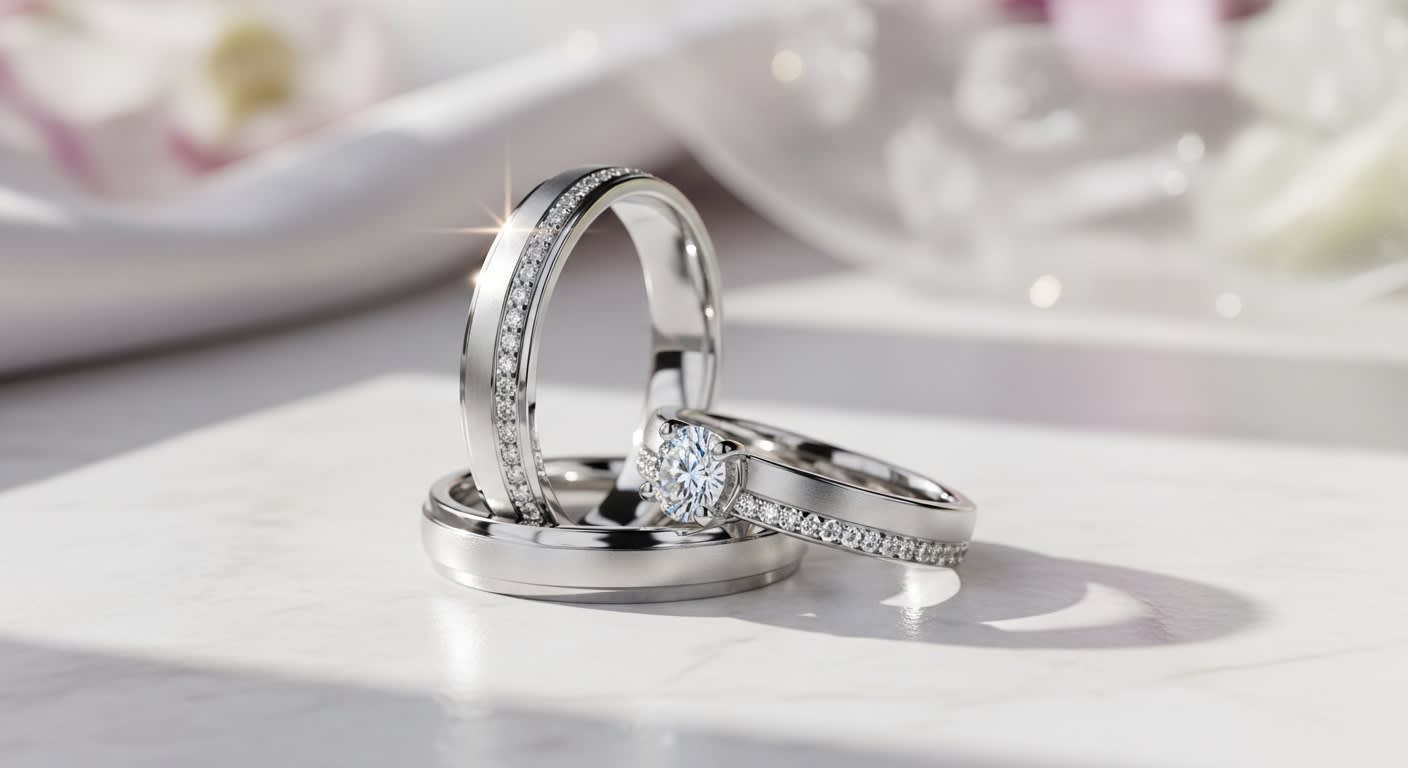
Choosing the perfect metal for your engagement or wedding ring can feel overwhelming when you’re comparing durability, appearance, and long-term value. White gold stands out as a popular choice, combining the timeless appeal of precious metal with modern aesthetics and practical benefits. This guide breaks down white gold’s composition, compares it to other metals, and provides actionable maintenance tips so you can make an informed decision that matches your lifestyle and budget.
Table of Contents
- Key takeaways
- What is white gold and how is it made?
- Benefits of choosing white gold for engagement and wedding rings
- White gold versus other popular ring metals: a detailed comparison
- How to care for and maintain your white gold ring
- Explore your perfect white gold ring at SuperJeweler
- Frequently asked questions
Key Takeaways
| Point | Details |
|---|---|
| White gold composition | White gold is an alloy of pure gold with white metals such as palladium nickel or silver, with 14K and 18K varieties indicating the gold content. |
| Rhodium plating | Rhodium plating provides a bright reflective white surface, adds scratch protection, and creates a hypoallergenic layer, but wears away over time revealing a warmer tone. |
| Daily wear durability | The alloy strengthens the metal for everyday wear, helping prongs hold stones and resist bending under normal stresses. |
| Price versus platinum | Platinum rings typically cost 40 to 50 percent more than an equivalent white gold piece, making white gold a budget friendly option. |
What is white gold and how is it made?
White gold is an alloy created by combining pure gold with white metals like palladium, nickel, or silver. Pure gold naturally has a yellow color, so jewelers add these metals to achieve the silvery-white appearance that makes white gold distinctive. The most common formulations are 14K and 18K white gold, where the karat number indicates the percentage of pure gold in the mix.
In 14K white gold, 58.3% is pure gold mixed with 41.7% other metals, while 18K contains 75% pure gold. The higher gold content in 18K creates a richer yellow undertone that shows through more noticeably when the rhodium plating wears away. Lower karat white gold tends to be harder and more scratch-resistant because the additional alloy metals strengthen the final product.
Manufacturers plate finished white gold ring options with rhodium, a platinum-group metal that enhances brightness and provides initial protection. This plating creates the brilliant white surface most people associate with white gold jewelry. Rhodium plating provides scratch protection but gradually fades to reveal the metal beneath, which appears slightly warmer in tone.
Key benefits and considerations of rhodium plating include:
- Creates an exceptionally bright, reflective white surface that enhances diamond brilliance
- Adds a protective layer that resists minor scratches and everyday wear
- Hypoallergenic coating helps prevent skin reactions for nickel-sensitive wearers
- Temporary protection that requires renewal every 1-2 years depending on wear patterns
- Relatively inexpensive to reapply through professional jewelers
The combination of gold’s malleability with harder alloy metals creates a material that holds intricate details while remaining durable enough for daily wear. This balance makes white gold particularly suitable for engagement rings featuring delicate prong settings or detailed engraving work.
Benefits of choosing white gold for engagement and wedding rings
White gold offers a bright white finish that creates stunning contrast with diamonds and colored gemstones. The reflective rhodium surface amplifies light return from center stones, making diamonds appear more brilliant. This aesthetic advantage explains why many couples prefer white gold for their engagement ring collections, especially when showcasing colorless or near-colorless diamonds.

White gold delivers exceptional value compared to platinum while providing a nearly identical appearance. A platinum ring typically costs 40-50% more than an equivalent white gold piece due to platinum’s higher density and rarity. For budget-conscious couples, white gold allows you to allocate more funds toward a larger or higher-quality center stone without sacrificing the white metal aesthetic.
The alloy composition makes white gold rings strong enough for everyday wear throughout decades of marriage. The added metals create hardness that helps prongs securely hold gemstones and prevents the band from bending or warping under normal stress. While pure gold is too soft for practical jewelry use, the white gold alloy strikes an ideal balance between workability during manufacturing and durability during wear.
White gold’s neutral color palette works beautifully with every gemstone option and complements all skin tones. Whether you choose sapphires, emeralds, rubies, or diamonds, the white metal provides a clean backdrop that lets the gemstone’s color take center stage. This versatility extends to wedding band selections that can match or complement your engagement ring regardless of design style.
Key advantages of white gold for rings include:
- Coordinates seamlessly with white metals in other jewelry pieces you already own
- Maintains value as a precious metal investment while costing less than platinum
- Available in various karat weights to match different budgets and durability needs
- Easier to resize than platinum due to lower melting point and greater malleability
- Widely available from jewelers, making repairs and maintenance convenient
Pro Tip: Schedule rhodium replating every 12-18 months to maintain your ring’s brilliant white appearance and protective coating. Most jewelers offer this service for $50-75, and the process typically takes just a few days. Regular replating prevents the underlying metal from showing through and keeps your ring looking brand new.
White gold versus other popular ring metals: a detailed comparison
Understanding how white gold compares to yellow gold and platinum helps you choose the metal that best fits your priorities and lifestyle. Each metal offers distinct characteristics in appearance, durability, maintenance requirements, and cost.
| Feature | White Gold | Yellow Gold | Platinum |
|---|---|---|---|
| Initial Cost | Moderate | Moderate | High (40-50% more) |
| Color | Bright white (plated) | Warm yellow | Natural gray-white |
| Maintenance | Replating every 1-2 years | Minimal, occasional polishing | Minimal, develops patina |
| Durability | Strong, scratches show as plating wears | Soft, develops patina naturally | Very dense, scratches displace metal |
| Hypoallergenic | Depends on alloy (nickel concerns) | Generally hypoallergenic | Completely hypoallergenic |
| Weight | Lighter feel on finger | Lighter feel on finger | Noticeably heavier |
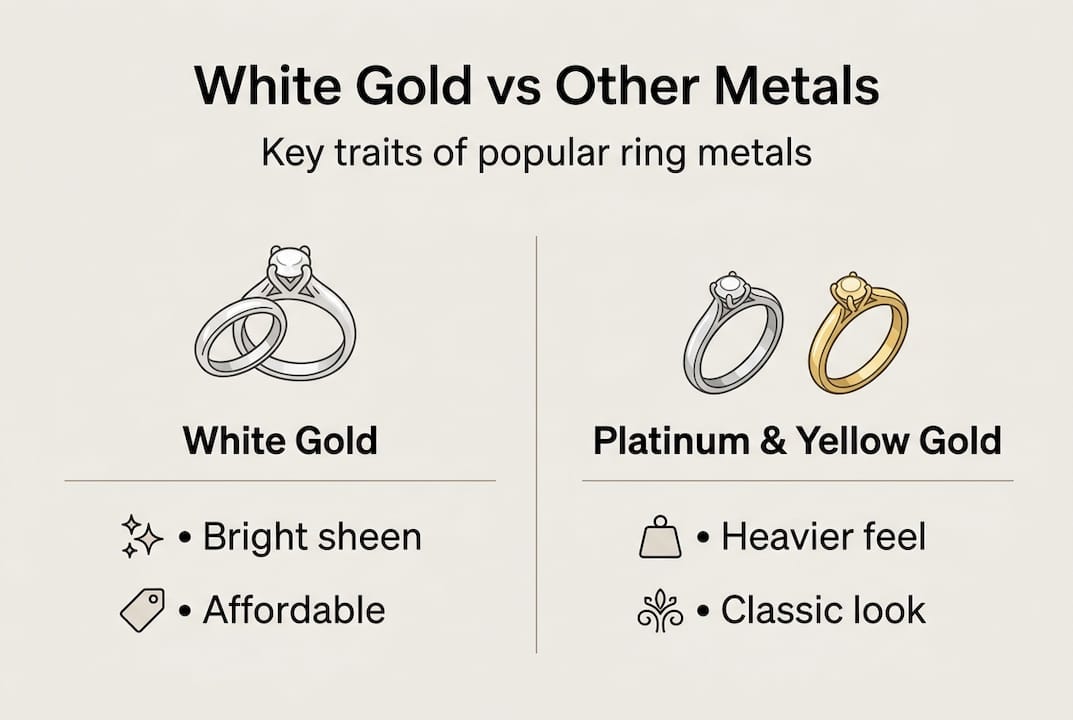
Rhodium plating fades over time, revealing white gold’s natural color unlike yellow gold’s patina or platinum’s wear characteristics. Yellow gold develops a soft, warm patina that many people find appealing as it ages, requiring only occasional polishing to restore shine. Platinum scratches differently, with the metal displacing rather than wearing away, creating a distinctive frosted appearance over time.
Wear patterns differ significantly across these metals:
- White gold shows scratches more visibly as rhodium wears thin, especially on ring bottoms and sides
- Yellow gold scratches blend into the metal’s natural color, making daily wear less apparent
- Platinum develops a patina finish that some prefer for its vintage character
- All three metals can be professionally polished to restore original appearance
The rhodium coating on white gold serves a dual purpose beyond aesthetics. It provides surface hardness that resists minor abrasions during the first year of wear. As the coating thins in high-contact areas, the softer gold alloy beneath becomes exposed and scratches more easily. This differs from yellow gold, which maintains consistent hardness throughout, and platinum, which is naturally harder than gold alloys.
“While rhodium plating gives white gold its initial brilliance and scratch resistance, the coating’s gradual wear reveals the warmer-toned metal underneath. Yellow gold and platinum age differently, developing character through natural patina rather than requiring surface renewal.”
Pro Tip: Consider your daily activities when choosing metals. If you work with your hands frequently or expose your ring to chemicals, platinum’s natural durability may justify the higher cost. For office environments or less demanding wear, white gold with regular maintenance provides excellent longevity. Browse diamond wedding band options to see how different metals showcase similar designs.
How to care for and maintain your white gold ring
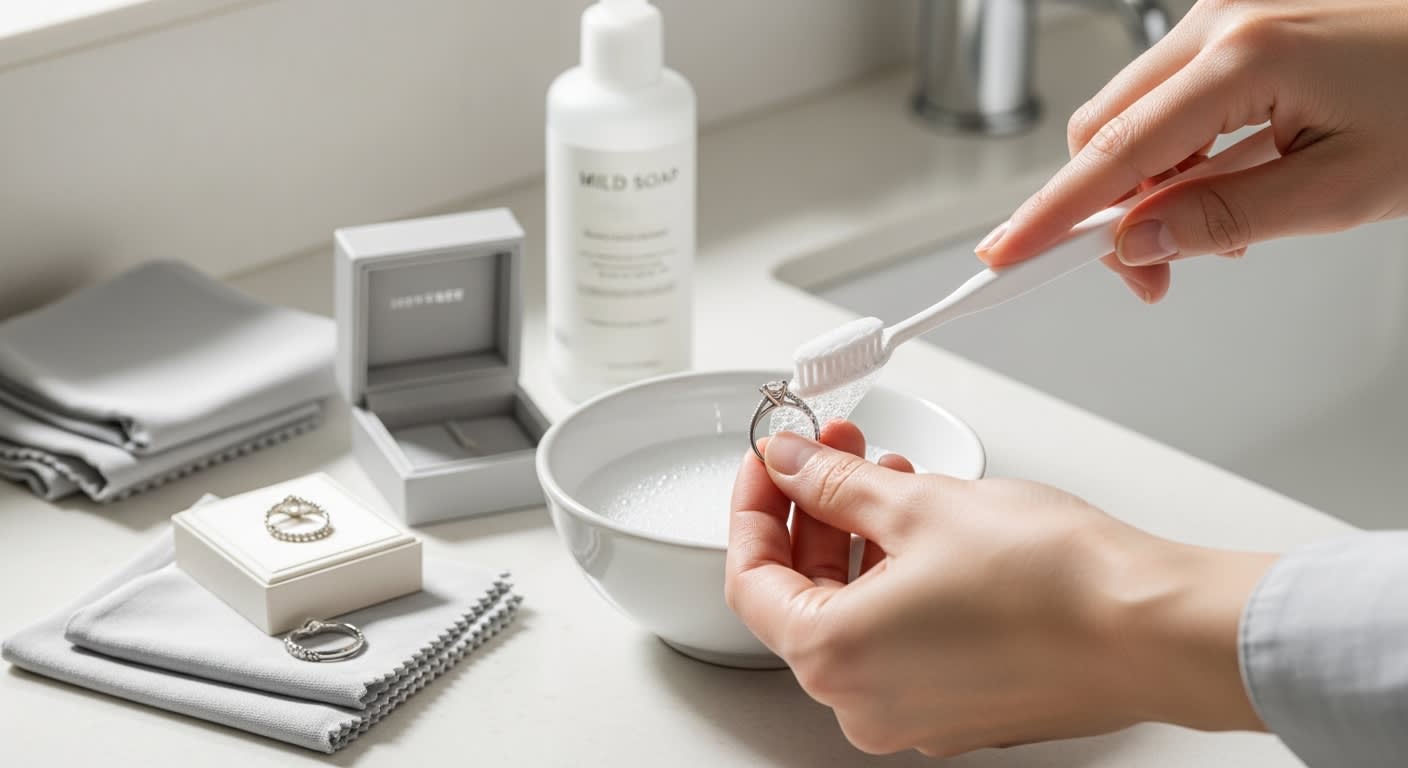
Rhodium plating protects white gold initially but requires periodic reapplication to maintain appearance and scratch resistance. Proper daily care extends the time between professional services and keeps your ring looking beautiful. Most jewelers recommend replating when you notice the rhodium wearing thin in high-contact areas or when the underlying metal’s warmer tone becomes visible.
Follow these essential care steps to preserve your white gold ring:
- Remove your ring before applying lotions, sunscreen, or cleaning products that contain harsh chemicals like bleach or ammonia. These substances can deteriorate rhodium plating faster and potentially damage gemstone settings.
- Clean your ring weekly using warm water, mild dish soap, and a soft toothbrush to remove oils and debris. Gently scrub around prongs and under the center stone where buildup accumulates, then rinse thoroughly and pat dry with a lint-free cloth.
- Store your ring separately in a fabric-lined jewelry box or soft pouch when not wearing it. Prevent scratches by keeping it away from other jewelry pieces, especially harder materials like diamonds that can abrade the rhodium surface.
- Schedule professional inspections every six months to check prong tightness, assess plating condition, and identify potential issues before they become serious. Many jewelers offer free inspections with complimentary cleaning and polishing.
- Have your ring professionally replated when the rhodium shows significant wear, typically every 12-24 months depending on your lifestyle. The process removes old plating, polishes the base metal, and applies fresh rhodium for renewed brilliance.
Recognize these signs that indicate your ring needs replating:
- Yellow or champagne tint appearing through the white surface, especially on the band’s underside
- Dull or lackluster appearance that doesn’t improve with regular cleaning
- Visible scratches that expose the darker alloy metal beneath
- Uneven color with some areas appearing brighter white than others
Pro Tip: Use jewelry cleaners specifically formulated for white gold rather than generic solutions. Avoid ultrasonic cleaners at home if your ring contains emeralds, opals, or pearls, as these gemstones can be damaged by vibration. When in doubt, ask your jeweler which cleaning method works best for your specific ring design. For more guidance on preserving your investment, explore engagement ring care tips that apply to various metal types.
Explore your perfect white gold ring at SuperJeweler
Now that you understand white gold’s benefits and maintenance requirements, finding your ideal ring becomes the exciting next step. SuperJeweler offers an extensive selection of white gold engagement rings and wedding bands designed to match every style preference and budget. Whether you’re drawn to classic solitaires, vintage-inspired halos, or modern three-stone designs, you’ll discover options that showcase white gold’s versatility.

Our affordable engagement rings collection features stunning white gold settings starting under $1,000, proving that quality and beauty don’t require stretching your budget. For those seeking premium designs with larger center stones or intricate details, browse our complete engagement ring collections showcasing craftsmanship at competitive prices. Complete your wedding set by exploring coordinating wedding bands collection pieces that complement your engagement ring perfectly. SuperJeweler’s commitment to accessible luxury, free worldwide shipping, and comprehensive warranties makes finding your forever rings straightforward and enjoyable.
Frequently asked questions
Is white gold a good choice for an engagement ring?
White gold makes an excellent engagement ring choice for couples who love the bright white metal aesthetic but want to spend less than platinum costs. The metal’s strength holds gemstones securely while its rhodium plating creates stunning brilliance that enhances diamond sparkle. The main trade-off involves maintenance, as you’ll need periodic replating to maintain the bright white appearance, but this cost remains modest compared to the initial savings versus platinum.
How often should white gold rings be replated with rhodium?
Most white gold rings need rhodium replating every 12-24 months depending on wear patterns and exposure to chemicals or abrasive activities. You’ll notice signs like visible yellowing on the band’s underside, dullness that cleaning doesn’t fix, or scratches exposing darker metal beneath the plating. Active lifestyles or jobs involving hand work may require more frequent replating, while gentle wear can extend the coating’s lifespan beyond two years.
Can white gold cause allergic reactions?
Some white gold alloys contain nickel, which triggers contact dermatitis in approximately 10-15% of the population with metal sensitivities. If you have known nickel allergies, request nickel-free white gold formulations using palladium instead, or choose higher karat options like 18K that contain less alloy metal overall. The rhodium plating provides a hypoallergenic barrier when intact, but reactions may occur as the coating wears and skin contacts the base alloy.
How does white gold compare in price to platinum?
White gold typically costs 40-50% less than platinum for comparable ring designs due to platinum’s greater density, rarity, and higher material costs. A platinum engagement ring requiring 6 grams of metal costs significantly more than a white gold version needing just 4 grams to achieve similar dimensions, since platinum weighs about 60% more than gold. While platinum requires no plating and minimal maintenance, white gold’s lower upfront cost plus periodic replating expenses still totals less over a lifetime of wear.
Recommended
- Cheap Engagement Rings | Diamond Cheap Engagement Rings
- Cheap Engagement Rings | Three Diamond Cheap Engagement Rings
- Why Choose Engagement Rings: Meaning, Choices, Value
- Wedding Ring Selection Guide for Perfect Bands
