Shopping for an engagement ring can quickly get confusing with so many myths about what truly makes a diamond valuable. Knowing how the 4Cs—Cut, Color, Clarity, and Carat Weight—define diamond quality helps couples move past confusing terminology and marketing hype. This guide unpacks the Four Cs, addresses misconceptions about diamond rarity, and shares tips for choosing an ethically sourced, high-quality stone that fits your budget and values.
Table of Contents
- Diamond Quality Defined And Common Misconceptions
- The Four Cs: Cut, Color, Clarity, And Carat
- Ethical Sourcing And Lab-Grown Alternatives
- How Quality Affects Price And Longevity
- Avoiding Common Diamond Buying Mistakes
Key Takeaways
| Point | Details |
|---|---|
| Understanding the 4Cs | Familiarize yourself with Cut, Color, Clarity, and Carat to evaluate diamond quality effectively. |
| Prioritize Cut Quality | A well-cut diamond exhibits superior brilliance, often making it more visually appealing than a larger stone with inferior cut. |
| Be Aware of Misconceptions | Recognize that not all diamonds are equally valuable, and size does not equate to quality. |
| Verify Certification | Always request an independent grading report to ensure transparency and verify quality before making a purchase. |
Diamond Quality Defined and Common Misconceptions
Understanding diamond quality isn’t just about sparkle – it’s about making an informed investment in your engagement ring. The diamond grading system provides a comprehensive framework for evaluating these precious stones, ensuring transparency and consistency in a market historically plagued by ambiguity.
The global standard for diamond evaluation centers around the 4Cs of diamond quality: Cut, Color, Clarity, and Carat Weight. These metrics were developed by the Gemological Institute of America (GIA) to replace an earlier era of inconsistent and misleading diamond descriptions.
Key Components of Diamond Quality:
- Cut: Determines how well the diamond reflects light
- Color: Ranges from colorless to light yellow
- Clarity: Evaluates internal and external imperfections
- Carat Weight: Measures the diamond’s physical weight
Contrary to popular belief, diamonds are not inherently rare or always a guaranteed investment. Marketing campaigns have long perpetuated myths about diamond value. In reality, diamond rarity and value depend significantly on specific quality characteristics.
Common misconceptions about diamonds include:
- All diamonds are equally valuable
- Bigger diamonds are always better
- Diamond quality is purely subjective
- Diamonds are extremely rare
Understanding these nuanced quality factors helps buyers make more informed decisions, moving beyond marketing hype to genuine value assessment.
Pro tip: Always request a certified diamond grading report from a reputable gemological institution to verify the diamond’s true quality characteristics.
The Four Cs: Cut, Color, Clarity, and Carat
Engagement ring shoppers need to understand the critical factors that determine a diamond’s quality and value. The universal diamond grading system provides a comprehensive framework for evaluating these precious stones, ensuring buyers can make informed decisions about their investment.
The Four Cs – Cut, Color, Clarity, and Carat – represent the essential characteristics that define a diamond’s overall quality and aesthetic appeal. Each component plays a unique role in determining the stone’s beauty, brilliance, and market value.
Key Diamond Quality Factors:
- Cut: Determines the diamond’s sparkle and light reflection
- Color: Evaluates the stone’s color saturation and purity
- Clarity: Measures internal and external imperfections
- Carat: Indicates the diamond’s physical weight
Among these factors, Cut is arguably the most critical. It directly influences a diamond’s ability to reflect and refract light, creating the mesmerizing sparkle that makes these stones so captivating. A well-cut diamond can appear larger and more brilliant, even with a smaller carat weight.
Color grades range from completely colorless to light yellow or brown. The most valuable diamonds are those closest to colorless, with subtle variations that can significantly impact pricing. Diamond grading laboratories use precise scales to evaluate these nuanced color differences.
Diamond Color Scale:
- D-F: Colorless (most valuable)
- G-J: Near Colorless
- K-M: Faint Color
- N-R: Very Light Color
- S-Z: Light Color
Clarity assesses the presence of internal inclusions and external blemishes. Most diamonds contain some imperfections, but the best stones have minimal, barely visible characteristics that don’t compromise the stone’s overall beauty.
Carat weight measures the diamond’s physical mass, with one carat equaling 0.2 grams. While larger diamonds are often more expensive, the other Cs can dramatically influence a stone’s value and appearance.
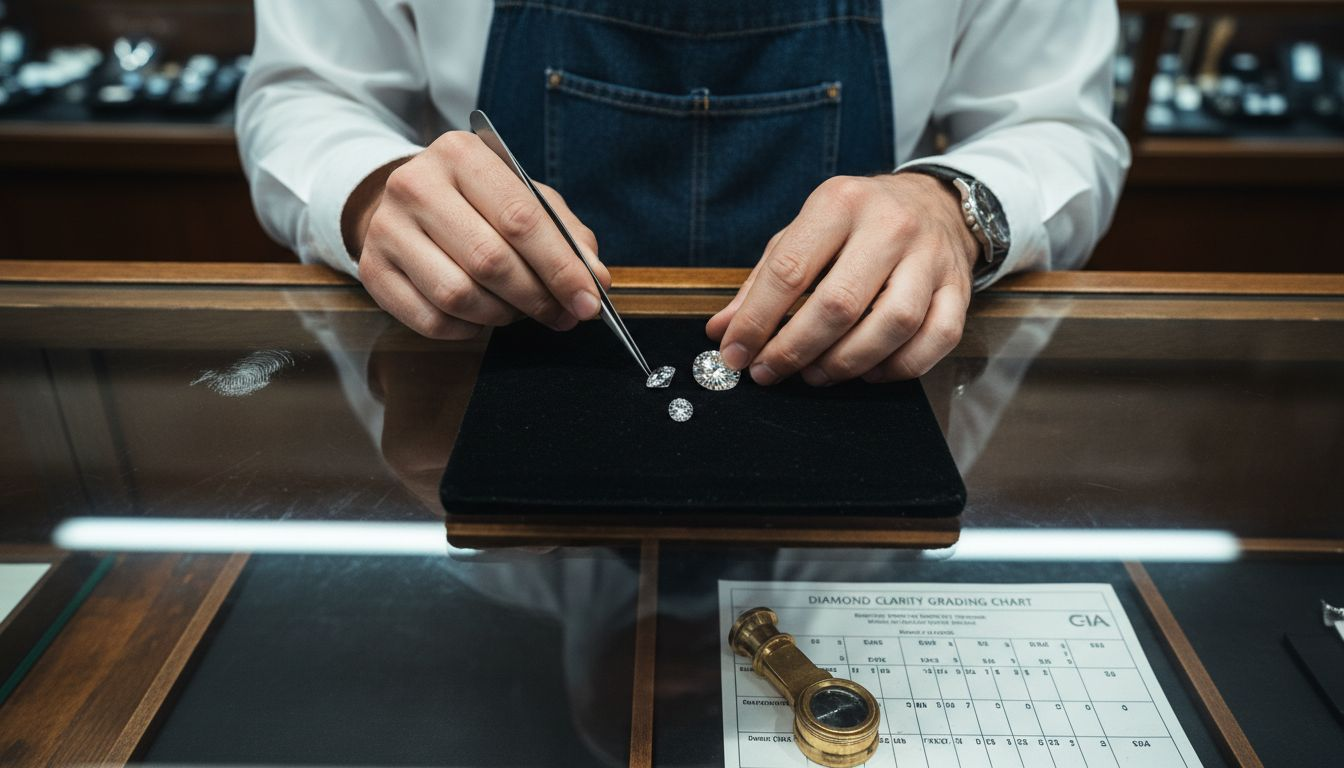
Pro tip: Prioritize cut quality over carat weight – a smaller diamond with exceptional cut can appear more brilliant and larger than a bigger stone with poor proportions.
Ethical Sourcing and Lab-Grown Alternatives
Engagement ring shoppers today face an important choice between traditional mined diamonds and innovative lab-grown alternatives. Ethical diamond sourcing has become a critical consideration for couples who want their symbol of love to reflect their personal values and commitment to responsible consumer choices.
Lab-grown diamonds represent a technological breakthrough in the jewelry industry, offering a compelling alternative to traditionally mined stones. These diamonds are chemically and physically identical to natural diamonds, created through advanced scientific processes that replicate the natural diamond formation under controlled conditions.
Key Advantages of Lab-Grown Diamonds:
- Environmentally sustainable production
- Eliminates concerns about conflict diamonds
- Typically 30-50% less expensive than mined diamonds
- Identical chemical composition to natural diamonds
- Produced with minimal human rights concerns
Two primary manufacturing methods dominate lab-grown diamond production: High Pressure High Temperature (HPHT) and Chemical Vapor Deposition (CVD). Laboratory techniques for diamond creation have become increasingly sophisticated, allowing for the production of high-quality stones that are virtually indistinguishable from natural diamonds.
The ethical landscape of diamond sourcing is complex. While the Kimberley Process attempts to regulate conflict diamonds, it is not a perfect solution. Lab-grown diamonds offer a transparent alternative that addresses many of the social and environmental concerns associated with traditional diamond mining.
Ethical Considerations for Diamond Buyers:
- Verify the origin of your diamond
- Consider the environmental impact
- Research the manufacturer’s ethical standards
- Understand the full production process
- Compare certified sources and documentation
Responsible mining can support local economies, but lab-grown diamonds provide a compelling option for environmentally and socially conscious consumers. The choice ultimately depends on individual values, budget, and personal preferences.
Here’s a summary comparing natural and lab-grown diamonds for ethical shoppers:
| Aspect | Natural Diamonds | Lab-Grown Diamonds |
|---|---|---|
| Environmental Impact | High from mining | Low, more sustainable |
| Cost | Higher, premium for rarity | 30-50% less expensive |
| Chemical Structure | Pure carbon, natural formation | Pure carbon, lab-created |
| Conflict Concerns | Potential, depends on source | Minimal, transparent process |
| Certification Standards | Widely established (GIA, AGS) | Increasingly standardized |
| Social Responsibility | Varies by mining operation | Typically higher, fewer issues |
Pro tip: Request a detailed certification and origin report for your diamond, whether lab-grown or mined, to ensure transparency and ethical sourcing.
How Quality Affects Price and Longevity
Understanding the intricate relationship between diamond quality and value is crucial for making an informed engagement ring purchase. Diamond quality factors dramatically influence both the immediate price and long-term durability of your precious stone.
The 4Cs – Cut, Color, Clarity, and Carat – work together to determine a diamond’s overall value and aesthetic performance. Each factor contributes uniquely to the stone’s brilliance, structural integrity, and market worth.
Price Progression of Diamond Quality:
- Colorless diamonds command highest prices
- Flawless clarity increases value exponentially
- Superior cut maximizes light performance
- Larger carat weights dramatically raise cost
- Rare combinations of high-quality characteristics create premium pricing
A diamond’s cut is particularly critical. Superior diamond characteristics directly impact the stone’s ability to reflect and refract light, creating that mesmerizing sparkle that makes diamonds so desirable. A perfectly cut diamond can appear larger and more brilliant, even with a smaller carat weight.
Factors Affecting Diamond Longevity:
- Minimal internal inclusions
- High-quality cut precision
- Proper setting and maintenance
- Protection from physical impacts
- Regular professional inspections
Price increases are not linear but exponential. A flawless, colorless diamond of significant size can cost many times more than a similar stone with lower quality characteristics. This non-linear pricing reflects the increasing rarity of top-tier diamonds.
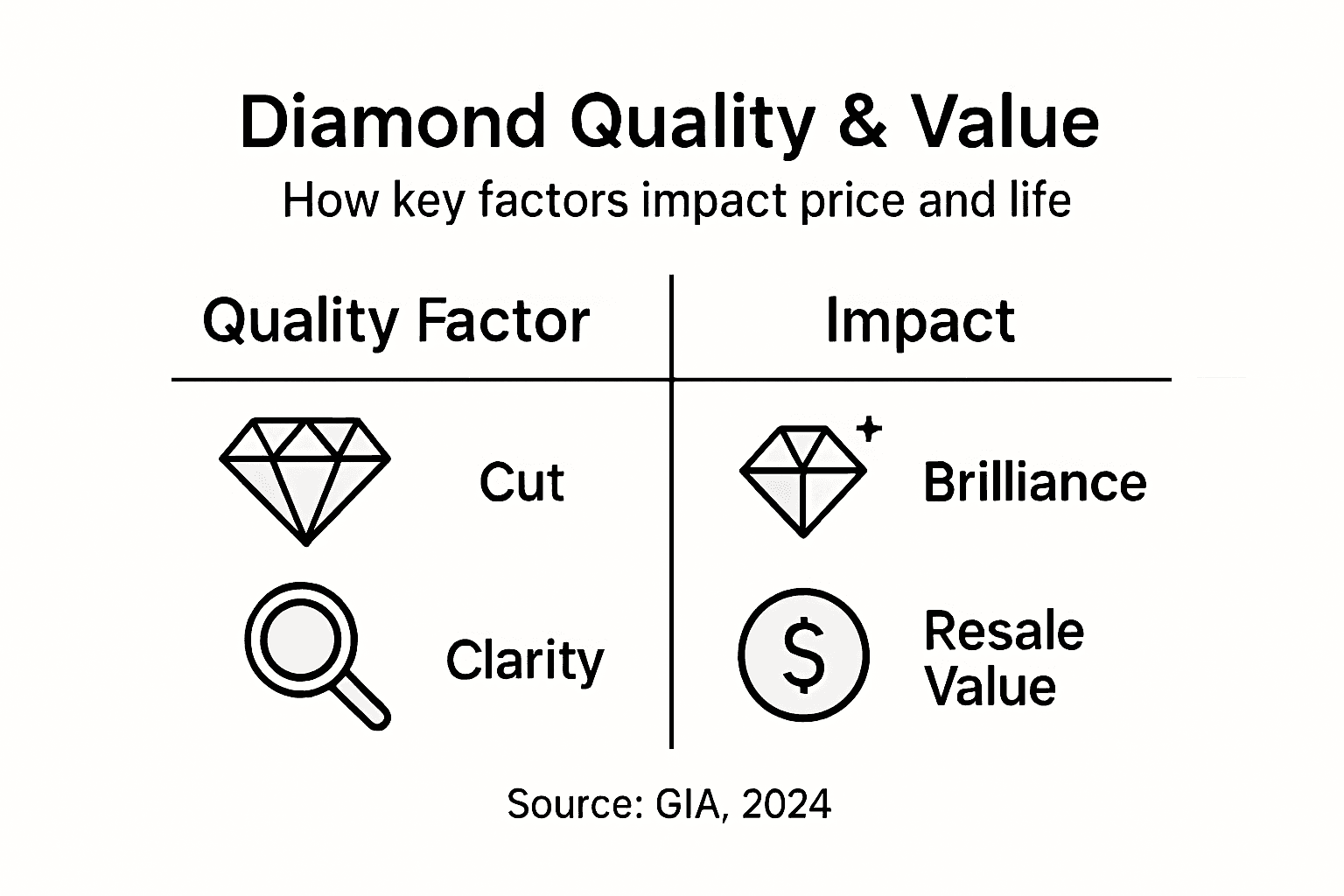
The investment potential of a diamond extends beyond its initial purchase. High-quality stones maintain their brilliance and structural integrity longer, potentially becoming family heirlooms that retain value across generations.
The following table highlights how each of the Four Cs impacts both price and long-term value:
| Diamond Quality Factor | Price Impact | Longevity Impact |
|---|---|---|
| Cut | Strongest, non-linear cost | Enhances brilliance |
| Color | Increases with colorless | Minor, mainly aesthetic |
| Clarity | High for flawless stones | Greater durability |
| Carat Weight | Dramatic with larger sizes | No effect, just mass |
Pro tip: Invest in the highest quality diamond you can afford, prioritizing cut and clarity over pure size, as these factors most significantly impact long-term beauty and value.
Avoiding Common Diamond Buying Mistakes
Navigating the diamond purchasing landscape can be challenging, especially for first-time buyers. Common diamond buying mistakes often stem from lack of knowledge and falling prey to misleading marketing tactics.
Many engagement ring shoppers make critical errors that can significantly impact their investment. Understanding these potential pitfalls is crucial to making an informed and confident purchase.
Top Diamond Buying Mistakes to Avoid:
- Overemphasizing carat size
- Neglecting diamond certification
- Failing to compare multiple stones
- Ignoring cut quality
- Getting swayed by sales pressure
- Not establishing a clear budget
One of the most prevalent mistakes is focusing exclusively on diamond size. Buyers frequently prioritize carat weight over more critical factors like cut and clarity, which actually determine a diamond’s true brilliance and beauty.
Red Flags in Diamond Shopping:
- Lack of independent grading report
- Unclear return or exchange policy
- Vague descriptions about diamond origins
- Pressuring tactics from salespeople
- Prices that seem too good to be true
Understanding the Four Cs is fundamental. Many consumers mistakenly believe that a larger diamond automatically means better quality. In reality, a smaller diamond with exceptional cut and clarity can be far more valuable and visually stunning than a larger stone with poor characteristics.
Ethical considerations are equally important. Buyers should request detailed information about a diamond’s origin, ensuring they’re making a responsible purchase that aligns with their personal values.
Pro tip: Always request and carefully review a diamond’s independent grading report from a reputable organization like GIA before making your final purchase decision.
Discover the Perfect Engagement Ring That Matches Your Diamond Quality Expectations
Choosing an engagement ring is more than a purchase it is a meaningful investment in your future and a symbol of your unique love story. This article highlights the importance of understanding diamond quality through the Four Cs and ethical sourcing to avoid common buying mistakes. Your challenge is finding a ring that balances superior cut clarity and carat weight while fitting your budget and values.
At SuperJeweler.com we simplify this complex decision with an extensive selection of engagement rings featuring both natural and lab-grown diamonds. You can explore customizable options tailored to your preferences including diamond shape style and quality certifications. Our affordable pricing and free worldwide shipping make it easier to find that brilliant diamond that truly shines.

Start your journey today by visiting our engagement rings collection to experience accessible luxury crafted with transparency and ethical awareness. Let your ring speak volumes about quality and commitment without compromise. Shop now and secure the perfect symbol of your love with confidence.
Frequently Asked Questions
What are the 4Cs of diamond quality?
The 4Cs of diamond quality stand for Cut, Color, Clarity, and Carat Weight. These factors are essential for assessing a diamond’s overall value and beauty.
How does diamond cut affect its quality and price?
The diamond cut significantly influences how well the diamond reflects light, which contributes to its sparkle. A well-cut diamond can appear larger and more brilliant, often resulting in a higher price due to its enhanced visual appeal.
Are lab-grown diamonds as valuable as natural diamonds?
Lab-grown diamonds are chemically identical to natural diamonds but typically cost 30-50% less. They offer a more environmentally sustainable option and can eliminate concerns related to conflict diamonds.
Why is certification important when buying a diamond?
A certified diamond grading report from a reputable institution helps verify the quality characteristics of the diamond, ensuring that buyers make informed decisions based on reliable assessments rather than marketing claims.
Recommended
- Diamond Cut: The Secret to Sparkling Love
- Why Engagement Rings Matter for Couples Worldwide
- Why Choose Engagement Rings: Meaning, Choices, Value
- Engagement Rings | SuperJeweler
