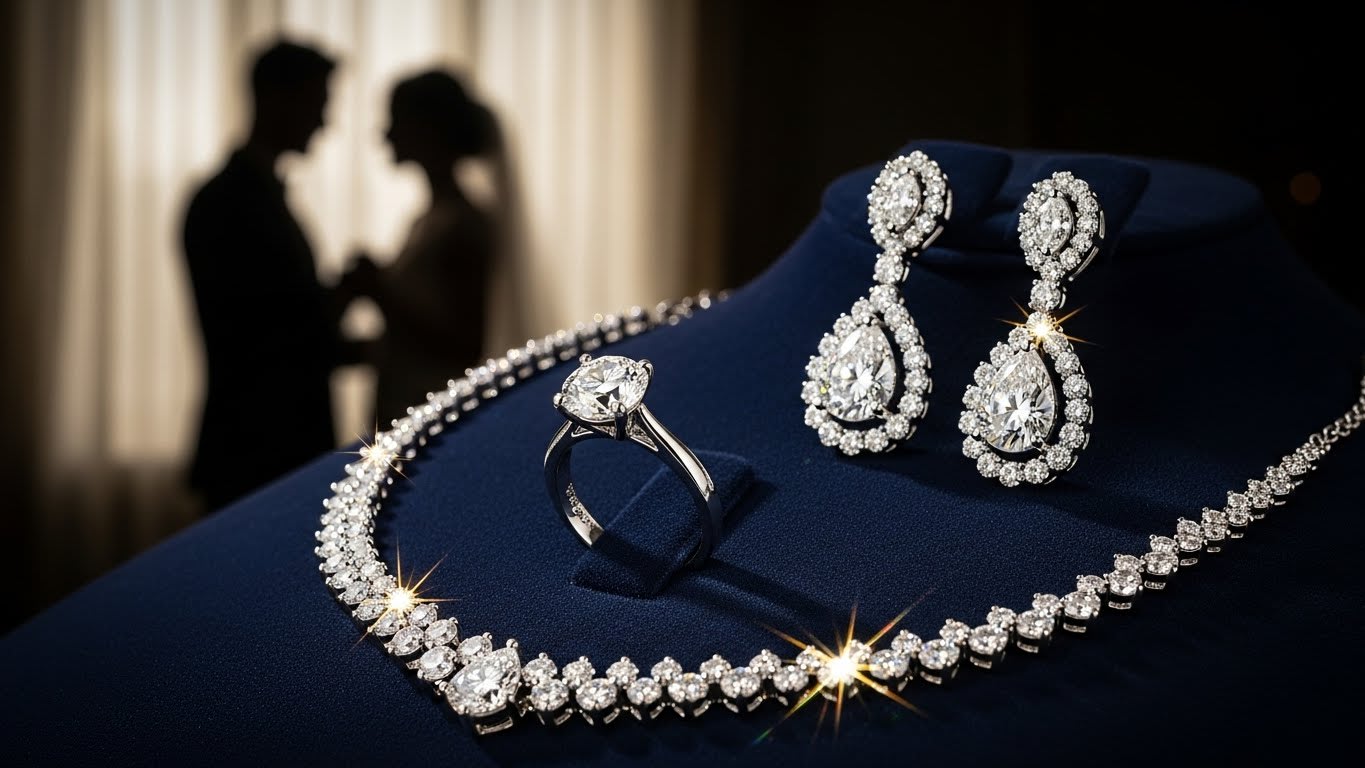
Most American couples exploring affordable wedding jewelry discover that diamond pieces are more than symbols of love—they are potential investment assets. With global market trends showing diamonds provide unique portfolio diversification, many engaged couples reconsider the value behind these sparkling gems. This guide makes sense of how diamond jewelry, including lab-grown options, can offer both lasting beauty and real financial benefits for value-focused celebrations.
Table of Contents
- Diamond Jewelry as an Investment Asset
- Types of Diamond Jewelry to Consider
- Real Value of Lab-Grown vs. Natural Diamonds
- Practical Benefits Beyond Aesthetics
- Risks, Costs, and Alternatives Explored
Key Takeaways
| Point | Details |
|---|---|
| Investment Diversification | Diamond jewelry can be a solid investment asset, providing a tangible option for portfolio diversification. |
| Quality and Certification | Prioritize high-quality diamonds with certifications to ensure stability and long-term value retention. |
| Market Dynamics | Understanding supply and demand factors is crucial to navigate price fluctuations and market trends. |
| Lab-Grown vs. Natural | Both lab-grown and natural diamonds have unique advantages, but natural diamonds tend to hold better resale value due to their rarity. |
Diamond Jewelry as an Investment Asset
Diamond jewelry represents more than just aesthetic beauty—it is increasingly recognized as a sophisticated financial asset with unique investment characteristics. The global diamond market offers discerning investors an opportunity to diversify their portfolio through a tangible, portable, and historically resilient commodity. Global diamond market trends demonstrate that these precious stones can serve as a strategic alternative investment vehicle.
Unlike traditional financial instruments, diamonds possess intrinsic value derived from their rarity, durability, and universal appeal. Natural diamonds, especially those of high quality and certification, maintain remarkable value stability. Investors can choose between natural and lab-grown diamonds, each offering distinct advantages. Diamond market supply dynamics reveal complex factors influencing pricing, including global production, ethical sourcing, and emerging consumer preferences.
Successful diamond jewelry investment requires understanding several critical factors. Quality matters tremendously—stones are evaluated using the 4Cs (cut, color, clarity, and carat weight). Higher-grade diamonds typically appreciate more consistently. Investors should prioritize certified stones from reputable sources, focusing on pieces with potential for long-term value retention. Engagement rings and classic jewelry designs often maintain stronger resale value compared to trendy, fashion-driven pieces.
Pro tip: When investing in diamond jewelry, always request a professional gemological certification and maintain original documentation to maximize future resale potential.
The following table summarizes critical factors that can influence diamond investment outcomes:
| Investment Factor | Description | Impact on Value |
|---|---|---|
| Cut, Color, Clarity | Quality grades based on 4Cs | High grades increase value |
| Certification | Proof of authenticity and origin | Essential for resale |
| Design Type | Classic vs. trendy styles | Classic holds value better |
| Market Trends | Supply, demand, and global dynamics | Can cause price fluctuation |
Types of Diamond Jewelry to Consider
Investors and jewelry enthusiasts have multiple diamond jewelry options to consider, each with unique characteristics and investment potential. Diamond varieties range from traditional natural stones to innovative lab-grown alternatives, offering diverse investment strategies for different financial goals and personal preferences.
Natural diamond jewelry remains the classic investment choice, with engagement rings, solitaire pendants, and tennis bracelets representing the most stable and sought-after pieces. These traditional designs typically feature high-quality, certified diamonds that maintain substantial resale value. Classic cuts like round brilliant, princess, and emerald remain particularly attractive to collectors and investors due to their timeless appeal and consistent market demand.

Lab-grown diamond jewelry has emerged as a compelling alternative, offering identical physical properties to natural diamonds at a more accessible price point. Lab grown diamond necklace collections provide investors with ethically sourced, environmentally conscious options that often cost 30-50% less than comparable natural diamond pieces. These modern alternatives appeal especially to younger investors seeking both financial value and social responsibility in their jewelry investments.
Pro tip: Always purchase diamond jewelry with reliable certification and maintain original documentation to protect your investment’s long-term value and potential resale opportunity.
Real Value of Lab-Grown vs. Natural Diamonds
The diamond market has undergone significant transformation with the emergence of lab-grown diamonds, challenging traditional perceptions of value and investment potential. Diamond market pricing dynamics reveal a complex landscape where technological innovation meets traditional market economics, creating nuanced opportunities for investors and consumers alike.
Natural diamonds continue to hold a premium position in the market, primarily due to their inherent rarity and historical significance. These stones are formed over millions of years, requiring extensive mining operations and maintaining intrinsic scarcity that lab-grown alternatives cannot replicate. Investors typically find natural diamonds more attractive for long-term value preservation, as their limited supply supports more stable pricing and collector interest.
Natural diamonds’ market trends demonstrate that while lab-grown diamonds offer identical optical and chemical properties, they face significant challenges in maintaining resale value. Lab-created diamonds are typically 40-70% less expensive, making them attractive to budget-conscious consumers. However, their unlimited reproducibility means they lack the appreciation potential of natural diamonds, which remain more desirable among serious collectors and investors.
Pro tip: When considering diamond investments, prioritize certified stones with clear provenance and consider a balanced portfolio that includes both natural and lab-grown diamonds to mitigate potential market fluctuations.
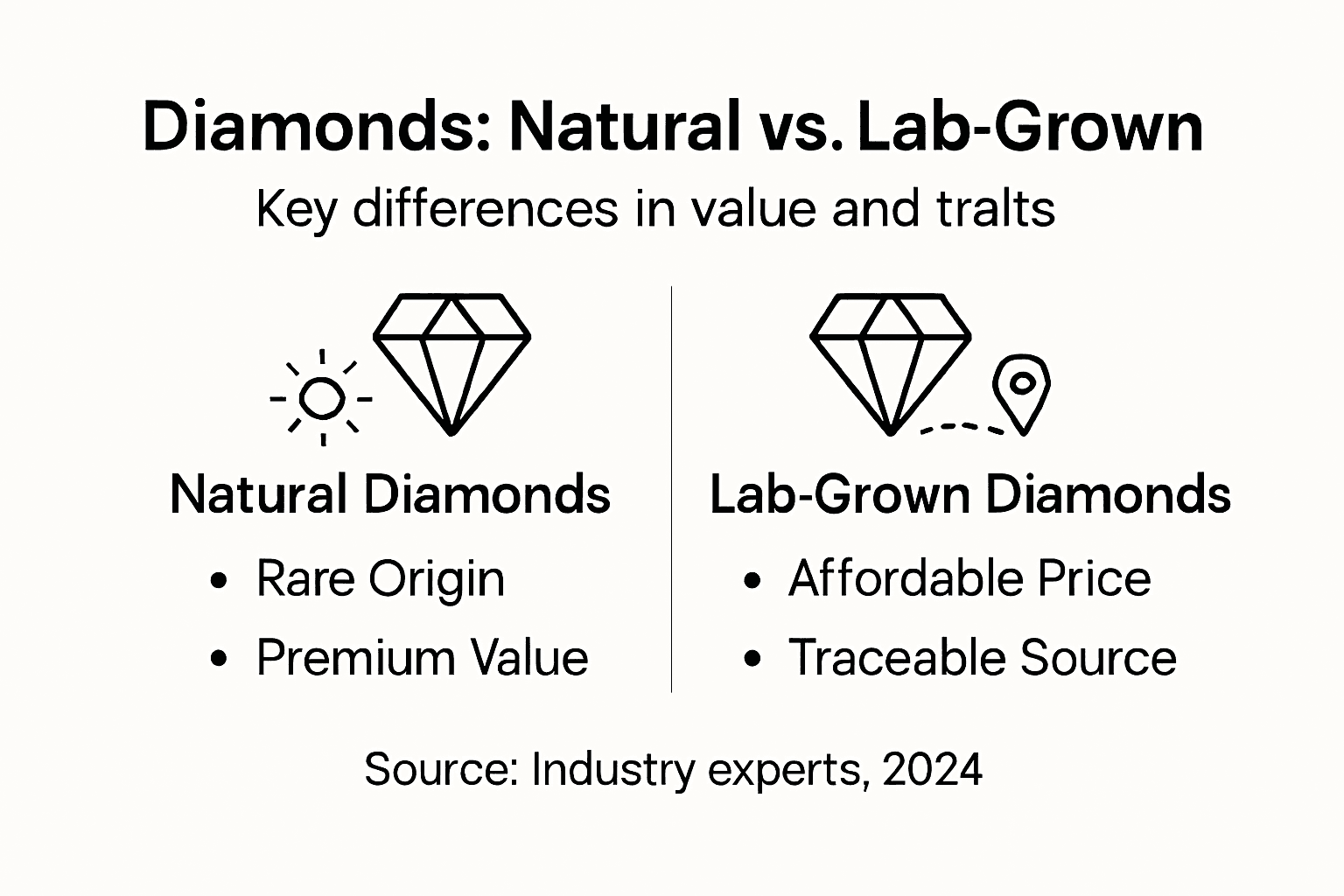
Here’s a concise comparison of natural and lab-grown diamonds for investment purposes:
| Criteria | Natural Diamonds | Lab-Grown Diamonds |
|---|---|---|
| Price | Higher initial cost | 30-70% less expensive |
| Rarity | Naturally scarce; limited supply | Can be produced indefinitely |
| Resale Value | Historically stable; strong demand | Often drops due to reproducibility |
| Environmental Impact | Significant mining footprint | Lower impact; no mining required |
| Certification | Widely available from major labs | Increasingly accepted; important |
| Appeal to Collectors | Highly valued by collectors | Less appeal for traditional buyers |
Practical Benefits Beyond Aesthetics
Diamonds transcend their traditional role as decorative gemstones, emerging as critical components in advanced technological and medical applications. Diamond applications extend far beyond jewelry, showcasing their remarkable physical and chemical properties that make them invaluable in scientific and industrial contexts.
In medical technology, diamonds demonstrate extraordinary potential. Nanodiamonds are revolutionizing targeted cancer treatments, serving as precise drug delivery mechanisms that can navigate complex biological environments. Surgical instruments crafted with diamond coatings offer unprecedented durability and precision, while medical diamond technologies provide biocompatible solutions for advanced implants and diagnostic tools. Their chemical inertness and exceptional hardness make them ideal for creating cutting-edge medical equipment that withstands rigorous sterilization and repeated use.
Beyond healthcare, diamonds play crucial roles in industrial and technological innovations. Their unparalleled hardness makes them essential in manufacturing high-performance cutting tools, precision scientific instruments, and advanced electronic components. Heat dissipation properties and electrical conductivity enable diamonds to function in extreme environments, from semiconductor manufacturing to aerospace engineering, demonstrating their remarkable versatility and technological significance.
Pro tip: Consider diamonds not just as decorative items, but as sophisticated technological materials with potential for groundbreaking applications across multiple scientific and industrial domains.
Risks, Costs, and Alternatives Explored
Diamond investments present a complex landscape of potential opportunities and inherent challenges that require careful strategic consideration. Diamond investment risks encompass multiple dimensions beyond simple market fluctuations, involving intricate supply chain dynamics, evolving market structures, and significant ethical considerations that can impact overall investment potential.
The diamond market’s historical volatility stems from several critical factors. Traditional diamond markets were traditionally controlled by powerful cartels that maintained artificial pricing mechanisms, but recent market fragmentation has introduced unprecedented transparency and unpredictability. Investors must navigate challenges including price inconsistencies, limited liquidity compared to more traditional assets, and the ongoing disruption caused by lab-grown diamond technologies that challenge conventional valuation models.
Alternative investment strategies have emerged to mitigate diamond investment risks. Diversification becomes crucial, with sophisticated investors spreading risk across different diamond categories including natural, lab-grown, colored, and investment-grade stones. Emerging market trends suggest that comprehensive due diligence, understanding certification processes, and maintaining a long-term perspective are essential for successful diamond investment strategies. Potential investors should carefully assess factors like stone quality, market demand, and geopolitical influences that can significantly impact diamond valuations.
Pro tip: Always consult multiple expert appraisers and maintain comprehensive documentation when considering diamond investments to protect your financial interests.
Secure Your Future with Timeless Diamond Jewelry from SuperJeweler
Investing in diamond jewelry requires confidence in quality, certification, and lasting value. This article highlights how understanding the 4Cs, choosing certified stones, and balancing natural with lab-grown diamonds are critical to maximizing your investment potential. At SuperJeweler, we address these challenges by offering a wide selection of certified natural and lab-grown diamonds crafted into classic and customizable jewelry pieces that hold both emotional and financial worth.

Discover how you can blend beauty with security by exploring our extensive collection of engagement rings, necklaces, and more at SuperJeweler.com. Shop now to access affordable pricing, free worldwide shipping, and warranty options that protect your investment. Start building a diverse diamond portfolio today and enjoy jewelry designed to last a lifetime and beyond.
Frequently Asked Questions
What makes diamond jewelry a good investment?
Diamond jewelry offers intrinsic value due to its rarity, durability, and universal appeal. The market demonstrates that high-quality, certified diamonds tend to retain their value, making them a strong addition to a diversified investment portfolio.
How do I assess the quality of diamond jewelry?
The quality of diamond jewelry is evaluated using the 4Cs: cut, color, clarity, and carat weight. Higher grades in these categories generally lead to better appreciation potential and resale value.
What is the difference between natural diamonds and lab-grown diamonds for investment?
Natural diamonds are rare and maintain stable pricing due to limited supply, while lab-grown diamonds are less expensive and can be produced indefinitely, which can affect their resale value. Investing in natural diamonds is often seen as more secure for long-term value preservation.
What should I consider when investing in diamond jewelry?
When investing in diamond jewelry, prioritize purchasing certified stones from reputable sources, focus on classic designs, and maintain original documentation. Understanding market trends and risks associated with diamond investments is also crucial for making informed decisions.
Recommended
- Lab Grown Diamond Jewelry | SuperJeweler
- Lab Grown Diamond Rings | SuperJeweler
- 4 Carat Lab Grown Diamond Ring Deals | SuperJeweler
- 5 Carat Lab Grown Diamond Ring Deals | SuperJeweler
