TL;DR:
- A hidden halo ring features small diamonds beneath the center stone, creating side-angle sparkle while maintaining a solitaire look. Popular designs include classic, cathedral, pavé band, three-stone, and custom gallery styles, each offering unique aesthetic options. Proper basket height, metal choice, and ring pairing are essential for optimal appearance and daily comfort.
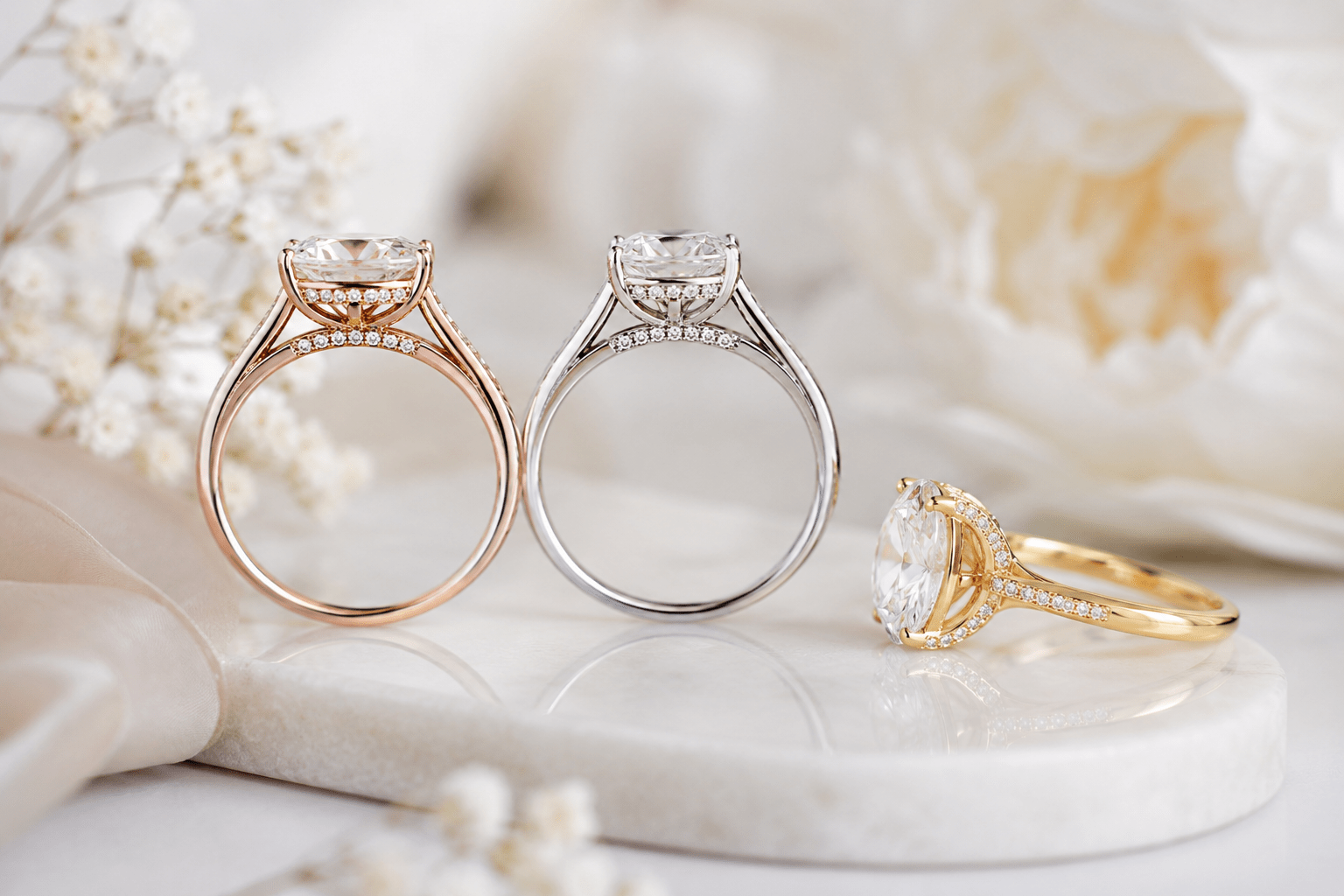
A hidden halo engagement ring is defined as a setting where a circle of small diamonds sits beneath the center stone, tucked inside the gallery rather than surrounding the crown. This placement creates a “secret sparkle” visible from the side but invisible from above, preserving the clean solitaire look that many couples prefer. Engagement ring hidden halo styles have surged in popularity in 2026 because they offer two rings in one: a restrained, classic face-up appearance and a brilliant flash of light at every side angle. The industry term for this design is a “gallery halo” or “under-bezel halo,” and understanding that distinction helps you shop with confidence.
Top engagement ring hidden halo styles to know
The five designs below represent the most popular hidden halo ring designs on the market right now. Each one solves a slightly different aesthetic problem, so knowing the differences saves you time and narrows your search.
1. Classic hidden halo solitaire
The classic hidden halo solitaire is the purest version of this style. A plain or lightly tapered band leads to a four or six-prong basket, and the melee diamonds sit entirely within the gallery, invisible from above. Traditional halos increase perceived face-up size by 15–30%, while hidden halos focus that sparkle entirely on side-angle brilliance. The result is a ring that photographs like a solitaire but catches light like something far more complex.
2. Cathedral hidden halo
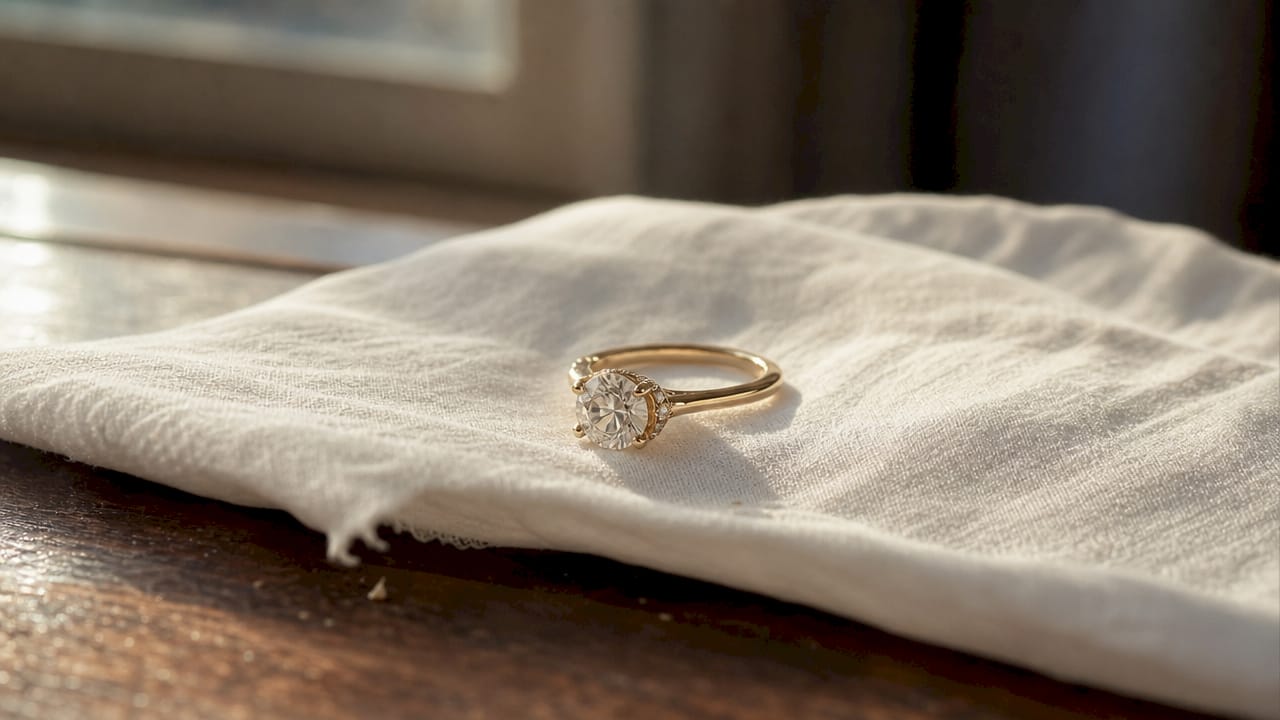
A cathedral setting uses sweeping metal arches that rise from the band to cradle the center stone at an elevated height. When a hidden halo is added to this architecture, the melee diamonds sit at the peak of those arches, making them visible from a wider range of angles. The elevated basket also makes cleaning easier, since debris is less likely to collect around the gallery diamonds. Couples who want a more dramatic profile without adding a visible halo crown favor this combination.
3. Pavé band hidden halo
This style pairs a diamond-studded shank with the under-gallery melee, multiplying the total sparkle without changing the face-up silhouette. The pavé diamonds on the band visually connect to the hidden halo, creating a continuous shimmer from finger to stone. Typical hidden halo settings use 10–30 melee diamonds sized 0.8mm to 1.5mm, and adding pavé to the shank can double the total accent stone count. This design suits couples who want maximum brilliance at a moderate price increase.
Pro Tip: When choosing a pavé band hidden halo, ask your jeweler to confirm that the band diamonds are bead-set or micro-pavé. Prong-set band stones sit higher and can snag on fabric over time.
4. Three-stone hidden halo
Three-stone rings traditionally symbolize past, present, and future. Adding a hidden halo beneath the center stone introduces a fourth layer of meaning: a private detail shared only between the couple. The side stones anchor the design visually, while the under-gallery diamonds add depth without competing with the flanking stones. This is one of the most unique halo ring styles available because it layers symbolism and sparkle simultaneously.
5. Custom gallery hidden halo
Custom gallery designs move beyond a simple circle of melee diamonds. Jewelers can arrange the under-gallery stones in floral patterns, geometric shapes, or even initials. Larger center stones of 3.00 carats or more often require 0.25 or more total carat weight in the hidden halo to maintain visual proportion, which gives custom designs more material to work with. This option costs more but produces a ring that is genuinely one of a kind.
Which diamond shapes pair best with hidden halo settings
Popular diamond shapes for hidden halos include round, oval, cushion, radiant, pear, and emerald, each requiring specific basket and prong adjustments. Matching the right shape to the right setting is the single most important decision you will make after choosing the stone itself.
- Round brilliant. The round brilliant is the natural starting point for hidden halo ring designs. Its symmetrical girdle sits evenly above a circular melee arrangement, and its 57 or 58 facets already maximize light return. The hidden halo amplifies that brilliance from the side without disrupting the stone’s geometry.
- Oval. An oval center stone benefits from a contoured hidden halo that follows its elongated girdle. The elongation also flatters the finger, and the side sparkle from the halo accentuates the stone’s length. Ask for a “fancy-shaped” gallery that mirrors the oval outline rather than a standard round melee circle.
- Cushion. Cushion cuts have soft, rounded corners that blend naturally with a pavé gallery detail. The pillow-like shape and the curved melee arrangement share the same visual language, making this one of the most harmonious pairings available.
- Pear and marquise. Both shapes have pointed tips that require protective prongs. A hidden halo on a pear or marquise ring adds side sparkle while the tip prong handles the structural work. The asymmetry of the pear shape makes the hidden halo especially visible from the pointed end.
- Emerald and Asscher. Step-cut stones like emerald and Asscher cuts rely on long, open facets rather than brilliant-cut sparkle. A restrained hidden halo with smaller melee diamonds complements rather than competes with the stone’s hall-of-mirrors effect. Avoid heavy pavé galleries on step cuts, as they can visually overwhelm the stone’s quiet elegance.
Pro Tip: For oval and pear shapes, request a “scalloped” hidden halo that follows the stone’s outline. A standard round melee circle will leave visible gaps at the pointed or elongated ends, reducing the design’s visual coherence.
How hidden halo settings affect appearance and daily wear
Setting choices determine how a hidden halo ring looks, feels, and holds up over years of daily wear. Four factors matter most: basket height, metal type, prong design, and maintenance requirements.
- Basket height. Setting height is critical; too low and the hidden halo is obscured or causes discomfort, too high and the ring feels impractical. A balanced basket height protects the melee diamonds while allowing side-angle light to reach them. Ask your jeweler to show you the ring from a 45-degree angle before purchasing, since that is the angle where the hidden halo is most visible.
- Metal type. Platinum is denser and more durable than gold, making it the preferred metal for settings with many small melee diamonds. 14k gold is the most common choice for hidden halo diamond engagement rings because it balances durability with cost. White gold requires rhodium plating every one to two years to maintain its bright finish, while platinum develops a natural patina that many wearers prefer.
- Prong design. The center stone typically uses four or six prongs, but the melee diamonds in the gallery use bead or micro-prong settings. Bead settings are more secure for active wearers. Claw prongs on melee stones look more open and sparkly but catch on fabric more easily.
- Maintenance and budget. Hidden halos often cost $300 to $1,500 more than plain solitaire settings due to additional diamonds and labor-intensive setting work. The melee diamonds also require professional inspection every 12–18 months to check for loose stones. Factor that ongoing cost into your total budget before committing to a complex gallery design.
Pro Tip: Request a bezel-edge gallery on your hidden halo if you work with your hands. A partial bezel around the melee diamonds reduces the risk of stone loss without sacrificing the side-angle sparkle effect.
Customizing hidden halo engagement rings
Personalization is where hidden halo ring designs truly separate themselves from standard solitaires. Every element below the center stone is a canvas.
- Metal color. Yellow gold warms the appearance of lower-color diamonds (I or J grades) and gives the ring a vintage character. White gold and platinum keep the focus on the diamonds’ natural color. Rose gold adds a romantic warmth that pairs especially well with oval and cushion center stones.
- Accent diamond quality. The melee diamonds in a hidden halo are small, but their cut quality still affects sparkle. Specify VS2 or SI1 clarity for the gallery stones, since inclusions in melee diamonds are rarely visible to the naked eye but cut quality directly affects how they reflect light.
- Gallery motifs. Custom jewelers can arrange gallery diamonds in floral, starburst, or geometric patterns. Restraint in hidden halo design balances tradition and modernity, so even a simple alternating pattern of round and marquise melee stones creates a signature that feels personal without being loud.
- Wedding band pairing. Matching a hidden halo ring with wedding bands may require design considerations like cathedral settings or curved bands for a proper fit. Some hidden halos intentionally create a small visual gap between the engagement ring and band, which actually highlights the gallery detail. Browse diamond wedding bands early in the process to confirm compatibility before the engagement ring is finalized.
- Budget-conscious options. Lab-grown diamonds cost significantly less than mined diamonds of equivalent quality, making them an excellent choice for the melee stones in a hidden halo. Using lab-grown accent diamonds can reduce the total setting cost while maintaining the same visual impact.
| Customization option | Effect on ring |
|---|---|
| Yellow gold setting | Warms lower-color center stones and adds vintage character |
| Lab-grown melee diamonds | Reduces cost without sacrificing sparkle or quality |
| Custom gallery motif | Creates a personal signature visible only from the side |
| Curved wedding band | Ensures a flush fit against the hidden halo basket |
| Higher melee clarity grade | Improves light return in the gallery without a major price jump |
Key takeaways
Hidden halo engagement rings deliver side-angle brilliance and a classic solitaire face-up appearance, making them the most versatile setting style for couples who want both restraint and sparkle.
| Point | Details |
|---|---|
| Hidden halos focus on side sparkle | Melee diamonds beneath the stone add brilliance at 30–70 degrees without changing the face-up look. |
| Shape matching matters | Round, oval, and cushion cuts pair most naturally with hidden halo gallery arrangements. |
| Basket height is critical | Too low obscures the halo; too high makes the ring impractical for daily wear. |
| Customization drives cost | Settings range from $1,200 to $4,500 before the center stone, depending on metal and complexity. |
| Lab-grown accents save money | Using lab-grown melee diamonds reduces total cost while maintaining the same visual effect. |
Why the hidden halo rewards patience and a sharp eye
The hidden halo is the ring style I recommend most often to couples who tell me they want something “different but not loud.” That phrase describes exactly what this design delivers. You get a ring that reads as a clean, timeless solitaire in a photo or across a table, but reveals its complexity the moment someone leans in for a closer look.
The detail that most buyers overlook is basket height. I have seen beautiful rings ruined by a gallery that sits too close to the finger, trapping light and making the melee diamonds look dull. Always ask to see the ring from a 45-degree angle before you commit. That is the angle where the hidden halo either earns its price or exposes its flaws.
My other consistent advice is to think about the wedding band before finalizing the engagement ring. Hidden halo settings and band compatibility is a real design challenge, and couples who skip this step often end up with a gap between the two rings that looks unintentional. A cathedral setting or a custom curved band solves this cleanly.
The subtle luxury of hidden halos suits wearers who appreciate craftsmanship for its own sake. The sparkle is not for the room. It is for the person wearing the ring and the person who gave it to them. That intimacy is rare in jewelry design, and it is worth the extra care it takes to get right.
— Andrew
Superjeweler’s hidden halo collection
Superjeweler carries a full range of hidden halo engagement rings across every major diamond shape, metal type, and price point. Whether you are drawn to a classic round brilliant solitaire or a custom cushion-cut gallery design, the selection covers both mined and lab-grown diamond options for couples who want maximum sparkle at a lower cost.

Every ring ships free with a lifetime guarantee and a flexible return policy. Couples working with a tighter budget will find strong options in the rings under $1,000 category, where hidden halo designs with real diamonds start at prices that make the style genuinely accessible. Superjeweler’s team is available to help you match the right setting, shape, and metal before you buy.
FAQ
What is a hidden halo ring?
A hidden halo ring features a circle of small diamonds set beneath the center stone inside the gallery, adding side-angle sparkle without altering the classic solitaire appearance from above.
How much does a hidden halo setting cost?
Hidden halo settings typically cost $300 to $1,500 more than plain solitaire settings. In 2026, 14k gold hidden halo settings generally range from $1,200 to $2,800 before the center diamond.
Which diamond shape works best in a hidden halo setting?
Round brilliant, oval, and cushion cuts pair most naturally with hidden halo designs because their girdle shapes align well with a circular or contoured melee arrangement.
Do hidden halos make the center stone look bigger?
Hidden halos do not increase the face-up perceived size of the center stone the way traditional halos do. They add brilliance from side angles at roughly 30–70 degrees instead.
How do I pair a wedding band with a hidden halo engagement ring?
Cathedral settings and curved wedding bands are the most reliable solutions for a flush fit. Some hidden halo designs intentionally leave a small gap between the engagement ring and band to highlight the gallery detail.
Recommended
- Trends in Engagement Rings 2026: Style, Stone, and Savings
- Pear Shaped Diamond Ring Styles: 2026 Buyer’s Guide
- How to Customize Engagement Ring for a Perfect Fit
- Rose Gold Engagement Ring Styles: 2026 Trend Guide
