
TL;DR:
- Engagement ring profiles refer to the cross-sectional shape of the band, affecting comfort and durability. Choosing the right profile, band width, and setting height ensures long-term wearability and avoids discomfort. Testing different profiles in person is essential to find the most suitable shape for daily life.
Engagement ring profiles are defined as the cross-sectional shape of the ring band, and that shape determines how the ring feels on your finger every single day. Most shoppers focus on the center stone and metal color, but the profile is the design element that controls comfort, durability, and how well the band pairs with a wedding ring. Standard band widths range from 2mm to 8mm, and each width interacts differently with the profile geometry beneath it. Understanding the types of engagement ring profiles before you buy is the difference between a ring you love wearing and one you quietly resent by month three.
Engagement ring profiles explained: the four main types
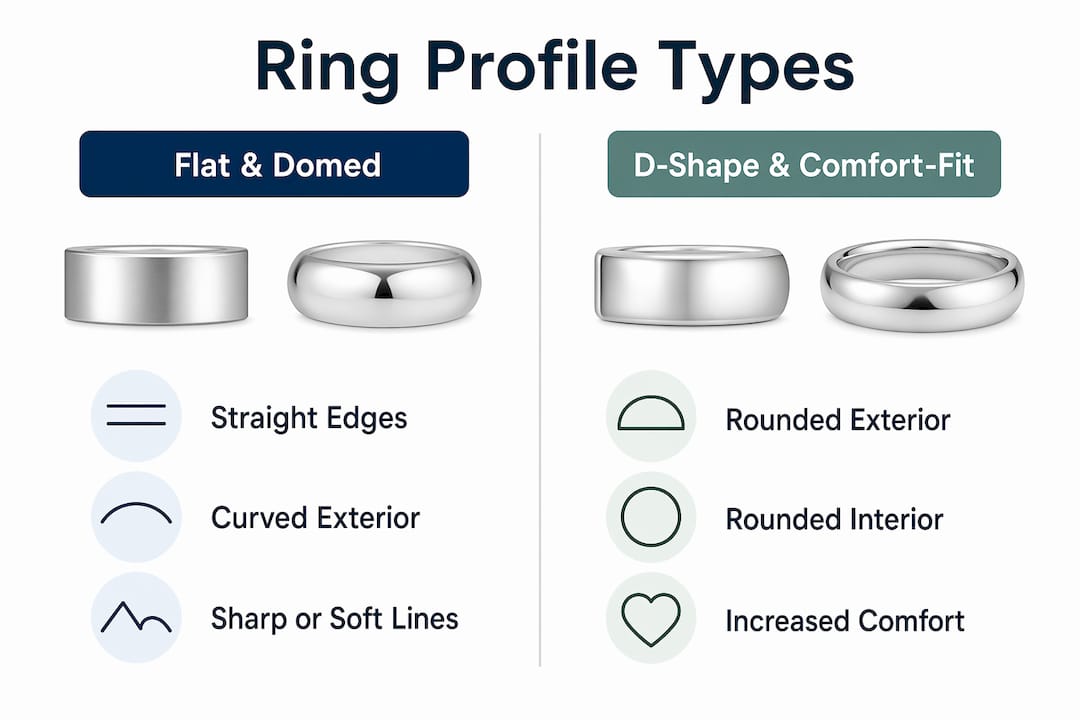
The four profiles you will encounter most often are flat, domed, D-shape, and comfort-fit (also called court). Each has a distinct cross-sectional geometry that produces a different tactile experience and visual effect.
Flat profiles have straight, parallel sides and sharp edges on both the interior and exterior of the band. They sit flush against the finger and create a modern, architectural look. The tradeoff is that flat profiles offer no ergonomic relief. The sharp inner edge can press into the skin during finger swelling, which happens with heat, exercise, and pregnancy.
Domed profiles curve outward on the exterior while remaining flat or only slightly curved on the interior. The dome creates a classic, rounded silhouette that reads as traditional and timeless. Because the exterior curves away from adjacent fingers, domed bands tend to feel less bulky than their width suggests.
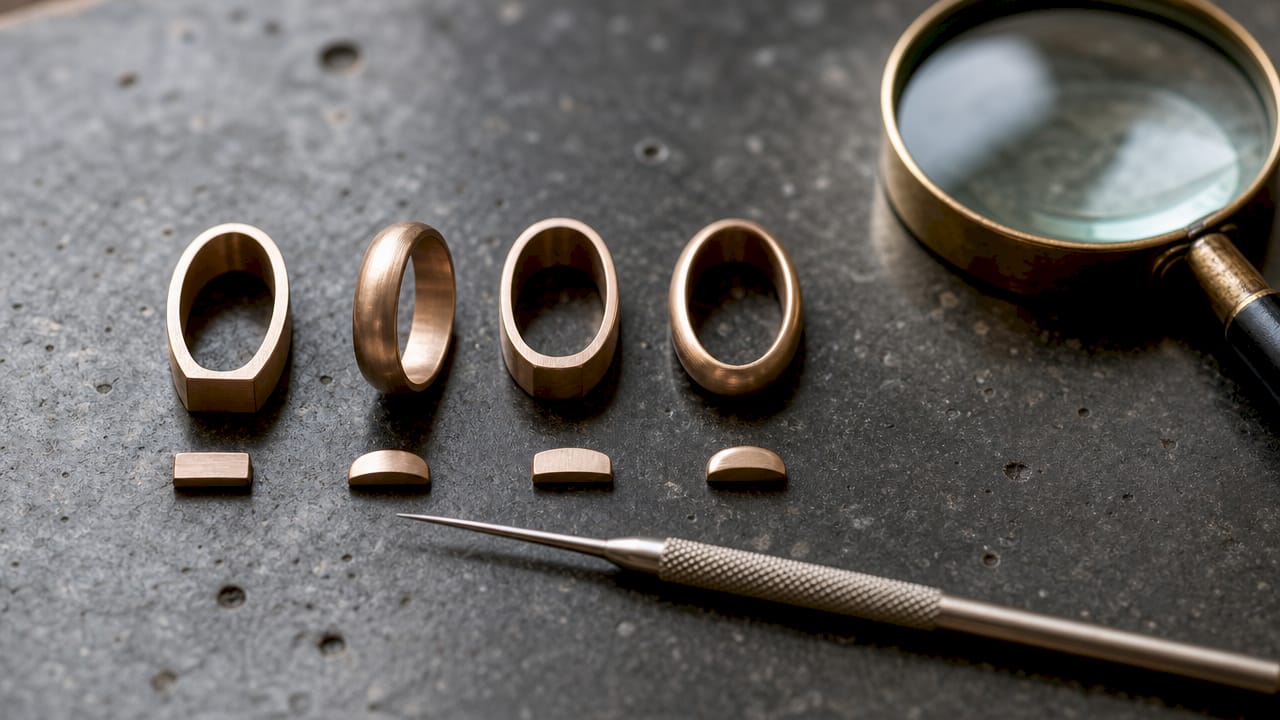
D-shape profiles are a close relative of the domed profile. The exterior curves like the letter “D,” but the interior is flat. This gives the ring a bold, sculptural look from the outside while maintaining a firm, flat contact surface against the skin. D-shape bands suit wearers who want visual drama without the full rounded feel of a comfort-fit interior.
Comfort-fit profiles feature a rounded interior surface. Comfort-fit rings often feel a half-size roomier than standard-fit rings of the same nominal size, especially in wider bands. That roomier feel comes from the curved inner wall, which reduces the contact area between metal and skin. Jewelry designers consistently rate comfort-fit as the top choice for daily wear because it minimizes irritation during finger swelling.
Pro Tip: If you are ordering a comfort-fit ring online, size down by a half size from your standard measurement. The rounded interior creates extra perceived space, and a ring that fits correctly in the store can feel loose at home.
| Profile type | Exterior shape | Interior shape | Best for |
|---|---|---|---|
| Flat | Straight | Straight | Modern aesthetics, slim fingers |
| Domed | Curved | Flat or slight curve | Classic look, everyday wear |
| D-shape | Curved (bold) | Flat | Sculptural style, firm fit |
| Comfort-fit | Curved or flat | Rounded | Active lifestyles, wide bands |
How does band width and thickness affect profile comfort?
Band width and profile geometry work together. A flat profile on a 2mm band feels barely noticeable. That same flat profile on a 6mm band creates a rigid, squared-off surface that presses firmly against the finger. Comfort-fit profiles reduce pinching and rubbing during finger swelling caused by heat or activity, and this benefit becomes more pronounced as band width increases.
Thickness adds another layer of complexity. Average 6mm bands measure roughly 1.5mm to 2.5mm thick, and thicker metal raises the profile height above the finger. A thicker band with a high dome sits noticeably above the hand, which some wearers love for its presence and others find catches on fabric.
Key width and thickness considerations:
- Bands under 3mm work well with any profile because the contact area is small regardless of shape.
- Bands between 4mm and 6mm benefit most from a comfort-fit interior to offset the wider contact surface.
- Bands above 6mm on wider fingers can carry a domed or D-shape exterior without looking disproportionate.
- Thicker bands (above 2mm) in a flat profile feel more rigid and are better suited to wearers with larger hands.
- Finger sensitivity and skin conditions make comfort-fit interiors worth prioritizing regardless of width.
Pro Tip: Ask to try the same ring in two different widths before deciding. The profile that feels perfect at 4mm can feel completely different at 6mm, even on the same finger.
You can also explore customizing your band width to match your finger shape and lifestyle before committing to a final design.
How does setting height influence band profile choice?
Setting height, sometimes called the ring’s vertical profile, refers to how far the center stone sits above the finger. High-profile settings raise the center stone dramatically, creating visual impact but increasing the risk of snagging on clothing, hair, and gloves. Low-profile settings keep the stone close to the finger for a cleaner, more practical silhouette.
The setting height you choose directly shapes which band profile works alongside it. High-profile engagement rings pair well with straight wedding bands because the elevated center stone creates natural clearance between the two rings. Low-profile settings sit closer to the finger and often require a contoured or curved wedding band to nestle flush without a visible gap.
Profile pairing strategies for bridal sets:
- A high-profile solitaire with a flat wedding band creates a clean, architectural stack with clear separation between rings.
- A low-profile bezel or channel setting works best with a curved or fitted wedding band that follows the contour of the engagement ring.
- Curved profiles provide a fluid, ergonomic fit for stacked rings, reducing the gap that flat bands create against curved engagement ring shanks.
- If you plan to wear both rings daily, test the pairing before purchasing the wedding band to confirm there is no uncomfortable ridge between the two.
Planning your engagement ring and matching band together from the start avoids the frustration of mismatched profiles after the proposal. Bridal comfort is a real consideration too. Just as bridal comfort planning applies across wedding day choices, ring profile comfort deserves the same deliberate attention.
How to choose your engagement ring profile based on lifestyle
Your daily routine is the most reliable guide to the right profile. Low-profile settings are preferred for active lifestyles because they reduce catching on equipment, clothing, and surfaces. The same logic applies to band profiles. Comfort-fit interiors reduce the sensation of pressure during workouts, outdoor work, and any activity that causes hand swelling.
Follow these steps to match your profile to your life:
- Assess your activity level. If you work with your hands, exercise daily, or spend time outdoors, prioritize a comfort-fit interior and a low-profile setting. Both reduce snagging and pressure.
- Consider your finger shape. Shorter fingers often look more balanced with a narrower, domed band. Longer fingers can carry wider, flatter profiles without the band appearing to dominate the hand.
- Test profiles in person before buying. Jewelry designers emphasize trying on various profiles to avoid discomfort and long-term annoyance. A profile that looks beautiful in a photo can feel wrong on your specific finger shape.
- Think about resizing. Comfort-fit rings are slightly harder to resize than standard-fit rings because the rounded interior must be maintained through the process. Confirm your jeweler has experience resizing comfort-fit bands before purchasing.
- Balance aesthetics with wearability. A flat, wide band may suit your style perfectly but feel uncomfortable after eight hours. Choose the profile that you can wear all day without thinking about it.
Pro Tip: Wear a ring sizer or a borrowed ring of the target width for a full day before ordering. Comfort at 10 minutes in a store is not the same as comfort after a full workday.
Key Takeaways
The profile of an engagement ring band is the single most underrated factor in long-term comfort, and choosing it correctly requires matching cross-sectional geometry to your finger shape, band width, setting height, and daily lifestyle.
| Point | Details |
|---|---|
| Profile defines comfort | The band’s cross-sectional shape controls daily feel more than metal type or stone size. |
| Comfort-fit runs large | Comfort-fit rings feel a half-size roomier than standard-fit rings of the same nominal size. |
| Width amplifies profile effects | Wider bands make profile geometry more pronounced; comfort-fit interiors matter most above 4mm. |
| Setting height drives band pairing | High-profile settings work with straight bands; low-profile settings need curved or contoured bands. |
| Try before you commit | Testing profiles in person prevents the most common source of post-purchase regret. |
What most buyers get wrong about ring profiles
Most buyers spend 90% of their decision time on the diamond and almost none on the band profile. I have seen this pattern repeat consistently, and the regret that follows is predictable. A stunning stone on a flat, wide band that digs into the finger becomes a ring that lives in a drawer.
The insight that changes how you shop is this: profile geometry is invisible in photographs. You cannot feel a rounded interior from a product image. You cannot sense the height of a dome from a top-down shot. This is why so many online ring purchases disappoint. The ring looks identical to what was ordered, but it feels nothing like what was imagined.
The buyers who end up happiest are the ones who treat the profile decision as seriously as the stone decision. They try multiple profiles in a physical store, note which ones they forget they are wearing, and then shop online for the best price in that specific profile. That sequence, try first, buy second, works far better than the reverse.
One more thing most guides skip: plan your wedding band at the same time as your engagement ring. The profile compatibility between the two rings is not a detail you can figure out later without risk. A low-profile engagement ring with a flat wedding band will almost always have a visible gap. That gap bothers some wearers enormously and others not at all. Know which type you are before the wedding.
— Andrew
Superjeweler’s engagement ring selection for every profile preference
Superjeweler carries an extensive range of engagement rings spanning flat, domed, and comfort-fit band profiles across multiple widths and metal types. Whether you prefer the clean lines of a flat band or the ergonomic feel of a rounded interior, the collection includes options at price points that make quality accessible.
Shoppers working with a tighter budget will find a strong selection of affordable engagement rings under $1,000 that do not sacrifice band quality or profile variety. Superjeweler also offers diamond bridal sets where the engagement ring and wedding band are designed as a matched pair, eliminating the profile compatibility guesswork entirely. Free worldwide shipping and a clear return policy make it practical to order, try at home, and confirm the fit before committing.
FAQ
What is an engagement ring profile?
An engagement ring profile is the cross-sectional shape of the band, such as flat, domed, D-shape, or comfort-fit. It determines how the ring feels against the finger and how it looks from the side.
Which engagement ring profile is most comfortable for daily wear?
Comfort-fit profiles, which feature a rounded interior surface, consistently rate highest for daily wear comfort. They reduce pressure and irritation during finger swelling caused by heat or activity.
Does the ring profile affect sizing?
Yes. Comfort-fit rings feel approximately a half-size roomier than standard-fit rings of the same nominal size, so buyers often need to size down by half a size when ordering a comfort-fit band.
How does setting height relate to band profile?
High-profile settings pair well with straight, flat wedding bands because the elevated stone creates natural clearance. Low-profile settings typically require curved or contoured bands to sit flush without a gap.
Can I resize a comfort-fit engagement ring?
Comfort-fit rings can be resized, but the process is more involved than resizing a standard-fit ring because the rounded interior must be preserved. Confirm your jeweler has specific experience with comfort-fit resizing before purchasing.
Recommended
- Engagement Ring Shopping Timeline: Your 2026 Guide
- Trends in Engagement Rings 2026: Style, Stone, and Savings
- Step-by-step engagement ring buying guide for couples
- How to Choose an Engagement Ring Step by Step Easily
