TL;DR:
- Establish a clear budget and prioritize key factors like style, ethics, and size versus quality.
- Focus on diamond cut and certification, considering lab-grown options for affordability and size.
- Verify certifications, compare vendors, and review policies to ensure a smart, stress-free purchase.
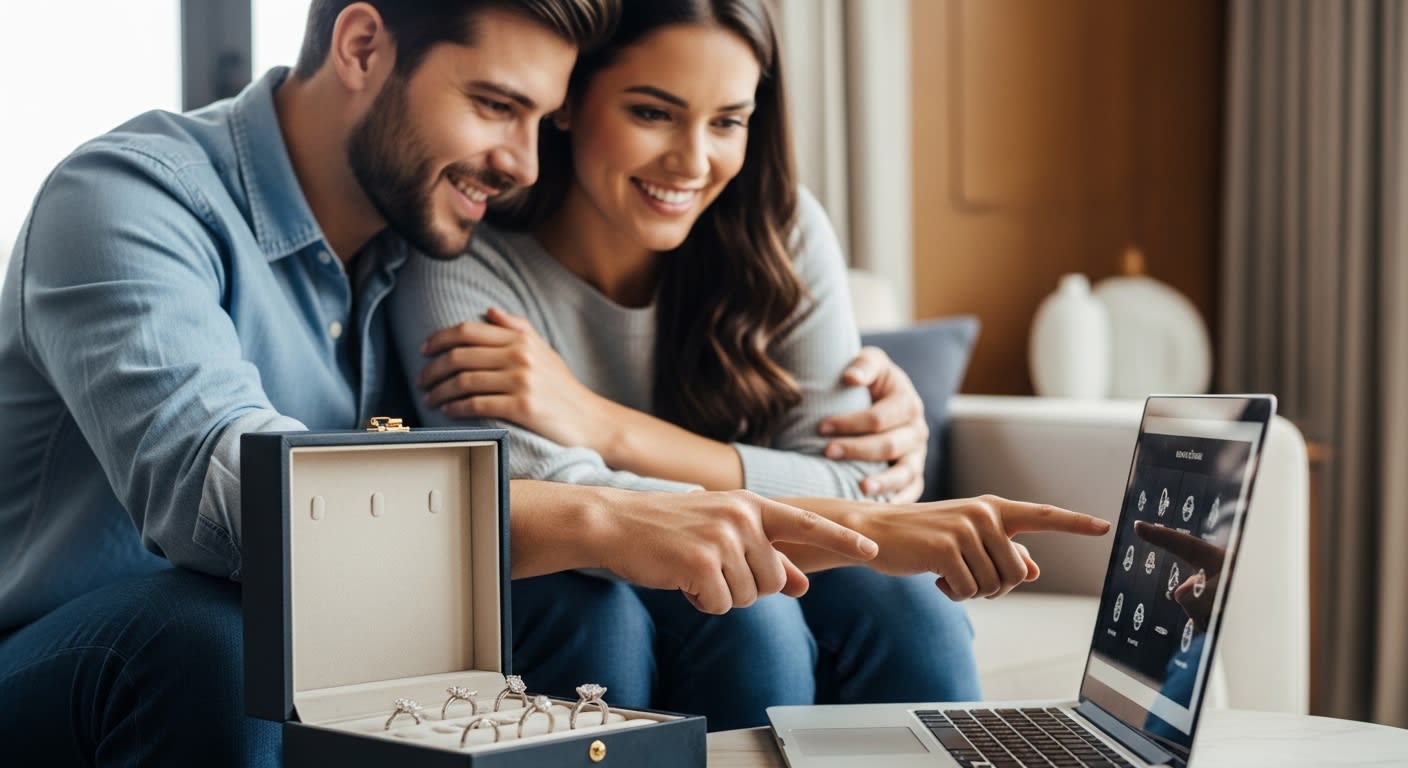
Buying an engagement ring is one of the most exciting purchases you’ll ever make, and also one of the most nerve-wracking. The sheer number of choices, from diamond shapes to metal types to budget questions, can turn excitement into anxiety fast. But here’s the truth: with a clear, step-by-step process, ring shopping becomes far less stressful and a lot more fun. This guide walks you through every decision you’ll face, in the right order, so you can shop with confidence, avoid costly mistakes, and find a ring that genuinely reflects your relationship.
Table of Contents
- Set your budget and shopping priorities
- Understand diamond quality: the 4Cs explained
- Choose between lab-grown and natural diamonds
- Select ring style, settings, and finishing touches
- Shop smart: verification, comparison, and final checks
- A smarter path to ring shopping: What the experts don’t tell you
- Find your perfect ring with SuperJeweler
- Frequently asked questions
Key Takeaways
| Point | Details |
|---|---|
| Prioritize your budget | Set realistic spending limits based on your own finances, not outdated social rules. |
| Focus on diamond cut | Excellent cut delivers maximum sparkle, often more important than size or color. |
| Lab-grown offers more value | Lab-grown diamonds let you get higher specs for less, making them ideal for budget-conscious couples. |
| Style should match the wearer | Choose a ring style that reflects your partner’s taste and daily habits for a truly meaningful choice. |
| Always verify before buying | Check certifications, compare vendors, and confirm return policies to avoid costly mistakes. |
Set your budget and shopping priorities
Before you look at a single ring, you need a number. Not a vague range, but an actual figure you’re comfortable spending without stretching your finances. This single step prevents more regret than any other part of the process.
The old “three months salary” rule? Ignore it. That guideline was invented by a diamond marketing campaign in the 1980s and has no basis in financial reality. The average US engagement ring cost sits between $5,000 and $7,000 in 2026, but many couples are spending well under $3,000 by choosing lab-grown diamonds. Your budget should reflect your financial health, not a marketing slogan.
Once you have a number, break it down. Most jewelers recommend allocating roughly 70% to the center stone, 20% to the setting, and 10% to extras like engraving, resizing, or insurance. This framework keeps you from falling in love with a diamond you can’t afford to set properly.
Before shopping, also clarify your priorities. Ask yourself:
- Style: Does your partner prefer classic, vintage, or modern designs?
- Ethics: Are lab-grown or conflict-free natural diamonds important to you?
- Size vs. quality: Would you rather have a larger stone or a higher-quality smaller one?
- Metal type: Platinum, white gold, yellow gold, or rose gold?
Use a simple table to map your priorities before you start browsing:
| Priority | High importance | Medium importance | Low importance |
|---|---|---|---|
| Center stone size | ✓ | ||
| Diamond quality (4Cs) | ✓ | ||
| Ring style/design | ✓ | ||
| Metal type | ✓ | ||
| Budget flexibility | ✓ |
Pro Tip: Before you shop, follow a smart budgeting workflow to map out your priorities in writing. Couples who do this spend an average of 30% less time shopping and report higher satisfaction with their final choice.
Understand diamond quality: the 4Cs explained
With a budget in place, the next crucial step is understanding what actually makes one diamond worth more than another. That comes down to four factors, known as the 4Cs: Cut, Color, Clarity, and Carat.
Here’s what each one means and what to prioritize:
- Cut: This is the most important factor. Cut determines how well a diamond reflects light, which is what creates that signature sparkle. Always prioritize an Excellent or Very Good cut grade. A poorly cut 1.5-carat diamond will look duller than a well-cut 1-carat stone.
- Color: Diamond color is graded from D (colorless) to Z (noticeably yellow). The G-J range is considered near-colorless and offers the best value. Most people can’t see the difference between a D and a G with the naked eye, but the price gap is significant.
- Clarity: This refers to internal flaws (inclusions) and surface marks (blemishes). VS2 to SI1 grades are considered “eye-clean,” meaning flaws aren’t visible without magnification. You don’t need a flawless diamond to have a beautiful one.
- Carat: Carat measures weight, not size. A smart trick: buy just under whole numbers. A 0.9-carat diamond looks nearly identical to a 1.0-carat stone but costs noticeably less.
Here’s a quick comparison to guide your 4Cs choices by budget:
| Budget range | Cut | Color | Clarity | Carat |
|---|---|---|---|---|
| Under $3,000 | Excellent | H-J | SI1 | 0.7-0.9ct |
| $3,000-$6,000 | Excellent | G-H | VS2-SI1 | 0.9-1.2ct |
| Over $6,000 | Excellent | F-G | VS1-VS2 | 1.2ct+ |
Always ask for a grading report from GIA (Gemological Institute of America) or AGS (American Gem Society). These independent certifications confirm that a diamond’s quality has been verified by a neutral third party, not just the seller. To maximize sparkle with diamond cut, never compromise on cut grade, even if it means going slightly smaller on carat.
“The cut of a diamond is the single greatest factor in its beauty. A well-cut diamond will always outshine a larger, poorly cut stone.” — GIA Diamond Grading Expert
Choose between lab-grown and natural diamonds
With diamond quality in mind, today’s couples also face an important choice about where their diamond comes from. Lab-grown diamonds and natural diamonds are both real diamonds, chemically and physically identical. The difference is origin.
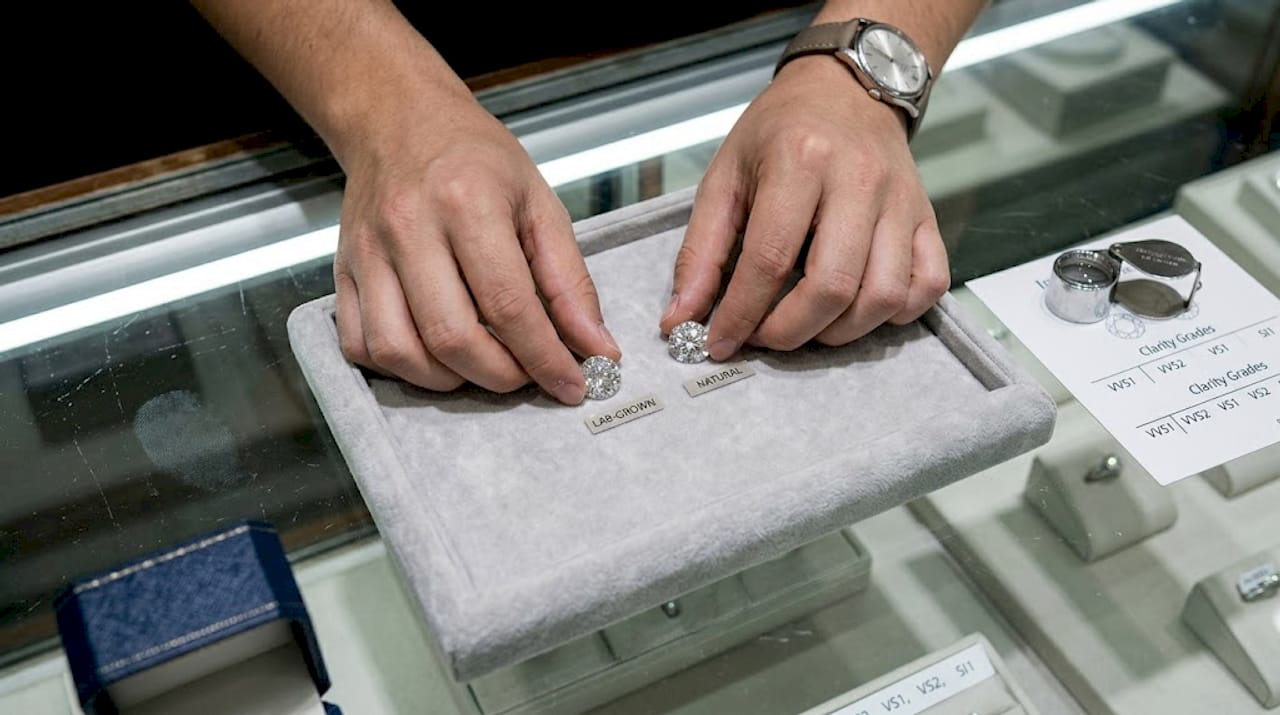
Natural diamonds formed billions of years ago deep in the earth. Lab-grown diamonds are created in controlled environments using advanced technology that replicates that same process in weeks. Both types are graded using the same 4Cs standards.
Lab-grown diamonds: pros and cons
- Pro: Significantly lower cost, often 50-70% less than natural equivalents
- Pro: Lab-grown enables larger specs within your budget, giving you more diamond for your money
- Pro: No mining means a lower environmental footprint
- Con: They don’t carry the same geological rarity as natural diamonds
- Con: Resale value is currently lower and less predictable
Natural diamonds: pros and cons
- Pro: Unique geological origin adds sentimental and historical significance
- Pro: More established resale market
- Con: Higher price for equivalent specs
- Con: Mining raises ethical and environmental concerns unless certified conflict-free
Pro Tip: If size and sparkle within budget are your top priorities, lab-grown is a genuinely smart choice. Browse lab-grown diamond deals to see how far your budget can stretch. If the story of a natural, rare stone matters more to you both, that’s equally valid.
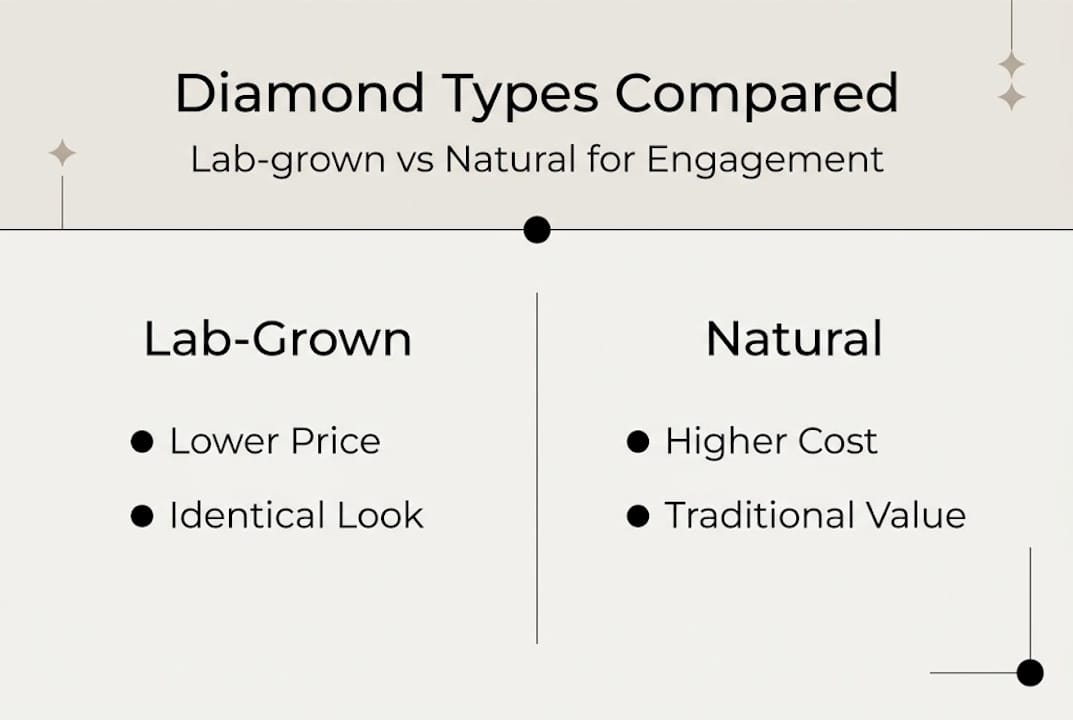
Here’s a quick comparison:
| Factor | Lab-grown | Natural |
|---|---|---|
| Price | 50-70% lower | Higher |
| Appearance | Identical | Identical |
| Rarity | No | Yes |
| Certification | Yes (GIA/IGI) | Yes (GIA/AGS) |
| Resale value | Lower | Higher |
If you want to learn more before deciding, understanding lab grown diamonds is a great place to start. You can also explore lab grown rings to get a feel for what’s available at different price points.
Select ring style, settings, and finishing touches
Once you’ve selected the main diamond, your next step is expressing your partner’s unique style through the ring design. This is where the ring becomes personal.
The most popular ring styles include:
- Solitaire: A single diamond on a plain band. Timeless, clean, and lets the stone do all the talking.
- Halo: A center stone surrounded by smaller diamonds. Creates the illusion of a larger stone and adds extra sparkle.
- Vintage or antique: Detailed metalwork, milgrain edges, and intricate patterns. Perfect for someone who loves old-world elegance.
- Three-stone: A center diamond flanked by two side stones. Often carries symbolic meaning (past, present, future).
- Modern or minimalist: Clean lines, geometric shapes, and understated settings for contemporary tastes.
Think about your partner’s lifestyle too. Someone who works with their hands or is very active may prefer a lower, more secure setting that won’t snag. A prong setting shows off the diamond beautifully but sits higher. A bezel setting wraps the diamond in metal for a sleeker, more protected look.
For metals, here’s a quick breakdown:
- Platinum: Most durable, hypoallergenic, naturally white. Higher price point.
- White gold: Looks similar to platinum at a lower cost, but requires replating over time.
- Yellow gold: Classic and warm. Pairs especially well with lower-color diamonds.
- Rose gold: Romantic and trendy. Flattering on most skin tones.
Personalization options add real meaning. Consider engraving a date, initials, or a short phrase inside the band. Some couples also choose birthstones as accent stones for a more personal touch.
Pro Tip: If you’re unsure about your partner’s style, look at the jewelry they already wear. The metal color and overall aesthetic of their everyday pieces will tell you a lot. You can also browse styles together without revealing your full plan, framing it as casual curiosity.
Shop smart: verification, comparison, and final checks
With the style and setting set, it’s time to move onto the final, crucial safeguards before making your purchase. This stage is where many buyers skip steps and later regret it.
Here’s a numbered checklist to follow before finalizing any purchase:
- Request the grading certificate. Every diamond should come with a GIA, AGS, or IGI certificate. If a seller can’t provide one, walk away.
- Compare at least three vendors. Prices for the same specs can vary by 20-40% between retailers. Online retailers often offer better pricing than brick-and-mortar stores for the same quality.
- Read the return policy. Look for at least a 30-day return window. A reputable jeweler stands behind their product.
- Check the warranty. Does it cover prong tightening, cleaning, and resizing? These services add real long-term value.
- Verify resizing options. Most rings can be resized one to two sizes up or down. Some settings, like eternity bands, cannot be resized easily.
- Review the receipt carefully. It should list the diamond specs (carat, cut, color, clarity) and the metal type. Vague descriptions are a red flag.
Use a smart buying checklist to keep track of each vendor you evaluate.
Red flags to watch for:
- No independent grading certificate
- Pressure to buy immediately or “today only” pricing
- Vague descriptions of metal quality (“gold-toned” instead of “14k gold”)
- No clear return or warranty policy
“A reputable jeweler will always welcome your questions. If someone rushes you or gets defensive, that’s your signal to leave.” — Jewelry industry best practice
A smarter path to ring shopping: What the experts don’t tell you
Here’s something the jewelry industry rarely admits: a lot of the stress couples feel during ring shopping is manufactured. Marketing has convinced generations of buyers that the ring must be a certain size, cost a certain amount, and follow a certain tradition to be meaningful. None of that is true.
We’ve helped thousands of couples find rings, and the ones who are happiest with their purchase are almost never the ones who spent the most. They’re the ones who were honest about their budget, clear about their values, and focused on what their partner actually loves rather than what looks impressive in photos.
The most meaningful ring is the one that fits your relationship, not someone else’s expectations. If a lab-grown diamond lets you start your marriage without financial stress, that’s a deeply smart and loving choice. If insights on lab grown help you feel confident in that decision, even better. Perfection is overrated. Intention is everything.
Find your perfect ring with SuperJeweler
When you’re ready to take the next step with confidence, SuperJeweler is here to help every step of the way.
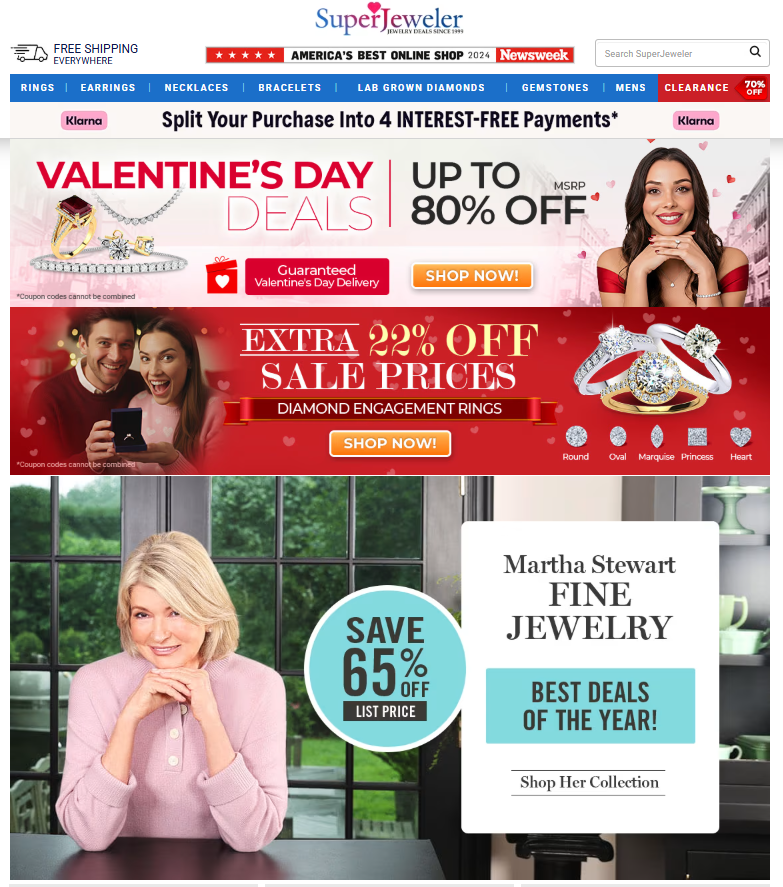
At SuperJeweler, we carry thousands of affordable engagement rings across every style, budget, and diamond type. Whether you’ve decided on a lab-grown stone or a natural diamond, our collections make it easy to find exactly what you’re looking for without overpaying. Check out our best lab-grown deals to see stunning options at prices that might surprise you. And when you’re ready to complete the set, our wedding bands selection has something for every taste. Free shipping, warranty options, and easy returns mean you can shop with total peace of mind.
Frequently asked questions
How much should you realistically spend on an engagement ring?
Spend what supports your financial health, not a marketing rule. The average ring cost is $5,000 to $7,000 in 2026, but many couples find beautiful options under $3,000 with lab-grown diamonds.
What are the 4Cs of diamonds, and which matters most?
The 4Cs are Cut, Color, Clarity, and Carat. Cut matters most for sparkle, so always prioritize an Excellent grade before focusing on the other three.
Are lab-grown diamonds really worth it?
Yes, for most buyers. Lab-grown diamonds give you larger, better-spec stones within your budget, though they don’t carry the geological rarity of natural diamonds.
How can I be sure I’m getting a quality ring?
Buy from a reputable jeweler, always request an independent grading certificate from GIA or AGS, and confirm the return and warranty policy before purchasing.
Recommended
- How to Choose an Engagement Ring Step by Step Easily
- Wedding band buying workflow: your 2026 step-by-step guide
- Wedding Ring Selection Guide for Perfect Bands
- 7 Essential Engagement Ring Buying Tips for First-Time Couples
