TL;DR:
- In 2026, gemstones serve as mood-setters and identity markers, shifting focus from decoration to personal expression.
- Jewelry-first styling emphasizes selecting a striking gemstone piece before building outfits, creating cohesive and intentional looks.
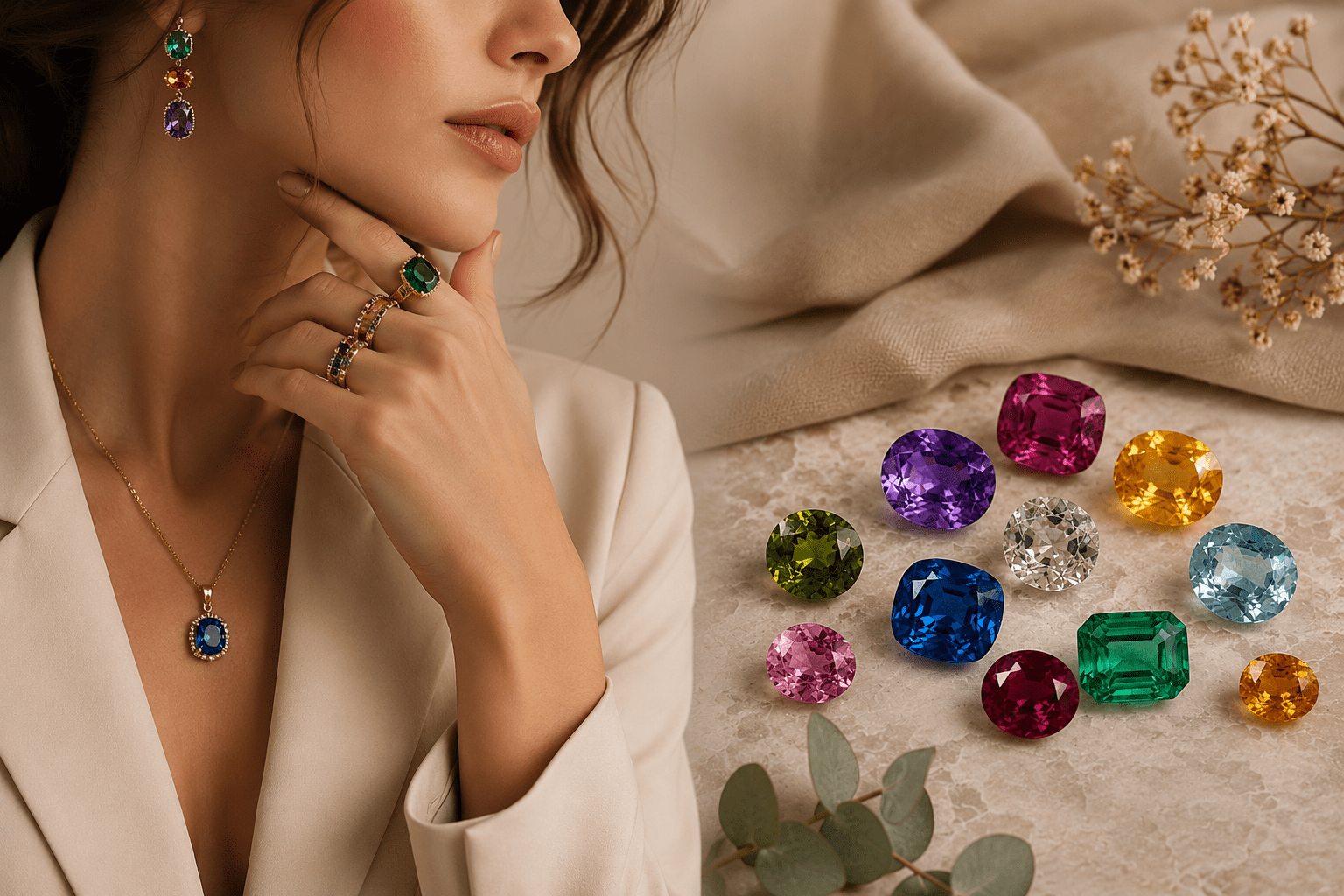
Gemstones are defined as the primary design language of contemporary fashion, functioning not as decoration but as mood-setters, identity markers, and the anchor points around which entire outfits are built. The role of gemstones in fashion has shifted decisively in 2026: color is now chosen to communicate personal expression, not simply to sparkle. Brands like Cartier are designing entire high jewelry collections around gemstone placement and color balance, while Pantone’s seasonal palettes directly influence which stones dominate runways and retail. Whether you wear a single emerald pendant or a stack of crystal bracelets, the stone you choose tells a story before you say a word.
How are gemstone color trends shaping fashion styling in 2026?
Color in gemstones functions as design language, communicating mood and identity rather than serving as pure decoration. This shift reframes how fashion enthusiasts approach jewelry selection entirely.
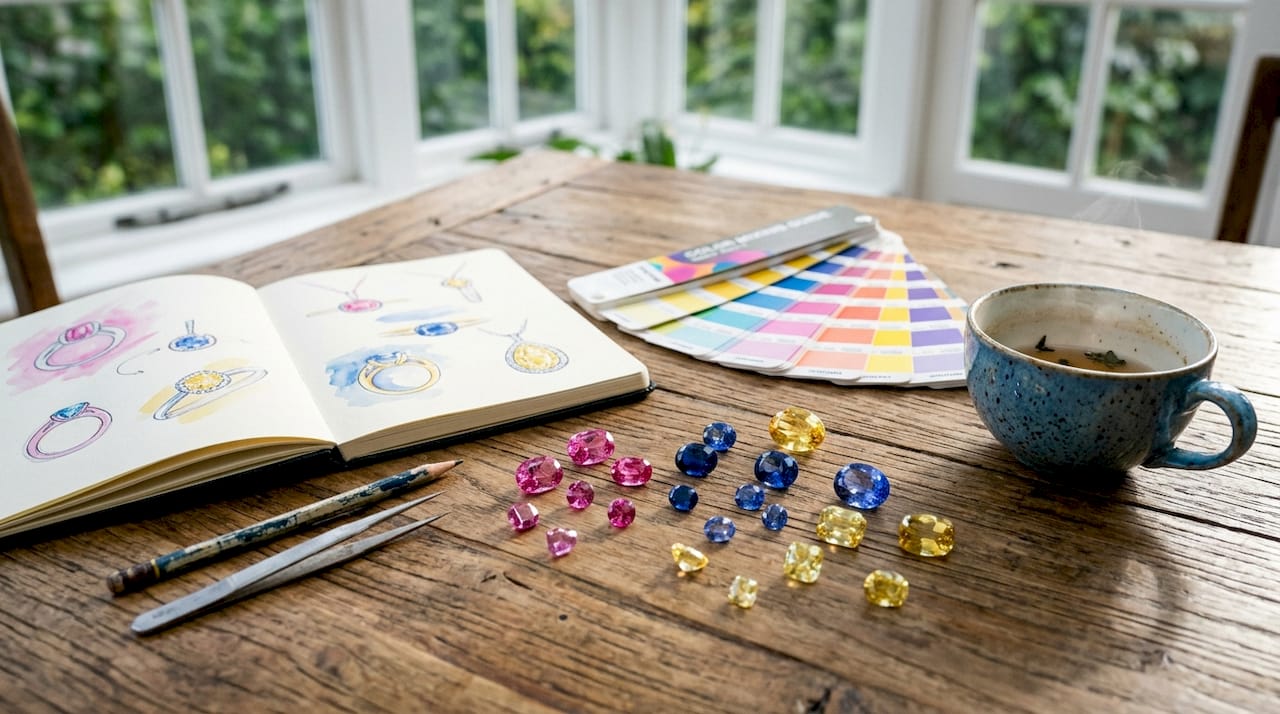
The dominant trend for 2026 is called “High-Impact Hues,” which focuses on vibrant, customizable gemstone colors that move well beyond traditional white diamonds. Pantone named Signature Red as its Color of the Year, and that choice has cascaded directly into gemstone demand, pushing rubies, garnets, and red spinels to the front of jewelry collections. When a color authority sets a seasonal palette, jewelers and stylists follow within months.
The practical effect on styling is significant. Muted, tonal accents are replacing the older approach of stacking multiple bright stones. A single deep sapphire ring against a cream linen outfit carries more visual authority than five competing colored pieces. This restraint is the point: gemstone color choices now reflect intentional mood-setting rather than maximalist accumulation.
Here is how color psychology maps to current gemstone styling choices:
- Red and deep pink stones (ruby, garnet, pink tourmaline): project confidence and passion; pair with black, ivory, or charcoal neutrals
- Blue stones (sapphire, aquamarine, blue topaz): signal calm authority and depth; work well against white, gray, and navy
- Green stones (emerald, tsavorite, peridot): communicate growth and originality; complement earth tones and warm browns
- Purple stones (amethyst, tanzanite): suggest creativity and individuality; pair with blush, lavender, or deep plum
Pro Tip: When using Pantone’s seasonal color as a guide, identify the gemstone closest to that hue in your price range rather than buying the most expensive option. A well-cut amethyst in the right setting reads as luxurious at any price point.
What is jewelry-first styling and how does it change outfit building?
Jewelry-first styling reverses the traditional sequence of getting dressed by selecting one gemstone statement piece before choosing clothing, rather than accessorizing an outfit already assembled. Harper’s Bazaar has called this the biggest shift in fashion right now, and the logic behind it is hard to argue with.
The traditional approach treats jewelry as the finishing touch. Jewelry-first styling treats the stone as the creative brief. Every clothing choice that follows serves the piece, not the other way around. The result is a more cohesive, intentional look with a clear focal point.
Here is how to apply the jewelry-first method in practice:
- Select your anchor piece. Choose one gemstone item: a bold gemstone necklace, a cocktail ring, or a pair of statement earrings. This piece sets the color story and the occasion tone.
- Extract the palette. Identify the dominant color and one secondary tone in the stone. Build your outfit around those two colors, using neutrals as the base.
- Reduce competing elements. If your anchor piece is a large emerald pendant, skip the stacked bracelets and bold earrings. Let one piece carry the look.
- Match the stone’s energy to the occasion. A deep blue tanzanite reads formal. A bright peridot reads casual and playful. The stone should match where you are going, not just what you are wearing.
- Confirm cohesion before leaving. Stand back and identify the first thing your eye lands on. If it is the gemstone piece, the method worked.
Cartier’s 2026 Tutti Kanya necklace demonstrates this principle at the highest level. The design prioritizes gemstone placement and color balance over metal ornamentation, letting the stones define the composition entirely. What works for Cartier’s high jewelry works equally well for a well-chosen piece from an accessible collection.
Pro Tip: Photograph your anchor piece against a white background before you start building the outfit. Seeing the stone in isolation makes it easier to identify its true color family and avoid clashing combinations.
How do gemstones convey meaning beyond aesthetics in modern fashion?
Gemstones carry symbolic weight that clothing rarely can. Emeralds hold historic significance dating back to Egyptian royalty, where they symbolized renewal and eternal life. That layered meaning does not disappear when a stone appears in a modern ring or pendant. It transfers to the wearer.
The symbolic dimension of gemstone jewelry now actively shapes purchasing decisions. Buyers, particularly Millennials and Gen Z consumers, often choose a stone for its visual appeal first and then discover or assign meaning to it afterward. Spiritual and wellness-oriented jewelry has moved into mainstream fashion, with crystal stacks, mala necklaces, and birthstone pieces becoming everyday style staples rather than niche spiritual accessories.
The meanings most commonly associated with popular fashion gemstones include:
- Amethyst: clarity, calm, and protection; historically worn by royalty and clergy
- Turquoise: healing and good fortune; central to Native American and Persian cultural traditions
- Emerald: renewal, love, and wisdom; associated with Venus and spring across multiple cultures
- Ruby: passion, courage, and vitality; considered the king of gemstones in Sanskrit texts
- Sapphire: loyalty, truth, and wisdom; the stone of choice for royal engagement rings across centuries
This two-stage buyer motivation, aesthetics first and meaning second, has real implications for how you build a gemstone wardrobe. A piece you choose because you love its color becomes more meaningful once you understand what it has historically represented. That added layer of story is part of why personalization and storytelling now drive gemstone jewelry demand more than any other factor.
Conscious consumerism adds a third layer. Consumers increasingly buy gemstone jewelry for its story and ethics, not merely its sparkle. Knowing where a stone was mined, whether it is lab-grown, and what it represents personally all factor into the purchase. This is not a niche concern. It is the direction the entire market is moving.
What are the key gemstone jewelry trends and styling tips for 2026?
The defining styling philosophy for 2026 is intentional maximalism: more color, more personality, but with discipline. The goal is not to wear more stones but to wear the right stone with full commitment.
Current trends shaping gemstone fashion accessories:
- Single-stone spotlight: One vivid, well-chosen piece carries the entire look. Think a large oval pink gemstone ring worn with an otherwise minimal outfit.
- Contrast styling: Pairing a vivid stone with a neutral palette creates the highest visual impact. A deep red garnet pendant against a white shirt reads stronger than the same stone against a patterned blouse.
- Birthstone personalization: Wearing your own or a loved one’s birthstone as a fashion choice, not just a sentimental one, is a growing trend that connects personal meaning to daily style.
- Layered fine jewelry: Delicate chains with small colored stones layered at different lengths create depth without visual noise. The key is keeping stone colors within the same family.
- Red carpet influence: Designers and celebrities are choosing colored stones over white diamonds for major appearances, which accelerates demand at every price point.
Gemstone styling: what works versus what to avoid
| Approach | Works | Avoid |
|---|---|---|
| Stone count | One bold anchor piece | Three or more competing statement pieces |
| Color pairing | Vivid stone with neutral clothing | Bright stone against a busy print |
| Metal choice | Yellow gold with warm stones (ruby, citrine) | Mixed metals with multiple colored stones |
| Occasion match | Stone energy matches the event tone | Formal stones in casual settings |
| Layering | Same color family, varied sizes | Clashing colors at the same neckline |
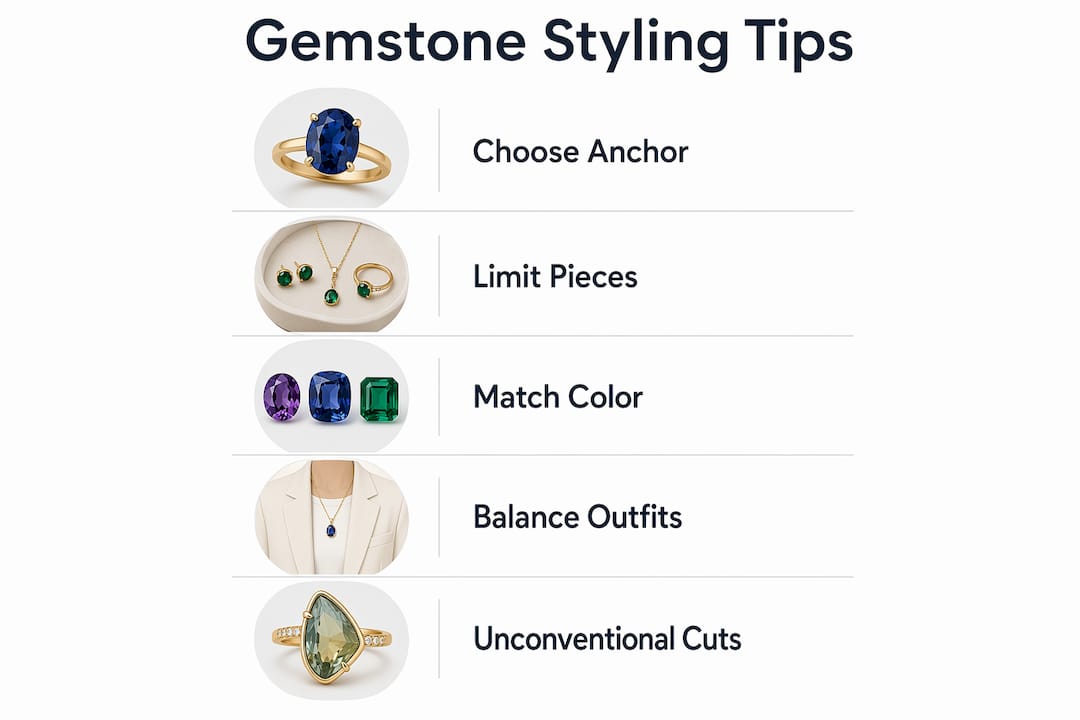
Emerging designers are also pushing gemstone designs for wardrobes in unexpected directions, using unconventional cuts like rose-cut and portrait-cut stones that emphasize color depth over brilliance. These cuts suit the current preference for stones that glow rather than flash.
Key takeaways
Gemstones function as a complete design language in 2026 fashion, where color, symbolism, and jewelry-first styling combine to make a single stone more expressive than an entire accessory collection.
| Point | Details |
|---|---|
| Color as communication | Choose gemstone color based on mood and occasion, not just personal preference. |
| Jewelry-first styling | Select your anchor gemstone piece before building the outfit around it. |
| Symbolic depth | Every major gemstone carries cultural and historical meaning that adds to its fashion value. |
| Intentional maximalism | Wear one vivid, well-chosen stone rather than multiple competing pieces. |
| Ethics and story | Buyers increasingly factor sourcing, lab-grown options, and personal narrative into gemstone purchases. |
Why gemstones matter more now than ever before
I have spent years watching jewelry cycle in and out of fashion relevance, and what is happening right now is genuinely different. Gemstones are not trending because a celebrity wore them on a red carpet. They are trending because people are tired of anonymous style. A white diamond is beautiful, but it does not tell you much about the person wearing it. A deep teal tourmaline or a vivid orange spinel? That tells you something.
The jewelry-first styling shift is the most democratizing development I have seen in fashion accessories in a long time. You do not need a large wardrobe or a large budget to use it. You need one piece you genuinely love and the confidence to build around it. That is accessible to anyone.
What I find most compelling is the ethics dimension. The move toward lab-grown diamonds and traceable gemstones is not just a sustainability trend. It is a storytelling trend. When you know where your stone came from and why you chose it, wearing it feels different. That emotional connection is what separates a piece of jewelry from a fashion accessory.
My advice: stop buying stones because they match an outfit. Start buying stones because they match something true about you. The outfit will follow.
— Andrew
Explore gemstone jewelry at Superjeweler
Superjeweler carries one of the most varied selections of colored gemstone jewelry available online, from vivid gemstone rings in rubies, sapphires, and emeralds to delicate birthstone pendants built for everyday wear. Every piece is priced for accessibility without sacrificing quality, and free worldwide shipping means your next anchor piece is never far away.
Whether you are building a jewelry-first wardrobe or searching for a single statement piece that carries real meaning, Superjeweler’s collections cover the full spectrum of color, cut, and customization. For shoppers who want the brilliance of a diamond with a conscious choice behind it, the lab-grown diamond collection offers stunning options at prices that make fine jewelry genuinely accessible. Start with the stone that speaks to you.
FAQ
What is the role of gemstones in fashion today?
Gemstones function as a design language in contemporary fashion, setting mood, communicating identity, and anchoring entire outfits around a single color story. In 2026, color-driven gemstone choices are shaped by Pantone’s seasonal palettes and a consumer preference for personal meaning over pure decoration.
What does jewelry-first styling mean?
Jewelry-first styling means selecting a gemstone statement piece before choosing clothing, then building the outfit’s color palette and silhouette around that anchor piece. This approach reduces competing focal points and creates more intentional, cohesive looks.
Which gemstone colors are trending in 2026?
The High-Impact Hues trend centers on vibrant reds, deep blues, and rich greens, with Pantone’s Signature Red driving demand for rubies, garnets, and red spinels. Muted tonal accents in lavender and sage are also popular for fine jewelry layering.
Do gemstones carry symbolic meaning in fashion?
Yes. Emeralds historically symbolize renewal and were prized by Egyptian royalty, while rubies represent passion and sapphires signal loyalty. Modern buyers often choose a stone for its visual appeal first, then connect with its cultural or personal meaning over time.
Are lab-grown gemstones a valid choice for fashion jewelry?
Lab-grown stones are chemically and visually identical to mined gems and are increasingly preferred by Millennial and Gen Z buyers for their ethical sourcing and lower price points. They offer the same color impact and symbolic resonance as natural stones, making them a strong choice for fashion-forward wardrobes.
Recommended
- Diamond Trends 2026: Styles, Shapes & Smart Choices
- Blue Gemstones: Ocean-Inspired Beauty
- Role of Gemstones in Engagement Rings: Modern Impact
- What is birthstone jewelry? A 2026 guide to meaning
