Most jewelry loses its sparkle not from wear but from buildup. Body oils, lotion, hairspray, and everyday dust collect in settings and along metal surfaces, dulling even the finest pieces. The good news: a safe, step-by-step jewelry cleaning routine restores that shine at home with supplies you likely already own.
Before you touch a single piece with water, identify what you’re cleaning. Solid gold, sterling silver, plated metals, diamonds, pearls, and opals each respond differently to moisture, friction, and cleaning products. Safe jewelry cleaning always starts with identifying the material first and cleaning second. Get that step right, and the rest follows naturally.
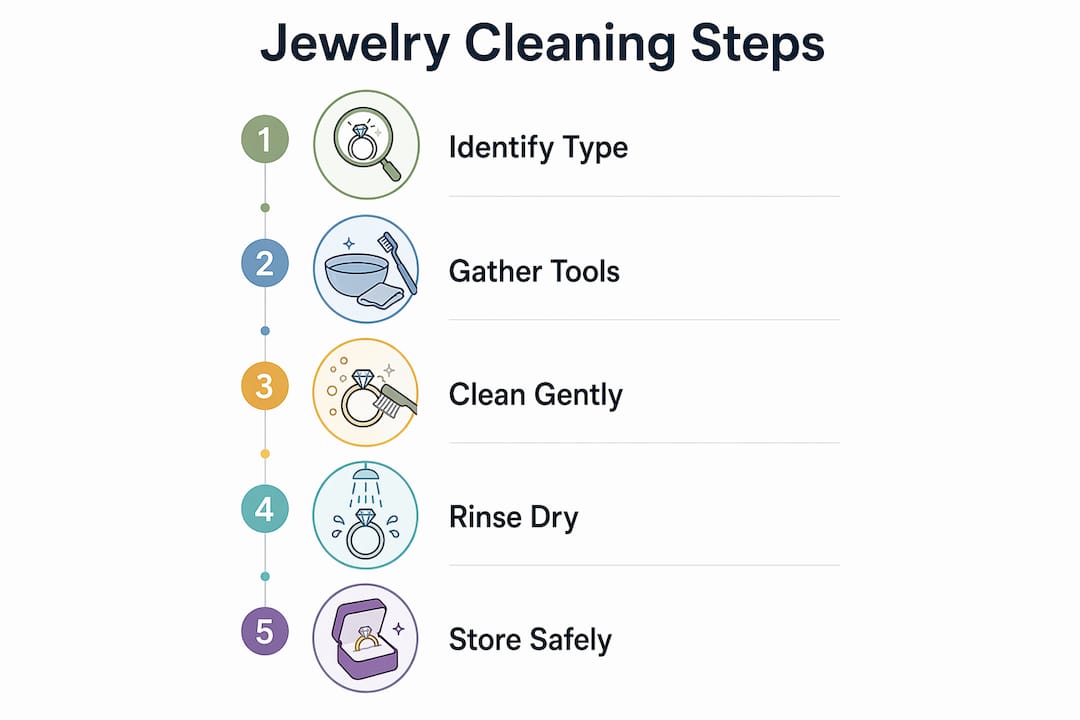
The core sequence for most jewelry:
- Identify the metal and stone type before anything else
- Inspect for loose prongs, cracked stones, or bent clasps under good light
- Gather mild dish soap, lukewarm water, a soft-bristle brush, and two clean bowls
- Add one or two drops of soap to a bowl of lukewarm water and soak the piece briefly (a few minutes for gold and diamonds; skip soaking for pearls and opals)
- Use a soft-bristle toothbrush or baby brush to gently clean crevices, prong bases, and clasps
- Rinse carefully in a second bowl of clean lukewarm water, never over an open drain
- Pat dry with a lint-free microfiber cloth and allow the piece to air dry fully before storing
- Re-inspect settings and clasps after cleaning to confirm nothing shifted
What tools do you actually need before you start?
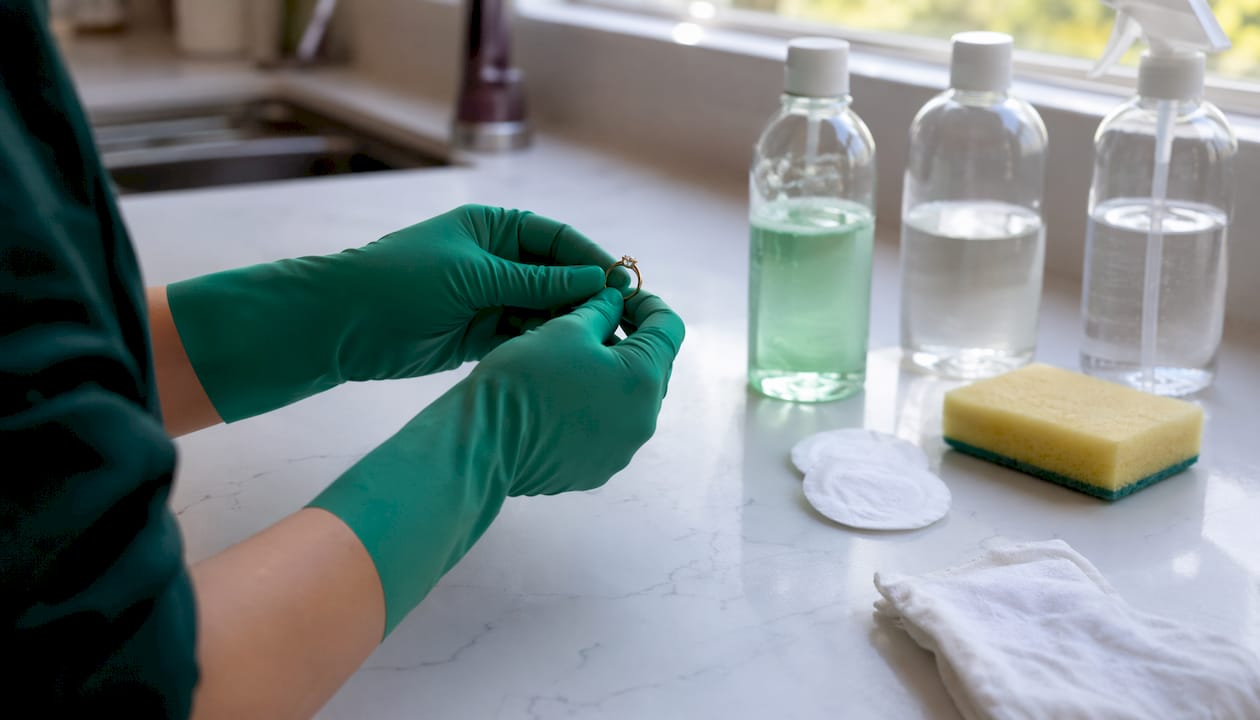
The right supplies make the difference between a safe clean and an accidental scratch. Mild dish soap and warm water work safely on most metals and gems, including gold, silver, diamonds, and sapphires. You don’t need specialty products for most routine cleaning.
- Mild, unscented dish soap: Cuts through oils without harsh chemicals; avoid antibacterial or heavily fragranced formulas
- Lukewarm water: Hot water can loosen glued settings and stress certain stones; lukewarm is the safe default
- Soft-bristle toothbrush or baby brush: Reaches under stone settings and along clasps without scratching metal
- Two small bowls: One for soapy water, one for rinsing; keeps the cleaning solution separate from rinse water
- Lint-free microfiber cloth: For drying and light polishing; paper towels leave micro-abrasions on metal surfaces
- Silver polishing cloth: Useful for tarnish on sterling silver pieces between deeper cleanings
- Skip entirely: Abrasive pads, bleach, acetone, ammonia-based household cleaners, and toothpaste
Common jewelry cleaning mistakes that damage pieces
The most costly cleaning errors are also the most avoidable. Knowing what not to do protects your jewelry as much as knowing the right technique.
- Using toothpaste or baking soda: Both are abrasive. These common home remedies scratch softer metals and gemstone finishes in ways that can’t be reversed
- Soaking porous or treated stones: Pearls, opals, emeralds, and lapis lazuli absorb water and chemicals; soaking damages their surface and can loosen fracture-filled stones
- Using bleach, chlorine, or acetone: Harsh chemicals degrade both metal integrity and gemstone quality, even with brief exposure
- Scrubbing too hard: Firm toothbrushes and aggressive pressure scratch metal and can dislodge stones from already-worn prongs
- Cleaning over an open sink: Small earrings, pendants, and charms disappear instantly; always use a bowl on a table or close the drain completely
- Over-cleaning plated pieces: Gold-plated and silver-plated jewelry has a thin surface layer that wears away with frequent or abrasive cleaning; clean gently and only when needed
- Skipping the pre-cleaning inspection: A slightly loose stone becomes a lost stone once you start scrubbing
Pro Tip: Before every cleaning session, hold the piece under good light and gently tap it near your ear. A faint rattle signals a loose stone. Stop there and take it to a jeweler before cleaning.
How to store and maintain jewelry between cleanings
Good storage habits cut your cleaning frequency in half. The less buildup accumulates, the gentler each cleaning needs to be.
- Remove jewelry before swimming, exercising, or sleeping: Chlorine, saltwater, and mechanical stress accelerate tarnish and cause physical damage to prongs and clasps
- Wipe pieces with a soft cloth after each wear: Removes body oils and residue before they bond to the metal surface
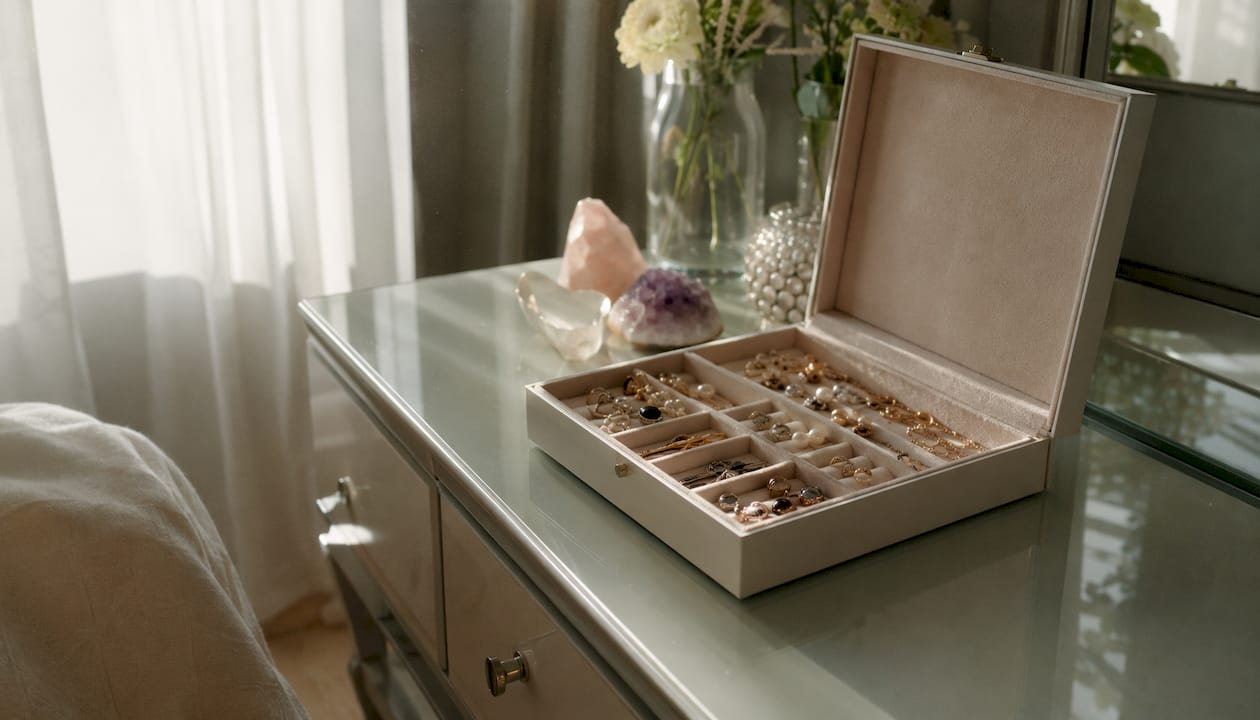
- Store pieces separately: Soft pouches or compartment trays prevent stones from scratching each other and chains from tangling
- Clasp chains before storing: An unclasped necklace knots; a clasped one stays straight and ready to wear
- Keep earrings paired: Storing them together prevents loss and makes matching effortless
- Inspect prongs and clasps regularly: Catching a bent prong early costs far less than replacing a lost stone
- Apply perfume, lotion, and hairspray before putting on jewelry: Letting products dry first dramatically reduces residue buildup on metal and stones
For more jewelry care tips that extend the life of your pieces, Superjeweler’s blog covers preventive habits recommended by professional jewelers.
When should you take jewelry to a professional?
Home cleaning handles routine maintenance well. But some situations genuinely require a jeweler’s tools and trained eye.
- Annually or twice yearly for engagement rings and heirlooms: Daily-wear pieces accumulate embedded grime that soap and a brush can’t fully reach
- Any time a stone feels loose or a setting looks damaged: Cleaning a compromised setting risks losing the stone entirely
- Antique, porous, or complex gemstone combinations: Vintage and heavily soiled pieces are safest in professional hands; uncertain stone identification makes home cleaning a gamble
- Deep scratches or dull metal that won’t respond to polishing: Professional buffing wheels with progressive grits restore a mirror finish that polishing cloths can’t replicate
- White gold that looks yellow after cleaning: That’s plating wear, not dirt. Rhodium re-plating is a professional-only service
- Pearl restringing: Silk or nylon thread stretches and weakens over time; a jeweler restrings and re-knots properly
Professional ultrasonic cleaners operate using high-frequency sound waves with heated solutions, reaching embedded dirt in crevices that manual cleaning simply cannot access. Beyond cleaning, jewelers examine pieces under 10x–40x magnification, catching prong thinning and hairline fractures invisible to the naked eye. Think of it the way you think about dental care: daily brushing at home plus professional cleanings twice a year produces results neither approach achieves alone.
Expert advice for safe, lasting jewelry cleaning habits
Professional jewelers consistently point to the same principles: start gentle, stay consistent, and never guess with a stone you can’t identify.
- Use the least aggressive method that works: For most gold and diamond pieces, mild soap and lukewarm water is genuinely enough. Reaching for stronger solutions first causes unnecessary wear
- Clean lightly and often rather than aggressively and rarely: Regular gentle maintenance prevents heavy buildup and reduces the need for harsh treatments
- Handle unknown or delicate stones with caution: If you can’t confirm the stone type, wipe with a barely damp cloth and consult a jeweler before doing anything more
- Avoid home ultrasonic cleaners for antique, glued, or included stones: Vibration loosens settings that are already stressed; the risk outweighs the convenience for fragile pieces
- Inspect before and after every cleaning session: Catching a shifted stone or a lifted prong immediately after cleaning prevents a small problem from becoming a costly one
- Build a simple weekly habit: A five-minute soap-and-water clean for daily-wear rings, a quick wipe for everything else, and separate storage every night keeps most jewelry looking sharp year-round
Pro Tip: For gold jewelry care, the gentlest effective method is always the right starting point. Save stronger approaches for when a jeweler recommends them.
Key Takeaways
Safe, consistent jewelry cleaning at home preserves brilliance and prevents costly repairs when you match the method to the material every time.
| Point | Details |
|---|---|
| Identify before cleaning | Always confirm the metal and stone type before applying any cleaning method. |
| Soap and water first | Mild dish soap with lukewarm water safely cleans most gold, diamond, and hard-gemstone pieces. |
| Skip abrasives entirely | Toothpaste, baking soda, and paper towels cause irreversible scratches on metals and stones. |
| Store pieces separately | Soft pouches or compartment trays prevent scratching, tangling, and buildup between wears. |
| Schedule professional care | Engagement rings and heirlooms benefit from professional inspection and cleaning once or twice a year. |
Keep your jewelry looking its best with Superjeweler

Whether you’ve just cleaned a treasured heirloom or you’re caring for a new piece, the right jewelry deserves the right attention. Superjeweler carries an extensive collection of engagement rings at prices that make fine jewelry genuinely accessible, along with lab-grown diamond jewelry that pairs beautifully with the care routine you’ve just built. Browse the full collection at Superjeweler.com and find a piece worth keeping brilliant for years.
{
  "@context": "https://schema.org",
  "@type": "Article",
  "headline": "Step by Step Jewelry Cleaning: Your Safe Home Guide",
  "description": "A complete step-by-step jewelry cleaning guide covering safe techniques, essential tools, common mistakes to avoid, storage tips, and when to seek professional care for all jewelry types.",
  "author": {
    "@type": "Organization",
    "name": "Superjeweler",
    "url": "https://www.superjeweler.com"
  },
  "publisher": {
    "@type": "Organization",
    "name": "Superjeweler",
    "url": "https://www.superjeweler.com"
  },
  "mainEntityOfPage": {
    "@type": "WebPage",
    "@id": "https://www.blog.superjeweler.com"
  }
}
Recommended
- Jewelry Care Tips: Keep Your Pieces Sparkling Longer
- How to Care for Gold Jewelry: A Complete Guide
- Step by Step Jewelry Shopping: Your Complete 2026 Guide
- Diamond Earring Care Tips: Proven Steps to Keep Them Sparkling
