TL;DR:
- Lab-grown and natural diamonds are both real stones with identical chemical and optical properties, but differ in origin, price, and rarity. The choice depends on personal values and budget, with lab-grown diamonds offering larger sizes at lower costs and natural diamonds maintaining higher resale value. Certification and clear disclosure are essential for buyers to verify origin and ensure quality, regardless of the type purchased.
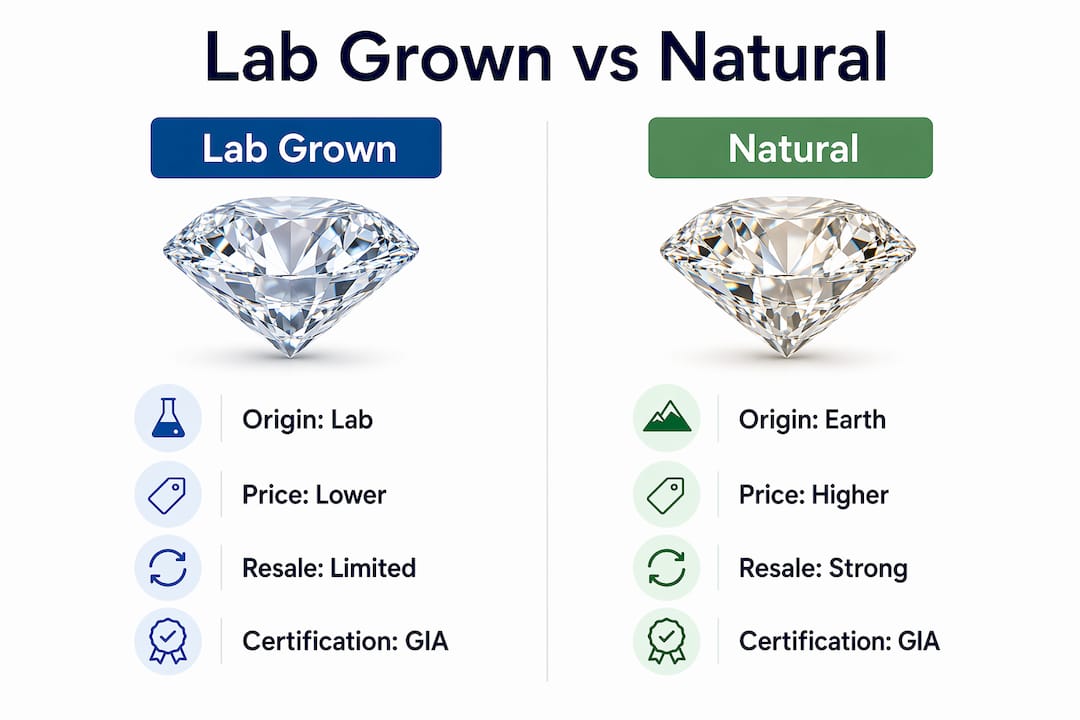
Comparing lab grown vs natural diamonds is the process of evaluating origin, price, quality grading, and certification to select the right stone for your needs. Both types are real diamonds. Lab-grown and natural diamonds share identical chemical composition, crystal structure, and optical properties. The differences that matter to buyers come down to how each stone formed, what it costs, and what documentation backs it up. This guide walks through every factor you need to evaluate, using current GIA grading standards and FTC disclosure rules, so you can make a confident, informed purchase.
How to compare lab grown vs natural diamonds: origin and formation
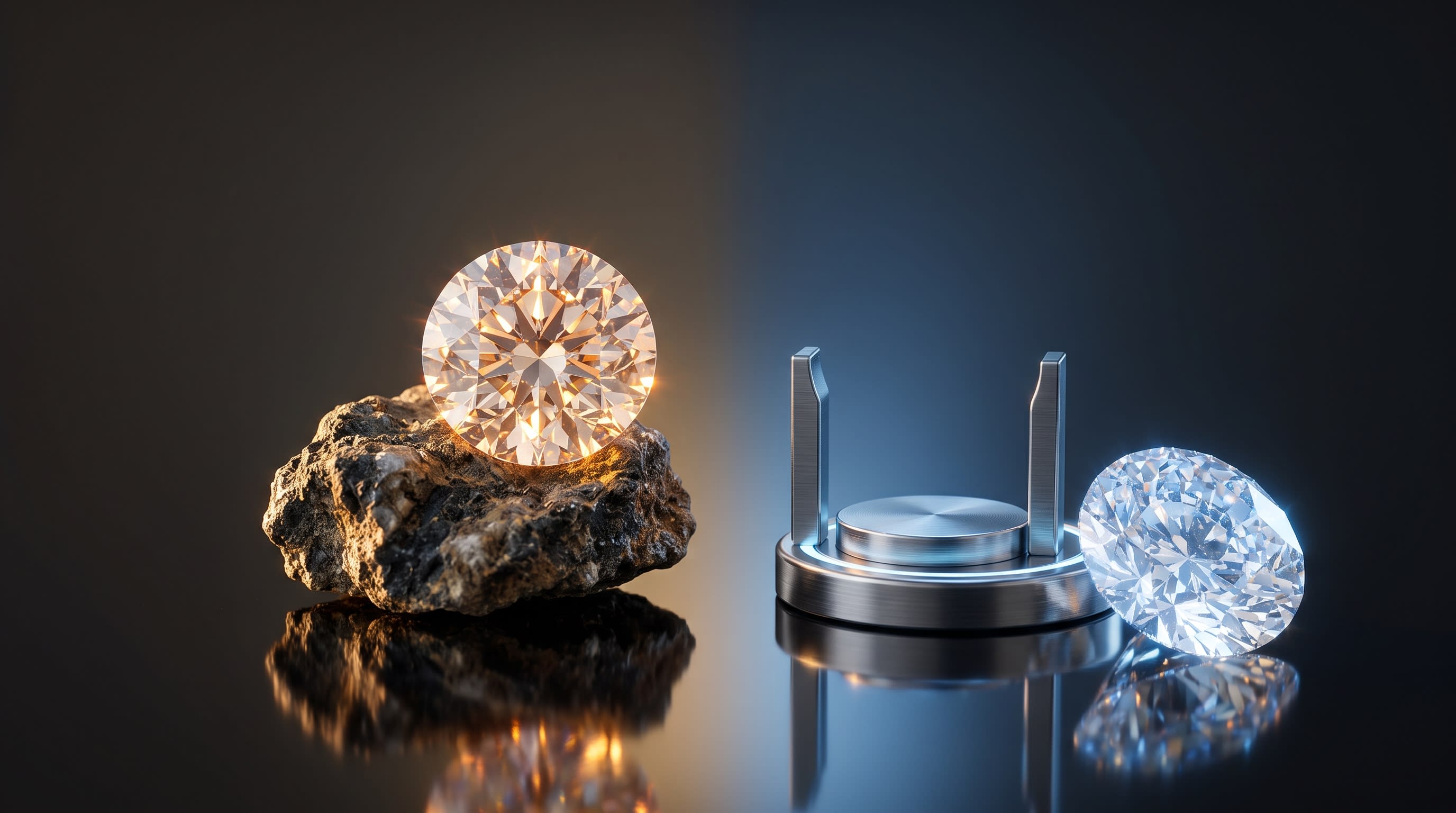
The most fundamental distinction between lab grown and natural diamonds is where they come from. Natural diamonds form deep in the earth over billions of years under extreme heat and pressure. Lab-grown diamonds are created in controlled laboratory environments using one of two methods: High Pressure High Temperature (HPHT) or Chemical Vapor Deposition (CVD).
Despite their different origins, both diamond types are chemically identical. A gemologist cannot tell them apart with the naked eye. Even professional appraisers require spectroscopy or growth pattern detection equipment to determine origin. That fact changes how buyers should approach the comparison: you are not choosing between a real diamond and a fake one. You are choosing between two real diamonds with different backstories.
Origin affects three things buyers care about most:
- Scarcity: Natural diamonds are finite geological resources. Lab-grown diamonds can be produced at scale, which drives prices down over time.
- Pricing: Production scale means lab-grown stones cost significantly less per carat than natural equivalents.
- Perception: Some buyers attach emotional significance to a stone formed by nature. Others prioritize size and value per dollar. Neither preference is wrong.
Understanding origin is the starting point for any honest natural vs synthetic comparison. Once you accept that both are real diamonds, the evaluation becomes practical rather than philosophical.
What are the 4Cs, and how does GIA grade lab-grown stones?
The 4Cs, cut, color, clarity, and carat weight, are the global standard for evaluating diamond quality. The Gemological Institute of America (GIA) developed this system and applies it to both natural and lab-grown stones. However, GIA updated its grading approach for lab-grown diamonds in 2026 in a meaningful way.
95% of lab-grown diamonds fall within a narrow range of high color and clarity. That concentration made the traditional D-to-Z color scale and FL-to-I3 clarity scale less useful for differentiating lab-grown stones. GIA responded by shifting to two broader categories for lab-grown grading: “premium” and “standard.” This change reflects the market reality that most lab-grown diamonds cluster near the top of the traditional scale.
| Evaluation factor | Natural diamonds | Lab-grown diamonds |
|---|---|---|
| Color grading | D to Z scale (GIA) | Premium or standard (GIA, 2026) |
| Clarity grading | FL to I3 scale (GIA) | Premium or standard (GIA, 2026) |
| Cut grading | Excellent to Poor | Same scale applies |
| Carat weight | Standard measurement | Same measurement |
| Origin on certificate | Stated as natural | Stated as lab-grown |
When comparing grades between stone types, focus on cut above all other factors. Cut determines how a diamond reflects light, and a well-cut lab-grown stone will outperform a poorly cut natural diamond of higher color and clarity every time.
Pro Tip: Ask for the GIA grading report number and verify it directly on GIA’s website before purchasing any diamond, lab-grown or natural. The report confirms both quality and origin.
How do prices and resale values compare?
Price is where the lab grown vs mined comparison becomes most dramatic. A 3-carat lab-grown diamond can cost as little as 7% of a comparable natural diamond. That gap exists because lab-grown production capacity has grown rapidly, pushing prices down. Natural diamond prices hold because geological supply is fixed.

The price advantage of lab-grown stones is real and significant. A buyer who would otherwise purchase a 1-carat natural diamond can often afford a 2-carat or 3-carat lab-grown stone at the same budget. That size difference is visible and meaningful in a finished ring.
Resale value tells a different story. Natural diamonds command an origin premium rooted in geological rarity, which supports long-term price floors. Lab-grown diamonds are manufactured products, and their resale market reflects ongoing production increases. Buyers should treat lab-grown and natural diamonds as different financial asset categories rather than interchangeable commodities.
The practical takeaway: if you plan to resell or upgrade your diamond within five to ten years, natural diamonds carry more predictable resale value. If you want the largest, highest-quality stone for your budget and plan to keep it, lab-grown diamonds deliver more per dollar. Neither answer is universally correct. The right choice depends on your priorities.
What certification and disclosure rules protect buyers?
Certification is the buyer’s primary protection in any diamond purchase. FTC guidelines require clear and conspicuous disclosure of diamond origin in all marketing and sales materials. The FTC prefers the term “lab-grown diamond” and discourages vague language like “cultured” or “synthetic,” which can mislead buyers about what they are purchasing.
Certification reports must clearly identify whether a diamond is natural or lab-grown. GIA provides this identification on every report it issues. Before purchasing, confirm the following:
- The certificate explicitly states “lab-grown” or “natural” with no ambiguous language.
- The certificate number matches the laser inscription on the diamond’s girdle.
- The issuing lab is a recognized institution such as GIA or IGI.
- The seller can explain the grading report in plain language.
Pro Tip: Never accept a verbal assurance of origin. Always request the physical or digital certificate and cross-reference the report number with the issuing lab’s online database before completing the purchase.
Disclosure protects you from paying natural diamond prices for a lab-grown stone, or vice versa. It also protects you from misrepresented quality grades. A reputable seller welcomes certificate verification. Walk away from any seller who resists it.
Practical steps for choosing between lab-grown and natural
Making the final decision between lab grown and natural stones requires a structured approach. Personal values, budget, and intended use all factor in, and buyers often prioritize emotional significance or sustainability alongside price when making this choice.
Follow these steps to reach a decision you will feel confident about:
- Set your total budget. A complete diamond budget includes the center stone, setting, taxes, insurance, and any resizing or customization fees. Focusing only on the stone price leads to budget surprises at checkout.
- Decide on shape and cut first. Round brilliant, oval, cushion, and radiant cuts are available in both lab-grown and natural stones. Lock in the shape you want before comparing prices across origin types.
- Request certified stones only. Compare GIA-certified lab-grown stones against GIA-certified natural stones at equivalent cut grades. This creates a fair, like-for-like comparison.
- Assess your values. Ask yourself whether the geological origin of the stone matters to you personally. If it does, that preference is valid and worth paying for. If it does not, lab-grown stones offer more stone for your money.
- Ask about return and upgrade policies. Confirm the seller’s return window, upgrade program terms, and whether the certificate transfers with the stone. These policies affect long-term satisfaction as much as the initial price.
- Compare total value, not just price. A lab-grown stone at a lower price with a strong return policy and clear certification may represent better overall value than a natural stone sold without documentation.
Choosing lab-grown diamond rings or natural diamond rings is ultimately a personal decision. The steps above remove guesswork and replace it with a clear framework.
Key Takeaways
Lab-grown and natural diamonds are chemically identical, and the right choice depends on evaluating origin, grading, price, certification, and personal priorities together.
| Point | Details |
|---|---|
| Both are real diamonds | Lab-grown and natural diamonds share identical chemical and physical properties; origin is the only fundamental difference. |
| GIA updated lab-grown grading | As of 2026, GIA uses “premium” and “standard” categories for lab-grown stones instead of the traditional D-to-Z color scale. |
| Price gap is significant | A 3-carat lab-grown diamond can cost as little as 7% of a comparable natural stone, offering major size advantages per dollar. |
| Resale value differs | Natural diamonds hold value through geological rarity; lab-grown stones should be treated as a separate financial category. |
| Certification is non-negotiable | Always verify the GIA or IGI certificate number against the issuing lab’s database before completing any diamond purchase. |
What I’ve learned from years of watching buyers choose the wrong diamond
Most buyers walk into this decision focused on the wrong variable. They argue about lab-grown versus natural as if one is superior. The real question is always: what matters to you, and does your documentation support what you are paying for?
I have seen buyers spend a premium on a natural diamond with a weak cut grade, then feel disappointed when the stone looks dull in a finished ring. I have also seen buyers purchase a lab-grown stone without a certificate, only to discover the grade was misrepresented. Both mistakes share the same root cause: prioritizing origin or price over documentation and cut quality.
The 2026 GIA grading update for lab-grown stones is the most important development buyers should understand right now. The shift to “premium” and “standard” categories changes how you read a lab-grown certificate. A stone labeled “premium” under the new system sits at the top of the traditional color and clarity scale. That context matters when you are comparing a lab-grown stone to a natural stone graded D/VVS1.
My honest position: if budget allows you to buy a well-cut, certified natural diamond in the size you want, buy it. If budget forces a compromise on size or cut to afford a natural stone, a certified lab-grown stone at the same cut grade is the better purchase. The benefits of lab-grown diamonds are real, and so is the emotional value some buyers place on natural origin. Acknowledge both, then let your certificate and your cut grade make the final call.
— Andrew
Superjeweler’s certified diamond selection for every budget
Superjeweler carries both certified lab-grown and natural diamonds across a full range of styles, cuts, and price points. Every stone comes with clear origin disclosure and certification documentation, so you never have to guess what you are buying.

Buyers looking for maximum size and value per dollar can browse lab-grown diamond deals that include GIA and IGI certified stones at prices that make larger carat weights accessible. Buyers who want natural diamonds can explore the full engagement ring collection with certified stones across all major shapes. Superjeweler also offers free worldwide shipping and a satisfaction guarantee, so the purchase decision carries less risk from the start. If you know your budget and your preferred shape, Superjeweler’s selection gives you the certified options to compare side by side.
FAQ
Are lab-grown diamonds real diamonds?
Yes. Lab-grown diamonds are real diamonds with the same chemical composition, hardness, and optical properties as natural diamonds. Only specialized equipment can distinguish origin.
How do I differentiate lab grown from natural without equipment?
You cannot reliably differentiate lab grown from natural with the naked eye. The only reliable method is a GIA or IGI grading report that explicitly states the stone’s origin.
Is lab grown worth it compared to natural?
Lab-grown diamonds deliver significantly more size and quality per dollar, making them worth it for buyers who prioritize value. Natural diamonds hold resale value better due to geological rarity.
What grading system applies to lab-grown diamonds in 2026?
GIA updated its lab-grown grading in 2026 to use “premium” and “standard” categories instead of the traditional D-to-Z color and FL-to-I3 clarity scales, reflecting the narrow quality range of most lab-grown stones.
What disclosure does the FTC require for lab-grown diamonds?
The FTC requires sellers to clearly disclose diamond origin using the term “lab-grown diamond.” Vague terms like “cultured” or “synthetic” are discouraged to prevent consumer confusion.
Recommended
- Top 4 Lab-Grown Diamonds vs Natural Diamonds 2026
- Lab Grown Diamond Jewelry | SuperJeweler
- Lab Grown Diamond Rings | SuperJeweler
- Lab Grown Diamonds | SuperJeweler
