TL;DR:
- Most buyers skip critical steps when purchasing jewelry, risking overpaying or receiving uncertified stones. Following a structured process, including setting a firm budget, prioritizing cut quality, and verifying certificates, helps ensure a confident purchase. Comparing multiple vendors and understanding style and metal choices prevent common mistakes and result in better value.
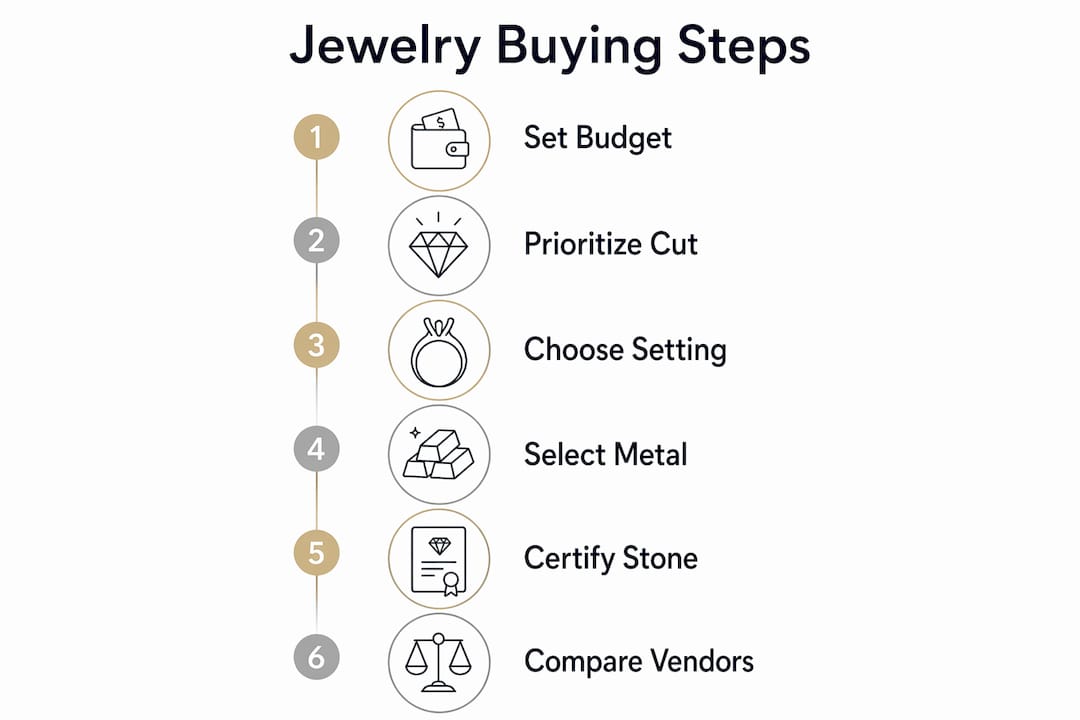
Step by step jewelry buying is a structured process that moves you from setting a budget to walking away with a piece you’ll love for decades. Most buyers skip critical steps, which leads to overpaying, receiving uncertified stones, or choosing a style that doesn’t hold up to daily wear. This guide covers every stage of the jewelry buying process: budgeting, understanding quality factors like the diamond 4 Cs, GIA and AGS certifications, style selection, and vendor verification. Follow these steps and you’ll buy with confidence, whether you’re shopping for an engagement ring, a fashion piece, or a special occasion gift.
Step by step jewelry buying: how to set a realistic budget
The single most common mistake buyers make is starting with a style before they have a firm number. Set your total budget first, then shop within it.
A practical budget breakdown for an engagement ring follows the 70/20/10 rule: allocate roughly 70% to the center stone, 20% to the setting, and 10% to extras. Extras include engraving, resizing, insurance, and a cleaning plan. This structure keeps you from blowing the entire budget on a large stone and then scrambling to afford a quality setting.
Here’s how to apply this in practice:
- Write down your total number. Not a range. A specific dollar amount you can spend without financial stress.
- Calculate the stone budget first. Multiply your total by 0.70. That’s your ceiling for the diamond or gemstone.
- Allocate 20% to the setting. This covers the metal, prongs, and any side stones.
- Reserve 10% for extras. Insurance alone is worth budgeting for, especially on pieces over $1,000.
- Ignore the “two months’ salary” rule. That figure was a marketing invention. Your finances and priorities are what matter.
Pro Tip: If your budget feels tight, prioritize cut quality over carat size. A smaller, well-cut diamond outshines a larger, poorly cut one every time.
Timing your purchase also affects what you pay. Seasonal price drops tend to occur in november, december, july, and august, when retailers run promotions to move inventory. Buying during these windows can stretch your budget further without sacrificing quality.
What quality factors actually matter when buying jewelry?
Quality in fine jewelry comes down to four measurable factors for diamonds, plus two verification standards that protect your purchase.
The 4 Cs explained
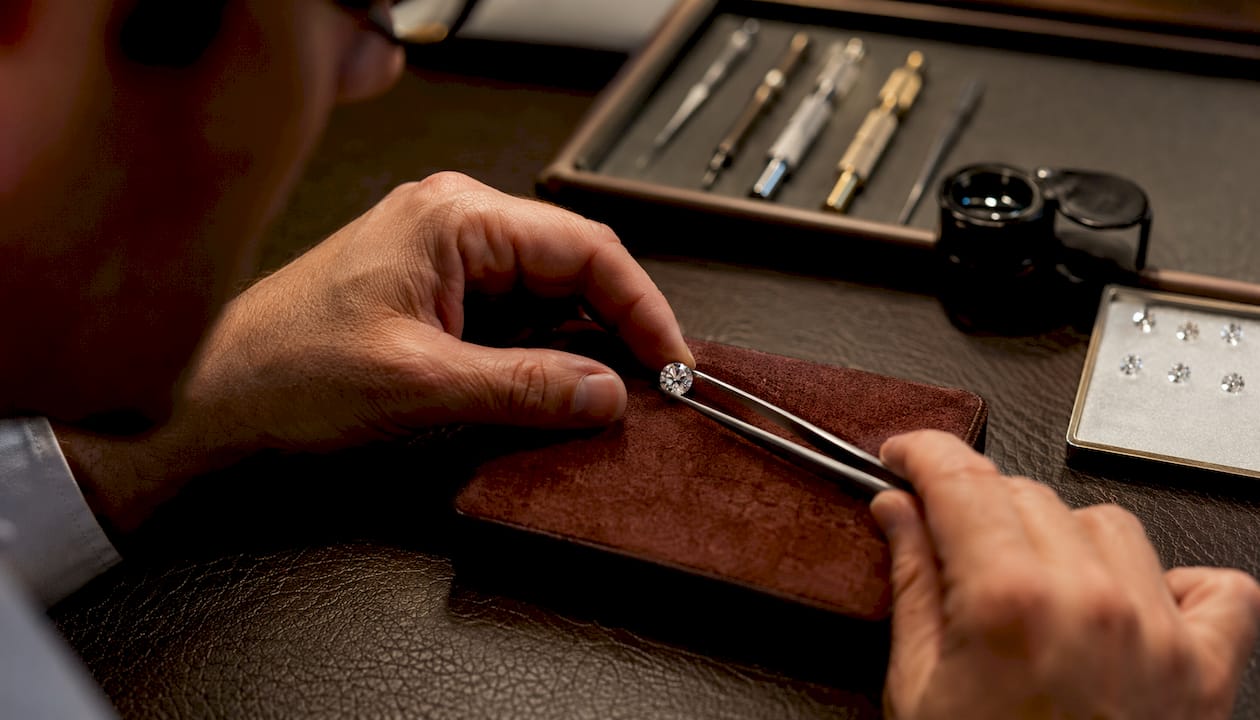
The Gemological Institute of America (GIA) established the 4 Cs as the global standard for diamond grading: Cut, Color, Clarity, and Carat. Each affects price and appearance differently.
| Quality Factor | What It Measures | Buyer Priority |
|---|---|---|
| Cut | Light performance and sparkle | Highest. Never compromise here. |
| Color | Presence of yellow or brown tint | Medium. G–I grades are eye-clean and cost less. |
| Clarity | Internal inclusions and surface blemishes | Medium. VS2–SI1 grades are usually eye-clean. |
| Carat | Weight (1 carat = 0.2 grams) | Lowest. Size is visible but price rises exponentially. |
Cut is the most critical factor. A diamond with an Excellent or Ideal cut grade returns light beautifully, even at a smaller carat weight. Many buyers overspend on color grades that are indistinguishable to the naked eye. Targeting G–I color grades frees up budget for a better cut or a larger stone.
Carat weight deserves a note: price increases exponentially with size, not linearly. A 1.0-carat diamond costs significantly more than two 0.50-carat diamonds of identical quality. Buying just below round numbers (0.90 instead of 1.00 carats) delivers near-identical visual size at a lower price.
Why GIA and AGS certifications matter
A GIA certificate functions as an identity card for a diamond. It documents the stone’s exact grades, measurements, and characteristics, verified by an independent lab. AGS (American Gem Society) certification carries the same credibility. Both organizations use rigorous, consistent grading standards.
Buyers should insist on GIA or AGS certification for any stone 0.30 carats and above. Without a certificate, you’re relying entirely on the seller’s word for quality claims. Always verify that the report number on the certificate matches the laser inscription on the stone’s girdle.
Pro Tip: For lab-grown diamonds, the same certification standards apply. Superjeweler carries lab-grown diamond options with verified grading, giving you the same quality assurance at a lower price point.
How do style, setting, and metal affect your choice?
Style is personal, but certain choices have practical consequences that buyers often overlook.
Ring styles and what they signal
- Solitaire: One center stone, clean lines, timeless. The most popular choice and the easiest to resize.
- Halo: A center stone surrounded by smaller diamonds. Creates the appearance of a larger stone.
- Three-stone: Symbolizes past, present, and future. Offers more surface sparkle.
- Vintage or antique-inspired: Milgrain edges, filigree, and intricate metalwork. Harder to resize due to detailed settings.
- Minimalist: Thin bands, small stones, low profile. Ideal for active lifestyles.
Setting types and their trade-offs
Prong settings hold the stone high, maximizing light exposure and sparkle. They’re also the easiest to clean. Bezel settings wrap metal around the stone’s edge, offering better protection for active wearers. Pavé and channel settings add side diamonds but complicate resizing.
Stone security depends directly on prong count. Fewer than four prongs raises the risk of stone loss over time. Experts recommend 4–6 prongs for daily-wear pieces. Six-prong settings are common on round brilliant diamonds and provide the most secure hold.
Choosing the right metal
Platinum is the most durable and hypoallergenic option. It’s also the most expensive. White gold offers a similar look at a lower price but requires rhodium plating every few years to maintain its color. Yellow gold is classic and requires the least maintenance. Rose gold has a warm tone that flatters many skin tones but is not available in platinum.
One critical resizing note: full eternity and pavé bands cannot be resized without major reconstruction. If you’re unsure of the recipient’s ring size, choose a solitaire or a style with open areas on the band. Getting the size wrong on an eternity band means rebuilding the ring, not just adjusting it.
Where and how to buy: vendor selection and final checks
Choosing where to buy is as important as choosing what to buy. Price variation between vendors is significant.
Compare at least three vendors
Prices vary 20–40% between vendors for identical diamond specifications. That’s not a small difference. On a $5,000 purchase, that gap equals $1,000–$2,000. Comparing vendors is the single highest-return action in the entire jewelry buying process.
Follow this verification checklist before committing:
- Confirm the certificate. Verify the GIA or AGS report number on the lab’s website. The number should match the stone’s laser inscription.
- Review the return policy. A reputable vendor offers at least 30 days for returns, no questions asked.
- Check the warranty. Look for coverage that includes cleaning, prong tightening, and resizing.
- Read the receipt carefully. The receipt should itemize diamond specs (carat, cut, color, clarity), metal type, and karat weight.
- Ask to see the stone under magnification. Any vendor who refuses is a red flag.
Red flags to avoid
Vague product descriptions (“high quality diamond” with no grade listed) signal that the vendor cannot or will not back up quality claims. High-pressure sales tactics, refusal to share certificate details, and no-return policies are all reasons to walk away. Online vendors should provide 360-degree video of the stone and a clear certificate scan before purchase.
Pro Tip: Online vendors often offer lower prices than brick-and-mortar stores because they carry lower overhead. The key is verifying certificates independently before buying.
Timing matters here too. Buying during off-peak months gives you more negotiating room, especially with in-store retailers who want to move inventory before end-of-quarter.
Key Takeaways
Structured jewelry buying requires a firm budget, GIA or AGS certification, cut-first quality prioritization, and vendor comparison across at least three sources before committing.
| Point | Details |
|---|---|
| Set a firm budget first | Use the 70/20/10 rule: stone, setting, and extras before you browse. |
| Prioritize cut over carat | A well-cut smaller diamond outshines a larger, poorly cut stone. |
| Require GIA or AGS certification | Always verify the report number matches the stone’s laser inscription. |
| Compare at least three vendors | Price variation of 20–40% on identical specs makes comparison non-negotiable. |
| Check resizing limitations | Full eternity and pavé bands cannot be resized without rebuilding the ring. |
What I’ve learned from watching buyers get this wrong
Most buyers I’ve seen make the same two mistakes. They start with a style they saw online, then try to reverse-engineer a budget around it. And they trust a seller’s verbal quality claims without asking for a certificate.
The 4 Cs framework exists precisely to remove subjectivity from the process. When you know that a G-color, VS2-clarity, Excellent-cut stone at 0.90 carats is a specific, verifiable product, you can compare it across vendors with confidence. Without that framework, you’re comparing marketing language, not diamonds.
My honest advice: spend more time on cut research than any other factor. Read about diamond cut quality before you set foot in a store or open a browser tab. A buyer who understands cut grades walks into every conversation with an advantage.
I’d also push back on the idea that bigger is always better. A 0.85-carat Ideal-cut diamond in a well-designed solitaire setting will draw more compliments than a 1.20-carat stone with a mediocre cut. The light performance is simply not comparable.
Finally, don’t skip the receipt review. A receipt that lists “1 diamond ring” without specifying grades is not a receipt. It’s a handshake. You need documentation of exactly what you paid for.
— Andrew
Fine jewelry with verified quality from Superjeweler
Superjeweler applies the principles in this guide across its entire catalog, from certified diamond engagement rings to lab-grown diamond jewelry with verified grading reports.
Buyers looking for affordable engagement rings with real diamonds will find a wide selection at Superjeweler, with transparent specs, certificate details, and a clear return policy. The site also carries personalized jewelry for special occasion gifts, with options across metals, styles, and price points. Free worldwide shipping and warranty coverage make it a practical starting point for any buyer following a structured purchasing process.
FAQ
What is the most important factor when buying a diamond?
Cut is the most important factor. A high-quality cut determines how much light the diamond reflects, which directly drives sparkle and visual appeal.
Do I need a GIA certificate for every diamond purchase?
GIA or AGS certification is recommended for any stone 0.30 carats and above. The certificate independently verifies the stone’s grades and protects you from misrepresented quality.
When is the best time of year to buy an engagement ring?
Engagement rings tend to be cheapest in november, december, july, and august, when retailers run seasonal promotions and need to move inventory.
Can all rings be resized after purchase?
Most solitaire and simple band styles can be resized. Full eternity bands and pavé-set rings cannot be resized without major reconstruction, so confirm the correct size before buying these styles.
How much should I spend on an engagement ring?
Spend what your finances allow without stress. A practical allocation is 70% on the center stone, 20% on the setting, and 10% on extras like insurance and engraving.
Recommended
- Step by Step Jewelry Shopping: Your Complete 2026 Guide
- Affordable Jewelry Shopping Guide for Quality Finds
- Gemstone Buying Process: A Complete Guide for 2026
- Step-by-step engagement ring buying guide for couples
