TL;DR:
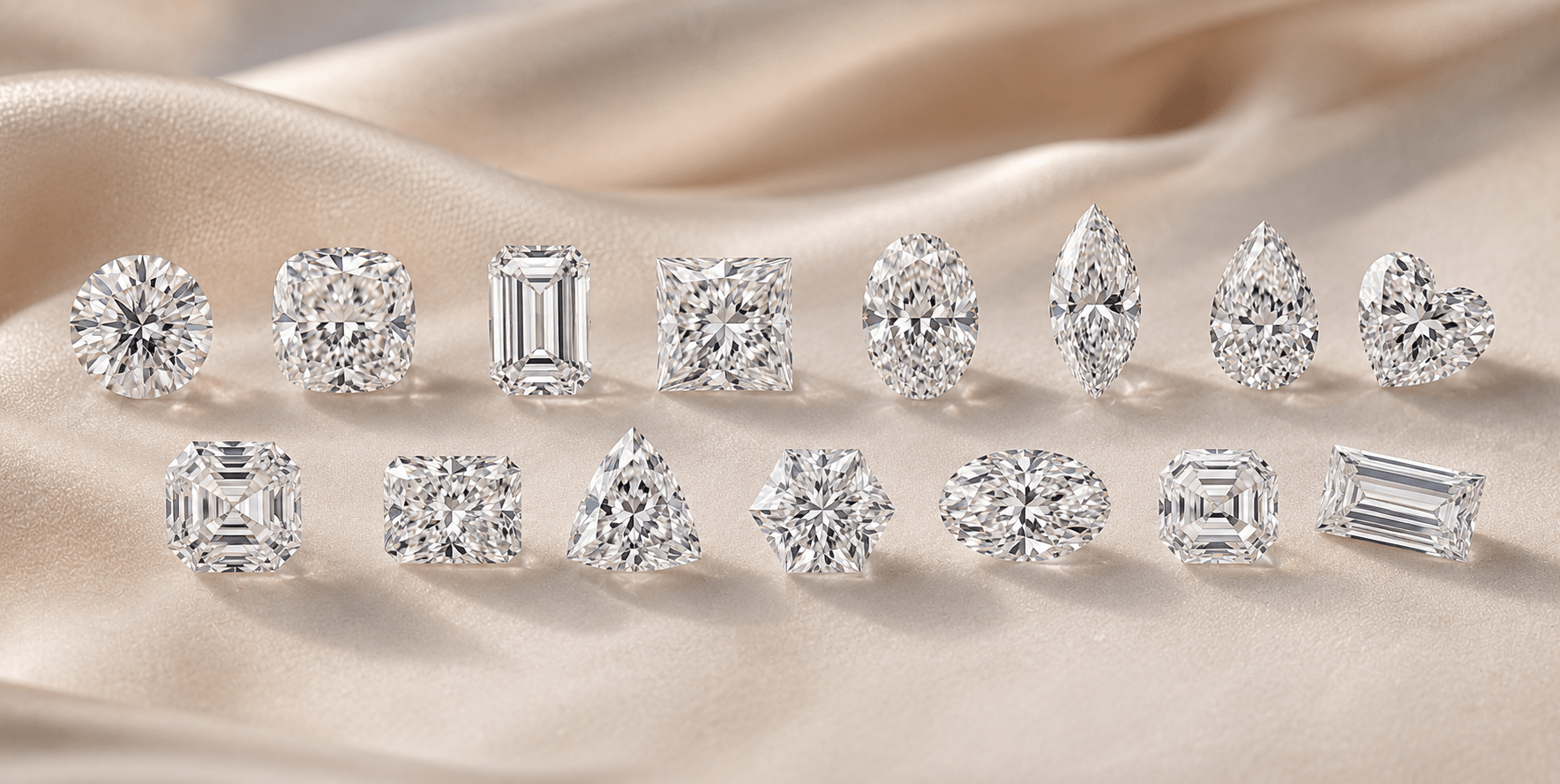
- Diamond cut significantly influences a stone’s sparkle, durability, size appearance, and price. The round brilliant is the most popular due to its optimized facets and proven light performance, while fancy shapes like princess, oval, and cushion offer cost savings and unique aesthetics with certain durability considerations. Step cuts such as emerald and asscher provide distinctive elegance but require higher clarity and color grades to hide inclusions and enhance transparency.
Diamond cut is the single most important factor in how much light a stone returns to your eye, and understanding the advantages of different diamond cuts helps you spend smarter on any jewelry purchase. The term “diamond cut” covers two distinct ideas: cut quality (how well a stone is proportioned and polished) and cut shape (round, princess, oval, and so on). Both affect sparkle, durability, perceived size, and price. This guide breaks down the benefits of each major shape so you can match the right cut to your style, budget, and lifestyle before you buy.
1. Advantages of different diamond cuts: why shape matters first
Every diamond shape is engineered differently, and those differences produce real, measurable outcomes in light performance and wearability. The GIA cut grading system evaluates brightness, fire, scintillation, and proportions to assign grades from Excellent to Poor. That grading system, however, applies only to round brilliants. Fancy shapes like princess, oval, and emerald are evaluated only for polish and symmetry, which means buyers must rely on video inspection or in-person viewing to judge their sparkle. Knowing this upfront changes how you shop for every shape on this list.
2. Round brilliant cut: the gold standard for sparkle
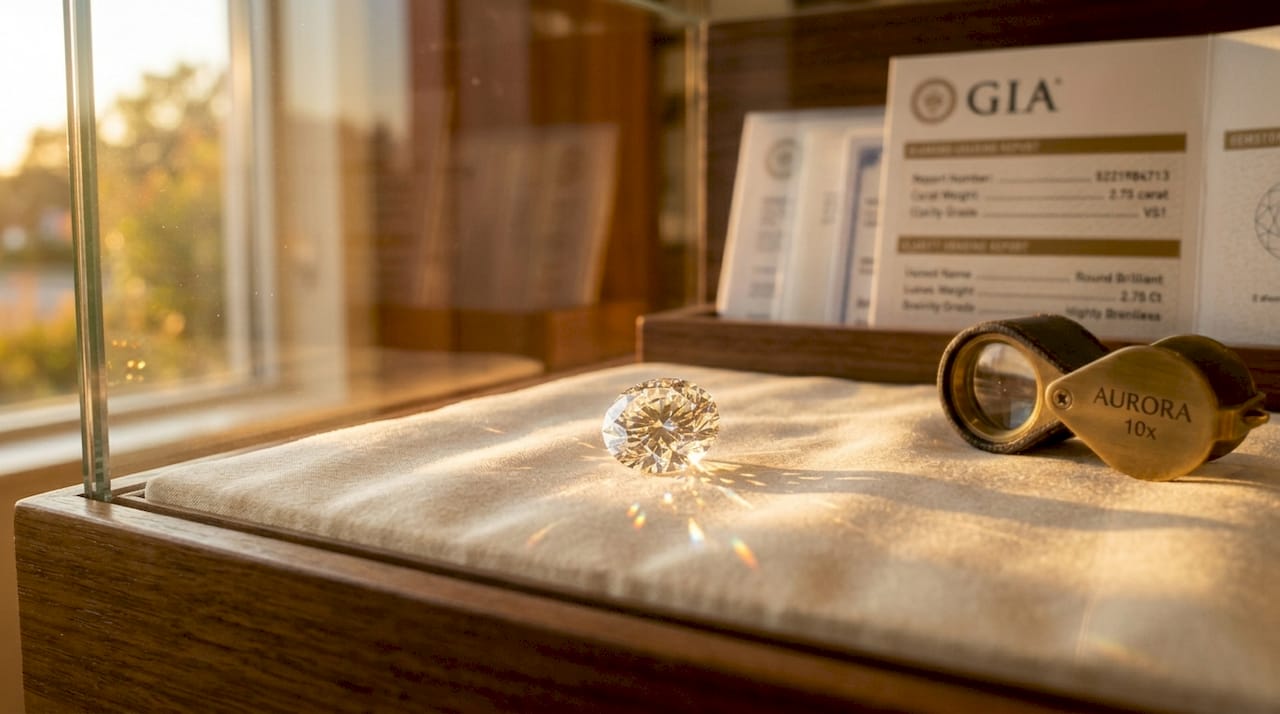
The round brilliant is the most purchased diamond shape in the world, and its dominance is backed by science. Its 58 precisely arranged facets are optimized for light return, maximizing brightness, fire (the rainbow flashes), and scintillation (the sparkle when the stone moves). No other shape has this level of optical engineering built into a standardized grading system.
Key advantages of the round brilliant:
- Official GIA cut grade gives buyers an objective benchmark no fancy shape can match
- Maximum light performance from 58 facets tuned for white light return and color dispersion
- No pointed edges means the stone resists chipping during daily wear
- Strongest resale value of any diamond shape due to standardized demand and liquidity in the secondary market
- Timeless style that works in solitaire, halo, and pavé settings without looking dated
The one trade-off is price. Round brilliants cost more per carat than fancy shapes because the cutting process wastes more of the rough stone.
Pro Tip: An Excellent cut grade is a floor, not a ceiling. The best Excellent cut diamonds have a depth between 59 and 62.5 percent and a table between 53 and 58 percent. Always view the actual stone, not just the grade.
3. Benefits of princess, cushion, and oval cuts
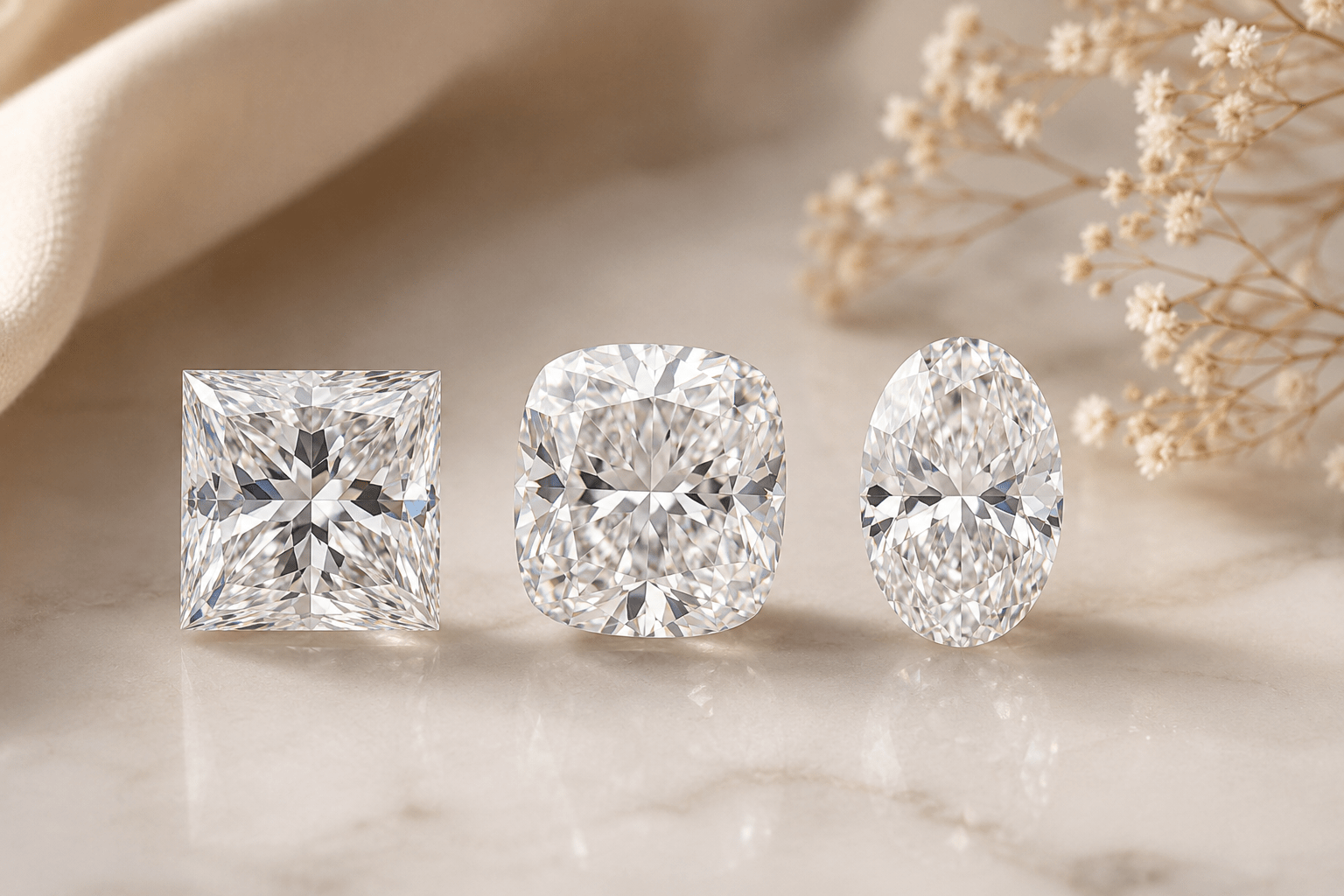
These three shapes dominate the fancy cut market because each offers a distinct aesthetic advantage while costing less per carat than a round of equal weight.
Princess cut delivers near-round brilliance in a square silhouette. Its modern, geometric look appeals to buyers who want maximum sparkle without the round’s price premium. The sharp corners are a durability consideration, so a four-prong setting that protects each corner is the standard recommendation.
Cushion cut combines a square or rectangular outline with rounded corners, which improves chip resistance compared to princess. Its larger facets produce a softer, more romantic sparkle pattern that many buyers describe as vintage or antique in feel. Cushion cuts also mask color well, so you can often buy one color grade lower than you would for a round and see no visible difference.
Oval cut is the shape that punches above its weight on size. Oval diamonds appear larger face-up than rounds of the same carat weight, which means you get more visual diamond for your dollar. The elongated outline also flatters the finger, creating the illusion of length.
Key advantages across these three shapes:
- Price savings of 20 to 40 percent compared to round brilliants of equal carat weight
- Brilliant faceting in all three shapes masks inclusions and color better than step cuts
- Rounded or protected corners on cushion and oval reduce chipping risk for everyday rings
- Versatile settings from classic solitaires to modern east-west orientations
Pro Tip: Oval cuts can show a “bow-tie effect,” a dark shadow across the center caused by poor proportions. Always request a video or view the stone in motion before buying.
4. Unique advantages of step cuts: emerald and asscher shapes
Step cuts are the opposite of brilliant cuts in almost every way, and that contrast is exactly their appeal. Where brilliant cuts scatter light into thousands of tiny flashes, step cuts produce long, dramatic reflections that designers call the “hall of mirrors” effect. The emerald cut and asscher cut are the two dominant step cut shapes, and both project a sleek, architectural elegance that brilliant cuts cannot replicate.
The trade-off is transparency. Step cuts reveal inclusions and color more readily than brilliant cuts because their large, open facets act like windows rather than mirrors. Buyers who choose emerald or asscher cuts should budget for higher clarity grades, typically VS2 or better, and higher color grades, typically H or above, to keep the stone looking clean to the naked eye.
Advantages of step cuts:
- Distinctive hall-of-mirrors effect that no brilliant cut can produce
- Minimalist, modern aesthetic favored in Art Deco and contemporary fine jewelry
- Larger face-up appearance relative to carat weight due to the flat, wide table facet
- Lower cutting waste on emerald cuts, which can translate to slightly lower rough costs
The asscher cut adds an extra layer of interest with its cropped corners and deeper pavilion, producing a more three-dimensional optical effect than the standard emerald. Both shapes reward buyers who prioritize elegance over raw sparkle.
5. Advantages of elongated fancy shapes: marquise, pear, and heart
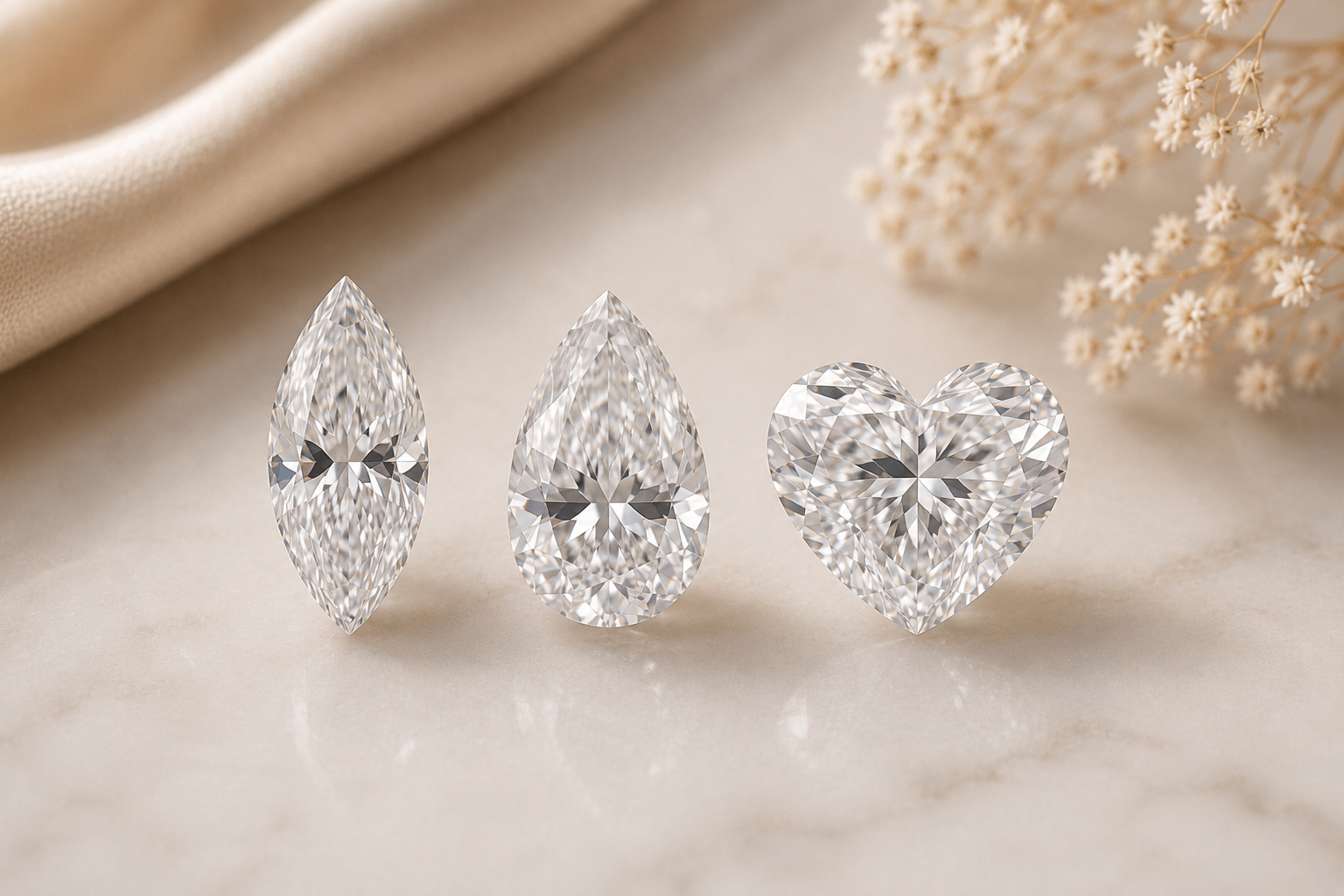
Marquise, pear, and heart diamonds share one defining characteristic: they all have at least one pointed tip. That structural feature creates both their greatest visual advantage and their primary durability challenge.
The visual advantage is size. Elongated shapes create a larger visual footprint per carat than any other cut category. A one-carat marquise, for example, can look as large as a 1.25-carat round when set in a ring. The pear shape combines the elongated silhouette with a rounded base, making it one of the most flattering cuts for finger length. The heart shape is the most symbolic cut in jewelry, and its distinctive outline makes it instantly recognizable even at small carat weights.
The durability challenge is real. Pointed tips are vulnerable to chipping, and a bezel setting or V-prong is the standard protection for any pointed tip. Skipping that protection on a marquise or pear in an everyday ring is a risk not worth taking.
Key advantages of elongated shapes:
- Maximum perceived size per carat, offering strong value for size-conscious buyers
- Finger-elongating effect that flatters a wide range of hand shapes
- Unique, non-round silhouette that stands out from the majority of engagement rings
- Heart shape symbolic value that carries emotional weight beyond aesthetics
Pro Tip: For pear and marquise cuts, orient the point toward the fingernail in a ring setting. This direction maximizes the elongating effect and keeps the tip protected by the prong.
6. Diamond cut comparison: sparkle, durability, size, and value
Choosing between cuts comes down to four criteria: sparkle, durability, size appearance, and price. The table below summarizes where each major cut excels.
| Cut Shape | Sparkle Type | Durability | Size Appearance | Relative Price |
|---|---|---|---|---|
| Round brilliant | Maximum, certified | Excellent (no points) | Standard | Highest |
| Princess | High, brilliant | Good (corners need prongs) | Standard | Moderate |
| Cushion | Soft, romantic | Very good (rounded corners) | Standard to large | Moderate |
| Oval | High, brilliant | Very good | Larger than round | Moderate |
| Emerald | Hall-of-mirrors | Very good | Large face-up | Lower |
| Asscher | Hall-of-mirrors | Very good | Moderate | Moderate |
| Marquise | High, brilliant | Needs tip protection | Largest per carat | Lower |
| Pear | High, brilliant | Needs tip protection | Very large | Lower |
| Heart | High, brilliant | Needs tip protection | Moderate | Lower |
Round brilliants win on sparkle and resale, but fancy cuts offer price savings and unique aesthetics that many buyers find more personally meaningful. The right cut is the one that matches your priorities, not the one with the highest market demand.
Key takeaways
The advantages of different diamond cuts are determined by their optical design, structural durability, and the trade-off between price per carat and visual impact.
| Point | Details |
|---|---|
| Round brilliant leads on sparkle | Its GIA cut grade and 58-facet design produce the highest certified light performance of any shape. |
| Fancy cuts save money per carat | Princess, oval, and cushion cuts cost 20 to 40 percent less than rounds of equal weight. |
| Step cuts require higher clarity | Emerald and asscher shapes reveal inclusions easily, so VS2 or better is the standard recommendation. |
| Elongated shapes maximize size | Marquise, pear, and oval appear larger face-up per carat than round brilliants. |
| Pointed tips need protective settings | Bezel or V-prong settings are required for marquise, pear, and heart shapes to prevent chipping. |
What I’ve learned after years of watching buyers choose diamond cuts
Most buyers walk in convinced they want a round brilliant because it’s the “safe” choice. I understand the logic. The GIA cut grade gives you a number to trust, and the resale argument is real. But I’ve watched too many people buy a round because they felt they were supposed to, then spend years admiring someone else’s oval or emerald cut.
My honest view: the GIA cut grade matters enormously for rounds, but it’s not the whole story. A well-cut round with optimal proportions will outperform a larger stone with a lower cut quality. That’s a fact worth internalizing. But for fancy shapes, cut quality is entirely visual. You cannot grade your way to a good oval. You have to see it move.
The durability question is underrated. If you work with your hands, cook daily, or simply forget to take your ring off, a cushion or oval will serve you better than a marquise over a decade of wear. That’s not a style judgment. It’s physics.
My recommendation: start with your lifestyle, then your aesthetic preference, then your budget. The cut that fits all three is the right one, regardless of what’s trending. And always watch a video of the actual stone before you buy online. No grading report replaces that.
— Andrew
Shop diamond rings in every cut at Superjeweler

Superjeweler carries engagement rings in every major cut shape, from round brilliants with GIA-certified grades to emerald, oval, and cushion cuts at prices that reflect the real cost differences between shapes. Each product listing includes detailed cut specifications so you can verify proportions before you buy. If you’re working with a tighter budget, the cheap engagement rings collection features real diamonds under $1,000 across multiple shapes. Superjeweler also offers lab-grown diamond deals in popular fancy cuts, giving you more carat weight for your money without sacrificing cut quality. Free shipping and a return policy mean you can order with confidence.
FAQ
Which diamond cut has the most sparkle?
The round brilliant cut produces the most sparkle of any diamond shape. Its 58 facets are specifically engineered for maximum light return, and it is the only shape with an official GIA cut grade to verify that performance.
Are fancy cut diamonds cheaper than round brilliants?
Fancy cuts like princess, oval, and cushion typically cost 20 to 40 percent less per carat than round brilliants of equal quality. The price difference reflects both cutting yield from rough stone and lower market demand compared to rounds.
Which diamond cut looks the biggest?
Marquise and oval cuts appear largest face-up relative to their carat weight. Oval diamonds in particular look noticeably larger than round brilliants of the same carat weight due to their elongated outline and shallower depth.
Do step cut diamonds require higher clarity grades?
Step cuts like emerald and asscher reveal inclusions more readily than brilliant cuts because their large, open facets act as windows. VS2 clarity or better is the standard recommendation to keep a step cut diamond looking clean to the naked eye.
What is the most durable diamond cut for everyday wear?
Round, cushion, and oval cuts are the most durable for daily wear because they have no pointed tips or sharp corners. Pointed shapes like marquise, pear, and heart require bezel or V-prong settings to protect vulnerable tips from chipping.
Recommended
- Find the perfect diamond shape: top trends for 2026 rings
- Diamond Cut in Engagement Rings: Maximizing Sparkle
- Diamond shape impact: choosing the ideal engagement ring
- Understand diamond shapes: choose the perfect ring in 2026
