TL;DR:
- Choosing the right diamond shape balances sparkle, size, durability, and personal style, not just visual preference. Elongated shapes like oval, marquise, and pear appear larger per carat and visually lengthen fingers, offering better value. Protect pointed shapes with suitable settings, and prioritize cut quality along with personal fit for a timeless, meaningful choice.
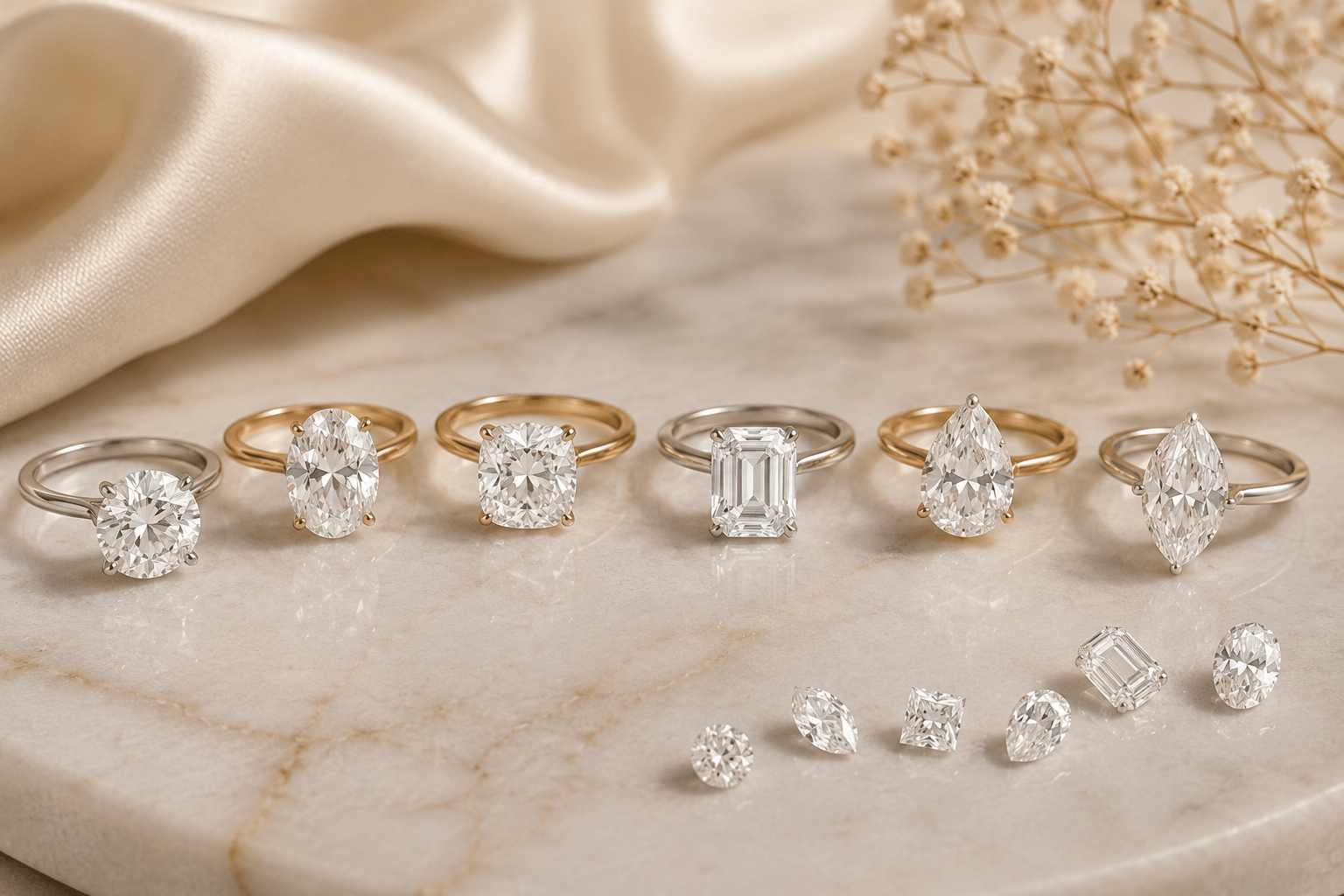
Diamond shape is defined as the outline or silhouette of a stone viewed from above, and it is the single most visible decision you will make when buying a diamond ring. Knowing how to pick diamond shape correctly means understanding how that silhouette affects sparkle, perceived carat size, finger-flattering proportions, durability, and setting compatibility. The most popular diamond shapes include round, oval, princess, cushion, emerald, pear, marquise, and heart. Each carries a distinct personality and a different set of trade-offs. This guide walks you through every factor that matters, so you can choose with confidence rather than guesswork.
How to pick diamond shape: sparkle, size, and finger effects
Diamond shape influences light reflection, perceived size, and style compatibility more than most buyers realize before they start shopping. The difference between a round brilliant and an emerald cut is not just visual preference. It is a fundamentally different experience of light, transparency, and proportion.
How cut style determines brilliance
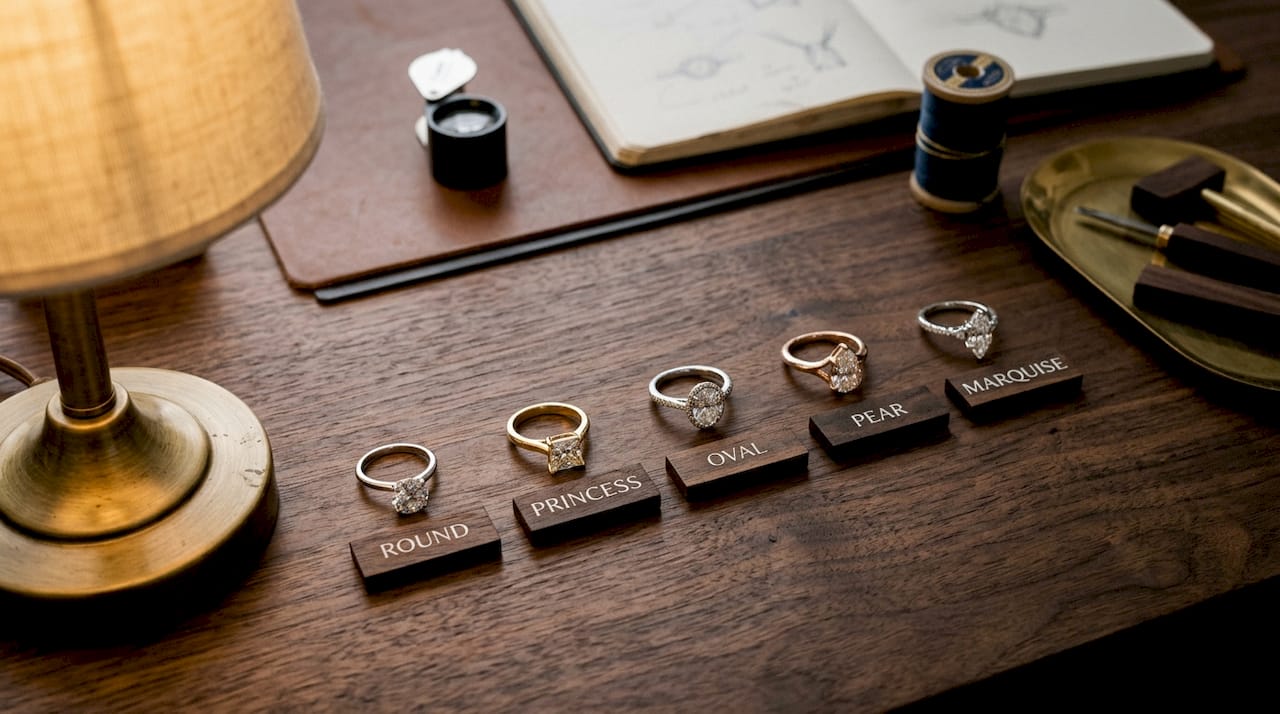
Brilliant cuts, including round, oval, princess, and pear, use triangular and kite-shaped facets arranged to bounce light back through the top of the stone. The round brilliant has 58 facets engineered specifically to maximize that return of light, which is why it remains the top-selling shape worldwide. Step cuts, including emerald and asscher, use long parallel facets that create a “hall of mirrors” effect. They are quieter, more architectural, and emphasize clarity over fire. Neither is objectively better. They are simply different conversations between light and stone.
Why elongated shapes look larger and lengthen fingers
Elongated shapes like oval, marquise, and pear appear larger per carat and visually lengthen fingers. A one-carat oval, for example, typically shows more surface area face-up than a one-carat round. This means elongated shapes offer a real size advantage for buyers working within a set budget. The visual lengthening effect on the finger is equally significant for shoppers with shorter or wider fingers who want a more slender look.
One optical issue to know about before you commit:
- Round: Maximum sparkle, slightly smaller face-up appearance per carat
- Oval: Larger face-up, finger-lengthening, but can show a “bow-tie” shadow across the center
- Marquise: Most elongated, dramatic finger effect, bow-tie risk at the tips
- Pear: Combines round and marquise, versatile, bow-tie possible
- Princess: Square with brilliant faceting, strong sparkle, sharp corners
- Cushion: Soft corners, romantic feel, excellent light performance
- Emerald: Rectangular step cut, hall-of-mirrors effect, shows clarity clearly
- Heart: Romantic and bold, requires skilled cutting for symmetry
Pro Tip: The bow-tie effect in oval, marquise, and pear shapes is a dark shadow across the center caused by light leakage. It ranges from barely visible to distracting. Always request a video or in-person viewing before purchasing any elongated shape.
What durability and setting factors should you know by shape?
Shape decisions affect durability and required protective settings just as much as they affect sparkle. This is the part of the diamond shapes checklist most buyers overlook until after the purchase.
Which shapes are most vulnerable to chipping
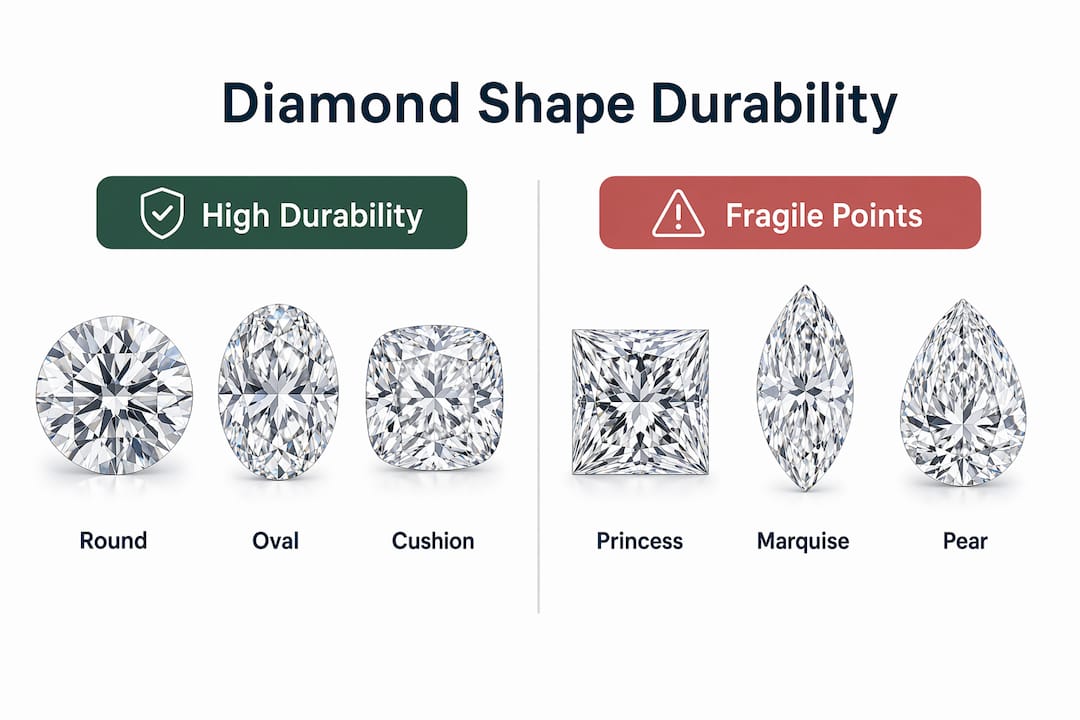
Pointed shapes carry the highest chipping risk. Marquise and pear diamonds have sharp tips where the crystal structure is thinnest. Princess cuts have four pointed corners that are equally exposed. A single knock against a countertop or gym equipment can chip an unprotected tip. Round and cushion shapes, by contrast, have no points and are significantly more forgiving for daily wear.
GIA confirms that shape influences both light performance and setting requirements, particularly for protecting pointed tips. The setting you choose is not just an aesthetic decision. It is a structural one.
Protective setting recommendations by shape:
- Marquise and pear: V-prong settings cradle each tip and absorb impact
- Princess: Bezel or corner prongs cover all four points
- Emerald and asscher: Four-prong or bezel settings work well; these shapes have no points but exposed facets that show every flaw
- Round and cushion: Most setting styles work; prong, bezel, halo, and pavé are all viable
- Oval: Standard four or six-prong settings are sufficient; bezel adds extra protection
“Choosing a setting involves balancing protection and aesthetics. A bezel fully encircles the stone for maximum protection but reduces side light entry. A prong setting maximizes light but leaves the girdle exposed. Neither is wrong. The right answer depends on how active your lifestyle is.”
Pro Tip: If you work with your hands, exercise regularly, or simply want a low-maintenance ring, prioritize a bezel or V-prong setting over a standard four-prong. The extra protection is worth far more than you will notice aesthetically.
Step cuts like emerald require special attention to clarity. Emerald cuts reveal the interior clearly because their large, open facets act like windows into the stone. Gemologists recommend VS2 clarity and G color or better for emerald cuts to avoid visible inclusions. For brilliant cuts, SI1 clarity and H color often deliver excellent value without visible flaws to the naked eye.
How do personal style, hand shape, and lifestyle affect your choice?
Personal style, hand features, and lifestyle significantly influence the ideal diamond shape beyond technical brilliance or cost. No certification tells you which shape will feel right on your hand or match your personality. That part requires self-awareness and, ideally, trying shapes in person.
Here is a practical framework for aligning shape to the person wearing it:
- Assess your hand proportions. Longer fingers can carry most shapes well, including wider cushions and bold emeralds. Shorter or wider fingers benefit most from elongated shapes like oval, marquise, or pear, which create a visual lengthening effect.
- Identify your aesthetic. Classic and timeless buyers gravitate toward round brilliants. Modern and architectural personalities often prefer emerald or asscher cuts. Romantic styles align with cushion, pear, or heart shapes. Bold, unconventional buyers frequently choose marquise or radiant cuts.
- Evaluate your lifestyle honestly. If you are active, work with your hands, or simply want a ring that requires minimal care, round and cushion shapes in bezel or low-profile settings are the most practical choices. If the ring is primarily for special occasions, a more delicate shape with an elaborate setting is entirely reasonable.
- Consider the emotional connection. Superjeweler notes that emotional resonance and shape personality are factors that buyers should weigh seriously, rather than following trends or resale value projections. A ring worn every day for decades should feel personally meaningful, not just technically correct.
- Try before you commit. Virtual try-on tools and high-quality video viewing are now widely available. Use them. Seeing a shape on your actual hand, even digitally, reveals proportional fit that no specification sheet can replicate.
What practical steps and a diamond shapes checklist look like
Selecting the best diamond shape requires more than picking a silhouette you like in a photo. The following steps and comparison table give you a repeatable process for evaluating any stone.
- Prioritize cut quality first. Cut is the most important factor influencing diamond beauty. For round brilliants, GIA assigns an overall cut grade. Aim for Excellent or Very Good. For fancy shapes, GIA does not assign an overall cut grade, so you must evaluate polish, symmetry, and length-to-width ratios manually.
- Request video for elongated shapes. Bow-tie effects only reveal themselves in motion and under varied lighting. A static photo will not show you the full picture. Ask for a 360-degree video before purchasing any oval, marquise, or pear.
- Check length-to-width ratios. For ovals, a ratio between 1.30 and 1.50 produces the most balanced look. Pears typically look best between 1.45 and 1.75. Ratios outside these ranges can look stubby or excessively elongated.
- Understand price differences by shape. Round diamonds command the highest prices because of cutting waste and demand. Oval and cushion cuts typically offer 10 to 30 percent more visual size per dollar spent. This is a meaningful advantage for budget-conscious buyers.
- Use a checklist or quiz. Many jewelers, including Superjeweler, offer tools to match shape preferences to hand features and personality. These narrow the field before you spend time evaluating individual stones.
| Shape | Best for | Durability | Price vs. round |
|---|---|---|---|
| Round | Maximum sparkle, classic style | Highest | Most expensive |
| Oval | Size per carat, finger lengthening | High | 15-25% less |
| Cushion | Romantic, vintage feel | High | 20-30% less |
| Princess | Modern, geometric look | Moderate (corner risk) | 10-20% less |
| Emerald | Architectural, clarity showcase | Moderate | 20-30% less |
| Pear | Elongated, versatile | Moderate (tip risk) | 15-25% less |
| Marquise | Most dramatic elongation | Lower (tip risk) | 15-25% less |
Key takeaways
Choosing the right diamond shape requires matching sparkle style, durability needs, finger proportions, and personal aesthetics before evaluating any individual stone.
| Point | Details |
|---|---|
| Shape defines the ring’s personality | Round maximizes sparkle; step cuts like emerald emphasize clarity and transparency. |
| Elongated shapes offer size value | Oval, marquise, and pear appear larger per carat and visually lengthen fingers. |
| Pointed shapes need protective settings | Marquise, pear, and princess tips require V-prong or bezel settings to prevent chipping. |
| Cut quality matters most | Prioritize Excellent or Very Good polish and symmetry, especially for fancy shapes without GIA cut grades. |
| Personal fit outweighs trends | Emotional connection and hand proportions should drive the final decision more than resale value or popularity. |
Why I think most buyers approach shape selection backwards
Most people start with shape and work backward to the technical details. I think that is the wrong order. After years of watching buyers make this decision, the ones who end up happiest start with two questions: How will this ring be worn, and what does the wearer’s hand actually look like?
A stunning marquise on a short, wide finger can look awkward, while the same stone on a long, slender finger looks extraordinary. An emerald cut on someone who values drama and clarity is a perfect match. On someone who wants maximum sparkle and does not want to think about maintenance, it is the wrong choice entirely. The shape’s personality has to match the person’s personality.
The other thing I have seen buyers underestimate is durability. A princess cut in a four-prong setting looks incredible in a jewelry case. After two years of daily wear, those unprotected corners tell a different story. Choosing a shape without thinking about the setting that will protect it is like buying a car without checking the safety rating.
My honest advice: see the stone in person or via high-quality video before you buy. Certifications tell you what a diamond is. Video tells you what it does. And what it does, how it moves light, how it sits on the hand, is what you will notice every single day for the rest of your life.
— Andrew
Find your perfect diamond shape at Superjeweler
Superjeweler carries one of the broadest selections of diamond shapes available online, from classic round brilliants to elongated ovals, cushions, and emerald cuts, all with detailed filtering by shape, price, and setting style.
Whether you are working with a tight budget or looking for something extraordinary, Superjeweler’s engagement ring collection lets you filter by every major shape and compare stones side by side. If you want to maximize visual impact without stretching your budget, the cheap engagement rings section features real diamonds across multiple shapes under $1,000. Lab-grown options are also available across all popular shapes, offering the same visual quality at a fraction of the cost of mined stones. Free worldwide shipping and a solid return policy mean you can shop with confidence.
FAQ
What is the most popular diamond shape for engagement rings?
The round brilliant is the most popular diamond shape for engagement rings worldwide, prized for its maximum sparkle and timeless appearance. Oval has grown significantly in popularity in recent years as buyers seek a larger face-up appearance per carat.
Which diamond shape looks biggest for the money?
Oval, marquise, and pear shapes appear larger per carat than round diamonds because of their elongated surface area. Oval is generally considered the best value for buyers who want visual size without paying the round brilliant premium.
Does diamond shape affect durability?
Yes. Pointed shapes like marquise, pear, and princess are more prone to chipping at their tips and corners. Round and cushion shapes have no points and are the most durable options for everyday wear.
How do I evaluate a fancy shape diamond without a GIA cut grade?
Because GIA does not assign cut grades to fancy shapes, you should review polish and symmetry grades (aim for Excellent or Very Good), check the length-to-width ratio for proportional balance, and always request a video to assess bow-tie effects and light performance.
What diamond shape is best for short fingers?
Elongated shapes, particularly oval, marquise, and pear, create a visual lengthening effect that makes shorter fingers appear more slender. Avoid very wide shapes like cushion or Asscher if finger length is a concern, as they can make fingers look shorter.
Recommended
- Understand diamond shapes: choose the perfect ring in 2026
- Diamond shape impact: choosing the ideal engagement ring
- Find the perfect diamond shape: top trends for 2026 rings
- Step-by-step engagement ring buying guide for couples
