Choosing the right metal for an engagement ring comes down to four things: how durable it needs to be, what it looks like on the finger, how much upkeep you’re willing to do, and what fits your budget. Here’s the short version before we go deep:
- Platinum is the most durable, naturally white, and hypoallergenic. It’s also the most expensive and develops a soft patina over time.
- 14K white gold balances cost and appearance well, but needs rhodium replating every 1–2 years to stay bright.
- 18K yellow gold offers a rich, warm color and a luxury feel, though it scratches more easily than 14K.
- 14K yellow gold is harder, more scratch-resistant, and a smart choice for everyday wear.
- Rose gold has a warm, romantic blush tone and is alloyed with copper, which adds durability.
- Palladium is naturally white and hypoallergenic but has become harder to find and repair.
- Titanium and tungsten are extremely durable and affordable but cannot be resized.
The right pick depends on your lifestyle, skin sensitivity, and how much you want to spend upfront versus over time.
Table of Contents
- Common engagement ring metals and what sets each one apart
- White gold vs. platinum: a side-by-side breakdown
- How to pick the right metal for your lifestyle
- Maintenance and care for every ring metal
- Expert insights on metal choices from Superjeweler
- Environmental and ethical sourcing of ring metals
- Key Takeaways
- Find your ring at Superjeweler
Table of Contents
- Common engagement ring metals and what sets each one apart
- White gold vs. platinum: a side-by-side breakdown
- How to pick the right metal for your lifestyle
- Maintenance and care for every ring metal
- Expert insights on metal choices from Superjeweler
- Environmental and ethical sourcing of ring metals
- Key Takeaways
- Find your ring at Superjeweler
Common engagement ring metals and what sets each one apart
Every engagement ring metal has a distinct personality. Understanding the basics of each one makes the rest of the decision much easier.
Gold: karats, colors, and tradeoffs
Gold’s purity is measured in karats. Pure gold is 24K, but it’s too soft for jewelry worn daily. Alloying it with other metals adds strength and changes its color.
- 14K gold contains approximately 58.3% pure gold, making it harder and more scratch-resistant than higher-karat options. It’s the most popular choice for everyday engagement rings in the U.S.
- 18K gold contains 75% pure gold, giving it a richer, deeper color but making it softer and more prone to scratching. It suits buyers who prioritize a luxurious look and are willing to handle it with more care.
- Yellow gold is the classic choice. Its warm tone complements lower-color diamonds beautifully, since the metal’s hue masks any slight yellow in the stone.
- White gold is alloyed with white metals like palladium or nickel, then plated with rhodium to achieve a bright, silvery finish. It looks nearly identical to platinum at a lower price point.
- Rose gold gets its blush color from a higher copper content. Copper is a hard metal, so rose gold tends to be more durable than yellow or white gold at the same karat. It doesn’t require plating and holds its color permanently.
Platinum
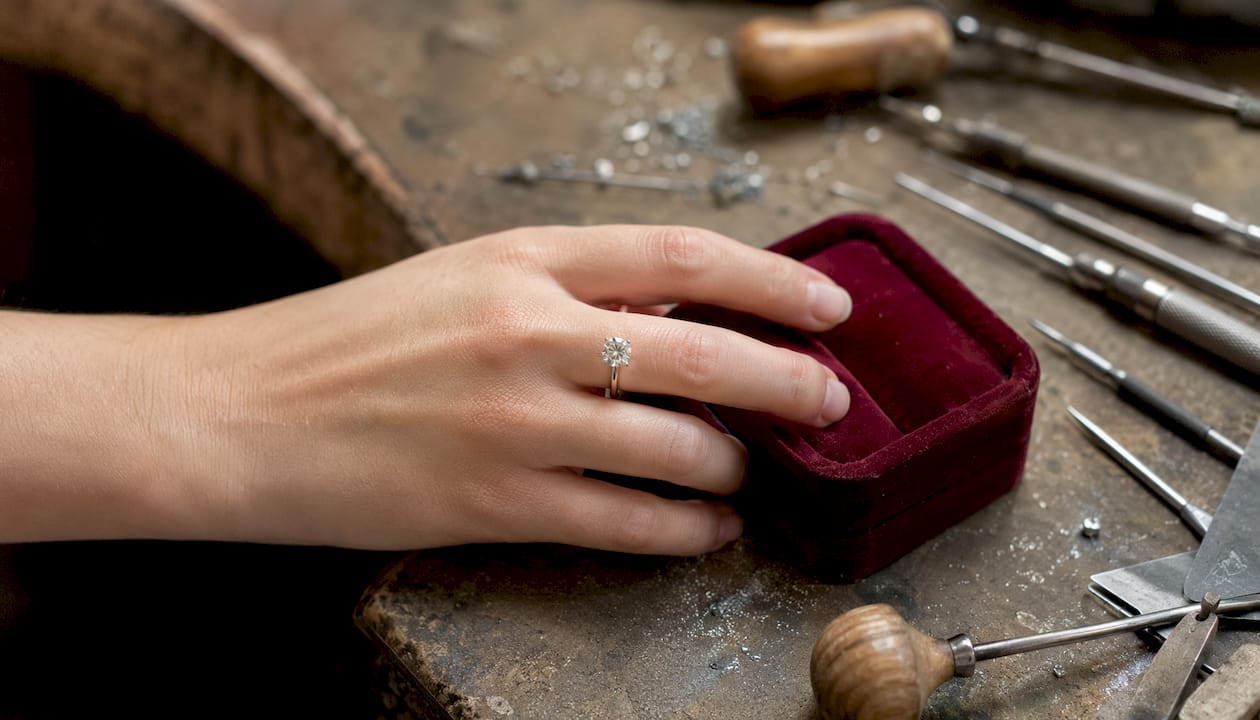
Platinum is naturally white, hypoallergenic, and extremely dense. It doesn’t need rhodium plating to look bright, and it holds prongs securely around diamonds, making it a top choice for intricate or delicate settings. Over time, it develops a soft, matte finish called a patina. Some buyers love this aged look; others prefer to have it polished back to a high shine. Either way, the metal volume stays intact because platinum displaces rather than loses material when scratched.
Palladium
Palladium is a platinum-group metal that’s naturally white and hypoallergenic. It’s significantly lighter than platinum, which some wearers prefer. However, palladium has become less common in jewelry stores due to price volatility and the fact that it’s difficult to resize or repair. Many jewelers have stopped carrying it altogether. If you find it, it can be a good option, but confirm your jeweler can service it long-term.
Alternative metals: titanium and tungsten
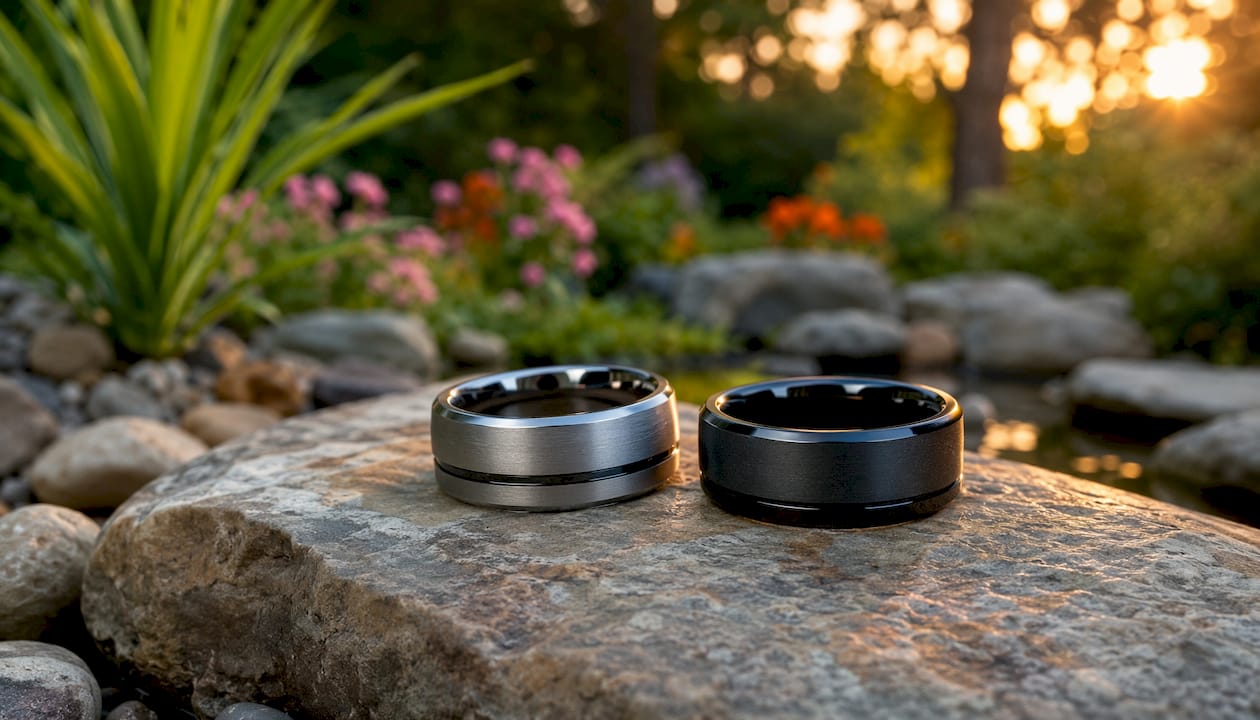
Titanium and tungsten are extremely hard, lightweight (titanium), and very affordable. They’re popular for men’s bands. The catch: neither can be resized. If your finger size changes, you’ll need a new ring. Superjeweler carries a solid selection of men’s tungsten and titanium rings for those who want maximum durability at a lower price.
White gold vs. platinum: a side-by-side breakdown
This is the most common comparison shoppers make, and for good reason. Both metals look nearly identical to the naked eye, but they behave very differently over time.
Durability and scratch resistance
White gold is actually harder than platinum and more scratch-resistant on the surface. When platinum gets scratched, the metal displaces rather than chips away, so the ring retains its volume. White gold, by contrast, loses small amounts of metal with each scratch. Over decades, this matters. Platinum rings last longer in terms of total metal mass.
Weight and feel
A platinum ring of the same size weighs roughly 60% more than a white gold ring. Many buyers interpret that heft as a sign of quality. Others find it uncomfortable for daily wear. This is genuinely personal, and worth considering before you commit.
Color and appearance
Fresh out of the jeweler, both look nearly identical. The difference shows up over time. White gold’s rhodium plating gradually wears off, revealing a slightly warmer, yellowish base metal underneath. Platinum stays naturally white without any plating, so its color never shifts. For buyers who want a consistently bright white look without maintenance, platinum has a clear advantage.
Maintenance requirements
White gold needs rhodium replating every 1–2 years to maintain its bright finish, especially for active wearers. Each replating typically costs $50–$150 at a jeweler. Platinum requires no replating. If you want the patina polished out, a jeweler can do it, but it’s optional. For a deeper look at how these two metals compare across every dimension, Superjeweler’s guide on white gold vs. platinum is worth reading before you decide.
Hypoallergenic properties
Platinum is naturally hypoallergenic. White gold alloyed with nickel can cause reactions in people with nickel sensitivity, which is more common than most people realize. White gold alloyed with palladium instead of nickel is a better option for sensitive skin, but you’ll need to ask your jeweler specifically about the alloy composition.
Cost
Platinum costs significantly more than white gold, both in raw material and in labor (it’s denser and harder to work with). For budget-conscious buyers, white gold delivers a nearly identical look at a lower upfront price, with the tradeoff of ongoing maintenance costs.
| Feature | White Gold | Platinum |
|---|---|---|
| Durability | Hard, surface scratches lose metal | Displaces metal, retains volume long-term |
| Color | Bright white with rhodium; fades over time | Naturally white, no plating needed |
| Maintenance | Replating every 1–2 years | Occasional polishing only |
| Cost | Lower upfront | Higher upfront, lower long-term maintenance |
| Hypoallergenic | Depends on alloy (nickel vs. palladium) | Yes, naturally |
| Weight | Lighter | Roughly 60% heavier than white gold |
| Resizing | Straightforward | Possible, but requires a skilled jeweler |
How to pick the right metal for your lifestyle
The best metal for an engagement ring isn’t the most expensive one. It’s the one that fits how the wearer actually lives. Expert jewelers consistently emphasize that lifestyle fit should drive the decision more than appearance or cost alone.
- Active lifestyle or manual work: Platinum or 14K gold hold up best. Both resist daily wear without requiring constant attention. Platinum’s density makes it especially secure for prong settings, which matters if you’re hard on your hands.
- Sensitive skin: Platinum is the safest choice. Rose gold (copper alloy) is generally fine too. Avoid white gold with nickel if you’ve ever had a reaction to jewelry.
- Budget-conscious buyers: 14K white gold gives you the look of platinum at a fraction of the cost. Factor in replating costs over time, but the upfront savings are real. Rings under $1,000 in white gold are genuinely available with real diamonds.
- Style preferences: Yellow gold flatters warmer skin tones and pairs beautifully with vintage or halo settings. Rose gold suits romantic, feminine designs. White metals (platinum or white gold) make diamonds look their brightest and work well with modern, minimalist settings.
- Delicate or intricate settings: Platinum’s density and strength make it the preferred metal for pavé, channel, and micro-set designs where tiny prongs need to hold small stones securely.
- Matching a wedding band: Think about what metal your partner will wear daily. Mixing metals is perfectly acceptable, but if you want them to match, choose the engagement ring metal first and build from there. Superjeweler’s step-by-step engagement ring guide walks through this in detail.
Pro Tip: If you love the look of platinum but want to manage costs, consider a 14K white gold band with a platinum head (the prong setting that holds the diamond). You get platinum’s security where it matters most, with white gold’s lower cost for the rest of the ring.
Maintenance and care for every ring metal
No engagement ring is maintenance-free. The metal you choose determines what kind of upkeep you’re signing up for.
Prong inspection: the most critical task
Regardless of metal, prong inspection is the single most important maintenance task for any diamond ring. Prongs can bend or loosen with daily wear, even in platinum. A loose prong means a loose diamond, and that’s a stone you can lose. Have a jeweler check the prongs at least once or twice a year. Most jewelers do this for free or at minimal cost.
White gold care
- Have the ring replated with rhodium every 1–2 years, or sooner if you notice the color shifting toward yellow.
- Clean with mild dish soap and warm water; avoid harsh chemicals that accelerate plating wear.
- Remove the ring before swimming in chlorinated pools or using cleaning products.
- Store separately from other jewelry to prevent surface scratches.
Platinum care
- Platinum develops a patina naturally. If you prefer a high shine, ask your jeweler to polish it periodically.
- Clean with warm water and a soft brush; platinum is low-maintenance day-to-day.
- Scratches on platinum displace metal rather than remove it, so the ring stays structurally sound even as the surface changes.
- Resizing platinum is possible but requires a jeweler experienced with the metal, since it’s harder to work than gold.
Yellow and rose gold care
- Both metals can be polished to restore shine when they start to look dull.
- Rose gold’s copper content makes it slightly more prone to tarnishing in certain environments; clean regularly with a soft cloth.
- 18K gold scratches more easily than 14K, so consider having it polished more frequently if you wear it daily.
- Resizing gold rings is generally straightforward, making it a practical choice if you’re unsure about your long-term ring size.
Alternative metals
Titanium and tungsten require almost no maintenance and don’t tarnish. The tradeoff is that neither can be resized. Tungsten is also brittle enough that it can crack under extreme pressure, though this is rare in normal wear.
Expert insights on metal choices from Superjeweler
The clearest advice from experienced jewelers is simple: match the metal to the life the wearer actually leads, not just the look they want in the store. A platinum ring on someone who never removes it for yard work or gym sessions will hold up beautifully for decades. The same ring on someone who stores it carefully and wears it only occasionally will also hold up, but the investment may not be necessary.
Superjeweler’s team has seen this play out across thousands of ring purchases. A few consistent patterns emerge:
- Buyers who work with their hands or have active hobbies almost always end up happier with platinum or 14K gold than with softer, higher-karat options.
- First-time ring buyers often underestimate maintenance costs for white gold. Replating is not expensive, but it does require remembering to do it.
- Rose gold has surged in popularity over the past decade, particularly for vintage-inspired settings, and it holds its color permanently without any plating.
- The weight of platinum surprises many buyers who try it on for the first time. Some love it immediately; others prefer the lighter feel of gold.
Superjeweler’s blog covers the gold vs. platinum decision in depth, including investment considerations beyond the ring itself. For buyers focused specifically on platinum’s long-term value, the reasons to choose platinum guide is a useful read. And if you’re still working through the broader decision, the ring metals guide covers all seven major options with lifestyle-specific recommendations.
Environmental and ethical sourcing of ring metals
Where a metal comes from matters to a growing number of buyers, and the jewelry industry has responded with more transparency than it offered a decade ago.
Mining impact
Platinum and gold mining both carry significant environmental costs: land disruption, water use, and chemical processing. Large-scale mining operations in South Africa (platinum) and regions across Africa, South America, and Asia (gold) have faced scrutiny over labor practices and environmental damage. This doesn’t mean mined metals are off the table, but it’s worth asking your jeweler about sourcing.
Recycled metals
Recycled gold and platinum are chemically identical to newly mined metals. Many jewelers, including those who supply Superjeweler, use recycled precious metals in their alloys. Recycled metal reduces demand for new mining without any compromise in quality. If this matters to you, ask specifically whether the ring you’re considering uses recycled metal content.
Fairmined and responsibly sourced certifications
The Fairmined certification is one of the most recognized standards for ethically sourced gold. It verifies that gold comes from artisanal and small-scale mining operations that meet environmental and labor standards. The Responsible Jewellery Council (RJC) certification covers a broader supply chain, including platinum and diamonds. When shopping, look for these certifications or ask your jeweler directly about their sourcing practices.
Lab-grown diamonds and metal pairing
Many buyers who choose lab-grown diamonds for ethical reasons also want to pair them with responsibly sourced metals. This is entirely achievable. Superjeweler’s lab-grown diamond rings are available in multiple metal options, and the combination of a lab-grown stone with recycled metal is one of the lowest-impact choices available in fine jewelry today.
Palladium’s shifting profile
Palladium’s price volatility has been driven largely by automotive industry demand for catalytic converters, not jewelry. As electric vehicles reduce that demand, palladium prices have softened, making it a more accessible option again. Its environmental footprint is similar to platinum, since both are mined in overlapping regions and processes.
Key Takeaways
Platinum leads on durability and hypoallergenic performance, while 14K white gold delivers the closest look at a lower cost with more maintenance required over time.
| Point | Details |
|---|---|
| Platinum for durability | Platinum displaces rather than loses metal when scratched, preserving ring volume over decades. |
| White gold needs upkeep | Rhodium plating wears off every 1–2 years, requiring replating to maintain a bright white finish. |
| 14K gold for everyday wear | At 58.3% pure gold, 14K is harder and more scratch-resistant than 18K, making it better for daily use. |
| Lifestyle drives the decision | Active wearers and those with sensitive skin benefit most from platinum or nickel-free alloys. |
| Superjeweler’s range | Superjeweler offers engagement rings across all major metals, including options under $1,000 with real diamonds. |
Find your ring at Superjeweler
Knowing which metal fits your life is half the decision. The other half is finding a ring you actually love at a price that makes sense.

Superjeweler carries engagement rings across every major metal, from platinum solitaires to 14K rose gold vintage designs, with real diamonds and lab-grown options at prices that don’t require a second mortgage. If your budget is under $1,000, the affordable engagement ring collection includes genuine diamond rings in white gold, yellow gold, and rose gold. Free shipping, warranty coverage, and a straightforward return policy mean you can shop with confidence. Browse the full collection and filter by metal, diamond shape, and price to find exactly what you’re looking for.
{
  "@context": "https://schema.org",
  "@type": "Article",
  "headline": "Engagement Ring Metal Comparison: Your Complete Guide",
  "description": "A comprehensive comparison of engagement ring metals including platinum, gold types, and alternative metals, covering durability, appearance, maintenance, cost, and ethical sourcing.",
  "author": {
    "@type": "Organization",
    "name": "Superjeweler",
    "url": "https://www.superjeweler.com"
  },
  "publisher": {
    "@type": "Organization",
    "name": "Superjeweler",
    "url": "https://www.superjeweler.com"
  },
  "mainEntityOfPage": {
    "@type": "WebPage",
    "@id": "https://www.superjeweler.com"
  }
}
Recommended
- Ring metals guide: 7 top choices for your perfect band
- Engagement Ring Matching Band Options: Style and Fit Guide
- White Gold vs Platinum: Key Differences for Jewelry Buyers
- Step-by-step engagement ring buying guide for couples
