TL;DR:
- Carat weight measures gemstone mass, not size, and affects necklace appearance and price.
- Total carat weight includes all stones, but visual impact depends on cut, shape, and setting.
- Understanding carat nuances helps shoppers make smarter, more satisfying jewelry choices.
You’ve seen it happen. Two necklaces side by side, looking almost identical, but one costs three times more. The tag says something about carat weight, and suddenly you’re second-guessing everything. Most shoppers assume carat weight is a ring thing, or that bigger numbers automatically mean better jewelry. Neither is quite right. Carat weight in necklaces works differently than you might expect, and understanding it changes how you shop, what you pay, and how happy you are with your purchase. This guide breaks down exactly what necklace carat weight means, how it affects price and appearance, and what to look for before you buy.
Table of Contents
- What does carat weight mean in necklaces?
- How necklace carat weight affects value and appearance
- Comparing necklace carat weight: diamonds vs gemstones
- Typical carat weights for popular necklace styles
- The truth about carat weight: What really matters for shoppers
- Find your perfect necklace at SuperJeweler
- Frequently asked questions
Key Takeaways
| Point | Details |
|---|---|
| Carat weight basics | Carat weight measures the mass of all gemstones in a necklace, not just size. |
| Impact on value | Higher carat weight increases necklace price, but appearance and style matter just as much. |
| Comparing stones | Diamonds and gemstones of the same carat can appear different sizes due to density and cut. |
| Popular necklace weights | Everyday necklaces typically range from 0.25 to 1 carat for comfortable, stylish wear. |
| Smart shopping tips | Always check both carat weight and dimensions to choose the right necklace for your look. |
What does carat weight mean in necklaces?
With that confusion in mind, let’s get clear on what “carat weight” actually means for necklaces. The word “carat” trips people up because it sounds like it measures size. It doesn’t. Carat weight measures gemstone mass, not the visual surface area you see when a stone catches light. One carat equals exactly 0.2 grams. That’s it. A heavier stone, not necessarily a wider or taller one.
In necklaces, things get a little more layered. A pendant with a single diamond uses that stone’s individual carat weight as the label. But many necklaces feature multiple stones, and that’s where the phrase total carat weight (TCW) comes in. TCW adds together all the stones in the piece. A station necklace with twenty small diamonds totaling 1.0 ct TCW looks very different from a solitaire pendant with a single 1.0 ct center stone, even though the numbers match.
Here’s what shapes how carat weight looks in real life:
- Setting style: A bezel setting covers more of the stone, making it look smaller than a prong setting at the same carat weight.
- Cut quality: A well-cut diamond reflects more light, looking larger and more brilliant than a poorly cut stone of equal weight.
- Stone shape: Elongated shapes like oval or marquise spread weight across more surface area, appearing larger than round stones of equal mass.
- Number of stones: Many small stones can add up to a high TCW while each individual stone looks delicate and subtle.
“What matters most isn’t the number on the tag. It’s how the necklace looks on you and how the stones catch the light in real wear.”
You can get a fuller sense of how these terms work together with this necklace vocabulary explained resource, which covers key terminology for diamond necklace buyers.
Pro Tip: When comparing necklaces, ask whether the carat weight listed is for a single stone or the total weight of all stones combined. That one question can save you real money and avoid disappointment.
How necklace carat weight affects value and appearance
Now that carat weight is clear, how does it translate into what you see and what you pay? The short answer: significantly, but not always in a straight line. Carat weight significantly influences retail pricing, but price per carat is not fixed. It jumps at certain popular thresholds.

Diamonds priced just under 0.50 ct, 1.0 ct, and 2.0 ct often cost noticeably less than stones that cross those marks, even if the visual difference is tiny. A 0.95 ct pendant can look nearly identical to a 1.0 ct pendant but sell for significantly less. Savvy shoppers use this to their advantage.
| Necklace style | Typical carat weight | Approximate price range |
|---|---|---|
| Solitaire pendant | 0.25 to 1.0 ct | $300 to $5,000+ |
| Diamond station necklace | 0.50 to 3.0 ct TCW | $400 to $8,000+ |
| Halo pendant | 0.50 to 2.0 ct TCW | $500 to $6,000+ |
| Multi-stone bar necklace | 0.25 to 1.5 ct TCW | $250 to $3,500+ |
Beyond price, value also depends on the quality of individual stones. A necklace with a high TCW but low-clarity, poorly cut stones is not necessarily a better deal than one with fewer, finer stones. Here’s how carat weight actually plays into real purchase decisions:
- Set your budget first, then find the largest carat weight with the best quality within that range.
- Check the cut grade before the carat number. Cut drives brilliance more than weight does.
- Compare TCW across styles to understand what you’re actually getting per dollar.
- Look for stones just below threshold weights (0.45 ct instead of 0.50 ct) to maximize size while controlling cost.
- Ask for measurements in millimeters, not just carat weight, to predict how the necklace will truly look.
Browse gemstone necklace options to see how different styles and carat weights are priced side by side, which makes comparisons much easier. Understanding carat value vs price can also help you negotiate or spot genuine bargains when shopping online.
Comparing necklace carat weight: diamonds vs gemstones
With so many styles and stones, how does carat weight compare between diamond and gemstone necklaces? This is where things get genuinely interesting and where a lot of shoppers get misled.
Gemstones have variable densities, which changes how their carat weight presents visually. A ruby is denser than a diamond. A sapphire sits between them. This means that a 1-carat ruby will look physically smaller than a 1-carat diamond, because that same mass is packed into less space.
| Stone type | Density (g/cm³) | Approx. diameter at 1 ct (round) |
|---|---|---|
| Diamond | 3.52 | ~6.5 mm |
| Sapphire | 4.00 | ~6.0 mm |
| Ruby | 4.00 | ~6.0 mm |
| Emerald | 2.76 | ~7.0 mm |
Emerald, which is less dense than diamond, actually looks larger at the same carat weight. That surprises most shoppers. So a 1-carat emerald pendant may appear more visually bold than a 1-carat diamond pendant, even though the price dynamics are completely different.
When you’re comparing shop gemstone necklaces with diamond necklaces, keep this checklist in mind:
- Always request the stone’s millimeter dimensions, not just carat weight
- Ask whether the listed weight is for one center stone or all stones combined
- Compare similar cuts for a fair visual comparison
- Note whether the necklace uses natural or lab-created stones, since this affects pricing significantly
- Check color grade and clarity alongside carat weight for diamonds
If you’re considering colored stone pieces, take time to learn about gemstone carat differences before committing to a purchase. And for practical guidance on what separates smart buys from overpaying, the necklace buying tips resource walks through quality markers in plain language.
Typical carat weights for popular necklace styles
Even with all this info, you still want to know. What carat weight fits most people, and what do typical necklace options offer? Here’s a real-world reference that most jewelry guides skip.
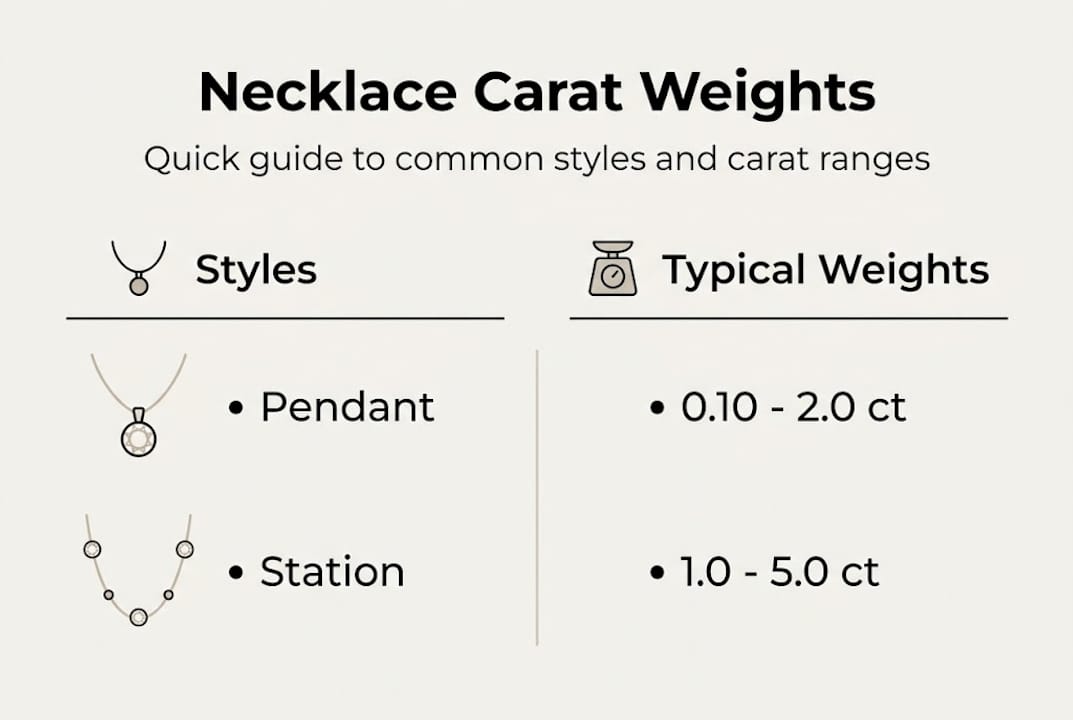
Popular pendant necklaces range from 0.10 ct to 2.0 ct depending on the style, setting, and buyer’s preference. But most people land somewhere in the middle, and for good reason.
| Necklace type | Common carat range | Best for |
|---|---|---|
| Solitaire pendant | 0.25 to 1.0 ct | Everyday elegance |
| Diamond station necklace | 0.50 to 2.0 ct TCW | Layering or standalone |
| Multi-stone or cluster | 0.75 to 3.0 ct TCW | Special occasions |
| Diamonds by the yard | 0.10 to 0.50 ct per stone | Modern, minimal style |
Here’s what those carat ranges actually look like when worn:
- 0.10 to 0.25 ct: Subtle sparkle, barely-there aesthetic, great for layering or gifting
- 0.25 to 0.50 ct: Noticeable presence without being flashy, the most versatile everyday range
- 0.50 to 1.0 ct: A confident statement piece that reads as fine jewelry from across the room
- 1.0 ct and above: Bold, noticeable, often chosen for milestone gifts or special occasions
If you’re drawn to minimalist designs, a diamonds by the yard necklace offers consistent sparkle without heavy carat weight in any single stone. For variety across styles and budgets, browsing the full necklace collection gives you a hands-on sense of how different weights look at different price points. You can also see common pearl necklace weights for context on how non-diamond styles are categorized.
Pro Tip: Think about how you actually dress day to day. A 1.5 ct TCW station necklace might be perfect for someone who wears it as a focal point, but overwhelming for someone who prefers to layer delicate pieces. Your lifestyle matters as much as your budget.
The truth about carat weight: What really matters for shoppers
Armed with the facts, here’s what most shoppers overlook. Carat weight is a measurement. It is not a verdict on beauty or value. Some of the most stunning necklaces we see purchased at SuperJeweler are under 0.50 ct, because the buyer focused on cut, setting, and how the piece actually looked against their neckline.
Marketing around total carat weight can be misleading. A necklace advertised at “2.0 ct TCW” might feature dozens of tiny stones that individually offer very little visual impact. The number sounds impressive, but the result can look thin and unimpressive in person. Always ask: where is that weight concentrated?
Personal style and sentimental meaning consistently outrank sheer stone mass in long-term satisfaction with a purchase. The person who buys a 0.35 ct pendant that perfectly matches their aesthetic tends to wear it more and love it longer than someone who bought 1.0 ct because it sounded better.
Knowing how to prioritize value means looking at the whole picture, not just the number on the tag. Ask yourself how the necklace will look on you, not on a model or in a spec sheet. That question, above everything else, leads to a purchase you’ll be proud of.
Find your perfect necklace at SuperJeweler
Ready to turn knowledge into action? Here’s how SuperJeweler can help with your next necklace purchase. Now that you know what carat weight actually means, what to compare, and where the value truly hides, you’re in a much stronger position to shop with confidence.

At SuperJeweler, you can filter gemstone necklaces by stone type, carat range, and price, making it easy to apply everything you’ve learned here directly to your search. If you’re considering a more modern or sustainable option, explore our lab grown diamond necklace collection, where you get exceptional carat weight at a fraction of the cost of mined diamonds. For the minimalist lover, our diamonds by the yard styles bring elegant sparkle without heavy stone weight. Free shipping and a generous return policy mean you can shop without worry.
Frequently asked questions
How does necklace carat weight differ from stone size?
Carat weight measures mass, not surface area, so two stones of equal carat weight can look very different in size depending on their cut, shape, and density.
Is total carat weight more important than single stone size?
Total carat weight includes all stones in a piece, but the center stone usually dominates the visual impact, so consider both figures before deciding.
What is a good carat weight for everyday necklace wear?
Necklaces between 0.25 and 1.0 ct hit the sweet spot for daily wear, offering visible sparkle without feeling heavy or impractical through the day.
Do gemstones and diamonds look the same at one carat?
No. Because gemstones vary in density, one carat in a ruby or sapphire takes up less physical space than one carat in a diamond or emerald, making the visual size noticeably different.
Recommended
- Diamond necklace buying tips: quality & value in 2026
- Star Of David Necklace | SuperJeweler
- Gold Anklet | SuperJeweler
- How carat weight influences diamond value in 2026
