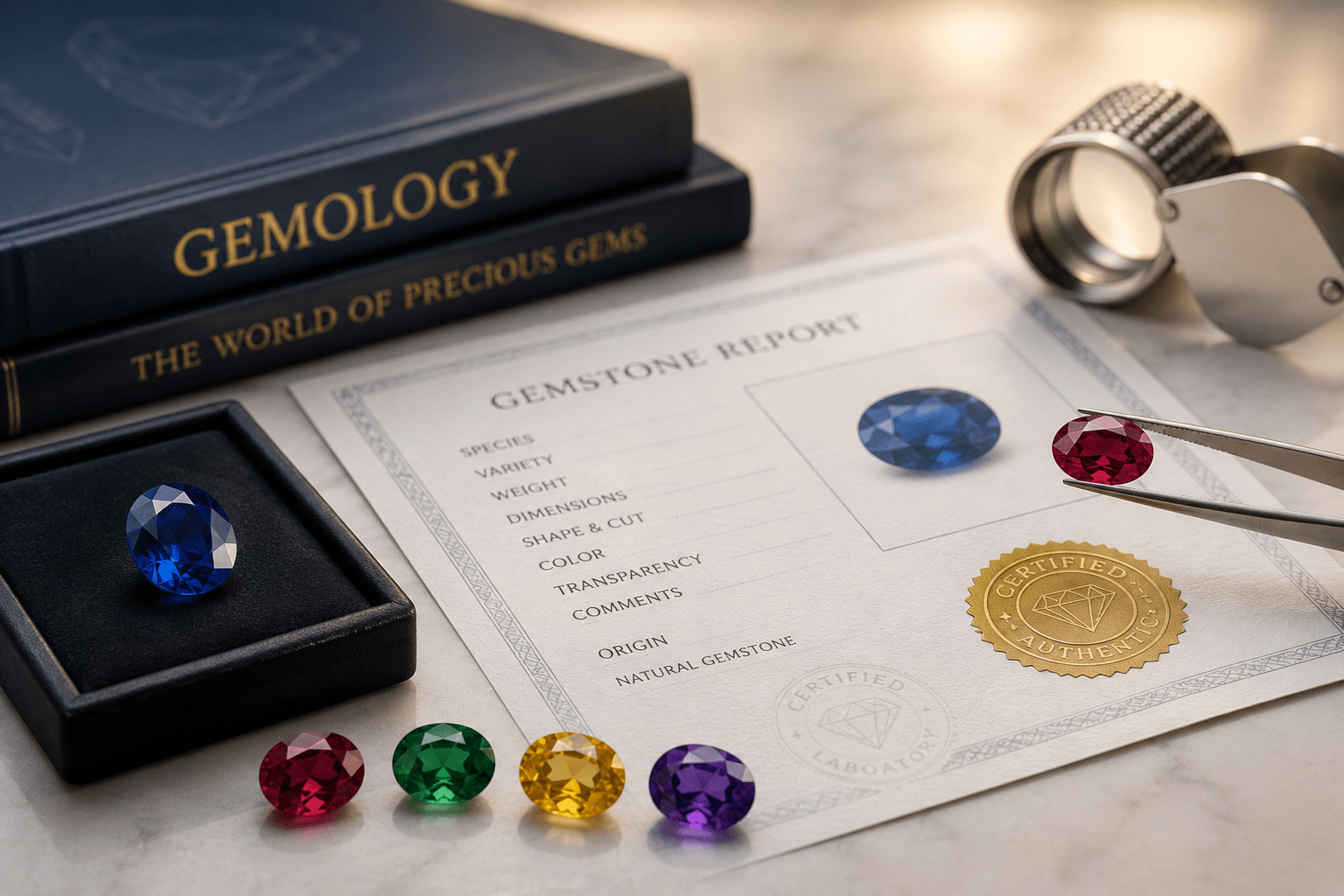
TL;DR:
- Gemstone certification is an independent report from a reputable lab that verifies a stone’s species, quality, and treatments. It provides essential protection against fraud and adds value for resale, insurance, and confidence in purchase decisions. Always verify the report number online and choose reports from trusted labs like GIA, Gübelin, or SSEF for maximum reliability.
Not every gemstone that comes with a certificate is actually certified the way you’d hope. Sellers use terms like “appraised,” “graded,” and “certified” interchangeably, but these words mean very different things. Understanding what is gemstone certification, specifically what an independent lab report actually documents and guarantees, is the difference between making a smart purchase and an expensive mistake. This guide breaks down how gemstone certification works, which labs you can trust, and exactly what to look for before you spend a dollar on any stone.
Table of Contents
- Key takeaways
- What gemstone certification actually is
- Why certification protects you as a buyer
- Reputable certification labs and how to evaluate them
- How to read a gemstone certification report
- Practical tips for buying certified gemstones
- My honest take on gemstone certification
- Shop certified gemstones at Superjeweler
- FAQ
Key takeaways
| Point | Details |
|---|---|
| Certification is lab-independent | A genuine certificate comes from a third-party lab, not the seller or jewelry store. |
| Color drives most of the value | Color accounts for 50 to 70% of a colored gemstone’s value, making it the top item to check on any report. |
| Treatment disclosure changes everything | Heat, fracture filling, and irradiation directly affect both price and care requirements. |
| Lab reputation determines trust | Reports from top-tier labs carry significantly more weight with insurers, appraisers, and resellers. |
| Always verify the report number | Cross-checking a certificate through the issuing lab’s online database confirms it hasn’t been forged or altered. |
What gemstone certification actually is
Gemstone certification, also called gem certification, is an official written report issued by an independent gemological laboratory after a trained expert examines a stone. It is not a sales receipt, a store appraisal, or a manufacturer’s guarantee. Think of it as a passport for the gemstone: an unbiased document that follows the stone wherever it goes.
A standard certification report covers far more than most buyers expect. Here is what a thorough lab report typically includes:
- Species and variety: Whether the stone is a natural ruby, synthetic sapphire, or glass imitation
- Weight: Measured in carats to at least two decimal places
- Dimensions: Length, width, and depth in millimeters
- Color grading: Hue, tone, and saturation evaluated against standardized scales
- Clarity: Description of inclusions or blemishes affecting transparency
- Cut quality: Proportions and finish, particularly relevant for faceted stones
- Treatment disclosure: Any heat, irradiation, fracture filling, or coating applied to the stone
- Geographic origin: Listed when determinable, which can significantly affect value for rubies, sapphires, and emeralds
The lab’s role is straightforward: independent assessment of authenticity with no financial stake in the sale. That independence is the entire point. When you buy from a seller who only provides their own in-house grading, you are trusting the fox to guard the henhouse.
Pro Tip: Ask for the actual lab report, not just a summary. Some retailers print their own “certificates” that mimic the look of official lab documents. Real reports include the laboratory’s name, logo, report number, and contact information for verification.
Why certification protects you as a buyer
The gemstone market has a fraud problem that most casual buyers underestimate. Treated stones are sold as natural. Lab-grown sapphires are passed off as mined. Glass and synthetic materials fill bins at markets worldwide. Certification prevents fraud by creating a documented record that a qualified gemologist, using professional equipment, examined the stone and stands behind the findings.
Here is where the importance of gemstone certification becomes financial, not just technical:
- Pricing transparency: A certified stone has a defensible market value. Without documentation, sellers can charge whatever they believe they can get away with.
- Treatment impact on price: A heat-treated ruby worth $1,000 may look identical to an untreated ruby worth $8,000. Treatment disclosures affect price and durability and the only way to know which you are buying is through lab testing.
- Resale value: Certified gemstones command higher resale prices because buyers at every level of the market trust documented quality over verbal assurances.
- Insurance documentation: Insurers require objective evidence of what a stone is and what it is worth. A respected lab report is the cleanest proof available.
“Without certification, buyers rely solely on subjective seller opinions, risking paying too much or receiving fake stones.” — gemlabtesting.com
Consumer demand for verified data on origin and treatment status has become one of the biggest drivers in the gemstone market today. Buyers are no longer willing to take a seller’s word for it, and that shift is healthy.
Reputable certification labs and how to evaluate them
Not all lab reports carry equal weight. The gemological laboratory that issues a certificate matters enormously, and understanding which labs are respected helps you avoid worthless paperwork.
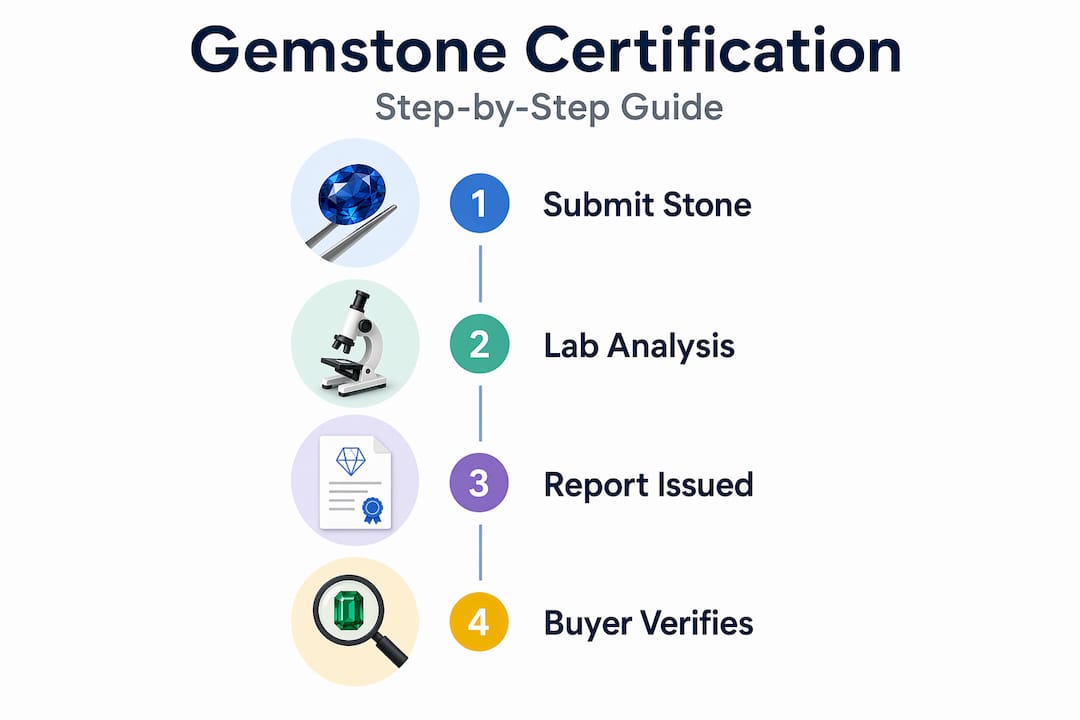
| Lab | Full Name | Known For |
|---|---|---|
| GIA | Gemological Institute of America | Diamonds and colored stones; globally recognized standard |
| AGS | American Gem Society | Diamond cut grading; U.S. market trusted |
| Gübelin | Gübelin Gem Lab | Colored stone origin determination; Swiss precision |
| SSEF | Swiss Gemmological Institute | Colored stone treatment disclosure; top-tier credibility |
| AGL | American Gemological Laboratories | Comprehensive colored stone reports; widely accepted in U.S. |
Reports from top labs like GIA, Gübelin, or SSEF carry significantly more credibility than those from smaller or unknown labs. Certification from a lab no one has heard of offers little protection, since the grading standards, equipment, and expertise behind it are unverifiable.
Beyond recognizing the lab’s name, look for these security features on any certificate you receive:
- QR codes or barcodes that link directly to the lab’s online database
- Holographic foil or embossed seals that cannot be photocopied
- Microprint or watermarks on the paper itself
- Security features like holograms are standard on authentic reports from top laboratories
Pro Tip: Every major lab maintains an online report verification database. Take the report number printed on the certificate and search it directly on the lab’s website before finalizing any purchase. This step takes two minutes and eliminates the risk of counterfeit documentation entirely.
For diamonds specifically, the diamond certification process follows similar principles and the same lab hierarchy applies.

How to read a gemstone certification report
Getting the certificate in hand is only half the job. Knowing what to focus on when you read it separates informed buyers from everyone else. Here is how to work through a report systematically:
- Confirm the gemstone species. The report should state clearly whether the stone is natural, synthetic, or an imitation. “Natural” means mined from the earth. “Synthetic” means lab-grown with the same chemical composition. “Imitation” means a different material altogether, like glass or plastic.
- Check the treatment section first. This is where treatment identification and disclosure becomes critical. Look for phrases like “indications of heating,” “fracture-filled,” or “no indications of treatment.” Untreated stones of any significant size command a price premium that can be substantial.
- Evaluate color carefully. Color is the most significant quality factor for colored gemstones, influencing up to 70% of market value. The report will note hue (the base color), tone (light to dark), and saturation (how vivid or muted the color appears). For a blue sapphire, a vivid, medium-dark blue with no gray modifier is far more valuable than a pale or overly dark stone.
- Review weight and dimensions. Carat weight is objective. Dimensions tell you whether the stone was cut to maximize beauty or to retain maximum weight, which is a common trade-off that affects how a stone looks when set.
- Look for origin information. For high-value colored stones like Burmese rubies, Kashmir sapphires, or Colombian emeralds, geographic origin can double or triple the price. Not all reports include origin, but for premium stones it is worth requesting a lab that specializes in origin determination.
- Cross-check the report number online. Verifying a certificate via the lab’s database using the report number is the single most effective way to confirm authenticity. If the number does not appear, treat the document as suspect.
Understanding the gemstone clarity guide alongside the certification report gives you a complete picture of the stone’s quality profile before committing.
Practical tips for buying certified gemstones
Certification does not automatically mean a stone is a good buy, and skipping certification does not always mean disaster. Context matters.
- For stones valued above $500, always request an independent lab report. Certification costs typically range from $80 to $300 depending on carat weight and the lab selected. At that fee range, the protection is worth it on any stone with meaningful resale or sentimental value.
- For treated stones, certification is non-negotiable. A stone with undisclosed heat treatment or fracture filling is worth less and may require different care. You need documentation.
- Do not confuse certificate with quality. A certified stone can still be a poor-quality stone. Certification tells you what the stone is. Your own judgment and the grading details tell you whether it is worth buying.
- Avoid in-house certificates from retailers. These are not independent and carry no weight with insurers, resellers, or appraisers.
- Buy from retailers who source certified stones and display that information transparently. Reputable sellers will show you the lab report or provide access to it online before purchase.
Pro Tip: When comparing two stones at similar price points, the one with an independent lab report from a recognized lab is almost always the safer choice, even if it costs slightly more upfront. The documentation pays for itself the first time you try to sell, insure, or upgrade.
My honest take on gemstone certification
Certification is less about bureaucracy and more about transferring trust. I’ve watched buyers walk away from beautiful stones because they couldn’t verify what they were buying, and I’ve watched other buyers pay premium prices for certified junk because they assumed the report meant quality.
The real value of certification is that it removes the seller from the equation. When a GIA or Gübelin report says “no indications of treatment,” that statement holds up in court, in an insurance claim, and at a resale counter. A seller’s verbal assurance does not.
What surprises most people is how technically difficult synthetic and treated stone detection has become. High-pressure, high-temperature treated diamonds, for example, look identical to natural diamonds without specialized spectroscopic equipment. Certification reduces buyer uncertainty because the lab has the equipment most buyers will never access.
My advice is simple: treat certification the same way you treat a vehicle history report when buying a used car. You would not hand over thousands of dollars based on the seller’s description alone. The same logic applies to a gemstone that costs more than a mortgage payment.
Always demand an independent lab report. Verify the report number online. And understand what you are reading before you sign anything. That combination will protect you better than any return policy ever will.
— Andrew
Shop certified gemstones at Superjeweler
At Superjeweler, transparent gemstone quality is built into how we sell, not added as an afterthought.

Whether you are looking for certified lab-grown diamonds with full origin and grading documentation, or browsing a wide selection of engagement rings backed by quality assurance, every piece comes with the information you need to buy with confidence. If you are working within a budget, Superjeweler’s affordable engagement rings under $1,000 include real diamonds with certification-backed quality so you never have to guess. Explore our full collection of gemstone rings and shop knowing exactly what you are getting.
FAQ
What is gemstone certification?
Gemstone certification is an official report from an independent gemological laboratory that documents a stone’s species, weight, color, clarity, cut, treatments, and sometimes origin. It is not a seller’s appraisal but an unbiased third-party evaluation.
Which labs issue the most trusted gemstone certificates?
GIA, AGS, Gübelin, SSEF, and AGL are among the most respected gemstone certification bodies worldwide. Reports from these labs carry the most weight with insurers, resellers, and appraisers.
How much does gemstone certification cost?
Certification fees typically range from $80 to $300 depending on the stone’s carat weight and the laboratory selected. For any stone valued above $500, that cost is justified by the protection and resale documentation it provides.
Does a certificate mean the gemstone is high quality?
No. A certificate documents what a stone is, including its treatments and grading characteristics. A certified stone can still be low quality. The certificate gives you the information to judge quality yourself rather than trusting the seller’s description.
How do I verify a gemstone certificate is real?
Take the report number printed on the certificate and search it directly in the issuing laboratory’s online verification database. Verifying through the lab’s database is the only reliable way to confirm a certificate has not been forged or altered.
Recommended
- What Is a Certified Diamond and Why It Matters
- Understand diamond certification to buy with confidence
- Green Gemstones: Fresh and Fabulous
- Gemstone clarity guide: essential tips for jewelry buyers
