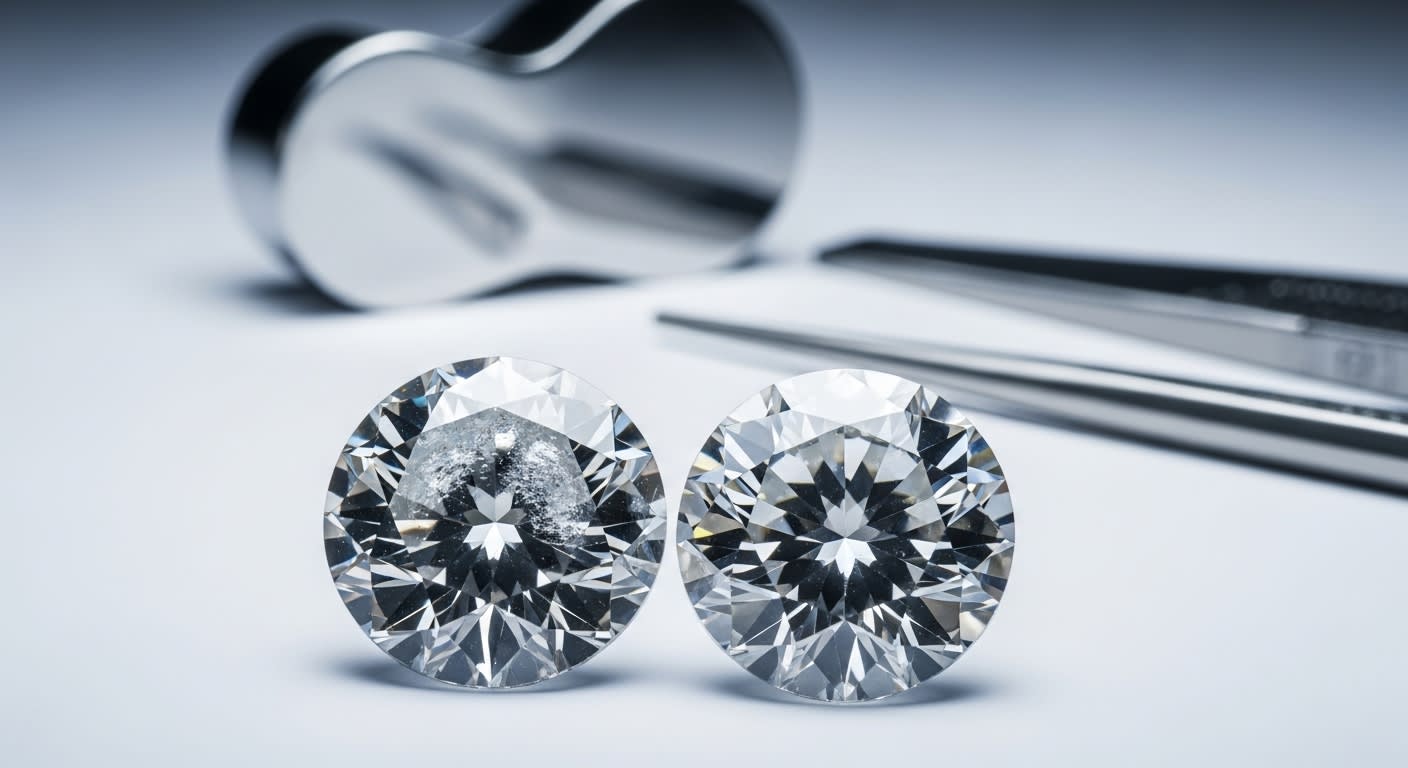
TL;DR:
- Gemstone clarity measures internal inclusions and surface blemishes that affect transparency and sparkle.
- Grading uses a standardized scale from Flawless to Included, influencing price and appearance.
- Most buyers find VS2 to SI1 clarity offers the best balance of beauty and value.
Even the most expensive gemstones on earth carry tiny natural imperfections. Most buyers never notice them, but those invisible flaws can shift a stone’s price by thousands of dollars. Gemstone clarity is one of the most misunderstood factors in jewelry buying, yet it directly shapes how a stone sparkles, how it’s priced, and how it looks in the ring you’ll wear every day. This guide breaks down how clarity is defined, how professionals grade it, and how you can use that knowledge to make a smarter, more confident purchase.
Table of Contents
- What is gemstone clarity?
- How gemologists grade clarity
- Clarity grades: Scales and what they mean
- How clarity affects jewelry buying decisions
- A gemologist’s perspective: Why ‘flawless’ isn’t always best
- Find your perfect gemstone ring with expert confidence
- Frequently asked questions
Key Takeaways
| Point | Details |
|---|---|
| Clarity defines gemstone quality | Clarity measures natural imperfections and directly impacts brilliance and value. |
| Grading scales guide buyers | Gemologists use standardized scales to rate clarity, helping you compare stones easily. |
| Balance clarity with budget | Most buyers get the best value from ‘eye-clean’ stones instead of flawless grade. |
| Professional grading adds confidence | Certified grades ensure you know what you’re getting before you buy. |
What is gemstone clarity?
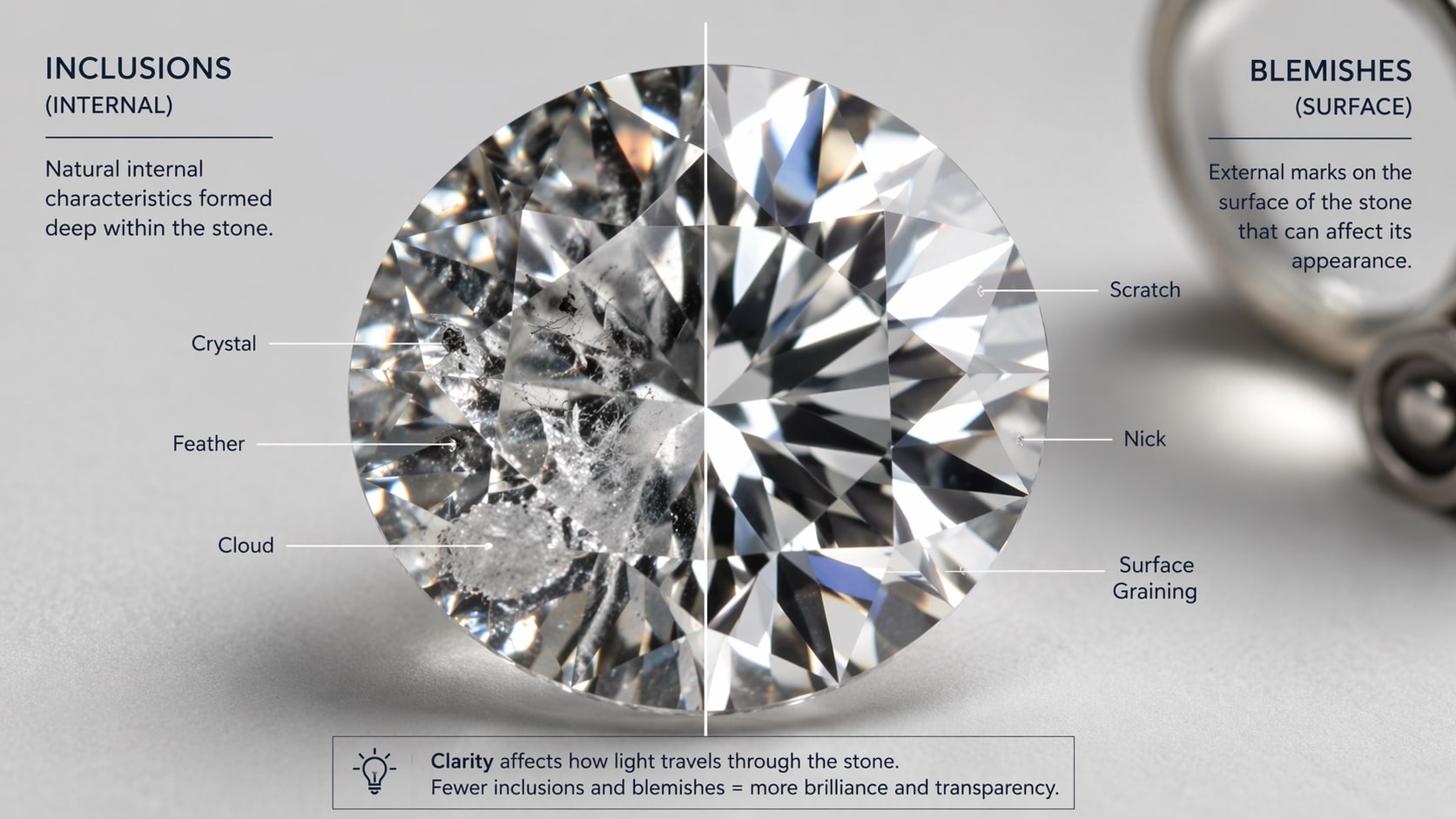
Clarity refers to how free a gemstone is from natural imperfections. Every stone forms under extreme heat and pressure deep inside the earth, and that process almost always leaves behind traces. Those traces fall into two categories: inclusions and blemishes.
Inclusions are internal characteristics. Think of tiny crystals trapped inside the stone, small fractures called feathers, or cloud-like clusters of microscopic particles. Blemishes, on the other hand, live on the surface. Scratches, nicks, and surface graining are all examples. Both types affect how light travels through the stone, which directly influences brilliance and transparency.
Here’s why this matters for you as a buyer: a stone with heavy inclusions near its center can look dull or even show visible dark spots. A stone with only minor, edge-positioned inclusions might look completely clean to the naked eye while carrying a much lower price tag.
The most widely used standard for clarity evaluation is the GIA 11-grade scale, which runs from FL (Flawless) at the top down through I3 (Included) at the bottom. The full range includes:
- FL – Flawless: No inclusions or blemishes under 10x magnification
- IF – Internally Flawless: No inclusions, minor surface blemishes only
- VVS1 / VVS2 – Very Very Slightly Included: Tiny inclusions, extremely difficult to see
- VS1 / VS2 – Very Slightly Included: Minor inclusions, difficult to see
- SI1 / SI2 – Slightly Included: Noticeable inclusions under magnification
- I1 / I2 / I3 – Included: Obvious inclusions that may affect transparency
For a deeper look at how these grades connect to everyday jewelry choices, the clarity basics guide covers practical buyer scenarios in detail.
One important stat to keep in mind: the vast majority of diamonds sold in the retail market fall in the VS2 to SI2 range. Flawless stones represent a tiny fraction of all gems in circulation, which is exactly why they command such a premium.
How gemologists grade clarity
Knowing what clarity is and knowing how it’s measured are two different things. The grading process is more precise than most buyers realize, and understanding it helps you trust the grade on a certificate.
Gemologists examine loose stones under 10x magnification in controlled lab conditions. The stone is typically positioned at a 90-degree angle to the table (the flat top surface) so light enters consistently. This standardized setup ensures that two graders at different labs reach the same conclusion about the same stone.
The five key factors graders evaluate are:
- Size – Larger inclusions lower the grade more than tiny ones
- Number – More inclusions generally mean a lower grade
- Location – Central inclusions are penalized more than edge ones
- Nature – The type of inclusion matters; dark or high-relief inclusions impact the grade more
- Relief – How visible an inclusion is against the background of the stone
As the IGI grading process outlines, graders examine stones under standardized conditions to assess all five factors before assigning a final grade. This objectivity is what makes certified stones comparable across retailers.
“A dark inclusion sitting directly under the table of a diamond affects its appearance far more than a feather near the girdle edge, even if both are the same physical size.”
This is why two stones with the same clarity grade can still look quite different. Location matters enormously. A VS2 stone with a small inclusion near the edge might look cleaner than another VS2 with a cloud positioned right at the center.
For buyers who want to go deeper, the full clarity grading process explains how lab reports are structured. If you’re purchasing a certified stone, you can also use tools for verifying clarity against the certificate yourself.
Clarity grades: Scales and what they mean
Once a stone is graded, that grade needs to communicate something meaningful to buyers, jewelers, and appraisers worldwide. That’s where standardized scales come in.
The GIA 11-grade scale is the gold standard for diamonds. Here’s a practical breakdown of what each range means for real-world buyers:
| Clarity grade | What it means | Visible to naked eye? |
|---|---|---|
| FL / IF | No imperfections visible under 10x | No |
| VVS1 / VVS2 | Minute inclusions, expert only | No |
| VS1 / VS2 | Minor inclusions, difficult to see | Rarely |
| SI1 / SI2 | Noticeable under magnification | Sometimes (SI2) |
| I1 / I2 / I3 | Obvious inclusions | Yes |
For colored gemstones like sapphires, rubies, and emeralds, grading systems are adapted. Emeralds, for example, are almost always included, so the trade accepts a higher level of inclusions as normal. The GIA uses separate clarity type categories for colored stones, recognizing that nature treats each gem species differently.
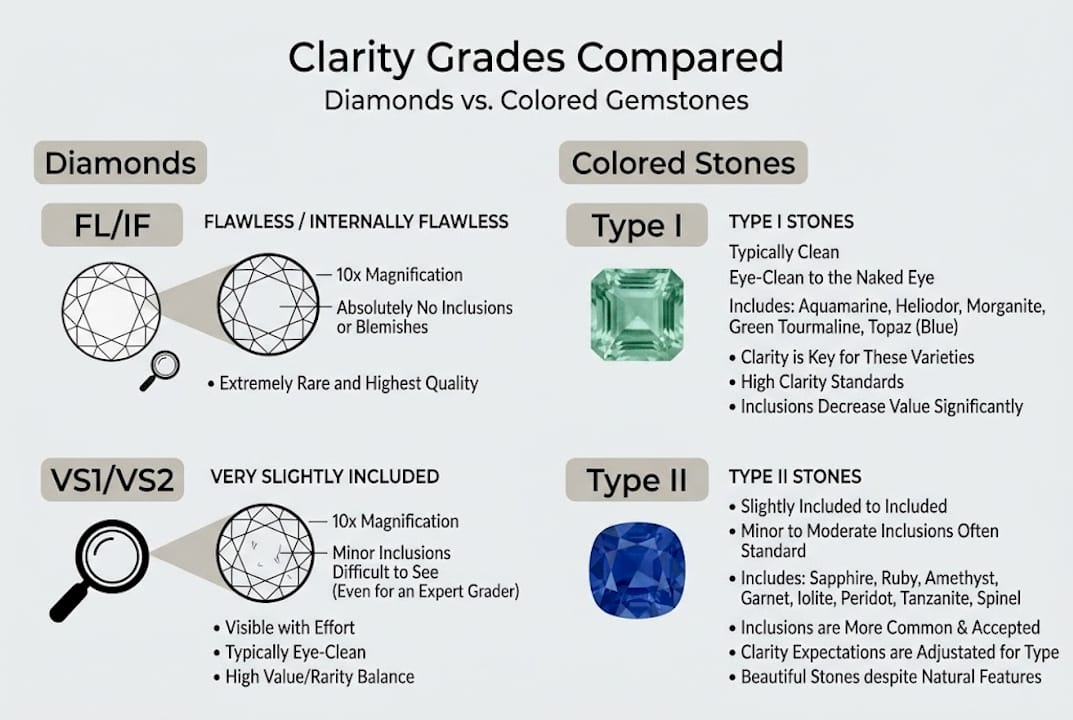
Pro Tip: For most buyers, a VS1 or VS2 stone offers the best balance of visual quality and price. These grades are almost always eye-clean, meaning no imperfections are visible without magnification, yet they cost significantly less than VVS or Flawless stones.
Clarity grade also has a direct relationship with clarity and value. Moving just one grade up can increase a stone’s price by 10 to 20 percent, sometimes more in higher weight categories. Understanding this relationship lets you make deliberate trade-offs rather than defaulting to the highest grade out of habit.
For a side-by-side comparison of how clarity interacts with other grading factors, the diamond color and clarity comparison resource is worth reviewing before you shop.
How clarity affects jewelry buying decisions
Clarity doesn’t exist in a vacuum. It’s one of the Four Cs, alongside Color, Cut, and Carat weight, and smart buyers know how to balance all four against their budget and priorities.
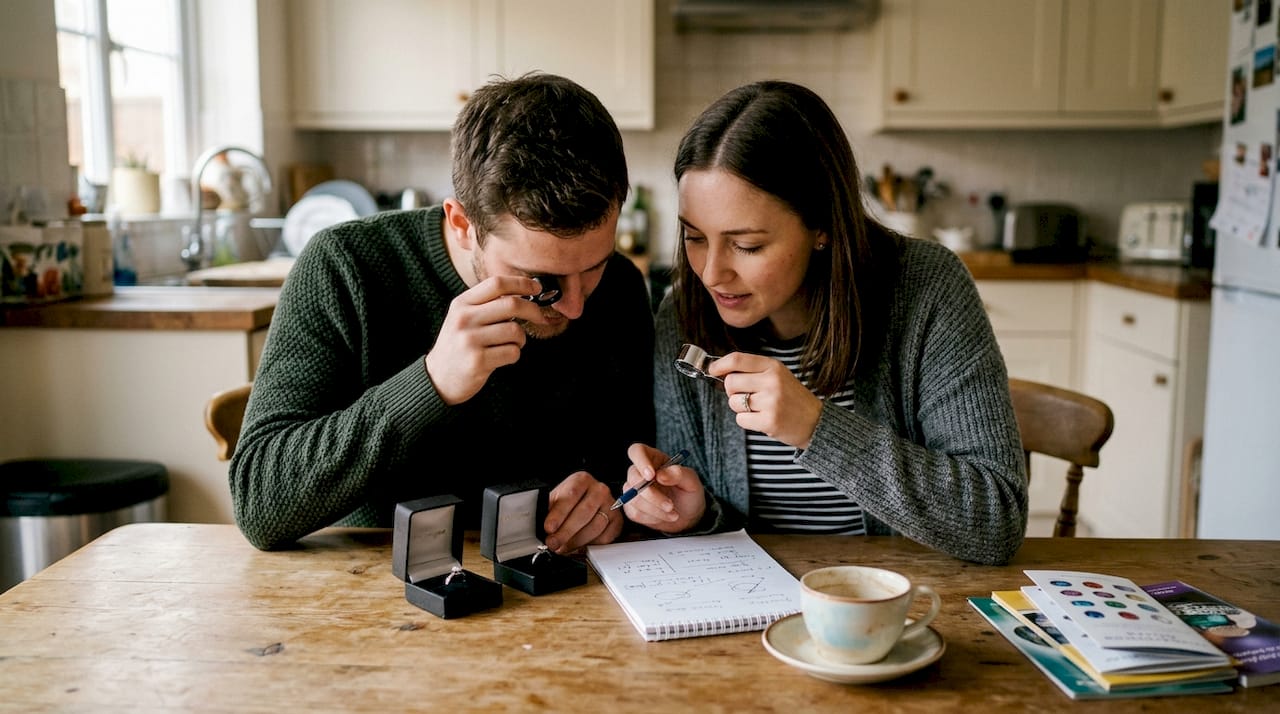
Here’s a practical reality: most inclusions are invisible without a loupe. Once a stone is set in a ring and worn under normal lighting, even SI1 stones can look stunning. The setting itself, especially a bezel or halo style, can also mask minor edge inclusions entirely.
Clarity affects pricing in measurable ways across the market. Here’s an illustrative look at how clarity grade can shift price for a 1-carat round diamond at similar color grades:
| Clarity grade | Relative price range |
|---|---|
| FL / IF | Very high premium |
| VVS1 / VVS2 | High premium |
| VS1 / VS2 | Moderate premium, excellent value |
| SI1 | Competitive price, often eye-clean |
| SI2 | Budget-friendly, inspect carefully |
| I1 and below | Lowest price, visible inclusions likely |
For most buyers choosing an engagement ring, the sweet spot sits between VS2 and SI1. You get a stone that looks flawless in everyday wear without paying the premium reserved for collectors and investors.
A few practical tips for using clarity wisely:
- Prioritize cut over clarity. A well-cut stone with minor inclusions will outshine a poorly cut flawless stone every time.
- Ask to see the stone in person or via video. Certificates tell you the grade; your eyes tell you whether it matters.
- Consider the setting. Prong settings show more of the stone; bezel settings can hide edge inclusions naturally.
- Think about carat trade-offs. Dropping from VS1 to SI1 on clarity could let you go from a 0.9-carat to a 1.1-carat stone at the same budget.
For a full walkthrough of how to weigh these factors together, the steps to choosing a ring guide is a great next read. When you’re ready to see real options, explore gemstone rings across a range of clarity grades and price points.
A gemologist’s perspective: Why ‘flawless’ isn’t always best
Here’s something the industry rarely says out loud: chasing a Flawless grade is often a poor use of your budget. Flawless and Internally Flawless stones are extraordinarily rare, and that rarity drives prices to levels that have almost nothing to do with how beautiful the stone looks once it’s set and worn.
Experienced buyers and collectors know that the real value lives in the VS2 to SI1 range. These stones are eye-clean in virtually every real-world setting. Nobody at a dinner table is examining your ring under 10x magnification. The impact of clarity on visible beauty drops off sharply below VVS grades for most stone sizes.
There’s also something worth appreciating about minor inclusions. They are literally the fingerprint of the earth. No two included stones are identical. That tiny crystal or feather inside your diamond formed over billions of years. Some collectors find that poetic rather than problematic. The goal isn’t perfection for its own sake. It’s finding the stone that looks perfect to you at a price that makes sense for your life.
Find your perfect gemstone ring with expert confidence
Now that you understand how clarity works, you can shop with real confidence instead of just trusting a salesperson’s word. At SuperJeweler, we make it easy to find stones that balance clarity, beauty, and budget without compromise.

Browse our affordable engagement rings collection to find eye-clean options across a wide range of clarity grades and price points. If you’re curious about modern alternatives, our lab grown diamond options offer excellent clarity at a fraction of the cost of mined stones. Or simply start by browsing our full selection of gemstone rings to see how clarity translates into real, wearable beauty.
Frequently asked questions
What are inclusions and blemishes in gemstones?
Inclusions are internal imperfections trapped inside a gemstone during its formation, while blemishes are surface-level flaws like scratches or nicks. Both types are evaluated when assigning a clarity grade to a stone.
Can you see clarity imperfections without a magnifier?
Most clarity imperfections are invisible to the naked eye and only become visible under 10x magnification, which is the standard tool used in professional grading labs.
Does clarity grading apply to colored gemstones as well as diamonds?
Yes, but colored gemstones like rubies, sapphires, and emeralds follow adapted clarity standards that account for the natural inclusion levels typical of each gem species.
How much does clarity affect gemstone value?
Clarity has a significant impact on pricing, but eye-clean stones in the VS2 to SI1 range often deliver the best value for buyers who prioritize appearance over certificate grade.
Recommended
- Gemstone clarity guide: essential tips for jewelry buyers
- Diamond Clarity – How It Impacts Ring Value
- Gemstone Rings | SuperJeweler
- Lab Grown Diamond Jewelry | SuperJeweler
