TL;DR:
- Conflict-free certification mainly verifies diamonds do not fund rebel conflicts, not ethical or environmental issues.
- Broader standards like RJC and Fairmined provide greater transparency on labor, environmental, and supply chain ethics.
- Lab-grown diamonds and recycled metals offer inherently conflict-free options with lower environmental impact.
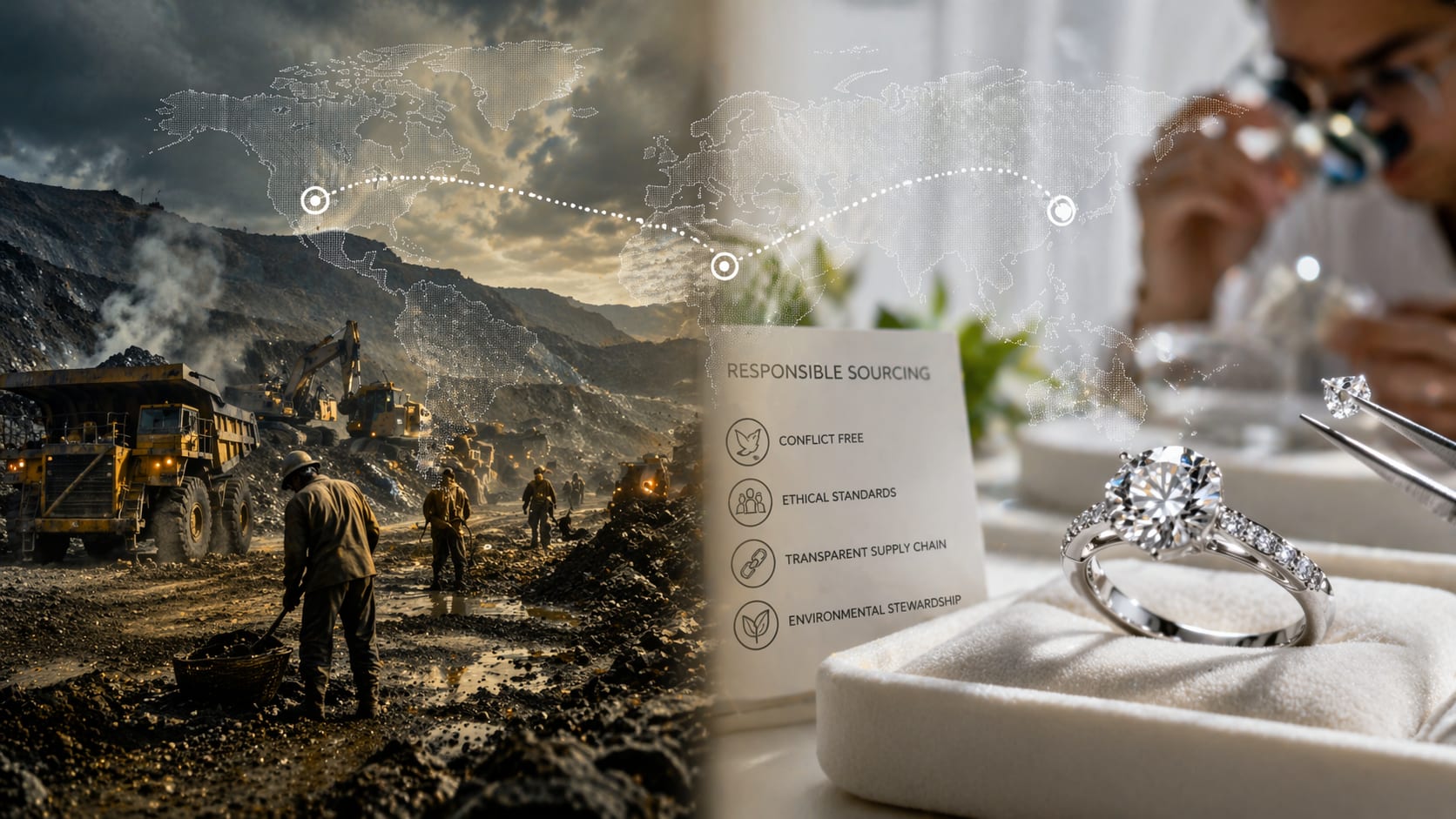
Most shoppers breathe a sigh of relief when they see the words ‘conflict-free’ on a jewelry tag. It feels like a guarantee that nothing harmful happened to get that diamond onto the shelf. The reality is sharper and a little more uncomfortable. Conflict-free certification, as it currently exists, is narrowly defined and leaves major ethical gaps around labor conditions, environmental harm, and supply chain transparency. This guide walks you through exactly what the term means, which certifications actually matter, why lab-grown and alternative materials are gaining ground, and the practical steps you can take to shop with genuine confidence.
Table of Contents
- Defining conflict-free jewelry: What does it really mean?
- Beyond the Kimberley Process: Certifications and standards to know
- Lab-grown diamonds and alternative materials: Truly conflict-free?
- Common pitfalls and evolving challenges: What to watch for
- Our take: True ethical jewelry goes beyond ‘conflict-free’ labels
- Find your ideal conflict-free and ethical jewelry with SuperJeweler
- Frequently asked questions
Key Takeaways
| Point | Details |
|---|---|
| KPCS is limited | Kimberley Process only assures diamonds aren’t funding conflicts, not full ethical standards. |
| Broader certifications matter | RJC and similar standards cover human rights, labor, environment, and supply chain traceability. |
| Lab-grown is best for conflict-free | Lab-grown diamonds are inherently conflict-free and have lower environmental impact than mined stones. |
| Ask for documentation | Always request certification and detailed origin information when buying jewelry. |
| Ongoing reforms | Criticisms of current certifications show the need for continued improvement and transparency in the industry. |
Defining conflict-free jewelry: What does it really mean?
When a jeweler calls a diamond conflict-free, they are almost always referring to compliance with the Kimberley Process Certification Scheme, or KPCS. Launched in 2003, the KPCS is an international agreement designed to stop diamonds from funding armed rebel groups. It is an important baseline, but understanding what it actually covers reveals just how narrow the definition is.
Conflict-free jewelry refers primarily to diamonds certified under the KPCS as not funding rebel conflicts. That is the scope. Not worker safety. Not child labor. Not the impact on rivers and ecosystems near mines. Just rebel financing.
The KPCS works through batch certification. When a shipment of rough diamonds leaves a country, the government certifies the entire batch as conflict-free. Individual stones are not tracked. If one diamond in that batch came from a problematic source, the certification still applies to the whole lot. That gap matters enormously when you are trying to trace the exact origins of your ring.
“The Kimberley Process does not cover labor rights, child labor, environmental damage, state violence, or polished diamonds.”
This broader ethical gap in KPCS coverage is something even industry advocates acknowledge openly. The scheme was designed for a specific purpose and does that job imperfectly, leaving several critical areas untouched.
Here is a quick comparison of what KPCS does and does not address:
| Criterion | Covered by KPCS | Notes |
|---|---|---|
| Rebel conflict financing | Yes | Core purpose of the scheme |
| Individual stone traceability | No | Batch-level only |
| Labor rights and worker safety | No | Outside KPCS scope |
| Child labor prevention | No | Not addressed |
| Environmental protection | No | Mining damage not covered |
| State violence by governments | No | Only rebel groups are in scope |
| Polished diamonds | No | Rough diamonds only |
The main limitations of conflict-free certification to keep in mind:
- Batch, not individual, traceability means one certificate covers many stones
- Government abuses are excluded, so diamonds from state-controlled mines under repressive regimes can still qualify
- Environmental destruction is entirely outside the scheme’s mandate
- Labor conditions in cutting and polishing facilities receive no scrutiny
- Metals like gold and platinum in the ring setting are never addressed at all
The conflict-free diamond guide at SuperJeweler breaks this down further if you want a deeper look at how the certification works in practice.
Beyond the Kimberley Process: Certifications and standards to know
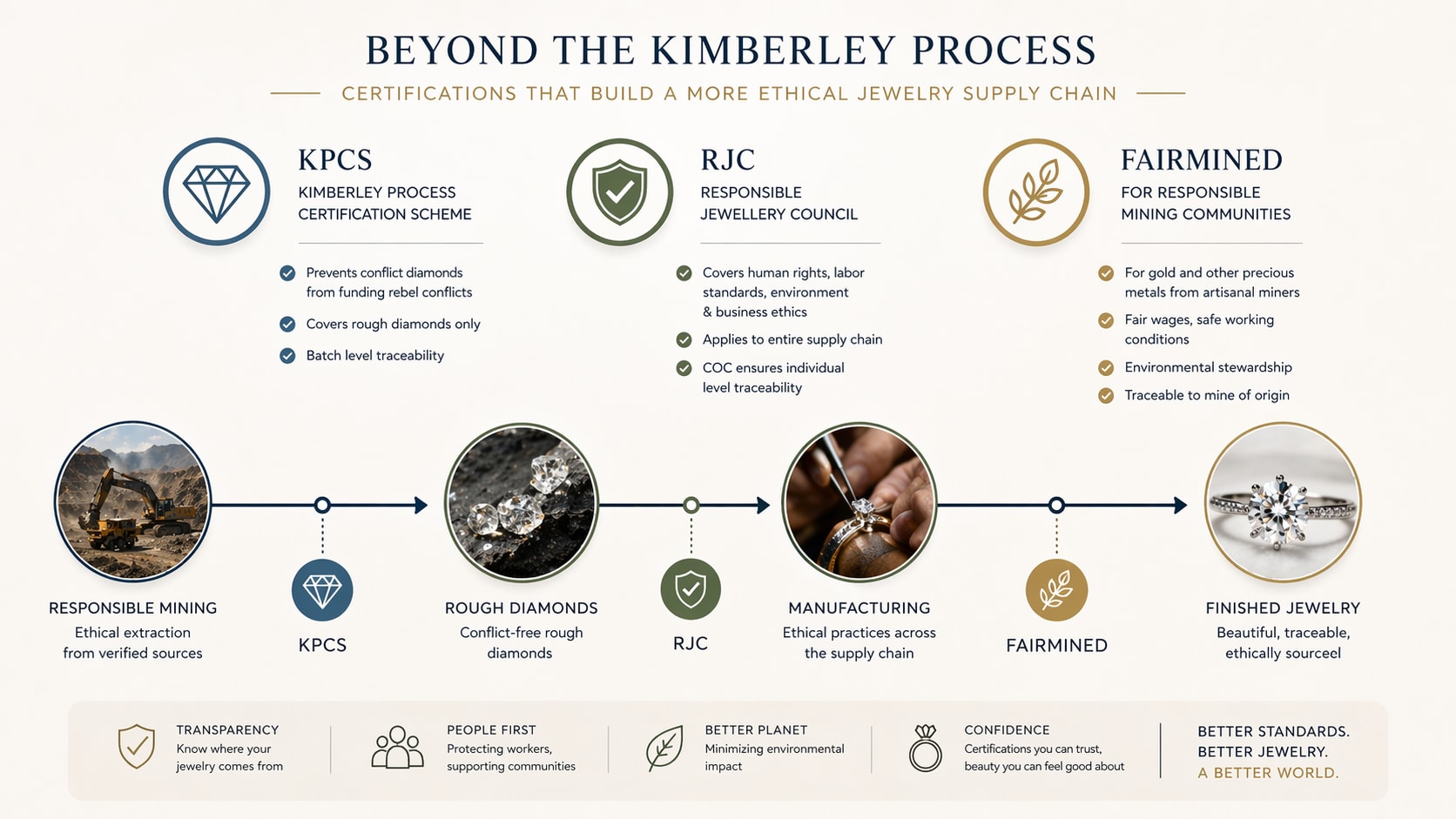
With the basic definition and its limits clear, it’s crucial for buyers to recognize additional standards that provide greater ethical assurance. Several organizations have stepped in to fill the gaps that KPCS leaves open.
The Responsible Jewellery Council provides broader certification through two key programs. The Code of Practices (COP) covers human rights, labor standards, environmental responsibility, and business ethics across the entire supply chain. The Chain of Custody (COC) adds traceability, verifying that specific diamonds or metals can be tracked from source to finished piece. Both certifications require independent auditing, which gives them real credibility.
Fairmined is another standard worth knowing. It applies specifically to gold and other precious metals mined by small-scale and artisanal mining organizations. A Fairmined certification means miners received fair wages, worked in safe conditions, and followed environmental standards. For the ring setting, this certification can be as important as what covers the stone.
Here is a quick breakdown of how these certifications compare:
| Certification | Covers stones | Covers metals | Labor rights | Environment | Traceability |
|---|---|---|---|---|---|
| KPCS | Yes (rough only) | No | No | No | Batch level |
| RJC COP | Yes | Yes | Yes | Yes | Supply chain |
| RJC COC | Yes | Yes | Yes | Yes | Individual level |
| Fairmined | No | Yes | Yes | Yes | Mine of origin |
If you want to verify a jeweler’s supply chain before buying, here are the steps to follow:
- Ask the retailer which certifications apply to both the stone and the metal setting
- Request copies of KPCS, RJC, or Fairmined certificates for the specific piece
- Check whether the jeweler is listed as a certified member on the RJC COC standard page
- Ask for country of origin information, not just a regional or generic answer
- Look for independent third-party audits rather than self-reported claims
Pro Tip: A reputable jeweler should be able to hand you certification documents, not just verbal assurances. If they cannot produce paperwork or direct you to a verifiable certification body, treat that as a red flag. Transparency should feel easy, not defensive.
The ethical jewelry truth behind these standards is that they require ongoing auditing, which makes them meaningfully stronger than a one-time certificate.
Lab-grown diamonds and alternative materials: Truly conflict-free?
Broader certifications are helpful, but there are even more practical alternatives emerging in the market. Lab-grown diamonds have moved from niche curiosity to mainstream choice in just a few years, and for ethically-conscious buyers, the appeal is straightforward.
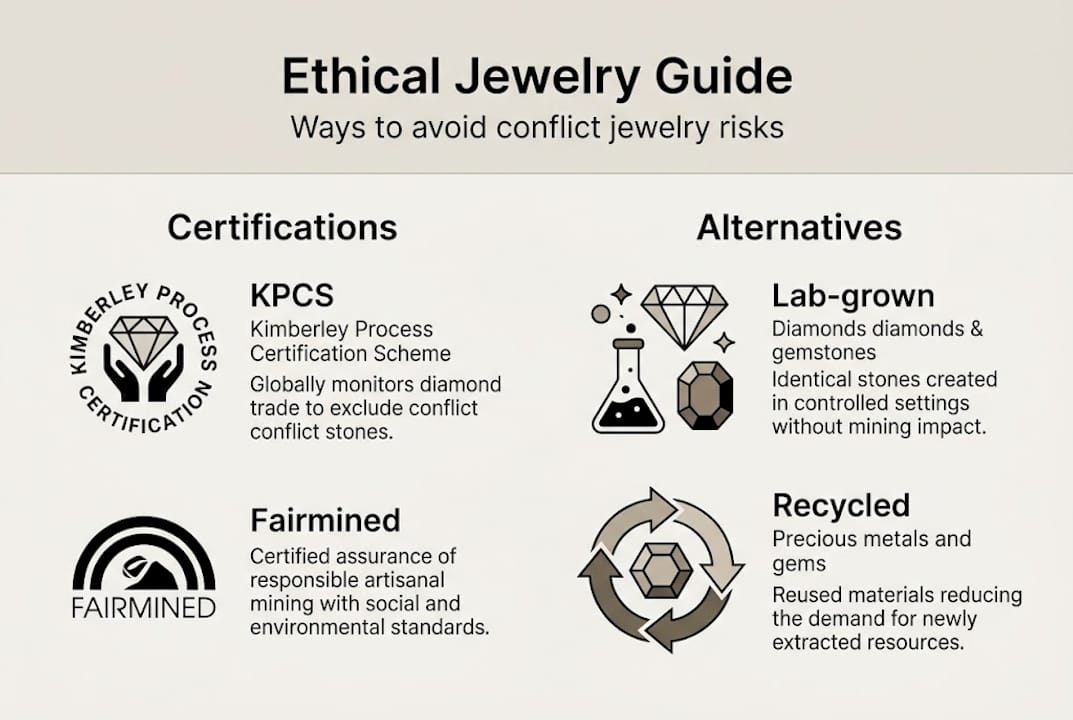
Lab-grown diamonds are inherently conflict-free with lower environmental impact than mined stones. They are created in controlled facilities using either High Pressure High Temperature (HPHT) or Chemical Vapor Deposition (CVD) processes. No mines. No displaced communities. No government-controlled extraction zones with questionable human rights records. The stone that reaches your ring setting has a documented, traceable origin by default.
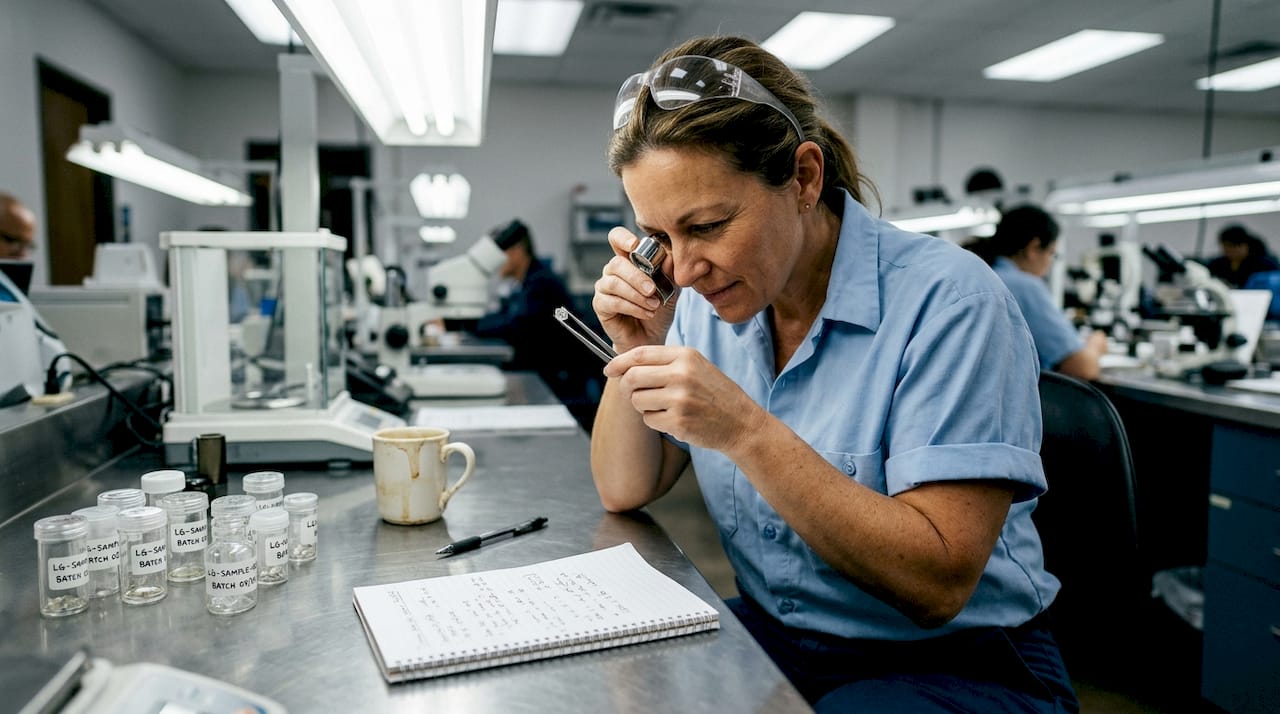
The environmental comparison is striking. Mined diamonds require moving massive amounts of earth, consuming enormous energy and water, and leaving long-term damage to ecosystems. Lab-grown diamonds still require energy to produce, and the carbon footprint depends heavily on the energy source used in manufacturing. Facilities powered by renewable energy have a significantly smaller impact. It’s worth asking your retailer about the energy source used at the lab.
Material choices for genuinely conflict-free jewelry include:
- Lab-grown diamonds: No mining, inherently traceable, increasingly affordable
- Recycled gold and platinum: Diverts metals from existing supply, reduces new mining demand
- Fairmined gold: Ethically sourced from certified artisanal miners
- Moissanite and sapphire alternatives: Lab-created versions offer similar traceability benefits
- Blockchain-traced metals: Emerging technology that records each stage of the supply chain digitally
Recycled metals deserve a nuance here. Recycled gold is generally a strong ethical choice, but the transparency around its origins can vary. Some recycled metal programs have robust documentation. Others simply blend sources without detailed records. When a retailer says a ring uses recycled gold, ask specifically how that claim is verified and whether any third-party standard applies.
Pro Tip: When shopping for lab-grown diamonds, ask for the production method (HPHT or CVD) and the country where the stone was grown. Also ask what energy source the facility uses. These details separate genuinely lower-impact options from marketing language. A thorough explanation of lab-grown explained in the SuperJeweler blog covers these technical differences clearly.
The certification ethics and alternatives space continues to develop as consumer demand for real transparency drives innovation.
Common pitfalls and evolving challenges: What to watch for
Even the best certifications have drawbacks, and it’s important to be aware of ongoing challenges and how to avoid common mistakes. The Kimberley Process has faced sustained criticism from advocacy groups, journalists, and even former insiders.
The most serious criticism targets state-controlled abuses. Because KPCS only covers rebel financing, governments that use their own military to control diamond mines can still export certified stones. Narrow KPCS definition shields state abuses in countries like Russia and Zimbabwe, where documented human rights violations in mining areas continue alongside valid KPCS certification. As of the 2025 KP plenary, reform debates remain unresolved.
“The Kimberley Process has failed to adapt to modern abuses. Its definition of a conflict diamond was written for a specific historical moment and has not kept pace with the ways diamond revenues fund state violence and repression today. Reform is urgent.”
Blockchain technology is one of the most promising responses to the traceability gap. Several companies and programs now record every step of a stone’s journey digitally, from mine to market, making batch-level fraud much harder to hide. This is not yet industry-standard, but it is a direction worth watching and asking your jeweler about.
Signs that a conflict-free claim may be unreliable:
- No written documentation: Verbal assurances without paperwork are not certifications
- Vague origin descriptions: ‘Africa’ or ‘sourced responsibly’ without specifics is not traceability
- No mention of metals: Ethical claims that only address the stone and ignore the setting
- No third-party audits: Self-certified claims without independent verification
- Dismissive responses: Jewelers who treat detailed questions as inconvenient rather than reasonable
The conflict-free diamond reality is that consumers asking smart questions are the single most effective pressure point for improving industry standards. Demand detailed answers.
Our take: True ethical jewelry goes beyond ‘conflict-free’ labels
Having explored the technical and practical realities, here is a straightforward perspective on what matters most: the conflict-free label is a floor, not a ceiling.
Relying on KPCS certification alone is like checking that a restaurant has a health inspection pass and assuming that means the workers were paid fairly and the ingredients were sustainably sourced. The inspection matters, but it tells you almost nothing about the bigger picture.
True ethical purchasing requires active effort. Ask about metals as often as you ask about stones. Request documentation, not just reassurance. Consider ethical lab-grown options seriously, not as a compromise but as a genuinely better choice for buyers who want both beauty and clear conscience.
The jewelry industry is moving in a more transparent direction, but consumer pressure drives that movement. Every time you ask a retailer for certification details, you signal that these standards matter. The buyers who push for more information are the ones who get it, and who gradually shift what the industry considers normal.
Pro Tip: Always request written certification documentation before purchasing any fine jewelry, and ask specifically about both the stone and the metal setting. A two-minute conversation about origins is worth more than a lifetime of uncertainty.
Find your ideal conflict-free and ethical jewelry with SuperJeweler
If you’re ready to apply your knowledge and shop with confidence, SuperJeweler makes it easier to find verified ethical jewelry without sacrificing beauty or your budget.

SuperJeweler offers a wide selection of lab-grown jewelry with documented origins, giving you the transparency that traditional certification often misses. Whether you’re looking for conflict-free engagement rings for a proposal or simply want to build a collection you feel good about, the range covers every style and budget. For buyers watching their spending, the selection of affordable conflict-free engagement rings proves that ethical choices don’t have to be expensive. Browse with confidence, ask questions freely, and shop knowing that SuperJeweler is committed to helping you make informed decisions.
Frequently asked questions
Is all conflict-free jewelry also ethical and sustainable?
No. KPCS does not cover labor rights, child labor, or environmental damage, so conflict-free jewelry only ensures diamonds aren’t funding armed conflicts. True ethical jewelry requires additional certifications that address those broader concerns.
How can I verify my jewelry is conflict-free and ethically sourced?
Ask for written documentation such as KPCS, RJC COP or COC certificates, or Fairmined certification, and request specific origin details for both the stone and the metal. The Responsible Jewellery Council maintains a public directory of certified members you can cross-reference.
Are lab-grown diamonds always conflict-free?
Yes. Lab-grown diamonds are inherently conflict-free because they are created in controlled laboratory settings with no connection to mining supply chains, and they carry a lower environmental impact than mined alternatives.
What are the main criticisms of the Kimberley Process?
Critics point out that the narrow KP definition shields state-sponsored abuses and that the scheme lacks individual stone traceability, addresses only rough diamonds, and ignores labor and environmental harms throughout the supply chain.
Recommended
- What is a conflict-free diamond? Your guide to ethical jewelry
- What is a conflict-free diamond? The truth behind ethical jewelry
- Top 5 Lab-Grown Diamond Jewelry Options in 2026 for Eco-conscious Couples Seeking Affordable, Ethical Engagement Rings
- Lab Grown Diamond Jewelry | SuperJeweler
