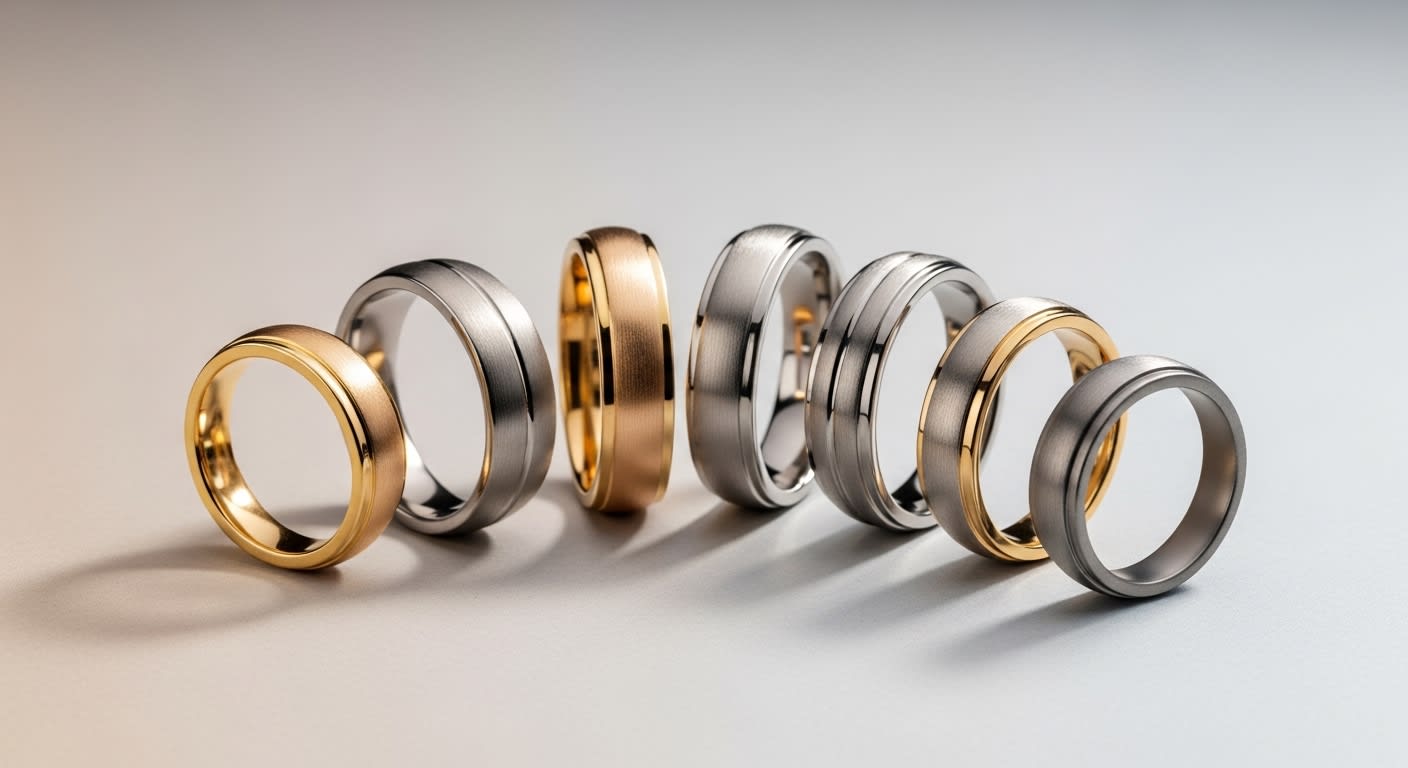
TL;DR:
- Choosing the right ring metal depends on durability, budget, skin sensitivity, and style preferences.
- Platinum offers premium durability and hypoallergenic qualities, while gold alloys vary in maintenance needs.
- Modern alternatives like titanium and tungsten are affordable, strong, and ideal for active lifestyles.
Picking a ring metal sounds simple until you’re standing in front of a display case, completely overwhelmed. The metal you choose shapes everything: how the ring looks on your hand, how it holds up through daily life, and whether it irritates your skin. With options ranging from classic yellow gold to modern tungsten, each metal brings a genuinely different experience to the table. This guide walks you through every major option, explains what sets them apart, and gives you a clear framework for making a decision you’ll feel great about for decades.
Table of Contents
- How to evaluate ring metals: What matters most
- Gold varieties: Yellow, white, and rose
- Platinum and palladium: Premium white metals
- Modern and alternative ring metals: Titanium, tungsten, and more
- How to choose: Matching metals to your diamond, style, and budget
- Our honest take: What really matters when choosing ring metals
- Explore stunning rings in every metal at SuperJeweler
- Frequently asked questions
Key Takeaways
| Point | Details |
|---|---|
| Prioritize durability and allergies | Choose metals that match your lifestyle needs and skin sensitivity for comfort and long-term wear. |
| Consider gold color varieties | Yellow, white, and rose gold each offer unique looks, maintenance needs, and suitability for different styles. |
| Premium and modern options | Platinum, palladium, titanium, and tungsten provide alternatives for those seeking luxury, strength, or affordability. |
| Pair metal with stone and budget | Match metals to your diamond style and spending plan to maximize your ring’s beauty and value. |
How to evaluate ring metals: What matters most
Let’s start by identifying what really matters when picking a ring metal. Before you fall in love with a specific look, it helps to understand the factors that will affect your satisfaction long after the honeymoon.
Here are the key criteria to weigh:
- Durability: How well does the metal resist scratching, bending, and daily wear?
- Budget: Precious metals like platinum cost significantly more than alternatives like titanium.
- Color: Do you want warm yellow tones, cool white, or something in between?
- Hypoallergenic properties: Nickel allergies are more common than most people realize, and some metals contain nickel as an alloy.
- Maintenance: Some metals need regular upkeep (like replating), while others are nearly maintenance-free.
The Mohs hardness scale measures a material’s resistance to scratching, and it’s a useful tool for comparing ring metals. A higher number means harder, but harder isn’t always better. Very hard metals like tungsten can crack under sudden impact.
When it comes to gold, 14k is best for durability in everyday wear, while 18k gold is softer and more prone to scratching despite being more valuable. Nickel is commonly used in white gold alloys, which can trigger reactions in sensitive wearers.
Understanding platinum vs. gold durability early in your search saves you from costly regrets. Similarly, knowing the white gold ring benefits helps you weigh shine against upkeep.
Pro Tip: Match your metal to both your skin tone and your lifestyle. Cool-toned skin tends to look stunning with white metals, while warm-toned skin glows next to yellow or rose gold. If you work with your hands, prioritize durability over luxury.
Gold varieties: Yellow, white, and rose
Now that you know what to prioritize, let’s explore the gold options available. Gold remains the most popular choice for engagement and wedding rings, but it comes in several distinct varieties that behave quite differently.
Gold purity is measured in karats. Pure gold is 24k, but it’s too soft for jewelry. Jewelers mix it with other metals to create alloys. 14k and 18k compositions differ meaningfully: 14k contains 58.3% gold, while 18k contains 75% gold. The higher the karat, the richer the color and value, but also the softer the metal.
Here’s how the three main gold types compare:
- Yellow gold: The classic choice. It’s warm, timeless, and suits vintage or nature-inspired designs beautifully. It also shows scratches more visibly over time.
- White gold: Alloyed with metals like palladium or nickel and coated with rhodium for a bright, silvery finish. White gold durability details show it’s a strong everyday option, though it requires replating every one to three years.
- Rose gold: Created by mixing gold with copper. The result is a warm, pinkish hue that looks stunning on all skin tones. It’s romantic and increasingly popular in modern ring designs.
According to engagement ring metals data, white gold may contain nickel and needs replating to maintain its shine, which is worth factoring into your long-term budget.
When choosing between 14k vs. 18k gold rings, think about how often you’ll wear it and how much you value a richer gold color versus a harder, more resilient band.
Pro Tip: If you or your partner has a known nickel allergy, ask specifically whether the white gold alloy contains nickel. Many jewelers offer nickel-free white gold options.
Platinum and palladium: Premium white metals
Gold may be the classic pick, but platinum and palladium offer distinct advantages that make them worth serious consideration.
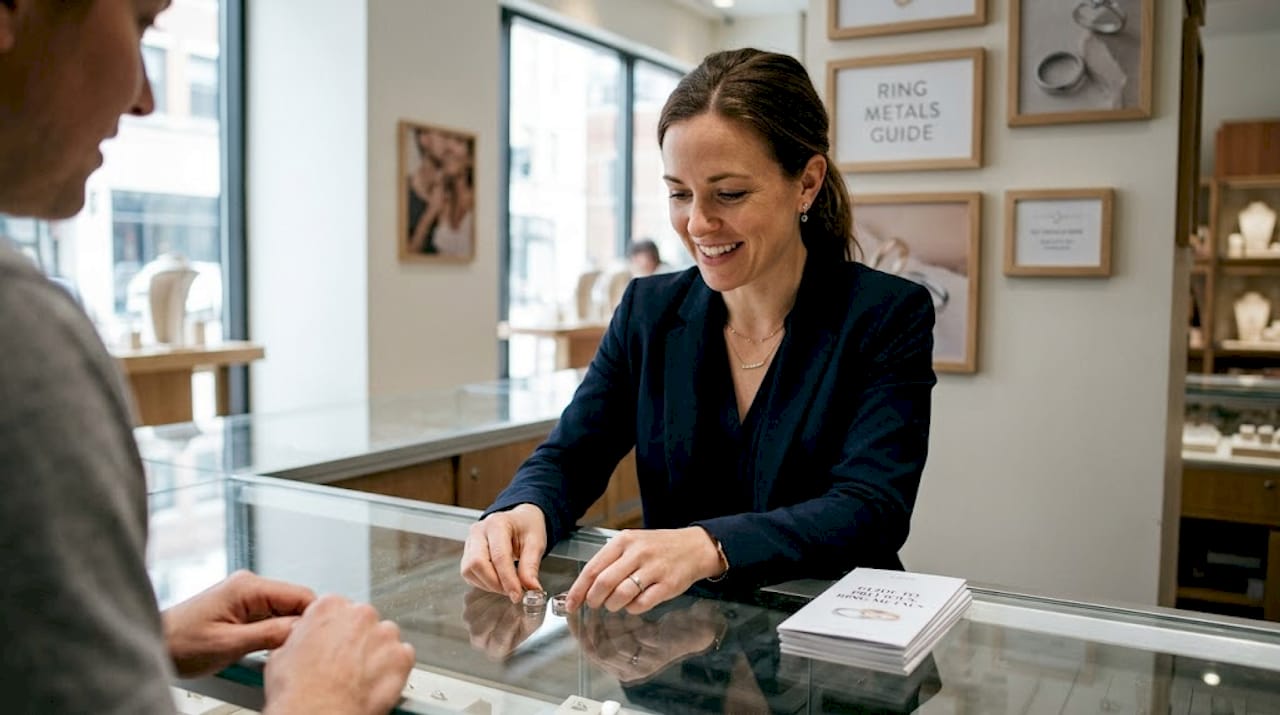
Platinum is the heaviest and most prestigious ring metal. It’s naturally white, never needs replating, and is completely hypoallergenic. Over time, it develops a soft, matte finish called a patina, which many wearers love as a sign of character. Its density means it holds stones securely, making it an excellent choice for diamond rings in platinum.
Here’s a comparison to help you decide:
| Feature | Platinum | White gold | Palladium |
|---|---|---|---|
| Color | Natural white | Rhodium-plated | Natural white |
| Replating needed | No | Yes | No |
| Hypoallergenic | Yes | Sometimes | Yes |
| Weight | Very heavy | Moderate | Light |
| Cost | Highest | Mid-range | Mid-range |
| Durability | Excellent | Good | Good |
Palladium belongs to the same metal family as platinum and shares many of its best traits. It’s lighter, naturally white, and usually less expensive. It’s a smart middle-ground option for buyers who want the look of platinum without the premium price.
“Platinum scores a Mohs 4 to 4.5, making it very dense, hypoallergenic, and maintenance-free compared to other white metals.”
The platinum’s enduring value comes from the fact that when platinum scratches, the metal displaces rather than disappears. That means you lose almost no material over time, unlike gold, which actually wears away with scratching.
- Platinum: best for those who want zero maintenance and maximum prestige
- Palladium: best for those who want a platinum look at a lower price point
- White gold: best for those who want flexibility and don’t mind occasional upkeep
Modern and alternative ring metals: Titanium, tungsten, and more
Beyond precious metals, modern alternatives are gaining popularity for good reasons. These metals offer unique combinations of strength, affordability, and style that traditional metals simply can’t match.
Titanium and tungsten are now among the most popular choices for men’s wedding bands, and it’s easy to see why. They’re tough, affordable, and look sharp.
Here’s a breakdown of the main alternative metals:
| Metal | Hardness | Weight | Resizable | Hypoallergenic | Cost |
|---|---|---|---|---|---|
| Titanium | High | Very light | No | Yes | Low |
| Tungsten | Very high | Heavy | No | Usually | Low |
| Cobalt | High | Moderate | Sometimes | Yes | Low-mid |
| Stainless steel | Moderate | Moderate | Sometimes | Usually | Very low |
| Ceramic | Very high | Light | No | Yes | Low |
- Titanium: Incredibly lightweight and strong. Perfect for active lifestyles. It’s hypoallergenic and won’t irritate sensitive skin. The downside is that it can’t be resized.
- Tungsten: Extremely scratch-resistant and modern-looking. It has a satisfying weight to it. However, it’s brittle under sharp impact and also can’t be resized.
- Cobalt: Looks similar to white gold but is much harder. A good option if you want a precious-metal look without the price.
- Ceramic: Ultra-hard and lightweight, available in black or white. A bold, contemporary choice.
Browsing men’s tungsten rings is a great starting point if you’re leaning toward alternative metals. For those watching their spending, affordable wedding bands in these materials offer incredible value.
Pro Tip: If you’re buying an alternative metal ring, always purchase a half-size larger than your usual size. These rings cannot be resized, and fingers swell slightly throughout the day.
How to choose: Matching metals to your diamond, style, and budget
With all the options defined, here’s how to make your final pick. The best ring metal isn’t the most expensive one. It’s the one that works best for your specific diamond, aesthetic, and real-world life.
White metals maximize diamond brilliance because they don’t cast color into the stone. Platinum and white gold are ideal pairings for colorless or near-colorless diamonds. Rose and yellow gold, on the other hand, add warmth and contrast that can make lower-color diamonds look richer and more vibrant.
Here’s a simple step-by-step process:
- Identify your diamond’s color grade. Colorless diamonds (D to F) shine brightest in white metals. Warmer diamonds (G to J) can look stunning in yellow or rose gold.
- Consider your lifestyle. Active hands need durable metals. Desk workers have more flexibility.
- Set a realistic budget. Platinum costs more upfront but may save money long-term since it needs no replating.
- Think about allergies. If you’re unsure, choose platinum, palladium, or titanium to stay safe.
- Try it on. Color looks different against your skin than it does in photos.
For those balancing quality and cost, affordable diamond ring picks show that you don’t need to spend a fortune to get a beautiful, lasting ring. Exploring choosing diamonds for wedding bands can also help you see how different metals frame different stone shapes.
Stat to know: Most jewelry experts recommend allocating no more than 20% of your total ring budget to the metal setting, leaving room for a quality center stone.
Our honest take: What really matters when choosing ring metals
Having covered the technical details, here’s our candid perspective. The jewelry industry loves to push the most expensive option as the best option. But that’s not always true.
Platinum is genuinely excellent, but it’s not for everyone. If you’re on a budget and you maintain your ring well, 14k white gold gives you a beautiful, durable ring at a fraction of the cost. The replating every couple of years is a minor inconvenience, not a dealbreaker.
What we see most often is buyers fixating on the metal and underinvesting in the stone. A mediocre diamond in a platinum setting is still a mediocre diamond. Prioritize the center stone first, then choose the best metal your remaining budget allows.
We also think alternative metals deserve more credit. Tungsten and titanium rings are not “lesser” choices. They’re smart ones for people with active lifestyles or tight budgets. Checking out real value-for-money picks confirms that beauty and durability don’t require a premium price tag.
Trend-driven metals like black ceramic or cobalt are worth considering too, especially for men’s bands. Style evolves, and your ring should reflect who you actually are.
Explore stunning rings in every metal at SuperJeweler
Ready to see these metals in action? At SuperJeweler, we carry rings in every metal covered in this guide, from classic 14k yellow gold to modern tungsten and everything in between.

Browsing is easy. You can filter by metal type, price range, and style to find exactly what fits your vision and your budget. Whether you’re searching for budget engagement rings that don’t compromise on quality, or exploring wedding bands in every metal for both partners, the options are extensive. We also carry a full collection of lab grown diamond rings set in your choice of metal, with free worldwide shipping and a satisfaction guarantee on every order.
Frequently asked questions
What is the most durable metal for engagement rings?
Platinum is the most durable option for engagement rings because of its density and the way it displaces rather than loses material when scratched, preserving the ring’s integrity over decades.
Which ring metals are hypoallergenic?
Platinum, palladium, and titanium are the safest choices for sensitive skin. Platinum is hypoallergenic by nature, while some white gold alloys contain nickel and may cause reactions.
Why does white gold require replating?
White gold gets its bright white appearance from a rhodium coating applied over the alloy. Rhodium plating wears away with daily use, so replating every one to three years keeps it looking its best.
How do I decide between 14k and 18k gold?
14k gold balances durability and cost better for everyday wear, while 18k gold offers a richer color and higher gold content but scratches more easily and costs more.
Can alternative metals like titanium or tungsten be resized?
No. Titanium and tungsten rings cannot typically be resized because of their extreme hardness and composition. Always confirm your correct size before purchasing one of these metals.
Recommended
- Wedding Ring Selection Guide for Perfect Bands
- How to Select a Wedding Band for Your Perfect Match
- Top 6 Wedding Bands Comparison 2026
- 7 Types of Wedding Rings Every Couple Should Know
