TL;DR:
- Regular cleaning and inspection keep diamond earrings sparkling and prevent damage.
- Use mild soap, a soft toothbrush, and avoid harsh chemicals for safe at-home care.
- Store earrings separately and remove them during water or physical activities to protect their condition.
Even the most brilliant diamond earrings lose their sparkle without consistent care. Skin oils, hair products, and everyday wear create a film over the stone that blocks light from bouncing back the way it should. Many people assume diamonds are maintenance-free because they are the hardest natural material on Earth. That assumption costs them their earrings’ brilliance over time. The good news is that keeping your diamond earrings glowing does not require expensive tools or professional visits every week. With a few simple habits and the right techniques, you can protect both the stones and the settings for years to come.
Table of Contents
- Understand the essentials: Why regular care matters
- Clean your diamond earrings effectively: Step-by-step
- How often you should clean and inspect your earrings
- The right (and wrong) tools: What to use and avoid
- Storage and daily habits that protect your diamond earrings
- The truth most owners miss about diamond earring care
- Enhance and protect your jewelry collection with SuperJeweler
- Frequently asked questions
Key Takeaways
| Point | Details |
|---|---|
| Routine is key | Regular gentle cleaning keeps diamond earrings sparkling and prevents dullness. |
| Choose safe tools | Use only mild soap, soft brushes, and avoid harsh chemicals or ultrasonic cleaners for delicate settings. |
| Storage matters | Separate, soft-lined cases protect diamonds from scratches and chemical buildup. |
| Professional inspections prevent loss | Annual jeweler check-ups help detect loose stones and preserve earring integrity. |
Understand the essentials: Why regular care matters
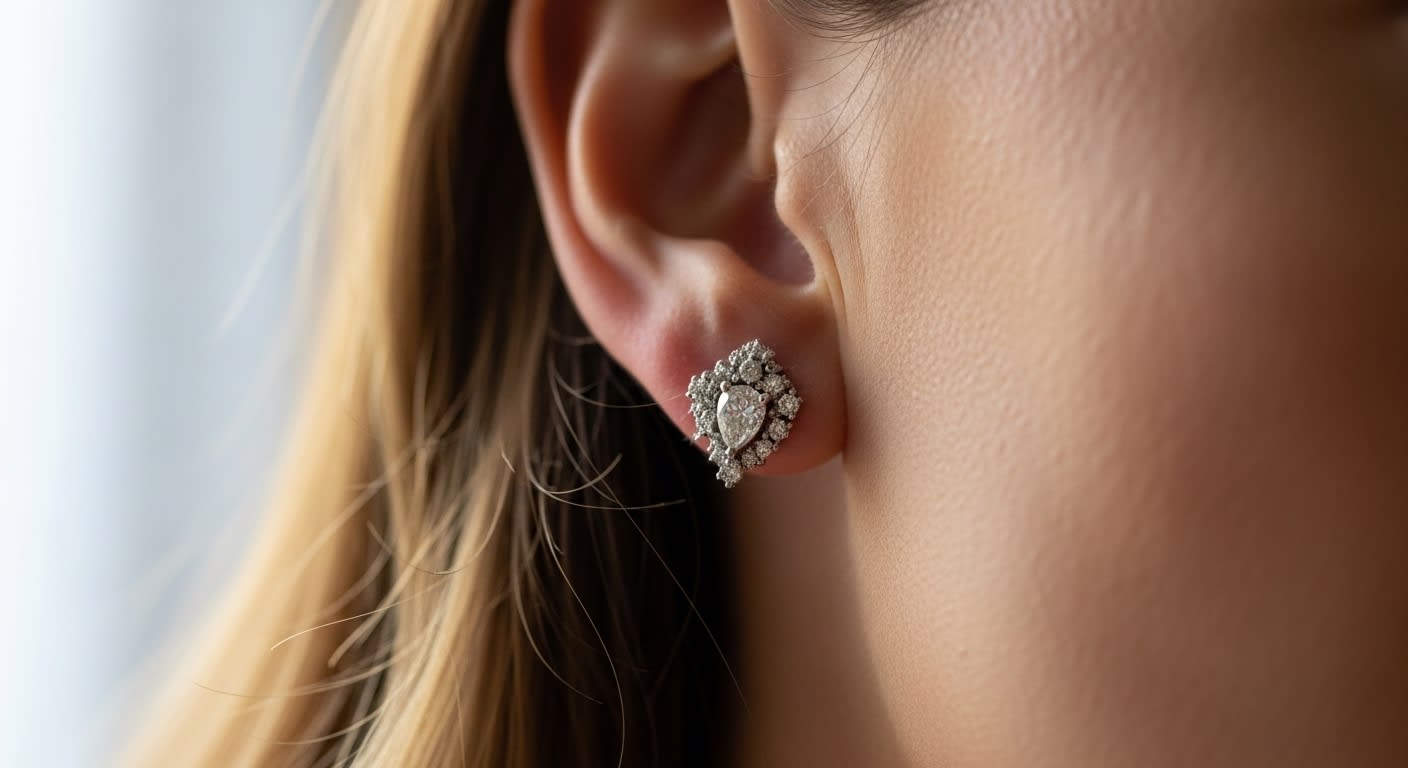
Diamonds are extraordinarily durable, but durability does not mean they are self-cleaning. Every time you wear your earrings, they collect a thin layer of skin oils, sweat, hair products, and airborne dust. That layer builds up fast, and it does not take long before a diamond that once caught every ray of light starts looking flat and lifeless.
Regular cleaning keeps diamonds sparkling and prevents the buildup that dulls them over time.
The stone itself is not the only thing at risk. The setting that holds your diamond in place is just as vulnerable. Prong settings can bend slightly from everyday contact. Pavé and halo styles can trap debris in the tiny gaps between stones, creating pressure that eventually loosens them. Ignoring the setting is one of the most common ways people accidentally lose a stone.
Here are the main culprits behind dull, damaged diamond earrings:
- Skin oils and sweat coat the stone’s surface after just a few hours of wear
- Hair products like dry shampoo, hairspray, and serums leave a waxy residue
- Lotions and perfumes applied near the ears create chemical buildup on metal settings
- Everyday contact with pillows, phone cases, and clothing causes micro-abrasion on softer metals like gold
- Humidity and moisture can weaken adhesives used in certain settings over time
The variety of diamond earring types on the market, from simple studs to elaborate chandeliers, each come with their own care needs. A solitaire stud has fewer places for debris to hide than a multi-stone halo design, but both need regular attention. Understanding what your specific pair faces every day is the first step to protecting it.
Now that you know you cannot take your earrings’ shine for granted, let’s break down exactly how to clean and care for them with simple, expert-approved methods.
Clean your diamond earrings effectively: Step-by-step
At-home cleaning does not need to be complicated. The most effective routine uses supplies you already have at home, and it takes less than 30 minutes from start to finish.
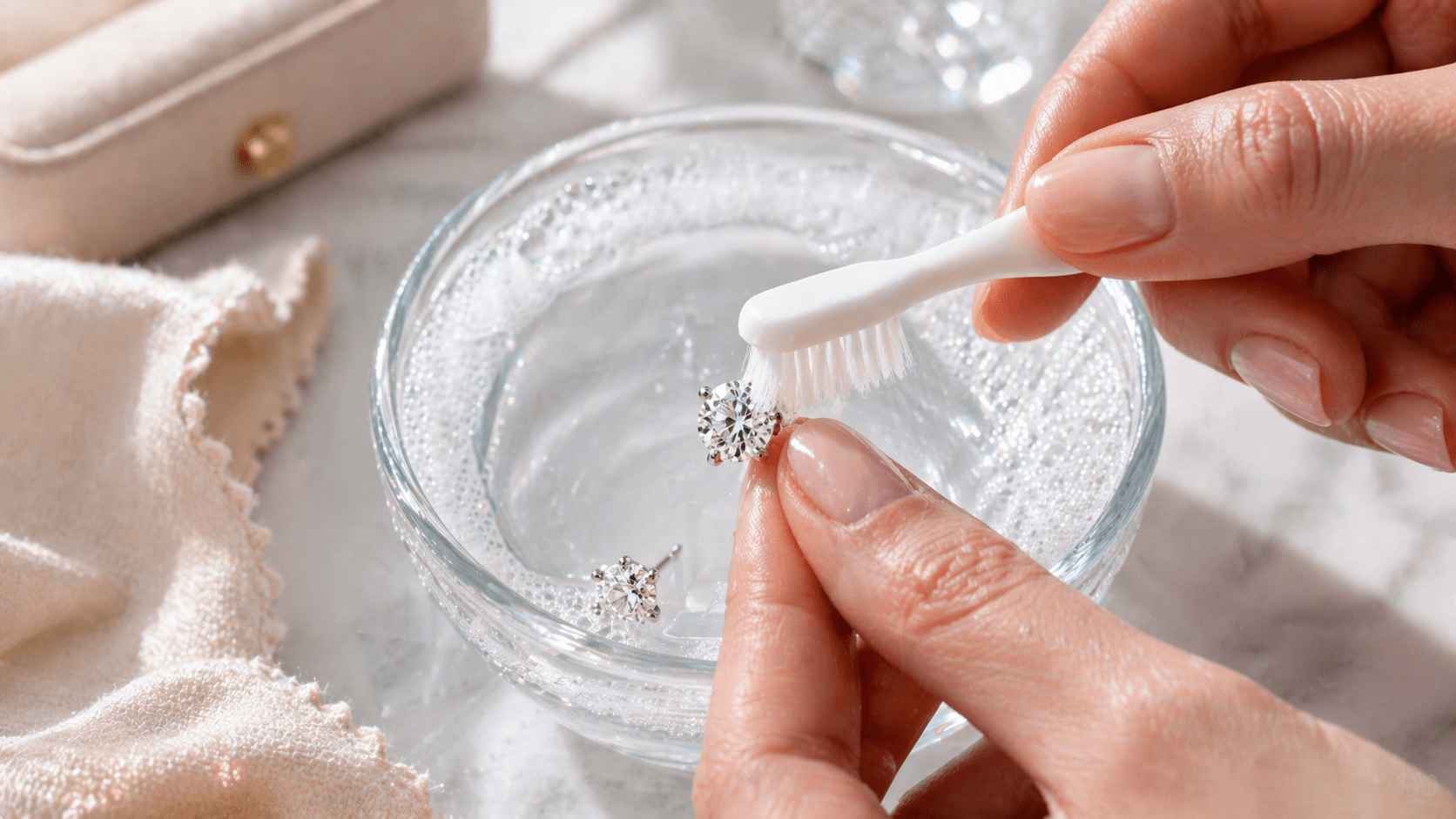
- Fill a small bowl with warm (not hot) water and add two to three drops of mild dish soap.
- Place your earrings in the solution and let them soak for 15 to 30 minutes to loosen oils and debris.
- Use a soft-bristle toothbrush to gently scrub around the stone and setting, paying extra attention to the back of the diamond where buildup hides.
- Rinse thoroughly under warm running water. Use a fine mesh strainer over the drain so you do not risk losing an earring.
- Pat dry immediately with a lint-free cloth. Never air-dry, as water spots can form on the metal.
Pro Tip: For screw-back earrings, unscrew the backs before soaking so the cleaning solution reaches every surface. Residue trapped under a tight back is one of the most overlooked sources of irritation and dullness.
For pavé and halo styles, use the toothbrush with extra care around each small stone. Work in short, light strokes rather than scrubbing back and forth. For prong settings, check that no prongs shift during brushing. If one moves, stop and take the earring to a jeweler before wearing it again.
One rule that applies to every style: avoid harsh chemicals like bleach, ammonia, toothpaste, and acetone. These erode metal over time and can weaken the adhesives or coatings used in certain settings. Stick to mild soap and warm water, and you will never go wrong.
You can also explore diamond cleaning kits designed specifically for fine jewelry, which often include the right brush size and a safe solution already measured out.
How often you should clean and inspect your earrings
Cleaning frequency depends on how often you wear your earrings. Daily wearers face more buildup and need more frequent attention than someone who saves their diamonds for special occasions.
| Wear pattern | Home cleaning frequency | Professional cleaning |
|---|---|---|
| Daily wear | Every 1 to 2 weeks | Every 6 months |
| Occasional wear | Once a month | Once a year |
| Rarely worn | Before and after each use | Every 12 months |
For daily wearers, a quick rinse after removing earrings each evening makes a noticeable difference. Cleaning every 1 to 2 weeks for daily use, or monthly for occasional use, keeps buildup from becoming stubborn.
Professional cleaning is worth scheduling at least once or twice a year. Many jewelers offer this service free every six months, and it often includes a settings inspection to catch loose prongs before a stone is lost. That inspection alone is worth the trip.
Pro Tip: Set a recurring reminder on your phone for cleaning day. Treating it like any other routine task, similar to changing your air filter or rotating your tires, means it actually gets done.
Here is what to watch for between professional visits:
- A prong that catches on fabric or hair
- A stone that looks slightly off-center compared to when you bought it
- A back that no longer tightens the way it used to
- Any visible crack or chip on the metal
Exploring professional cleaning options and learning more about jewelry maintenance tips can help you build a complete care routine that goes beyond just cleaning.
The right (and wrong) tools: What to use and avoid
The tools you choose matter as much as the technique. Using the wrong product, even with the best intentions, can cause damage that is expensive to reverse.
| Tool or product | Safe to use? | Notes |
|---|---|---|
| Mild dish soap | Yes | Best all-around cleaner |
| Soft toothbrush | Yes | Use extra-soft bristles |
| Lint-free cloth | Yes | Prevents water spots and fiber transfer |
| Ultrasonic cleaner | Use with caution | Safe for solid solitaires only |
| Toothpaste | No | Abrasive, causes micro-scratches |
| Bleach or ammonia | No | Erodes metal and weakens settings |
| Acetone | No | Damages adhesives and coatings |
Ultrasonic cleaners are not safe for fragile settings like prong, halo, or pavé styles because the vibrations can loosen stones. They are only appropriate for secure solitaire diamonds with no additional stones or delicate metalwork.
Here is a quick list of safe tools to keep in your jewelry care kit:
- A small ceramic or glass bowl for soaking
- An extra-soft toothbrush reserved only for jewelry
- Mild dish soap (fragrance-free is ideal)
- A lint-free microfiber cloth
- A fine mesh strainer for rinsing over the sink
Pro Tip: Label your jewelry toothbrush so it never accidentally gets used for anything else. Cross-contamination with toothpaste or other products is a surprisingly common source of unintended damage.
If you want to invest in a dedicated solution, look at jewelry cleaning products formulated for fine jewelry, and check out best cleaning kits that include everything you need in one package.
Storage and daily habits that protect your diamond earrings
Cleaning is only half the battle. How you store your earrings and the habits you build around wearing them determine how long they stay in excellent condition.
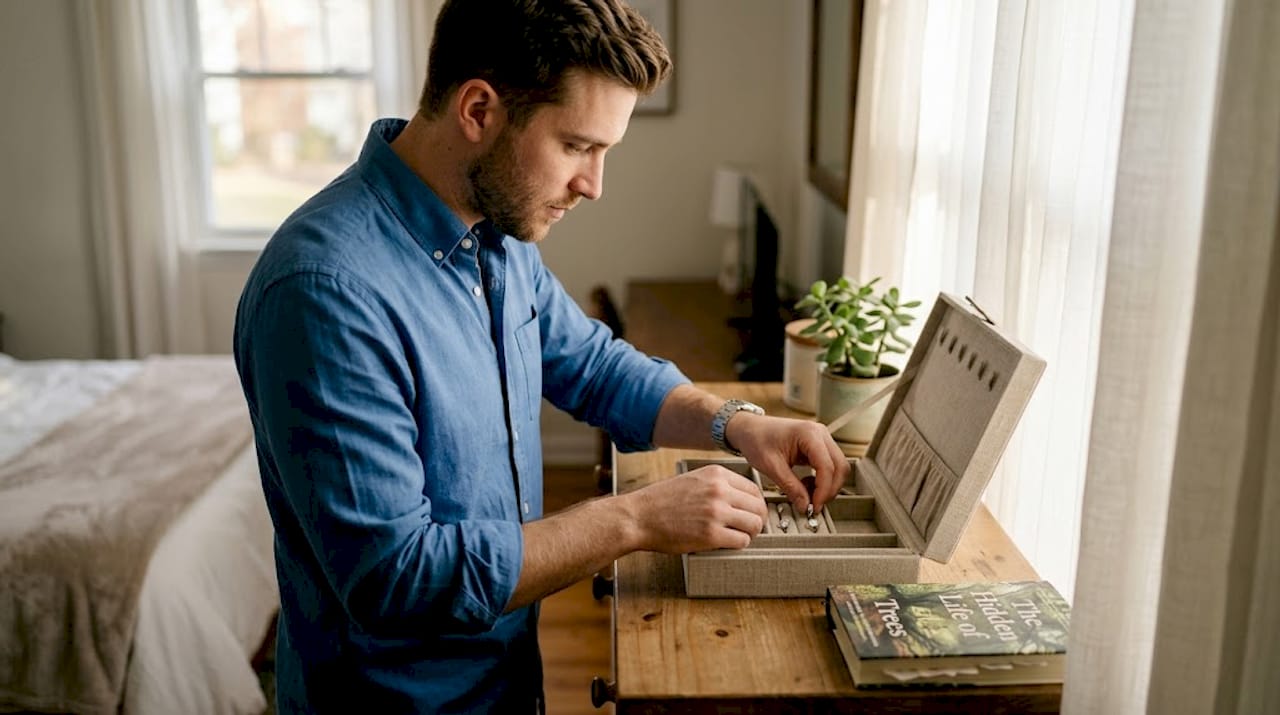
Start with storage. Tossing earrings into a drawer or a shared jewelry dish is one of the fastest ways to cause scratches. Diamonds are hard enough to scratch other diamonds, and metal settings can be bent or dinged by contact with other pieces.
Store diamond earrings in individual soft pouches or lined compartments to prevent scratches from other jewelry or even other diamonds in your collection. A fabric-lined jewelry box with separate sections is ideal. For travel, use a padded case with individual slots.
Here are the daily habits that make the biggest difference:
- Put earrings on last when getting ready, after applying makeup, perfume, and hair products
- Remove earrings first when coming home, before washing your face or applying night cream
- Remove before swimming, exercising, applying lotions, or doing household chores to prevent chemical damage
- Check the backs every time you put earrings on to confirm they are secure
- Avoid sleeping in your earrings when possible, especially with dangling or hoop styles that can bend under pressure
Pro Tip: Keep a small dish on your nightstand specifically for your earrings. It creates a consistent drop spot that keeps them off the bathroom counter and away from water, soap, and other products.
For earring storage solutions that combine function and style, a dedicated jewelry organizer protects your investment while keeping everything easy to find.
The truth most owners miss about diamond earring care
Here is something worth saying plainly: most diamond earring damage does not happen in dramatic accidents. It happens slowly, invisibly, over months of small oversights. A prong that was slightly loose six months ago is now the reason a stone is missing. A film of hairspray that was never fully cleaned off is now the reason a diamond looks gray instead of brilliant.
The uncomfortable truth is that diamonds do not take care of themselves. The phrase “diamonds are forever” refers to their hardness, not their ability to stay beautiful without any effort from you. Lab-grown diamond care follows the same rules as natural diamonds because the chemical structure is identical. Neither type is exempt from the effects of neglect.
What actually protects your investment is consistency over intensity. A two-minute check of your settings every week beats a single deep clean once a year. Forming the habit of removing earrings before the gym or the pool matters more than any product you buy. The jewelers who see the most heartbroken customers are not seeing people who dropped their earrings. They are seeing people who simply forgot to pay attention.
Enhance and protect your jewelry collection with SuperJeweler
Now that you have the tools and knowledge to keep your diamond earrings looking their best, you might find yourself inspired to expand your collection or upgrade to a pair with settings designed for long-term durability. SuperJeweler offers a wide range of earrings built with secure settings and quality craftsmanship that make care routines easier and more effective.

Browse shop gemstone earrings for colorful, well-crafted options that pair beautifully with your diamond pieces. If you are curious about lower-maintenance alternatives, explore lab grown diamonds that offer the same brilliance and durability as natural diamonds at a more accessible price point. SuperJeweler also offers free worldwide shipping and flexible return policies, so finding your next favorite pair is completely risk-free.
Frequently asked questions
Can I use toothpaste to clean my diamond earrings?
No. Toothpaste is abrasive and damages metal and stone surfaces, leaving micro-scratches that dull your earrings over time. Always use mild dish soap instead.
How do I safely clean pavé or halo diamond earrings?
Use a soft toothbrush with mild soap and brush gently around each stone in short, light strokes. Ultrasonic cleaners loosen prongs in pavé and halo settings, so avoid them at home for these styles.
How can I tell if my diamond earring settings are secure?
Check prongs and fastenings weekly for any movement or snagging on fabric. A professional settings inspection at least once a year catches issues before a stone is lost.
How should I store diamond earrings when traveling?
Use a soft, padded jewelry travel case with individual slots or separate pouches. Storing in soft pouches prevents diamonds from scratching each other or snagging on other pieces.
Is it safe to wear diamond earrings in a pool or at the gym?
No. Chlorine and sweat damage metal settings and can cause chemical buildup that dulls diamonds. Remove your earrings before any water or exercise activity.
Recommended
- Diamond Drop Earrings | Huge Selection, Free Shipping, Lifetime Guarantee, Amazing Low Prices From SuperJeweler
- Three Diamond Earrings | SuperJeweler
- Diamond Cut in Engagement Rings: Maximizing Sparkle
- Why Buy Diamond Earrings: Beauty, Value, and Ethics
