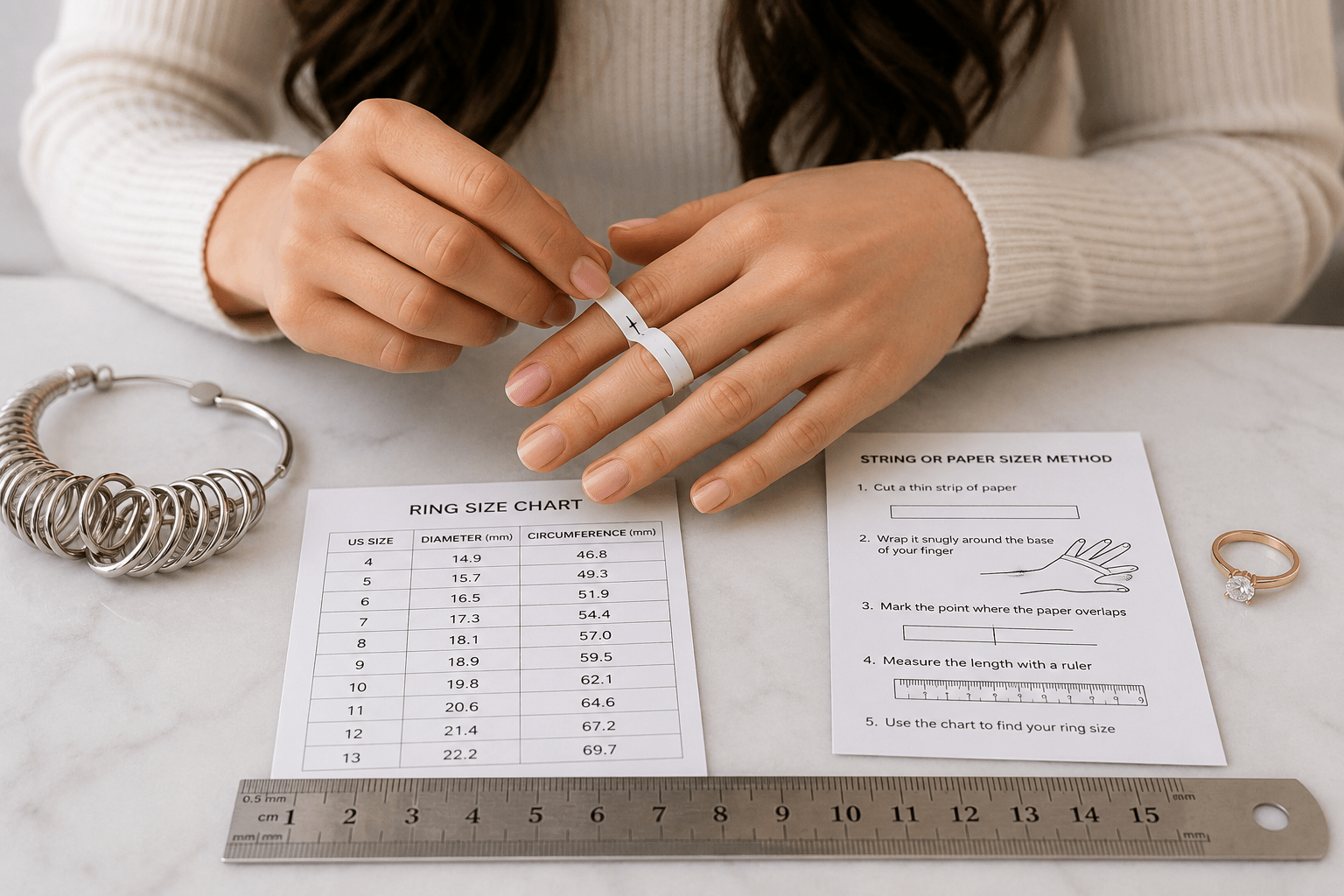
The three most reliable ways to get an accurate ring size are: borrow a ring the person already wears on the target finger and have a jeweler measure it, use a calibrated plastic ring sizer or a properly scaled printable sizer, or measure circumference with a strip of paper or non-stretchy string. Borrowing a ring and getting a jeweler’s read is the gold standard when precision matters most. A physical sizer is the best all-around choice for convenience and accuracy. The paper method works in a pinch but can have more error than other methods.
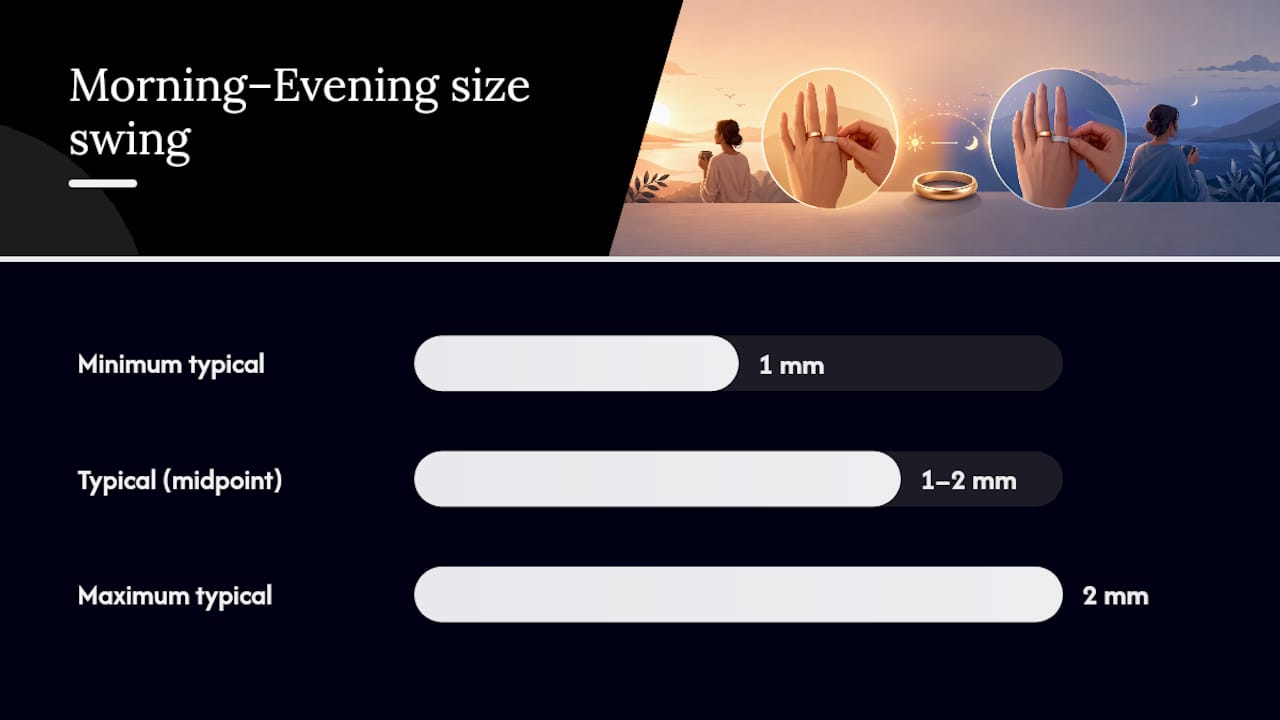
One detail trips up almost everyone: fingers can swell or shrink by 1 to 2 millimeters depending on the time of day, so measure between 5pm and 9pm for the most stable reading. Whichever method you pick, measure at least three times and average the results.
- Most accurate: Borrow a ring + jeweler measurement
- Best balance of accuracy and convenience: Calibrated or printable ring sizer
- Most accessible: Paper strip or string circumference method
If you’re shopping for an engagement ring or wedding band, Superjeweler carries pieces across the full size range and offers resizing support, so you’re not locked in if your measurement is slightly off.
Key Takeaways
Accurate ring sizing comes down to measuring in the evening, averaging three readings, and confirming with a jeweler for any purchase that matters.
| Point | Details |
|---|---|
| Time your measurement | Measure between 5pm and 9pm, since fingers run 1 to 2 mm larger than in the morning. |
| Average three readings | Take three separate measurements and average them to cancel out one-off errors. |
| Use millimeters, not guesswork | Rely on a ruler, caliper, or sizer reading in millimeters rather than eyeballing a chart. |
| Verify before buying non-resizable metals | Confirm with a professional jeweler when the ring is expensive or made from tungsten or titanium. |
| Shop with room to adjust | Superjeweler offers rings across the full size range with resizing support on many styles. |
Table of Contents
- How to Measure Ring Size: Comparing the Three Methods
- How Do You Measure an Existing Ring That Fits?
- How Do You Measure Ring Size With String or Paper?
- How Do You Use a Ring Sizer Correctly?
- When Should You Measure Your Finger for the Most Accurate Size?
- What Other Factors Affect How a Ring Fits?
- What Should You Check Before You Order a Ring?
- What a Jeweler Actually Checks When Sizing a Ring
- Ready to Order? Here’s What Superjeweler Offers
- Frequently Asked Questions
- Sources
How to Measure Ring Size: Comparing the Three Methods
Each method trades off accuracy against convenience, and picking the right one depends on what you have access to.
- Existing ring + jeweler: Highest accuracy, takes under a minute, requires access to a ring worn on the correct finger. This is the most reliable stealth method if you’re sizing a partner without them knowing.
- Plastic or printable sizer: Very good accuracy, works for anyone regardless of what jewelry they own, but printable versions require a print-scale check.
- Paper or string circumference: Works with zero special tools, but string tends to stretch and slip, which introduces more error than a paper strip.
Pro Tip: If the ring you’re buying is expensive or made from a metal that can’t be resized later (think tungsten or some titanium alloys), skip the DIY guesswork entirely and get a professional jeweler’s measurement before you order.
For everyday purchases under $500, a calibrated sizer is usually accurate enough. For fine jewelry, a second verification method is worth the extra five minutes.
How Do You Measure an Existing Ring That Fits?
If you or someone else already owns a ring that fits the exact target finger, this gets you jeweler-level accuracy without leaving the house.
- Confirm the ring was worn on the same finger and hand you’re sizing for. Dominant-hand fingers often run about half a US size larger than the non-dominant hand, so grabbing the wrong ring skews your result.
- Check that the band isn’t warped, bent, or resized poorly, since a distorted band throws off the diameter.
- Place the ring on a ruler or printed diameter gauge and read the inner diameter, not the outer edge of the metal.
- If tracing the inside of the ring onto paper, hold your pencil perfectly vertical. Angling the pencil even slightly can add 0.5 to 1 millimeter of error, which is enough to throw off a full size.
- Match your millimeter reading to a standard conversion chart.
Pro Tip: A digital caliper gives you a cleaner reading than a ruler alone. They cost about as much as a sandwich and remove almost all guesswork from the tracing step.
How Do You Measure Ring Size With String or Paper?
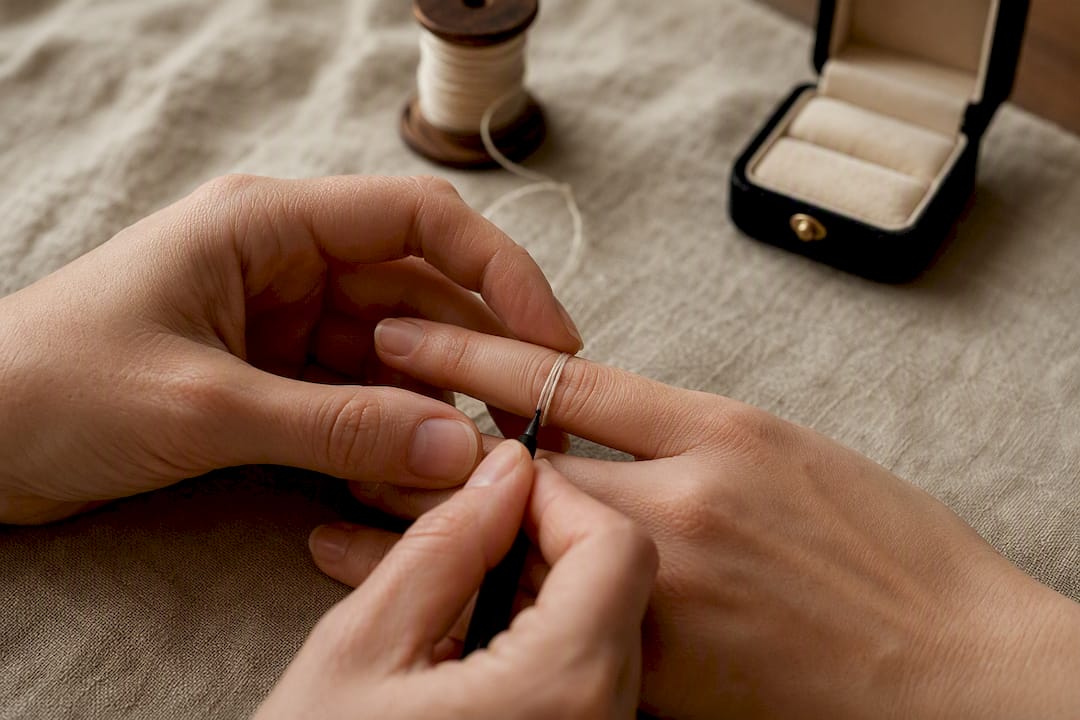
No ring to borrow and no sizer on hand? A strip of paper or a piece of dental floss will get you close, and done correctly this method holds accuracy within about ±0.5 mm, roughly a quarter of a US size.
- Cut a thin strip of paper (not stretchy ribbon or elastic) about half an inch wide and six inches long.
- Wrap it around the base of the target finger, snug enough that it doesn’t slide but loose enough to slip over the knuckle.
- Mark exactly where the strip overlaps with a pen.
- Lay the strip flat and measure the distance to your mark in millimeters using a ruler.
- Repeat the whole process three times at different points in the evening and average the numbers.
Timing and body condition change the result more than most people expect. Measure between 5pm and 9pm, since fingers run 1 to 2 millimeters larger by evening than first thing in the morning. Warm up cold hands before measuring, and skip this exercise right after a salty meal, a workout, or time in extreme heat or cold, all of which cause temporary swelling.
Pro Tip: If your measurement lands right between two sizes on the chart, size up. A ring that’s slightly loose is a quick, cheap fix; one that’s too tight often means sending it back entirely.
How Do You Use a Ring Sizer Correctly?
A manufactured plastic sizer removes most of the guesswork built into paper and string. Real Simple ranks a ring-measurement tool as the most accurate at-home option, and these tools typically run a few dollars.
- Slide the adjustable band onto the target finger and tighten until it’s snug but slides over the knuckle without much resistance.
- Read the size marker where the band locks in place.
- Repeat at a different time in the evening to confirm the reading holds.
If you’re using a printable version instead, check these pitfalls before trusting the result:
- Confirm your printer didn’t auto-scale the page. Measure the printed reference line with a ruler. It should match the stated length exactly.
- Use plain paper, not cardstock, which can throw off the fit around the sizing holes.
- Test that the sizer passes comfortably over the knuckle, not just the base of the finger.
When Should You Measure Your Finger for the Most Accurate Size?
Timing changes your result more than most people realize. Temperature is the single biggest short-term driver of finger size, and fingers can shift by up to 2 millimeters with heat or cold exposure alone.
- Measure in the evening, ideally between 5pm and 9pm, when fingers have settled at their largest natural size for the day.
- Avoid measuring right after a salty meal, an intense workout, or time spent in very hot or cold conditions.
- Warm your hands under lukewarm water first if they feel cold or stiff.
- Take three separate measurements at different moments in the evening and average them.
- Slide the ring, sizer, or paper strip over your knuckle to confirm it passes comfortably, not just that it fits the base of the finger.
Pro Tip: Keep a small notebook note of your measurement date and time. If a reading looks off weeks later, you’ll know whether it’s a real change or just an unusually hot afternoon.
A 1 to 2 millimeter swing between morning and evening is common enough that it’s the main reason jewelers ask when you last measured, not just what number you got.
What Other Factors Affect How a Ring Fits?
Ring size isn’t a fixed number so much as a comfortable range, and a few real-world factors shift where that range sits.
- Band width matters. A wide band (8mm or more) sits against more of your finger, and typically feels tighter than a thin band at the same labeled size, so consider going up half a size for chunkier styles.
- Knuckle versus base. If your knuckle is noticeably bigger than the base of your finger, measure both. Size for the knuckle if the gap is small, or ask about a ring with a spring insert if the difference is significant.
- Pregnancy and swelling are usually temporary. Wait until a few months postpartum before finalizing a size based on pregnancy measurements.
- Sustained weight change or arthritis can be permanent. If your finger size has stayed different for several months, re-measure rather than relying on an old number.
What Should You Check Before You Order a Ring?
Run through this list before you finalize any size and hit checkout.
- Confirm your measurement is the average of at least three evening readings, not a single data point.
- If you measured a borrowed ring, double check it came from the exact target finger and hand.
- If you used a printed sizer, verify the print scale against a ruler one more time.
- Test that your chosen size passes comfortably over the knuckle.
- When in doubt between two sizes, order the larger one. Resizing a ring down is a routine, inexpensive service; resizing up isn’t always possible.
- Check the seller’s resizing and return policy before you buy, especially for anything over a few hundred dollars.
- For tungsten, ceramic, or some titanium bands, professional sizing isn’t optional. These metals typically can’t be resized at all once the ring ships.
What a Jeweler Actually Checks When Sizing a Ring
I’ve seen enough size-related returns to know the pattern: most come down to a measurement taken at the wrong time of day, on the wrong finger, or with a stretchy material that gave a false reading. A jeweler doesn’t just glance at a number. They check knuckle clearance, band width, and whether the finger measured is actually the one that will wear the ring day to day.
For anything beyond a casual fashion piece, that extra five minutes with a professional is worth it. Superjeweler stocks engagement rings, wedding bands, and eternity rings across a full range of sizes, and offers resizing support on many styles if your at-home measurement turns out to be a touch off. If your situation is unusual (a family heirloom setting, a non-resizable metal, or a knuckle-to-base gap), Superjeweler’s customer service team can walk through the options before you commit.
Ready to Order? Here’s What Superjeweler Offers
Once you’ve got a solid measurement, the real decision is what ring to put it on. Superjeweler carries engagement rings across the full standard size range, along with wedding bands, eternity rings, and lab-grown diamond options, and many styles include resizing support if your at-home measurement needs a small adjustment after the fact.

If budget is part of the equation, the cheap engagement rings under $1,000 collection gives you real diamonds without the premium price tag, and every listing shows current size availability before you check out. Have your evening measurement ready, browse styles in your confirmed size, and reach out to customer service directly if you’re unsure whether a specific setting can be resized later.
Frequently Asked Questions
How accurate is the paper strip method for measuring ring size?
Done correctly, it holds accuracy within about ±0.5 millimeters, roughly a quarter of a US size, as long as you use non-stretchy paper and measure in millimeters rather than estimating against a printed chart.
What time of day should I measure my ring size?
Measure in the evening, ideally between 5pm and 9pm. Fingers are typically 1 to 2 millimeters larger by evening than first thing in the morning, so an evening reading gives you a more stable number.
Should I measure my knuckle or the base of my finger?
Measure both if there’s a noticeable gap between them. If your knuckle is significantly larger than the base, size closer to the knuckle measurement or ask about a ring with a spring insert to keep it secure lower down.
Can I trust a printable ring sizer?
Check the printed reference line against a ruler before trusting the size it indicates, since many printers automatically shrink pages to fit margins.
What if my measurement falls between two sizes?
Size up. A slightly loose ring can usually be resized down inexpensively, while a ring that’s too tight sometimes can’t be resized at all, depending on the metal and setting.
Do I need a jeweler to confirm my size before buying an engagement ring?
For a significant purchase, yes. A jeweler checks knuckle clearance and band width in ways a home measurement can miss, and it’s especially important for metals like tungsten or titanium that typically can’t be resized after the fact.
Sources
Recommended
- Diamond Eternity Ring | Ring Size .5 Diamond Eternity Ring From Superjeweler
- Diamond Eternity Ring | Ring Size 8 Diamond Eternity Ring From Superjeweler
- Diamond Eternity Ring | Ring Size 7 Diamond Eternity Ring From Superjeweler
- Diamond Eternity Ring | Ring Size 4.5 Diamond Eternity Ring From Superjeweler
