TL;DR:
- Wearing birthstone jewelry offers personal meaning, practical wearability, and gift-giving advantages regardless of folklore belief.
- The modern list of birthstones, standardized in 1912 and updated over time, reflects cultural history and market flexibility.
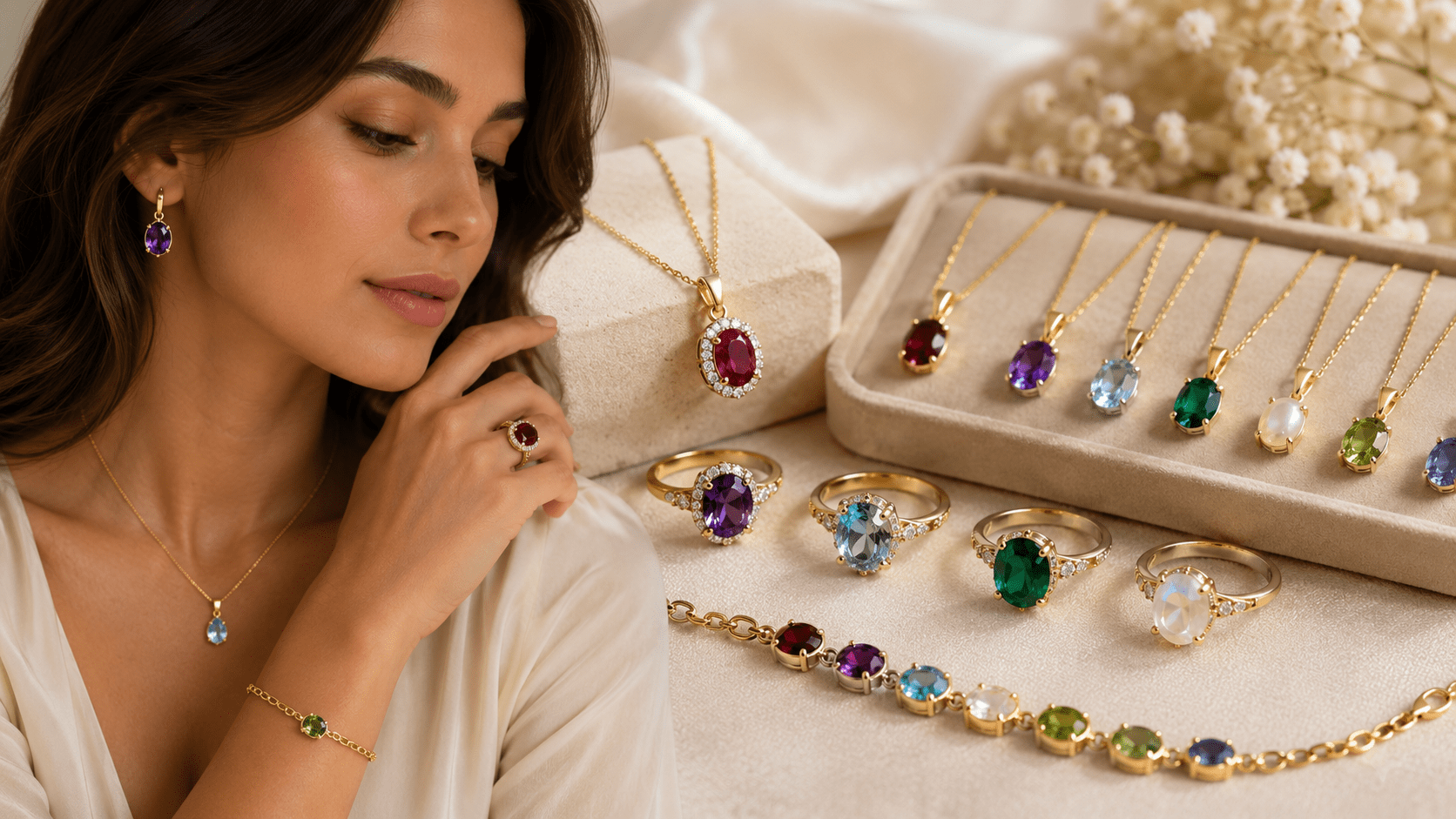
Wearing birthstone jewelry gives you a personal symbol, a giftable keepsake, and a wearable focus for luck or mindfulness — three advantages that hold up whether you believe in folklore or just love color. The American Gem Society and the Jewelers of America both recognize birthstones as culturally significant gems tied to each month of the year, and Superjeweler carries the full range of birthstone pieces for U.S. shoppers looking to buy or gift them.
Three quick takeaways:
- Personal meaning: A birthstone turns a piece of jewelry into a story — your birth month, your child’s, or a milestone you want to carry with you.
- Gifting power: Birthstone pieces are among the easiest personalized gifts to give because the recipient’s month does the choosing for you.
- Practical wearability: With the right stone and setting, birthstone jewelry works every day, not just on special occasions.
Table of Contents
- What birthstones are and how the modern list works
- Where the birthstone tradition actually came from
- 10 real advantages of wearing birthstone jewelry
- Month-by-month birthstone guide
- How to pick and style birthstone jewelry that fits your life
- Care, quality checks, and what to look for when buying
- What gemologists and retail experts say about birthstone jewelry
- Key Takeaways
- Why birthstone pieces are worth recommending
- Find quality birthstone jewelry at Superjeweler
- Useful sources and further reading
What birthstones are and how the modern list works
A birthstone is a gemstone assigned to a specific birth month, worn as a personal symbol or talisman. The concept sounds ancient — and it is — but the list most Americans use today is actually a modern industry standard. The National Association of Jewelers codified the modern birthstone list in 1912, creating a commercial and cultural framework that replaced centuries of competing regional traditions.
That 1912 list has been updated a few times since. The American Gem Society now recognizes multiple stones per month, offering flexibility. June’s stones include pearl, alexandrite, and moonstone. December’s stones include tanzanite, blue topaz, and turquoise. These alternate stones exist partly for commercial reasons and partly because no single ancient tradition ever agreed on a universal list.
One practical implication: you are not locked in. Many buyers choose a stone for its color, meaning, or durability rather than strict calendar fidelity, and that is entirely in keeping with how the tradition has always worked.
Where the birthstone tradition actually came from
The roots go back further than 1912 by about two millennia. The most cited origin is Aaron’s breastplate, described in the Book of Exodus, which featured twelve stones representing the twelve tribes of Israel. Around the first century CE, the historian Josephus drew a connection between those twelve stones, the twelve months of the year, and the twelve zodiac signs — a link that the 5th-century scholar St. Jerome then popularized among Christians.
For centuries, people collected all twelve stones and wore a different one each month, believing each gem held heightened talismanic powers during its assigned period. The practice of wearing only your own birth month’s stone — the custom we recognize today — didn’t emerge until the 16th century, most likely in Germany or Poland.
Hindu tradition contributed its own parallel framework. The Ratna Pariksha, a 5th-century Sanskrit text, chronicles nine gemstones tied to celestial forces (the navaratna), with Vedic astrologers recommending specific stones based on individual birth charts. That Eastern tradition likely influenced Western practices as trade routes expanded. The 1912 standardization didn’t invent the idea; it just gave a commercial shape to something people had been doing for a very long time.
10 real advantages of wearing birthstone jewelry
1. It carries personal identity in a way plain metal can’t
A birthstone ring or necklace tells a story the moment someone notices it. Wearing your own birth month’s stone is a quiet form of self-expression — more specific than a plain band, less loud than a statement piece. Many wearers describe it as carrying a piece of their own history on their wrist or finger.
2. Birthstone pieces make genuinely personal gifts
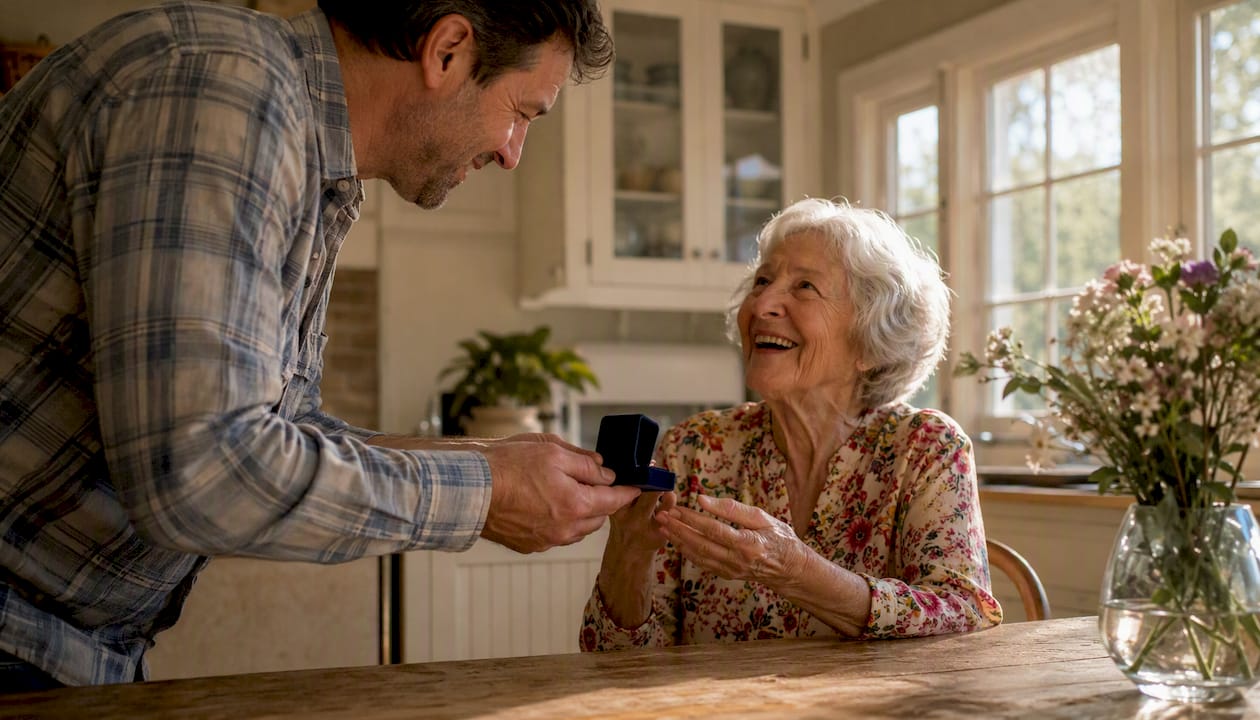
This is the most practical advantage for gift-givers. When you know someone’s birth month, the stone selects itself. A birthstone necklace communicates that you paid attention — not just to a wish list, but to who the person actually is. That specificity is hard to replicate with a generic piece.
3. Multi-stone family designs multiply the meaning
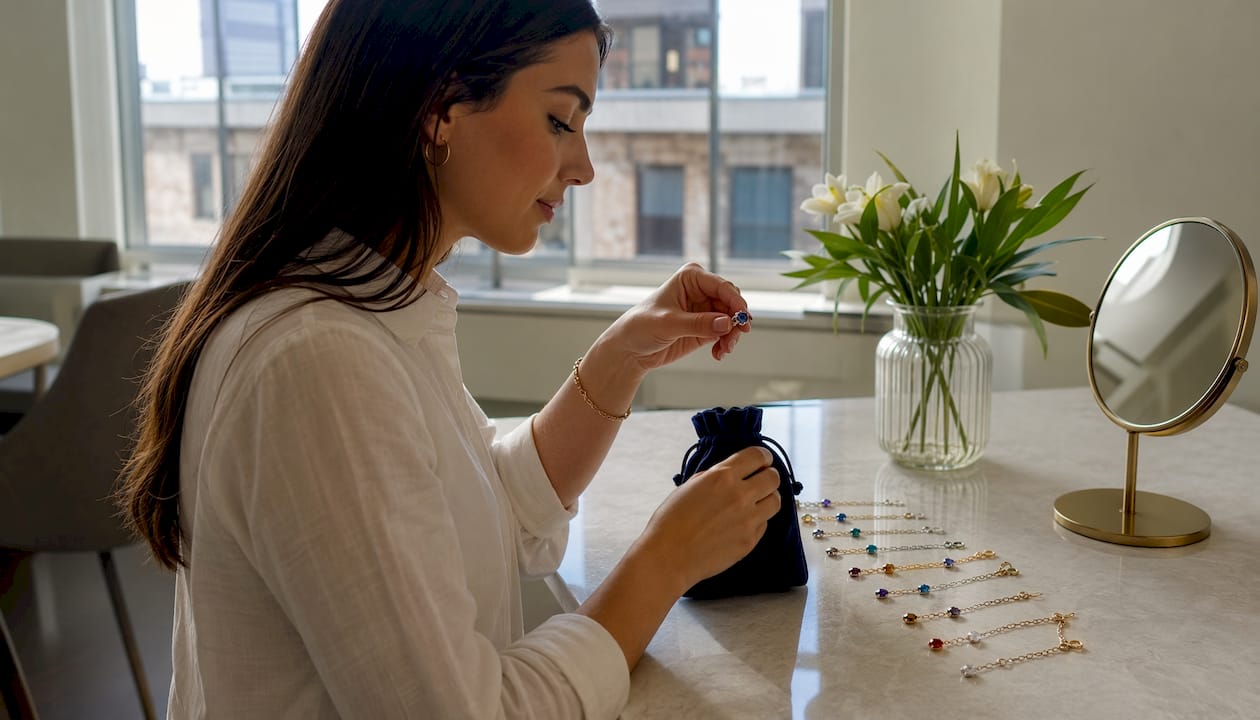
One of the fastest-growing personalization trends is the family birthstone piece: a pendant or bracelet set with the stones of every family member. A mother’s necklace with three stones representing her children is a keepsake that a plain diamond pendant simply cannot be. Retailers report that multi-stone family pieces increase how often wearers actually put the piece on, because the emotional connection is stronger.
4. Folklore assigns luck and protection — and that belief has real psychological weight
Across cultures, birthstones have been credited with protection, good fortune, and specific virtues. Garnet is said to signify eternal friendship and trust; sapphire represents wisdom; emerald symbolizes rebirth and growth. None of these claims have clinical backing, and the GIA frames them as lore rather than science. But the psychological effect of wearing something you believe in is real. Ritual objects produce measurable confidence and focus effects — the stone becomes an anchor for intention, whether or not it has any physical power.
5. Stones work as tangible anchors for mindfulness and meditation
Crystal-healing practitioners describe gemstones as complementary tools for focus and ritual. The mechanism is psychological rather than metaphysical: holding or wearing a specific stone during a daily practice gives the mind a concrete focal point. That is the same principle behind worry stones, prayer beads, and any other tactile ritual object. If a piece of amethyst on your wrist helps you pause before reacting, the advantage is real regardless of what you believe about the stone’s energy.
Pro Tip: If you want a stone for daily mindfulness wear, choose one with a Mohs hardness of 7 or above — quartz-family stones like amethyst (7) and citrine (7) hold up to everyday contact without scratching.
6. Birthstones offer a color-forward way to update your wardrobe
Colored gemstone jewelry is one of the most effective ways to add personality to a neutral outfit. A deep blue sapphire ring reads differently than a ruby, and both read differently than a pale aquamarine. Because birthstones cover the full color spectrum across twelve months, you can build a collection that works across seasons — cool aquamarines and blue topazes for winter, warm citrines and peridots for fall. The color advantage is purely aesthetic, but it’s a real one.
7. Durable birthstones hold up to daily wear better than most people expect
Diamond (April) sits at 10 on the Mohs hardness scale — the hardest natural material. Sapphire (September) and ruby (July) both rate 9. Blue topaz (November alternate) comes in at 8. These stones can handle rings worn every day without special precautions. That durability is a genuine advantage over softer fashion stones that chip or scratch with regular contact. Protective settings like bezel and channel styles extend that advantage to softer stones like opal and pearl by shielding the edges.
8. Birthstone jewelry works across every jewelry type
Rings, necklaces, bracelets, earrings — birthstones translate across all of them. A gemstone ring in a bezel setting suits daily wear. A pendant works for softer stones like moonstone or pearl that you’d rather not expose to the knocks a ring takes. Stud earrings in any birthstone are low-maintenance and appropriate for almost any occasion. That versatility means you can match the piece type to your lifestyle rather than compromising on the stone.
9. Heirloom and sentimental value compounds over time
A birthstone piece given at a milestone — a 16th birthday, a graduation, the birth of a child — accumulates meaning with every year it’s worn. Unlike a trend piece that dates itself, a birthstone ring from 1985 reads as intentional and personal in 2026. The sentimental value is built in from the start and grows rather than fades.
10. They start conversations in a way plain jewelry rarely does
Ask someone about a colored stone on their finger and you’ll almost always get a story. That conversational quality is part of the social advantage of birthstone jewelry. The piece signals something about the wearer — their birth month, a family connection, a belief — and that signal invites connection. Plain metal doesn’t do that.
Month-by-month birthstone guide
Meanings come from American Gem Society and GIA sources. Durability ratings reference the Mohs scale; stones rated 7+ are generally safe for rings with normal care.
| Month | Primary Stone | Symbolic Meaning | Durability Note |
|---|---|---|---|
| January | Garnet | Eternal friendship and trust | Mohs 7; fine for rings with care |
| February | Amethyst | Clarity, calm, and sincerity | Mohs 7; good for everyday rings |
| March | Aquamarine | Courage, health, and serenity | Mohs 8; excellent for rings |
| April | Diamond | Strength, love, and eternal commitment | Mohs 10; the most durable option |
| May | Emerald | Rebirth, growth, and fertility | Mohs 8; treat gently — most are oiled |
| June | Pearl / Alexandrite / Moonstone | Purity, love, and good fortune | Pearl: Mohs 3; best as pendants/earrings |
| July | Ruby | Passion, protection, and vitality | Mohs 9; outstanding for daily rings |
| August | Peridot / Spinel / Sardonyx | Strength, healing, and happiness | Peridot: Mohs 7; better as pendants |
| September | Sapphire | Wisdom, loyalty, and nobility | Mohs 9; excellent for rings |
| October | Opal / Tourmaline | Hope, creativity, and confidence | Opal: Mohs 6; best in protective settings |
| November | Topaz / Citrine | Affection, warmth, and energy | Mohs 8 (topaz); great for rings |
| December | Tanzanite / Blue Topaz / Turquoise | Luck, success, and good health | Blue topaz: Mohs 8; tanzanite: Mohs 6–7 |
Meanings vary by culture and historical source. Alternate stones exist for most months; choose based on color preference, durability needs, and personal resonance.
How to pick and style birthstone jewelry that fits your life
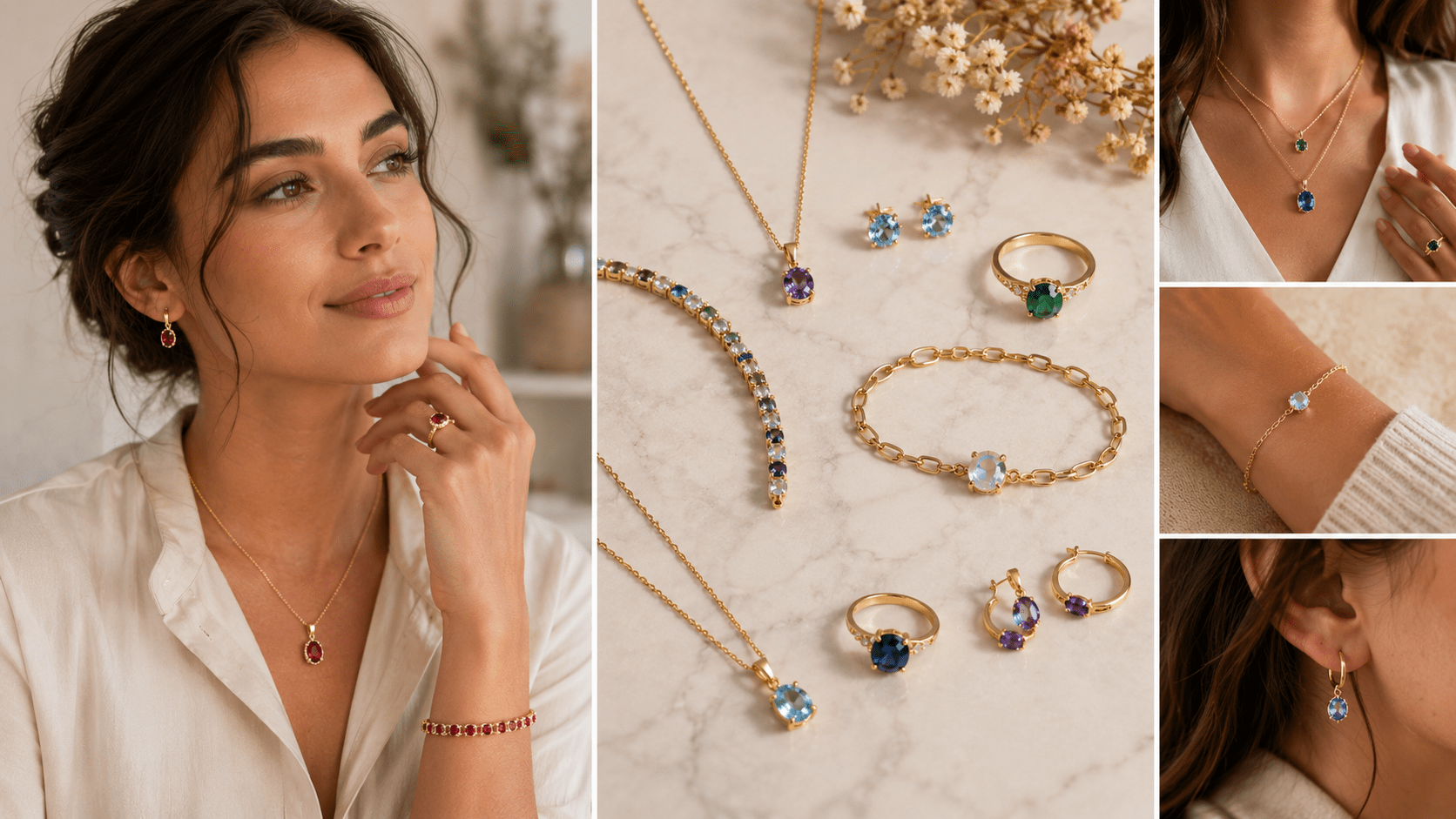
Choosing well means matching the stone to how and where you’ll wear it. Work through these steps before you buy.
- Clarify your intention. Are you buying for meaning, for daily wear, for a gift, or for fashion? The answer shapes every other decision.
- Check the Mohs hardness. For a ring you’ll wear daily, stick to stones rated 7 or above. For pendants and earrings, softer stones like opal, pearl, and moonstone are fine.
- Consider the setting type. Prong settings show off the stone but leave edges exposed. Bezel settings wrap the stone in metal and protect it — the right call for active wearers or softer gems.
- Match the metal to the stone’s color. Warm stones (garnet, citrine, ruby) tend to look richer in yellow or rose gold. Cool stones (aquamarine, sapphire, tanzanite) often pop against white gold or platinum.
- Ask about treatments before you buy. Most emeralds are oiled to enhance clarity; many rubies are heat-treated. Neither is a problem, but you need to know because treated stones require gentler cleaning.
- Confirm the return and warranty policy. A reputable seller will offer a clear return window and disclose any treatments upfront.
- Think about layering. A birthstone pendant layers well with a plain chain or a diamond necklace. Mixing two birthstones — yours and a partner’s — in a layered set is a popular way to personalize without going full family-piece.
Styling shortcut: If you want one piece that works everywhere, a birthstone pendant in a bezel or halo setting on a 16–18 inch chain is the most versatile option across stone types and occasions.
Care, quality checks, and what to look for when buying
Most birthstone jewelry is low-maintenance, but a few habits protect your investment.
Daily care basics: Warm water, a drop of mild dish soap, and a soft toothbrush handle most cleaning jobs for hard stones like sapphire, ruby, and topaz. Avoid ultrasonic cleaners for emeralds (oiled stones), opals (porous), and pearls (organic). Pat dry rather than air-drying to prevent water spots on metal.
Storage: Keep pieces in separate pouches or compartments. A diamond or sapphire left loose in a jewelry box will scratch softer stones sitting next to it.
Treatment disclosure matters. The GIA advises that treatment disclosures — heat, fracture-filling, dyeing — affect both care requirements and long-term value. A fracture-filled emerald needs gentler cleaning than an untreated one. Ask your seller directly, and get the answer in writing if the piece is significant.
Quality checklist before you buy:
- Metal hallmark stamped on the piece (14K, 18K, 925 sterling)
- Prongs or bezel edges checked for security — no sharp edges, no loose movement
- Stone seated evenly with no visible gaps
- Return policy and warranty terms confirmed in writing
- Lab report or treatment disclosure for higher-value stones (emeralds, rubies, sapphires above a certain carat weight)
Wearability by piece type: Rings take the most abuse, so they need the hardest stones or the most protective settings. Pendants and earrings are gentler environments — that’s where you can safely wear opal, pearl, or moonstone without worrying about every bump.
What gemologists and retail experts say about birthstone jewelry
The expert consensus on birthstone jewelry is more nuanced than either pure skepticism or full endorsement of folklore. Gemologist Dr. Nandita Shah has described colored gemstones as “feel-good jewelry” that can support confidence and complement formal therapy — a framing that acknowledges psychological benefit without making clinical claims.
That retail insight tracks with what personalization data shows. Pieces with engraving, multi-stone family designs, or stones chosen for personal meaning get worn more frequently than generic fashion jewelry. The emotional investment translates directly into use.
On healing and luck claims: the GIA and the American Gem Society present birthstone meanings as cultural lore, not medical or scientific fact. Crystal-healing practitioners frame the benefits as complementary and psychological. No peer-reviewed clinical evidence supports the idea that wearing a specific gemstone produces physical health outcomes. What the research does support is that ritual objects and intentional practices can produce real mood and confidence effects through psychological mechanisms. Wear your birthstone for the meaning you assign it — that’s enough.
Pro Tip: When choosing a setting for a stone you plan to wear daily, ask your jeweler specifically about bezel vs. prong settings for your stone’s hardness. A bezel-set opal or moonstone ring will outlast a prong-set version by years.
Key Takeaways
Birthstone jewelry’s strongest advantage is personal: the meaning you attach to the stone determines how much you wear it and how much it matters to you over time.
| Point | Details |
|---|---|
| Personal symbolism drives value | The emotional connection you assign to a stone matters more than strict month rules. |
| Gifting is simpler with birthstones | A recipient’s birth month does the choosing for you, making the gift feel specific and considered. |
| Durability varies widely by stone | Diamonds, sapphires, and rubies (Mohs 9–10) suit daily rings; opals and pearls are better as pendants or earrings. |
| Treatments affect care and value | Always ask about heat treatment, oiling, or fracture-filling before buying — it changes how you clean and store the piece. |
| Superjeweler for U.S. shoppers | Superjeweler carries birthstone rings, pendants, and personalized multi-stone pieces with warranty and return options. |
Why birthstone pieces are worth recommending
There’s a version of birthstone jewelry that’s purely transactional — a gift you grab because you know someone’s birth month and nothing else. That version is fine. But the pieces that actually get worn for decades are the ones chosen with a little more thought: the right stone for the wearer’s lifestyle, a setting that protects it, a design that means something specific.
The folklore around luck and healing is genuinely ancient, and it’s worth knowing. But the real reason birthstone jewelry holds up as a category is simpler: a colored stone tied to a person’s identity is more interesting than a plain metal band, easier to personalize than almost any other jewelry type, and durable enough (when chosen well) to become an heirloom. That combination of meaning, color, and longevity is hard to beat in a single piece.
Find quality birthstone jewelry at Superjeweler
Birthstone jewelry works best when the piece is built to last and personalized to the wearer. Superjeweler offers one of the broadest selections of birthstone and gemstone jewelry available online in the U.S., from single-stone rings and pendants to multi-stone family necklaces with engraving options.
Every piece ships free, and Superjeweler backs its jewelry with warranty and return policies so you can buy with confidence. Whether you’re choosing a stone for yourself or putting together a personalized birthstone gift for someone else, the selection covers every month, every metal, and a wide range of price points.
Browse the full birthstone and personalized jewelry collections at Superjeweler.com and find the piece that fits the person — and the occasion.
Useful sources and further reading
| Source | Why it’s useful |
|---|---|
| American Gem Society — Birthstones | Industry-standard month-by-month list with symbolic meanings and stone facts |
| GIA Birthstones | Gemological education on properties, lore, and treatment disclosures for each stone |
| Jewelers of America — Birthstone Jewelry | Industry context on the 1912 standardization, durability guidance, and buying tips |
| International Gem Society — History of Birthstones | Detailed historical narrative from ancient traditions through the modern list |
| Superjeweler — Personalized Jewelry | U.S. retail source for multi-stone family pieces, engraved designs, and birthstone categories |
| Superjeweler Blog — Why Choose Birthstone Jewelry | Practical gifting and personalization guidance with product context |
| Superjeweler Blog — Birthstone Necklaces as Personal Gifts | Specific advice on necklace styles, customization, and sentimental value |
| Superjeweler — Gemstone Rings | Product category for birthstone ring options across all months and metals |
Recommended
- Why choose birthstone jewelry: gifts with personal touch
- What is birthstone jewelry? A 2026 guide to meaning
- Birthstone Jewelry Buying Guide: Choose With Confidence
- The Role of Birthstones: Meaning, History, and Symbolism
