Every month has at least one official birthstone, and several of them have two or three. Here’s the full list at a glance:
- January: Garnet
- February: Amethyst
- March: Aquamarine (traditional: Bloodstone)
- April: Diamond
- May: Emerald
- June: Pearl, Alexandrite, or Moonstone
- July: Ruby
- August: Peridot, Spinel, or Sardonyx
- September: Sapphire
- October: Opal or Tourmaline
- November: Topaz or Citrine
- December: Turquoise, Zircon, or Tanzanite
Below, you’ll find the meaning, durability rating, and best jewelry use for each stone, plus why some months ended up with more than one option.
Key Takeaways
Every calendar month has an official modern birthstone, six months offer more than one recognized option, and hardness on the Mohs scale should drive whether a stone goes into a ring or a pendant.
| Point | Details |
|---|---|
| Some months have choices | March, June, August, October, November, and December each list two or three recognized stones. |
| Hardness drives placement | Stones rated 8 to 10, like diamond and sapphire, suit daily rings; softer stones like pearl and opal fit protected settings. |
| Lists evolved over time | The 1912 standard was updated in 1952, 2002, and 2016 to add stones like tanzanite and spinel. |
| Modern vs. traditional is a choice | Modern stones offer more availability and durability; traditional stones offer historical character. |
| Shop by month at Superjeweler | Superjeweler stocks birthstone collections by month, including emerald, pearl, and sapphire pieces with customization options. |
Table of Contents
- Birthstones By Month: The Full Chart With Meanings and Durability
- Why Do Modern and Traditional Birthstone Lists Differ?
- How to Choose and Care for Birthstone Jewelry
- Sources
Birthstones By Month: The Full Chart With Meanings and Durability
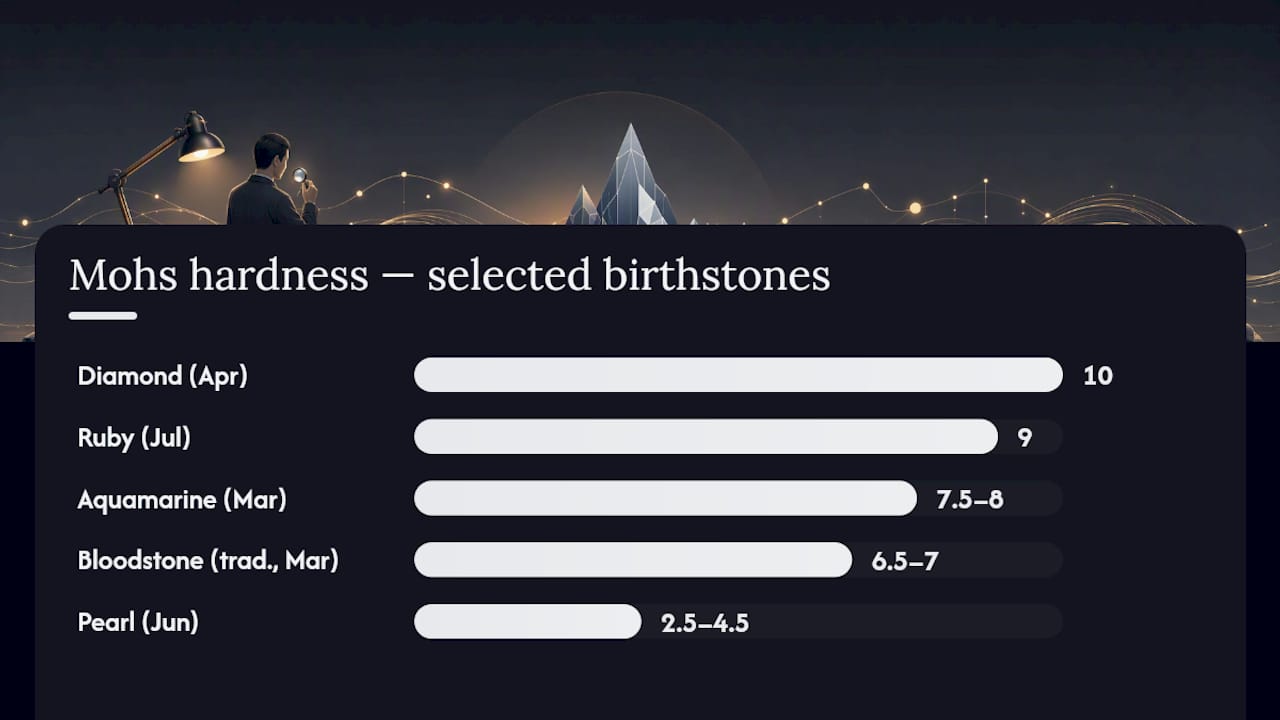
Each entry below pairs the modern birthstone with its traditional counterpart where one exists, along with a quick note on how tough the stone is day to day. Durability is measured on the Mohs hardness scale, which runs from 1 (talc, soft enough to scratch with a fingernail) to 10 (diamond, the hardest natural material known).
January — Garnet. Deep red garnet symbolizes protection and friendship. It sits around 6.5 to 7.5 on the Mohs scale, tough enough for a ring worn daily, though it can chip on a sharp edge.
February — Amethyst. This purple quartz has long stood for clarity and calm. At 7 on the Mohs scale, amethyst jewelry holds up well in rings and earrings alike.
March — Aquamarine, with Bloodstone as the traditional pick. Aquamarine’s pale blue evokes the sea and is prized for calm and clarity of mind; bloodstone, a dark green jasper flecked with red, carries older associations with courage. Aquamarine rates 7.5 to 8 on Mohs, notably harder than bloodstone’s 6.5 to 7, so it’s the steadier daily-wear choice.
April — Diamond. Diamond means everlasting love and tops the hardness scale at a perfect 10. Nothing scratches it under normal wear, which is why it’s the default stone for engagement rings meant to be worn every day for decades.
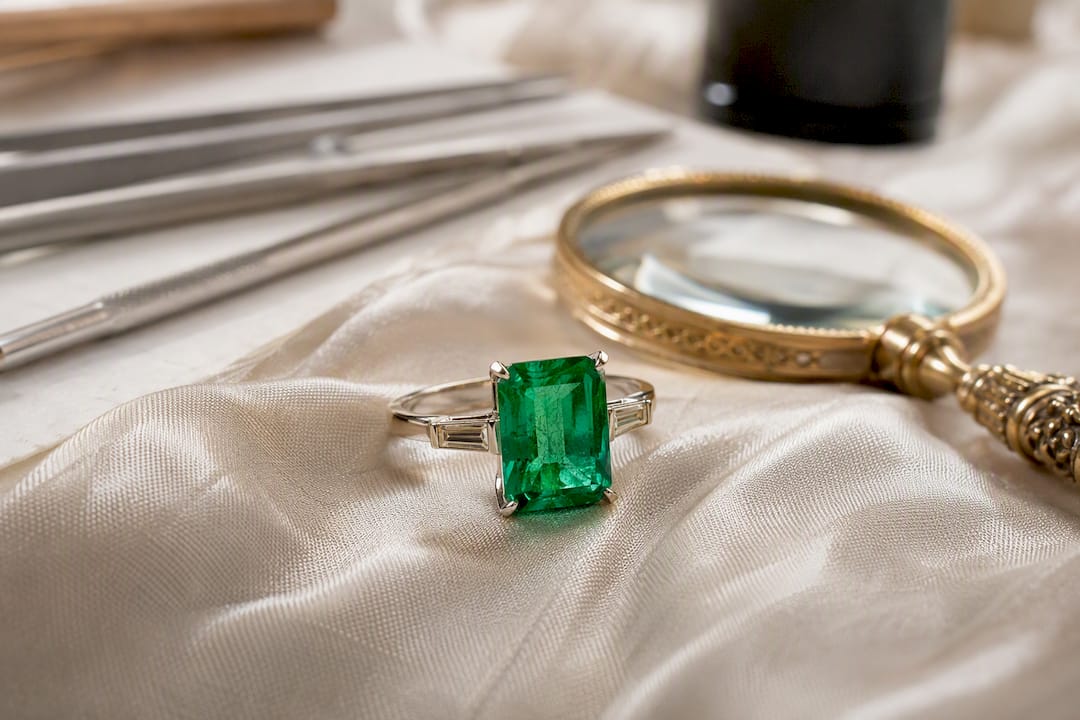
May — Emerald. Green emerald represents rebirth and love. It’s a 7.5 to 8 on Mohs, but natural inclusions (“jardin”) make it more prone to chipping than its hardness number suggests, so a protective setting matters more than usual. Browse the May birthstone collection for ring styles built around this.
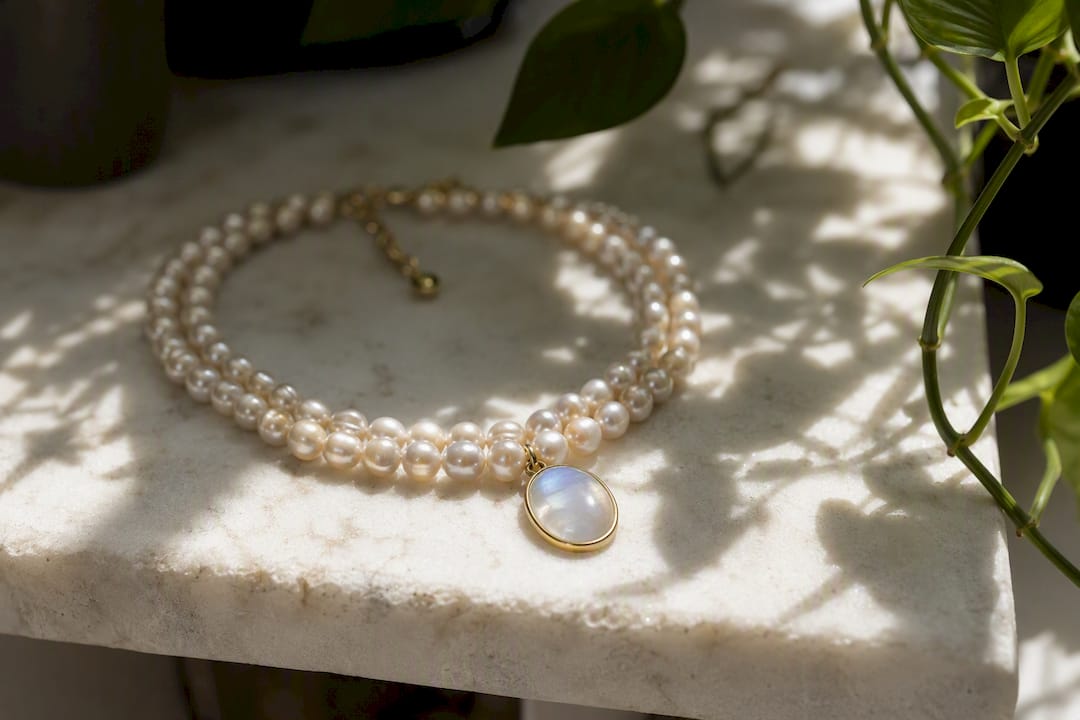
June — Pearl, Alexandrite, or Moonstone. Pearl stands for purity, alexandrite for balance (it shifts color under different light), and moonstone for intuition. Pearl is the softest common birthstone at 2.5 to 4.5 on Mohs, per Geology, so pearl jewelry belongs in earrings or pendants rather than everyday rings.
July — Ruby. Ruby signals passion and vitality. At 9 on Mohs, it’s the second hardest natural gem after diamond and one of the best choices for a ring worn without a second thought.
August — Peridot, Spinel, or Sardonyx. Peridot’s olive green ties to strength; spinel, added to the modern list more recently, comes in nearly every color; sardonyx is a banded traditional stone linked to courage. Peridot sits at 6.5 to 7, while spinel runs harder at 8, making spinel the better bet for a ring.
September — Sapphire. Sapphire represents wisdom and loyalty and is known for its excellent durability similar to ruby. Sapphire jewelry is a common substitute for diamond in engagement rings for exactly this reason.
October — Opal or Tourmaline. Opal’s flashes of color stand for hope; tourmaline comes in nearly every hue and symbolizes creativity. Opal is soft and sensitive to knocks and temperature swings at 5.5 to 6.5, while tourmaline’s 7 to 7.5 makes it far more forgiving for regular wear.
November — Topaz or Citrine. Golden topaz and citrine both suggest warmth and friendship. Topaz rates 8 on Mohs; citrine, a quartz variety, comes in at 7. Both handle daily wear reasonably well.
December — Turquoise, Zircon, or Tanzanite. Turquoise carries centuries of protective symbolism, zircon offers brilliant sparkle at a lower price than diamond, and tanzanite (only discovered in 1967) brings a violet blue found nowhere else. Turquoise is soft at 5 to 6 and porous, so it needs a protective setting, while zircon at 6 to 7.5 and tanzanite at 6 to 7 need a bit more care than harder stones but still work well in low-impact jewelry.
Why Do Modern and Traditional Birthstone Lists Differ?
The modern birthstone list traces back to 1912, when the National Association of Jewelers, now known as Jewelers of America, published a standardized chart to settle the inconsistent, often regional lists jewelers had been using for decades. That single decision is why most calendars today agree on one primary stone per month.
The list hasn’t stayed frozen since then. Updates in 1952, 2002, and 2016 added stones like alexandrite, tanzanite, and spinel, largely because those gems became more available to cut and set, and because jewelers wanted options that gave shoppers more choice at different price points. Tanzanite’s 2002 addition to December is a good example: it wasn’t even discovered until 1967, so it couldn’t have been on anyone’s traditional list.
Traditional lists, by contrast, reflect older folklore and regional custom, and they sometimes favor opaque, ornamental stones like turquoise or bloodstone over the more facetable gems that dominate the modern chart.
- Pick the modern stone if you want consistent availability, more cutting styles, and generally better durability for everyday jewelry.
- Pick the traditional stone if you want a less common look or a connection to older folklore.
Pro Tip: If you’re buying a gift and unsure which list to use, the modern stone is the safer default. It’s what most people expect when they hear “birthstone,” and it’s usually easier to source in a range of cuts and price points.
How to Choose and Care for Birthstone Jewelry
Matching a stone to how you’ll wear it matters more than most gift buyers realize. A soft stone in a ring that gets knocked against countertops all day won’t last the way the same stone would in a pair of earrings.
- Match hardness to use. Stones rated 8 to 10 on Mohs, like diamond, sapphire, and ruby, tolerate daily-wear rings well. Stones under 7, including pearl, opal, and turquoise, do better in necklaces, earrings, or occasional-wear rings where they’re less exposed to impact.
- Ask about treatment and origin. Many colored gemstones are heat treated or clarity enhanced, which is standard practice and not a red flag, but you should know before you buy. Lab-grown options exist for several birthstones now, including diamond, and they carry the same hardness and durability as their mined counterparts.
- Check the return and warranty terms. A birthstone jewelry buying guide is worth a quick read before you commit, especially for a first-time purchase.
- Clean gently and store separately. Warm water and a soft brush handle most stones. Skip ultrasonic cleaners on pearls and opals, since both can be damaged by vibration and heat, and store soft stones apart from harder ones so they don’t get scratched in a jewelry box.
A note from Andrew
Superjeweler has spent years building out birthstone collections across every month, from emerald rings to pearl necklaces, with customization options and worldwide shipping backing each purchase. If you’re shopping for a specific month, it’s worth browsing the product pages directly. Seeing a stone’s actual color range and cut options tells you more than any chart can.
Shop Birthstone Jewelry by Month at Superjeweler
Superjeweler organizes its gemstone selection by birthstone month, so you’re not stuck guessing which pieces actually match the person you’re shopping for.

If you already know the month, jump straight to the May birthstone category for emerald pieces or the pearl jewelry collection for June. Not sure yet, or shopping for something bigger, like an anniversary or an engagement? The gemstone rings collection covers birthstone options across every month in one place, and every piece ships with Superjeweler’s standard warranty coverage. Start browsing by month, and check the durability notes above before you pick a setting.
Sources
Recommended
- How to Choose Birthstone Gifts: A Style-Smart Guide
- How to Pick Birthstone Gifts: A Practical Buyer’s Guide
- Advantages of Birthstone Jewelry: Meaning, Luck & Style
