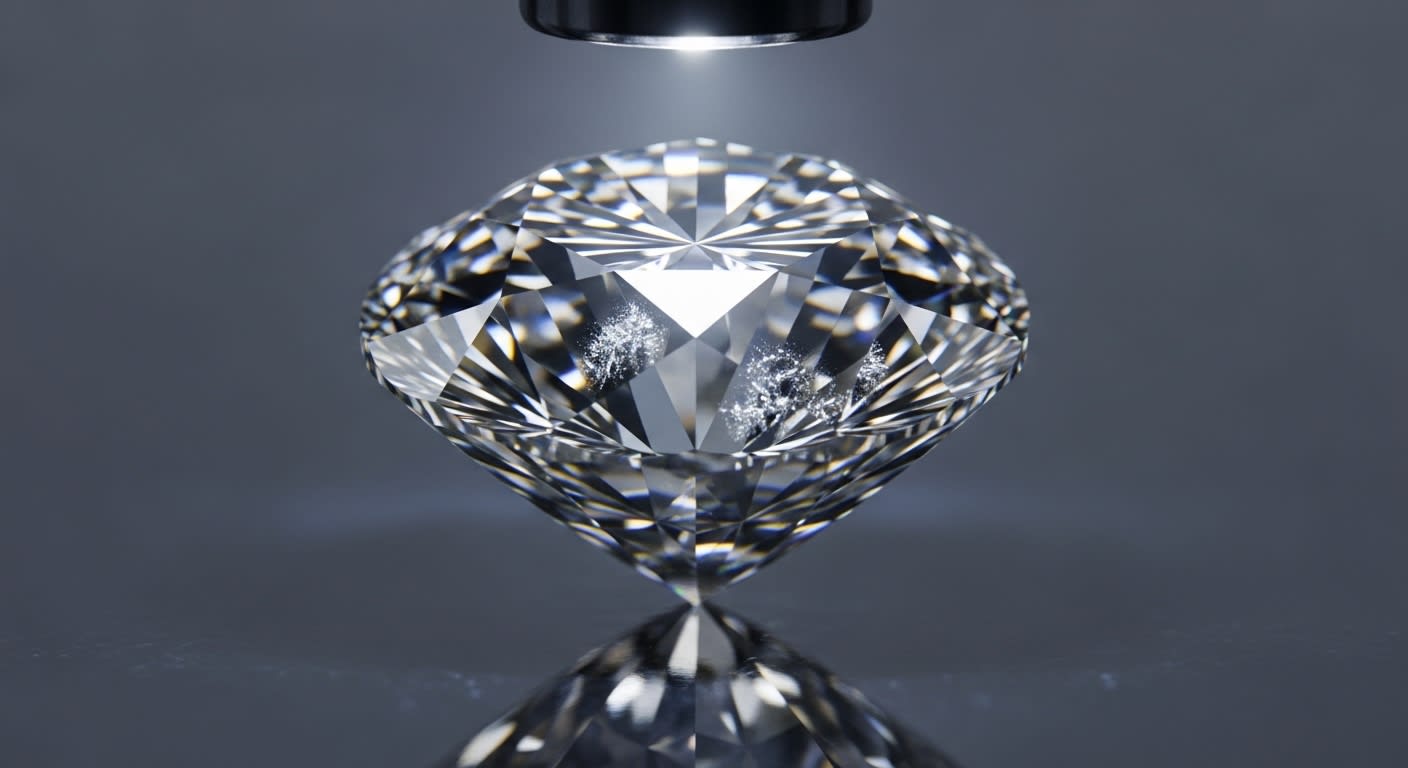
Shopping for an engagement ring can leave couples feeling torn between sparkle and budget. Understanding diamond clarity matters because even tiny imperfections can impact both appearance and value. With clarity grading scales now standardized across the United States, buyers have access to reliable information that helps them avoid common myths and confidently choose a ring that fits their needs. Discover how clarity influences price, beauty, and whether inclusions really deserve their reputation.
Table of Contents
- Diamond Clarity Defined And Common Myths
- Diamond Grading Scales And What They Mean
- Types Of Inclusions And Blemishes
- How Clarity Influences Diamond Value
- Choosing The Right Clarity For Your Budget
Key Takeaways
| Point | Details |
|---|---|
| Understanding Diamond Clarity | Clarity is crucial for assessing a diamond’s quality, with the scale ranging from Flawless (FL) to Included (I1/I2/I3). Each grade reflects the presence of inclusions and blemishes that affect appearance and value. |
| Myths About Inclusions | Not all inclusions negatively impact a diamond; many are microscopic and virtually undetectable. Professional assessments are essential to gauge the true effect on value and appearance. |
| Investment Considerations | Higher clarity grades typically command premium prices, but diamonds with slight inclusions can offer stunning looks at lower costs. Prioritize eye-clean options when selecting a diamond. |
| Practical Shopping Tips | Always request a clarity grading report and inspect the stone under magnification to fully understand its unique characteristics before making a purchase. |
Diamond Clarity Defined and Common Myths
Diamond clarity represents a crucial factor in assessing a diamond’s overall quality and value. At its core, diamond clarity refers to the presence and visibility of internal characteristics called inclusions and surface blemishes that impact a stone’s appearance and structural integrity. Diamond clarity grading involves examining these features under 10x magnification to determine a precise assessment.
The diamond clarity scale ranges across several key categories:
- Flawless (FL): No inclusions or blemishes visible under magnification
- Internally Flawless (IF): No internal inclusions, minor surface blemishes
- Very Very Slightly Included (VVS1/VVS2): Microscopic inclusions difficult to detect
- Very Slightly Included (VS1/VS2): Minor inclusions visible under magnification
- Slightly Included (SI1/SI2): Noticeable inclusions that may be visible to naked eye
- Included (I1/I2/I3): Significant inclusions affecting transparency and brilliance
Contrary to popular misconceptions, not all inclusions are detrimental. Experts assess diamond clarity by considering several critical factors:
- Size of the inclusion
- Number of inclusions present
- Position of inclusions within the diamond
- Impact on light performance and overall transparency
Inclusions are like a diamond’s unique fingerprint – they help identify individual stones and can distinguish natural diamonds from synthetic alternatives.
One prevalent myth suggests that any inclusion automatically reduces a diamond’s value. In reality, many inclusions are microscopic and do not significantly impact a stone’s appearance or structural integrity. Professional gemologists can determine whether an inclusion compromises the diamond’s overall quality.

Pro tip: When shopping for diamonds, request a clarity grading report and examine the stone under magnification to understand its unique characteristics.
Diamond Grading Scales and What They Mean
Diamond grading scales represent a standardized system for evaluating a diamond’s quality and value. Diamond grading plots serve as intricate maps that document the unique internal characteristics of each stone, functioning like a precise fingerprint that helps gemologists assess its clarity and overall worth.
The universal Gemological Institute of America (GIA) clarity scale provides a comprehensive framework for diamond evaluation, which has been the industry standard since the 1950s. The scale encompasses six primary categories:
- Flawless (FL): Absolutely no internal or external imperfections
- Internally Flawless (IF): No internal flaws, minimal surface blemishes
- Very Very Slightly Included (VVS1/VVS2): Microscopic inclusions extremely difficult to detect
- Very Slightly Included (VS1/VS2): Minor inclusions visible under magnification
- Slightly Included (SI1/SI2): Noticeable inclusions potentially visible to naked eye
- Included (I1/I2/I3): Significant inclusions affecting diamond transparency
Professional gemologists use specialized magnification tools to meticulously examine each diamond, analyzing factors such as:
- Inclusion size and quantity
- Precise location within the stone
- Potential impact on light performance
- Overall visual appearance
Each diamond’s grading plot represents a unique map of its internal landscape, providing critical insights into its individual characteristics and potential value.
Understanding the nuanced differences between clarity grades helps consumers make informed decisions. While higher clarity grades typically command premium prices, expert diamond assessments reveal that many inclusions are microscopic and do not significantly compromise a diamond’s overall beauty or structural integrity.
Pro tip: Request a detailed grading report from a reputable gemological laboratory to fully understand a diamond’s unique clarity characteristics and potential value.
Types of Inclusions and Blemishes
Diamonds are not perfect. Diamond inclusions and blemishes represent the unique internal and external characteristics that make each stone distinct. These microscopic features can significantly impact a diamond’s overall clarity, appearance, and value.
Internal inclusions are categorized into several primary types:
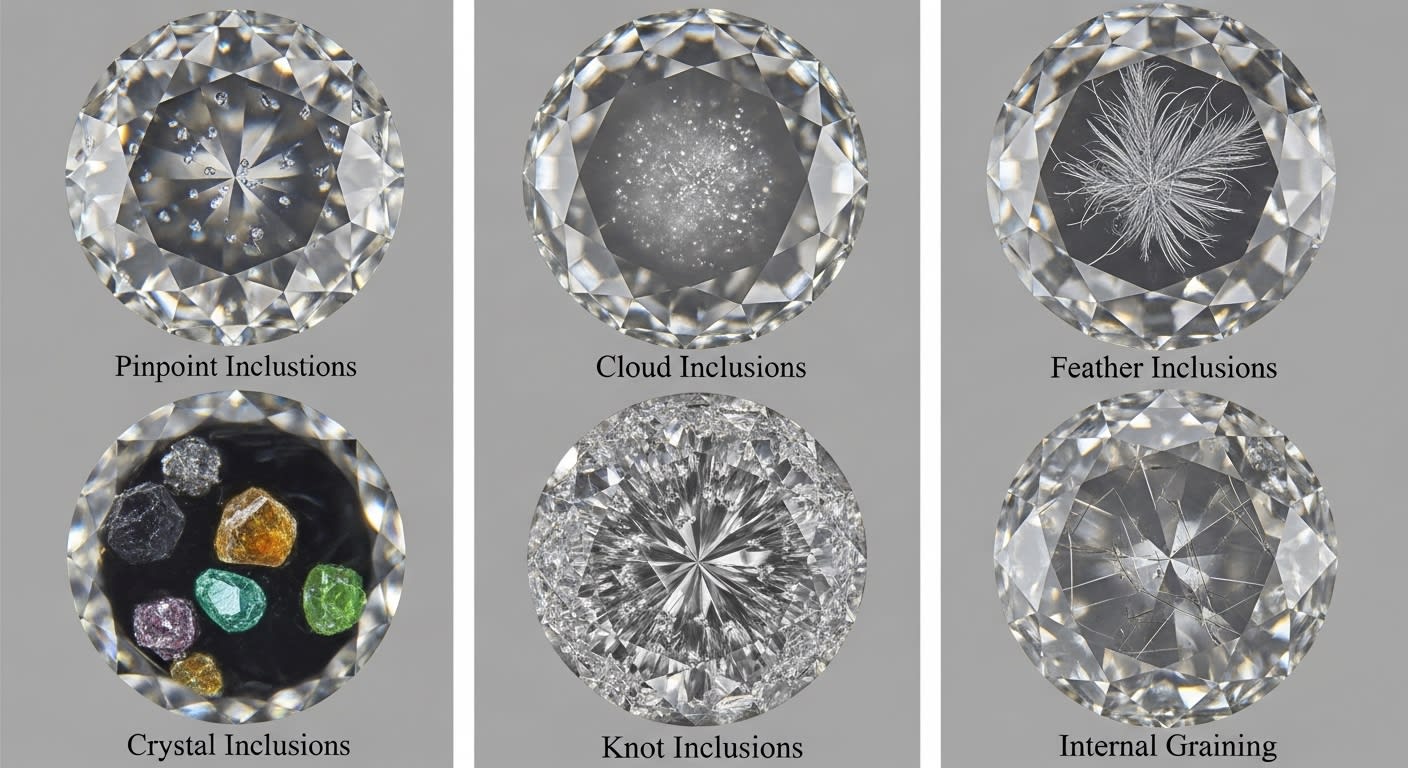
- Pinpoint Inclusions: Tiny crystal-like spots within the diamond
- Cloud Inclusions: Clustered pinpoint inclusions that create a hazy appearance
- Feather Inclusions: Microscopic cracks that resemble delicate feather-like structures
- Crystal Inclusions: Embedded mineral crystals of different colors or compositions
- Knot Inclusions: Crystalline structures that extend to the diamond’s surface
- Internal Graining: Irregular growth patterns visible within the stone
Surface blemishes, while different from internal inclusions, also play a crucial role in diamond evaluation. Gemological assessments typically consider surface characteristics such as:
- Polish marks
- Scratches
- Surface nicks
- Chips
- Abrasions
- Natural surface irregularities
Not all inclusions are detrimental – some can actually help gemologists identify a diamond’s unique origin and authenticity.
The impact of inclusions varies dramatically. Some microscopic imperfections are purely cosmetic and have minimal effect on a diamond’s structural integrity, while others near the surface can potentially compromise the stone’s durability. Professional gemologists carefully evaluate each inclusion’s size, location, and potential influence on the diamond’s overall performance.
Pro tip: Request a detailed diamond plot that maps out all inclusions before making a purchase, allowing you to understand exactly what makes your diamond unique.
Explore how different inclusion types may impact your diamond’s durability and beauty:
| Inclusion Type | Durability Impact | Effect on Sparkle |
|---|---|---|
| Feather | Possible weakness site | May reduce brilliance if large |
| Crystal | Rarely affects strength | May cause light spots or color |
| Cloud | No structural risk | Can make diamond look hazy |
| Knot | Weakness on surface | Can disrupt light reflection |
| Pinpoint | No effect | Negligible visual impact |
How Clarity Influences Diamond Value
Diamond clarity’s impact represents a critical factor in determining a diamond’s overall market value and desirability. The presence, size, and location of inclusions directly influence a stone’s price, with rarer, clearer diamonds commanding significantly higher prices in the marketplace.
The relationship between clarity and value can be understood through several key considerations:
- Rarity Factor: Flawless and internally flawless diamonds are exceptionally rare
- Visual Appeal: Fewer inclusions mean greater transparency and light performance
- Price Stratification: Clarity grades can cause dramatic price variations
- Investment Potential: Higher clarity stones often retain better long-term value
Professional gemologists assess clarity using precise criteria that evaluate:
- Number of inclusions
- Size of individual inclusions
- Location within the diamond
- Potential impact on structural integrity
- Visibility under 10x magnification
Not all inclusions are equal – some microscopic imperfections have minimal impact on a diamond’s overall beauty and value.
Diamond market assessments reveal that while lower clarity diamonds are less expensive, strategic selection can yield excellent value. An eye-clean diamond with slight inclusions invisible to the naked eye can offer a beautiful appearance at a more accessible price point.
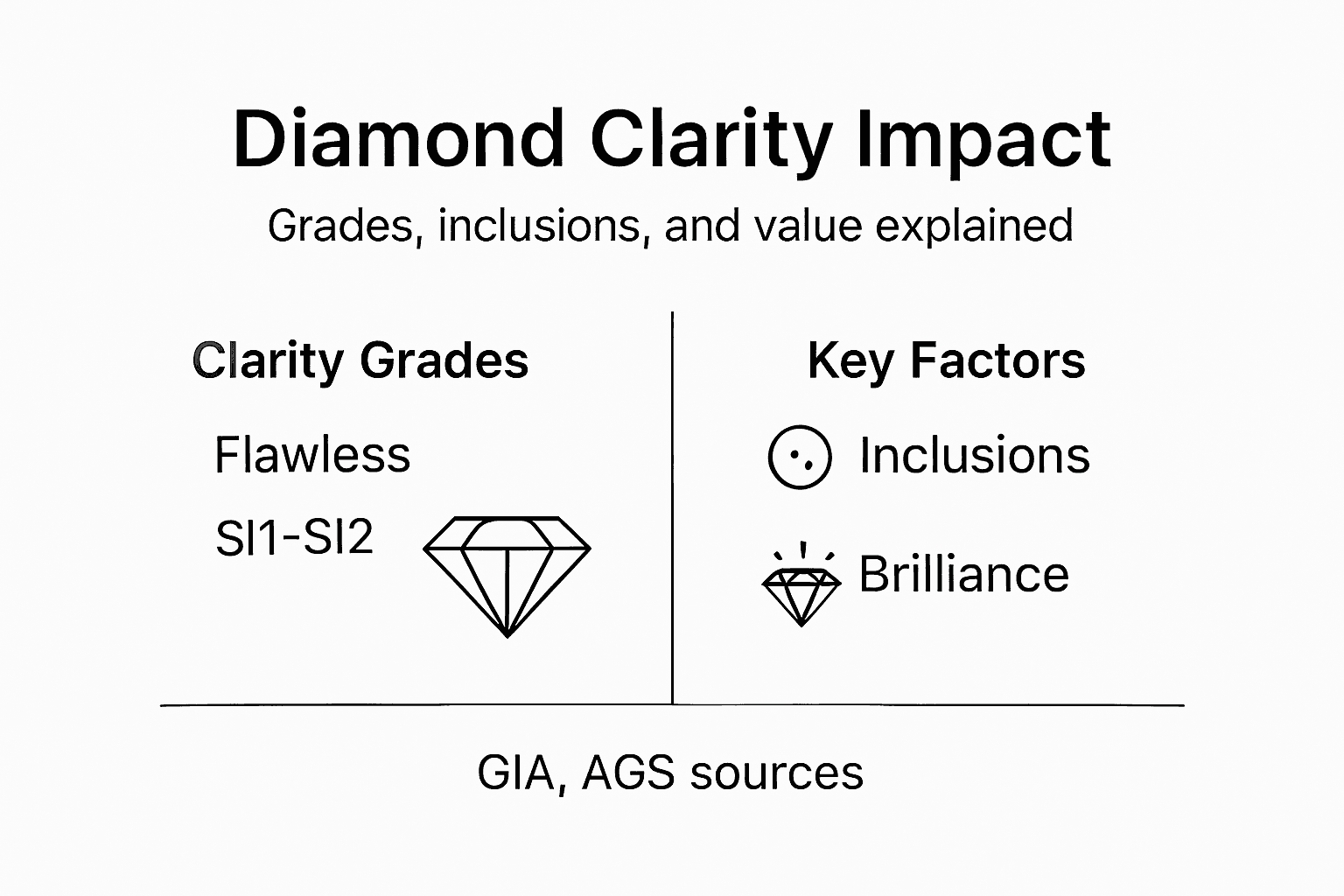
Pro tip: Consider prioritizing clarity grades between VS2 and SI1, where diamonds appear flawless to the naked eye but come at a more affordable price point.
Here’s a concise guide to understanding how each diamond clarity grade typically impacts budget and appearance:
| Clarity Grade | Typical Appearance | Value Implication |
|---|---|---|
| FL/IF | Flawless, no visible marks | Highest price premium |
| VVS1/VVS2 | Virtually flawless, extremely clean | Very high cost |
| VS1/VS2 | Eye-clean in most cases | High value-for-quality |
| SI1/SI2 | Often eye-clean, minor marks | Best balance of price and looks |
| I1/I2/I3 | Visible inclusions, less sparkle | Most affordable, least rare |
Choosing the Right Clarity for Your Budget
SI1 clarity diamonds represent an excellent sweet spot for budget-conscious buyers seeking beautiful engagement rings. Understanding how to strategically select diamond clarity can help you maximize value without compromising visual appeal or breaking the bank.
When navigating diamond clarity options, consider these key budget-friendly strategies:
- Prioritize Eye-Clean Appearance: Focus on diamonds that look flawless to the naked eye
- Understand Visibility Thresholds: Learn how inclusions impact overall diamond beauty
- Consider Diamond Size: Larger stones require higher clarity grades to maintain appearance
- Explore Alternative Clarity Grades: SI1 and SI2 offer significant cost savings
Professional gemologists recommend examining diamonds through several critical lenses:
- Location of inclusions within the stone
- Size and number of imperfections
- Impact on light performance and transparency
- Potential structural implications
Not all inclusions are created equal – some microscopic imperfections are virtually invisible and do not compromise a diamond’s inherent beauty.
Diamond selection strategies reveal that carefully chosen SI2 clarity diamonds can offer remarkable value. The key is to personally inspect each stone or rely on trusted certification to ensure the inclusions do not detract from the diamond’s overall aesthetic.
Pro tip: Request high-resolution images or in-person viewing to confirm a diamond appears eye-clean before making your final purchase decision.
Discover the Perfect Diamond Clarity for Your Dream Ring
Choosing the right diamond clarity can feel overwhelming when you consider inclusions, grading scales, and the impact on your ring’s value. You want a beautiful engagement ring that looks flawless to the naked eye without stretching your budget unnecessarily. This article clearly explains how clarity grades like SI1 and VS2 offer eye-clean beauty and excellent value. Now, imagine exploring a vast collection of hand-selected diamonds specially curated to match these clarity standards.

At SuperJeweler.com, we understand your desire to balance sparkling brilliance with smart spending. Our user-friendly platform features customizable options across shapes and styles to fit your clarity preferences and budget. Discover our wide range of engagement rings designed to highlight each diamond’s unique characteristics. Shop now to enjoy affordable pricing, free worldwide shipping, and warranty protection so you can confidently select a diamond that shines with both beauty and value.
Frequently Asked Questions
How does diamond clarity affect the overall value of a diamond ring?
Diamond clarity significantly impacts the value of a diamond ring as it determines the presence and visibility of inclusions and blemishes. Higher clarity grades, which indicate fewer visible imperfections, typically command higher prices due to their rarity and visual appeal.
What are the different clarity grades for diamonds?
Diamonds are graded on a scale that includes classifications such as Flawless (FL), Internally Flawless (IF), Very Very Slightly Included (VVS1/VVS2), Very Slightly Included (VS1/VS2), Slightly Included (SI1/SI2), and Included (I1/I2/I3). Each grade reflects the clarity and presence of inclusions or blemishes.
Can inclusions be beneficial for a diamond’s identification?
Yes, inclusions can be beneficial as they serve as a unique fingerprint for diamonds, helping gemologists identify individual stones. Certain inclusions also can distinguish natural diamonds from synthetic alternatives.
What is an eye-clean diamond, and why is it important?
An eye-clean diamond is one that appears flawless to the naked eye, meaning any inclusions are not visible without magnification. This is important for purchasers who want a visually appealing diamond while possibly saving costs, as eye-clean diamonds typically offer a better price-to-quality ratio.
Recommended
- Why Diamond Quality Matters for Engagement Rings
- What Is a Certified Diamond and Why It Matters
- Diamond Cut: The Secret to Sparkling Love
- 5 Carat Diamond Ring | Very Low Prices On 5 Carat Diamond Rings On SuperJeweler. Buy Direct And Save
- Gold as a safe-haven asset class
