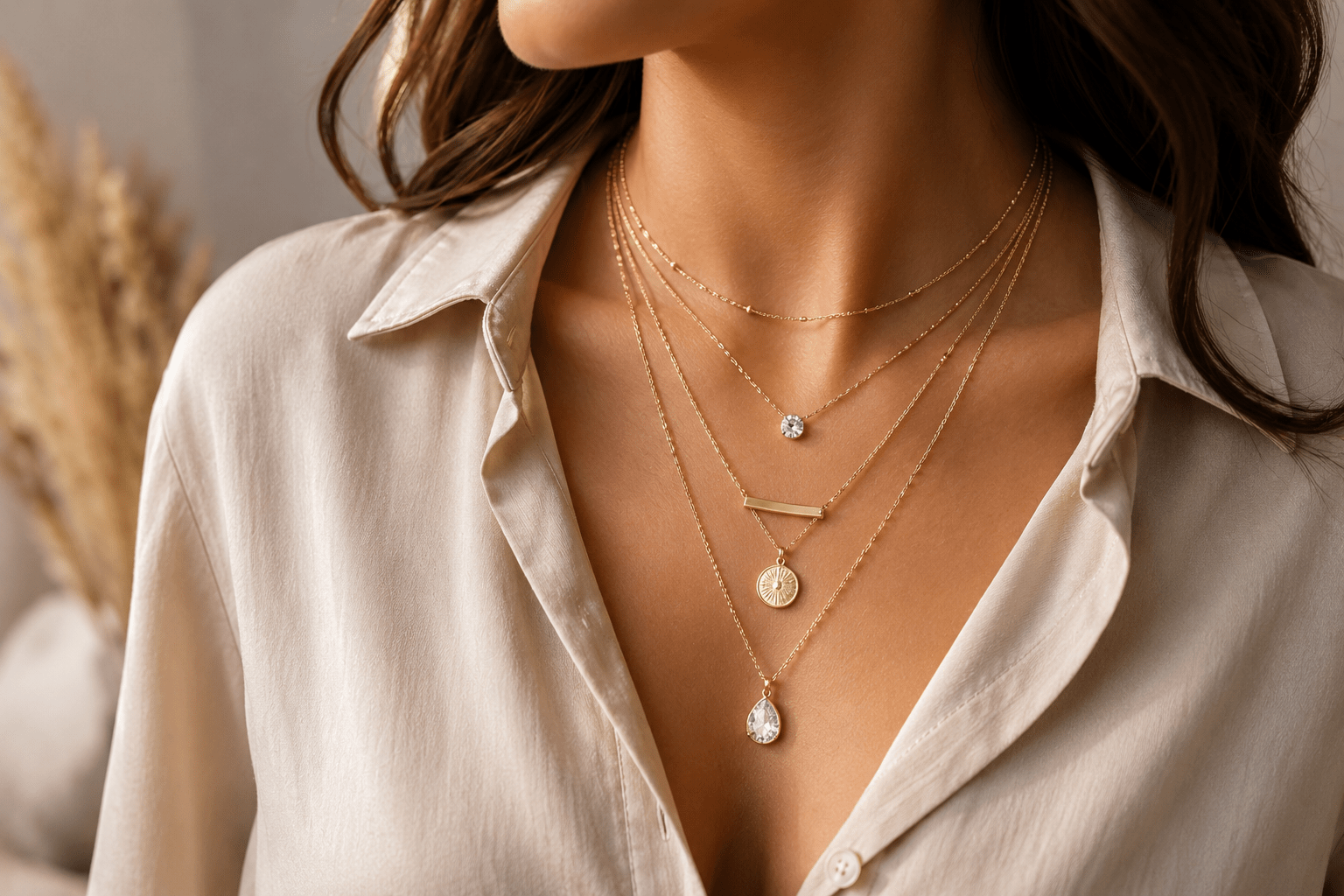
Start with a 16-inch base, add an 18-inch focal piece, and finish with a 22-inch anchor. That three-chain recipe, with roughly 2 inches of space between each layer, covers most everyday stacks without tangling. The two-inch spacing rule is the single most violated principle in necklace layering, and fixing it alone transforms a tangled mess into something that looks deliberate.
Three quick rules before you put anything on:
- Vary the weight. Heavier chains sit lower naturally; lighter ones float higher. That weight difference keeps each chain in its own lane.
- Mix textures. A cable chain next to a paperclip chain next to a rope chain gives the eye something to move across.
- Keep the heaviest piece lowest. Physics does the styling for you.
Pro Tip: Superjeweler carries gold chains in multiple weights and lengths, so you can build a full stack without hunting across multiple stores.
Key Takeaways
A clean layered necklace stack starts with a focal piece at 17–19 inches, adds a shorter base and a longer anchor, and keeps at least 2 inches of spacing between every layer.
| Point | Details |
|---|---|
| Use the 16/18/22 recipe | This three-chain combination gives each layer a clear visual job with consistent spacing. |
| Keep 2–4 inches between layers | Two inches is the minimum; 3–4 inches reads cleaner and reduces tangling. |
| Heaviest chain lowest | Weight difference keeps chains in their own lanes and prevents rotation-induced knots. |
| 70/30 metal ratio | One dominant metal with a 30% accent reads intentional; equal splits read accidental. |
| Use a connector clasp | A layering clasp holds multiple chains at fixed distances and eliminates most daily tangling. |
| Superjeweler for the full stack | Gold chains, focal pendants, and personalized pieces available with free shipping. |
Table of Contents
- What do standard necklace lengths actually mean?
- How do you build a layered necklace stack step by step?
- How do you mix metals, textures, and pendant sizes without it looking messy?
- How do you stop necklaces from tangling?
- How much spacing should you leave between layered necklaces?
- Which necklace stacks work best with different outfits?
- A stylist’s honest take on layering necklaces
- Build your layered stack with Superjeweler
- Sources
What do standard necklace lengths actually mean?
Before you can layer necklaces confidently, you need the vocabulary. Each length name corresponds to a specific place on the body, and that placement changes how the stack reads.
| Length Name | Typical Range | Where It Sits | Best Role in a Stack |
|---|---|---|---|
| Choker | 14–16 in | At or just above the collarbone | Base layer, closest to the face |
| Princess | 17–19 in | Just below the collarbone | Focal mid-layer with pendant |
| Matinee | 20–24 in | Between collarbone and bust | Mid-to-anchor layer |
| Opera | 26–30 in | At or below the bust | Long anchor or statement layer |
These standard length names are the core technical vocabulary for building a stack. A choker and a princess chain together give you roughly 2–3 inches of separation. A princess and a matinee give you 3–5 inches, which is often the cleaner visual gap.
Body proportions shift how lengths read. On a longer neck or a taller frame, add about 2 inches to each length. On a petite frame, the standard lengths tend to sit exactly as labeled.
Pro Tip: Measure your neck with a soft tape measure, then add 2–4 inches for a comfortable fit. A 1-inch extender chain lets you adjust any necklace to hit the right spot without buying a new piece.
How do you build a layered necklace stack step by step?
Building a stack is easier when you treat it as three distinct jobs: base, focal, anchor.
- Choose your focal piece first. This is usually the 17–19 inch princess-length necklace with a pendant. It carries the most visual weight and personality, so start here and build outward.
- Add the base layer. A 14–16 inch choker or delicate chain sits closest to the neck. Keep it simple: a thin cable or box chain lets the focal piece do the talking.
- Finish with the anchor. A 20–24 inch matinee or longer chain grounds the stack. This is where you want the most texture or the heaviest link style.
- Test before you commit. Put everything on, lean forward in front of a mirror, and shake your shoulders gently. If chains cross, swap the order or adjust lengths.
Three ready-to-wear stack recipes
- Everyday 2-piece: 16-inch delicate gold chain + 18-inch pendant necklace. Clean, low-maintenance, works with almost any neckline.
- Versatile 3-piece: 16 + 18 + 22 inches. The 16/18/22 combination is the most reliable everyday stack because each chain has a clear visual job and the spacing stays consistent.
- Evening 4-piece: 14 + 16 + 20 + 26 inches. Use a choker as the base, a pendant at 16, a textured chain at 20, and a long opera-length drop at 26. Vary the metal finish across at least two of the four.
The 16/18/24 and 16/18/22 combinations are consistently recommended because they create visible steps. Each chain occupies its own zone rather than competing for the same space.
Quick assembly checklist:
- Lay all chains flat on a surface before putting them on
- Clasp each one separately, starting with the shortest
- Check spacing in a mirror at eye level, then again leaning forward
- If two chains touch, swap to a longer or shorter option
How do you mix metals, textures, and pendant sizes without it looking messy?
The short answer: give one metal the majority of the real estate. A 70% dominant / 30% accent metal ratio keeps mixed-metal stacks from reading as an accident. Three gold chains and one silver pendant reads as intentional. Two gold and two silver reads as indecision.
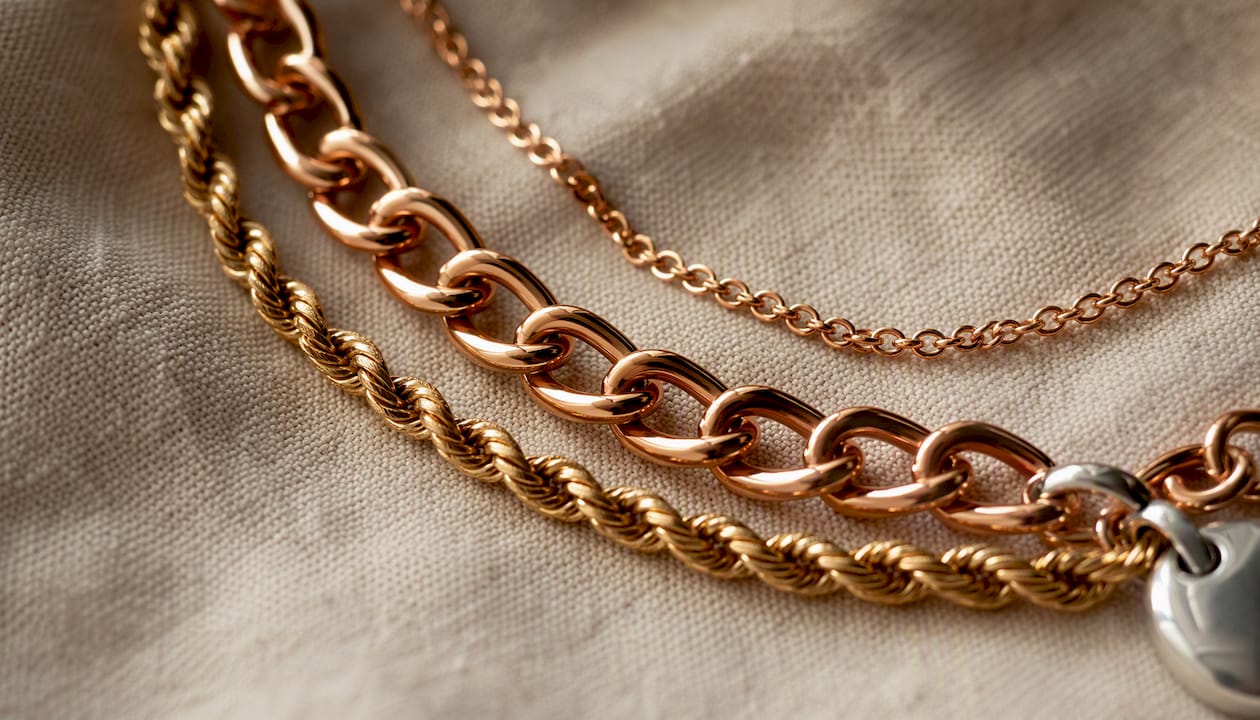
Chain texture is where the real contrast comes from. A smooth cable chain next to a chunky paperclip chain next to a twisted rope chain gives the stack dimension without requiring different metals at all. The eye reads texture as variety, so you can keep everything in yellow gold and still build a visually interesting stack.
Pendant scale follows one clear rule: one substantial pendant or two small complementary ones. A single strong pendant creates the hierarchy that lets mixed-metal and mixed-texture chains read as a collected composition rather than a pile. Two pendants of equal size compete. Two pendants where one is clearly larger than the other work.
Practical guidelines:
- Match pendant metal to the chain it hangs on, not necessarily to the other chains
- Reserve pendants for the 17–19 inch layer; the base and anchor chains usually read better bare
- When keeping all metals the same, vary the chain width instead (1mm base, 2mm mid, 3–4mm anchor)
Pro Tip: Personalized pendants, like initials or birthstone drops, work especially well as the focal mid-layer because they add meaning without adding visual noise.
How do you stop necklaces from tangling?
Tangling is a physics problem. Chains of similar weight rotate at different speeds and snag each other. The fix is structural, not just careful handling.
Tools that actually help:
- Layering connector clasps: One clasp holds multiple chains at a fixed distance from each other. This single tool eliminates most tangling for multi-chain stacks.
- Extender chains: Add 1–2 inches to any chain so you can hit the exact spacing you need without buying a new piece.
- Bar spacers: A small horizontal bar that threads through multiple chains and keeps them parallel.
- Pre-set layered necklaces: A single clasp holds two or three chains at preset lengths. Zero tangling by design, and a practical option when you want the layered look without the daily management.
- Lobster clasps over spring rings: For heavier chains, lobster clasps hold more securely and are easier to open with one hand.
When a tangle happens anyway, try laying the chain flat on a smooth surface and working the knot loose with two straight pins. A small amount of baby powder loosens tight knots by reducing friction. For a stubborn knot, soaking the chain in warm water for a few minutes before gently pulling the ends apart often works.
If a pendant keeps snagging, the bail or jump ring is usually the culprit. A jeweler can replace or tighten those connectors for roughly $25–$75, which protects the chain from long-term wear.
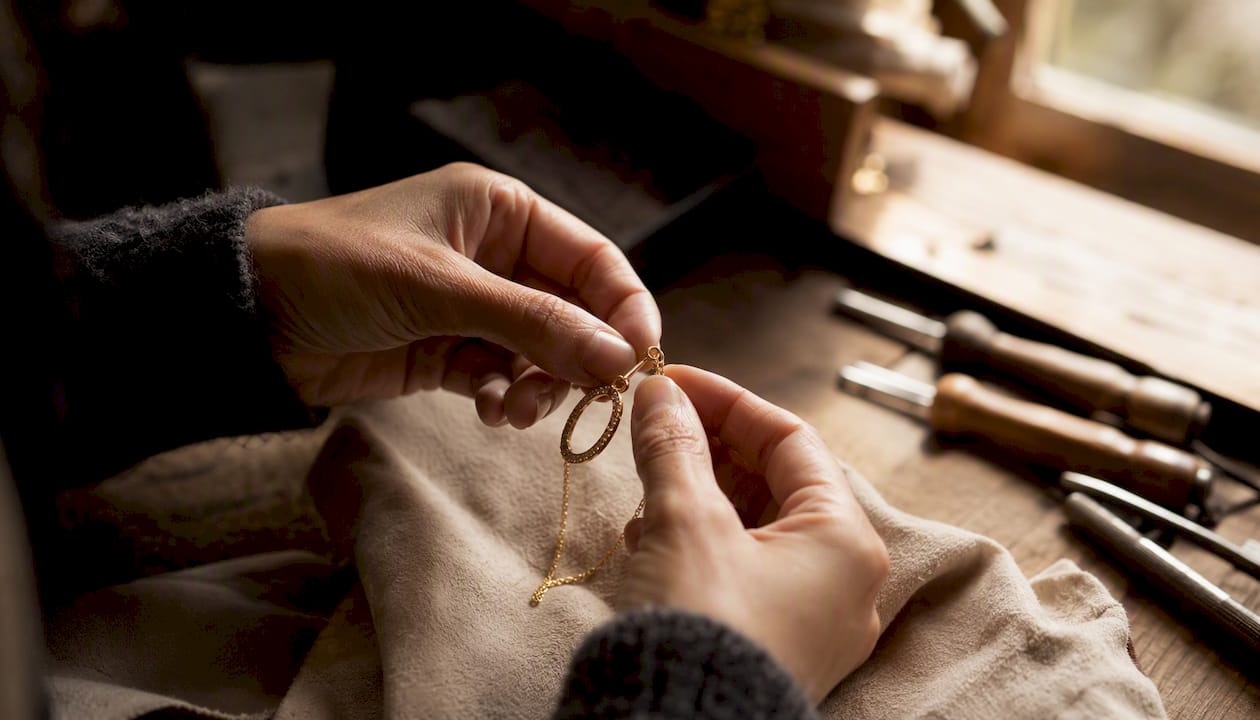
Pro Tip: Pair a heavier rope or curb chain at the bottom with a lighter pendant chain above it. The heavier chain acts as an anchor and reduces rotation-induced knots during movement.
How much spacing should you leave between layered necklaces?
Two inches is the floor, not the target. The two-inch rule prevents chains from overlapping, but 3–4 inches of separation often looks cleaner, especially for a 3- or 4-piece stack where the chains need room to move independently.
For daily wear, 2–3 necklaces hit the sweet spot between visual interest and practical wearability. Four or more layers work for statement looks but require more varied textures and weights to avoid looking cluttered.
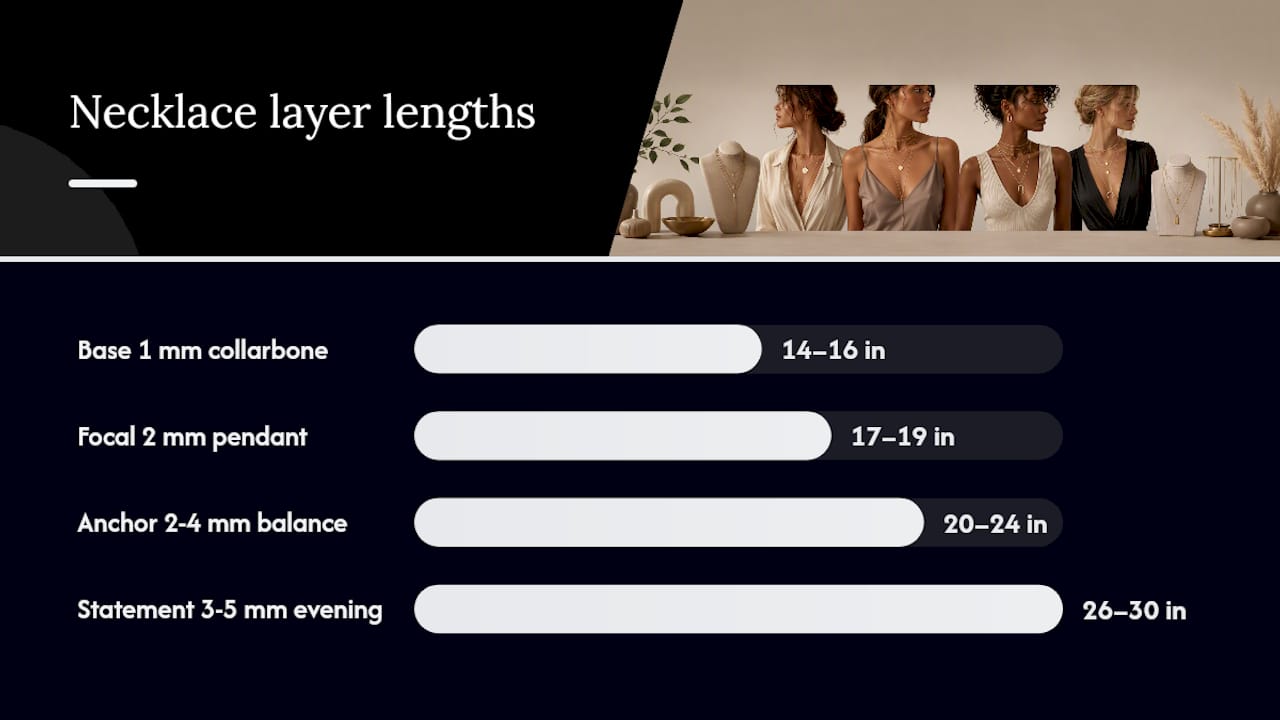
| Layer Position | Common Length | Suggested Chain Width | Notes |
|---|---|---|---|
| Base (shortest) | 14–16 in | 1 mm | Delicate, sits at collarbone |
| Focal (mid) | 17–19 in | 2 mm | Carries pendant or main detail |
| Anchor (long) | 20–24 in | 2–4 mm | Heavier, provides movement and balance |
| Statement (optional) | 26–30 in | 3–5 mm | Chunky or textured for evening stacks |
Pro Tip: If two chains you already own sit too close together, clip a 2-inch extender onto the shorter one before buying anything new. It costs a few dollars and solves the spacing problem immediately.
Which necklace stacks work best with different outfits?
The neckline of your top does most of the work. Match the stack to the opening, not the other way around.
- Crew neck or T-shirt: 16 + 18 inches. Both chains sit above the fabric. Keep it simple; the neckline does the framing.
- V-neck blouse: 16 + 20 + 26 inches. The V shape invites a longer drop, so let the 26-inch anchor follow the line of the neckline.
- Button-down (open collar): 18 + 22 inches. A mid-length pendant at 18 inches fills the open collar; a longer chain at 22 adds depth.
- Sweater or turtleneck: 20 + 26 inches only. Shorter chains disappear under the fabric. Go longer and chunkier so the stack reads above the knit.
- Off-shoulder or strapless: 14 + 18 inches. The bare neckline is the focal point; keep the stack short and close to the collarbone.
- Evening or formal wear: 14 + 16 + 20 + 26 inches. A full four-piece stack with a statement pendant at 16 and a textured anchor at 26 reads as intentional dressing.
Current 2026 trends run in two directions at once: chunky beaded statement chains for maximalist looks and ultra-delicate gold chains for minimalist ones. Both directions work in a layered stack as long as the pieces share at least one element (metal color, texture family, or pendant style).
For petite frames, keep the longest chain at or above 22 inches. For taller frames, a 26–30 inch opera-length anchor adds proportion without overwhelming. Pair your necklace stack with a finishing touch like a complementary scent to complete the overall look.
A stylist’s honest take on layering necklaces
Most people start with the wrong piece. They grab the chain they wear most often and try to build around it, which usually means the stack ends up anchored by a mid-weight 18-inch pendant that competes with everything else. Start with the focal piece instead: the one necklace that has the most personality, whether that’s a diamond pendant, an initial charm, or a multi-stone journey necklace. Build the base and anchor around it, not the other way around.
The movement test is the one step most people skip. Before you leave the house, walk a few steps and lean forward. If two chains cross, they will cross all day. Swap one length or add an extender and test again. Thirty seconds of adjustment saves hours of frustration.
Pro Tip: The best stacks are usually the ones with the fewest pieces. Two chains with strong contrast in texture and length almost always read better than four chains that are too similar.
Build your layered stack with Superjeweler
Superjeweler carries the full range of pieces a layered stack needs: delicate base chains, bold anchor links, and fashion necklaces that work as focal pendants right out of the box. The gold chain selection covers multiple widths and lengths, so you can match chain weight to layer position without compromise.

For readers who want a personalized focal piece, the personalized necklace collection includes initials, nameplates, and birthstone pendants that anchor a stack with something meaningful. Free shipping and a clear return policy mean you can order two lengths and keep the one that hits the right spot on your neckline. Browse the full necklace selection at Superjeweler and build your stack from the focal piece out.
Sources
- How To Layer Necklaces (2026 Guide) | TheCaratCut
- The Art of Layering Necklaces: How to Get It Right | TheGem Press
- Summer necklace trends 2026 | Who What Wear
- Layered Jewellery Is Back—Here’s How To Wear It in 2026 | Marie Claire UK
Recommended
- Necklace Layering Ideas for Effortless Everyday Style
- Diamond necklace styling guide: elevate every look
- How to Style Fashion Jewelry for Any Occasion
- Your Complete Necklace Style Checklist for Every Look
