Many shoppers assume a two-carat diamond automatically outshines a one-carat stone. In reality, a smaller diamond with excellent cut quality often delivers more brilliance than a larger diamond with poor proportions. Cut quality controls how light moves through a diamond, creating the sparkle that makes engagement rings captivating. This guide explains why cut matters most for diamond beauty and how to choose wisely when shopping for your perfect ring.
Table of Contents
- Understanding Diamond Cut: Definition And Basics
- How Diamond Cut Affects Light Performance And Appearance
- Diamond Cut Grading: Standards, Criteria, And Key Components
- Common Misconceptions About Diamond Cut
- Balancing Cut Quality With Carat Weight And Price
- Practical Tips For Consumers: Choosing The Right Cut
- Explore Sparkling Engagement Rings With Superb Cut Quality
Key takeaways
| Point | Details |
|---|---|
| Cut controls sparkle | Cut quality determines brilliance, fire, and scintillation more than any other factor. |
| Poor cuts waste light | Diamonds with incorrect proportions leak light through the bottom, reducing sparkle by over 30% regardless of clarity or color. |
| Grading guides decisions | Systems like GIA and IGI rate cuts from Excellent to Poor, helping buyers identify superior stones. |
| Balance cut and carat | Prioritizing cut over size maximizes visual impact and value within your budget. |
| Shape differs from cut | Diamond shape describes outline geometry while cut quality measures light performance. |
Understanding diamond cut: definition and basics
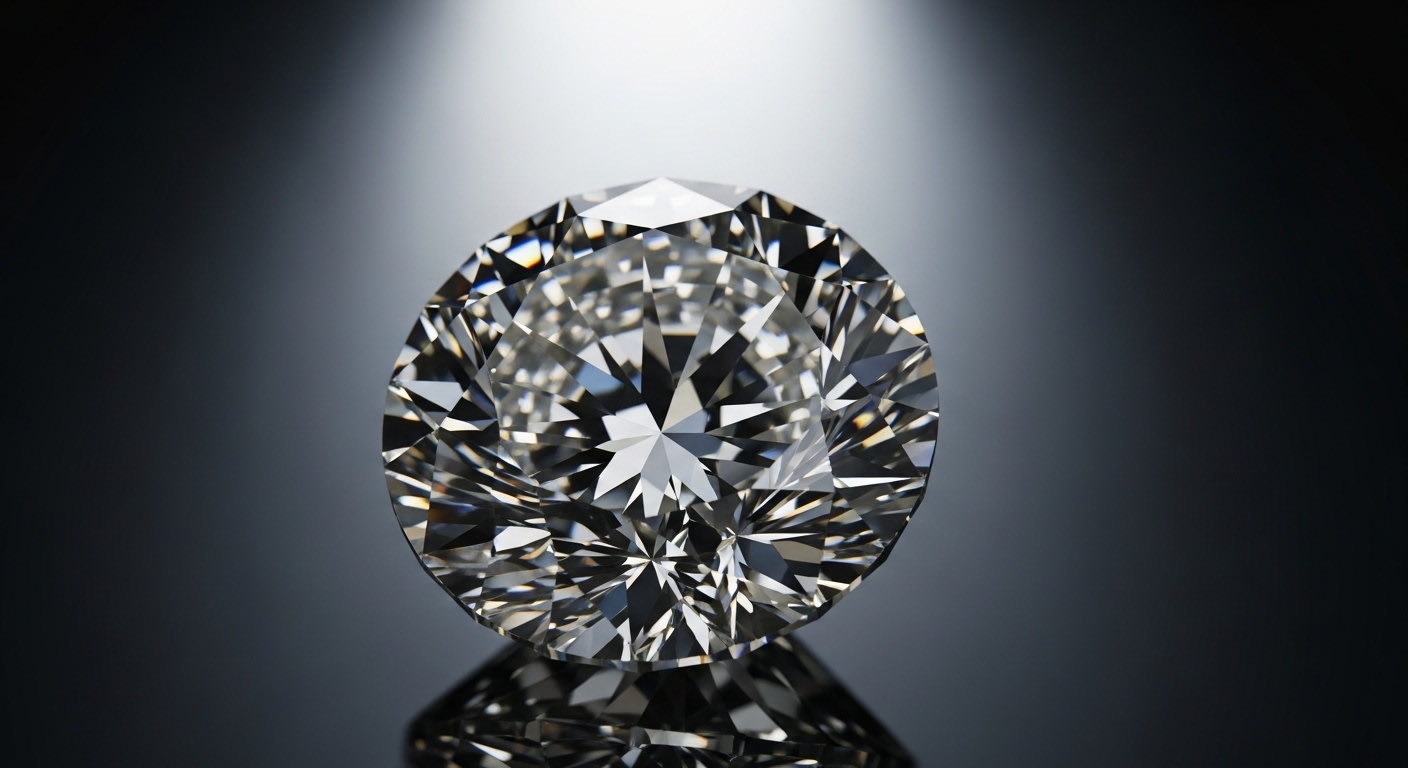
Diamond cut refers to the proportions, angles, and finish of a diamond’s facets, not its shape. While shape describes the outline (round, princess, cushion), cut quality controls how light moves through the stone. This distinction confuses many shoppers who browse diamond cut engagement rings expecting shape options rather than quality grades.
Cut quality produces three visual effects. Brilliance describes white light reflecting from the diamond’s surface and interior. Fire refers to colored light flashes dispersing through the stone. Scintillation creates sparkle patterns when the diamond moves under light. Together, these effects determine whether a diamond dazzles or disappoints.
Understanding basic diamond anatomy helps explain cut quality:
- Table: The flat top facet where light enters
- Crown: Upper angled facets between table and girdle
- Pavilion: Lower angled facets below the girdle
- Girdle: The thin edge separating crown and pavilion
- Facets: Polished surfaces arranged in precise patterns
Proper facet arrangement and proportions maximize optical performance. When cutters angle facets correctly, light enters through the table, reflects internally off pavilion facets, and exits through the crown as brilliance and fire. The GIA diamond cut explanation details how microscopic variations in these angles dramatically affect visual results.
How diamond cut affects light performance and appearance
Light enters a diamond through the table and crown facets, travels through the stone, reflects internally, then exits to create sparkle. This process depends entirely on facet angles and proportions. Diamonds cut too deep or shallow leak light through the pavilion or sides instead of reflecting it back to your eye, diminishing brilliance even with excellent color and clarity grades.
Ideal proportions optimize light behavior. Crown angles around 34 to 35 degrees paired with table sizes between 53% and 58% of diameter create optimal balance. These measurements allow light to enter efficiently, reflect completely off pavilion facets, and exit as maximum brilliance. Deviations of just two degrees can reduce sparkle noticeably.
Three components define light performance:
- Brightness: White light returning through the crown creating overall luminosity
- Fire: Rainbow colored flashes from light dispersion
- Scintillation: Contrast patterns and sparkle flashes during movement
Suboptimal proportions cause dramatic sparkle loss. Research shows poorly cut diamonds exhibit more than 30% less visible brilliance compared to well-cut stones. A deep cut sends light out the bottom. A shallow cut bounces light out the sides. Both scenarios waste the light that should create sparkle, leaving the diamond looking dull or glassy.
Pro Tip: When comparing diamonds, tilt each stone slightly under consistent lighting. Excellent cuts maintain strong sparkle and fire throughout the movement while poor cuts show dark or washed-out areas.
Visual assessment confirms cut quality instantly. Browse diamond cut engagement rings under various lighting conditions to see how superior cuts maintain brilliance from multiple angles. The International Gem Society diamond cut guide offers detailed illustrations showing light paths through well-cut versus poorly cut stones.
Diamond cut grading: standards, criteria, and key components
Major gemological laboratories grade cut quality using standardized scales. GIA and IGI systems range from Excellent (or Ideal) down to Poor, evaluating proportions, symmetry, and polish. These grades provide objective quality benchmarks, though grading cut quality remains challenging because cutters must balance optimal proportions against preserving rough diamond weight.
Cut grades incorporate multiple sub-factors:
- Polish: Surface smoothness and facet finish quality
- Symmetry: Precision of facet alignment and placement
- Proportions: Table size, crown angle, pavilion depth ratios
- Finish: Overall craftsmanship quality
Triple Excellent ratings indicate top grades in cut, polish, and symmetry. These diamonds command premium prices but deliver superior sparkle. A Triple Excellent one-carat diamond often outperforms a two-carat stone with Good cut grade despite the size difference.
| Cut Grade | Light Return | Price Impact | Visual Result |
|---|---|---|---|
| Excellent/Ideal | 95-100% | Premium 15-20% | Maximum brilliance and fire |
| Very Good | 85-94% | Moderate 5-10% | Strong sparkle, slight leakage |
| Good | 75-84% | Budget-friendly | Noticeable brightness loss |
| Fair/Poor | Below 75% | Discounted 20-30% | Dull appearance, major leakage |
Light performance reports and ideal scopes help visualize cut quality. These tools photograph light return patterns, revealing areas of leakage or darkness. Certificates from reputable labs include cut grades for round diamonds, though fancy shapes receive less comprehensive grading.
Pro Tip: Prioritize cut grade over minor clarity or color improvements. An Excellent cut, VS2 clarity, G color diamond appears more beautiful than a Poor cut, VVS1 clarity, D color stone despite lower technical grades.
Diamond cutters face difficult trade-offs. Achieving ideal proportions typically sacrifices 5% to 10% of rough diamond weight. This weight loss directly impacts cutter profits, creating financial pressure to preserve size over quality. Understanding this economic reality explains why many diamonds receive Good rather than Excellent grades. Browse diamond cut engagement rings with certificates to compare grading details, and consider how diamond clarity impact value interacts with cut quality in overall beauty. The diamond cutting process guide details these commercial considerations.
Common misconceptions about diamond cut
Many consumers confuse diamond shape with cut quality, treating them as interchangeable terms. Shape refers to outline geometry like round, princess, or cushion. Cut quality measures how well facets interact with light regardless of shape. A round diamond can have poor cut quality just as a princess cut can achieve excellent grades.
Research indicates up to 40% of shoppers misunderstand how cut influences brilliance more than size. This confusion leads to suboptimal purchases prioritizing carat weight over sparkle. The misconception that bigger always means better causes disappointment when large diamonds with poor cuts look lifeless compared to smaller stones with superior proportions.
Common misconceptions include:
- Believing carat weight guarantees sparkle and visual impact
- Assuming all diamonds of the same shape have identical light performance
- Thinking clarity and color matter more than cut for overall beauty
- Expecting shape names to indicate quality rather than outline
- Trusting size alone to create the “wow factor” in engagement rings
Bigger diamonds with poor cut quality appear dull and disappointing. A two-carat diamond with Fair cut loses dramatic amounts of light through the pavilion, creating dark areas and minimal fire. Meanwhile, a one-carat diamond with Excellent cut captures and reflects light efficiently, appearing brighter and more captivating despite smaller size.
Educating buyers prevents regrettable decisions. Understanding that cut controls sparkle helps shoppers prioritize correctly when comparing options. Visit diamond shape selections to see how cut quality varies independently of outline geometry. The diamond cut misconceptions resource clarifies these distinctions with visual examples showing identical shapes with different cut grades.
Balancing cut quality with carat weight and price
High cut quality diamonds cost more per carat because achieving optimal proportions requires sacrificing rough diamond weight during cutting. Cutters must remove more material to reach ideal angles, reducing yield and increasing per-carat prices. This economic reality creates tension between maximizing sparkle and controlling costs.
Smaller diamonds with Excellent cuts often appear larger and more brilliant than bigger diamonds with lower grades. The superior light return creates visual presence that size alone cannot match. A 0.90-carat Excellent cut stone frequently looks more impressive than a 1.10-carat Good cut diamond despite the 20% size difference.
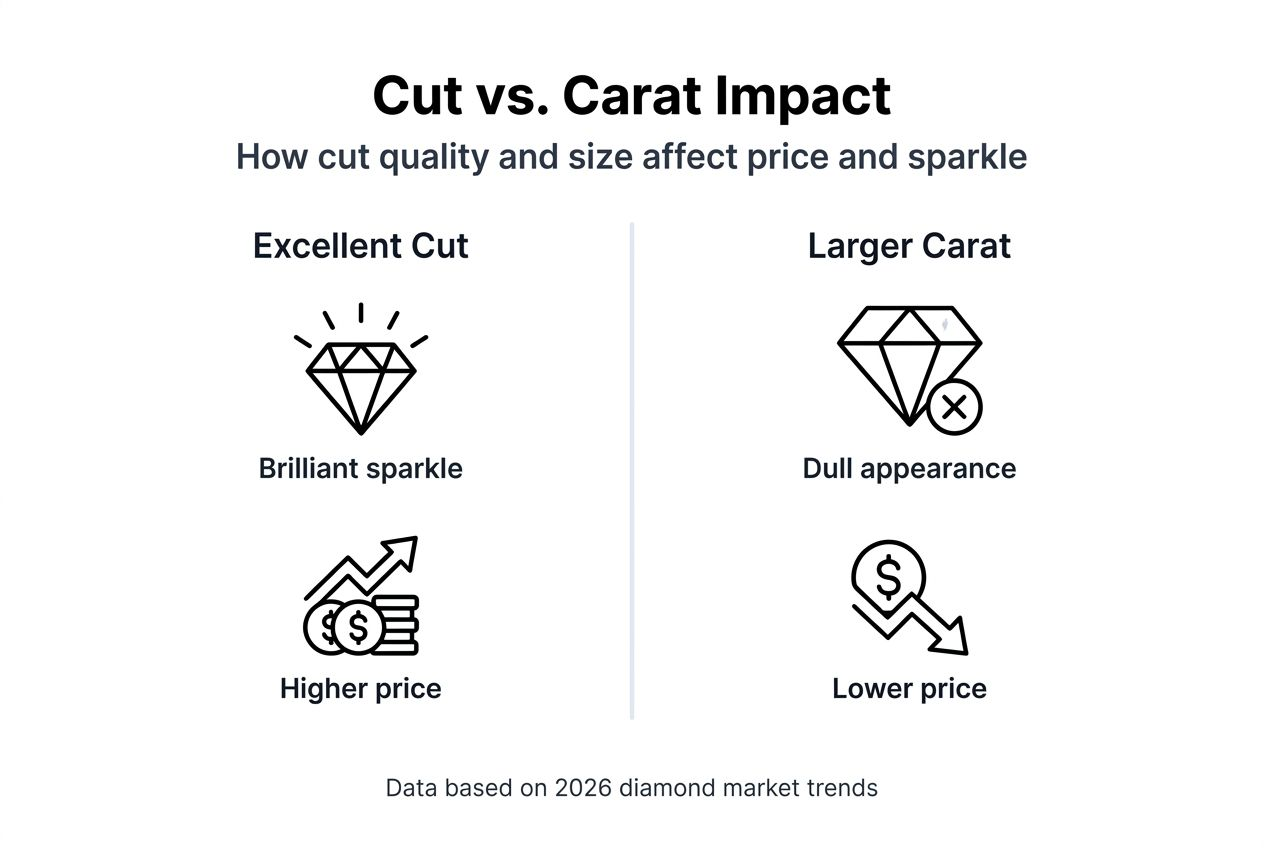
Consumers should weigh sparkle against size preference and budget. Some shoppers prioritize maximum carat weight and accept Good cut grades. Others reduce size to afford Excellent cuts and superior brilliance. Neither choice is wrong, but understanding the trade-off prevents disappointment.
Practical balancing strategies:
- Reduce carat weight by 10% to upgrade from Good to Excellent cut
- Choose Very Good cut as middle ground between cost and quality
- Prioritize cut grade over minor clarity or color improvements
- Compare diamonds visually rather than relying solely on carat numbers
- Consider total visual impact instead of individual specification maximization
| Scenario | Carat | Cut Grade | Approximate Price | Visual Impact |
|---|---|---|---|---|
| Sparkle Priority | 0.90 | Excellent | $4,500 | Maximum brilliance, slightly smaller |
| Balanced Approach | 1.00 | Very Good | $4,600 | Strong sparkle, full carat |
| Size Priority | 1.15 | Good | $4,400 | Larger appearance, reduced brilliance |
Price premiums for Triple Excellent diamonds reflect superior craftsmanship and visual performance. These stones justify higher costs through enhanced beauty that remains apparent throughout the ring’s lifetime. Budget-conscious shoppers can optimize value by accepting Very Good cut grades or reducing carat weight slightly.
Pro Tip: Dropping from 1.00 to 0.90 carats while upgrading from Very Good to Excellent cut often costs the same total price but delivers noticeably better sparkle.
Clear trade-off analysis helps find optimal balance. Review how diamond clarity impact value and diamond color grade impact interact with cut decisions across your budget. The diamond cutting trade-offs guide explains industry economics behind these pricing patterns.
Practical tips for consumers: choosing the right cut
Always prioritize cut grade over carat size when evaluating diamond reports. Certificates from GIA or IGI list cut grades prominently for round diamonds. Look for Excellent or Very Good ratings stamped on these documents as your primary quality indicator.
Use visual inspection tools to verify cut quality. Request light performance images or videos from sellers showing how diamonds handle light from multiple angles. These materials reveal sparkle patterns and potential leakage areas that grades alone cannot convey.
Essential buying actions:
- Verify Excellent or Very Good cut grades on certificates before considering other factors
- Ask about polish and symmetry ratings alongside cut grade for complete quality picture
- Compare diamonds visually under consistent lighting to assess real-world sparkle
- Request ideal scope images or light performance reports when available
- Prioritize certified lab grades but confirm with personal observation when possible
- Balance price and cut quality based on individual budget and preferences
Trust certified labs’ cut grades but verify through observation. Certificates provide objective baselines, yet seeing diamonds in person or through quality videos confirms actual appearance. Some sellers offer virtual appointments allowing real-time diamond viewing under professional lighting.
Pro Tip: Ask sellers to show diamonds under different lighting types. Excellent cuts maintain strong performance in natural daylight, LED, and incandescent light while poor cuts look uneven.
Negotiate based on cut grade rather than accepting default recommendations. Many salespeople emphasize carat weight or clarity because these factors seem more tangible. Educated buyers who prioritize cut quality often discover better value by accepting slightly lower clarity or color grades.
Explore guide to buying lab-grown diamonds online for additional purchasing strategies and compare diamond cut engagement rings with verified cut grades to build confidence recognizing superior quality.
Explore sparkling engagement rings with superb cut quality
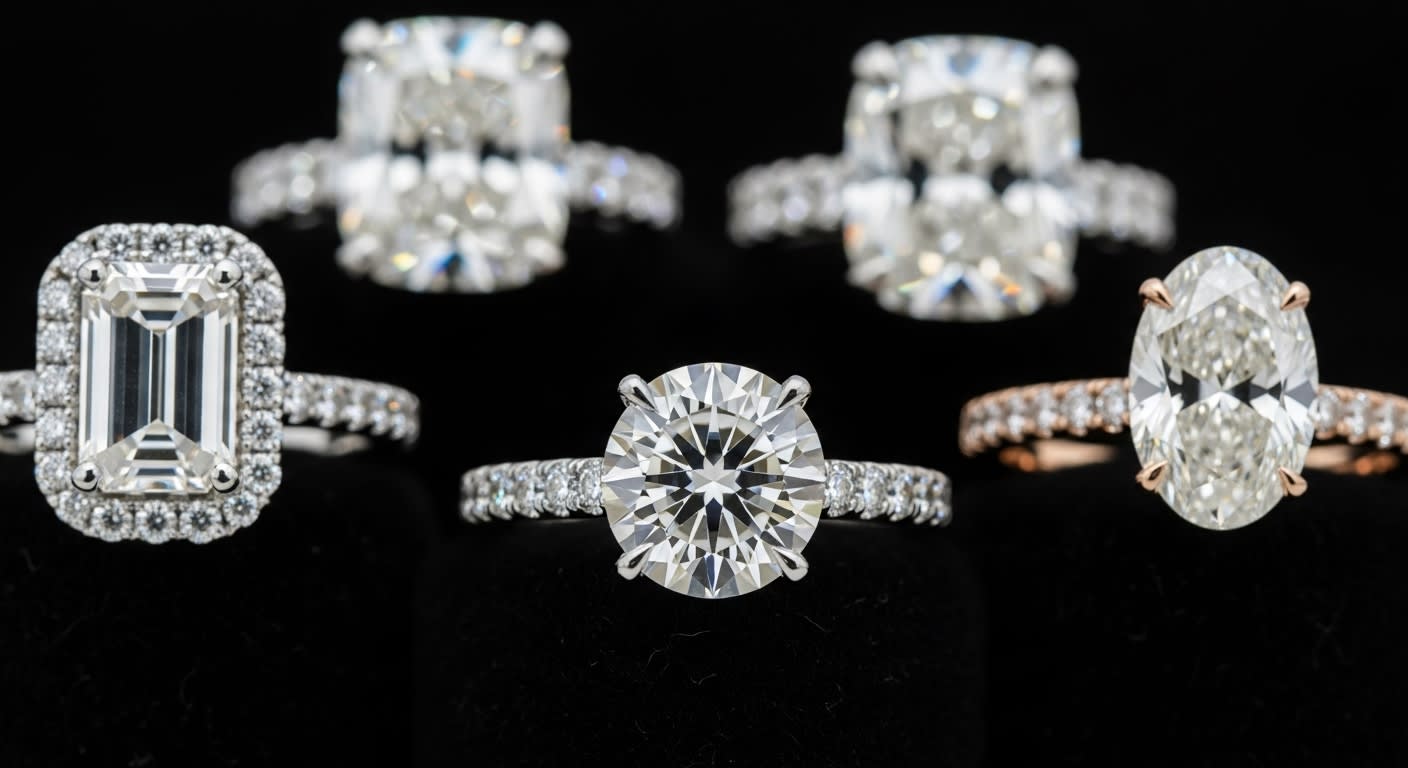
Now that you understand how cut quality creates diamond sparkle, explore rings prioritizing this crucial factor. SuperJeweler offers extensive collections emphasizing Excellent and Very Good cut grades across price ranges. Whether your budget targets cheap engagement rings under $1,000 or you seek 1 carat radiant diamond engagement rings balancing size with brilliance, superior cut quality remains the foundation.

Browse engagement rings featuring diamonds selected for optimal light performance. Expert support helps apply your new knowledge, ensuring you choose rings delivering maximum sparkle within your budget. Free shipping worldwide and comprehensive warranties protect your investment while you focus on finding the perfect symbol of your commitment.
FAQ
What is the difference between diamond cut and diamond shape?
Diamond cut refers to facet proportions, angles, and polish quality affecting how light performs inside the stone. Diamond shape describes the geometric outline such as round, princess, or cushion. Shape determines appearance style while cut quality controls sparkle and brilliance. Explore diamond shape options to see how cut grades vary independently of outline geometry.
How does diamond cut affect a diamond’s brilliance and fire?
Cut controls how light enters, reflects internally, and exits the diamond as brightness and colored flashes. Proper facet angles create complete internal reflection, maximizing sparkle. Poor cuts allow light to leak through the bottom or sides instead of returning as brilliance, reducing visual appeal regardless of excellent clarity or color grades.
Is a bigger diamond always better than a smaller, well-cut diamond?
A smaller diamond with Excellent cut frequently appears more brilliant and captivating than a larger stone with poor proportions. Size alone does not guarantee sparkle or visual impact. Cut quality matters more for beauty because it controls light performance. A well-cut 0.90-carat diamond often outshines a poorly cut 1.10-carat stone despite the size difference.
How can I verify a diamond’s cut quality before purchase?
Look for Excellent or Very Good cut grades on certificates from reputable labs like GIA or IGI. Request light performance images, videos, or ideal scope reports from sellers showing actual sparkle patterns. When possible, view diamonds personally under varied lighting conditions to confirm brilliance matches grade claims. Check the guide to buying lab-grown diamonds online for detailed verification strategies and quality assessment techniques.
Recommended
- Diamond Cut in Engagement Rings: Maximizing Sparkle
- Diamond Cut: The Secret to Sparkling Love
- Why Diamond Quality Matters for Engagement Rings
- Diamond Clarity – How It Impacts Ring Value
