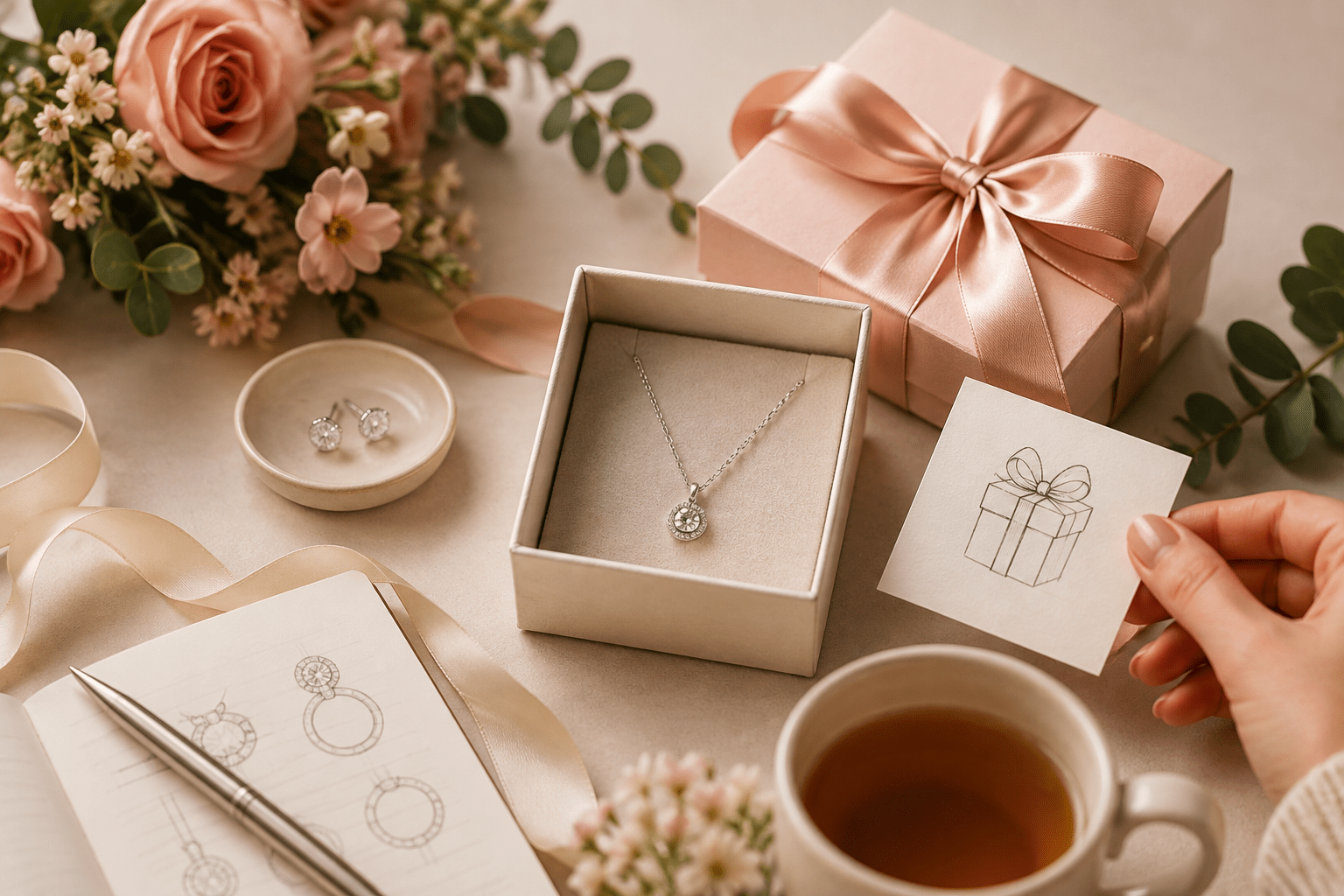
Picking the right piece of jewelry comes down to eight decisions made in order: define the occasion, set a budget and timeline, learn the recipient’s style, choose the type and material, nail the size, personalize and present it well, buy from a seller with real trust signals, and follow up on care afterward. Skip a step, and you risk a ring that doesn’t fit or a gift that misses the moment entirely.
This sequence works because each decision narrows the next. The occasion tells you the tone. The tone points you toward a metal and stone. The size determines whether you can buy now or need to wait. Jewelers of America and the Gemological Institute of America (GIA) both maintain public verification tools that matter later in this process, and a retailer like Superjeweler builds its entire online catalog around helping you move through these steps without guessing.
Here’s the checklist to work through, in order:
- Occasion and intent: What is this gift supposed to say?
- Budget and timeline: What can you spend, and how much lead time do you have?
- Recipient’s style: What metal, size, and aesthetic do they already gravitate toward?
- Type and material: Ring, necklace, bracelet, or earrings, in which metal and stone?
- Size and fit: Do you know the number, or do you need a workaround?
- Personalization and presentation: Engraving, birthstones, and how you’ll hand it over.
- Seller trust signals: Return policy, warranty, certification, reviews.
- Care and follow-up: How the recipient maintains it, and how you check in.
Key Takeaways
Following the occasion, budget, style, size, personalization, trust signal, and care sequence in order is what turns a jewelry purchase into a gift that actually fits.
| Point | Details |
|---|---|
| Decide the occasion first | Let the event and its emotional message set the tone before you look at any specific piece. |
| Budget with a lead time buffer | Add extra days for engraving, weeks for resizing, and more for custom or international orders. |
| Observe style discreetly | Check existing jewelry, social photos, and wardrobe cues rather than asking directly. |
| Match metal and stone to lifestyle | Active recipients need durable metals like titanium; formal occasions suit gold or platinum. |
| Verify trust signals before buying | Confirm return policy, warranty, and GIA or IGI certification before checkout. |
| Shop with a jeweler built for the process | Superjeweler offers sizing guides, personalization, and warranty coverage across its ring and diamond categories. |
Table of Contents
- Step 1: Define the Occasion and What You Want the Gift to Say
- Step 2: Set a Realistic Budget and Timeline
- How Do You Learn the Recipient’s Style Without Spoiling the Surprise?
- Step 4: Choose the Jewelry Type, Metal, and Gemstone
- Step 5: How Do You Get the Size Right Without Asking Directly?
- Step 6: Personalize and Present the Gift Thoughtfully
- Step 7: What Trust Signals Should You Check Before Checkout?
- Step 8: Care, Maintenance, and Following Up After the Gift
- Why an Established Online Jeweler Simplifies Every Step Above
- What Gift-Givers Usually Get Wrong
- Let Superjeweler Handle the Legwork on Your Next Gift
- Sources
Step 1: Define the Occasion and What You Want the Gift to Say
Every occasion carries its own unspoken message, and jewelry is one of the few gifts that can broadcast that message without a card. An anniversary gift tends to lean romantic and often references a shared history, a birthday gift skews personal and playful, an engagement is a formal commitment, and a “just because” gift works best when it feels light and low-pressure rather than momentous.
Mismatching tone to occasion is one of the more common gifting mistakes. A minimalist gold band feels flat as an engagement gift but perfect as an anniversary token. A bold cocktail ring reads as celebratory for a milestone birthday but oddly heavy for a Tuesday “thinking of you” gesture.
Consider how the occasion typically maps to jewelry choices:
- Anniversary: Eternity bands, matching sets, or pieces that reference a shared date or symbol.
- Birthday: Personal statement pieces that reflect the recipient’s individual taste rather than a shared relationship.
- Engagement: A ring, almost always, with the diamond or gemstone as the emotional centerpiece.
- Career milestone or graduation: Understated, professional pieces suited for daily wear at work.
- “Just because”: Smaller, lower-pressure items like stud earrings or a delicate pendant.
Pro Tip: Match the jewelry’s scale to the formality of the moment. Everyday studs or a thin chain say “I was thinking of you.” A statement piece with visible gemstones says “this moment matters.” Using the wrong scale can undercut an otherwise perfect choice.
Step 2: Set a Realistic Budget and Timeline
Budgeting for jewelry works best with a range, not a single number. Some buyers use a percentage of a milestone’s significance (spending more for a 25th anniversary than a fifth), while others set a fixed range and shop within it regardless of occasion. Both approaches beat walking into a purchase with no ceiling, since gemstone pricing swings widely based on carat weight, clarity, and cut.
Timeline matters just as much as price. A piece bought off the shelf can ship within days. A custom order, an engraving, or a ring resize typically adds one to three weeks depending on the seller’s production schedule, and international shipping can tack on another one to two weeks. If you’re buying for a set date, back-plan from that date rather than forward-planning from the purchase.
Match your target date to the required lead time:
- In-stock, no customization: Standard shipping, often within a week.
- Engraving added: Add several extra days to a week for production.
- Ring resizing: Add one to two weeks depending on the jeweler’s workshop schedule.
- Fully custom design: Add several weeks, sometimes longer for complex settings.
- International delivery: Add extra transit time and factor in customs processing.
If you want a wider view of how pricing bands map to occasions and gift types, Superjeweler’s guide to affordable jewelry gift ideas breaks down realistic price points for stylish, budget-conscious gifts.
How Do You Learn the Recipient’s Style Without Spoiling the Surprise?
Discreet reconnaissance beats guessing every time. The most reliable technique is simply paying attention to what the recipient already wears: check whether their existing pieces skew yellow gold, white gold, rose gold, or silver tone, since most people wear one metal color consistently and rarely mix them.
Social media photos are an underused resource here. Scroll through recent posts and note recurring jewelry in the background of selfies or group shots. Wardrobe and accessory drawers offer the same clues if you have casual access to them, and a quiet conversation with a close friend or family member can confirm a hunch without tipping off the recipient.
Build a mental (or literal) checklist as you observe:
- Metal tone: Warm (yellow/rose gold) or cool (white gold/silver/platinum)?
- Stone color preference: Do they lean toward classic white diamonds or colored gemstones?
- Design density: Minimalist single-stone pieces or more ornate, layered looks?
- Wear frequency: Do they wear jewelry daily, or save it for special occasions?
Pro Tip: When you genuinely can’t determine a preference, default to timeless shapes and neutral metals. A round or oval solitaire in white gold or platinum reads well against almost any wardrobe, and a classic tennis bracelet rarely misses. Jot down what you observe in your phone’s notes app so you can compare options later without relying on memory.
Step 4: Choose the Jewelry Type, Metal, and Gemstone
The right jewelry type depends heavily on how the recipient actually lives, not just how the piece looks in a photo. Someone who works with their hands all day, whether that’s a nurse, a chef, or a mechanic, will snag or damage a ring far more often than someone at a desk job. Someone who plays sports regularly needs a piece that comes off easily or resists impact. Rings and bracelets take the most physical wear; necklaces and earrings tend to survive daily life better.
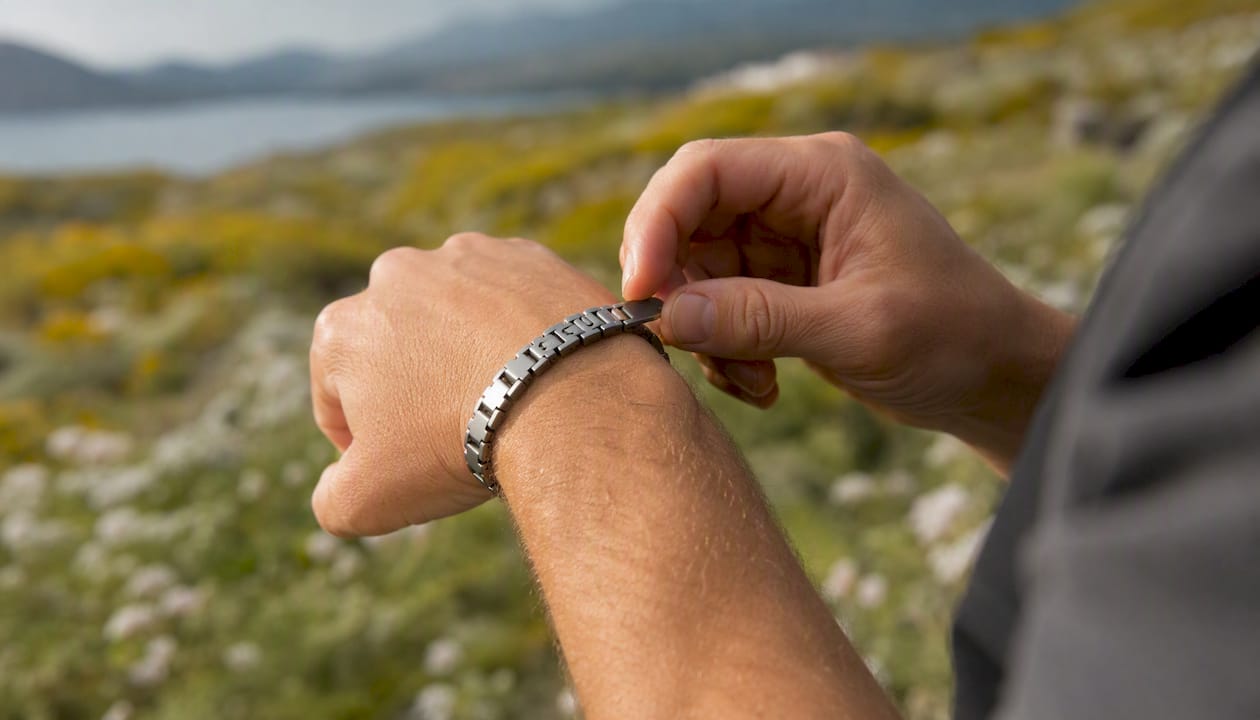
Metal choice affects both durability and comfort. Yellow gold is soft and classic but scratches more easily than harder alloys. White gold offers a bright, modern look but usually needs periodic rhodium replating. Platinum costs more upfront but resists tarnish and holds up longest over decades of wear. Sterling silver is affordable and versatile but tarnishes faster and scratches more readily. Stainless steel and titanium suit active lifestyles and cost less, and both work well as hypoallergenic options for anyone with sensitive skin or a nickel allergy.
Gemstone durability follows the Mohs hardness scale, which runs from 1 (talc) to 10 (diamond). Diamonds and sapphires (9 on the scale) hold up to daily wear better than softer stones like opal or pearl, which scratch more easily and need gentler handling. Birthstones add a personal, symbolic layer, and lab-grown diamonds now offer the same optical and physical properties as mined diamonds at a lower price point, which makes them worth a look for budget-conscious buyers who still want the real thing. Superjeweler’s guide to buying lab-grown diamonds online walks through what to check before purchasing.
| Gift Goal | Recommended Type | Metal Suggestion | Maintenance Level |
|---|---|---|---|
| Everyday comfort piece | Studs, thin pendant, or bangle | Stainless steel or gold | Low |
| Engagement statement | Solitaire ring | Platinum or white gold | Moderate to high |
| Active lifestyle recipient | Earrings or short necklace | Titanium or stainless steel | Low |
| Formal milestone gift | Tennis bracelet or cocktail ring | Gold or platinum | Moderate |
| Sensitive skin | Any type in hypoallergenic metal | Titanium or platinum | Low |
Selecting the right gemstone by hardness and color is one place where a quick materials primer pays off before you shop, and browsing gemstone jewelry by collection can help narrow the options once you know the metal and durability you need.
Step 5: How Do You Get the Size Right Without Asking Directly?
Sizing is where most gift-givers get nervous, and rings cause the most anxiety since a size that’s off by even half a size won’t sit right. You have several low-risk options before you resort to asking outright.
- Borrow a ring the recipient already wears on the correct finger, and either bring it to a jeweler for measurement or trace the inside diameter on paper.
- Use a printable ring sizer from most major jewelry retailers, which lets you compare a traced circle against standard size charts at home.
- Ask a jeweler for a professional sizing estimate based on the ring you borrowed. Most jewelers offer this as a quick, free service.
- For bracelets, measure the recipient’s wrist circumference (or a bracelet they already own) and add half an inch for a comfortable, not-too-tight fit.
- For necklaces, choose length based on how they typically wear pendants. Sixteen to eighteen inches sits at the collarbone; twenty inches and longer drapes lower for a more relaxed look.
Most established jewelers, including Superjeweler, offer resizing services after purchase, which takes the pressure off getting the ring size perfect on the first try.
Pro Tip: If you genuinely can’t nail down the size before the occasion, buy a piece with an adjustable band or chain as a placeholder, present it with the surprise intact, and mention casually that an exchange or resize is easy if needed. That keeps the moment special without risking a piece that never gets worn.
Step 6: Personalize and Present the Gift Thoughtfully
Personalization is what turns a nice piece of jewelry into a keepsake. Engraving is the most common option, and most jewelers restrict inscriptions to a set character count, so a short date, initials, or a coordinate pair usually works better than a full sentence. Birthstone placement, whether as a centerpiece or an accent stone, adds a personal touch to necklaces, rings, and bracelets alike. Charm bracelets built piece by piece over time also make a strong option for an ongoing gift relationship rather than a single occasion.
Presentation matters almost as much as the piece itself. A simple box with a handwritten note works for quieter, more intimate occasions. A planned reveal, whether that’s a dinner setting or a small scavenger hunt leading to the box, suits bigger milestones like engagements or major anniversaries. Match the presentation energy to the recipient’s personality; not everyone wants a public moment, and some people would rather open a box quietly at home.
Keep these personalization notes in mind:
- Engraving typically adds several days to a week of production time, so factor that into your timeline from Step 2.
- Custom work or multi-stone personalization can extend that window further.
- Personalized and engraved pieces are frequently excluded from standard returns, so confirm the seller’s policy on customized items before you order.
- Coordinate engravings (latitude and longitude of a meaningful place) and date engravings are increasingly popular alternatives to names or initials.
Pro Tip: Keep engraving text short and unambiguous. A date or initials rarely goes wrong, but a sentimental phrase can read differently years later if a relationship or circumstance changes. When in doubt, choose something factual over something declarative.
Step 7: What Trust Signals Should You Check Before Checkout?
Buying jewelry online, especially anything involving a diamond or colored gemstone, requires a bit of due diligence before you enter your card number. A handful of trust signals separate a reliable seller from a risky one, and checking them takes only a few minutes.
Start with the seller’s return and exchange policy, since jewelry sometimes needs an adjustment after the recipient actually wears it. A clear warranty or guarantee on craftsmanship matters too, particularly for prong settings that see daily wear. For diamonds above a certain size, ask whether the piece includes GIA or IGI certification, since a certificate confirms carat weight, clarity, and cut through an independent lab rather than the seller’s own claim. The GIA retailer lookup lets you verify a jeweler’s credentials and confirm certified stones before you buy. Genuine customer reviews and a secure, encrypted checkout round out the list.
| Trust Signal | Question to Ask the Seller |
|---|---|
| Return and exchange policy | What is the window for returns, and are personalized items excluded? |
| Warranty or guarantee | Does the warranty cover prong repair, resizing, or manufacturing defects? |
| Gemstone or diamond certification | Do you include GIA or IGI certification with this stone? |
| Customer reviews | Are reviews verified purchases, and how recent are they? |
| Secure checkout | Does the checkout page show encryption and a secure payment processor? |
Beyond individual retailer checks, directories like Jewelers and marketplace profiles such as The Knot’s jeweler listings give you a second layer of verification through professional membership and user reviews. On the e-commerce side, Shopify’s guidance on online store best practices points to the same signals that matter here: clear product information, transparent shipping and return terms, and a secure checkout flow. Buying from a professionally listed jeweler also tends to make resizing and warranty service easier down the line, since these retailers are accountable to a trade organization.
If you want a deeper walk-through of the full purchase decision, Superjeweler’s step-by-step jewelry buying guide covers checkout considerations in more detail.
Step 8: Care, Maintenance, and Following Up After the Gift
Every metal and gemstone has different care needs, and passing along a quick care note with the gift shows you thought past the unboxing moment. Gold and platinum pieces generally do well with mild soap, warm water, and a soft brush every few weeks. Sterling silver benefits from a dedicated polishing cloth and should be stored in an anti-tarnish pouch when not worn. Softer stones like opals, pearls, and emeralds should avoid direct contact with perfumes, lotions, and prolonged water exposure, while diamonds and sapphires tolerate more everyday handling.
Rings with prong settings should get a professional inspection about once a year, since worn or bent prongs are the leading cause of lost stones. A quick check at a local jeweler takes only a few minutes and catches problems before they become expensive.
Following up after gifting matters more than most givers realize. A week or two after the occasion, check in casually about comfort and fit rather than fishing for a reaction. If sizing was a guess, this is the natural moment to mention that resizing is simple and worth doing sooner rather than later.
- Clean gold and platinum every few weeks with mild soap and a soft brush.
- Store silver in an anti-tarnish pouch and polish it periodically.
- Keep softer gemstones away from perfume, lotion, and extended water exposure.
- Schedule a professional prong inspection annually for ring settings.
- Follow up within two weeks to check fit and comfort, and offer resizing if needed.
Why an Established Online Jeweler Simplifies Every Step Above
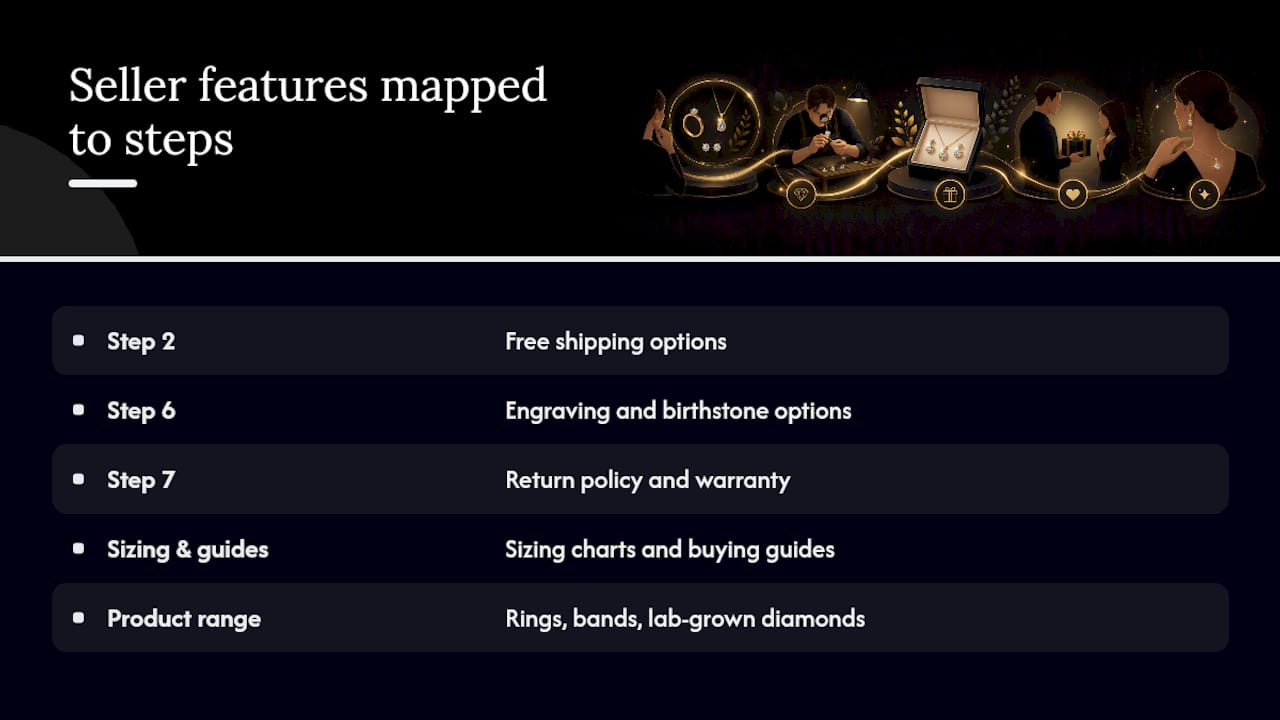
Working through eight decision points is a lot easier when the seller you’re buying from has already built tools around each one. Superjeweler carries engagement rings, wedding bands, and lab-grown diamonds across a wide range of price points, along with sizing charts and buying guides that map directly onto the steps in this article.
The site’s return policy and warranty options address Step 7 directly, giving you a documented safety net if a sized piece needs adjustment after the occasion. Free shipping options reduce the pressure around Step 2’s timeline math, and the personalized jewelry category covers Step 6 with engraving and birthstone options built into product listings rather than tacked on as an afterthought. Superjeweler’s own jewelry gift planning workflow walks through a similar sequence with product-specific examples, which is worth a look once you’ve settled on a general direction from this guide.
If you’re set on a metal that isn’t listed above, Providence Wholesale Silver’s guide to identifying real silver jewelry is a useful companion resource for checking hallmarks before you commit to a silver piece from any seller.
Sustainability is worth a mention here too. Lab-grown diamonds carry the same chemical and optical properties as mined stones without the mining footprint, which makes them a reasonable choice for gift-givers who care about sourcing. Recycled metal options, increasingly common across the industry, offer a similar upside for buyers weighing environmental impact alongside price.
What Gift-Givers Usually Get Wrong
The most common mistake I see isn’t a bad taste call. It’s skipping steps out of order, usually buying the ring before confirming the size, or picking the metal before understanding whether the recipient wears jewelry daily or only on special occasions. Rushing to the “exciting” part of the decision (the actual piece) before doing the quieter groundwork is what leads to a gift that ends up sitting in a drawer.
The tension every gift-giver faces is balancing surprise against practicality. My honest take: for anything involving a ring size, err toward asking a trusted friend or family member for a discreet assist rather than guessing. A resized ring after the fact rarely feels as special as one that fit from the moment it was opened, and the small risk to surprise is worth the certainty. Save the true surprise element for the personalization and presentation, where you have far more creative room without the size gamble.
Let Superjeweler Handle the Legwork on Your Next Gift
Working through eight steps on your own is manageable, but it helps to shop somewhere that’s already built its catalog around exactly this process. Superjeweler organizes its engagement rings, wedding bands, and lab-grown diamonds by price, metal, and stone type, so the choices you made in Steps 4 and 5 translate directly into a filtered product search instead of an endless scroll.
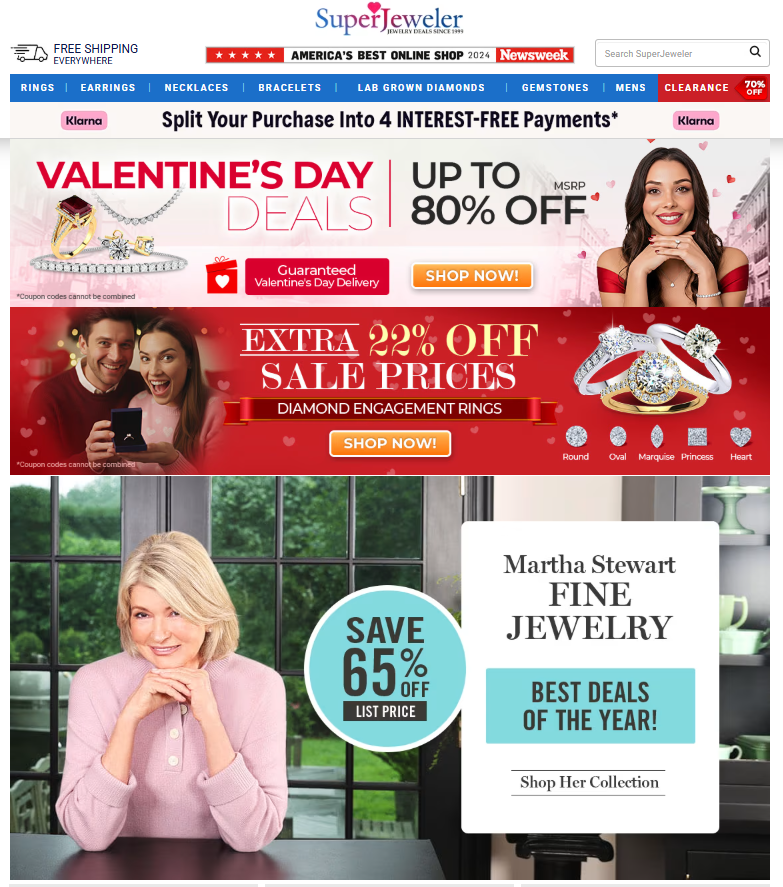
Personalization options, including engraving and birthstone settings, are built into product pages rather than offered as a vague add-on, which covers Step 6 without extra back-and-forth. Return policies and warranty coverage address the trust checklist from Step 7 before you ever add an item to your cart. If your gift centers on an engagement, browse Superjeweler’s engagement ring collection to see current styles, price bands, and available certifications side by side, and use the sizing guidance from Step 5 to narrow your search before you check out.
Sources
Recommended
- Why jewelry makes great gifts: meaningful & timeless
- Step by Step Jewelry Shopping: Your Complete 2026 Guide
