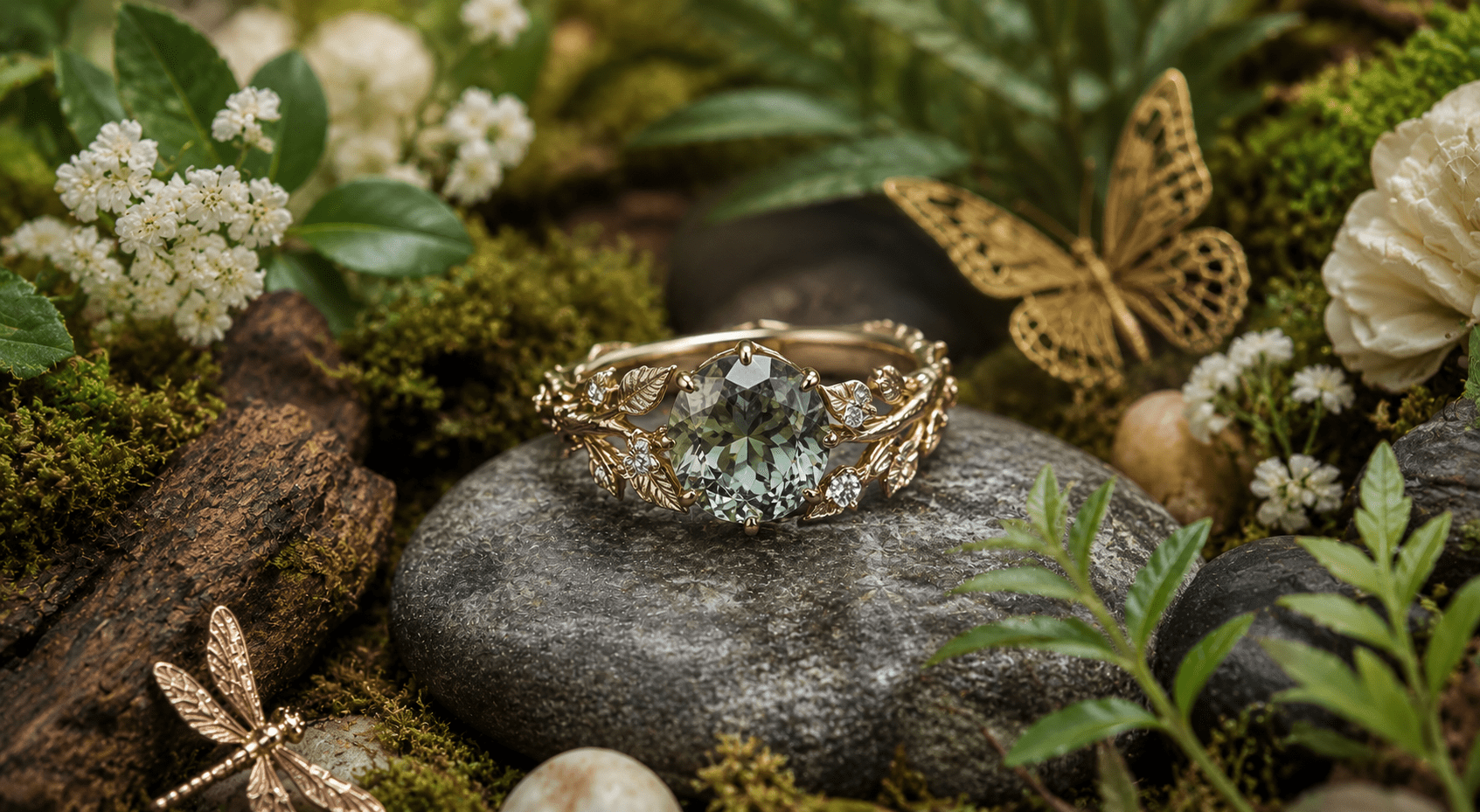
A nature-inspired ring draws its forms, textures, and motifs directly from the natural world rather than from abstract geometry or architectural shapes. Think of a band wrapped in sculpted gold vines, a cluster setting where diamond petals radiate from a center stone like a wildflower, or a bezel with a hammered pebble texture that mimics a riverbed. These rings show up across every occasion, from engagement rings and wedding bands to everyday fashion pieces, and they share one defining quality: the design tells a story borrowed from nature.
Table of Contents
- What motifs define nature-inspired rings? {#motifs}
- How do design details affect how the ring wears? {#design}
- What metals and gemstones work best? {#materials}
- What do nature motifs symbolize, and when do people wear these rings? {#symbolism}
- How do you choose the right nature-inspired ring? {#choose}
- How should you care for a nature-inspired ring? {#care}
- Why have designers always turned to nature? {#history}
- Key Takeaways {#takeaways}
- Why nature-inspired rings deserve more than a trend label {#perspective}
- Find your nature-inspired ring at Superjeweler {#promo}
- Useful sources {#sources}
What motifs define nature-inspired rings? {#motifs}
Nature-inspired jewelry translates organic curves, textures, and patterns into wearable metal and stone. Designers work across four broad motif families, each with its own visual vocabulary and formality range.
- Botanical: Leaves, flowers, vines, and branches. A classic example is a yellow gold band with engraved fern fronds curling toward a round center stone. Floral cluster settings, where smaller stones form petals around a larger gem, sit at the formal end; a simple etched leaf band reads as casual and minimal. Style labels you’ll hear: “vintage botanical,” “twig ring,” “floral halo.”
- Animal: Feathers, wings, and occasionally bird or insect silhouettes. A feather-textured band in rose gold is a common expression. These tend toward statement or fashion pieces rather than bridal, though feather motifs do appear in boho-style engagement rings.
- Ocean: Waves, coral textures, pebble-surface bezels, and shell forms. A white gold ring with a smooth, organically shaped bezel mimicking a sea-worn stone is a clean, modern take. Blue gemstones like aquamarine and blue topaz pair naturally with ocean themes.
- Geological: Raw or rough-cut stones, bark-like textures, and crystal-facet forms. A hammered sterling silver band or a ring set with a rough sapphire crystal leans into this category.
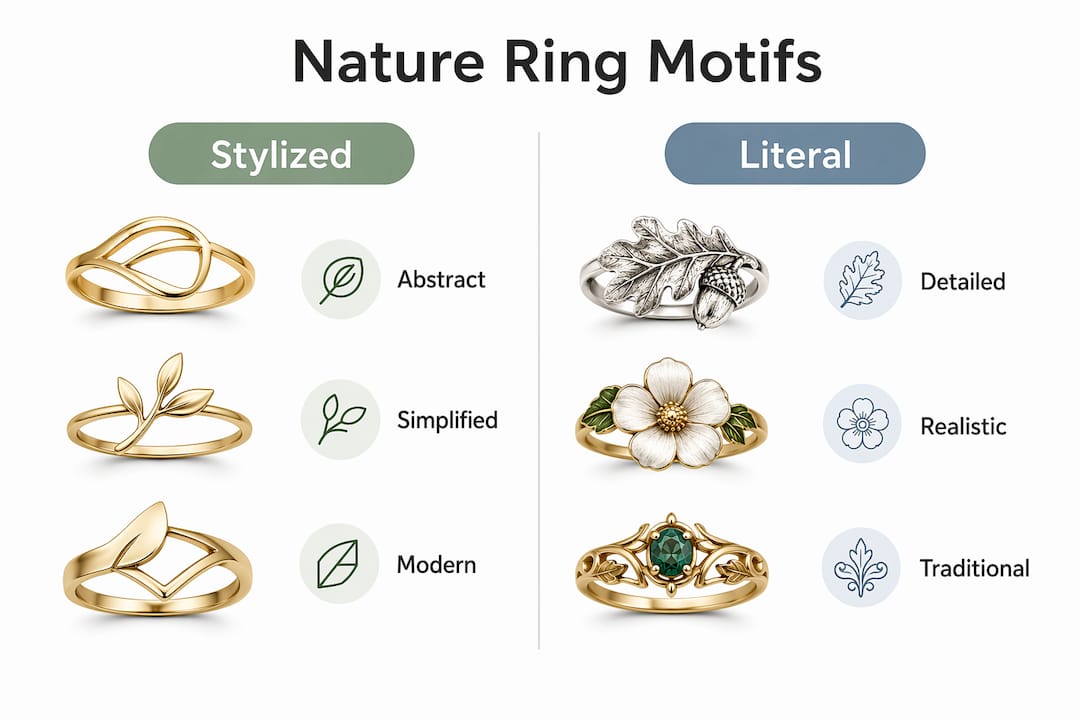
Auction-house commentary from Sotheby’s notes that designers choose between stylized and literal approaches deliberately. A stylized leaf, reduced to a clean curved line, reads as modern and sophisticated. A hyper-realistic sculpted leaf, with visible veins and a slightly irregular edge, creates a narrative, heritage feel. Neither is better; they suit different wearers and price points.
How do design details affect how the ring wears? {#design}
The construction choices in a nature-inspired ring have real consequences for daily comfort and long-term durability. Here is how the main variables compare.
| Design feature | Low-profile version | Sculptural/high-profile version |
|---|---|---|
| Band shape | Flat or gently curved, vine detail stays close to the finger | Raised branches, dimensional petals, or wrap-around forms |
| Snagging risk | Low; smooth enough for daily wear | Higher; raised elements catch fabric and hair |
| Resizing | Standard; most jewelers can size up or down | Often limited; wrap-around or asymmetric bands may only allow half-size adjustments |
| Everyday wearability | High | Better suited to occasional or dress wear |
| Setting integration | Bezel or flush settings blend into the organic form | Prong settings modified to resemble petals add drama but need more maintenance |
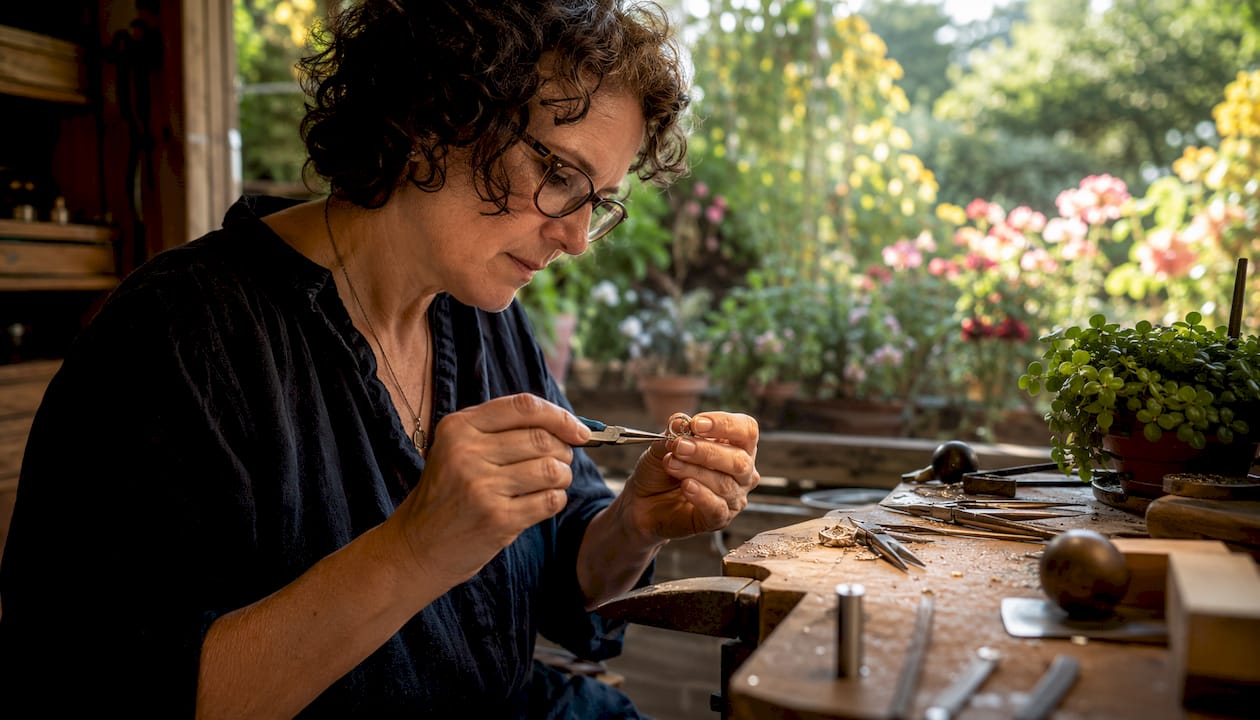
Low-profile designs tend to be the more practical daily choice. Practical design guidance from established jeweler commentary confirms that sculptural pieces often require specialized resizing or custom fittings, so ask about that before you buy.
Bezel settings, where metal wraps the stone’s girdle completely, work especially well with pebble and ocean motifs because the smooth metal edge reinforces the organic look. Prong settings modified into petal shapes are a signature of floral engagement rings, but those thin prongs need periodic inspection. Flush or gypsy settings, where the stone sits level with the band surface, suit bark-texture and geological designs.
Pro Tip: When evaluating a nature-inspired ring online, zoom into the gallery photos and look for the junction between the band and the setting. If the solder points are rough or the motif detail looks stamped rather than cast or hand-finished, the piece is likely mass-produced at a lower quality tier. Ask the retailer for a close-up image of the underside of the band too.
What metals and gemstones work best? {#materials}
Metals
| Metal | Durability | Color match to organic motifs | Relative price |
|---|---|---|---|
| Yellow gold (14k) | High | Warm; suits botanical and earth tones | Medium–High |
| Rose gold (14k) | High | Warm pink; flatters floral and botanical | Medium–High |
| White gold (14k) | High | Cool; suits ocean and geological | Medium–High |
| Platinum | Very high | Cool silver-white; premium bridal | High |
| Sterling silver | Medium | Cool; suits minimal twig and ocean | Low–Medium |
Yellow and rose gold are the most popular choices for botanical rings because their warmth echoes the color of dried leaves, bark, and flower centers. White gold and platinum suit ocean and geological motifs, where the cool tone reinforces the feel of sea glass or raw mineral. Sterling silver works well for fashion and everyday pieces but scratches more readily than gold alloys, so it’s better for occasional wear.
Gemstones
For everyday wear, hardness matters. Diamond (Mohs 10) and sapphire (Mohs 9) are the most durable center stone choices and hold up in any setting style. For botanical themes, emerald adds rich green depth, though it’s softer (Mohs 7.5–8) and more prone to chipping, so a bezel or protective setting is worth considering. Opal is stunning for ocean and ethereal designs but rates only Mohs 5.5–6.5 and requires careful handling. Turquoise, popular in geological and Southwestern-inspired pieces, is similarly soft.
Pink gemstones like pink sapphire and rose tourmaline pair beautifully with floral motifs and offer better durability than softer alternatives like rose quartz.
- Ask for disclosure: A reputable retailer will state clearly whether a stone is natural or lab-grown, and whether it has been treated (heat, fracture-filling, irradiation).
- Lab-grown gems: Lab-grown diamonds are chemically identical to mined stones and carry the same hardness. For eco-conscious buyers, they remove mining from the equation entirely.
- Ethical sourcing: Look for Kimberley Process certification on natural diamonds and ask whether colored stones come with origin disclosure or third-party grading reports.
What do nature motifs symbolize, and when do people wear these rings? {#symbolism}
Motif choice often carries personal meaning, and that meaning shapes which ring fits which occasion.
Floral and botanical jewelry spans a wide symbolic range: a cherry blossom motif signals transience and beauty; a rose motif traditionally represents love; a vine suggests growth and enduring connection. Leaf motifs read as renewal and fresh starts, which is why they appear frequently on engagement and promise rings. Wave designs carry associations with adaptability and the passage of time. Branch motifs suggest rootedness and family.
Common occasions and what design features suit each:
- Engagement rings: Floral halos, vine-wrapped solitaires, and low-profile botanical bands. Durability and daily wearability are priorities here, so diamond or sapphire centers in secure settings are the practical choice.
- Promise and commitment rings: Simpler botanical bands, twig rings, or single-leaf designs. These often use colored gemstones to add personal meaning.
- Everyday fashion rings: Minimal twig bands, hammered geological textures, and pebble bezels. Sterling silver or 14k gold; comfort fit bands that won’t snag.
- Statement and cocktail rings: Sculptural florals, dimensional feather designs, large rough-stone settings. Worn occasionally, so wearability tradeoffs are acceptable.
Cultural context matters too. Natural motifs are globally common in jewelry design, and the same motif can carry different meanings across traditions. A lotus in South Asian jewelry symbolizes purity and spiritual awakening; in Western contexts, it often reads as a wellness or mindfulness symbol. If cultural symbolism matters to you, it’s worth researching the specific motif’s meaning in your own tradition.
How do you choose the right nature-inspired ring? {#choose}
Follow this sequence when evaluating options, whether you’re shopping online or working with a custom jeweler.
- Nail the fit first. Asymmetric and wrap-around bands often fit differently from standard round shanks. Order a ring sizer or visit a jeweler in person before committing to a size, and ask specifically whether the design allows resizing after purchase.
- Match the stone to your lifestyle. If you wear the ring daily and work with your hands, choose a center stone rated Mohs 8 or higher and a bezel or low-prong setting. Sculptural pieces with exposed petals and thin prongs are better for occasional wear.
- Clarify gemstone origin. Ask whether the stone is natural or lab-grown, whether it has been treated, and whether a grading report is available. A retailer who can’t answer these questions clearly is a red flag.
- Verify the return and warranty policy. Nature-inspired rings with intricate details can look different in person than in photos. A 30-day return window and a warranty covering prong re-tipping and re-polishing are reasonable minimums to expect.
- Decide: ready-made or custom. Ready-made rings are faster and usually less expensive. Custom work lets you specify the exact motif, metal, and stone combination, but adds lead time and cost. Custom is worth it when you have a very specific vision or need an unusual size.
- Ask about resizing limits upfront. Sculptural bands, especially those with wrap-around vines or asymmetric branch designs, may only resize within a half-size range. Know this before you buy.
- Request high-resolution detail photos. If a retailer can’t show you a close-up of the motif detail and the setting from multiple angles, look elsewhere.
How should you care for a nature-inspired ring? {#care}
The organic details that make these rings beautiful, tiny prongs shaped like petals, hammered textures, delicate vine work, are also the features most vulnerable to damage and buildup.
Daily habits: Remove the ring before gardening, heavy cleaning, or any activity involving impact or abrasive materials. Soil and cleaning chemicals work into textured surfaces and can loosen stones. Store sculptural rings in a soft-lined box or pouch rather than loose in a drawer, where raised elements can deform or scratch against other pieces.
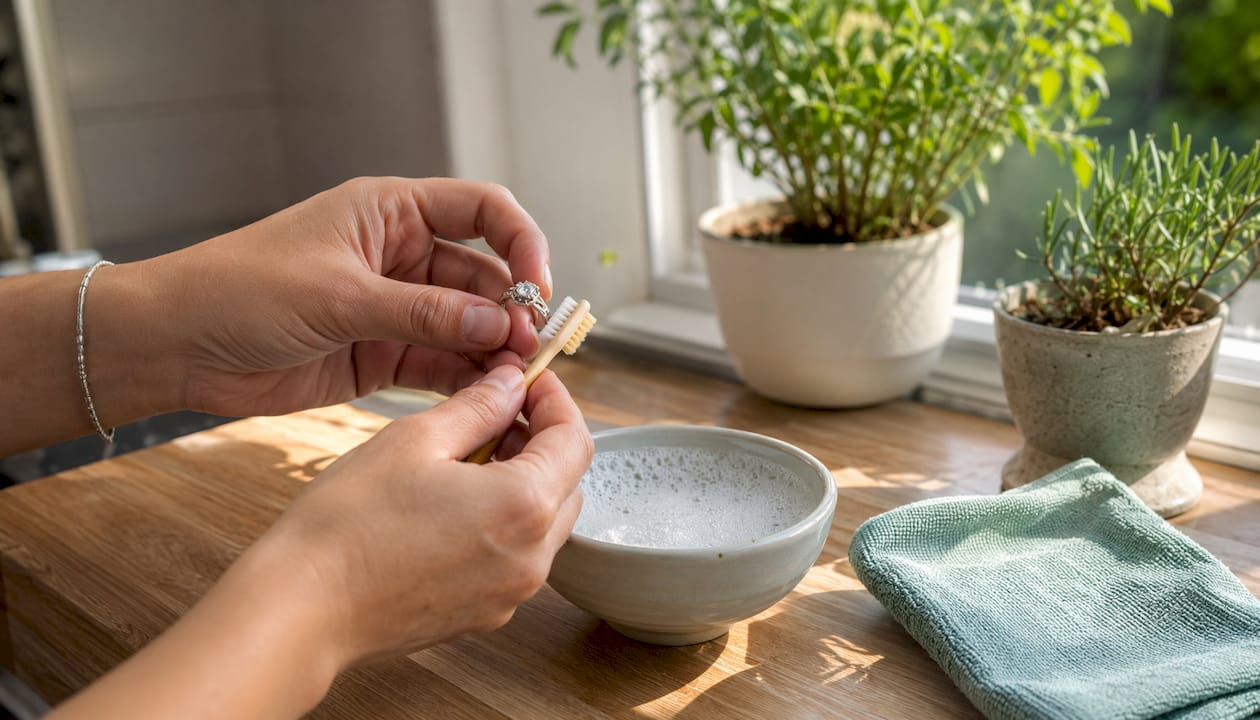
Cleaning at home: A gentle soak in warm water with a drop of mild dish soap, followed by a soft toothbrush worked lightly into the textured areas, handles most buildup. Rinse thoroughly and pat dry. Avoid ultrasonic cleaners if the ring contains opal, emerald, turquoise, or any treated stone; the vibration can cause fractures or loosen fillings. Diamonds and sapphires in secure settings are generally fine in an ultrasonic, but confirm with your jeweler first.
Professional maintenance: Plan for an annual inspection where a jeweler checks prong integrity, especially on petal-style settings. Every two to three years, consider a deeper service: re-tipping worn prongs, re-polishing textured finishes, and checking the setting for any movement in the stones. Hammered and matte finishes will gradually smooth with wear; a jeweler can restore the texture.
Pro Tip: Before you send a nature-inspired ring in for repair or insurance appraisal, photograph every angle in good natural light, including the underside of the band. Intricate motifs are hard to describe in words, and detailed photos protect you if a repair goes wrong or a stone needs to be replaced.
Why have designers always turned to nature? {#history}
Nature has been the most persistent source in jewelry design across every culture and period. The Victoria and Albert Museum’s jewelry history scholarship traces nature motifs from ancient Egyptian scarab and lotus pieces through Roman floral wreaths, Renaissance botanical enamels, and the elaborate Victorian naturalistic style, where advances in goldsmithing allowed jewelers to render flowers, insects, and birds with near-botanical accuracy. The Arts and Crafts and Art Nouveau movements of the late 19th and early 20th centuries pushed the organic form even further, treating the flowing line of a vine or the curve of a wave as a design principle rather than just a decorative detail.
“Nature has always been art and jewellery’s original muse — designers return to it not because it is easy, but because it is inexhaustible. Every leaf, wave, and crystal face offers a new geometry, a new texture, a new emotional register.” — Sotheby’s, on botanical and organic jewelry design
The emotional pull is part of the explanation. Museum and auction commentary emphasizes that wearers connect nature symbolism, growth, renewal, freedom, with personal narrative in a way that abstract geometry rarely achieves. A vine ring isn’t just a design choice; it’s a statement about what the wearer values. That combination of visual richness and symbolic depth is why natural motifs remain perennial favorites across cultures, from Indian temple jewelry dense with lotus and mango forms to contemporary American designers working in oxidized silver and rough-cut tourmaline.
Key Takeaways {#takeaways}
A nature-inspired ring is defined by its motif source, not its price point, and the right choice depends on matching design, stone, and setting to how and when you plan to wear it.
| Point | Details |
|---|---|
| Definition and motifs | Nature-inspired rings draw forms from botanical, animal, ocean, or geological sources; motif choice drives both look and symbolism. |
| Fit and resizing | Asymmetric and wrap-around bands have limited resizing range; confirm this with the retailer before purchasing. |
| Stone durability | For daily wear, choose diamond or sapphire (Mohs 9–10); softer stones like opal and turquoise suit occasional pieces. |
| Sourcing disclosure | Ask for natural vs. lab-grown status, treatment history, and grading reports; vague answers are a red flag. |
| Shop at Superjeweler | Superjeweler offers gemstone rings and lab-grown options with clear stone disclosure and a warranty, covering the key trust signals nature-inspired buyers need. |
Why nature-inspired rings deserve more than a trend label {#perspective}
The conversation around nature-inspired rings tends to flatten them into a trend category, something that cycles in and out of bridal season mood boards. That framing misses what actually drives demand for these pieces. The V&A’s jewelry scholarship and Sotheby’s commentary both point to the same underlying dynamic: nature motifs persist across every era and culture because they carry symbolic weight that geometric or abstract designs simply don’t. A vine ring isn’t fashionable; it’s meaningful. That’s a different kind of staying power.
The practical implication for buyers is that the design vocabulary matters more than most shoppers realize. Knowing the difference between a stylized leaf and a literal one, between a bezel that evokes a pebble and a prong set to look like a petal, changes how you shop and what you ask for. The buyers who end up disappointed are usually the ones who chose a sculptural piece for daily wear without asking about resizing or prong maintenance. The design is only half the decision.
Find your nature-inspired ring at Superjeweler {#promo}

Superjeweler offers one of the most accessible ways to move from inspiration to purchase on nature-inspired styles, with clear gemstone origin disclosures, lab-grown diamond options, and a warranty that covers the prong and setting maintenance these rings actually need. The selection spans engagement rings at prices that don’t require a second mortgage, through to lab-grown diamond rings for buyers who want the ethical sourcing story alongside the organic design aesthetic. Before you check out, confirm your ring size with the site’s sizing guide, verify the gemstone origin disclosure on the product page, and review the return window. Free shipping is included, and the warranty covers ongoing maintenance so the details that make these rings special stay that way.
Useful sources {#sources}
- A history of jewellery | Victoria and Albert Museum — Museum scholarship tracing nature motifs from ancient pieces to contemporary design; supports the history and symbolism sections.
- Mother Nature: art and jewellery’s original muse | Sotheby’s — Auction-house and curator commentary on stylized vs. literal botanical design and how motif choice affects formality and price.
- The Ultimate Guide to Floral Jewelry | Doruzova Studio — Detailed motif-to-meaning reference for floral and botanical jewelry; supports the symbolism section.
- Magic of Natural Motif | Fibre2Fashion — Industry article on the cultural breadth of natural motifs in jewelry design across traditions.
- Jewelry Design Inspired by Nature | Bangkok Knights — Practical design guidance on common elements, low-profile wearability, and setting choices for nature-inspired rings.
Recommended
- How to Customize Engagement Ring for a Perfect Fit
- Gemstone Rings | SuperJeweler
- 7 Types of Engagement Rings for Every Budget and Style
- Trends in Engagement Rings 2026: Style, Stone, and Savings
