Many assume bigger diamonds are better, but a 2-carat stone with poor clarity may be worth less than a 1-carat certified diamond graded excellent. Diamond certification removes guesswork by providing objective quality assessments based on standardized criteria. This guide explains how certification protects your investment, builds buying confidence, and helps you select diamonds that retain value.
Table of Contents
- What Is Diamond Certification? Defining Standards And Purpose
- How Diamond Certification Builds Consumer Confidence And Protects Buyers
- Recent Innovations In Certification Technology And Market Impact
- Comparison Of Certification Labs And Their Market Effect
- Common Misconceptions About Diamond Certification
- Verification And Authentication Methods For Certifying A Diamond
- Certification’s Role In Ethical And Sustainable Diamond Sourcing
- Applying Certification Knowledge To Your Diamond Purchase
- Shop Certified Diamonds Confidently At SuperJeweler
- Frequently Asked Questions
Key takeaways
| Point | Details |
|---|---|
| Objective quality grading | Diamond certification objectively grades a diamond’s quality using the 4Cs: cut, color, clarity, and carat. |
| Higher resale value | Certified diamonds often command 15-25% higher resale value due to buyer trust. |
| Lab reliability matters | Top labs like GIA offer the most reliable and recognized certifications. |
| Recent tech improvements | 2025 certification tech improvements increased valuation accuracy and market value. |
| Verification ensures authenticity | Verification methods like laser inscriptions ensure the diamond matches its certificate. |
What is diamond certification? Defining standards and purpose
Diamond certification is a comprehensive quality grading report issued by independent gemological laboratories. These reports scientifically evaluate diamonds using the 4Cs framework: cut (proportions and symmetry affecting brilliance), color (grading from colorless to yellow tints), clarity (presence of internal or external flaws), and carat (weight measurement). Labs like the Gemological Institute of America (GIA) assess diamonds using standardized gemological methods and specialized equipment to ensure consistency.
Certification provides transparency by reducing buyer uncertainty and minimizing misrepresentation risks. When you understand what certified diamond means, you gain confidence that the stone’s quality matches its description. The process creates documented proof of a diamond’s characteristics, enabling side-by-side comparisons based on objective metrics rather than subjective opinions.
Key certification benefits include:
- Objective quality verification independent of seller claims
- Standardized grading enabling accurate price comparisons
- Detailed documentation supporting insurance and resale
- Reduced fraud risk through laboratory authentication
- Clear understanding of what you’re purchasing
Certification transforms diamond buying from an intimidating process into an informed decision. The report becomes your roadmap, showing exactly what quality you receive for your investment.
How diamond certification builds consumer confidence and protects buyers
Certification dramatically reduces risks of misrepresentation and fraud in diamond purchasing. Without independent verification, buyers rely solely on seller descriptions, which may be inaccurate or intentionally misleading. Certified diamonds provide verifiable documentation that protects against overpaying for lower quality stones.
Insurance companies typically require certification to provide coverage on valuable diamond jewelry. The grading report establishes the diamond’s replacement value and characteristics, making claims processing straightforward if loss or theft occurs. This documentation proves essential for estate planning and inheritance purposes as well.
Uncertified diamonds create significant buyer uncertainty and potential financial loss. Studies show certified diamonds sell for 15-25% more than comparable uncertified stones during resale. This premium reflects increased buyer confidence and market trust in verified quality grades.
The benefits of certified diamonds extend beyond initial purchase protection:
- Verified quality documentation for insurance claims
- Higher resale prices due to trusted grading
- Elimination of quality disputes with sellers
- Confidence in receiving accurate value
- Protection against synthetic or treated stones misrepresented as natural
Pro Tip: Always request certification before finalizing any diamond purchase over $1,000 to protect your investment and ensure you receive the quality you’re paying for.
Recent innovations in certification technology and market impact
The Gemological Institute of America introduced significant grading technology advancements in 2025 that revolutionized diamond certification accuracy. These improvements utilize advanced spectroscopic analysis and enhanced clarity mapping technology to detect subtle quality characteristics previously difficult to grade consistently. The upgrades particularly benefit stones in the SI1 and SI2 clarity ranges and near-colorless G, H, and I color grades.
These technological improvements increased precision, resulting in reported value increases up to 40% for certain diamonds after re-certification under the new standards. Diamonds previously graded conservatively received upgraded ratings when evaluated with more sophisticated equipment, directly impacting market valuations.
The certification technology process improvements follow this sequence:
- Advanced spectroscopic analysis identifies precise color saturation and fluorescence characteristics
- High-resolution clarity mapping pinpoints inclusion locations and sizes with microscopic accuracy
- Automated consistency checks eliminate human grading variations between different gemologists
- Digital imaging creates permanent visual records of each diamond’s unique features
- Updated grading scales reflect more nuanced quality distinctions within each grade category
The market responds positively to updated, more precise certifications because buyers trust the enhanced accuracy. Diamonds re-certified under 2025 standards command premium prices reflecting their verified quality improvements.
These innovations particularly benefited the mid-quality diamond market. Stones previously considered borderline between grades now receive definitive classifications, reducing buyer hesitation and increasing transaction confidence.
Comparison of certification labs and their market effect
Different gemological laboratories maintain varying grading standards and market reputations. The Gemological Institute of America (GIA) stands as the most rigorous and trusted certification provider globally. Diamonds with GIA certification consistently command the highest resale premiums, typically 15-25% above uncertified stones.
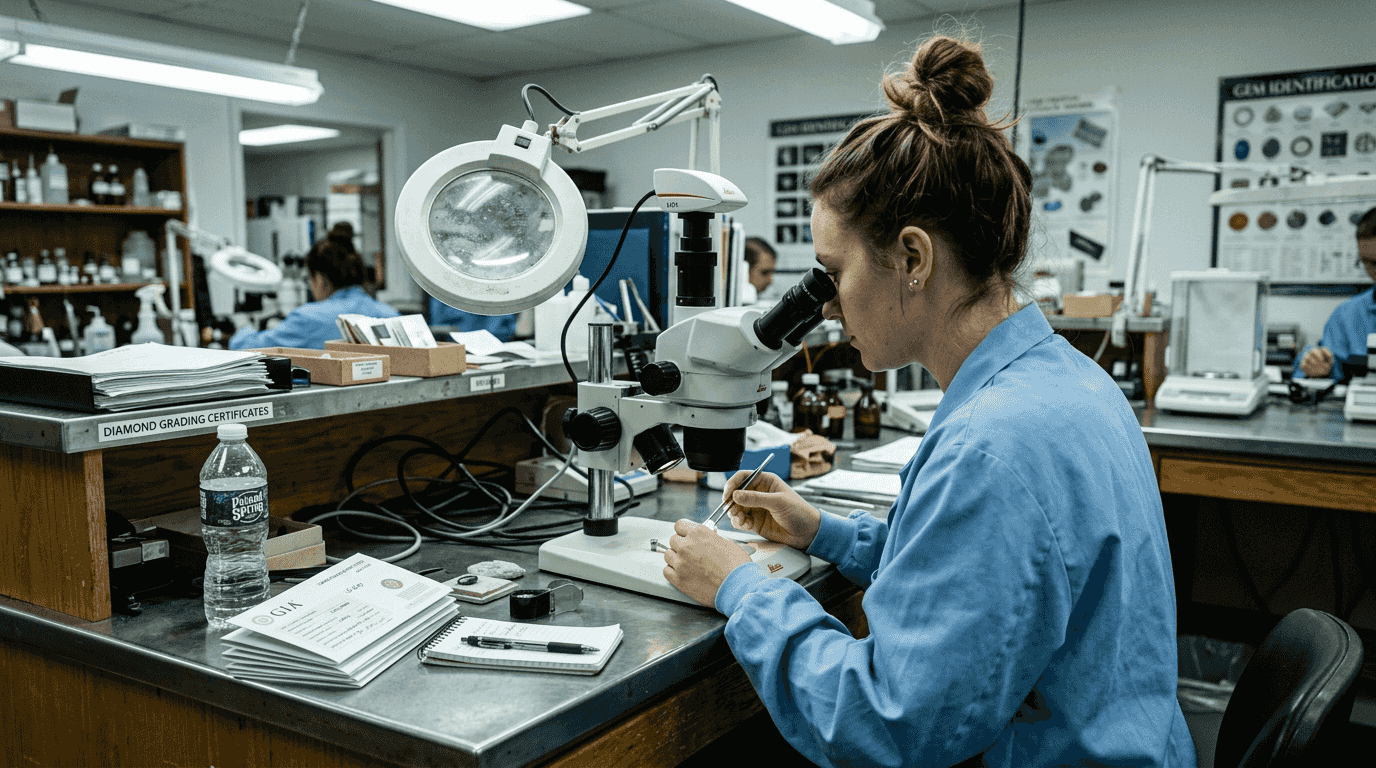
GCAL (Gem Certification and Assurance Lab) and HRD (Hoge Raad voor Diamant) offer strong certifications with intermediate market impact. Both maintain rigorous standards but command slightly lower resale premiums than GIA. IGI (International Gemological Institute) and EGL (European Gemological Laboratory) provide certification but generally receive lower resale value premiums due to perceived less stringent grading.
| Lab | Grading Rigor | Resale Impact | Consumer Trust |
|---|---|---|---|
| GIA | Most stringent | 15-25% premium | Highest globally |
| GCAL | Very stringent | 10-15% premium | High |
| HRD | Stringent | 8-12% premium | High in Europe |
| IGI | Moderate | 5-8% premium | Moderate |
| EGL | Variable | 0-5% premium | Lower |
This certification labs overview demonstrates why lab choice significantly impacts your diamond’s market value. When comparing two identical-quality diamonds, the one with GIA certification will consistently sell faster and command higher prices.
Pro Tip: Choose GIA certification for engagement rings or significant diamond purchases to maximize market confidence and value retention over time.
Common misconceptions about diamond certification
Many buyers mistakenly believe all diamonds automatically include certification. In reality, certification is optional and costs extra, so many retailers sell uncertified stones to reduce prices. Purchasing uncertified diamonds significantly increases risk of quality misrepresentation.
Another frequent misconception assumes certification measures diamond rarity or uniqueness. Certification actually assesses quality characteristics using standardized criteria. Every diamond receives a grade based on the 4Cs, but certification doesn’t indicate whether a particular stone is rare or especially desirable beyond its technical specifications.
Some consumers believe large carat weight automatically means higher overall value. A 2-carat diamond with poor cut and clarity grades may be worth substantially less than a 1-carat diamond with excellent grades across all categories. Certification reveals the complete quality picture beyond just size.
Key certification misconceptions to avoid:
- Certification is purely marketing with no real value impact (false: it directly affects pricing and resale)
- All certification labs use identical standards (false: grading rigor varies significantly)
- Certification guarantees a diamond is a good investment (false: it only verifies quality, not investment potential)
- Older certifications remain accurate indefinitely (false: grading standards and technology evolve)
- Certification protects against all fraud (false: counterfeit certificates exist, requiring verification)
Understanding these misconceptions helps you make informed decisions based on accurate information rather than false assumptions.
Verification and authentication methods for certifying a diamond
Verifying diamond certificate authenticity protects against counterfeit documentation and ensures the physical diamond matches its reported characteristics. Modern certification includes multiple authentication layers that buyers should utilize before finalizing purchases.
Laser inscriptions provide direct verification linking the physical diamond to its certification report. Most major labs inscribe the certificate number microscopically on the diamond’s girdle (outer edge). Jewelers can show you this inscription using magnification to confirm the stone matches its paperwork.
Follow these steps to verify diamond certificate authenticity:
- Examine the certificate for security features like watermarks, holograms, and official lab logos
- Check the diamond’s girdle for laser inscription matching the certificate report number
- Visit the certification lab’s official website and enter the report number to access the full grading report
- Compare the online report details with your physical certificate to ensure they match exactly
- Verify the diamond’s measurements and weight align with certificate specifications
- Have an independent appraiser confirm the diamond’s characteristics match the certification
Secure certificate handling maintains resale value. Store original certificates in safe locations and provide copies rather than originals for routine purposes. Lost certificates can be replaced by labs but may delay transactions and create buyer hesitation.
Pro Tip: Always check official lab databases online before purchasing or reselling certified diamonds to confirm authenticity and avoid counterfeit certificates that increasingly circulate in secondary markets.
Certification’s role in ethical and sustainable diamond sourcing
Diamond certification extends beyond quality assessment to support ethical sourcing verification. Modern certification processes help trace diamonds from mine to market, ensuring stones come from conflict-free sources that respect human rights and environmental standards.
Consumer preference increasingly favors ethically sourced diamonds, making certification’s traceability function critically important. Certification reports document a diamond’s origin country and processing chain, helping buyers avoid stones from conflict zones or operations with questionable labor practices.
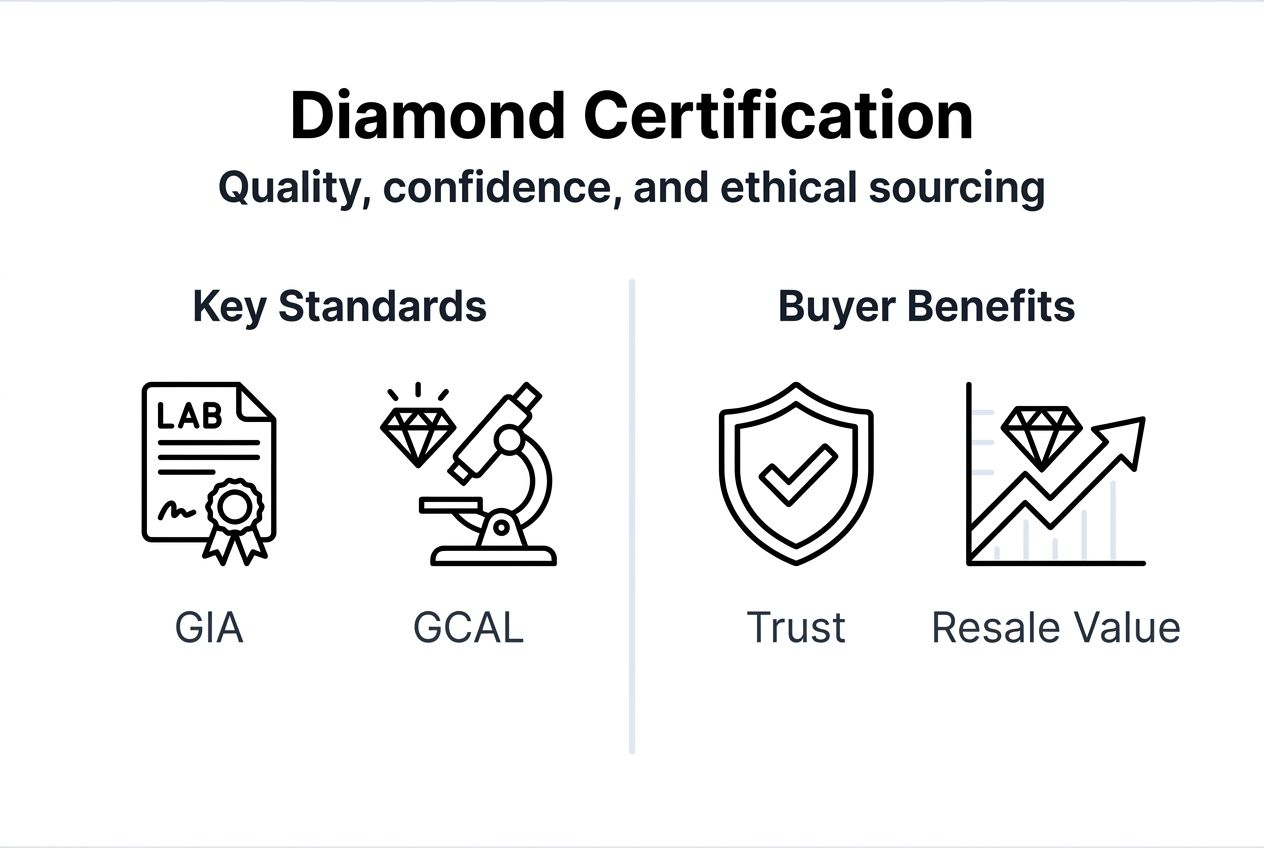
Lab-grown diamonds also receive certification verifying their laboratory origin and quality characteristics. These certifications distinguish lab-created stones from natural diamonds while providing identical quality grading. The lab-grown diamond market depends on certification to establish consumer trust and fair pricing.
Certification benefits for ethical and sustainable sourcing include:
- Documented origin verification ensuring conflict-free sourcing
- Supply chain transparency from mine or lab to retailer
- Environmental impact tracking for eco-conscious consumers
- Labor practice verification protecting mining community rights
- Clear distinction between natural and lab-grown diamonds preventing misrepresentation
This transparency empowers consumers to align purchases with personal values while maintaining confidence in diamond quality and authenticity.
Applying certification knowledge to your diamond purchase
Putting certification knowledge into practice requires strategic steps when shopping for or reselling diamonds. These actions maximize value while ensuring you receive authentic quality matching your investment.
Start by prioritizing diamonds with GIA certification when making significant purchases. The premium you pay for GIA-certified stones typically returns through higher resale value and buyer confidence. For budget-conscious purchases, GCAL or HRD certifications offer strong alternatives with good market acceptance.
Follow this process to leverage certification effectively:
- Prioritize diamonds with GIA certification for best long-term value retention and resale potential
- Read certification reports carefully, focusing on the 4Cs grades and any comments about treatments or enhancements
- Verify certificates using official lab online tools and confirm laser inscriptions match report numbers
- Factor certification lab prestige into price evaluation, expecting to pay more for GIA versus IGI certification
- Use certification details to compare similar stones and negotiate prices based on specific grade differences
When buying certified diamonds, remember that two stones with identical grades from different labs may have different actual quality. GIA grades more conservatively, so a GIA-certified VS2 clarity diamond often appears cleaner than an IGI-certified VS2.
Pro Tip: Combine scientific certification data with personal preferences regarding style and budget for balanced choices that satisfy both emotional desires and practical value considerations.
Shop certified diamonds confidently at SuperJeweler
Now that you understand certification’s critical role in diamond purchasing, exploring certified diamond collections helps you apply this knowledge practically. SuperJeweler offers an extensive selection of certified diamonds backed by trusted grading reports, ensuring quality transparency for every purchase.

Browse affordable cheap engagement rings starting under $1,000, each featuring verified diamond quality through recognized certification. The engagement rings selection spans diverse styles with certified natural diamonds, while lab grown diamond engagement rings provide eco-conscious alternatives at accessible price points. Expert customer service helps you understand certifications and select rings matching your quality requirements and budget. Shopping certified diamonds here maximizes value and confidence, transforming certification knowledge into smart purchasing decisions that protect your investment.
Frequently asked questions
What is diamond certification and why is it important?
Diamond certification is an independent grading report issued by gemological laboratories that scientifically assesses a diamond’s quality based on the 4Cs: cut, color, clarity, and carat weight. It provides objective verification of a diamond’s characteristics, helping buyers trust the stone’s authenticity and quality while reducing fraud risks and enabling accurate price comparisons.
How do I verify a diamond’s certification is authentic?
Check the diamond’s laser inscription on its girdle to ensure it matches the certificate report number exactly. Visit the certification lab’s official website and enter the report number to access the full grading report online, then compare those details with your physical certificate to confirm authenticity and detect counterfeit documentation.
Does certification affect a diamond’s resale value?
Certified diamonds consistently sell for 15-25% more than comparable uncertified stones during resale transactions. Top laboratories like GIA provide the highest resale premiums because buyers trust their rigorous grading standards, making certified diamonds significantly easier to sell at fair market prices.
Are certified lab-grown diamonds valued the same as natural diamonds?
Certified lab-grown diamonds possess resale value but generally command lower prices than natural diamonds of identical quality grades. Certification confirms quality characteristics and laboratory origin, but market demand and consumer preference currently favor natural diamonds, creating a price differential despite equivalent certification standards.
Recommended
- Why Buy Certified Diamonds: Quality, Value, Trust
- What Is a Certified Diamond and Why It Matters
- Step-by-Step Guide to Buying Lab-Grown Diamonds Online
- Diamond Necklace Terminology: What Every Buyer Should Know
