TL;DR:
- A vintage ring is a pre-owned piece between 20 and 100 years old, characterized by era-specific styles and craftsmanship. Recognizing hallmarks, gemstone cuts, and design details helps verify authenticity and period origins. The unique history, character, and craftsmanship of vintage rings enhance their enduring appeal and collectibility.
There is a common assumption that a vintage ring is simply any old piece of jewelry that has been sitting in someone’s drawer for a few decades. That assumption misses almost everything that makes these pieces genuinely interesting. A vintage ring carries a specific definition, a traceable history, and a set of design characteristics that tie it to a distinct moment in time. Whether you are a first-time buyer or a seasoned collector, understanding what is a vintage ring changes how you look at every piece you encounter. This guide covers definitions, identification, styles, and smart buying advice so you can approach vintage rings with real confidence.
Table of Contents
- Understanding vintage rings: definition and history
- Identifying vintage rings: styles, cuts, and hallmarks
- The unique charm and appeal of vintage rings
- Buying and caring for vintage rings: tips for collectors
- Why collectors and enthusiasts value vintage rings today
- The deeper meaning and enduring value of vintage rings
- Explore vintage and unique rings at SuperJeweler
- Frequently asked questions
Key Takeaways
| Point | Details |
|---|---|
| Vintage ring timeframe | Vintage rings are generally between 20 and 100 years old, distinct from antique and estate jewelry. |
| Identification features | Hallmarks, era-specific cuts, and craftsmanship details help identify authentic vintage rings. |
| Unique charm | Hand-cut stones and period-specific designs give vintage rings individuality and character. |
| Buying and care | Verify authenticity and condition, and maintain vintage rings carefully to ensure longevity. |
| Collectible value | Collectors prize vintage rings for their history, craftsmanship, and sustainable appeal. |
Understanding vintage rings: definition and history
The vintage ring definition starts with age, but it does not end there. In the jewelry trade, “antique” refers to pieces at least 100 years old; “vintage” covers pieces from roughly 20 to 100 years ago. Estate jewelry is a third term you will encounter, and it simply means any pre-owned piece regardless of age. Knowing these distinctions matters enormously when you are buying, selling, or valuing a ring.
Within that 20 to 100 year window, the major eras produce wildly different aesthetics. Each era had its own manufacturing technologies, cultural influences, and design philosophies that left fingerprints on the jewelry it produced:
- Victorian era (1837-1901): Sentimental motifs, yellow gold, rose-cut diamonds, and closed-back settings. Pieces from this period are now crossing into antique territory.
- Edwardian era (1901-1915): Delicate filigree, platinum settings, and mine-cut diamonds. The introduction of the jeweler’s torch allowed incredibly fine metalwork.
- Art Nouveau (1890-1910): Nature-inspired forms, flowing lines, enamel work, and unusual gemstones like opals and moonstones.
- Art Deco (1920-1935): Geometric precision, bold contrasts, white metals, and calibré-cut colored stones set in graphic patterns. This is arguably the most recognized vintage style today.
- Retro era (1940s): Large, sculptural gold rings with bold gem placements, shaped by the wartime platinum ban.
- Mid-century modern (1950s-1960s): Clean lines, yellow and rose gold, and a shift back toward rounded shapes after the angular Deco period.
Each era left behind identifiable markers. That is what makes the definition of vintage rings so much richer than a simple age cutoff. Understanding the era helps you understand the piece. For collectors drawn specifically to proposal-worthy pieces, vintage engagement rings span all of these periods and bring distinct personality to the table.
Now that you understand what qualifies as a vintage ring, let’s explore how to identify these pieces based on their styles and features.
Identifying vintage rings: styles, cuts, and hallmarks
Knowing the vintage ring characteristics to look for is what separates a casual admirer from a serious collector. The most reliable identification method starts with hallmarks, the small stamps pressed into the metal that reveal purity, origin, and sometimes the exact year of manufacture.
Key identification features include hallmarks indicating metal purity such as 14K or 18K stamps in American pieces, and 375 to 750 markings on European gold. British pieces often carry date letters that allow pinpointing the year of assay to the exact season. American rings from the early 20th century frequently feature maker’s marks alongside karat stamps.
Era-specific gemstone cuts are equally telling:
- Old mine cut: Pre-1900s, hand-cut with a cushion outline, high crown, and small table. Produces a warm, candlelit sparkle.
- Old European cut: 1890s to 1930s, round with a tiny table and large culet (bottom facet), visible as a dark circle when viewed face-up.
- Asscher cut: Introduced in 1902, with a square stepped facet pattern and deeply cropped corners.
- Transitional cut: 1930s to 1940s, bridging the old European and modern brilliant styles with a slightly larger table.
| Hallmark type | What it reveals | Associated era or region |
|---|---|---|
| 14K or 18K stamp | Gold purity, American standard | US pieces, 1906 onward |
| 750 or 585 | Gold purity in European millesimal format | European pieces, 20th century |
| British date letter | Exact assay year and assay office | UK pieces, Victorian onward |
| Maker’s mark | Specific manufacturer or workshop | All regions, identifies the maker |
| Platinum mark | Pt950 or Plat stamp | Edwardian and Art Deco pieces |
Beyond hallmarks and cuts, look at the craftsmanship itself. Milgrain edging (tiny bead-like borders along metal edges) appears heavily in Edwardian and Art Deco pieces. Hand-fabricated settings often show slight asymmetries that machine-made rings do not. Explore the range of vintage ring styles to see how these characteristics look across different eras. For collectors interested in colored stones, period gemstone rings often feature sapphires, rubies, and emeralds set in era-appropriate cuts.
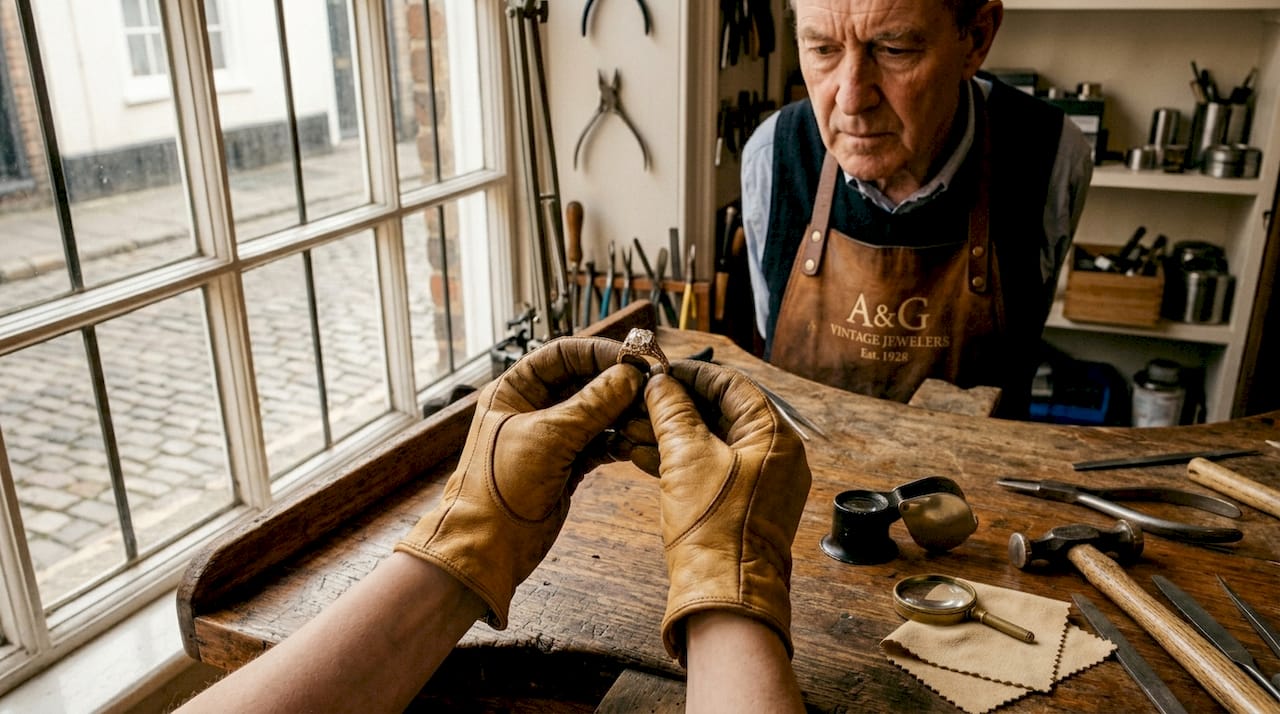
Pro Tip: Flip the ring over and examine the setting from below. Closed-back settings (where the metal entirely surrounds the stone’s base) are typical of Victorian and earlier work. Open-back settings, which allow light through, became more common from the Edwardian period onward. A closed back on a ring being sold as “1950s” is a red flag.
With identification basics covered, next we’ll explore the unique character and charm that make vintage rings so treasured.
The unique charm and appeal of vintage rings
What makes a ring vintage is not just its age. It is the specific way that age translates into a sensory and emotional experience you cannot replicate with a new piece.
Hand-cut vintage diamonds reflect light differently than their modern counterparts. A modern round brilliant has 57 or 58 precisely machined facets engineered for maximum fire. An old mine or old European cut has facets shaped by a craftsman’s eye, resulting in larger flashes of light rather than the constant, distributed sparkle of a modern stone. That difference is not a flaw. It is a signature.
The hand-carved and faceted nature of vintage stones provides narrative significance, and characterful hues like the yellow-brown warmth found in old mine cuts are now actively sought after rather than dismissed. The market has shifted decisively. What once looked “off-color” now reads as personality.
“People are longing for unique and bespoke designs with diamonds that have personality. Where we previously saw inclusions and imperfections, we now see character.”
That shift in perception explains why vintage engagement rings command serious collector attention. The appeal goes beyond aesthetics:
- Craftsmanship: Hand-setting, milgrain, filigree, and hand-engraving require skills that are increasingly rare.
- Rarity: No two hand-cut stones are identical. Your ring is genuinely one of a kind.
- History: Wearing a ring made in the 1930s means wearing a piece of the Art Deco era on your hand every day.
- Sustainability: Choosing a pre-existing piece avoids new mining, which matters to a growing number of buyers.
- Emotional resonance: The idea that a ring has existed through other lives and stories adds weight that a new piece simply cannot carry.
Understanding charm offers perspective on why many prefer vintage rings, leading us to practical buying and care advice.
Buying and caring for vintage rings: tips for collectors
How to identify vintage rings is only half the equation. Knowing how to buy and maintain them protects both your investment and the integrity of the piece.
- Source from reputable dealers. Established estate jewelers, certified appraisers, and specialty auction houses provide documentation, provenance records, and authenticity guarantees that individual sellers rarely can.
- Request an independent appraisal. Even from a trusted dealer, a third-party gemological appraisal confirms the stone’s identity, quality, and the ring’s approximate date and value.
- Examine the setting and stone security. Prongs on vintage rings can wear thin over decades. Before wearing regularly, have a jeweler check that every prong is intact and no stone is loose.
- Assess your lifestyle honestly. Antique designs may have picked up wear and tear over time, so it’s important to invest in a piece that you can wear day in and day out without damage. A heavily worked Art Deco filigree ring worn during manual work is a recipe for loss.
- Clean gently and infrequently. Soft metals like gold and platinum in vintage rings can be softer than modern alloys. Ultrasonic cleaners can loosen antique prong settings. Warm water, mild soap, and a soft brush are your safest tools.
- Store with care. Keep vintage rings individually in soft pouches or fabric-lined compartments. Metal-on-metal contact causes scratches that are particularly visible on high-polish vintage surfaces.
For buyers working within a set budget, browsing affordable engagement rings with vintage-inspired designs is a practical way to access that aesthetic without the wear concerns of genuinely old pieces.
Pro Tip: If you fall in love with a vintage stone but find the original setting too fragile or damaged for daily wear, consider commissioning a new setting designed around that specific stone’s character. This approach lets the stone’s quirks guide the design rather than forcing it into a standard shape, resulting in a piece that feels genuinely personal.
Now informed on buying and care, let’s consider how collectors think about vintage rings today and their value.
Why collectors and enthusiasts value vintage rings today
Vintage ring characteristics go beyond style preferences. In 2026, the collector market for vintage and antique rings is being driven by a broader cultural appetite for objects with history, individuality, and authenticity.
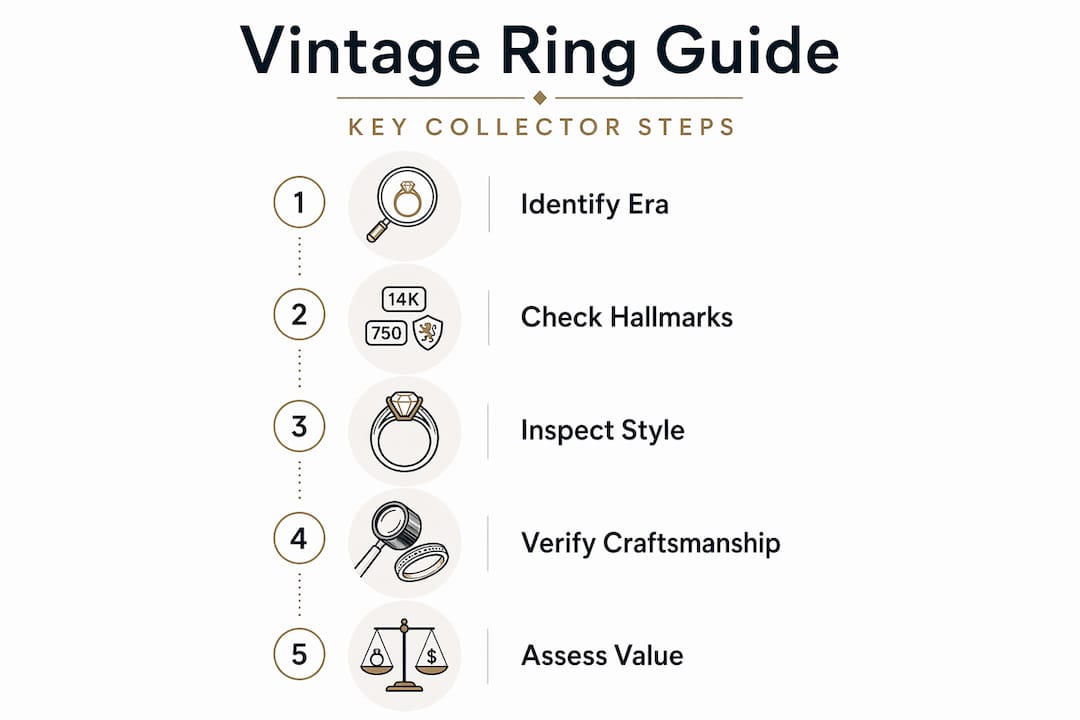
“People are longing for unique and bespoke designs with diamonds that have personality” and where inclusions and imperfections were once seen as flaws, collectors now read them as proof of age and individuality. A stone that graded “VS2 with character” in 1925 tells a more interesting story than a laboratory-perfect modern stone.
The characteristics collectors actively seek include:
- Provenance: Documentation of a ring’s origin, previous owners, or maker increases both sentimental and monetary value.
- Condition relative to age: A ring showing appropriate wear for its era is expected. One that shows signs of poor repair or replaced stones needs scrutiny.
- Era coherence: Every element of the ring (cut, metal, setting style, and hallmarks) should match the claimed period. Inconsistencies suggest alteration or misrepresentation.
- Rarity of style: Certain styles like full Art Deco platinum filigree or signed Edwardian pieces by known makers are genuinely scarce and command premium prices.
- Sustainability credentials: Choosing vintage is an inherently responsible buying decision. The ring already exists. No new resources are consumed.
The vintage engagement ring market in particular reflects a generation of buyers who want their jewelry to mean something beyond its price tag. That is not sentimentality. That is discernment.
The deeper meaning and enduring value of vintage rings
Here is the view that most coverage of vintage rings misses: these are not simply old accessories with a patina of romance. They are physical evidence of mastery that no longer exists at scale.
The jewelers who cut old European diamonds did so without the computerized faceting equipment used today. Every angle was a judgment call. Every prong was set by hand with tools that required years of practice to master. When you hold an Art Deco platinum filigree ring, you are holding the work of someone who spent their career learning to do exactly that. Modern manufacturing cannot replicate that. It can imitate the look, but the process is different and the result is different in ways a trained eye can detect immediately.
This is why the “imperfections” of vintage diamonds are actually the point. A slight asymmetry in the facets is not a defect. It is proof of human involvement. The warmth of an old mine cut’s slight yellow body color is not a quality compromise. It is what that stone looks like, and no two stones from that era look exactly the same.
The real collecting mindset around vintage engagement rings is about recognizing that value is not always measured in standardized grading reports. A ring’s story, its maker, its era, and the way its stone catches light in a specific and irreproducible way all contribute to worth that a certificate cannot fully quantify.
Pro Tip: If you are new to collecting, resist the urge to prioritize condition above all else. A ring that shows honest wear from a century of use is often more valuable and more interesting than one that has been heavily polished and re-tipped to look “new.” That wear is documentation. Protect it.
Explore vintage and unique rings at SuperJeweler
If exploring vintage rings has sparked the desire to find a piece that genuinely reflects your taste and story, SuperJeweler has options worth your time.

SuperJeweler’s curated selection of vintage engagement rings captures the craftsmanship and aesthetic of the great jewelry eras in pieces built with modern quality standards. Whether you are drawn to Art Deco geometric detail, Edwardian filigree, or mid-century elegance, the collection offers genuine variety. For buyers working within a practical budget, affordable engagement rings include vintage-inspired designs starting well under $1,000. If you want a colored stone with historical character, the gemstone rings collection features sapphires, rubies, and emeralds in settings that complement their beauty. Free shipping worldwide and a satisfaction guarantee mean the only risk is finding too many options you love.
Frequently asked questions
What exactly defines a vintage ring?
A vintage ring is typically a pre-owned piece between 20 and 100 years old, distinguished by era-specific styles and craftsmanship. This differs from antique jewelry (100+ years) and estate jewelry, which is any pre-owned piece regardless of age.
How can I tell if a ring is genuinely vintage?
Look for hallmark stamps indicating metal purity and origin, era-appropriate gemstone cuts like old mine or old European diamonds, and craftsmanship details like milgrain edging. A certified independent appraiser can confirm authenticity.
Are vintage rings suitable for everyday wear?
Many vintage rings handle daily wear well if properly inspected and maintained. Pieces from the Victorian era onward generally have open-back settings better suited to daily wear, but all vintage pieces benefit from regular professional prong checks.
What makes vintage diamonds different from modern ones?
Vintage diamonds are hand-carved and faceted with unique facet arrangements and often carry characterful color hues like warm yellow-brown. That individuality is what modern standardized cutting cannot reproduce.
Can vintage rings be remodeled or updated?
Yes, and remodeling around a stone’s quirks rather than forcing it into a standard setting often produces the most distinctive result. A new mounting can add durability while letting the original stone remain the focal point.
Recommended
- Vintage Style Engagement Rings | Superjeweler.com
- Brooches and Pins | SuperJeweler
- Estate Necklaces | Diamond & Gold Styles Below Wholesale | SuperJeweler
- Estate Earrings | Diamond & Gold Earrings Below Wholesale | SuperJeweler
