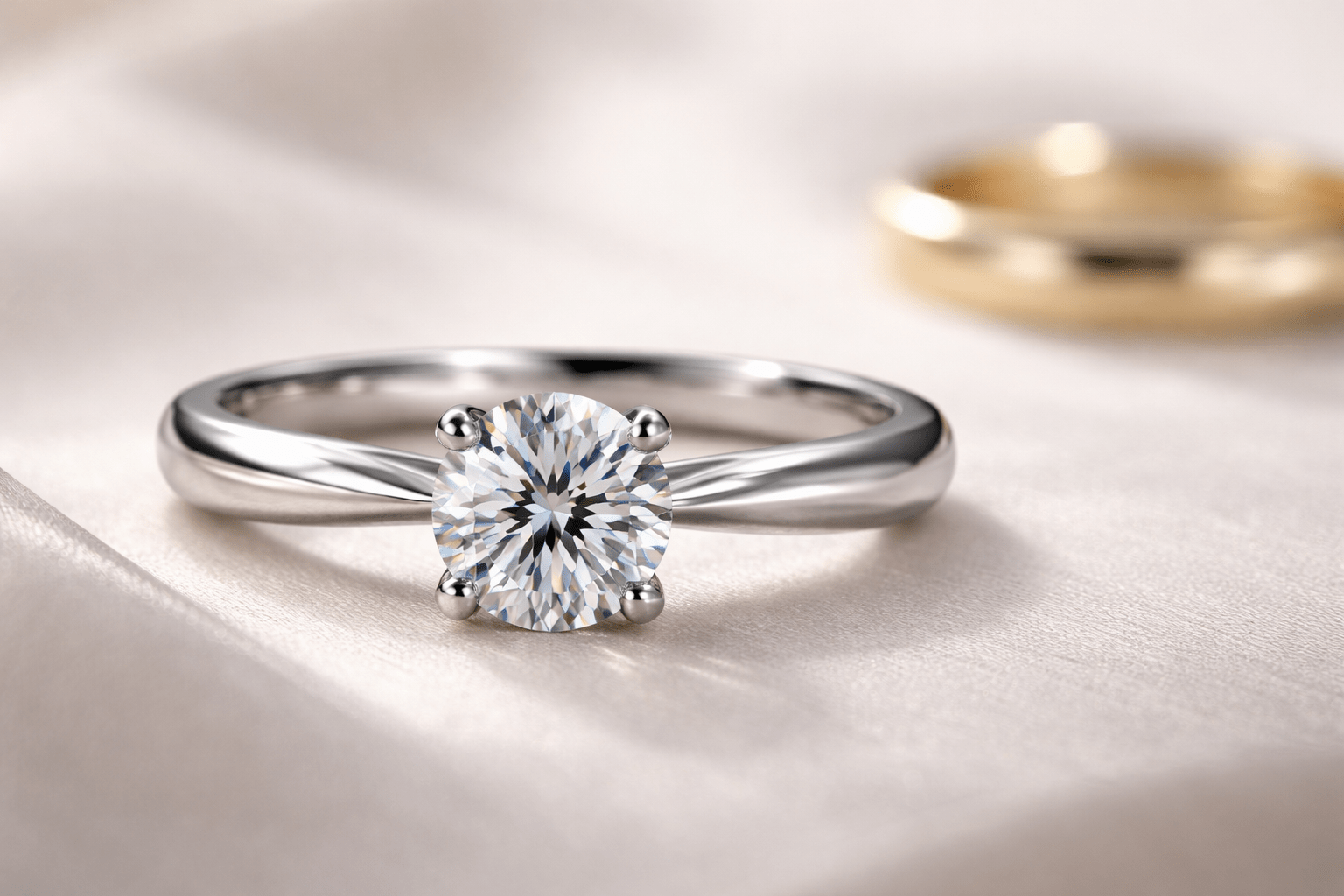
Most people assume gold is the obvious choice for engagement and wedding rings. It’s familiar, it’s traditional, and it’s everywhere. But platinum quietly outperforms gold in nearly every category that matters for a ring you’ll wear every single day for the rest of your life. When scratched, platinum displaces rather than loses mass, which means your ring stays structurally intact over decades. That single fact changes the entire conversation about which metal deserves to hold your most important gemstone.
Table of Contents
- What makes platinum unique for engagement and wedding rings?
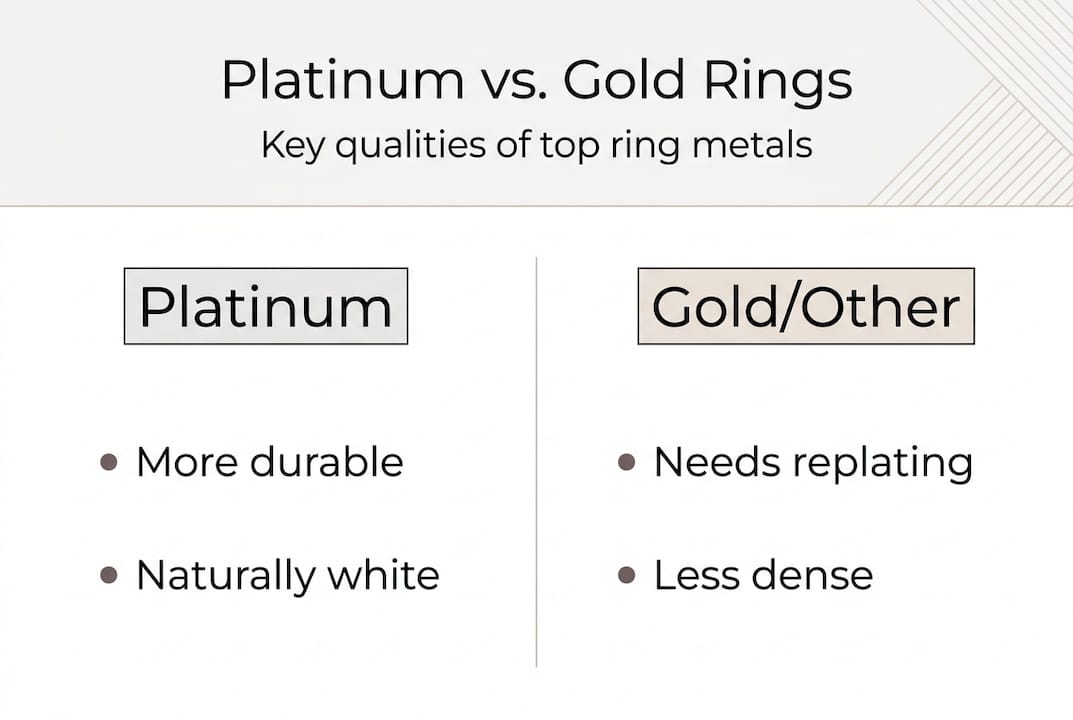
- Platinum vs. gold and other ring metals: A direct comparison
- Durability and long-term value: Why platinum excels
- Market value and buyer trends: Is platinum a smart investment?
- Find your perfect platinum (or alternative) ring
- Frequently asked questions
Key Takeaways
| Point | Details |
|---|---|
| Enduring durability | Platinum resists thinning and keeps gemstones secure for decades of everyday wear. |
| Hypoallergenic purity | With no nickel and 95% purity, platinum is safe for even the most sensitive skin. |
| Timeless color | Platinum retains its natural white luster without fading or needing regular re-plating. |
| Long-term value | Platinum offers growing investment appeal and strong market demand compared to gold. |
What makes platinum unique for engagement and wedding rings?
Platinum isn’t just another white metal. It’s a category of its own, and once you understand why, it’s hard to look at other options the same way.
Here’s what sets platinum apart from every other ring metal on the market:
- Purity: Most platinum rings are 95% pure platinum (stamped Pt950), compared to 18k white gold at just 75% gold content.
- Color stability: Platinum maintains a permanent natural white color without ever needing rhodium plating, which white gold requires every one to two years.
- Hypoallergenic properties: Platinum is naturally hypoallergenic because of its high purity, making it the safest choice for anyone with sensitive skin or nickel allergies.
- Gemstone security: Its density means prongs hold diamonds and gemstones more firmly than softer metals.
- Weight and feel: Platinum is noticeably heavier than gold, giving it a luxurious, substantial feel on the finger.
White gold looks similar at first glance, but the comparison breaks down quickly under real-world conditions. You can read more about white gold comparison to see exactly where the differences show up in daily wear. For couples who want a center stone that stays secure and brilliant, gemstone rings set in platinum offer unmatched long-term performance.
Stat to know: Platinum’s hypoallergenic reputation is backed by its composition. At 95% purity, there’s simply very little room for irritating alloys.
Platinum vs. gold and other ring metals: A direct comparison
Understanding platinum’s attributes, let’s compare them head-to-head with other popular ring metals. Numbers and side-by-side facts make the decision much clearer.
| Property | Platinum | 18k White Gold | Titanium/Tungsten |
|---|---|---|---|
| Purity | 95% | 75% | Varies |
| Color stability | Permanent white | Fades, needs replating | Permanent |
| Hypoallergenic | Yes | Often contains nickel | Usually yes |
| Durability | Displaces on scratch | Loses metal on scratch | Very hard, brittle |
| Maintenance | Polish only | Rhodium plating needed | Minimal |
| Resizing | Possible, costs more | Easy | Difficult or impossible |
| Cost | Higher upfront | Moderate | Low |
For diamond wedding bands, platinum’s ability to hold prongs intact over decades makes it the preferred choice among jewelers. Diamond eternity rings especially benefit from platinum’s density, since every stone in the band needs consistent prong support. If budget is the primary concern, tungsten and titanium rings offer durability at a lower price, though they can’t be resized.
Platinum’s superior strength for prongs is one of the most practical reasons jewelers recommend it for diamond settings. A loose stone is a nightmare. Platinum reduces that risk significantly.
Pro Tip: Scratches on platinum don’t remove metal. They push it aside. This means your ring’s prongs stay thick and your stone stays secure, even after years of daily wear. Gold prongs, by contrast, gradually thin out and need inspection more frequently.
“Platinum develops a desirable patina over time, giving it a soft, antique look that many couples find more beautiful than a high-polish finish.”
The benefits of platinum go beyond aesthetics. It’s a practical, long-term decision that pays off every year you wear the ring.
Durability and long-term value: Why platinum excels
A comparison tells part of the story, but what does this mean for the lifetime of your ring? Let’s walk through exactly how platinum protects your investment over time.
- Year one: The ring looks flawless. Platinum’s bright white finish requires no treatment.
- Years two through five: Minor surface scratches appear, but the metal displaces rather than wears away. Prong thickness stays consistent.
- Years five through ten: A soft patina begins to develop. Many couples love this look. Others choose a quick polish to restore the original shine.
- Decade two and beyond: Gold rings often need prong retipping or rhodium replating by this point. Platinum rings typically just need a polish.
- Heirloom stage: Platinum’s structural integrity means it can be passed down without major restoration work.
When platinum displaces rather than loses mass during scratching, it preserves prong thickness and gemstone security in a way gold simply cannot match over time. This is especially important for eternity ring durability, where multiple stones need consistent support across the entire band.
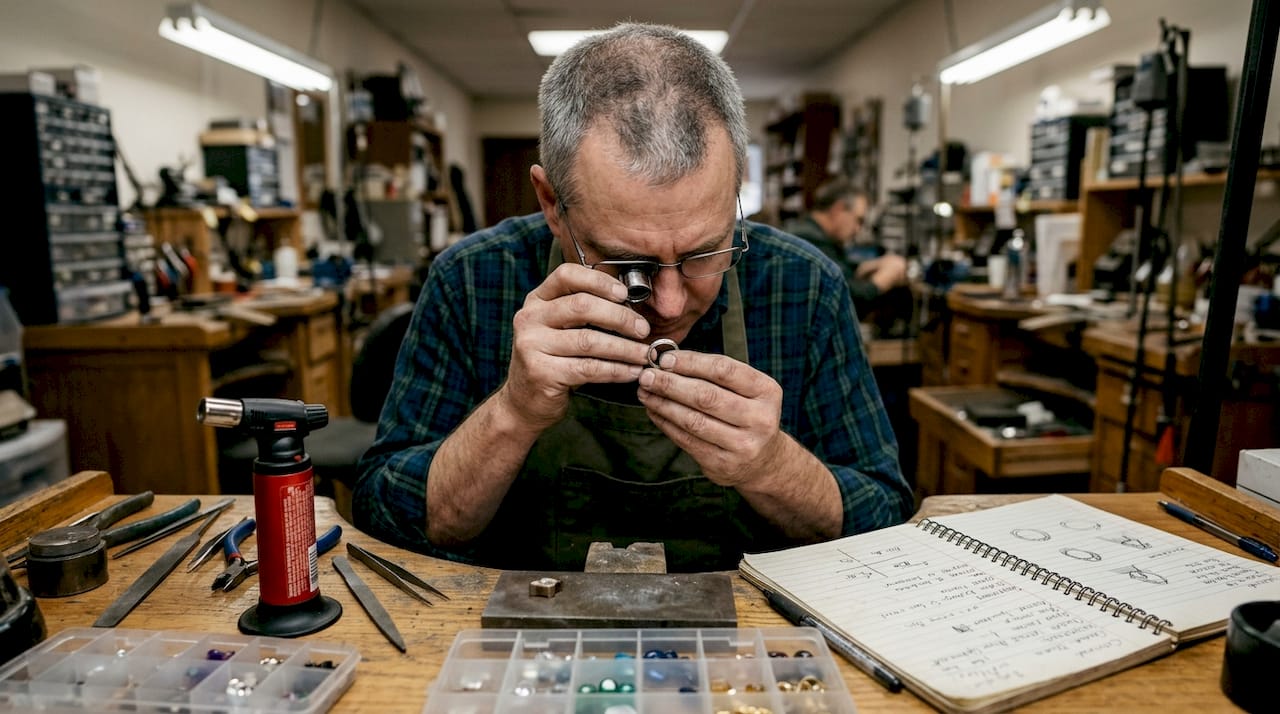
Pro Tip: If you love the antique look, let your platinum ring develop its natural patina naturally. If you prefer high shine, a simple polish from any jeweler restores it completely. You get to choose the look, and neither option damages the ring.
For durable gemstone rings, platinum is especially valuable because colored stones like sapphires and rubies are often softer than diamonds and need the most reliable prong support available.
Worth noting: Platinum’s density is roughly 60% greater than gold. That extra weight isn’t just a luxury feel. It’s structural protection for your stone.
Market value and buyer trends: Is platinum a smart investment?
For many, a ring is both a symbol and a financial commitment, so how does platinum compare in today’s market? The numbers in 2026 tell an interesting story.
Global platinum jewelry demand.pdf) is growing, forecasted at a 2.0% CAGR through 2028, driven largely by platinum’s price discount relative to gold. As gold prices have climbed to historic highs, platinum has become the smarter buy for couples who want a premium metal without paying a gold premium.
| Metric | Platinum | Gold |
|---|---|---|
| Current price trend | Rising steadily | Near historic highs |
| Demand growth (CAGR to 2028) | 2.0% | Slower growth |
| Maintenance cost | Low (polish only) | Higher (replating, prong work) |
| Resale value | Strong, growing | Established but expensive |
| Heirloom suitability | Excellent | Good |
“As gold prices remain elevated, platinum’s relative affordability combined with its superior durability is attracting a new generation of buyers who want lasting value, not just a familiar name.”
Couples shopping for trending diamond rings are increasingly choosing platinum settings because the metal enhances the visual brightness of diamonds. Platinum’s cool white tone doesn’t cast any yellow or warm tint onto the stone, which means your diamond looks whiter and more brilliant in platinum than in yellow or even white gold.
From a pure investment standpoint, platinum’s lower maintenance costs over a lifetime often offset the higher upfront price. You’re not paying for rhodium plating every couple of years. You’re not worrying about prong thinning. The ring simply works, year after year.
Find your perfect platinum (or alternative) ring
Now that you understand platinum’s real advantages, the next step is finding the ring that fits your style, your stone, and your budget.
At SuperJeweler, we carry an extensive selection of wedding bands in platinum and other premium metals, so you can compare options side by side and find exactly what you’re looking for. If you’re working with a tighter budget, our affordable engagement rings collection offers beautiful designs without sacrificing quality or craftsmanship. And if you want the brilliance of a diamond with a more accessible price point, our lab grown diamond rings pair beautifully with platinum settings. Every order ships free worldwide, and our team is here to help you make a confident, informed choice.
Frequently asked questions
Is platinum worth the higher upfront cost for engagement or wedding rings?
If long-term durability, low maintenance, and heirloom quality are your priorities, platinum’s cost is typically justified. Higher upfront cost vs. gold is offset by platinum’s minimal maintenance needs and structural longevity over decades.
Will platinum rings cause allergic reactions?
Platinum is naturally hypoallergenic because of its high purity at 95% Pt950, and it contains no nickel, making it the safest metal choice for anyone with sensitive skin.
How does platinum’s patina affect the look of my ring?
Platinum develops a soft patina over time that many couples find elegant and antique-looking. If you prefer high shine, a simple polish from any jeweler restores the original finish completely.
Is platinum more difficult or expensive to resize?
Resizing costs for platinum run 20 to 50% more than gold due to its density, but most experienced jewelers can resize platinum rings without any issue.
Why are more people choosing platinum rings now?
Global platinum jewelry demand.pdf) is forecasted to grow at 2.0% CAGR through 2028, driven by platinum’s price advantage over gold and its well-earned reputation for durability and lasting style.
Recommended
- Why Choose Engagement Rings: Meaning, Choices, Value
- Why choose white gold for engagement and wedding rings
- Pearl Rings: Delicate & Sophisticated (June Birthstone)
- Diamond Eternity Ring | Stunning Diamond Eternity Ring From SuperJeweler
