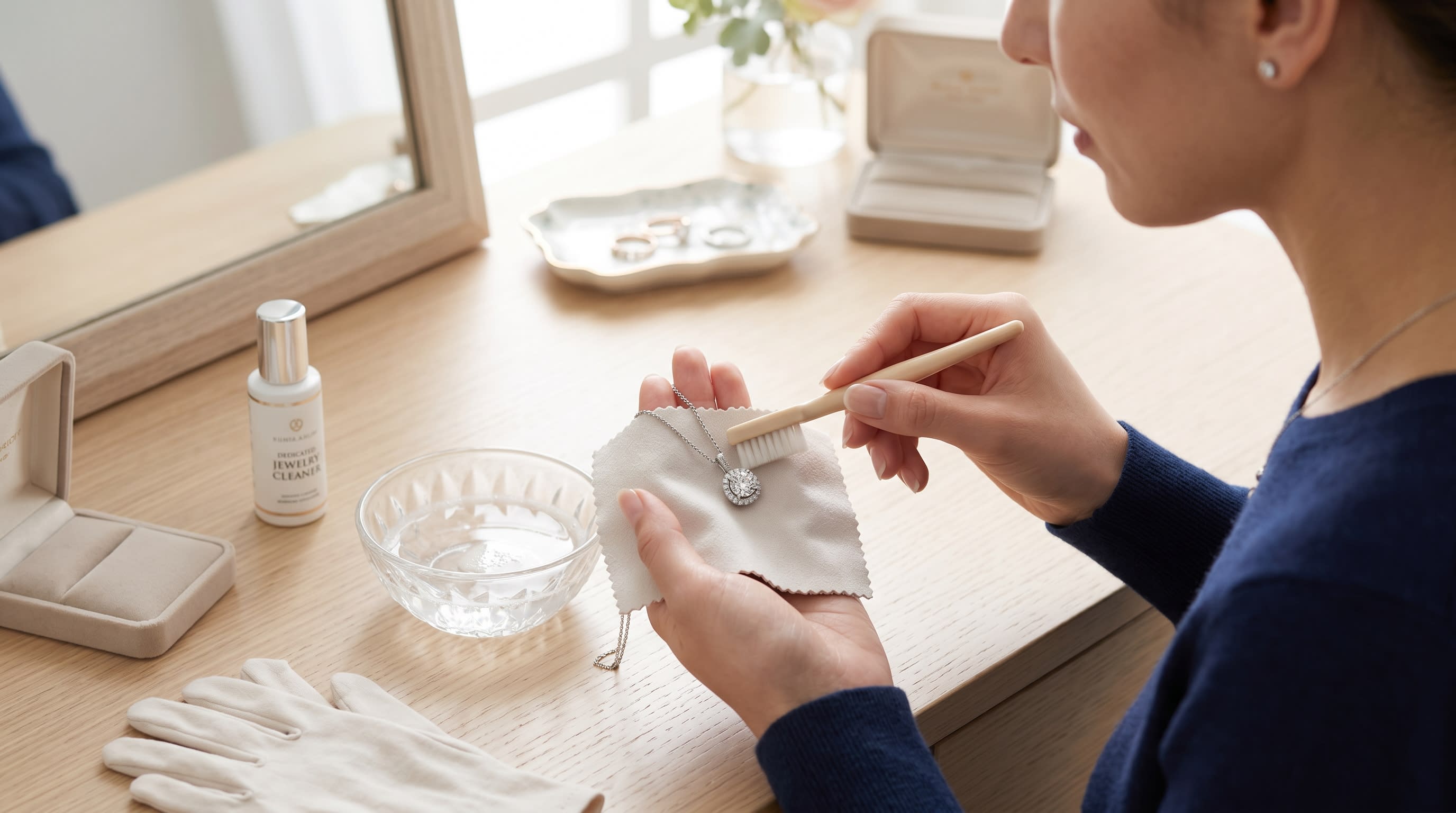
TL;DR:
- Regular, gentle cleaning combined with protective daily habits maintains your diamond necklace’s brilliance and prevents buildup. Proper storage in soft-lined boxes and careful removal before water exposure or activity prolongs its lifespan and keeps it looking pristine. Consistent low-effort maintenance is more effective than infrequent deep cleaning, ensuring lasting sparkle and beauty.
Your diamond necklace can lose its signature sparkle faster than you’d expect. Skin oils, makeup residue, and chlorine from a single swim can build up on the diamond’s facets and dull its brilliance within days of wearing it. The frustrating part? Most people clean their necklace occasionally rather than consistently, which means the problem compounds over time. A systematic care workflow changes that completely. By combining smart daily habits with the right cleaning technique and proper storage, you can keep your necklace looking camera-ready every single day it sits around your neck.
Table of Contents
- Gathering tools and preparing for diamond necklace care
- Daily habits: Protecting your diamond necklace from damage
- Step-by-step cleaning workflow for maximum brilliance
- Storage and environmental safety for diamond necklaces
- What most guides miss: The real secret to lasting brilliance
- Enhance your diamond necklace care with SuperJeweler
- Frequently asked questions
Key Takeaways
| Point | Details |
|---|---|
| Avoid harsh chemicals | Never use bleach, ammonia, toothpaste, or baking soda—stick to mild soap and distilled water. |
| Develop daily care habits | Put your necklace on after all lotions and makeup, and remove it before bathing or exercising. |
| Focus on underside cleaning | Clean the underside of your diamond necklace to remove oil and maximize brilliance. |
| Proper storage is essential | Store necklaces separately in a soft-lined box to protect from scratches and environmental hazards. |
| Consistency beats deep cleans | Regular workflow and gentle care maintain sparkle better than infrequent, harsh cleanings. |
Gathering tools and preparing for diamond necklace care
Good preparation makes the difference between a safe, effective cleaning and one that accidentally scratches your metal or loosens a prong. Before you touch your necklace, gather everything you need so you’re not scrambling mid-process.
Your safe cleaning toolkit:
- Lint-free microfiber cloth for gentle drying and polishing
- Mild dish soap (free of moisturizers or antibacterial additives)
- Distilled water to avoid mineral deposits from tap water
- A soft-bristled baby toothbrush for getting into settings
- A small bowl dedicated only to jewelry cleaning
Knowing what to avoid is just as important as knowing what to use. Harsh chemicals like bleach and ammonia can corrode metal alloys over time, strip protective finishes, and weaken prong integrity. Toothpaste and baking soda feel gentle because they’re marketed for home use, but both are abrasive at a microscopic level and can leave tiny scratches on gold and platinum. Home ultrasonic cleaners are tempting because jewelers use them professionally, but when used incorrectly they can vibrate stones loose, particularly in vintage or pavé settings.
| Tool or product | Safe to use | Reason |
|---|---|---|
| Mild dish soap | Yes | Gentle and effective at removing oils |
| Distilled water | Yes | Prevents mineral buildup on facets |
| Baby toothbrush | Yes | Soft bristles clean settings without scratching |
| Bleach or ammonia | No | Corrodes metals, weakens prongs |
| Toothpaste | No | Abrasive, scratches metal surface |
| Baking soda | No | Abrasive, strips finishes |
| Home ultrasonic cleaner | Use with caution | Can loosen stones in delicate settings |
Before you begin cleaning, clear a soft surface, like a folded towel, to work over. Remove any other rings or bracelets so they don’t accidentally scratch the necklace. Take a moment to inspect the chain links and setting under good light. If you spot a wobbly prong or a loose stone, skip cleaning and take the necklace to a jeweler first, because water and soap can accelerate a small problem into a lost diamond.
Pro Tip: Bookmark a set of jewelry care tips specific to fine jewelry so you always have a reference point before starting any at-home maintenance session.
Daily habits: Protecting your diamond necklace from damage
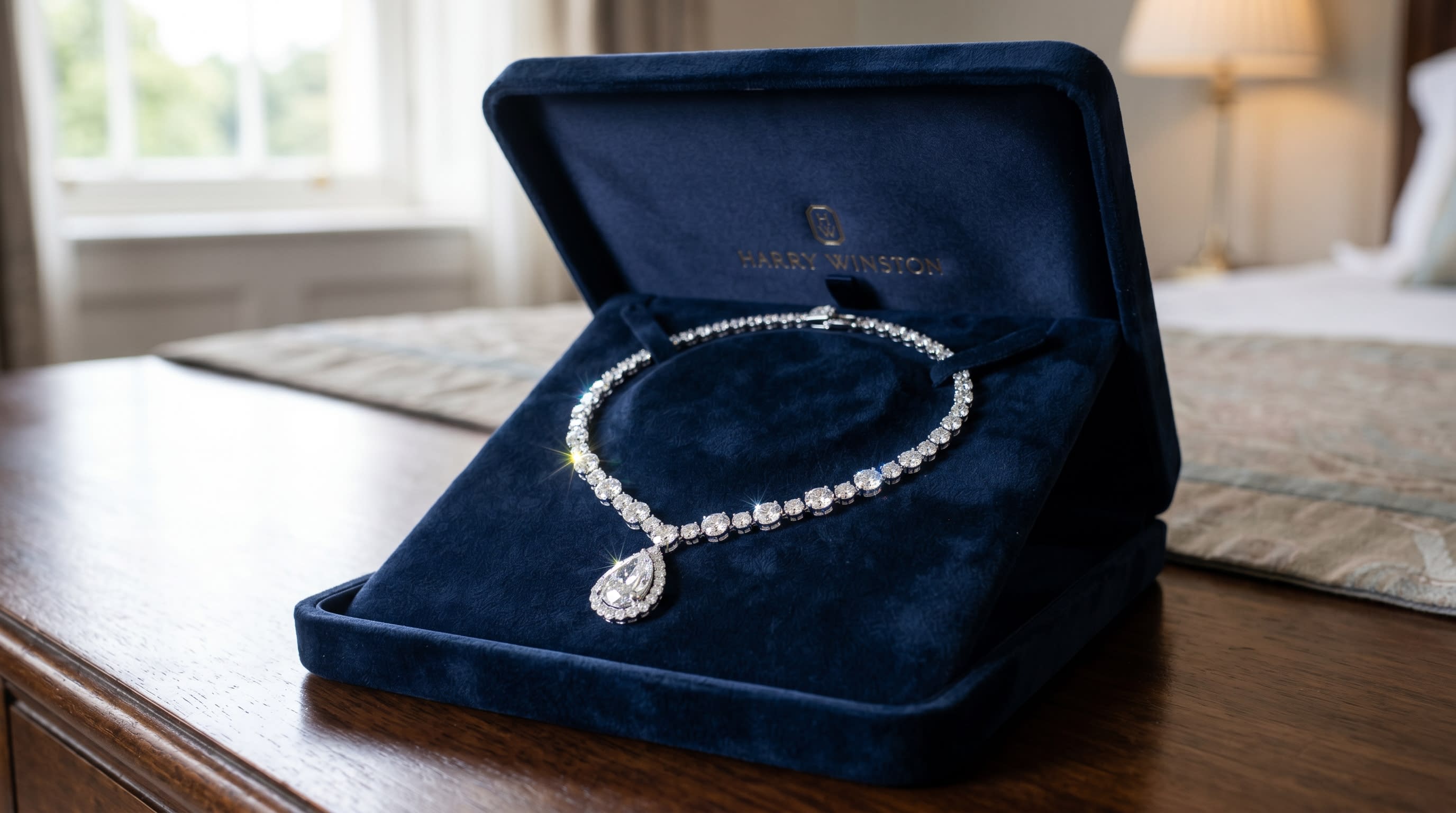
Cleaning removes the damage already done. Daily habits prevent it from happening in the first place. This is the section most people skip, and it’s exactly why their necklaces lose brilliance between cleanings.
The golden rule in jewelry care is simple: jewelry goes on last and comes off first. Put your necklace on after you’ve applied moisturizer, sunscreen, foundation, and perfume. All of these products contain compounds that deposit a filmy layer directly onto diamond facets. Once that layer builds up, light can’t enter and refract through the stone properly, and the result is a flat, lifeless look even on a high-quality diamond.
Knowing when to remove your necklace matters just as much. Remove your necklace before showering, swimming, or exercising because each of those activities exposes your jewelry to a different category of threat. Shower water contains chlorine in most municipal supplies. Pool water contains much higher concentrations of chlorine, which is aggressive enough to pit certain gold alloys. Sweat is acidic and sticky, which means it bonds with other residue on the diamond surface and is harder to clean off.
Key removal triggers to memorize:
- Before any water contact: showers, pools, hot tubs, dishwashing
- Before applying beauty products: perfume, hairspray, lotions, serums
- Before physical activity: workouts, sports, heavy yard work
- Before sleep: reduces chain tangling and metal fatigue
“Treating your necklace like the fine jewelry it is means letting it sit out the moments when your skin is working against it. That small habit protects far more than any cleaning routine ever could.”
The same principle applies to diamond earring care tips, where daily removal habits extend the life of settings and maintain the look of the metal. If you own lab grown diamond jewelry, these same rules apply exactly. Lab-grown diamonds share the same chemical and physical properties as natural diamonds, so they react identically to oils, chlorine, and sweat.
| Activity | Risk to necklace | Action |
|---|---|---|
| Swimming in a pool | High chlorine exposure | Always remove |
| Working out | Sweat and acid buildup | Always remove |
| Applying perfume | Film deposits on facets | Apply perfume first, then necklace |
| Cooking | Heat, oil, and steam | Remove or tuck in |
| Sleeping | Chain tangling and fatigue | Remove and store |
Pro Tip: Keep a small dish near your bathroom sink dedicated only to your necklace. Making removal into a ritual that takes less than five seconds removes every excuse for leaving it on.
Step-by-step cleaning workflow for maximum brilliance
Routine protection keeps your necklace looking good daily. But a proper periodic cleaning is what restores the full fire and brilliance of the diamond by removing layered buildup that daily habits can’t fully prevent.
Diamonds attract oils and grease more than almost any other gemstone, which is why the underside of the stone (the pavilion) collects the most grime. Directing roughly 80% of your cleaning effort toward the pavilion and the base of the setting produces dramatically better results than scrubbing the top of the stone.
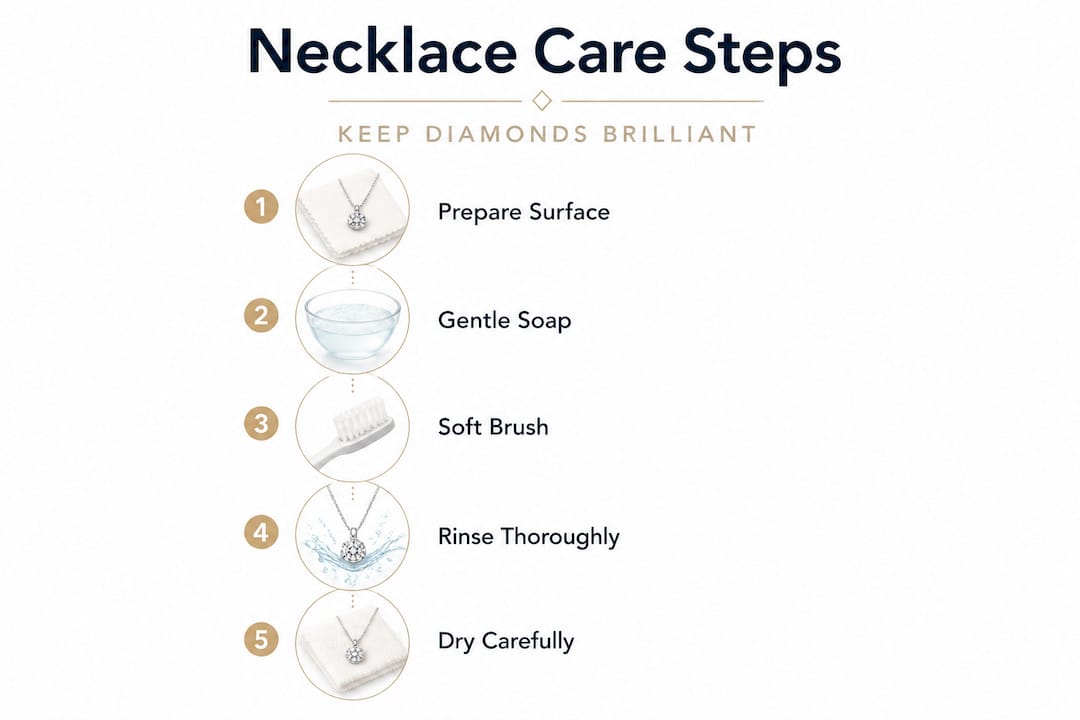
Step-by-step cleaning process:
- Fill your small bowl with warm distilled water and add 2 to 3 drops of mild dish soap.
- Submerge the necklace and let it soak for 15 to 20 minutes to loosen built-up oils.
- Remove the necklace and use your soft baby toothbrush to gently scrub the pavilion (bottom) of each diamond first.
- Work the bristles carefully through the prongs and along the setting’s underside.
- Turn the necklace over and gently brush the crown (top) of the diamond in small circular motions.
- Clean the chain by lightly running it through your fingers while still submerged.
- Rinse thoroughly under cool running water, making sure no soap remains in the setting.
- Pat dry with your lint-free cloth, then lay flat on a clean towel and let it air dry fully before storing.
Common mistakes that reduce brilliance:
- Overcleaning: Cleaning daily with soap strips the natural luster from gold finishes over time. Weekly light wipe-downs plus a monthly deep clean is the right balance.
- Neglecting the chain: Oils and dead skin cells accumulate in chain links too, making the entire piece look dull even when the diamond is clean.
- Rushing the rinse: Soap residue left in a setting causes its own cloudy film that looks a lot like a dirty diamond.
- Wiping aggressively: Dragging a cloth across the setting can catch prongs and bend them slightly over many cleanings.
If you’re unsure about the specific type of setting on your necklace, reviewing diamond necklace terminology before you clean helps you understand where to be most careful. For example, bezel-set necklaces require different brushing angles than prong-set ones. Checking your diamond necklace buying tips can also help you understand the metal type, which affects how aggressively you can clean. Yellow gold is softer than platinum, so it needs a lighter touch. Understanding what you own directly from your original diamond necklace buying guide is one of the most underrated steps in a proper care routine.
Pro Tip: Plug your drain before rinsing. Losing a stone down a drain during cleaning is more common than people admit, and it’s entirely preventable.
Storage and environmental safety for diamond necklaces
A thorough cleaning means very little if you store your necklace carelessly afterward. Poor storage undoes your work within hours by introducing new scratches, tangles, or chemical exposure from nearby products.
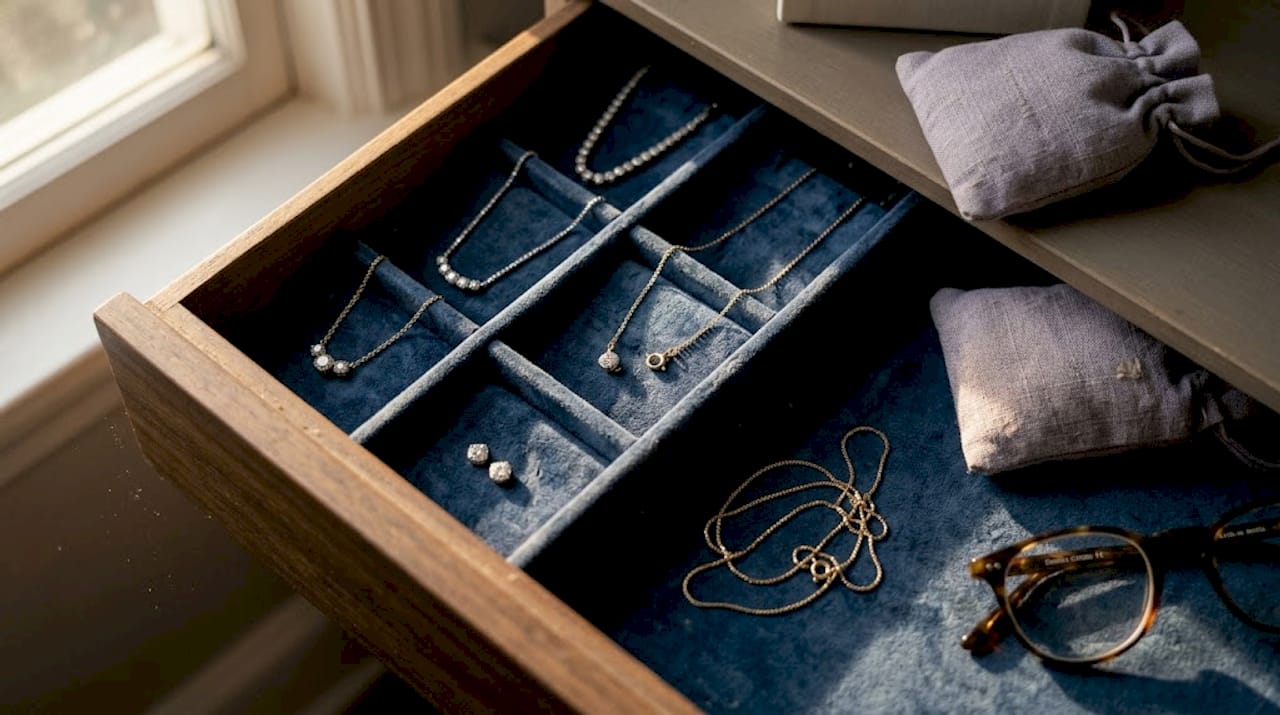
The ideal storage solution is a soft-lined jewelry box with individual compartments for each piece. Velvet and microsuede linings are the gold standard because they grip the chain gently and prevent movement. Storing your necklace in a small zip-lock bag is a commonly suggested hack, but over time the plastic can trap moisture and create a slightly humid micro-environment, which is bad for metal finishes.
Best storage practices:
- Store your necklace flat or hanging vertically to avoid kinking
- Keep it in a separate compartment away from rings and bracelets, which scratch chains
- Never store it near a sunny window or in a humid bathroom cabinet
- For diamond cross necklaces or pendants with multiple components, lay them flat to avoid stress on the bail
- Avoid storing near perfume bottles or cleaning products, which off-gas fumes that can dull metal
Temperature and humidity both affect your necklace more than most people realize. Extreme heat (like leaving a necklace in a hot car) can cause metal to expand and prongs to shift very slightly over repeated cycles. High humidity accelerates tarnishing on silver alloys and can weaken adhesive in channel or glued settings. A small silica gel packet inside your jewelry box manages moisture effectively and costs almost nothing.
Travel storage deserves its own attention. A dedicated jewelry roll with individual pockets protects each piece during transit. Never pack a necklace loose in a toiletry bag where it can tangle with other chains or get coated in lotion or toothpaste residue. Also, as avoiding harsh chemicals like bleach and ammonia matters during cleaning, it matters equally in your storage environment. Don’t keep your jewelry box in a cabinet under a sink where cleaning supplies are stored.
Pro Tip: Fasten the clasp before storing any necklace. An open clasp is the primary reason chains develop kinks and knots, because the open end snags on itself or other pieces.
What most guides miss: The real secret to lasting brilliance
Here’s an opinion you won’t hear often: the best diamond necklace care routine is the one boring enough to do without thinking. Most guides focus on intensive cleaning techniques and detailed product comparisons. They miss the larger truth, which is that consistency at a low effort level beats occasional deep cleaning sessions at a high effort level by a wide margin.
Brilliance is lost primarily to oils, not to surface dirt. Dirt is visible and people clean it. Oils are invisible and people ignore them until the dulling is obvious. By then, you’re dealing with weeks of layered buildup that requires real effort to remove. A 30-second wipe-down with a lint-free cloth after every wear prevents that entire cycle from starting.
We’ve seen customers bring in necklaces that looked permanently damaged, and in the vast majority of cases a proper cleaning restored them fully. The damage wasn’t irreversible. It was just compounded neglect. What looked like a permanently dull stone was a temporarily greasy one. This is actually encouraging: the standard is achievable for almost anyone.
The shortcuts that promise instant results deserve skepticism. Jewelry cleaning wipes often contain alcohol or strong surfactants that are fine for a quick wipe on a watch crystal but too harsh for prong settings used repeatedly. The diamond necklace styling guide we recommend emphasizes this point: how your necklace looks on you depends as much on its brilliance as its design. A well-maintained piece outshines a neglected one regardless of carat weight.
The single mindset shift that makes the most difference is treating your care routine as maintenance rather than repair. You change the oil in a car before the engine seizes, not after. The same logic keeps your diamonds camera-ready without ever requiring an emergency rescue cleaning.
Enhance your diamond necklace care with SuperJeweler
Caring for your necklace is only half the picture. The other half is knowing you started with a piece built to last.

At SuperJeweler, every necklace in our collection is crafted to hold up to real life, including daily wear and the care routines outlined above. Whether you’re exploring our stunning necklaces selection for your next piece or shopping for a more sustainable sparkle with our lab grown diamond jewelry, we back every purchase with free worldwide shipping and a satisfaction guarantee. Quality jewelry deserves quality care, and we want you to love what you own for decades. Browse our full collection and find a piece worth every step of this workflow.
Frequently asked questions
How often should I clean my diamond necklace?
Most experts recommend a light cleaning every 2 to 4 weeks and a thorough soak-and-brush cleaning every few months, depending on how frequently you wear it.
Can I use toothpaste or baking soda for cleaning?
No. Toothpaste and baking soda scratch metals and can also loosen prongs when used repeatedly, so both should always be avoided.
Is it safe to shower or swim with my diamond necklace on?
No. Remove your necklace before showering or swimming to protect it from chlorine, soap, and sweat, all of which build up and dull the diamond over time.
Why does my diamond necklace look dull even after cleaning?
Most likely because the pavilion (underside) of the stone wasn’t fully cleaned. Diamonds attract oils most on the bottom, so directing most of your brushing effort there restores brilliance more effectively.
What’s the best way to store a diamond necklace?
Store it in a soft-lined jewelry box in its own compartment, clasp fastened, away from humidity and direct sunlight to prevent scratching, tangling, and chemical exposure.
Recommended
- Diamond Earring Care Tips: Proven Steps to Keep Them Sparkling
- Jewelry Care Tips: Keep Your Pieces Sparkling Longer
- Diamond necklace styling guide: elevate every look
- Diamond necklace buying tips: quality & value in 2026
- Care & cleaning – TriEye
