TL;DR:
- Carat measures a diamond’s weight, not its size or appearance.
- Larger diamonds are rarer and exponentially more expensive due to market demand.
- Cut quality and shape significantly influence a diamond’s visual size and brilliance.
Carat weight is one of the most talked about factors in diamond shopping, yet it’s also one of the most misunderstood. Many buyers assume that a higher carat number automatically means a bigger, more impressive diamond, and that price simply doubles as carat doubles. Neither is true. In reality, diamond prices rise exponentially with carat weight because larger stones are far rarer, meaning a 2ct diamond costs significantly more than two separate 1ct diamonds of identical quality. Understanding how carat weight truly works puts you in control of every jewelry decision you make.
Table of Contents
- What does carat weight really mean?
- How carat weight impacts diamond price
- Carat weight versus size: Why appearance can fool you
- Popular carat weights and what they look like in jewelry
- Common carat weight pitfalls and how to shop smart
- Why carat weight shouldn’t be your only focus
- Find the perfect diamond for your style and budget
- Frequently asked questions
Key Takeaways
| Point | Details |
|---|---|
| Carat weight is about mass | It measures diamond weight, not visible size. |
| Price increases aren’t linear | Larger diamonds cost much more than smaller stones of the same quality. |
| Size can be deceiving | Cut and setting often make a bigger visual impact than carat weight alone. |
| Avoid carat weight pitfalls | Learn how to maximize beauty and value by balancing the 4Cs, not just chasing higher carat. |
What does carat weight really mean?
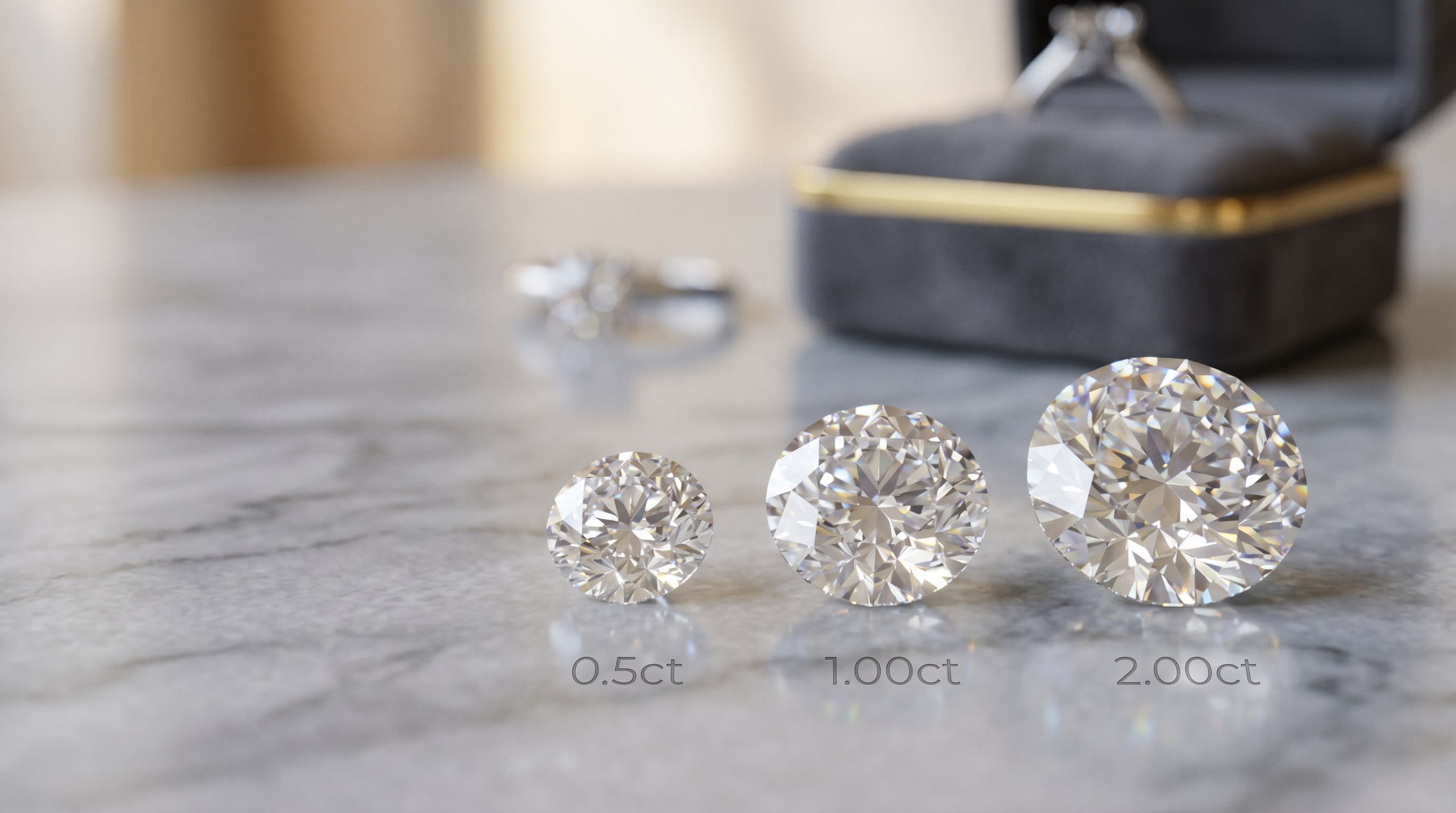
Carat weight is a unit of mass, not a measurement of how wide or tall a diamond looks. One carat equals exactly 200 milligrams, or 0.2 grams. That’s roughly the weight of a small paperclip. Jewelers use extremely precise scales to measure diamonds to the nearest hundredth of a carat, so you’ll often see weights listed as 0.97ct or 1.03ct rather than a clean whole number.
Here’s where buyers often get confused: two diamonds with the exact same carat weight can look noticeably different in size. Why? Because carat measures weight, and weight is distributed differently depending on the diamond’s shape and how it’s cut. A diamond cut too deep carries most of its weight below the surface, making it look smaller from above. A well-cut diamond of the same weight spreads that mass across its face, giving you more visible surface area.
Understanding carat weight and value together helps you see why two diamonds with identical carat numbers can be priced and sized very differently.
Common carat weights and their approximate diameter (round brilliant cut):
| Carat weight | Approximate diameter | Visual impression |
|---|---|---|
| 0.50ct | 5.0 mm | Delicate, classic |
| 0.75ct | 5.8 mm | Noticeable, elegant |
| 1.00ct | 6.5 mm | Popular, bold |
| 1.50ct | 7.4 mm | Striking, impressive |
| 2.00ct | 8.2 mm | Statement piece |
Keep in mind these measurements apply to round brilliant cuts. Fancy shapes like oval, marquise, or pear tend to have a larger surface area per carat, so they can look bigger than a round diamond of the same weight.
- Carat is a weight measurement, not a size measurement
- Cut quality directly affects how large a diamond appears
- Fancy shapes often appear larger than rounds at the same carat weight
- Depth percentage determines how much weight is visible from above
- Millimeter diameter is a better size reference than carat alone
Pro Tip: Watch for “magic numbers” when you shop. Diamonds priced at exactly 1.00ct carry a premium simply because buyers fixate on that milestone. A 0.97ct diamond looks virtually identical to the naked eye but can cost meaningfully less.
How carat weight impacts diamond price
Price does not scale in a straight line with carat weight. It grows exponentially. This happens because large rough diamonds are extraordinarily rare in nature. Finding a rough stone big enough to yield a 2ct polished diamond is far less common than finding two separate stones that yield 1ct each, so the market prices that rarity accordingly.
“A 2ct diamond costs significantly more than two 1ct diamonds of the same quality, because larger stones are far rarer and command a much higher price per carat.”
This has real consequences for your budget. Consider a rough price comparison for round brilliant diamonds of similar cut and clarity:
| Carat weight | Approximate price range | Price per carat |
|---|---|---|
| 0.50ct | $800 to $1,500 | $1,600 to $3,000 |
| 1.00ct | $3,500 to $7,000 | $3,500 to $7,000 |
| 1.50ct | $8,000 to $15,000 | $5,300 to $10,000 |
| 2.00ct | $15,000 to $30,000 | $7,500 to $15,000 |
(Prices are general estimates for natural diamonds with good cut and VS2 clarity. Lab-grown options are significantly more affordable.)
Notice how the price per carat itself increases as the stone gets larger. You’re not just paying for more weight; you’re paying a higher rate for every fraction of that weight. Understanding these carat weight value trends helps you set realistic expectations before you walk into any store.
Three reasons large diamonds cost so much more:
- Rarity of large rough crystals. Most diamonds found in nature are small. A rough stone large enough to produce a 2ct polished diamond is genuinely uncommon, and rarity always drives price up.
- Greater waste during cutting. Cutters remove more material proportionally when shaping larger stones, and every gram of rough diamond has value. That loss gets factored into the final price.
- Demand at milestone weights. Buyers emotionally attach to round numbers like 1ct, 1.5ct, and 2ct. Sellers know this and price stones at or just above those milestones at a premium.
Knowing this also makes necklace carat weight decisions easier. A pendant with a single 0.75ct center stone might give you far better brilliance and value than a 1ct stone at a much higher price point.
Carat weight versus size: Why appearance can fool you
Here’s a fact that surprises most shoppers: two diamonds sitting side by side can weigh exactly the same and look completely different in size. This happens because of the relationship between cut, shape, and how a diamond is mounted in a setting.
A round brilliant cut diamond and an oval cut diamond at 1.00ct each will not look the same size. The oval’s elongated shape creates a larger surface area, making it appear noticeably bigger. A marquise cut goes even further, stretching the stone to maximize visual length. These differences are real and significant, not just optical illusions.
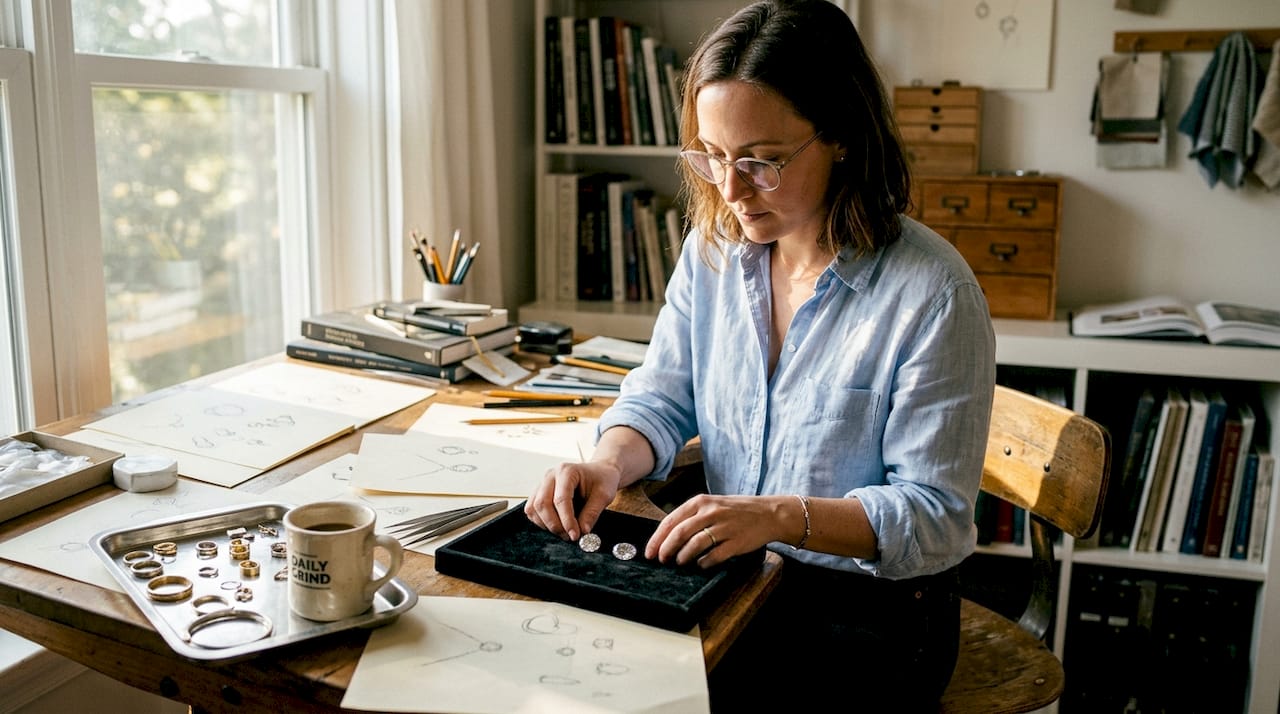
Mounting matters just as much. A solitaire setting with slim, delicate prongs lets the full diamond face shine, making it look as large as possible. A bezel setting, where metal wraps around the entire girdle (the outer edge of the diamond), can make the same stone look smaller because it hides part of the diamond’s diameter. Halo settings, where small accent diamonds surround the center stone, can make a 0.75ct center diamond look like a 1.25ct stone to the untrained eye.
Understanding how carat and necklace sizes interact with setting design applies equally to rings and earrings. The visual result is always a combination of weight, cut, and setting working together.
Three visual tricks that make a diamond appear larger:
- Choose elongated shapes. Oval, pear, and marquise cuts spread weight across a longer surface, boosting visual size without adding carat weight.
- Select a halo or pavé setting. Surrounding accent stones add sparkle and perceived size around the center stone.
- Opt for a slim band. A thinner band makes the center diamond look proportionally larger by comparison.
Pro Tip: If maximizing visual size on a budget is your goal, a well-cut oval or elongated cushion in a halo setting will consistently outperform a round solitaire at the same carat weight and price. Cut quality is the single biggest factor in how brilliant and large a diamond appears.
Popular carat weights and what they look like in jewelry
Visualizing carat weights in real jewelry helps you shop with confidence rather than guessing from abstract numbers. Here’s what the most popular weights actually look like across different jewelry types.
| Carat weight | Round diameter | Common jewelry use | Visual feel |
|---|---|---|---|
| 0.25ct | 4.1 mm | Stud earrings, pendants | Subtle, everyday wear |
| 0.50ct | 5.0 mm | Engagement rings, earrings | Classic, feminine |
| 0.75ct | 5.8 mm | Engagement rings, pendants | Noticeable, versatile |
| 1.00ct | 6.5 mm | Engagement rings, solitaires | Bold, traditional milestone |
| 1.50ct | 7.4 mm | Statement rings, anniversary rings | Striking, eye-catching |
| 2.00ct | 8.2 mm | Luxury rings, heirloom pieces | Dramatic, unmistakable |
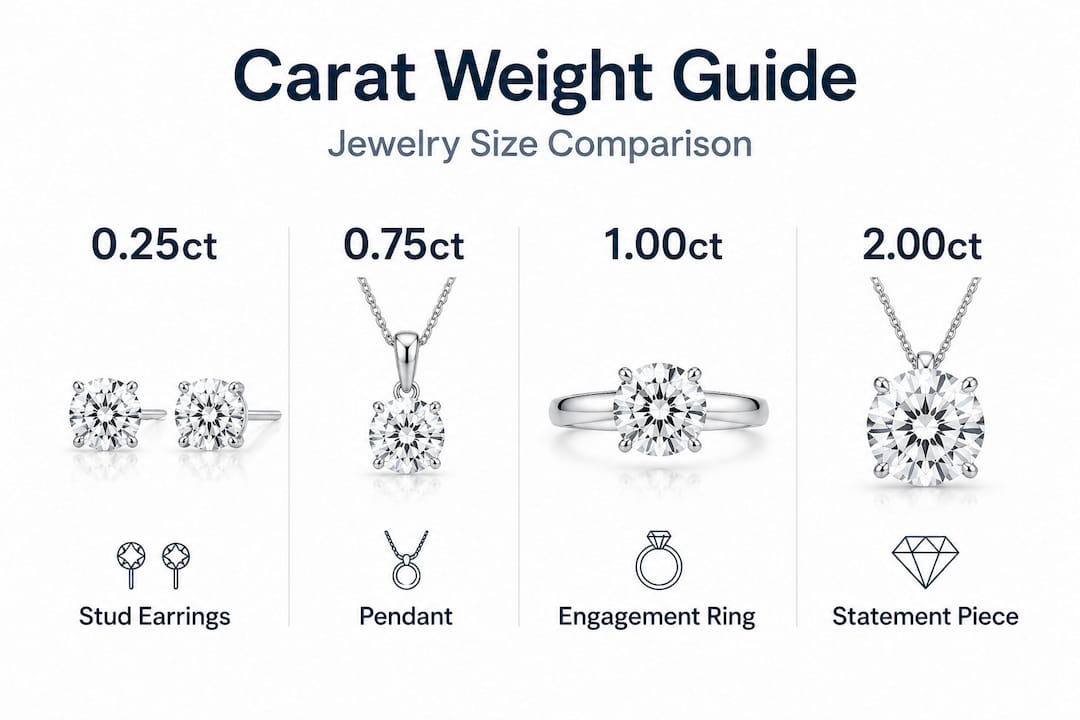
For engagement rings, 1ct remains the most popular choice in the United States, but that doesn’t mean it’s the best choice for every buyer. A beautifully cut 0.75ct diamond in a halo setting can look just as impressive as a 1ct solitaire while saving hundreds or even thousands of dollars.
Browsing 1 carat diamond rings gives you a clear benchmark for what that milestone looks like in real settings. If you want something more dramatic, 2 carat diamond rings offer a genuinely striking presence, especially in lab-grown options where the price is far more accessible. For those who want maximum impact, 4 carat diamond rings represent a true statement piece that turns heads.
Shopping tips for picking the right carat weight:
- Match carat weight to finger size. Larger hands can carry bigger stones naturally; smaller hands often look best with 0.5ct to 1ct ranges.
- Consider lifestyle. Active lifestyles call for lower-profile settings with modest carat weights that won’t snag or feel heavy.
- Think about setting style before choosing carat. A halo or three-stone setting changes the visual equation dramatically.
- Lab-grown diamonds give you more carat for your money. The same budget that buys a 0.75ct natural diamond can often get a 1.5ct lab-grown stone.
- Prioritize cut quality first. A well-cut smaller diamond outshines a poorly cut larger one every single time.
Common carat weight pitfalls and how to shop smart
Even informed buyers fall into predictable traps when carat weight enters the conversation. Knowing these mistakes in advance saves you money and regret.
- Fixating on round number milestones. The jump from 0.99ct to 1.00ct is invisible to the naked eye, but the price jump is very real. Sellers charge a premium at exactly 1.00ct, 1.50ct, and 2.00ct because buyers demand those numbers. Buying just below these milestones is one of the smartest moves in diamond shopping.
- Ignoring cut quality to get more carats. A poorly cut 1.5ct diamond will look dull and lifeless. A well-cut 1.00ct diamond will dazzle. Cut is what makes a diamond sparkle, and sparkle is what makes it beautiful. Never sacrifice cut grade to squeeze out extra carat weight.
- Assuming total carat weight equals center stone weight. Jewelry listings often show “total carat weight” (TCW), which includes all the small accent diamonds in a setting. A ring listed as 1.50ct TCW might have a 0.75ct center stone with 0.75ct in side stones. Always check the center stone weight separately.
- Overlooking lab-grown options. Lab-grown diamonds are chemically and visually identical to natural diamonds. They simply cost 50 to 80 percent less per carat. For buyers who want maximum carat weight within a budget, lab-grown diamonds are the most practical solution available today.
- Not comparing millimeter measurements. Always ask for the millimeter diameter of any diamond you’re considering. Two stones labeled 1.00ct can measure 6.3mm and 6.7mm depending on cut proportions. The larger diameter will look bigger on the finger.
Exploring affordable 1 carat rings shows you just how much variety exists at that popular milestone, including options that maximize visual size through smart cutting and setting choices.
Pro Tip: Ask your jeweler for the “face-up size” or millimeter diameter before committing to any diamond. A 0.95ct diamond with a 6.4mm diameter looks larger than a 1.00ct diamond with a 6.3mm diameter. Weight alone tells only part of the story.
Why carat weight shouldn’t be your only focus
After years of helping customers find their perfect ring, one pattern stands out clearly: the buyers who end up happiest are rarely the ones who chased the highest carat number. They’re the ones who balanced carat weight with cut quality, setting design, and their own personal style.
We’ve seen it play out countless times. A buyer stretches their budget to hit 2ct, compromises on cut grade to afford it, and ends up with a diamond that looks flat and glassy rather than brilliant and alive. Meanwhile, another buyer chooses a 1.25ct diamond with an excellent cut in a beautifully designed setting, and the ring genuinely stops people in their tracks.
The uncomfortable truth is that carat weight is the most marketed factor in diamond shopping precisely because it’s the easiest number to sell. “Bigger is better” is a simple message. But beauty in a diamond comes from the interaction of light with precisely angled facets, and that’s entirely about cut. A high carat weight with a mediocre cut is like buying a sports car with a weak engine. The outside looks impressive; the experience doesn’t deliver.
We also encourage buyers to think about long-term satisfaction. Rings are worn every day for decades. A ring that fits your lifestyle, flatters your hand, and reflects your personal taste will bring more joy than a ring that simply hits a carat milestone. Understanding diamond shopping value means looking at the whole picture: carat, cut, clarity, color, setting, and style working together as one.
The best jewelry decisions come from knowledge, not marketing pressure. And now you have that knowledge.
Find the perfect diamond for your style and budget
You’ve done the work to understand carat weight. Now it’s time to put that knowledge to use and find a diamond that genuinely excites you.

At SuperJeweler.com, you can shop by carat weight, shape, setting style, and budget all at once, making it easy to compare options side by side and see exactly what you’re getting. Whether you’re drawn to a classic 1 carat radiant cut or want to explore lab-grown diamonds that give you more stone for less money, the full range is right here. We offer free worldwide shipping, flexible return policies, and a team that genuinely wants you to find the right ring at the right price. Browse by carat, filter by budget, and discover how far your money can really go.
Frequently asked questions
How is carat weight measured in diamonds?
Carat weight is measured using high-precision scales, with one carat equaling exactly 200 milligrams. Jewelers measure to the nearest hundredth of a carat for accuracy.
Does a higher carat always mean a bigger-looking diamond?
No, two diamonds of the same carat weight can look very different in size depending on their cut, shape, and setting. An oval or marquise cut often appears larger than a round diamond of identical carat weight.
Why does diamond price jump at certain carat weights?
Prices surge at popular milestones like 1ct and 2ct because larger stones are far rarer in nature and buyer demand at those exact numbers pushes prices up further.
How do I choose the best carat weight for my engagement ring?
Consider your budget, finger size, preferred setting style, and personal taste together. Buying slightly below a popular carat milestone, such as 0.95ct instead of 1.00ct, often delivers the best combination of size and value.
Is carat weight more important than cut or clarity?
Carat weight is just one of four key quality factors. Cut and clarity often have a bigger impact on a diamond’s brilliance and beauty, so balancing all four factors leads to the most impressive result within any budget.
Recommended
- How carat weight influences diamond value in 2026
- Necklace Carat Weight Explained for Smarter Shopping
- Role of cut in diamond quality: maximize sparkle in 2026
- Diamond shape impact: choosing the ideal engagement ring
