TL;DR:
- Jewelry values vary depending on appraisal purpose, including insurance, resale, or estate needs.
- The appraisal process involves detailed examination, market research, and professional judgment.
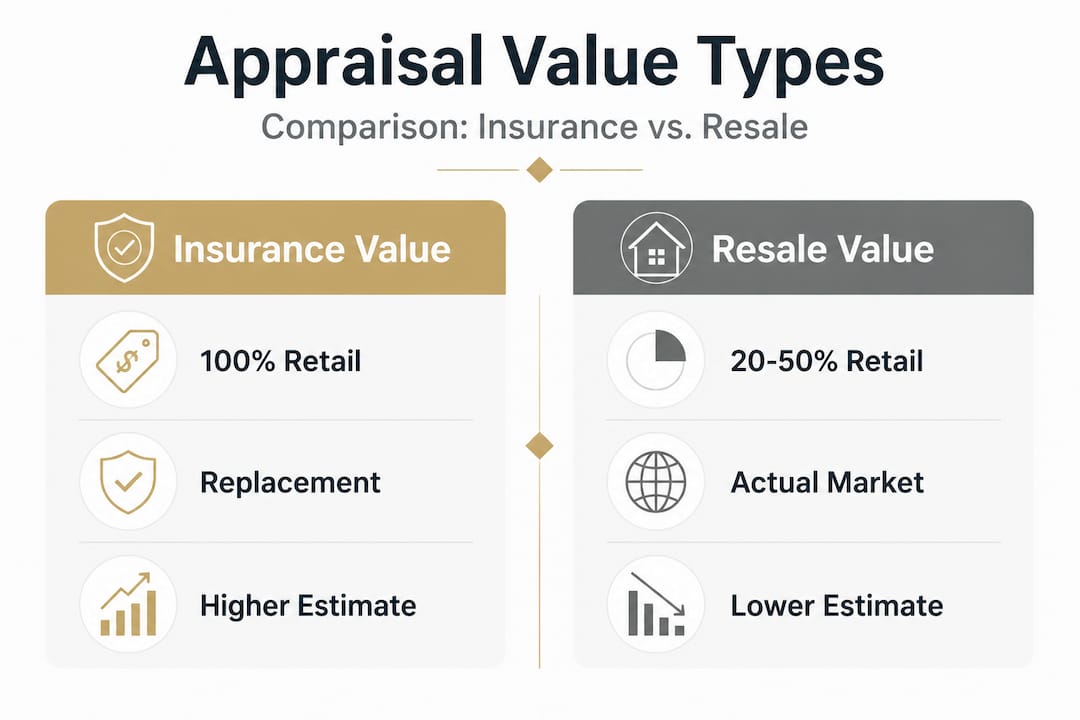
- Resale value is typically 20-50% of insurance replacement cost, reflecting secondary market prices.
Most people assume their jewelry has one clear, fixed value. It doesn’t. The ring you paid $3,000 for might be insured for $4,500, sold at resale for $1,200, or liquidated for even less depending on who’s looking at it and why. That gap isn’t a mistake or a scam. It’s how jewelry valuation actually works, and understanding it could save you thousands of dollars whether you’re buying an engagement ring, filing an insurance claim, or settling an estate. This guide walks you through everything you need to know about jewelry appraisals, from what they are to how to use them effectively.
Table of Contents
- What is a jewelry appraisal?
- The appraisal process step by step
- How value is determined in jewelry appraisals
- Expert tips for choosing and using an appraiser
- Appraisal edge cases and special situations
- A fresh take: Why jewelry appraisal is more art than science
- Explore your options with expert guidance
- Frequently asked questions
Key Takeaways
| Point | Details |
|---|---|
| Appraisals are purpose-driven | Every jewelry appraisal serves a specific need like insurance, resale, or estate documentation. |
| No single value | Jewelry often has a range of values that change with market trends and conditions. |
| Expertise matters | Certified independent appraisers provide the most accurate and trusted results. |
| Edge cases need extra care | Estate, vintage, and lab-grown pieces require specialized knowledge for proper appraisal. |
What is a jewelry appraisal?
A jewelry appraisal is a formal, written document prepared by a qualified professional that assigns a monetary value to a piece of jewelry for a specific purpose. It’s not just a price tag. It’s a detailed record that describes the piece, documents its materials and condition, and explains the method used to arrive at a value.
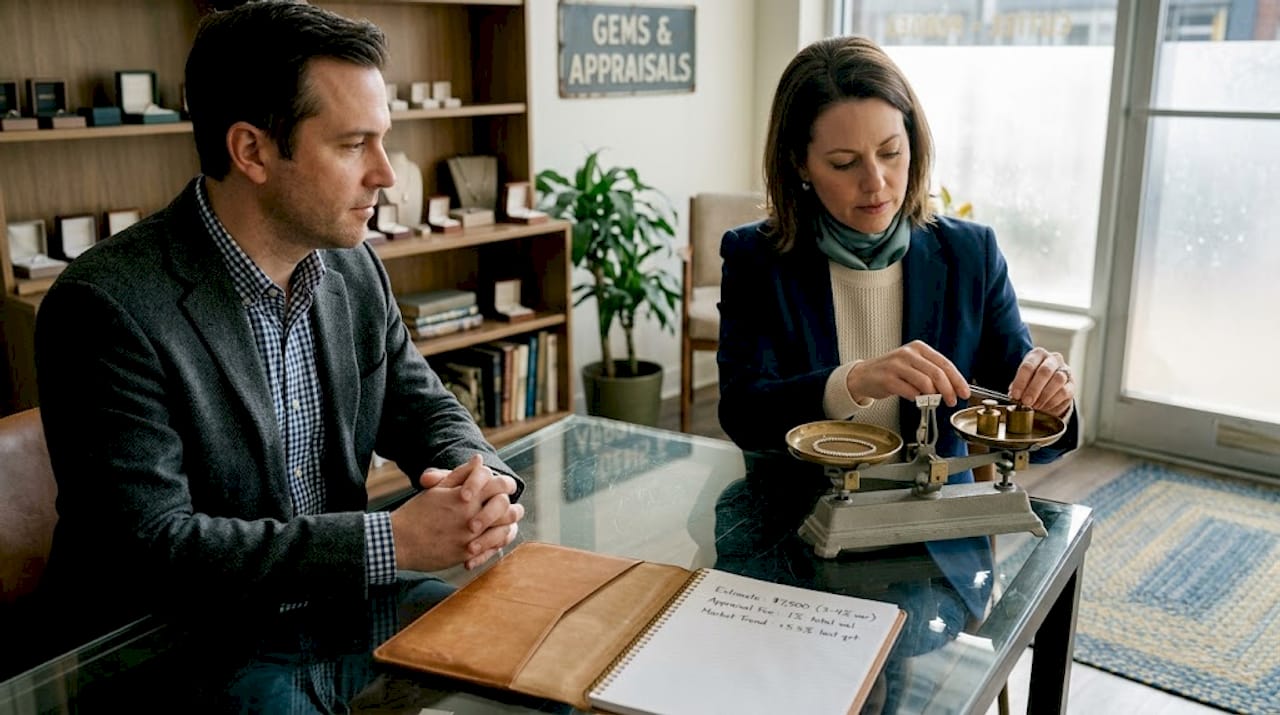
A qualified appraiser examines your piece using professional tools like loupes, microscopes, and electronic metal testers. They then write a report that covers the following core elements:
- Physical description: Metal type, weight, and purity (for example, 18k yellow gold or platinum 950)
- Gemstone details: Carat weight, cut, color, clarity, and any identifying characteristics
- Condition assessment: Scratches, prong wear, stone security, and overall structural integrity
- Photographs: Visual documentation of the piece from multiple angles
- Methodology: The approach used to determine value
- Appraiser credentials: Certifications, professional affiliations, and contact information
- Purpose of the appraisal: Insurance replacement, resale, estate, charitable donation, or equitable distribution
That last point matters more than most people realize. Appraisal reports must detail their purpose, methodology, and appraiser credentials because the same ring can carry very different values depending on what the appraisal is for. An insurance appraisal reflects what it would cost to replace the piece at retail. A resale appraisal reflects what the open market would actually pay.
Here’s a quick breakdown of the most common appraisal types:
| Appraisal type | What it reflects | Common use |
|---|---|---|
| Insurance replacement | Retail replacement cost | Homeowner or jewelry insurance |
| Fair market value | Price between willing buyer and seller | Estate planning, divorce |
| Resale value | Secondary market price | Selling or trading in |
| Liquidation value | Quick-sale floor price | Urgent sale, pawn |
One important truth to keep in mind: no single “value” exists because market volatility (gold recently hitting record highs) and piece condition create wide ranges. A diamond ring appraised during a gold price spike will carry a higher insurance value than the same ring appraised two years later if metal prices drop. Markets move. Your appraisal should reflect that reality.
“A jewelry appraisal is only as useful as the context it was written for. Always know why you’re getting one before you walk in the door.”
The appraisal process step by step
Understanding what a jewelry appraisal is, the next important question is how the process works in practice. Here’s what to expect from start to finish.
- Research and preparation. Before your appointment, gather any existing documentation: original receipts, prior appraisals, gemstone certificates (like a GIA grading report), or any provenance records for vintage or estate pieces. Clean your jewelry gently with a soft cloth so the appraiser can see it clearly.
- Find a qualified, independent appraiser. Look for credentials from recognized organizations like the Gemological Institute of America (GIA), the American Society of Appraisers (ASA), the National Association of Jewelry Appraisers (NAJA), or the International Society of Appraisers (ISA). Crucially, choose someone who has no financial stake in buying or selling your piece.
- The physical examination. The appraiser will inspect your piece under magnification, weigh it, test the metal, and grade any gemstones. For diamonds, they’ll assess the four Cs: cut, color, clarity, and carat weight. For colored stones, they may use spectroscopy or other tools to identify the gem type and detect treatments.
- Market research and comparables. A good appraiser doesn’t just look at the piece itself. They research current market prices for similar items, check metal spot prices, and compare recent auction or retail sales data. This step takes time and is where experience really counts.
- Documentation and valuation. All findings are recorded in a formal report. The appraiser assigns a value based on the purpose of the appraisal and the market data gathered.
- Final report delivery. You receive a signed, dated document with photographs, descriptions, and the assigned value. Keep this in a safe place, ideally a fireproof safe or a safe deposit box.
Appraisals cost $50 to $150 per hour or $25 to $100 per piece, and the process ranges from one hour for a simple item to several weeks for large collections. Don’t let cost deter you. For a piece worth several thousand dollars, a $75 to $150 appraisal fee is a small investment in protection.
Pro Tip: Never let the appraiser take your jewelry out of your sight during the examination. A reputable professional will always work in front of you. If someone asks to “hold onto it overnight,” that’s a red flag.
How value is determined in jewelry appraisals
Once you know the steps in the process, it’s crucial to understand how the appraiser arrives at those valuation numbers. This is where many buyers get confused or feel misled.
Appraisers don’t pull numbers from thin air. They use a combination of physical analysis, market data, and professional judgment. The type of value they’re calculating depends entirely on the appraisal’s purpose, as we covered above. But within each type, several factors influence the final number:
- Metal value: The melt value of the metal (weight multiplied by spot price multiplied by purity) acts as a baseline floor. A 10-gram 18k gold ring has a melt value you can calculate almost to the dollar.
- Gemstone quality: Cut, color, clarity, and carat weight for diamonds. For colored gems, rarity, origin, and treatments (or lack of them) play a major role.
- Craftsmanship and brand: A hand-engraved Art Deco platinum ring from a recognized maker carries a premium over a mass-produced piece with the same materials.
- Current market demand: Trends shift. Yellow gold is surging in popularity right now. Certain colored stones like Paraiba tourmalines command prices that would have seemed absurd a decade ago.
- Condition: Chips, cracks, missing stones, worn prongs, and polishing history all affect value in both directions.
Here’s the comparison that surprises most buyers: resale value is typically 20 to 50% of insurance value, with gold melt value as the floor based on weight, spot price, and purity. That means a ring insured for $5,000 might realistically sell for $1,000 to $2,500 on the secondary market. That’s not a rip-off. It reflects the difference between retail replacement cost and what the open market will actually pay.
| Value type | Typical % of retail price | Practical meaning |
|---|---|---|
| Insurance replacement | 100% to 130% | Covers full retail replacement |
| Fair market value | 50% to 80% | Realistic sale between parties |
| Resale/secondary market | 20% to 50% | What you’d get selling today |
| Liquidation | 10% to 30% | Quick-sale minimum |
Lab-grown diamonds add another layer of complexity. If you’re curious about how lab-grown vs natural diamonds differ in terms of market value and appraisal treatment, the gap is significant and growing. Lab-grown stones are appraised lower than natural diamonds of equivalent quality because their resale market is still developing and supply is abundant.
Pro Tip: Ask your appraiser to specify which type of value they’re assigning and why. If they can’t explain their methodology clearly, find someone else.
Expert tips for choosing and using an appraiser
Knowing how valuation works, let’s cover how you can set yourself up for appraisal success, starting with finding the right expert.
The single most important rule: never use a free appraisal offered by the jeweler selling you the piece. It’s not that all jewelers are dishonest. It’s that a seller who profits from a higher appraisal value has an obvious conflict of interest. Their “free appraisal” often inflates the insurance value to make their price look like a bargain. You end up over-insuring a piece and paying higher premiums for years.
Here’s what to look for in a trustworthy appraiser:
- Certified credentials: Choose independent certified appraisers with designations like GIA Graduate Gemologist (GG), ASA, NAJA, or ISA, and make sure they charge flat fees or hourly rates rather than a percentage of the appraised value.
- Independence: They should have no financial stake in buying, selling, or repairing your piece.
- Transparency: They should explain their methodology and welcome your questions.
- Experience with your type of jewelry: Someone who specializes in estate jewelry may not be the best choice for evaluating a modern lab-grown diamond jewelry piece, and vice versa.
“An appraiser who charges a percentage of the appraised value has a built-in incentive to inflate your jewelry’s worth. Always pay by the hour or by the piece.”
When should you re-appraise? The answer is more often than most people think. You should update appraisals every 2 to 3 years because metal prices and gemstone markets shift constantly. Gold prices, for example, have moved dramatically over the past decade. If your insurance appraisal is from 2018, it almost certainly doesn’t reflect today’s replacement cost. This is especially true if you own pieces with significant ethical considerations for lab-grown gems, where market values are evolving rapidly.
Red flags to watch for include appraisers who rush the examination, refuse to let you watch, offer verbal-only appraisals, or can’t produce credentials on request. A legitimate appraisal always results in a written, signed document.
Appraisal edge cases and special situations
Finally, let’s consider appraisal situations where the standard rules need extra nuance or caution for best results.
Not every piece of jewelry fits neatly into the standard appraisal framework. Here are the most common edge cases and what you need to know about each:
- Estate and collection appraisals: When donating jewelry valued over $5,000 to charity or settling an estate, the IRS requires qualified appraisals completed by a certified professional. Using an unqualified appraiser for these situations can result in rejected deductions or legal complications.
- Lab-grown vs natural diamonds: Lab-grown stones are appraised differently from natural diamonds. Because supply is higher and resale demand is still maturing, lab-grown gems typically carry lower appraised values. This doesn’t mean they’re inferior for wearing or gifting, but it does matter for insurance and resale planning.
- Vintage and antique jewelry: Provenance, maker’s marks, period authenticity, and condition wear all add significant nuance. A Georgian mourning ring with documented history is worth far more than an identical-looking reproduction. An experienced estate appraiser will know how to research and document these factors properly.
- Post-repair and modified pieces: If your jewelry has been resized, re-tipped, re-plated, or had stones replaced, it needs a fresh appraisal. Modifications can increase or decrease value, and an outdated appraisal won’t reflect the current state of the piece.
- Mounted stones: When a gemstone is set in a mounting, the appraiser can only estimate certain grading characteristics (like the exact carat weight or clarity of the stone’s underside). For high-value pieces, removing the stone for grading may be worth the extra cost.
- Costume vs fine jewelry: Authentication matters enormously here. A piece sold as fine jewelry that turns out to be costume quality has a dramatically different value. If you’re buying vintage or estate pieces from private sellers, an independent appraisal before purchase is a smart move.
A fresh take: Why jewelry appraisal is more art than science
With the main facts covered, it’s worth stepping back for a moment to offer a perspective you won’t hear from most guides or jewelry store handouts.
There’s a temptation to treat an appraisal like a scientific measurement, precise, repeatable, and objective. But two equally qualified appraisers can look at the same ring and arrive at values that differ by 15% or more. That’s not incompetence. That’s the reality of a market driven by human perception, trend cycles, and judgment calls.
Consider how the nuances in diamond valuation shift based on who’s buying and why. A diamond that grades identically on paper may sell for very different prices depending on whether it’s being marketed to a retail buyer, an estate dealer, or an international wholesale buyer. The stone didn’t change. The context did.
This is why we believe you should treat your appraisal as a living document, not a permanent truth. Markets move. Trends shift. What was fashionable and valuable in 2010 may be less so today, and what’s undervalued now may surge in five years. Updating your appraisal regularly isn’t just about insurance compliance. It’s about staying connected to the real-world value of something you own and love.
The best appraisers we’ve seen don’t just hand you a number. They explain the market context, flag uncertainties, and give you a range when a single number would be misleading. That kind of honest, nuanced communication is what separates a truly useful appraisal from a piece of paper that gives you false confidence.
Explore your options with expert guidance
Now that you understand how to secure your jewelry’s value, the next step is finding pieces you can trust from the start.

At SuperJeweler, we offer a wide selection of fine jewelry, including engagement rings and lab-grown diamond pieces, designed to give you quality and value you can verify. Whether you’re shopping for an affordable engagement ring that won’t compromise on beauty or exploring our full lab-grown diamond selection for a modern, ethical choice, every piece comes with the transparency you need to make an informed decision. We back our jewelry with clear product details, warranty options, and a generous return policy so your purchase is protected from day one.
Frequently asked questions
How often should I update my jewelry appraisal?
You should update every 2 to 3 years because metal price fluctuations and shifting gem markets can significantly change your jewelry’s replacement cost over time.
Does an appraisal certificate guarantee I can sell my jewelry for that value?
No. Resale is typically 20 to 50% of the insurance value listed in an appraisal, because insurance value reflects retail replacement cost, not what buyers in the secondary market will pay.
Who is qualified to appraise jewelry?
Certified independent appraisers holding designations from GIA, ASA, NAJA, or ISA are the most reliable choice, as these credentials require demonstrated gemological knowledge and ethical standards.
Is there a difference between appraising lab-grown and natural diamonds?
Yes. Lab-grown gems carry lower values than natural diamonds of equivalent quality in most appraisals, reflecting current market perception and the still-developing resale demand for lab-grown stones.
Recommended
- Protect Your Jewelry Investment: The True Value of a Warranty
- How to verify diamond authenticity: guide for buyers
- What Makes Jewelry Timeless: Style, Value & Legacy
- Gemstone clarity guide: essential tips for jewelry buyers
