TL;DR:
- Gemstone color, emphasizing hue, saturation, and tone, significantly influences value and desirability. Understanding how color interacts with lighting, setting, and chemistry guides better buying choices. Market value depends on vivid, pure hues and provenance, making color knowledge essential for confident jewelry purchases.
Most shoppers assume that size or sparkle determines a gemstone’s worth. They’re usually wrong. Color is the single most important factor in evaluating colored stones, and understanding why gemstone color matters can mean the difference between an impulse purchase you regret and a piece you’ll treasure for decades. This guide breaks down the science, the market forces, and the practical strategies that every jewelry buyer should know before choosing a stone.
Table of Contents
- Key Takeaways
- Why gemstone color matters at every price point
- The three fundamentals of gemstone color
- The science behind how gems get their color
- How color drives gemstone market value
- Choosing gemstones by color: what actually works
- My take: color is where expertise pays off most
- Explore gemstone color with confidence at Superjeweler
- FAQ
Key Takeaways
| Point | Details |
|---|---|
| Color drives value | Color outweighs clarity and carat in determining a colored gemstone’s price and desirability. |
| Three components define color | Hue, saturation, and tone work together to determine whether a gemstone looks stunning or flat. |
| Lighting changes everything | Always evaluate a gemstone under multiple light sources to see its true color accurately. |
| Setting affects perception | Metal choice acts as a color filter and can enhance or alter how a gemstone’s color appears. |
| Personal style matters | Choosing a gemstone color that aligns with your wardrobe and lifestyle leads to lasting satisfaction. |
Why gemstone color matters at every price point
Here’s a fact that surprises many buyers: a smaller ruby with a pure, vibrant red will almost always outperform a larger stone with a muddy or brownish cast in both beauty and price. The importance of gemstone color is so significant that it routinely outweighs clarity and carat weight in professional appraisals. A flawless stone in a dull color is simply less desirable than a slightly included stone that glows.
This dynamic plays out at every level of the market, from affordable semi-precious pieces to museum-quality specimens. A Colombian emerald sold at auction for over $5.5 million primarily because its color was extraordinary. You don’t need to spend millions to feel the impact. The same principle applies when you are comparing two amethysts at a jewelry counter.
Color also carries emotional weight. Certain hues feel romantic, powerful, calming, or joyful. The gemstone color significance you assign to a piece shapes how it feels to wear it and how others respond to it.
The three fundamentals of gemstone color
Every gemologist uses the same three building blocks to describe and grade any colored stone. Understanding them gives you a vocabulary to communicate exactly what you want.
Hue is the basic color family the stone belongs to. Blue, red, green, yellow, and violet are hues. But hue gets more nuanced quickly. A sapphire’s hue is graded as pure blue, violetish blue, or greenish blue, and those modifiers carry real price implications. A pure, unmodified blue sapphire commands more than one with a strong gray or green component.
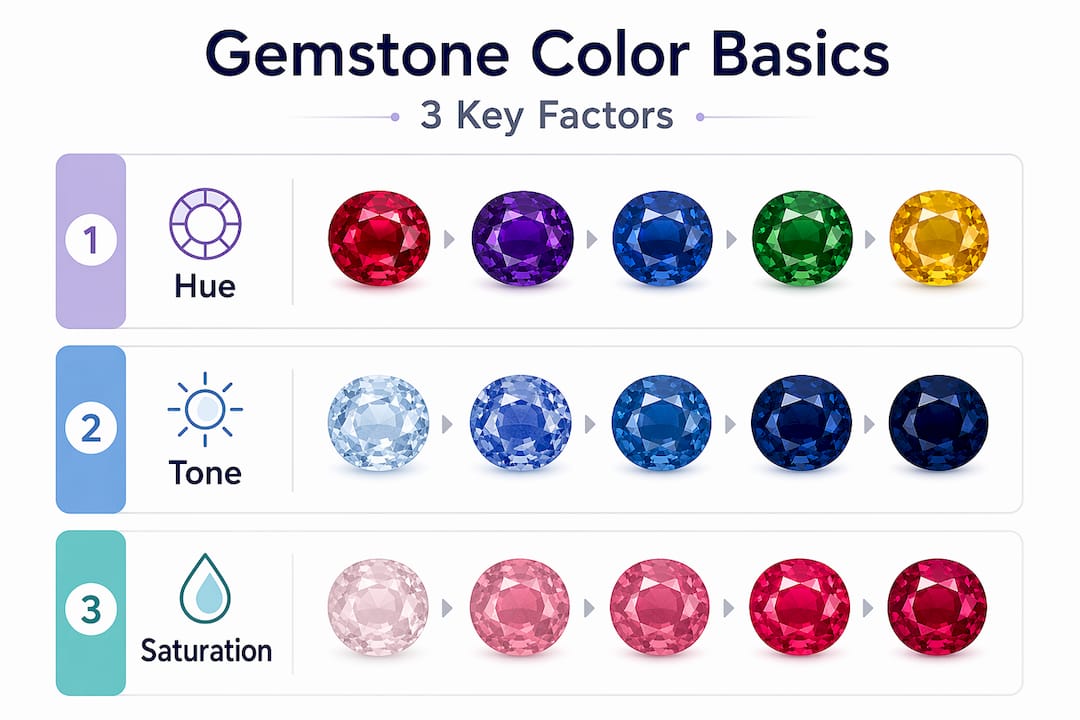
Saturation describes how vivid or intense the color is. This is where most buyers lose money. A highly saturated stone looks rich and alive. A low-saturation stone looks washed out, no matter what the hue. Vivid, medium-to-dark saturation levels consistently earn the highest premiums in professional grading. Think of saturation as the volume dial on the color.
Tone covers the lightness or darkness of the stone, ranging from nearly colorless to nearly black. A tone that is too light loses the richness of the hue. A tone that is too dark looks murky and absorbs light instead of reflecting it. The sweet spot sits in the medium to medium-dark range for most top-quality colored stones.
- A ruby at ideal hue, saturation, and tone is called “pigeon’s blood” and represents peak value.
- An emerald graded at medium-dark tone with strong green saturation and minimal yellowish hue is considered top quality.
- A blue gemstone like a sapphire hits peak desirability when saturation is vivid and tone is medium.
Pro Tip: When shopping in person, ask to see gemstones under both store lighting and natural daylight. The difference in how a stone reads between those two environments tells you a great deal about where its color truly falls on the spectrum.
The science behind how gems get their color
Color in gemstones is not random. It is chemistry. Chromium creates the red in rubies and the green in emeralds. Iron and titanium together produce the blue in sapphires. Manganese drives the pink in tourmaline and some garnets. These trace elements and impurities slip into a crystal’s structure during formation, absorbing certain wavelengths of light and reflecting others back to your eye as color.
Two optical phenomena take this further and are worth knowing before you shop.
- Pleochroism: Some stones show different colors from different angles due to their crystal structure. Sapphires, tanzanite, and alexandrite all exhibit this. A skilled gem cutter orients the stone during cutting to show the most desirable color face-up. A poorly cut stone might display a weaker secondary color because the cutter did not account for this.
- Metamerism: A stone can look entirely different colors under different types of light. Alexandrite is the most famous example, shifting from green in daylight to red under incandescent light. But even sapphires can appear more violet under fluorescent light and more purely blue in daylight.
- Color zoning: Many gems develop uneven color distribution during crystal growth. Zoning can be invisible once a stone is set but may affect its grade and price when visible.
| Gemstone | Primary trace element | Phenomenon to note |
|---|---|---|
| Ruby | Chromium | Strong fluorescence enhances red |
| Blue sapphire | Iron and titanium | Pleochroism requires precise cutting |
| Emerald | Chromium and vanadium | Heavy inclusions common in vivid stones |
| Diamond | Nitrogen (yellow tint) | Color graded D to Z scale |
Cutting and setting also directly affect color. A well-designed gemstone cut channels light through the stone to maximize the perception of its best hue. A pavilion cut too shallow or too deep bleeds color rather than concentrating it.

Pro Tip: Lighting conditions dramatically affect perception. Natural daylight at midday gives the most balanced view. Incandescent light warms up reds and oranges. If you are shopping online, look for images taken in high-CRI LED light, which most closely approximates true daylight.
How color drives gemstone market value
The impact of color on gemstones in the marketplace is measurable and significant. Industry graders prioritize vivid, medium-to-dark tones for the highest premiums. But market value is not just about looking good. Several intersecting factors amplify or diminish a color’s worth.
“Color is both a chemical property and a social construct. Buying decisions blend science and emotional response.” Sapphire color perception: The science behind its appeal
Provenance matters enormously. A Burmese ruby with a certified origin and pure red color commands multiples of what an identically colored stone from another source fetches in most markets. The color is identical. The provenance changes the price entirely.
Treatment disclosure also shifts value. Heat-treated stones are common and widely accepted, but an unheated stone with exceptional color carries a significant price premium because it achieved that color naturally. Certification from recognized labs like GIA or AGL will state treatment status, which directly affects resale potential.
Here is how the top colors for gemstones compare in terms of key value drivers:
| Stone | Top color | Key value drivers | Treatment risk |
|---|---|---|---|
| Ruby | Pure vivid red | Hue purity, origin, fluorescence | Heat treatment common |
| Blue sapphire | Vivid medium blue | Saturation and tone balance | Heat treatment common |
| Emerald | Vivid bluish green | Color depth, minimal yellowing | Oiling widely accepted |
| Diamond | D (colorless) | Absence of color graded D to Z | Irradiation for fancy colors |
Color liquidity matters too. Vivid, well-documented colors are easier to resell because they appeal to a broad market. Unusual or poorly documented colors can be stunning in person but harder to move if you ever want to upgrade or sell. This makes standardized color grading not just a technical exercise but a practical financial one.
Choosing gemstones by color: what actually works
Knowing the theory is useful. Translating it into confident decisions at the point of purchase is the real goal. Here is what experienced buyers do differently when choosing gemstones by color.
- Start with your wardrobe: The colors you wear most often are your best guide. A wardrobe heavy in navy, gray, and white will pair beautifully with sapphire, aquamarine, and white topaz. A palette of earth tones calls for amber, citrine, or chocolate garnet.
- Test under real light: Request to take any stone near a window. Store lighting almost always flatters, which means you are not seeing the true color. A stone that holds its color in natural light is a genuinely good stone.
- Think about the setting: Settings act as color filters. Yellow gold adds warmth to blues and greens, which can make a slightly greenish sapphire appear more purely blue. White gold or platinum highlights cool tones and will make a faintly gray sapphire look grayer. This is not a trick. It is a tool you can use intentionally.
- Weigh color against clarity: Unlike diamonds, most colored stones carry inclusions. A slightly included emerald with superb color is a better buy than a loupe-clean stone with flat, yellowish color. Color holds more value. For more on this tradeoff, gemstone clarity factors are worth understanding before you shop.
- Ask about treatments explicitly: Reputable sellers disclose all treatments upfront. If a price seems too low for the color you are seeing, ask directly whether the stone has been treated.
Pro Tip: If you love pink or purple gemstones but are unsure which specific hue suits you, hold swatches of fabric you own near the stone before purchasing. It sounds simple. It works remarkably well.
My take: color is where expertise pays off most
Over the years, I’ve watched buyers make the same mistake repeatedly. They spend an hour debating carat weight and almost no time examining color. Then they get home and notice the stone looks different, or they feel underwhelmed without knowing why. The answer almost always lives in the color.
What I’ve learned is that color is genuinely where the intersection of science and personal taste becomes most apparent. You can read every grading report in the world, but if the stone does not speak to you visually, no certificate changes that. At the same time, understanding what you are looking at prevents you from paying a premium for a stone that only looks good under showroom lighting.
The buyers who consistently end up satisfied are the ones who ask specific questions about hue modifiers, check the stone in multiple lighting environments, and have thought ahead about what metal they prefer and how it interacts with the color. These are not complex skills. They take maybe an hour to absorb. But the payoff is a gemstone you will still love ten years from now, not one you learned to tolerate.
My honest recommendation: before you shop for anything beyond basic diamond jewelry, spend time understanding what vivid saturation looks like versus washed-out saturation in the same stone type. That visual literacy transforms you from a casual buyer into someone who genuinely knows what they are getting.
— Andrew
Explore gemstone color with confidence at Superjeweler

At Superjeweler, you will find gemstone jewelry across an extraordinary range of colors, from deep blue sapphires and vivid rubies to soft pinks, rich purples, and ocean-inspired aquamarines. Each listing includes detailed product information so you can evaluate color, cut, and certification before you buy. Whether you are shopping for gemstone rings to mark a milestone or browsing gemstone necklaces for everyday style, Superjeweler’s selection spans every price point. If you are considering a diamond with specific color priorities, the lab-grown diamond collection offers precise color control at prices that make quality accessible. Every order ships free worldwide, backed by warranty options and a return policy designed to give you real confidence.
FAQ
What makes color the most important factor in gem value?
Color directly determines rarity and visual appeal, the two biggest drivers of market price. A gemstone with exceptional color in the right hue, saturation, and tone is simply harder to find, which makes it more valuable regardless of size.
How do I evaluate gemstone color before buying?
View the stone under natural daylight, incandescent light, and store fluorescent light. A high-quality stone holds its color across all three. A stone that only looks vivid under one source has a color weakness worth knowing about before you purchase.
Does the metal setting really change how a gemstone looks?
Yes, meaningfully. Yellow gold warms up cool-toned stones and can make a slightly off-color blue sapphire appear more vibrant. White gold and platinum enhance cool hues but can expose gray or violet modifiers that warmer metals would soften.
Are treated gemstones worth buying?
Treated stones are common and legitimate when disclosed. Heat treatment in sapphires and rubies is industry-standard and widely accepted. An unheated stone with equivalent color commands a premium. The key is full disclosure and certification so you know exactly what you own.
What are the top gemstone colors for investment-grade stones?
Pure vivid red in rubies, vivid medium blue in sapphires, and rich bluish-green in emeralds consistently top investment rankings. Colorless diamonds graded D to F also hold strong resale value. Color documentation from a recognized lab is non-negotiable for any serious purchase.
"“json
{
“@context”: “https://schema.org”,
“@graph”: [
{
“@type”: “Article”,
“headline”: “Why Gemstone Color Matters More Than You Think”,
“description”: “A comprehensive guide explaining why gemstone color matters for jewelry buyers, covering hue, saturation, tone, market value, and practical tips for choosing gemstones by color.”,
“author”: {
“@type”: “Person”,
“name”: “Andrew”
},
“publisher”: {
“@type”: “Organization”,
“name”: “Superjeweler”,
“url”: “https://www.superjeweler.com”
},
“mainEntityOfPage”: {
“@type”: “WebPage”,
“@id”: “https://www.superjeweler.com”
}
},
{
“@type”: “FAQPage”,
“mainEntity”: [
{
“@type”: “Question”,
“name”: “What makes color the most important factor in gem value?”,
“acceptedAnswer”: {
“@type”: “Answer”,
“text”: “Color directly determines rarity and visual appeal, the two biggest drivers of market price. A gemstone with exceptional color in the right hue, saturation, and tone is simply harder to find, which makes it more valuable regardless of size.”
}
},
{
“@type”: “Question”,
“name”: “How do I evaluate gemstone color before buying?”,
“acceptedAnswer”: {
“@type”: “Answer”,
“text”: “View the stone under natural daylight, incandescent light, and store fluorescent light. A high-quality stone holds its color across all three environments.”
}
},
{
“@type”: “Question”,
“name”: “Does the metal setting really change how a gemstone looks?”,
“acceptedAnswer”: {
“@type”: “Answer”,
“text”: “Yes. Yellow gold warms up cool-toned stones, while white gold and platinum enhance cool hues but can expose gray or violet modifiers that warmer metals would soften.”
}
},
{
“@type”: “Question”,
“name”: “Are treated gemstones worth buying?”,
“acceptedAnswer”: {
“@type”: “Answer”,
“text”: “Treated stones are common and legitimate when disclosed. Heat treatment in sapphires and rubies is widely accepted. Full disclosure and certification are essential.”
}
},
{
“@type”: “Question”,
“name”: “What are the top gemstone colors for investment-grade stones?”,
“acceptedAnswer”: {
“@type”: “Answer”,
“text”: “Pure vivid red in rubies, vivid medium blue in sapphires, and rich bluish-green in emeralds consistently top investment rankings. Colorless diamonds graded D to F also hold strong resale value.”
}
}
]
}
]
}
## Recommended

- [Gemstone Rings | SuperJeweler](https://www.superjeweler.com/rings/gemstone-rings)
- [Gemstone clarity guide: essential tips for jewelry buyers](https://www.blog.superjeweler.com/gemstone-clarity-guide-essential-tips-jewelry-buyers)
- [Green Gemstones: Fresh and Fabulous](https://www.superjeweler.com/green-gemstones)
- [Blue Gemstones: Ocean-Inspired Beauty](https://www.superjeweler.com/blue-gemstones)