TL;DR:
- Gemstone necklaces hold cultural, emotional, and personal significance that surpasses mere aesthetics.
- Their versatility in fashion and deep symbolism ensures they remain timeless accessories and meaningful gifts.
Gemstone necklaces are having a serious moment, and not for the reasons you might expect. Beyond their obvious visual appeal, these pieces carry cultural weight, personal symbolism, and a kind of emotional resonance that plain metal jewelry rarely achieves. If you’ve been wondering why consider gemstone necklaces as your next jewelry purchase or gift, the answer goes deeper than color and sparkle. From the spring 2026 runways to ancient healing traditions, gemstone necklaces sit at a rare intersection of fashion, identity, and meaning that makes them worth a closer look.
Table of Contents
- Key Takeaways
- Why consider gemstone necklaces in 2026
- Cultural and symbolic significance of gemstone necklaces
- Emotional and personal benefits of wearing gemstone necklaces
- Practical considerations when choosing a gemstone necklace
- My honest take on why gemstone necklaces endure
- Find your perfect gemstone necklace at Superjeweler
- FAQ
Key Takeaways
| Point | Details |
|---|---|
| Fashion-forward in 2026 | Amulet and pendant necklace silhouettes are trending on spring runways, making gemstones highly relevant. |
| Birthstones carry standardized meaning | Official birthstone lists, adopted in 1912, give gemstone necklaces built-in personal significance. |
| Emotional benefits are documented | Stones like amethyst and rose quartz are associated with calm, self-love, and emotional balance. |
| Personalization drives deeper value | Engraved or multi-stone necklaces create keepsakes with lasting emotional connection beyond appearance. |
| Practical selection matters | Matching stone color, metal type, and necklace length to your skin tone and wardrobe amplifies the effect. |
Why consider gemstone necklaces in 2026
The fashion world has spoken clearly this season. Amulet necklaces are among the standout trends for spring 2026, with designers like Sophie Buhai and Jennifer Behr reporting rising demand for bold, mixed-material pieces loaded with intention and story. This is not a subtle shift. These necklaces are made to be noticed.
What makes this trend different from past jewelry cycles is the styling context. Minimalist, monochromatic wardrobes have become the dominant everyday look for a broad range of people. A clean white shirt or a camel-toned dress provides almost no visual competition, which means a single gemstone necklace becomes the entire focal point of an outfit. Designers actively recommend letting statement necklaces carry the look on simple clothing rather than stacking accessories.
The benefits of gemstone necklaces in a fashion context extend beyond a single styling rule, though. Consider these current approaches:
- Layering: Stack a long labradorite pendant with a shorter gold chain for dimension without complexity.
- Back placement: Wear a necklace clasp at the front and let a drop stone fall down the back of a low-cut dress for unexpected drama.
- Color anchoring: Choose a gemstone that picks up one color in a printed top, instantly pulling a look together.
- Metal mixing: Pair a turquoise stone set in gold with silver rings for a collected, lived-in aesthetic that feels curated rather than matched.
Pro Tip: When working with bold-colored gemstones like emerald or sapphire, keep the rest of your accessories neutral. One strong stone reads as intentional. Three compete for attention.
The gemstone necklace advantages here are practical. Unlike a statement earring that draws attention to your face specifically, a necklace can be adjusted in length to frame a neckline, sit above a collar, or fall to the sternum depending on what the outfit calls for.
Cultural and symbolic significance of gemstone necklaces
Gemstone necklace meaning runs deep across virtually every culture that has ever valued stone. The most accessible entry point for most Americans is the birthstone tradition. The official birthstone list was adopted by the American National Association of Jewelers in 1912, with notable updates in 2002 and 2016 that added modern alternatives like tanzanite and spinel to the calendar.
That standardization matters more than people realize. It means that when you wear your birthstone, or gift one to someone you care about, you are drawing on a shared cultural shorthand that your recipient will immediately understand. There is no need to explain the significance. Birthstone jewelry provides a meaningful personal connection without requiring full customization, which is exactly why it remains one of the most reliably popular jewelry categories year after year.
Beyond birthstones, specific gemstones carry astrological and spiritual associations that many wearers take seriously:
- Amethyst: Associated with Pisces and Aquarius, and widely connected to clarity of thought, calm, and the third eye chakra in traditional healing systems.
- Turquoise: Historically linked to protection across Native American, Persian, and Egyptian traditions. Connected to the throat chakra and believed to support honest communication.
- Rose quartz: Often called the stone of unconditional love, tied to the heart chakra, and associated with self-worth and emotional recovery.
- Citrine: Connected to abundance and optimism, and frequently recommended for those seeking motivation or confidence shifts.
- Labradorite: Valued for its iridescent flash and associated with intuition, transformation, and psychic protection in metaphysical traditions.
Here is how the cultural symbolism of common gemstones compares to their birthstone status:
| Gemstone | Birthstone month | Primary symbolic meaning |
|---|---|---|
| Amethyst | February | Calm, spiritual clarity |
| Turquoise | December | Protection, communication |
| Rose quartz | Not a traditional birthstone | Love, emotional healing |
| Citrine | November | Abundance, confidence |
| Emerald | May | Growth, renewal, loyalty |
Whether you subscribe to the metaphysical beliefs or not, understanding this layer of meaning helps you choose a stone that resonates. It also makes gifting far more intentional. A friend going through a difficult transition might appreciate rose quartz in a way she would never appreciate a generic diamond pendant, even if the diamond costs more.
Emotional and personal benefits of wearing gemstone necklaces
This is where the gemstone necklace advantages move from cultural to deeply personal. Across traditions and now backed by growing consumer research, people consistently report that specific stones affect how they feel. You do not need to commit fully to crystal healing theory to recognize that intentional jewelry choices influence your internal state.

Turquoise has one of the oldest documented track records. Protection and emotional balance are historically assigned to this stone across multiple unrelated cultures, suggesting that its symbolic power predates any single tradition. Specifically, turquoise activates the throat chakra, which in traditional healing systems governs communication and self-expression. Wearers who keep a turquoise necklace on during high-stakes conversations often describe feeling grounded rather than anxious.
The emotional benefits of gemstone necklaces go beyond individual stones:
- Daily intention setting: Choosing a specific stone each morning based on what you want to cultivate creates a small but consistent ritual that many people find grounding.
- Grief and memory: Wearing a stone associated with a lost loved one keeps that person symbolically present. This is why memorial jewelry so often incorporates birthstones.
- Confidence anchor: Athletes and performers have long used physical talismans for focus. A necklace you associate with strength or calm can serve the same function.
- Gifts with emotional weight: 74% of jewelry buyers say the emotional benefit of a piece outweighs its cost, which means a well-chosen gemstone necklace can mean more than something far more expensive but less personal.
Pro Tip: If you are buying a gemstone necklace as a gift and do not know the recipient’s birthstone, ask about their favorite color. Color preferences often align surprisingly well with the stones that resonate most strongly with that person.
The insight here connects to what to know about gemstone necklaces in a gifting context specifically. Personalization does not always mean engraving a name. Sometimes it means paying attention to which stone actually matches that person’s inner world.
Practical considerations when choosing a gemstone necklace
Understanding the benefits of gemstone necklaces is one thing. Choosing the right one for your body, coloring, and lifestyle is another. The good news is that a few clear principles make selection much more straightforward.
Matching gemstones to skin tone is the most overlooked factor in necklace selection. Warm skin tones (golden, olive, or deep brown undertones) tend to glow alongside amber, citrine, carnelian, and warm-toned turquoise. Cooler skin tones (pink, blue, or neutral undertones) are flattered by amethyst, aquamarine, sapphire, and rose quartz. This is not a hard rule, but it is a reliable starting point when you are choosing between two stones you love equally.
Necklace length affects both proportion and styling flexibility:
| Length | Sits at | Best for |
|---|---|---|
| 16 inches | Collarbone | V-necks, simple tops |
| 18 inches | Below collarbone | Most necklines, versatile everyday wear |
| 20 to 22 inches | Upper chest | Crew necks, layering base |
| 24 to 30 inches | Sternum to bust | Long pendants, amulet styles, layering |
Metal choice changes how a gemstone reads. Yellow gold warms cooler-toned stones like amethyst and aquamarine, softening their intensity. White gold or sterling silver lets the stone’s natural color speak without interference, ideal for vibrant greens and blues. Rose gold pairs exceptionally well with pink and peach-toned stones.
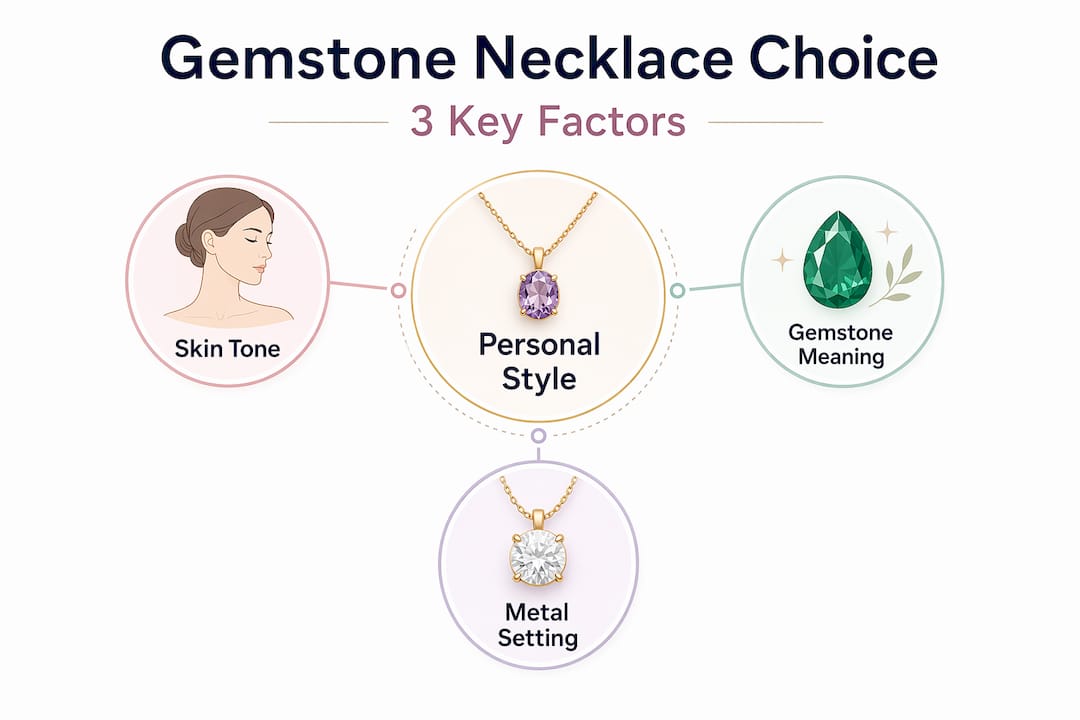
Finally, consider personalized necklaces as a step beyond single-stone selection. Combining two birthstones on one pendant, adding an engraving to the bail, or selecting a mixed-material setting that holds both a gemstone and a small diamond creates a piece that cannot be replicated. Bespoke engraving grew 28% year over year, reflecting how strongly people want their jewelry to carry a story, not just a price tag.
My honest take on why gemstone necklaces endure
I have spent years watching jewelry trends rise and collapse, and what strikes me about gemstone necklaces is that they consistently survive cycles that consume other categories. Plain metal jewelry trends come and go. Diamonds always hold cultural value. But gemstones occupy a rare third position. They are colorful enough to feel fashion-forward and symbolic enough to feel timeless.
What I find most interesting in 2026 specifically is the amulet resurgence. In my view, it is not really a fashion trend. It is a cultural signal. When consumers gravitate toward jewelry that functions as a personal talisman, they are telling the market something about what they need. They want objects that mean something. They want to carry intention on their bodies. The consumer desire for personal talismans reflects something real about how people are experiencing uncertainty in daily life.
My practical advice: do not overthink the metaphysics. Choose a stone you are drawn to, learn what it traditionally means, and wear it with that knowledge in the back of your mind. That context alone changes how you relate to the piece and how long you will actually wear it. The best jewelry is not the most expensive. It is the piece you reach for every single day.
— Andrew
Find your perfect gemstone necklace at Superjeweler
If this article has clarified why gemstone necklaces belong in your collection or on your gift list, the next step is finding one that genuinely fits your vision.

Superjeweler carries an extensive selection of gemstone necklaces spanning everything from vibrant solitaire pendants to layered amulet-style pieces that reflect the spring 2026 trends discussed above. Whether you are shopping for yourself or selecting a meaningful gift, the range covers birthstone classics, bold fashion pieces, and stones across every color family. You can also explore fashion necklaces for the latest trend-forward silhouettes. Superjeweler offers free worldwide shipping and a strong return policy, so you can shop with confidence. Browse the full collection and find the stone that speaks to you.
FAQ
Why consider gemstone necklaces over plain metal jewelry?
Gemstone necklaces offer color, symbolism, and personal meaning that plain metal pieces cannot. They function as focal points in minimalist outfits and carry cultural significance tied to birthstones, healing traditions, and personal identity.
What do different gemstones symbolize in a necklace?
Each stone carries distinct cultural meaning. Amethyst represents calm and clarity, turquoise symbolizes protection and communication, rose quartz is tied to love and emotional healing, and citrine is associated with confidence and abundance.
How do birthstone necklaces work as gifts?
The official U.S. birthstone list, adopted in 1912 and updated since, assigns a specific gemstone to each birth month, creating an instantly personal gift that requires no explanation of significance.
What should I know about gemstone necklace lengths?
Length determines where the necklace sits and how it pairs with necklines. An 18-inch chain is the most versatile everyday length, while longer pendant necklaces at 24 to 30 inches suit amulet styles and layered looks.
Are personalized gemstone necklaces worth the investment?
Yes. Research shows that 74% of jewelry buyers value emotional benefit above cost, and engraved or multi-stone pieces have seen consistent year-over-year growth in demand, making them both personally and commercially enduring choices.
Recommended
- Gemstone Necklaces | SuperJeweler
- Affordable Gemstone Jewelry: Top Beautiful Examples for Gifts
- What Is a Diamond Necklace? Styles, Value, and Trends
- Pearl Necklaces: Elevate Your Look Instantly
