TL;DR:
- Upgrading a wedding ring involves enhancing size, quality, shape, or style for a better reflection of oneself today. Lab-grown diamonds often provide larger stones at lower prices, making them an attractive upgrade option within a fixed budget. Setting choices like halo or pavé styles can significantly increase visual impact without increasing the actual stone size.
Upgrading a wedding ring means replacing or redesigning your existing ring with a larger stone, higher-quality diamond, or a new setting that better reflects who you are today. This upgrading wedding ring guide covers every major decision point: which upgrade path fits your goals, how lab-grown diamonds change the math, which setting styles are trending in 2026, and how to plan your budget without regret. Industry certifications from the Gemological Institute of America (GIA) and the American Gem Society (AGS) remain the gold standard for documenting stone quality before and after any upgrade. Superjeweler’s 2026 buyer resources confirm that lab-grown diamonds now let buyers get significantly more stone for the same spend, making this an especially good moment to reconsider what your ring could be.
What are the main ways to upgrade your wedding ring?
Four primary upgrade paths exist for wedding rings in 2026: increasing the center stone size, choosing a higher-quality diamond, changing the diamond shape, and redesigning the setting. Most meaningful upgrades combine at least two of these approaches.
Larger center stone. Moving from a 0.75-carat to a 1.5-carat diamond creates immediate visual impact. The trade-off is cost. A larger natural diamond at the same quality grade costs significantly more, so budget planning comes first.
Higher-quality diamond. Improving color, clarity, or cut grade can make your current stone size look dramatically better. Cut quality is the single most important factor for brilliance. An Excellent cut grade should be prioritized over higher color or clarity if budget forces a choice. A well-cut G-color, VS2 stone outperforms a poorly cut D-color stone in real-world sparkle.
New diamond shape. Fancy-shaped diamonds like oval, pear, cushion, and emerald cuts appear larger than round diamonds of the same carat weight due to their elongated outlines. Ovals, for example, can appear 10–15% larger than round brilliants at the same carat weight. That visual size gain costs nothing extra.
Setting redesign. Switching from a plain solitaire to a halo, pavé, or three-stone setting amplifies sparkle and style without replacing the center stone. This is often the most cost-effective upgrade for buyers who love their existing diamond.
- Larger stone: highest visual impact, highest cost
- Higher quality: best brilliance improvement per dollar
- New shape: size perception gain at no extra carat cost
- Setting redesign: style transformation at lower cost
- Combination: most dramatic results, requires the largest budget
Pro Tip: Before committing to a larger stone, ask your jeweler to show you your current diamond in a halo setting. The halo alone can add the appearance of 0.25–0.50 carats at a fraction of the cost of buying a larger stone.
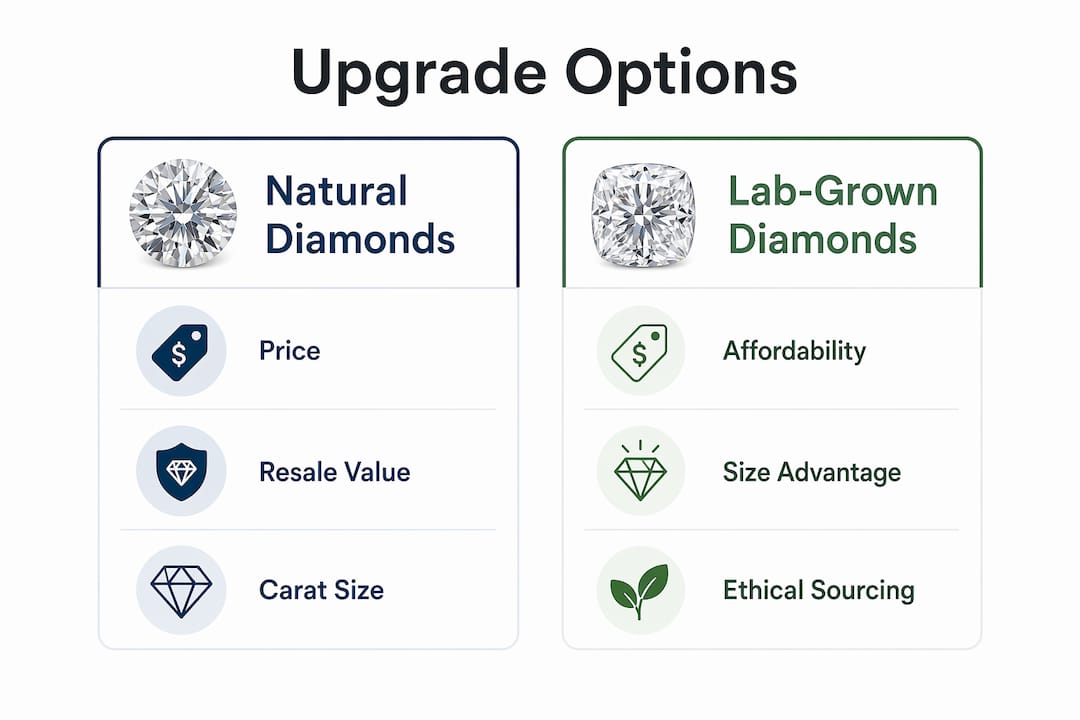
How do lab-grown diamonds compare with natural diamonds for an upgrade?
Lab-grown diamonds are chemically, physically, and optically identical to natural diamonds. The difference is origin and price. For buyers focused on size and quality within a fixed budget, the math strongly favors lab-grown stones.
Lab-grown diamonds allow buyers to obtain 30–50% larger stones than natural diamonds at the same budget. A $5,000 budget buys approximately 1.4–1.6 carats in a lab-grown diamond versus roughly 1 carat in a comparable natural stone. That is a meaningful size difference on the hand.
| Factor | Lab-grown diamond | Natural diamond |
|---|---|---|
| Price per carat | Significantly lower | Higher |
| Visual quality | Identical | Identical |
| Resale value | Lower | Higher |
| Size for budget | 30–50% more carat weight | Standard market rate |
| Colored options | Widely available, affordable | Rare and expensive |
Resale value is the honest trade-off. Lab-grown diamond prices have declined over the past five years, which means resale returns are lower than for natural stones. If long-term resale matters to you, a natural diamond holds value better. If maximizing size and quality for your budget is the priority, lab-grown is the stronger choice.
Ethical sourcing for lab-grown diamonds goes beyond the natural-versus-lab debate. Transparency about energy sourcing, manufacturing practices, and labor conditions matters. Legitimate grading reports and clear disclosure on origin are the markers of responsible production. Lab-grown colored diamonds, including pink and blue stones, are now widely available at prices that make creative upgrades genuinely accessible. Superjeweler’s lab-grown diamond rings collection reflects this range.
Pro Tip: Always request a GIA or IGI grading report for any lab-grown diamond you consider. The report confirms the stone’s cut, color, clarity, and carat weight, and protects your investment regardless of which type you choose.
What setting styles can transform your ring during an upgrade?
Setting choice shapes the entire personality of a ring. The right setting can make a modest stone look spectacular, add symbolic meaning, or simply modernize a ring that feels dated.
Three-stone settings symbolize past, present, and future, making them a natural fit for anniversary upgrades and vow renewals. Three-stone settings frequently repurpose the original center diamond as a side stone, honoring the past while creating something new. Matching side stones carefully for color, clarity, and cut is critical to avoid a mismatched appearance.
Halo and pavé settings increase sparkle and perceived carat size without enlarging the main stone. A halo of small diamonds surrounding the center stone creates the illusion of a much larger diamond. Pavé bands, where small diamonds are set closely along the band, add continuous sparkle from every angle.
Bezel and burnish settings offer a modern, low-profile look. The metal wraps around the stone’s edge, protecting it fully. This style suits active lifestyles and has grown in popularity as buyers prioritize durability alongside aesthetics. Lab-grown diamonds are growing in sales share, accounting for over 50% of rings sold in recent years, and bezel settings pair well with the clean lines favored in current trends.
Toi et Moi settings feature two different stones side by side, representing two people or two chapters of a life. This style works beautifully for couples who want something personal and unconventional. Pairing a round diamond with an oval sapphire, for instance, creates a ring that tells a specific story.
Metal choice completes the picture. Yellow gold reads warm and vintage. White gold or platinum reads modern and clean. Rose gold sits between the two, offering warmth without the traditional weight of yellow gold. Current trends favor yellow gold with thicker bands for durability and a bold look.
How to budget and plan your wedding ring upgrade
Setting a clear budget before consulting any jeweler is the single most effective way to avoid overspending. Jewelers work within whatever parameters you give them, so arriving with a firm number protects you.
- Gather your documentation. Locate your original GIA or AGS certificate and purchase receipt. These documents establish your stone’s baseline value and are required for most trade-in programs.
- Understand trade-in terms. Trade-in programs typically require the new diamond to be at least twice the value of the original for full trade-in credit. Retail trade-in values range from 50–80% of replacement value. Knowing this range helps you calculate your actual out-of-pocket cost.
- Set quality benchmarks. For larger stones, VS clarity, G color, and a Very Good to Excellent cut grade represent the best balance of quality and value. Dropping below SI1 clarity on stones over 1.5 carats risks visible inclusions.
- Choose your timing. Milestone anniversaries, vow renewals, and significant life events are natural moments for an upgrade. Planning three to six months ahead gives you time to research without pressure.
- Consult multiple sources. Get at least two assessments of your current stone’s value before committing to any trade-in. Values vary, and documentation gives you negotiating power.
Pro Tip: If your budget is tight, prioritize cut grade above all other quality factors. A well-cut stone in a lower color or clarity grade will outperform a poorly cut stone with better grades on paper.
| Quality factor | Recommended minimum | Why it matters |
|---|---|---|
| Cut grade | Very Good to Excellent | Drives brilliance and sparkle |
| Color grade | G | Near-colorless, undetectable to the eye |
| Clarity grade | VS2 | Eye-clean on stones up to 2 carats |
| Certification | GIA or AGS | Protects resale and trade-in value |
Key takeaways
The most effective wedding ring upgrade balances cut quality, setting style, and budget documentation to maximize both visual impact and long-term value.
| Point | Details |
|---|---|
| Prioritize cut grade | An Excellent cut delivers more brilliance than a higher color or clarity grade at the same price. |
| Lab-grown diamonds stretch budgets | A $5,000 budget buys 30–50% more carat weight in lab-grown versus natural diamonds. |
| Settings multiply impact | Halo and pavé settings increase perceived stone size without the cost of a larger diamond. |
| Documentation drives trade-in value | GIA or AGS certificates and original receipts unlock 50–80% trade-in credit at most jewelers. |
| Fancy shapes appear larger | Oval and pear cuts can look 10–15% larger than round brilliants of the same carat weight. |
What I’ve learned from watching couples upgrade their rings
The most common mistake I see is treating an upgrade as purely a size competition. Couples come in fixated on carat weight and leave disappointed when the budget does not stretch as far as they hoped. The rings that end up meaning the most are rarely the biggest ones. They are the ones where the original stone was repurposed thoughtfully, or where a setting change transformed a plain band into something that finally felt like the person wearing it.
Sentimental value deserves real weight in this decision. Repurposing your original center diamond as a side stone in a three-stone setting is not a compromise. It is a design choice with genuine meaning. The stone that was on your hand at your wedding becomes part of something new without disappearing.
Ethical sourcing is another area where marketing often outruns reality. Lab-grown diamonds are not automatically ethical, and natural diamonds are not automatically problematic. The honest question is whether the seller can document the stone’s origin, energy sourcing, and manufacturing conditions. Demand that transparency regardless of which type you choose.
My strongest advice: tell your jeweler your actual budget on the first call. Jewelers who work with real numbers find better solutions than those working around vague parameters. The reasons to upgrade are personal, but the process works best when it is direct and specific.
— Andrew
Superjeweler’s wedding ring upgrade options
Superjeweler carries both natural and lab-grown diamonds across a full range of settings, including three-stone, halo, pavé, and bezel styles. The selection covers budgets from accessible entry points to premium stones, with clear documentation on every certified diamond.
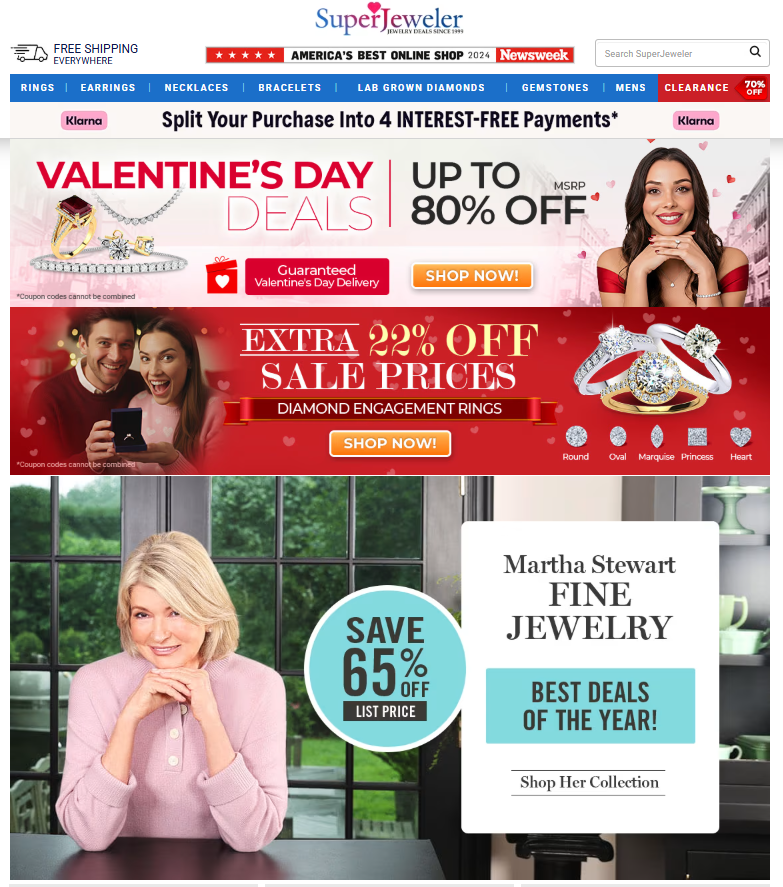
For buyers focused on maximizing size within a set budget, Superjeweler’s lab-grown diamond deals offer some of the most competitive pricing available, with stones certified by GIA and IGI. Buyers who want to start with a broader look at engagement ring options can filter by shape, metal, and price to narrow choices before speaking with a specialist. Free worldwide shipping and a clear return policy make it practical to compare options without risk.
FAQ
What does upgrading a wedding ring actually involve?
Upgrading a wedding ring means replacing the center stone, changing the setting, or both to improve size, quality, or style. The four main upgrade paths are a larger stone, higher-quality diamond, new diamond shape, and setting redesign.
When is the best time to upgrade a wedding ring?
Milestone anniversaries, vow renewals, and major life events are the most common triggers for a ring upgrade. Planning three to six months ahead gives you time to research stones, compare settings, and gather documentation for trade-in programs.
Are lab-grown diamonds a good choice for a ring upgrade?
Lab-grown diamonds deliver 30–50% more carat weight than natural diamonds at the same budget, making them a strong choice for buyers who prioritize size and quality. The trade-off is lower resale value compared to natural stones.
How much trade-in credit will I get for my original diamond?
Most trade-in programs return 50–80% of the original diamond’s replacement value, provided the new diamond is at least twice the value of the original. A GIA or AGS certificate and original purchase receipt are required to qualify for full credit.
Which setting style adds the most visual impact without a larger stone?
Halo settings create the greatest perceived size increase by surrounding the center stone with a ring of smaller diamonds. Pavé bands add continuous sparkle along the band and complement any center stone shape.
Recommended
- Wedding band buying workflow: your 2026 step-by-step guide
- Diamond Upgrade Ring Options: Your 2026 Buyer’s Guide
- Your ultimate 2026 wedding jewelry checklist
- How to customize your wedding band affordably in 2026
