TL;DR:
- An engagement ring symbolizes love, commitment, and unending devotion through its circular shape. Many design elements, like shape and gemstone, convey specific values and shared stories to personalize the meaning.
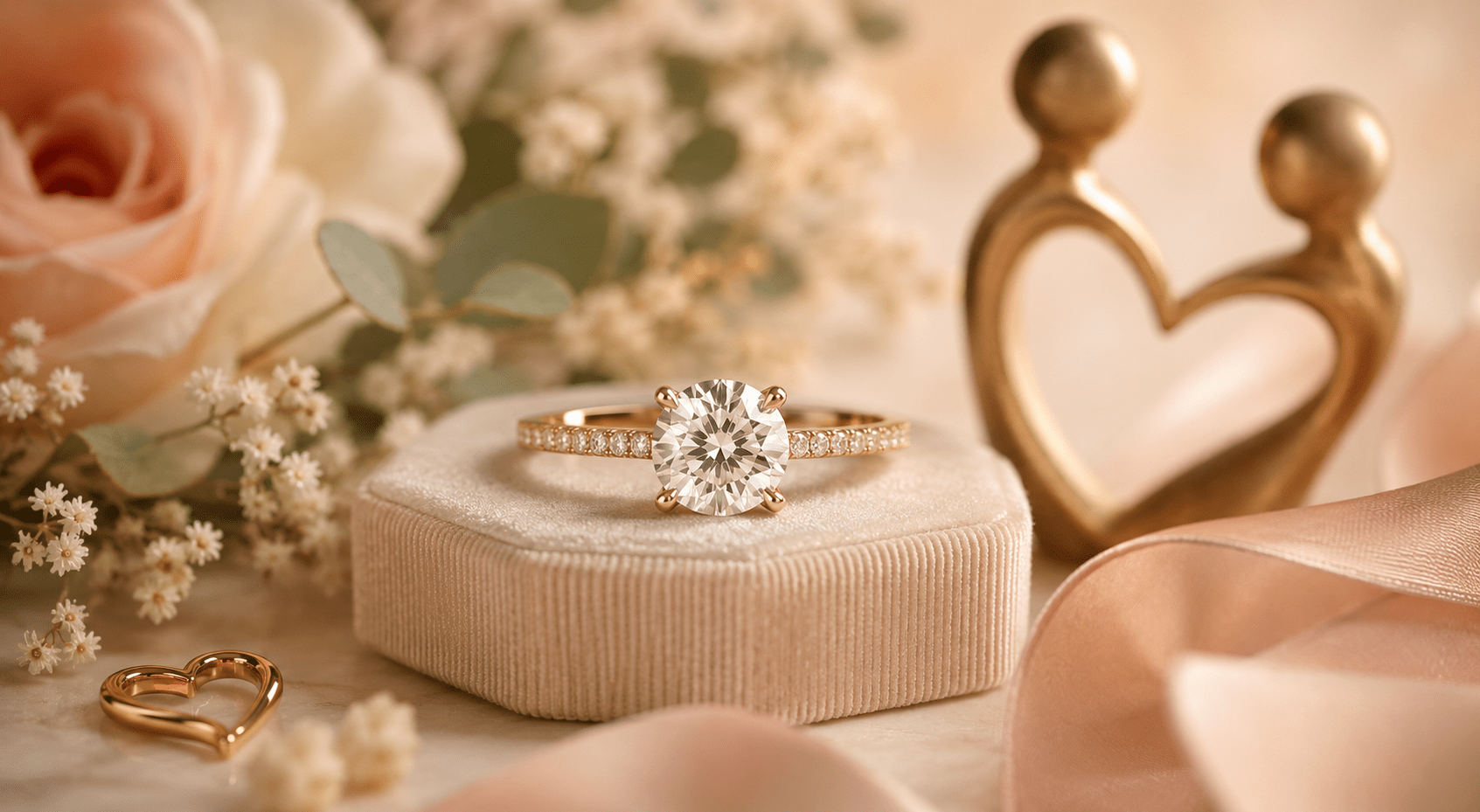
An engagement ring is defined as a symbol of eternal love, commitment, and the promise of a shared future. The ring’s circular shape carries a specific meaning: it has no beginning and no end, representing infinity and perfection across nearly every culture on earth. This engagement ring symbolism guide breaks down what your ring actually communicates, from the shape of the stone to the color of the metal, so you can choose with intention. Superjeweler offers hundreds of styles built around these exact meanings, from classic diamond solitaires to colored gemstone rings that tell a deeply personal story.
1. What does an engagement ring symbolize at its core?
An engagement ring symbolizes love, commitment, and the promise of a future together. The circle is the defining feature. It has no endpoint, which is why cultures from ancient Egypt to modern America have used it to represent eternity and perfection.
The ring worn on the fourth finger of the left hand also carries meaning. Ancient Romans believed a vein ran directly from that finger to the heart, a tradition called the vena amoris, or “vein of love.” That belief shaped a custom that billions of people still follow today.
The material matters too. A diamond’s hardness, rated 10 on the Mohs scale, makes it a natural stand-in for unbreakable devotion. That physical quality reinforced the diamond’s symbolic role long before marketing campaigns amplified it.
2. What do different engagement ring shapes symbolize?
Ring shapes carry distinct symbolic meanings tied to personality and relationship style. The shape you choose says something specific about the kind of love you want to represent.
| Shape | Symbolism | Typical wearer personality |
|---|---|---|
| Round brilliant | Timeless love, purity | Classic, romantic, values tradition |
| Princess | Modern sophistication, strength | Bold, confident, fashion-forward |
| Emerald | Elegance, clarity, openness | Refined, intellectual, appreciates art |
| Pear | Uniqueness, creativity | Free-spirited, artistic, independent |
| Oval | Endless love, individuality | Trend-aware, warm, expressive |
| Marquise | Ambition, royalty | Dramatic, passionate, history-minded |
| Cushion | Warmth, nostalgia | Sentimental, gentle, values comfort |
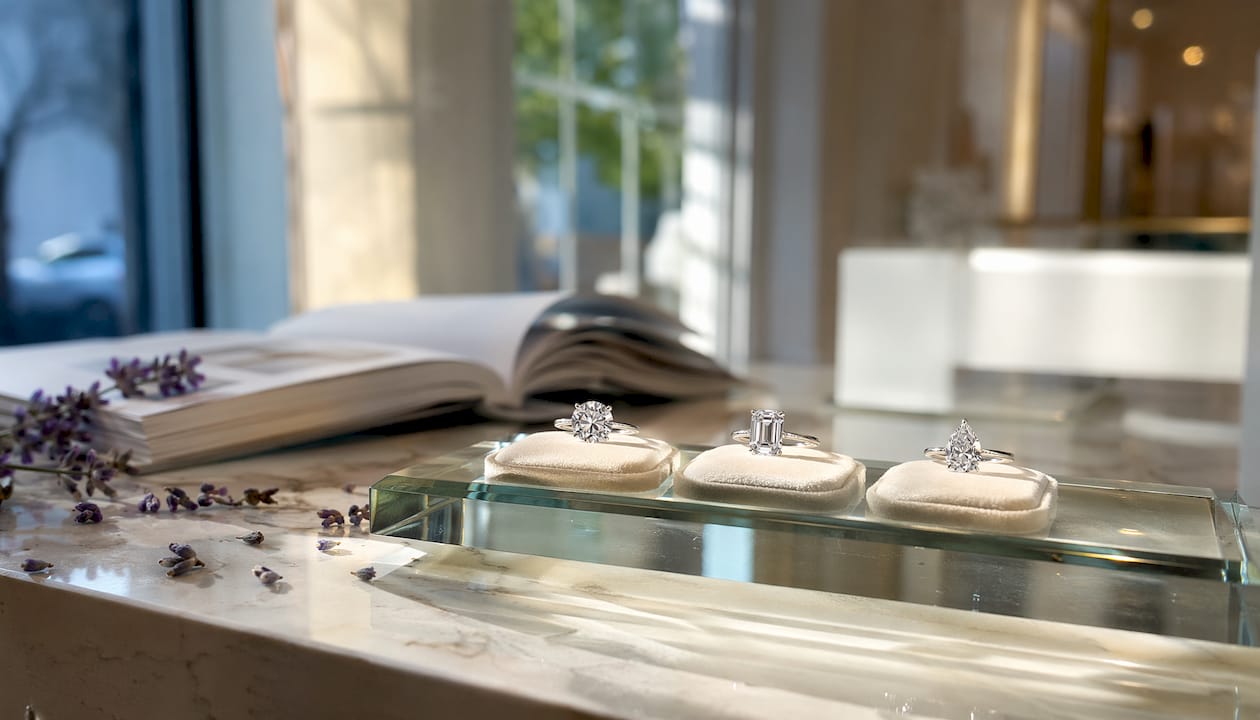
The round brilliant cut remains the most popular shape worldwide because its 58 facets maximize light return, creating a visual brilliance that reads as radiance and joy. The emerald cut, by contrast, uses long step-cut facets that create a mirror-like surface. That transparency is often described as a symbol of honesty and openness between partners.
Pro Tip: Study your partner’s existing jewelry before choosing a shape. Someone who wears geometric, angular pieces will likely connect more with a princess or emerald cut than a soft oval.
3. How gemstones and their colors shape ring symbolism
Diamonds became the standard engagement stone largely through 20th-century marketing, but colored gemstones were historically popular as engagement tokens long before that shift. Each stone carries its own symbolic weight, and choosing one intentionally adds a layer of meaning no diamond can replicate.
Here are the most significant gemstones and what they represent:
- Diamond: Eternal love, purity, and invincibility. The hardest natural substance on earth, it signals a bond that cannot be broken.
- Sapphire: Loyalty and honesty, historically worn by royalty. The blue sapphire in Princess Diana’s engagement ring, now worn by Kate Middleton, brought this symbolism to global attention.
- Ruby: Passionate love and devotion. Rubies have been associated with desire and deep emotional commitment across Asian and European traditions for centuries.
- Emerald: Prosperity, growth, and new beginnings. Ancient Egyptians linked the emerald to fertility and rebirth.
- Aquamarine: Courage and clarity. Sailors historically carried aquamarine for protection, and it now symbolizes a calm, clear-eyed commitment.
- Morganite: Compassion and unconditional love. Its soft pink color makes it one of the fastest-growing choices for modern engagement rings.
- Amethyst: Wisdom and spiritual protection. Medieval Europeans believed it kept couples faithful and clear-headed.
Gemstone color carries energy in many cultural traditions. Red stones signal heat and urgency. Blue stones suggest calm and trust. Green stones connect to growth and abundance. Choosing a stone by color is a legitimate and historically grounded way to encode meaning into a ring.
Superjeweler’s gemstone ring collection covers all of these options, including sapphires, rubies, and emeralds set in styles that range from vintage to contemporary. For couples who want to learn more before buying, the role of gemstones in engagement rings is worth reading in full.
4. What is the historical significance of engagement rings?
The engagement ring’s history stretches back to ancient Egypt, where couples exchanged braided reed rings as tokens of eternal commitment. Ancient Romans formalized the practice with iron rings called anulus pronubus, given as a public declaration of a man’s claim and a woman’s acceptance.
The diamond engagement ring has aristocratic origins dating to the 15th century, not merely 20th-century advertising. Archduke Maximilian of Austria gave Mary of Burgundy a diamond ring in 1477, making it one of the first documented diamond proposals in European history. That gesture set a precedent among European nobility that slowly filtered down through the social classes over the following centuries.
The modern diamond ring tradition accelerated dramatically after 1947. Diamond engagement rings rose from 10% of U.S. brides wearing them in 1940 to 80% by 1980, driven by De Beers’ “A Diamond Is Forever” campaign. That four-word phrase permanently linked diamonds to romantic permanence in the American cultural imagination.
The Tiffany Setting, introduced in 1886, also reshaped ring symbolism by lifting the diamond above the band on six prongs. That design maximized brilliance and made the stone the undisputed focal point, reinforcing the idea that the diamond itself was the symbol of pride and enduring love. The tradition of diamond rings thus embodies both centuries-old aristocracy and mid-20th-century democratization, giving every ring a layered cultural significance most wearers never fully consider.
5. How personalization adds deeper meaning to ring design
75% of engagement rings sold today are custom designs reflecting individual identity. That number signals a fundamental shift. Couples no longer treat the ring as a generic symbol. They treat it as a personal artifact.
Custom design options include engraving a date, a phrase, or a set of coordinates inside the band. Mixed metals, such as combining yellow gold with white gold or rose gold, can represent two distinct personalities merging into one. Motifs like vines, waves, or geometric patterns carry personal meaning when they reference a shared memory or a place that matters to the couple.
Nontraditional stones are also rising in popularity as expressions of identity. A couple who met hiking might choose a green tourmaline. A couple who bonded over the ocean might choose an aquamarine. The stone becomes a reference point, not just a decoration.
Some couples later add stones or trade up their rings to symbolize milestones like anniversaries, children, or major life changes. That practice shows how ring symbolism is not fixed at the moment of proposal. It can grow with the relationship.
Pro Tip: Before meeting with a jeweler, write down three to five things that define your relationship. Shared places, inside references, values you both hold. A skilled jeweler can translate any of those into a design element.
6. How to choose an engagement ring that reflects your values
Choosing a ring that carries real meaning starts with identifying what symbolism matters most to you as a couple. Shape, stone, metal, and setting each communicate something different. Deciding which of those elements matters most gives you a clear framework before you ever walk into a store or browse online.
| Feature | Symbolic value | Practical consideration |
|---|---|---|
| Round brilliant diamond | Timeless love | Most expensive cut per carat |
| Colored gemstone | Personalized meaning | Often more affordable than diamonds |
| Yellow gold band | Warmth, tradition | Shows scratches more visibly |
| Platinum band | Purity, strength | Heavier and more durable |
| Halo setting | Amplified brilliance | Makes center stone appear larger |
| Solitaire setting | Simplicity, focus | Easiest to resize and maintain |
The 5 Cs of diamond quality, which are cut, color, clarity, carat, and certificate, provide a baseline for evaluating any diamond ring. Cut has the greatest impact on brilliance, which directly affects how the ring looks and feels as a symbol of radiance. A well-cut diamond in a modest carat weight will outshine a poorly cut stone twice its size.
Budget does not limit meaning. A smaller diamond with an excellent cut, or a vivid colored gemstone in a simple setting, can carry as much symbolic weight as any expensive ring. The step-by-step guide to choosing an engagement ring at Superjeweler walks through each decision point clearly.
Modern shoppers also draw inspiration from social media, which has driven a rise in personalized and nontraditional ring symbolism reflecting individuality. That trend makes 2026 one of the most open moments in history to choose a ring that is genuinely yours. For couples interested in engagement ring trends in 2026, the options have never been broader.
Key takeaways
The most meaningful engagement ring combines personal symbolism with informed quality choices, because shape, stone, and setting each communicate something specific about the relationship.
| Point | Details |
|---|---|
| Shape carries meaning | Round signals timeless love; emerald signals openness; pear signals creativity. |
| Gemstone color matters | Blue stones represent loyalty, red stones represent passion, green stones represent growth. |
| History adds depth | Diamond rings trace back to 15th-century European aristocracy, not just modern marketing. |
| Personalization is rising | 75% of rings sold today are custom designs reflecting individual identity and shared story. |
| Quality affects symbolism | Diamond cut has the greatest impact on brilliance, which reinforces the ring’s visual power. |
Why I think most couples overlook the most important part of ring symbolism
Most engagement ring conversations start with budget and end with stone size. That order gets it backwards. The shape, color, and design of a ring communicate something every time it is worn, for decades. A ring chosen purely for carat weight says nothing specific about the couple who chose it.
What I find most striking about the history here is how layered it actually is. The diamond ring carries both a 15th-century aristocratic origin and a 20th-century marketing story. Neither cancels the other out. Both are true, and both are part of what the ring means when you put it on someone’s finger.
The personalization trend is the most interesting development in modern ring culture. Couples who engrave coordinates, choose a stone tied to a shared memory, or mix metals to represent two personalities are doing something genuinely new. They are turning a cultural symbol into a personal one. That combination, cultural weight plus personal specificity, is what makes a ring truly memorable.
My honest advice: spend as much time thinking about what the ring should say as you spend thinking about what it should cost. The meaning is what lasts.
— Andrew
Superjeweler’s collection for every kind of symbolism
Superjeweler carries one of the broadest selections of engagement rings available online, from classic round brilliant diamonds to vivid colored gemstone settings that carry deep personal meaning.

Whether you want a traditional diamond solitaire, a sapphire ring that signals loyalty, or a fully custom design that tells your specific story, Superjeweler has the options and the price points to make it real. The engagement ring collection covers every major style and stone type, and the affordable engagement rings under $1,000 section proves that meaningful symbolism does not require an unlimited budget. Free worldwide shipping and a satisfaction guarantee make it easy to shop with confidence.
FAQ
What does an engagement ring symbolize?
An engagement ring symbolizes love, commitment, and eternity, with the circular shape representing infinity and the promise of a shared future.
Why are diamonds the traditional engagement stone?
Diamond rings rose from 10% to 80% of U.S. brides between 1940 and 1980, largely due to De Beers’ “A Diamond Is Forever” campaign, though the tradition itself dates to 15th-century European aristocracy.
What do colored gemstones mean in engagement rings?
Sapphires represent loyalty, rubies represent passionate love, and emeralds represent prosperity and new beginnings. Each stone carries a distinct symbolic meaning rooted in centuries of cultural tradition.
How do I choose a ring shape with meaning?
Match the shape to the personality and values you want to express. Round brilliant signals timeless love, emerald cut signals openness and clarity, and pear signals creativity and individuality.
Can I personalize an engagement ring to add more meaning?
Yes. Engravings, mixed metals, custom motifs, and nontraditional stones all add personal layers of meaning. Custom ring designs now account for the majority of engagement rings sold, reflecting how couples use the ring to tell their own story.
Recommended
- Trends in Engagement Rings 2026: Style, Stone, and Savings
- Engagement Ring Shopping Timeline: Your 2026 Guide
- Why Upgrade Engagement Ring: Enhancing Love and Value
- Why Engagement Rings Matter for Couples Worldwide
